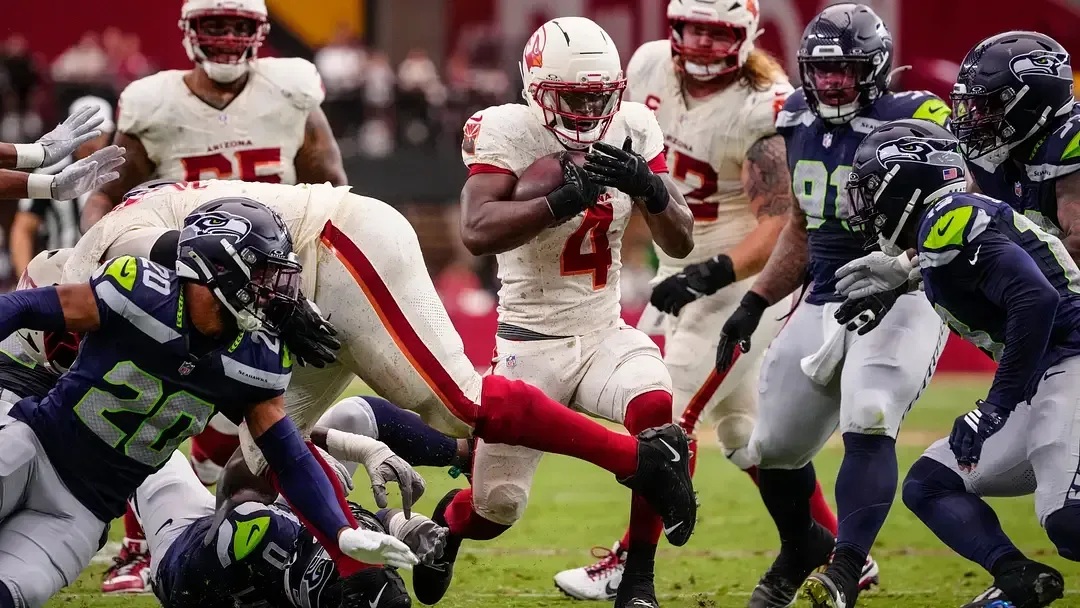
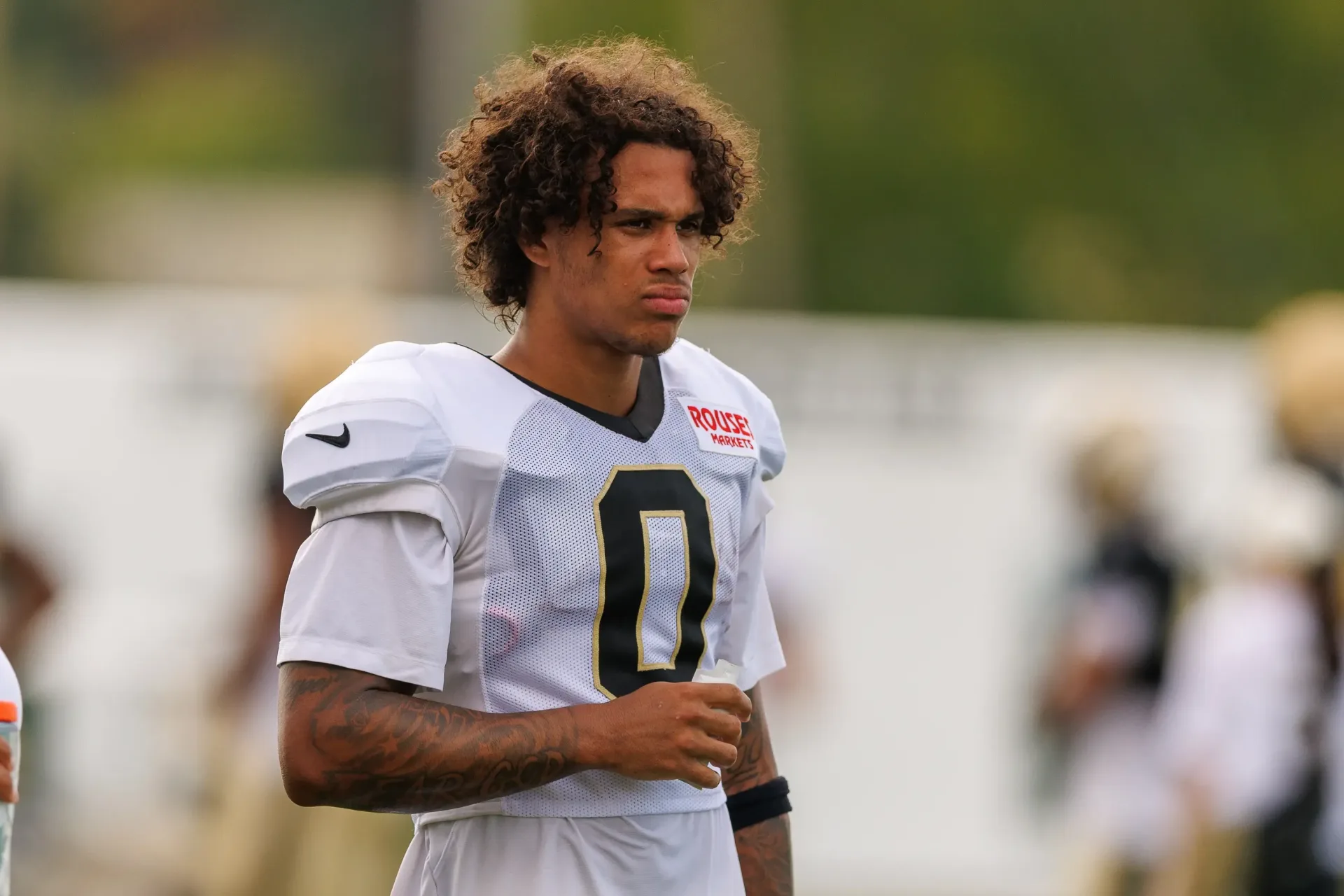
The NFL rookie-card picture after Week 9 has an unusual mix of stability at the very top and movement everywhere beneath it. Raiders quarterback Fernando Mendoza remains the player to watch, with Cardinals running back Jeremiyah Love, Titans wide receiver Carnell Tate and Saints receiver Jordyn Tyson still forming the leading group.
That order is less a declaration that the season’s story is settled than a reflection of a class in which few players have created an overwhelming, week-to-week separation. For collectors, that matters. A quiet ranking does not mean nothing has changed; it can mean that the top players retain enough perceived upside that one uneven game has not reset their standing.
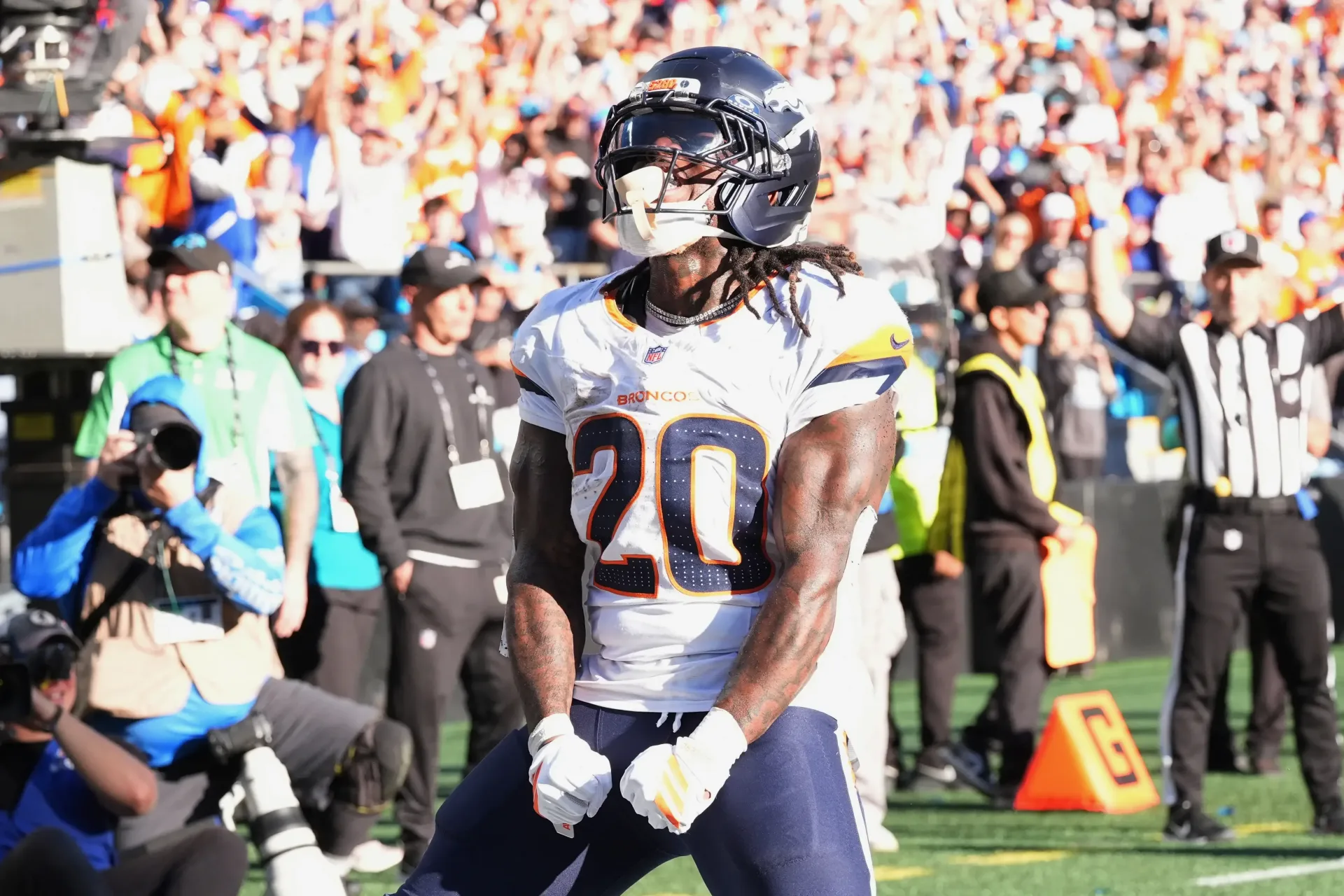
The more compelling change is just below that top quartet. Denver running back Jonah Coleman has paired a recent touchdown with meaningful all-purpose production, while Cleveland receiver Denzel Boston leads rookie pass catchers with 507 receiving yards. Both offer an important reminder for football-card collectors: the market conversation can shift before a season-long hierarchy does.
This is a watch list, not a promise of future card value. On-field opportunity, team results, injuries, roster decisions and collector demand can all alter the equation quickly. The practical task is to distinguish players producing now from players whose appeal rests chiefly on a possible future opening.
The Week 9 rookie-card tiers
Tier 1: The established leaders
- Fernando Mendoza, QB, Raiders
- Jeremiyah Love, RB, Cardinals
- Carnell Tate, WR, Titans
- Jordyn Tyson, WR, Saints
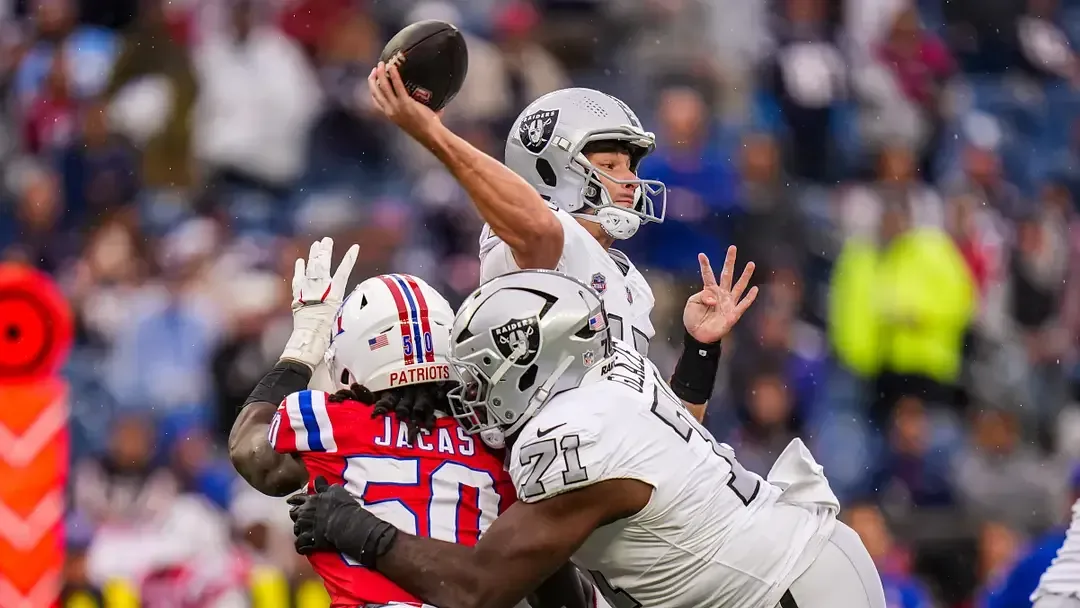
Mendoza stays at No. 1 amid uncertainty around the Raiders’ quarterback picture. A potential Kirk Cousins return to Minnesota had been discussed around the trade deadline, a development that could affect when the Mendoza chapter begins in earnest. Until a clearer path emerges, Mendoza represents the kind of quarterback-card proposition built heavily on position and projection rather than a fully established rookie-season body of work.
That does not make the appeal irrational. Quarterbacks can command disproportionate collector attention because the position is so strongly tied to a franchise’s identity and a team’s ceiling. It does mean collectors should be precise about what they are buying: not necessarily immediate production, but the possibility of a larger role later.
Love and Tate remain directly behind him, while Tyson’s first appearance showed why early evaluations need patience. The No. 8 overall selection was open for what could have been his first touchdown but fumbled the opportunity away late in the game’s first half. In a more productive rookie field, a debut mistake of that kind might invite a major reassessment. Here, Tyson remains fourth.
There is a football reason to keep watching rather than overreacting. The Saints are 3-5 in a division that remains open, and the expectation is that Tyson can develop within the Tyler Shough-led offense. That is not the same as guaranteeing a breakout. It is simply the case for allowing more than one game to define a highly drafted receiver’s rookie profile.
Tier 2: Productive players with a clearer current case
- Denzel Boston, WR, Browns
- Jonah Coleman, RB, Broncos
- KC Concepcion, WR, Browns
- Jadarian Price, RB, Seahawks
- Carson Beck, QB, Cardinals
- Omar Cooper, WR, Jets
Boston remains fifth because 507 receiving yards lead all rookie pass catchers. The second-round pick has been inconsistent within Cleveland’s uneven offense, but explosiveness and tangible receiving output are useful ingredients for a card-collecting case. Receiving yards are not a complete valuation tool; they do not account for every route, target, touchdown, role change or game situation. They are, however, an accessible measure of a receiver’s ability to accumulate production over time.
Coleman is the player applying the most immediate pressure. Denver extended its winning streak to five games after his go-ahead fourth-quarter touchdown, and the rookie totaled 88 yards in that contest. He has produced nearly 200 scrimmage yards over the past two weeks.
Scrimmage yards combine rushing and receiving yards. For a running back, that total is especially useful because it captures involvement beyond traditional carries. Coleman’s recent production also arrives in games Denver is winning, giving collectors two narratives to weigh at once: individual explosiveness and a visible place on a successful team.
The distinction between Boston and Coleman is worth watching. Boston currently has the stronger season-long rookie receiving statistic. Coleman has the hotter short-term case, bolstered by decisive plays and a five-game team streak. Neither framework automatically wins. Collectors deciding which player to prioritize should know whether they are responding to accumulated production or pursuing the possibility that recent momentum becomes a larger role.
Concepcion rose from No. 10 to No. 7, while Cooper moved from No. 11 to No. 10. Price held at eighth and Beck held ninth. These relatively modest shifts underline a useful principle: rankings can move because a player has improved, because another player has lost ground, or because the list is increasingly focused on athletes who offer an actionable present-day story.
Why Ty Simpson’s slide is about opportunity, not talent alone
Tier 3: Productive upside versus delayed upside
- Makai Lemon, WR, Eagles
- Ty Simpson, QB, Rams
- Germie Bernard, WR, Steelers
- Kenyon Sadiq, TE, Jets
- Emmett Johnson, RB, Chiefs
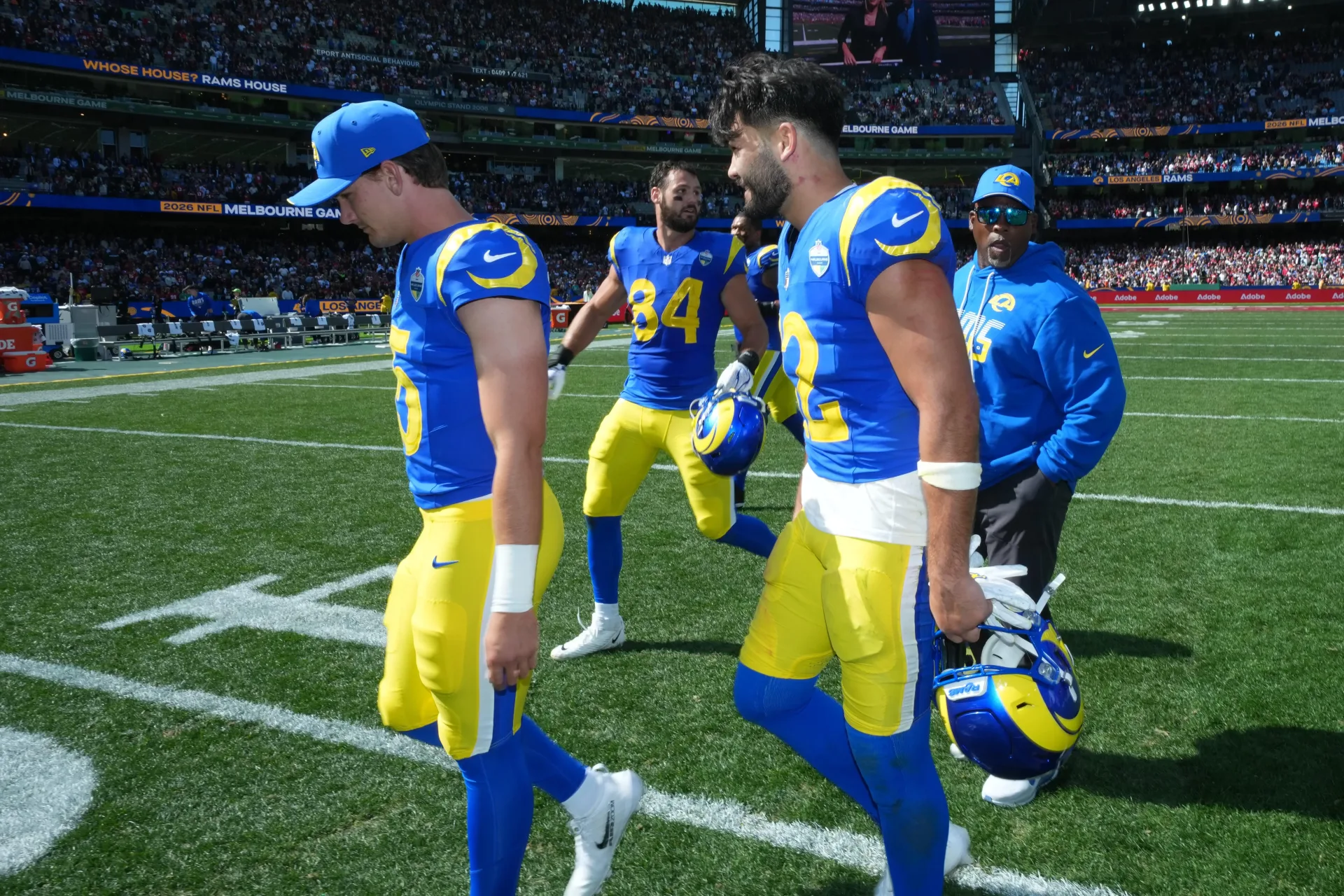
Rams quarterback Ty Simpson fell from sixth to 12th, but the change is not presented as a judgment on Simpson’s ability. It is a judgment on immediacy. Matthew Stafford continues to play through ailments and guide Los Angeles around the .500 mark, leaving Simpson without a clear near-term route to the field.
There is another layer of uncertainty. Puka Nacua’s potential injury could complicate matters if Simpson were required to play, and the Rams’ postseason prospects are hardly guaranteed in a crowded NFC race. Los Angeles has recently won close contests against Washington and the Chargers, but the final playoff picture remains unresolved.
For cards, a speculative hold is a player collected primarily for a future scenario rather than confirmed current production. Simpson fits that description. There is nothing inherently wrong with collecting speculative quarterbacks. Their eventual payoff can be substantial if circumstances turn. But the timeline can be lengthy, and every week without a path to playing time gives collectors more reason to compare that uncertainty with rookies who are producing now.
The relevant contrast is not that running backs and receivers are always safer than quarterbacks. It is that this particular list has players with a current contribution that can be discussed, followed and potentially traded around today. Simpson’s thesis is more dependent on what may happen later. That is why a fall in a weekly watch list need not amount to a permanent rejection.
Lemon’s rise from 12th to 11th and Johnson’s rise from 17th to 15th show that the lower half of the offensive list is still fluid. Bernard and Sadiq held their places. The important takeaway is not to treat a small weekly adjustment as a verdict, but to recognize it as a signal of where attention is concentrating.
Defensive rookies enter the conversation
Tier 4: Players worth monitoring
- Kaelon Black, RB, 49ers
- Mike Washington, RB, Raiders
- De’Zhaun Stribling, WR, 49ers
- David Bailey, DE, Jets
- Arvell Reese, LB, Giants
Bailey and Reese are the new names, arriving at 19th and 20th. Their inclusion is notable because defensive rookies often receive less hobby attention than quarterbacks, skill-position players and touchdown producers. That does not mean defensive achievements are irrelevant; it means collectors may need a stronger statistical, historical or team-success case before a defender attracts the same breadth of demand.
Reese supplied the clearest immediate marker with a three-sack performance. A sack is a tackle of the opposing quarterback behind the line of scrimmage on a passing play. It is one of the most visible defensive statistics and can quickly become part of a player’s collecting narrative, particularly if repeated over a season.
Bailey joins Reese as a New York defender to monitor. The Jets pass rusher has been placed in company with a notable group through his early work, while Reese’s performance strengthens the case that the Giants defender belongs on a broader rookie radar. Defensive cards can be an especially selective pursuit: collectors may favor accomplishment, recognizable milestones, team relevance or personal-player collecting over assumptions of broad market demand.
Black and Stribling maintained their rankings, while Washington dropped from 15th to 17th. Their places in this tier are an instruction to watch developments rather than a call to make an all-or-nothing judgment. Role changes can matter quickly for backs and receivers, especially once a team’s depth chart, injuries or late-season priorities change.
A practical way to use the list
Weekly rookie rankings are most valuable when treated as a research tool rather than a shopping list. Begin by separating each player into one of three categories: current producer, near-term opportunity play or longer-term projection. Boston and Coleman have current production to examine. Mendoza and Simpson depend more heavily on quarterback opportunity and future outcomes. Tyson is a top-pick receiver whose first game created a setback but not enough evidence to erase the broader projection.
Next, avoid confusing a player ranking with a specific card ranking. A player can be compelling while individual cards vary greatly by set, scarcity, condition, autograph status and design. The supplied Week 9 information supports a comparison of rookie situations; it does not establish that any particular card is underpriced, rare or a guaranteed purchase.
Finally, let the football case do the work. Coleman’s recent scrimmage output, Boston’s 507 receiving yards, Reese’s three sacks and the uncertain paths for Mendoza and Simpson are all concrete discussion points. They are more useful than chasing a name simply because it has climbed a few spots.
Sports collecting has room for many kinds of items and stories, from rookie cards to major photographic artifacts such as the record-setting public sales for Michael Jordan and Kobe Bryant images. But the immediate NFL rookie lesson is simpler: distinguish evidence from expectation. After Week 9, Mendoza is still the standard-bearer, Boston and Coleman have the strongest production-driven cases just behind the leaders, and the rest of the board remains volatile enough that opportunity may be the most important stat of all.