Topps is preparing the next installment of its flagship basketball line, with 2026-27 Topps Flagship Basketball pre-orders scheduled to open Tuesday, September 22 through the company’s website. A final price had not been announced with the pre-order date, so collectors should be careful to separate confirmed product details from early market expectations.
What is confirmed from the early preview is a product built around several familiar hobby pillars: a broad base-card set, new insert designs, rookie and veteran autographs, and limited serial-numbered chase cards. The release follows 2025-26 Topps Basketball, a set that drew attention in part because of its rookie class and Topps’ return to licensed basketball cards.
For collectors deciding whether to order early, the important distinction is simple: the September 22 date concerns pre-orders, not a confirmed retail release date. No box price, checklist, pack configuration, odds information, or full release timetable was included in the details available so far.
What Topps Has Confirmed for 2026-27 Flagship Basketball
The early product material points to a lineup that mixes current-player base cards with rookie-focused autograph content and several visual throwback or high-concept insert treatments. Among the named elements are:
- A base-card layout shared with recent Flagship Baseball and Football designs.
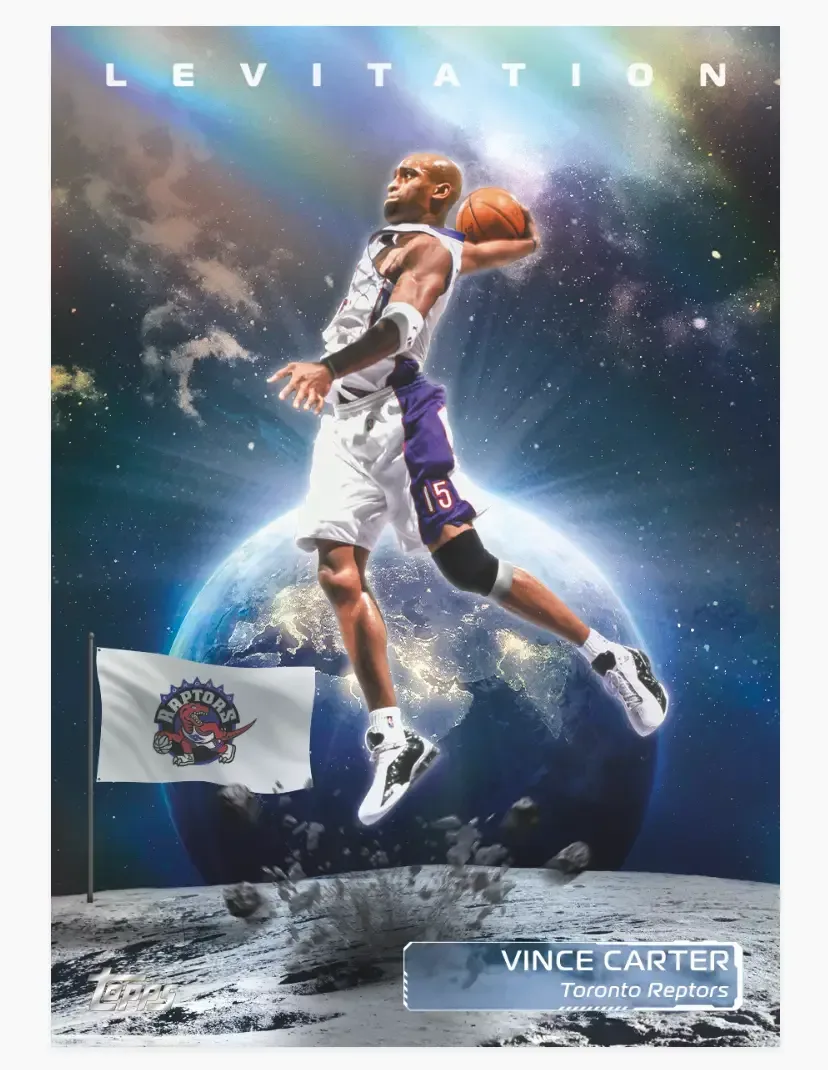
- The new Levitation insert set.
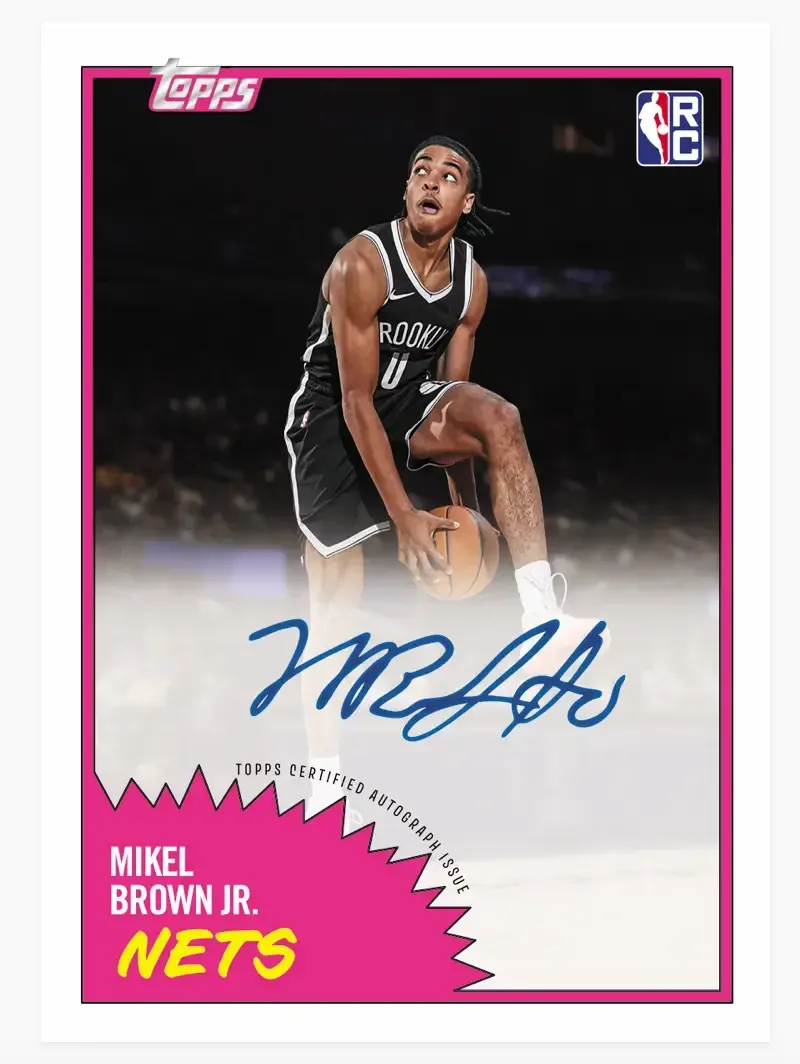
- An 1981-82 Topps Basketball-inspired insert and autograph treatment.
- Autographs for rookies and established players.
- Low-numbered autograph cards, including red-ink versions.
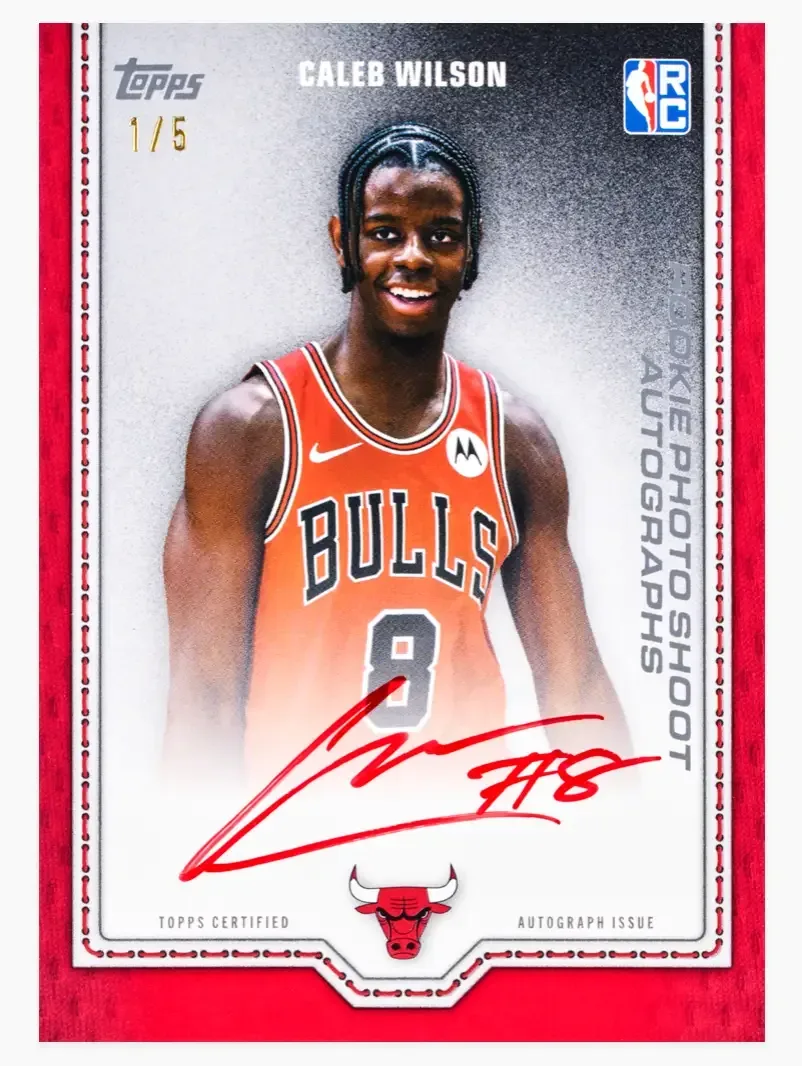
- A Caleb Wilson Rookie Photoshoot Red Ink Autograph limited to five copies.
That is a meaningful preview, but it is not a complete checklist. Collectors should not infer confirmed appearances, autograph signers, print runs, or pull rates beyond the examples and details already shown. In particular, a product preview image demonstrates a design or card concept; it does not by itself reveal how frequently the card will appear in packs.
The Flagship Design Keeps a Cross-Sport Look
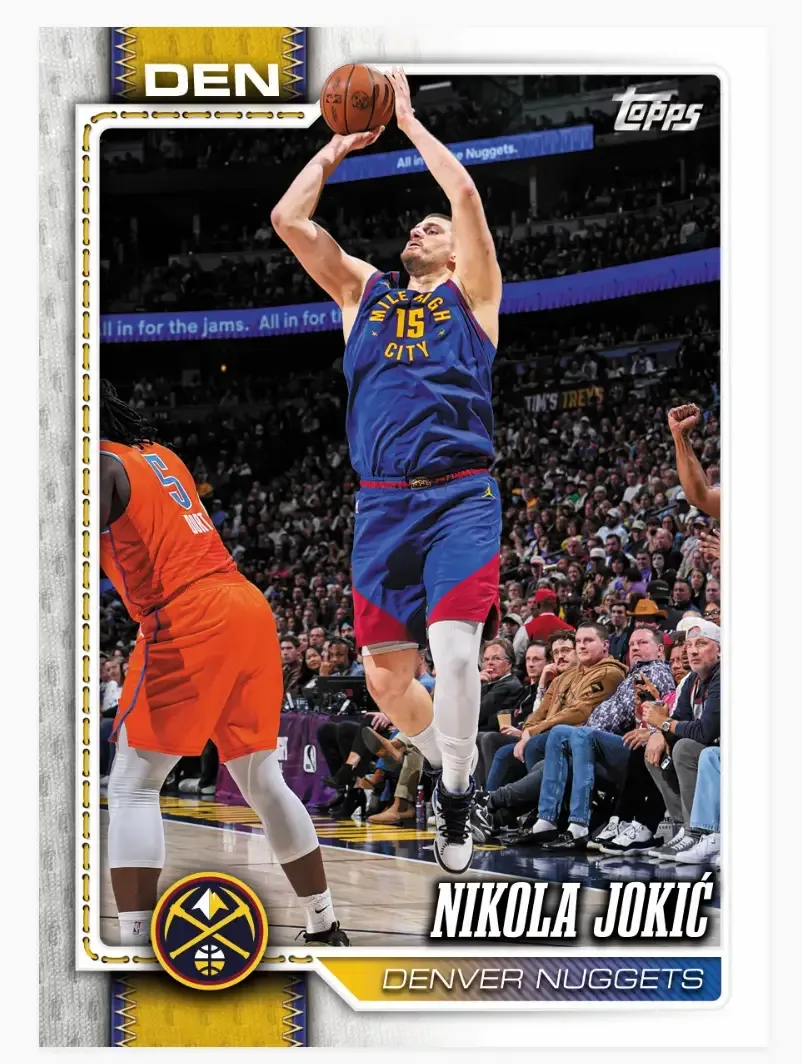
The 2026-27 base design continues the visual language used for recent Topps Flagship Baseball and Football cards. Player and team details sit along the bottom, while a jersey-inspired area of the border incorporates team-color styling. One preview featuring Nikola Jokić also shows the player image slightly extending beyond its photograph boundary.
In card-collecting terms, the base set is the core collection: the standard cards intended to make up the main player checklist. Base cards are normally the foundation for set builders, while inserts, parallels and autographs provide the scarcer chase component. The preview does not lay out the complete base checklist or say how many cards it contains, but the recurring flagship template should give collectors an immediate sense of what the regular cards will look like alongside Topps’ other sports releases.
A consistent visual identity can be useful for collectors who follow multiple Topps sports. It makes the product recognizably part of the Flagship family, while team-color elements provide a basketball-specific layer to the card fronts. Whether that approach lands with collectors will be a matter of taste, but it is a clear design direction rather than a wholesale reinvention of the flagship format.
Related coverage includes 2026-27 Topps Flagship Basketball Pre-Orders Open September 22.
Levitation Is the Newly Previewed Insert to Watch
The most distinctive new insert shown so far is Levitation. Its concept places a player poised to dunk against a space-themed scene, with Earth and a galaxy behind the action. The moon sits below the player, accompanied by a flag bearing the team logo. A Vince Carter example was used to showcase the design.
Inserts are cards that sit outside the main base-card set. They commonly have their own name, artwork, theme and scarcity level, making them a focal point for collectors who are not attempting to assemble every standard card. Levitation appears designed to stand apart visually from the relatively structured base layout, with a more illustrative, cosmic presentation centered on a classic basketball image: the player rising toward the rim.
Its eventual standing as a chase depends on information that is not yet available. A compelling insert can become a popular target, but difficulty matters. A card pulled often serves a different collecting role from one that appears only rarely, even if both share the same artwork. Until Topps provides odds or fuller pack details, the scarcity of Levitation cards remains unknown.
That uncertainty is worth keeping in mind for anyone planning a sealed-box purchase around a specific insert. The appeal of a design is known from the preview; the practical likelihood of finding it is not. For collectors who prefer a single player, team or insert set, waiting for checklist and odds details can make it easier to decide whether sealed boxes or individual-card purchases best suit their goals.
An 1981-82 Throwback Brings Magenta to the Autograph Lineup
Topps is also using the 1981-82 Topps Basketball design as an insert and autograph theme. The retro look is known for its magenta coloring, providing a deliberate contrast with the contemporary flagship base cards. A Mikel Brown Jr. preview demonstrates the autograph version, which also carries the new Rookie Card logo.
A retro-design insert is a modern card that borrows or recreates the visual style of an earlier issue. It is not the same thing as an original vintage card from that period. Its appeal lies in connecting a current player or rookie class to a recognizable older design language, often while adding modern elements such as current branding, autograph space, serial numbering or updated card stock.
The newer Rookie Card logo is another small but useful visual cue. Rookie cards are central to basketball-card collecting because they mark a player’s earliest major-card presence within a given licensed release cycle. The logo’s stronger visibility compared with the prior release may help collectors identify those cards more quickly when sorting packs or browsing listings, though it does not change the need to verify the exact card and designation when buying on the secondary market.
The hobby’s attention on rookie cards is often tied to a player’s future performance, but that outcome is inherently uncertain. The product can spotlight a rookie class at release; it cannot establish how those players will develop. Collectors purchasing with long-term value in mind should treat rookie demand as variable rather than guaranteed.
Caleb Wilson’s Red-Ink Card Is Limited to Five
The scarcest specifically described card in the preview is a Caleb Wilson Rookie Photoshoot Red Ink Autograph numbered to five copies. The shown card uses a rookie-photoshoot image, and its autograph and border have been presented as a color match.
“Numbered to five” means the card’s stated print run is five copies. That is a far lower quantity than a standard base card and makes it a high-end chase item by definition. It does not, however, disclose how the five copies are distributed across boxes or formats. Nor does it guarantee a particular resale result. Rarity can be one part of desirability, alongside player interest, card condition, collector demand and the wider supply of comparable autographs.
Red ink refers to the autograph being signed in red rather than a more conventional dark ink color. On this Wilson card, the red signature is paired with a red-toned border, creating the color-match effect. A color match is a design relationship between a card’s accent color and a player’s team colors, uniform details or another image element. It is a visual preference rather than a separate measure of rarity unless the card is also expressly numbered or otherwise designated as limited—as this five-copy card is.
For collectors who focus on autographs, the preview confirms that the 2026-27 product will not be limited to rookies. Topps says both rookies and stars will have signed cards in the release. The full signer list, specific autograph subsets and their quantities remain unannounced, so a complete view of the autograph program will require later checklist information.
What the Missing Price Means for Pre-Order Planning
Topps had not disclosed pricing at the time these details were presented. An estimate based on the prior year placed boxes in the $100-to-$125 range if pricing remains similar, but that is only an expectation, not an announced price.
That distinction matters, particularly with a flagship product positioned as accessible to a range of collectors. A price change, box-format change, or different pack configuration could alter the equation for set builders, autograph chasers and casual buyers alike. Until official listing details appear, the sensible approach is to treat the September 22 opening as a date to monitor rather than a guarantee of a particular buy-in.
Collectors can also use the period before ordering to define what they actually want from the release. A base-set collector may prioritize the standard checklist and availability. Someone attracted to the space-forward Levitation cards may wait to learn their odds. Autograph-focused collectors may want the full list of signers, while buyers interested in the rookie class should remember that on-card designations and future player performance are separate questions.
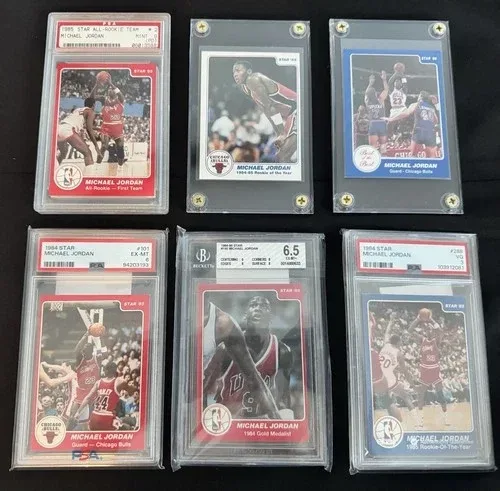
The broader basketball-card market has plenty of room for big-number headlines, but collectors should distinguish completed transactions from optimistic listings when judging value; that is especially relevant when comparing premium cards such as the difference between high Michael Jordan asking prices and actual sales. The same basic discipline applies to a new release: confirm the product information, know the card you are chasing, and avoid treating an early preview as a complete market picture.
Early Takeaway
2026-27 Topps Flagship Basketball has a defined pre-order opening date and a clear early aesthetic: a familiar cross-sport flagship base design, a highly stylized Levitation insert, magenta-heavy 1981-82 throwbacks, and rare rookie autograph chases. The Caleb Wilson red-ink autograph limited to five copies provides an especially concrete example of the product’s low-numbered ceiling.
Just as important are the unanswered questions. Official pricing, full checklists, pack details, release timing and insert odds were not yet specified. Those details will determine how the product functions in practice for different kinds of collectors. For now, September 22 is the key date, with the rest of the release picture still to come.