The minor-league season can turn prospect-card collecting into a fast-moving exercise in revised expectations. A player’s performance can validate a high price, create a new level of demand or introduce a difficult pause when an injury interrupts an otherwise impressive year.
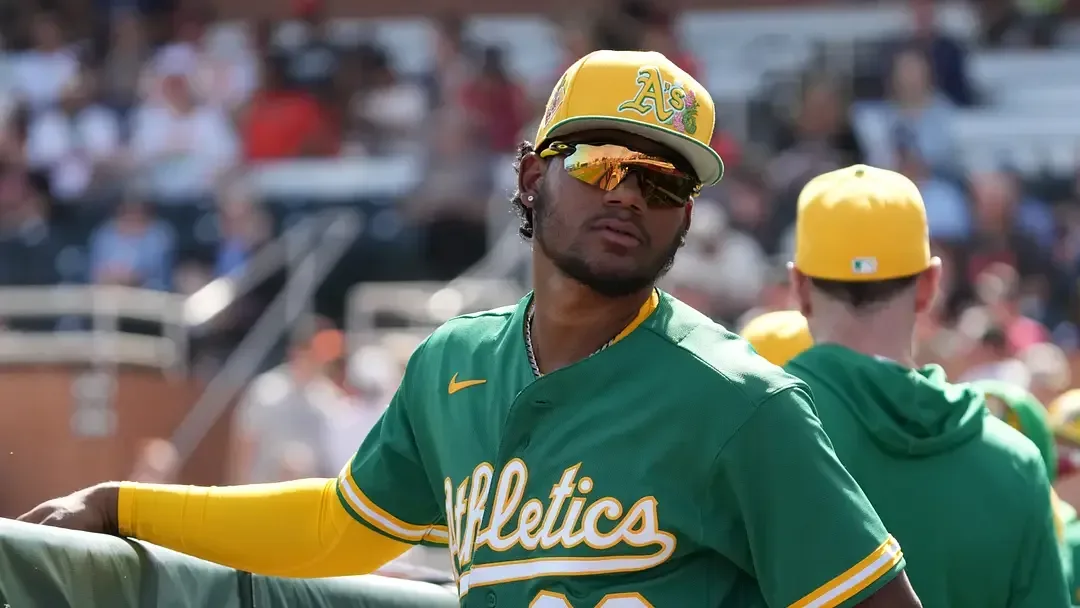
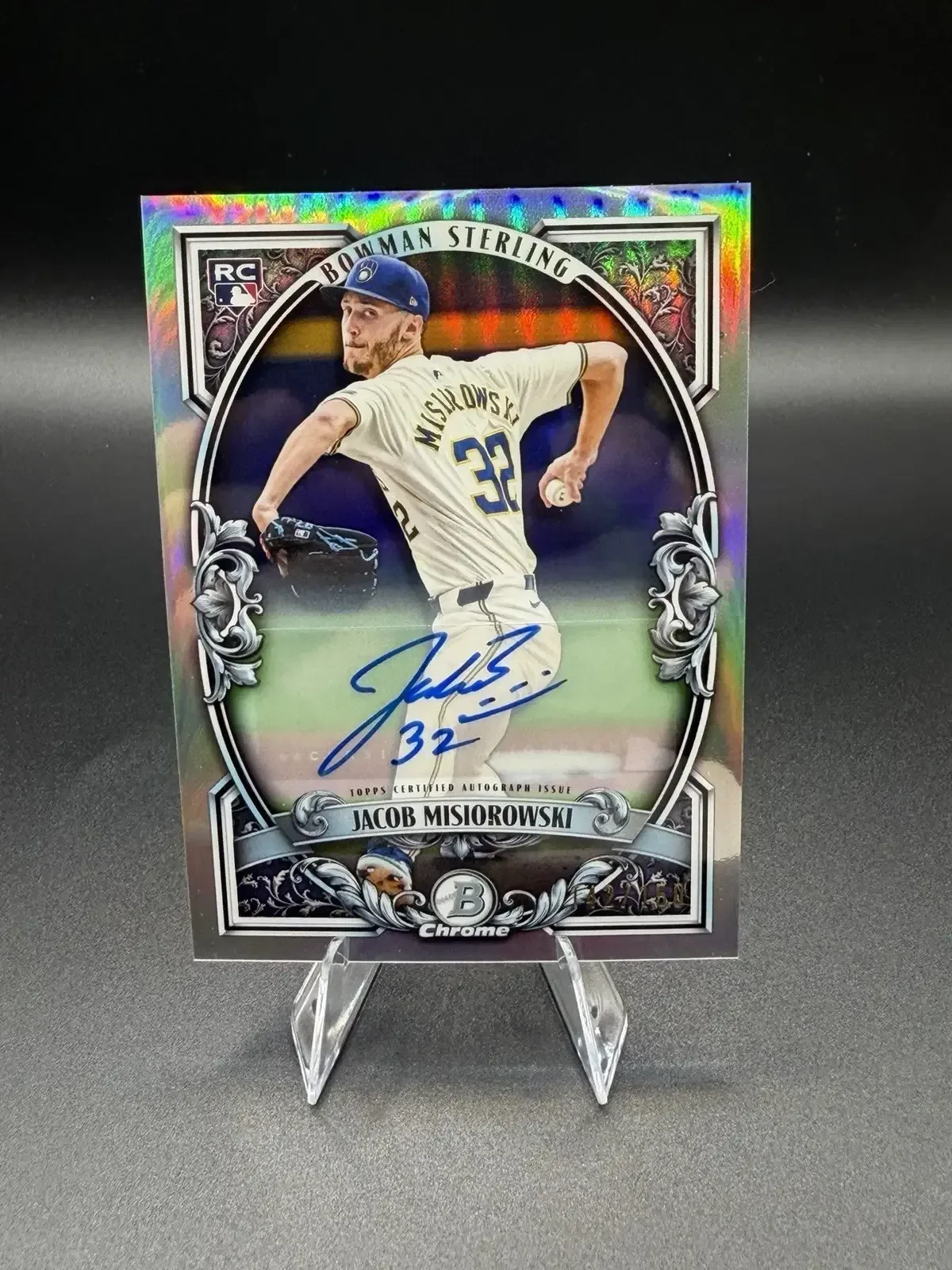
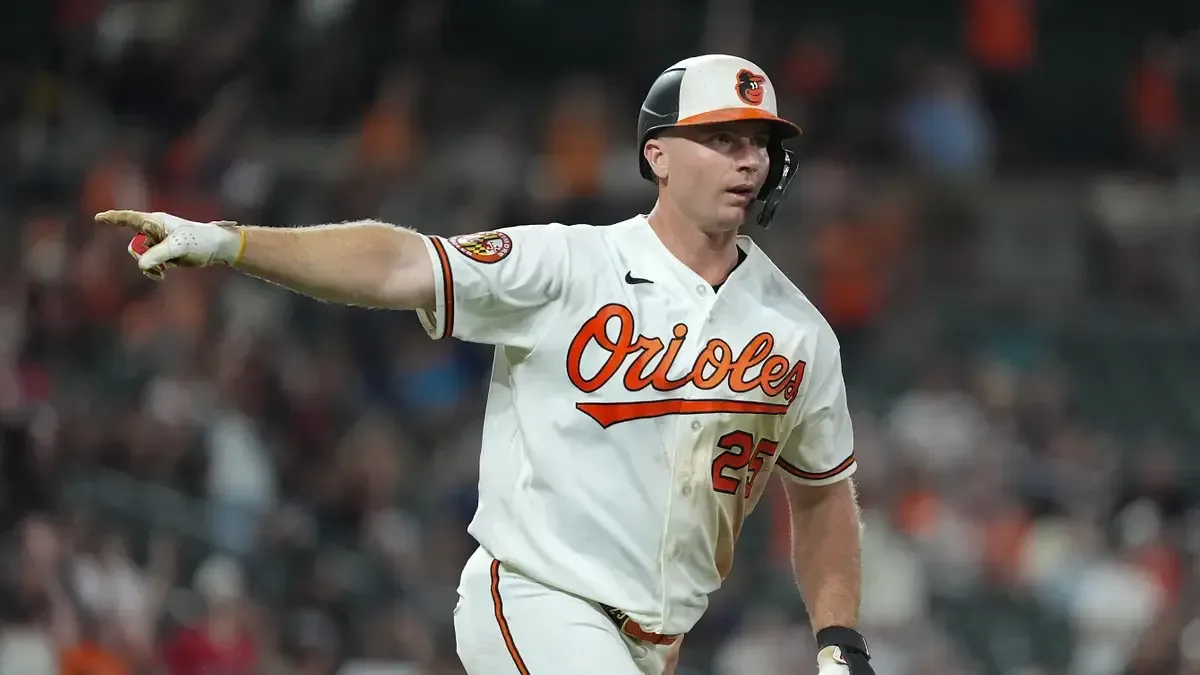
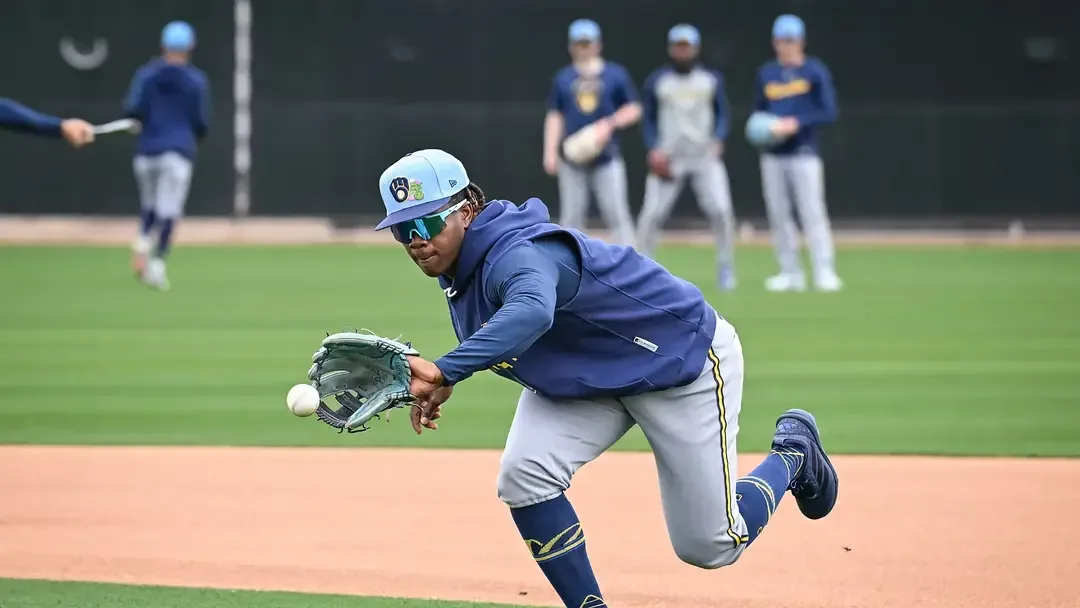
That is the situation surrounding three shortstops who ended 2026 among baseball’s most prominent prospects: Milwaukee Brewers infielder Jesús Made, Boston Red Sox infielder Franklin Arias and Athletics infielder Leo De Vries. All three showed why evaluators and collectors were paying attention. But their offseason card-market stories are not interchangeable.
Made entered the year carrying an already powerful market and spent the season supporting that confidence. Arias paired a large jump in prospect standing with an especially consequential power breakout, producing the clearest upward movement of the three. De Vries performed well at Double-A while young for the level, but a right-shoulder labral tear now makes his near-term market dependent on medical recovery and the timetable for his return.
For collectors, the important distinction is not simply who had the best season. It is the gap between what a card market had already anticipated and what the player actually delivered. Prospect cards often move on changing expectations as much as results themselves.
For more context, explore How to Stop ChatGPT, Claude, Gemini, Copilot and Grok From Training on Your Chats.
How to read a prospect-card market
A prospect card is a collectible tied to a player before the player has established a major-league résumé. That makes its value unusually sensitive to projection: collectors are weighing current production, youth relative to the player’s level, perceived tools, organizational path and potential timing of a major-league debut.
Terms used around these markets can sound more certain than they are. A player’s floor describes the more dependable end of a projected outcome; a ceiling describes the more optimistic possibility. Neither is a promise. Likewise, a rise in a prospect ranking does not establish a fixed card value. Rankings and sales are different signals: one is an evaluation of baseball potential, while the other reflects what buyers have recently chosen to pay.
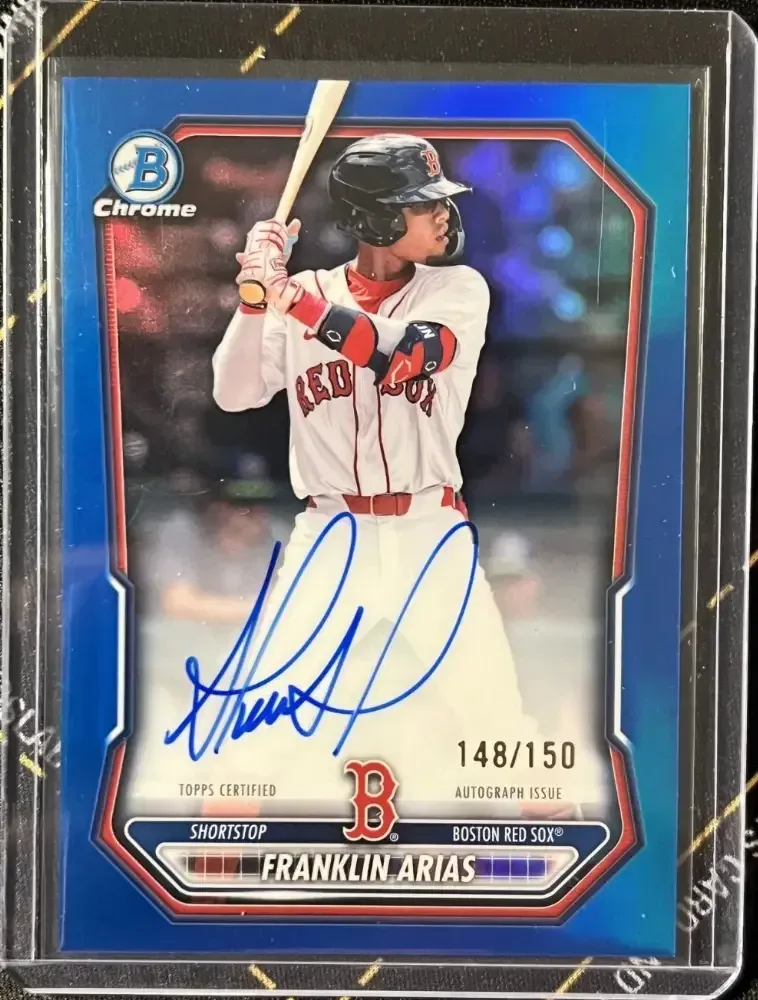
Card type matters too. A Bowman First Chrome autograph is generally a key early prospect issue because it combines an early Bowman designation, Chrome card stock and a signature. A numbered parallel is a version with an explicitly limited print run. For example, a blue Franklin Arias prospect autograph numbered to 150 has a stated cap of 150 copies, a feature that can make it distinct from a standard autograph issue. Limited supply does not eliminate risk, but it gives buyers a clearer sense of the card’s stated rarity.
Related coverage includes MLB Prospect Card Markets to Watch After the 2026 Minor League Season.
The offseason is therefore less about declaring winners than identifying what each market is now waiting to learn. Made’s case centers on whether he can maintain a premium as his debut gets closer. Arias has to show that the newly demonstrated power remains part of his offensive profile. De Vries must progress through recovery before collectors can confidently map out his next development step.
Jesús Made: a premium market that held its ground
Made began 2026 as the consensus No. 2 prospect in baseball. He later moved into the top spot after Pittsburgh’s Konnor Griffin graduated from rookie status. That context matters because Made was not a previously overlooked player who suddenly generated attention. The market had already assigned him a considerable amount of belief before the season began.
He spent the entire year in Double-A, doing so as one of the younger players at that level. His performance was described as well-rounded, matching the broad skill set that had driven the initial excitement. The key effect on the hobby market was stability rather than a dramatic new surge: the market was already strong, and Made largely met the lofty expectations embedded in it.
That is not a negative outcome. In prospect collecting, a highly priced player has a different task from a lower-priced breakout candidate. The breakout has room to earn broad recognition. The established premium player must avoid a result that forces collectors to reduce their assumptions. Made did the latter in 2026.
The practical implication is that Made’s cards enter the offseason with a relatively straightforward narrative. His market has room to grow as he gets nearer to a major-league debut, but it is also beginning from a high baseline. Buyers should understand that a stable market can represent confidence already earned, not a lack of interest. At the same time, an expensive prospect market can be less forgiving if development slows, because much of the optimistic case may already be reflected in demand.
Made’s season offers a useful reminder that minor-league level and age should be read together. Double-A is meaningful context on its own, but a young player succeeding there can be especially encouraging because he is facing a more advanced competitive environment earlier than many peers. That does not settle how quickly he will reach Milwaukee or how his skills will translate to the majors. It does explain why the existing enthusiasm did not fade.
Franklin Arias: the year’s clearest re-rating
Arias had the most pronounced change in the group’s market outlook because the questions surrounding him changed. Entering the season, he was regarded as a high-floor player: a strong defender and contact hitter. The uncertainty centered on power. That distinction shaped the evaluation of his ceiling, and consequently the enthusiasm collectors could reasonably have for his cards.
Over the course of 2026, Arias hit 25 home runs across Double-A and Triple-A while maintaining his contact-oriented offensive profile. The power output directly addressed the biggest open question in his projection. His prospect ranking rose from the mid-30s to No. 2 overall on Baseball America’s Top 100 list, a major reevaluation of his standing.
His card market responded. Sales data tracked by Card Ladder showed Bowman First Chrome autograph cards rising through the season. That relationship makes intuitive sense: more power without a corresponding loss of contact gives collectors a more expansive offensive outcome to consider. It is not merely a matter of a player adding one attractive stat. It changes the shape of the overall projection when the player was already known for defense and contact.
There is a practical difference between recognizing a rise and assuming it must continue indefinitely. Arias’ 2026 result made the power conversation much more favorable, but an offseason purchase still carries the normal prospect risks. The next relevant question is whether the new offensive performance remains durable as he approaches the majors. A prospective debut early in 2027 is a possibility, not a guarantee, and timing itself can affect collector attention.
Even with that caveat, Arias enters the winter with the strongest fresh catalyst among these three markets. Made preserved an elevated position; Arias gave the hobby a reason to redraw his position. For collectors following recent momentum, the distinction is substantial.
Leo De Vries: performance, then a recovery question
De Vries came into 2026 with enormous expectations and, like Made, played well as one of the younger competitors in Double-A. On performance alone, that kept his prospect case on firm footing. His year did not end on the field, however. A labral tear in his right shoulder brought the season to an early close, and he is expected to be sidelined until May 2027.
A labrum is cartilage that helps stabilize the shoulder joint. For a baseball player, a shoulder injury naturally becomes a major factor in the short-term outlook because it creates uncertainty around recovery, baseball activity and the timing of a return. The available information establishes an expected absence into May 2027; it does not provide a fuller recovery report or a definitive forecast beyond that timetable.
That lack of certainty is exactly why De Vries’ hobby market is more difficult to assess at season’s end. Prospect cards are already forward-looking assets in the collecting sense. An injury adds another layer of forecasting: buyers are now considering both the player’s long-range talent and the nearer-term recovery path.
Collectors should separate the two pieces of De Vries’ story. His Double-A season, particularly at his age, supports why he entered the year with substantial hype. The injury does not erase that performance. Conversely, the pre-injury performance does not remove the need to monitor recovery updates. Treating either fact as the whole case would overlook the actual uncertainty facing the market.
For those tracking De Vries through the offseason, the most useful information will be concrete progress toward the expected return window. Until that clarity arrives, price movement may reflect differing tolerance for uncertainty rather than a clean verdict on his talent.
What the three markets say about the winter ahead
These players offer three distinct examples of how a prospect market can look after a strong season:
- Made: Expectations were already high, and his Double-A performance helped sustain them. The next major potential catalyst is getting closer to a big-league opportunity.
- Arias: A power breakthrough alongside sustained contact drove a sharp rise in both prospect stature and interest in Bowman First Chrome autographs.
- De Vries: Strong play preserved the talent case, while the shoulder injury shifted the immediate focus to recovery and return timing.
That framework is more useful than a simple ranking of which card to chase. A card market can be strong for different reasons: established confidence, newly improved production or belief that an injury pause will prove temporary. Each rationale comes with a different kind of risk.
Collectors looking at any of the three should pay close attention to the exact card rather than only the player name. Autograph versus non-autograph, standard issue versus numbered parallel and stated print run are all part of what is being compared. A rising player market does not mean every card moves by the same amount, and a player’s prospect ranking alone does not make every issue equally scarce or equally desired.
The 2026 season left Made and Arias with momentum of different varieties, while De Vries heads into a more conditional offseason. For the hobby, that creates three compelling stories to watch rather than one uniform prospect narrative: a premium prospect holding his place, a prospect whose offensive upside expanded, and a highly regarded talent waiting for health to determine the next chapter.