As the 2026 MLB season moves toward the postseason, four pitchers stand out not simply for what they have done on the mound, but for the sharply different ways collectors can approach their cards. Jacob Misiorowski’s overpowering season has put a signed 2026 Bowman Chrome Sterling rookie in a much higher price bracket. Paul Skenes presents a lower-cost parallel tied to an established award winner navigating a less certain season. Tarik Skubal’s early Bowman Chrome issue remains comparatively accessible despite two consecutive Cy Young Awards. Cam Schlittler brings a breakout-year autograph with both a strong statistical case and obvious award speculation attached.
Those distinctions matter. A card is not made desirable by a player’s ERA alone, nor does an autograph automatically make it the correct purchase for every collector. Card type, condition, signature format, player trajectory and the amount of uncertainty a buyer is comfortable accepting all change the equation. Recent sales cited below are snapshots of completed-market activity, not fixed values or predictions of what any card will sell for next.
Jacob Misiorowski: premium rookie autograph appeal
Misiorowski has supplied the loudest on-field case of the group in 2026. He has been clocked above 105.5 mph and owns a 1.86 ERA, a number that measures earned runs allowed per nine innings. A lower ERA generally indicates more effective run prevention, so 1.86 is the kind of figure that naturally attracts attention when collectors are choosing pitchers whose seasons could define their early-card market.
His standard 2026 Topps Series 1 card provides the more conventional flagship entry point. In card terms, a flagship release is the central base product line rather than a specialized Chrome, prospect or autograph product. It can be meaningful to collectors looking for the familiar mainstream rookie issue, but the interest around Misiorowski has also extended to his Bowman cards.
For more context, explore Lydia Kanuga Launches When There Are Nine, a New Music and Entertainment PR Firm.
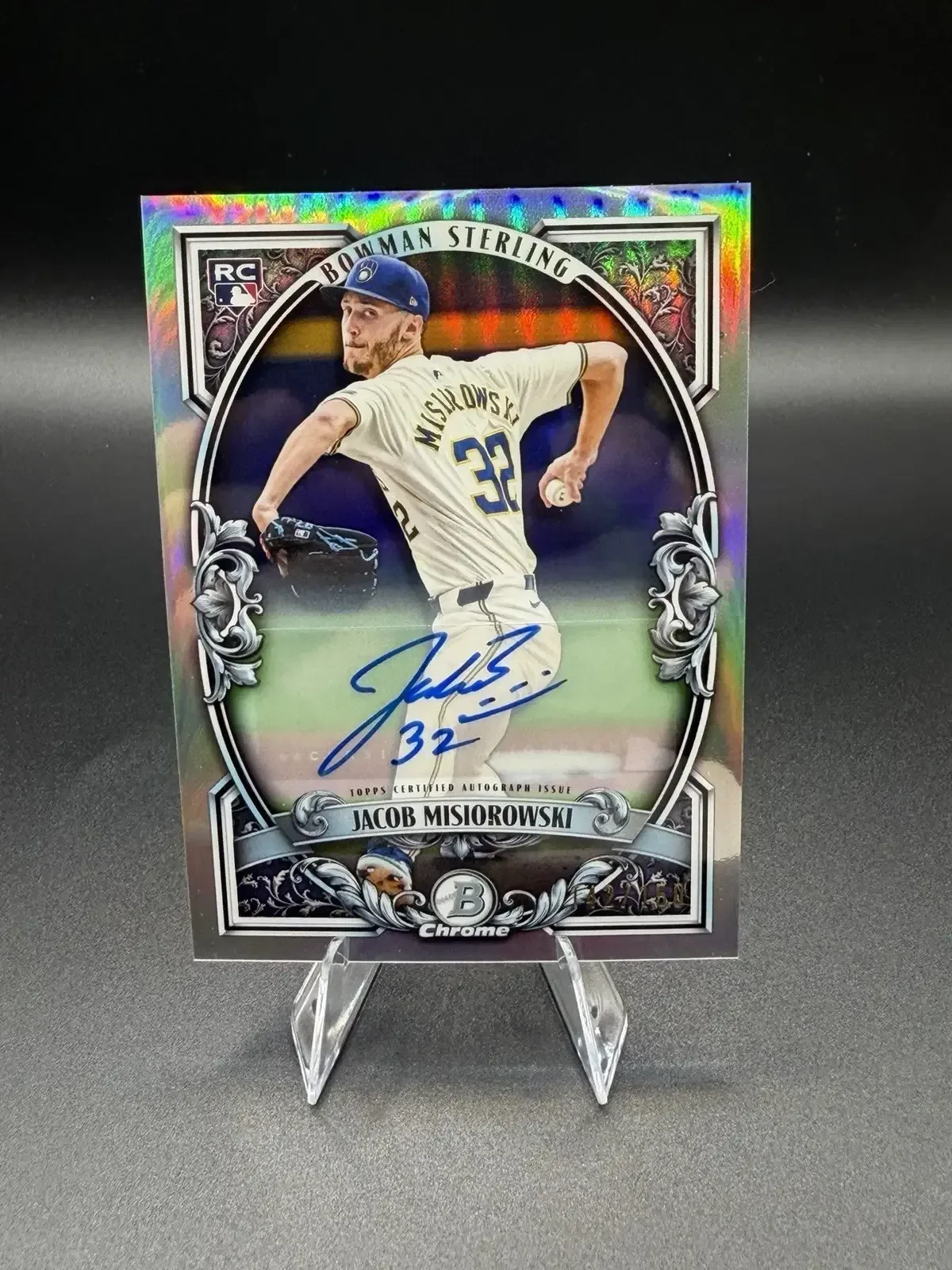
The focal card is the 2026 Bowman Chrome Sterling Autograph, which combines several elements many baseball-card collectors prioritize: rookie-card designation, a signature placed directly on the card, and a presentation-oriented image. An on-card autograph means the player signed the actual card surface. That differs from a signed sticker later applied to a card. Neither format makes every card equally desirable, but on-card signatures are often a clear preference for collectors who value the direct connection between player and card.
An ungraded copy recently sold for about $380. Ungraded means the card had not been assigned a third-party numerical condition grade at the time of sale. That detail is crucial when using any result as a comparison: an ungraded card’s condition can vary substantially, while a graded card has been evaluated and encapsulated by a grading company. The $380 sale therefore establishes a reference for an ungraded example of this particular signed card, not a universal value for every Misiorowski card or even every copy of the same issue.
The practical trade-off is straightforward. Misiorowski offers a rookie autograph connected to a dominant current season, but the cited sale is already the highest-priced entry among the four highlighted examples. Collectors who prefer the card’s signature and rookie attributes may see a compelling centerpiece; collectors seeking a cheaper way to follow the player may instead look to his flagship or other Bowman issues and pay close attention to the exact card, condition and authentication details.
Related coverage includes Affordable Rookie and Early Cards for Four MLB Playoff-Bound Pitchers to Watch.
Paul Skenes: an affordable parallel built around a rebound question
Skenes enters the conversation from a different position. He won the Cy Young Award in 2025, providing the kind of accolade that immediately gives a pitcher’s card profile additional weight. The Cy Young is the major annual award for a league’s top pitcher, and it remains a concise marker of how high a player’s established ceiling has been.
The supplied 2026 picture is more complicated. Skenes has dealt with diminished pitch velocity and command issues, though he has still been capable of dominant work. Velocity is the speed of a pitch; command is a pitcher’s ability to locate pitches where intended. When either element slips, the result can be less reliable execution even for an elite pitcher. That uncertainty is precisely what separates a current-performance chase from a rebound-oriented collecting decision.
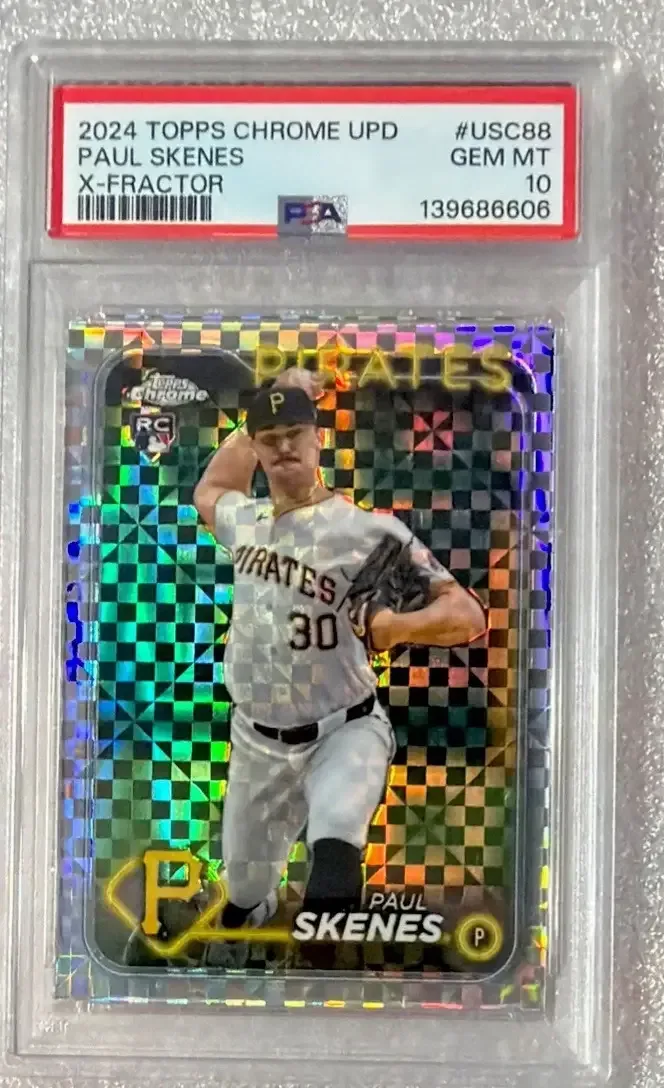
The card in focus is a 2024 Topps Chrome Update X-Fractor, with a recent sale near $75. Topps Chrome Update identifies the release and the X-Fractor identifies a parallel: a variation of a card within the same broader release, typically distinguished by a different visual finish. Here, “X-Fractor” tells collectors they are not looking at the ordinary version of the card. Before comparing prices, buyers should make sure they are comparing the same parallel rather than assuming every 2024 Topps Chrome Update Skenes card has comparable scarcity or demand.
At roughly $75 in the cited sale, the X-Fractor is the least expensive card listed here. That does not make it automatically cheap in every context, and it does not remove the risk associated with a player working through a down season. It does, however, illustrate a more measured route into a pitcher with a recent Cy Young on his résumé. The appeal rests on the possibility that his velocity and command return more fully next year, rather than on a claim that a rebound is guaranteed.
For a broader look at the same group of postseason-era pitcher cards, see this related pitcher-card roundup.
Tarik Skubal: award history and a graded early Bowman card
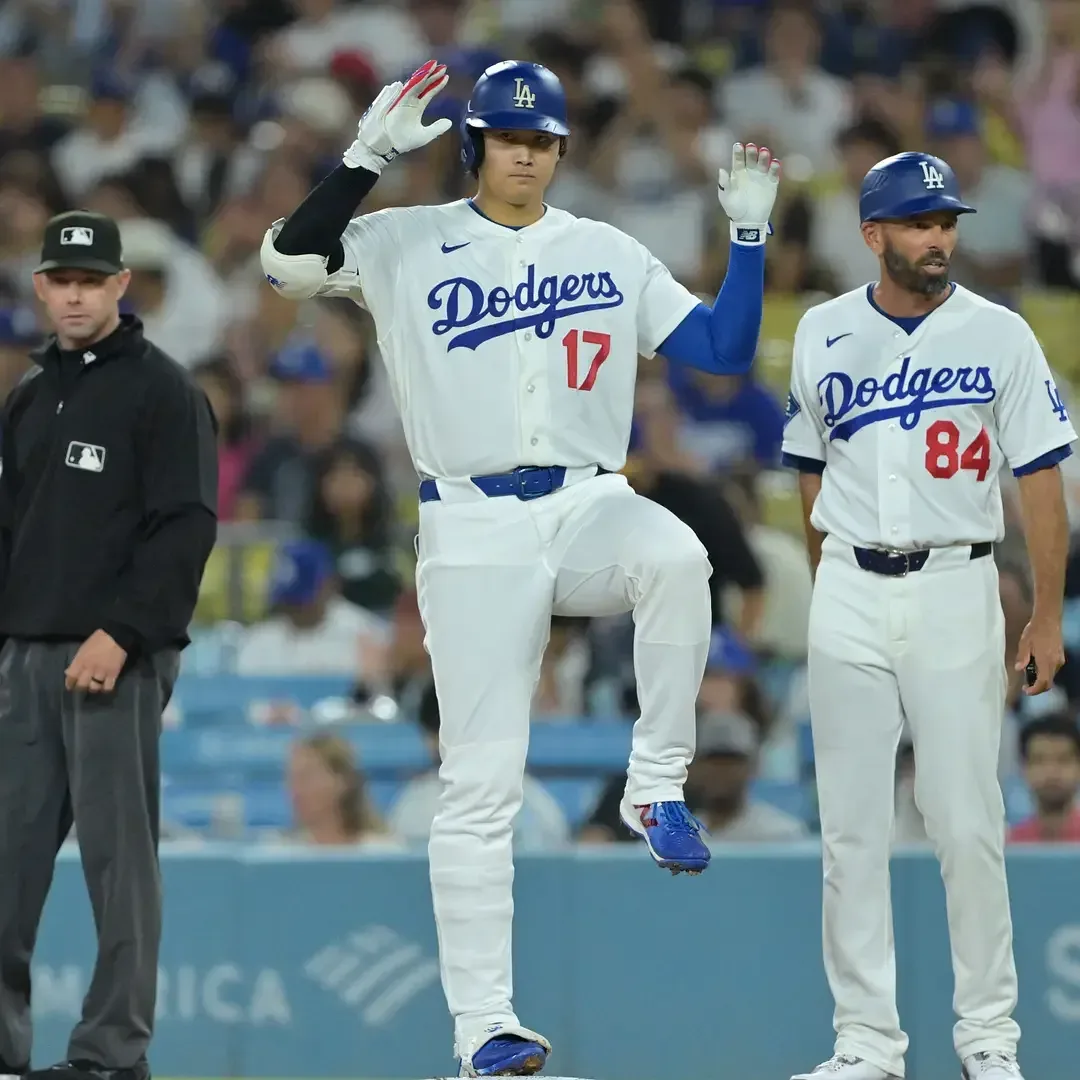
Skubal’s appeal comes from accomplishments already secured rather than a single breakout narrative. He has won back-to-back Cy Young Awards, an unusually strong foundation for any pitcher’s collecting case. He is also identified as one of the game’s leading left-handed pitchers, and his move to the Dodgers places him with a team in a major market. Those factors may increase the attention paid to his cards, but attention and long-term pricing are not the same thing.
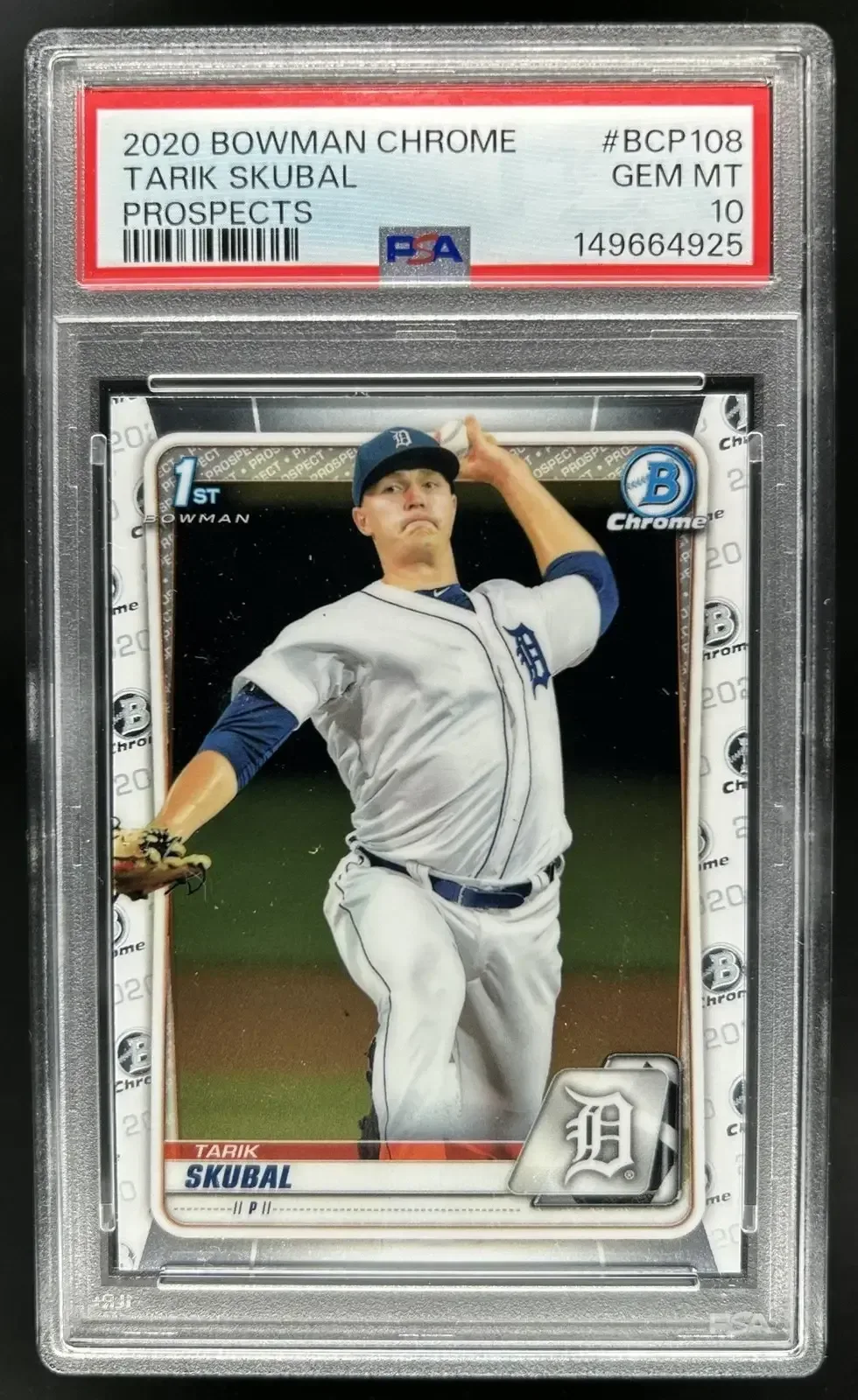
The highlighted issue is a 2020 Bowman Chrome Prospects card in gem-mint condition, available around $85. Bowman prospect cards occupy a distinct role in baseball collecting: they connect a player to an earlier stage of his professional-card arc. For collectors who value a player’s path before a more prominent major-league card, that can be part of the appeal. But it is important not to casually label every early Bowman card a rookie card. The card’s actual designation, set and player checklist placement should guide how it is described.
Gem mint refers to an exceptionally high condition level assigned on a grading scale. Unlike the ungraded Misiorowski and Schlittler examples, this $85 point is explicitly tied to a graded condition. That makes it an especially useful reminder that price comparisons must account for grading status. A raw 2020 Bowman Chrome Prospects Skubal card and a gem-mint graded copy are different collecting items, even when the pictured player and release name are otherwise the same.
Among these four, Skubal’s cited card is notable because the price is close to the Skenes X-Fractor despite pairing an early Bowman Chrome issue with gem-mint condition and a pitcher who has already accumulated consecutive Cy Young Awards. “Bargain” remains a subjective label, but the contrast highlights why collectors should compare exact versions rather than relying on a player’s reputation alone.
Cam Schlittler: a breakout autograph with award stakes
Schlittler’s 2026 has turned him into one of the year’s breakout pitching stories. His 1.94 ERA sits just behind Misiorowski’s 1.86 among the numbers cited here, and he is expected to be among the American League Cy Young Award hopefuls. For a collector, that combination gives the card a very current narrative: strong performance now, award uncertainty still unresolved, and a signed rookie-year issue available as the postseason approaches.
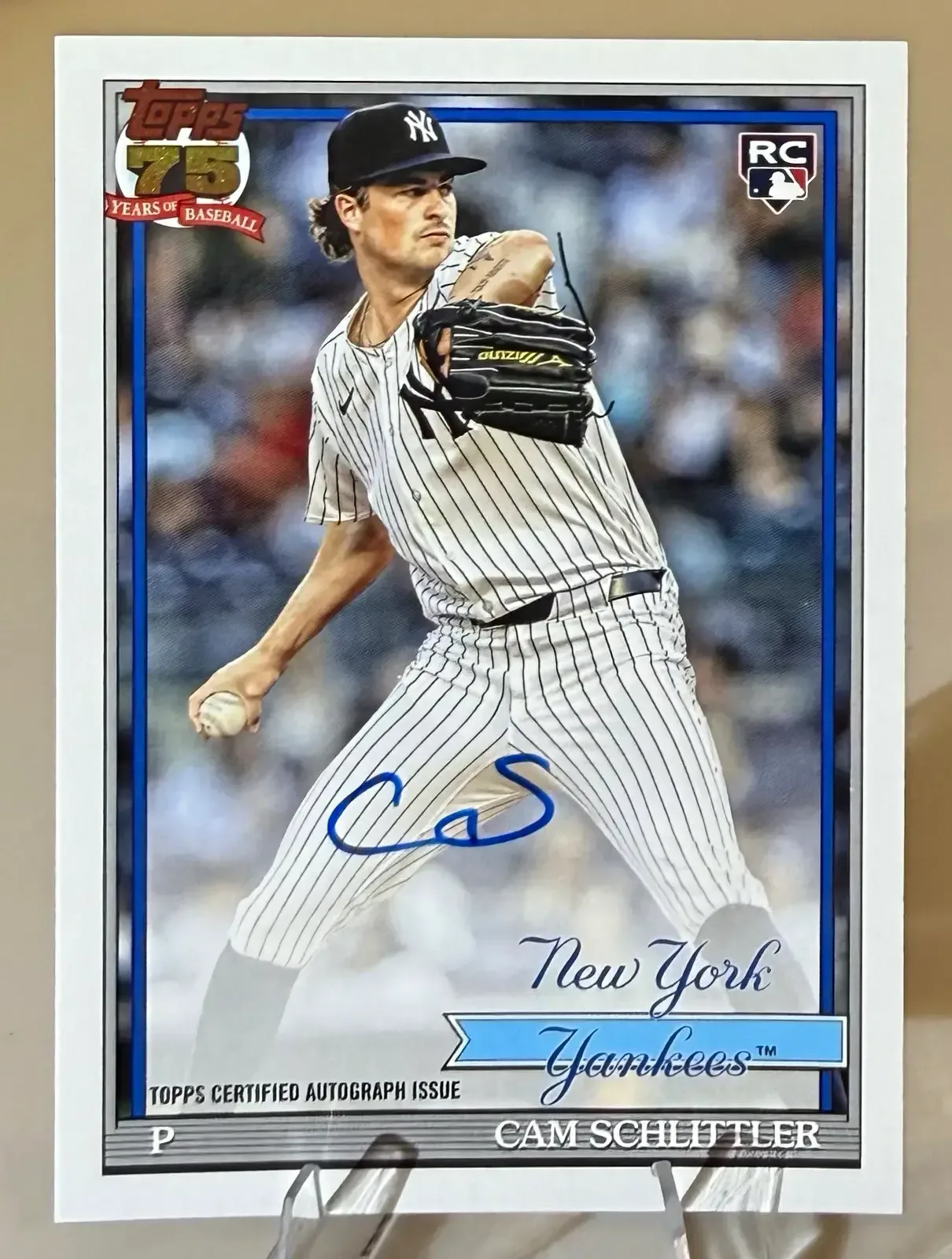
The specific card is a 2026 Topps Series One Autograph. A recent ungraded copy sold for $265. This is a comparatively direct product description: the major Topps Series One release, plus an autograph. As with Misiorowski’s sale, the ungraded status is not a footnote. Centering, corners, edges, surface condition, signature quality and authentication can all matter when collectors assess individual copies.
The $265 result places Schlittler below Misiorowski’s $380 Bowman Chrome Sterling autograph but above the two cited non-autograph or early-card examples. That ordering fits the cards’ different attributes without proving a strict ranking of the pitchers themselves. Misiorowski’s card has an on-card signature and strong Bowman Chrome Sterling presentation; Schlittler’s card carries a breakout season and a 2026 Topps Series One autograph; Skenes offers a lower-priced X-Fractor tied to a former Cy Young winner; Skubal supplies a gem-mint early Bowman Chrome prospect card linked to consecutive Cy Youngs.
How to use these sale examples responsibly
The central lesson is to decide what kind of collecting story matters most before chasing a card. These four examples cover four different motivations:
- Misiorowski: a high-end rookie autograph attached to elite velocity and a 1.86 ERA.
- Skenes: a lower-priced Chrome parallel for collectors comfortable with a rebound thesis after an uneven 2026.
- Skubal: a graded early Bowman Chrome prospect card supported by consecutive Cy Young Awards and a move to the Dodgers.
- Schlittler: a 2026 autograph that tracks a breakout 1.94-ERA campaign and American League Cy Young contention.
Before buying, confirm the full card name, year, product, parallel or autograph format, grade if applicable, and whether the comparable sale was graded or raw. Those checks are more useful than treating a single completed sale as a price guide. Pitching performance can elevate interest quickly, especially in October, but it also changes rapidly. For collectors, the more durable decision is often the card that best matches their preferred balance of player accomplishment, card design, condition and budget.