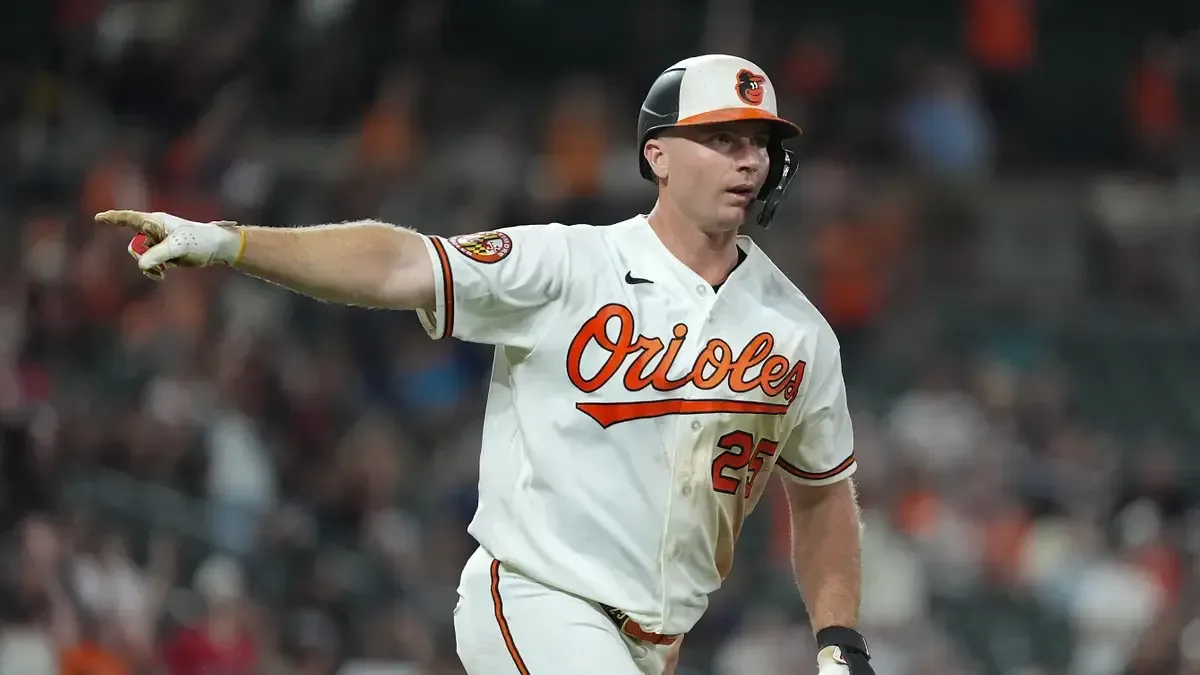
Baseball’s awards may not yet be official, but the trading-card market is already behaving as though it has read ahead in the scorebook. With the 2026 regular season in its final week, Pete Crow-Armstrong and Yordan Alvarez are projected as the respective MVP winners, Jacob Misiorowski and Dylan Cease are projected Cy Young recipients, and Sal Stewart and Kevin McGonigle are the leading Rookie of the Year projections.
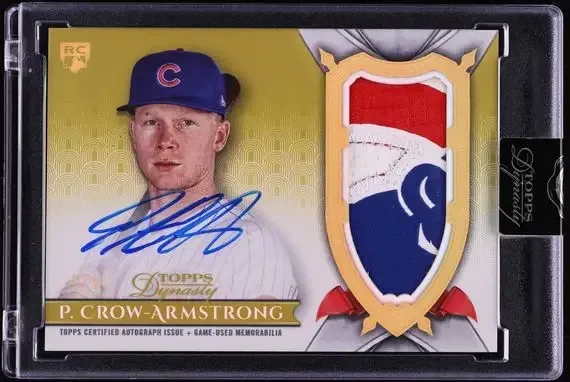
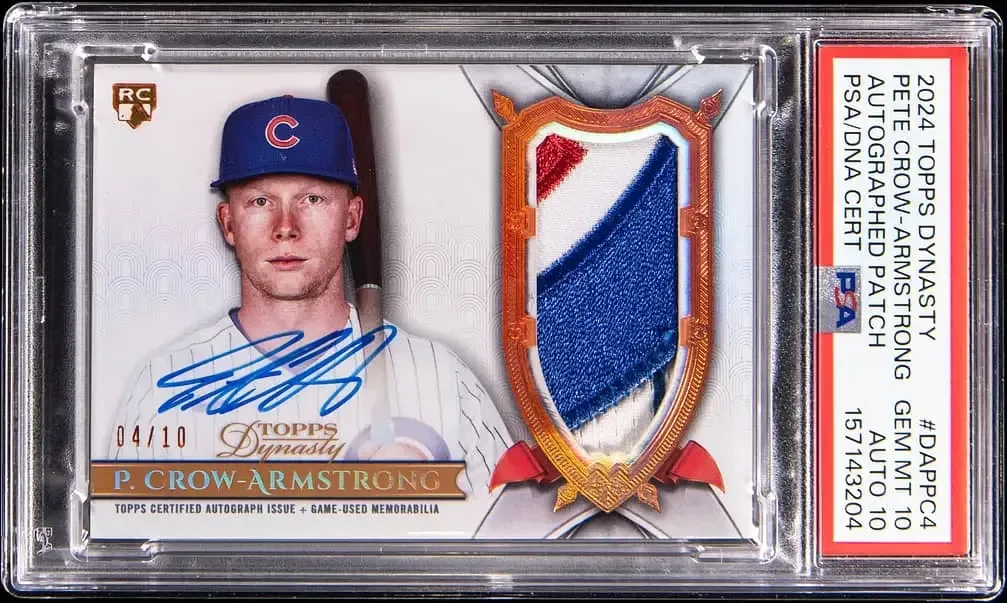
Those expectations are showing up in high-end sales. The strongest individual result in this group belongs to Crow-Armstrong: a 2024 Topps Dynasty Rookie Patch Autograph 1/1 sold for $66,000 on August 28. Misiorowski’s 2026 Bowman Anime Superfractor reached $45,600 in June, while McGonigle’s 2025 Bowman Chrome Red Refractor Autograph numbered to five sold for $48,000 in April.
There is an important qualifier, however. A handful of exceptional sales does not establish the value of every card carrying a player’s name. These are scarce, premium examples with details such as a one-of-one serial number, autograph, patch, rookie designation, prospect status or third-party grade. The records are useful snapshots of where high-end demand has landed during the season—not universal price guides for base cards, ungraded copies, or even other parallels from the same release.
The top 2026 sales for the projected award group
Pete Crow-Armstrong: $66,000
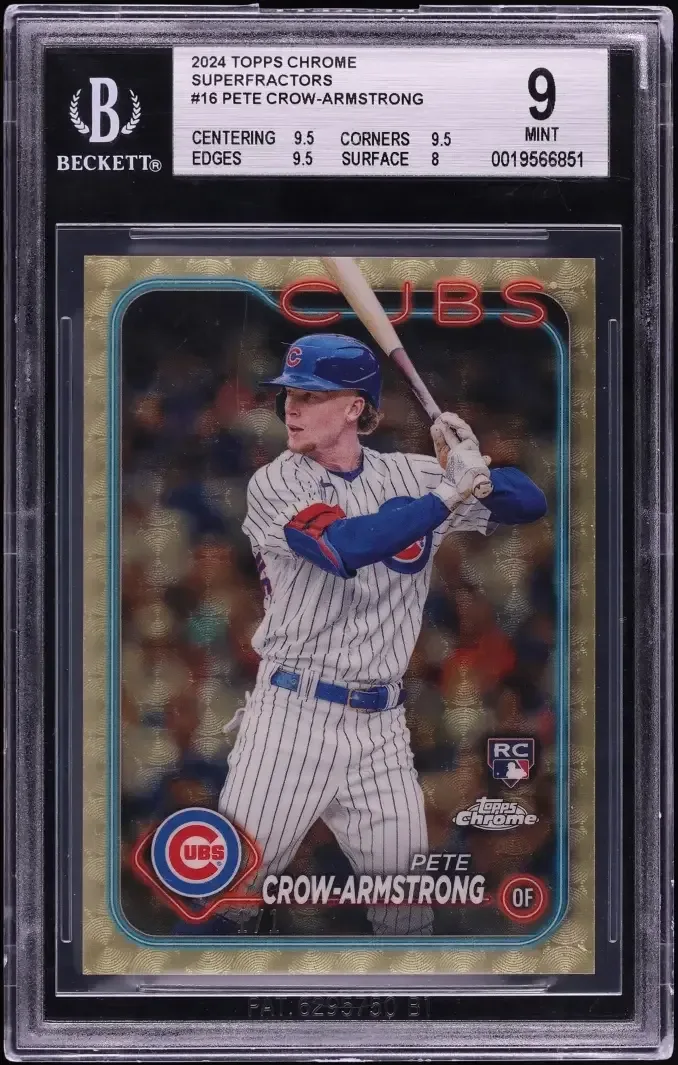
The projected MVP’s top reported sale was the 2024 Topps Dynasty Rookie Patch Autograph 1/1 at $66,000 on August 28. Dynasty is represented twice among his three biggest results: a 2024 Topps Dynasty Rookie Patch Autograph numbered to 10, graded PSA 10 with a 10 autograph grade, sold for $40,260 on September 10.
Between those Dynasty cards sits a 2024 Topps Chrome Superfractor Rookie graded BGS 9, which brought $48,000 on September 6. That creates a clear three-card high-water mark: $66,000, $48,000 and $40,260. Each is either uniquely numbered or tied to an extremely limited production level, and the two patch-autograph cards add memorabilia and signature elements beyond a standard rookie card.
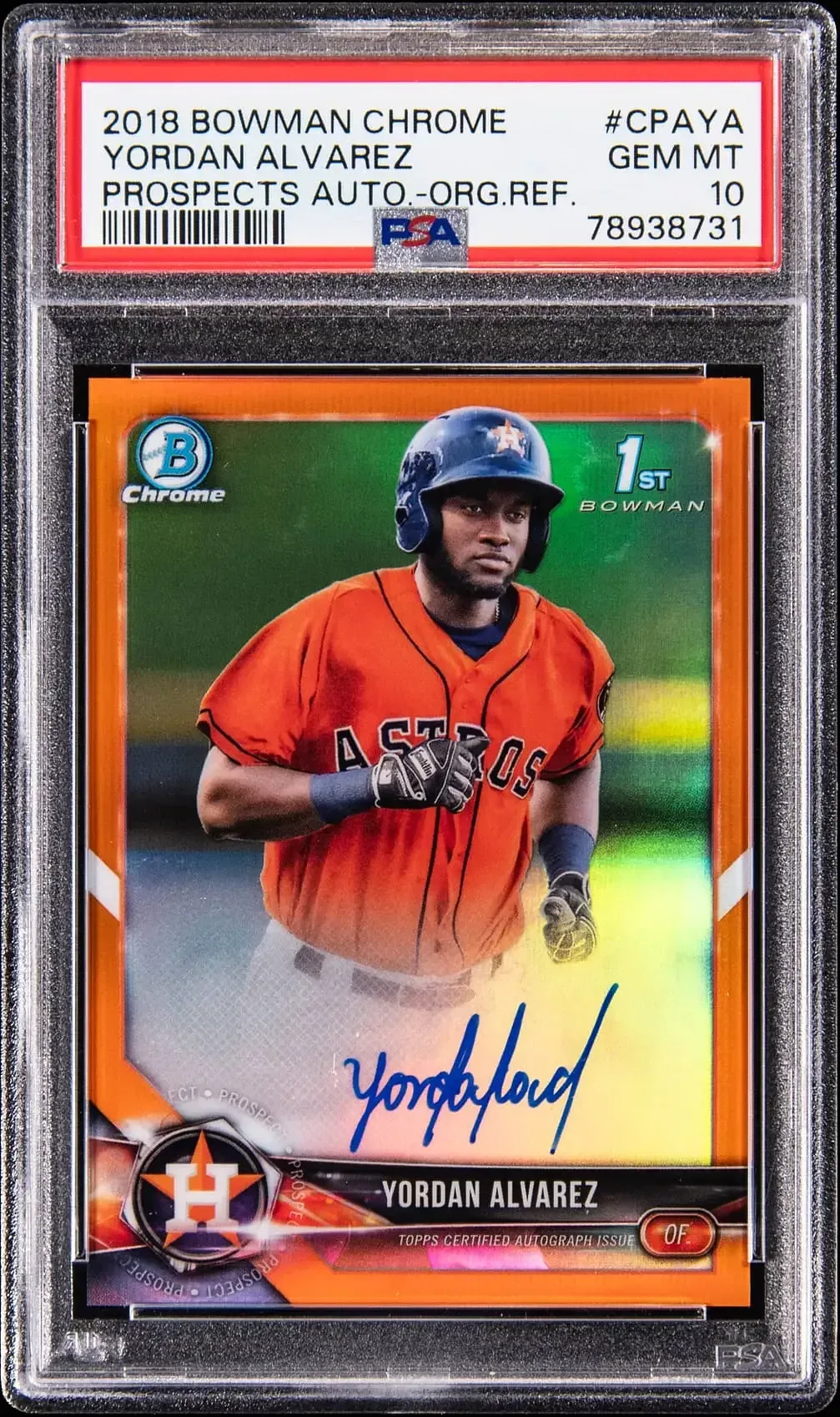
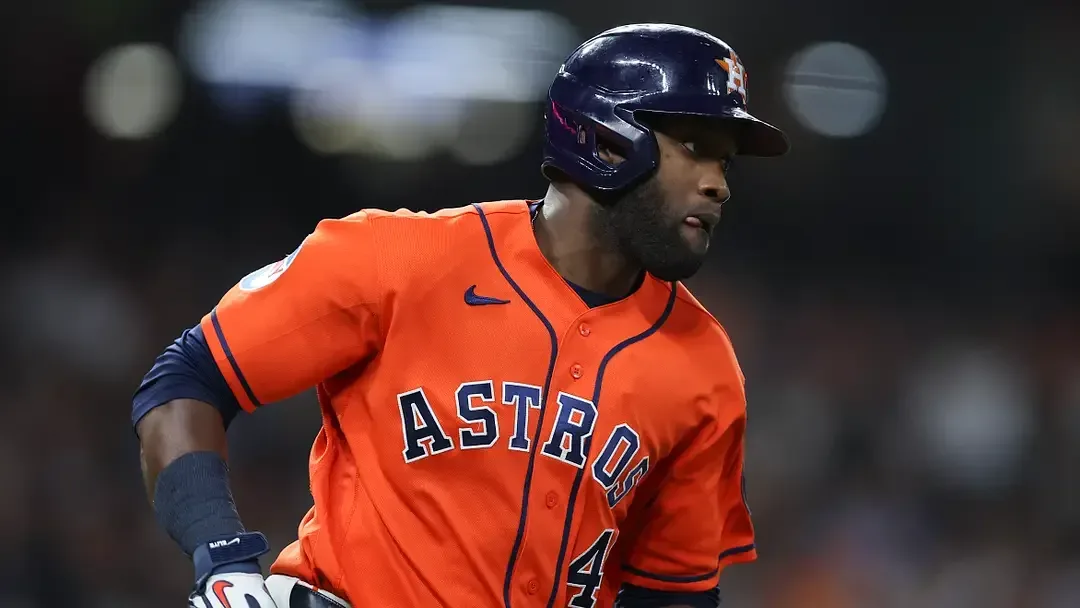
Yordan Alvarez: $17,690
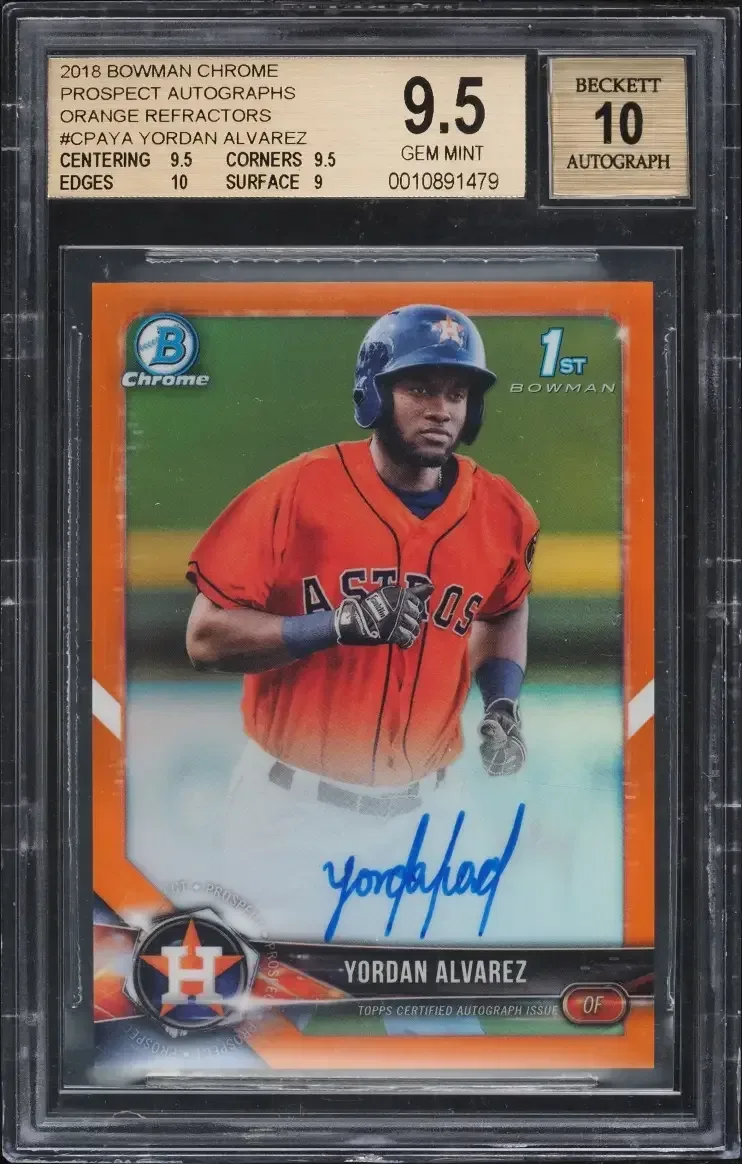
Alvarez’s best reported 2026 sale was a 2018 Bowman Chrome Orange Refractor Prospect Autograph numbered to 25, graded PSA 10, at $17,690 on June 6. A different graded copy of that same Orange Refractor Prospect Autograph—this one a BGS 9.5—sold for $12,600 on May 17.
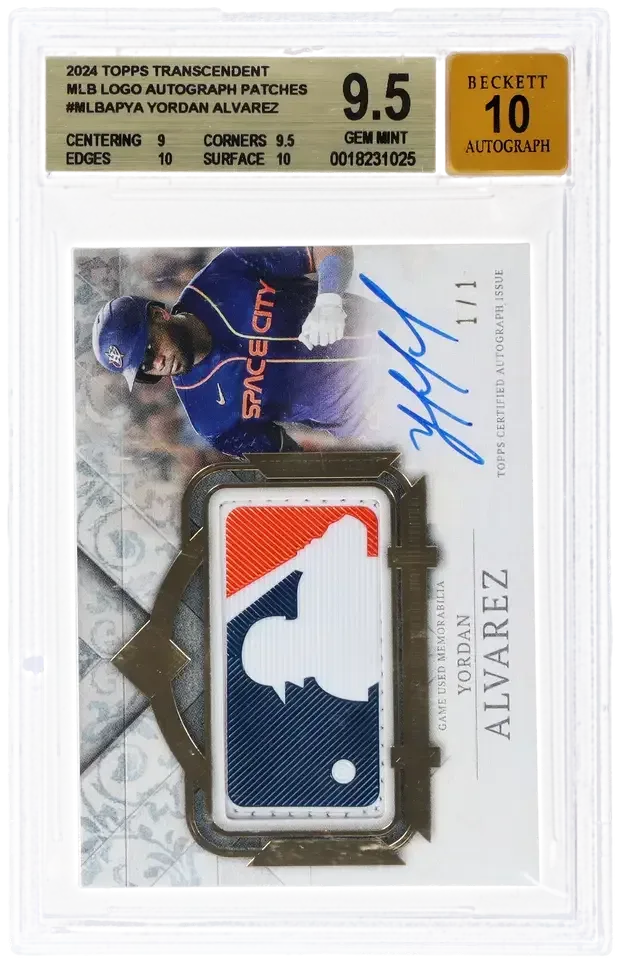
His second-highest result was remarkably close to the latter figure. A 2024 Topps Transcendent MLB Logo Autograph Patch 1/1, graded BGS 9.5 with a 10 autograph grade, sold for $12,610.80 on August 6. The comparison is a reminder that “1/1” is a powerful scarcity label, but it is not the only variable collectors weigh. Player stage, set identity, autograph status, condition and buyer preference can all matter when two high-end cards are competing for attention.
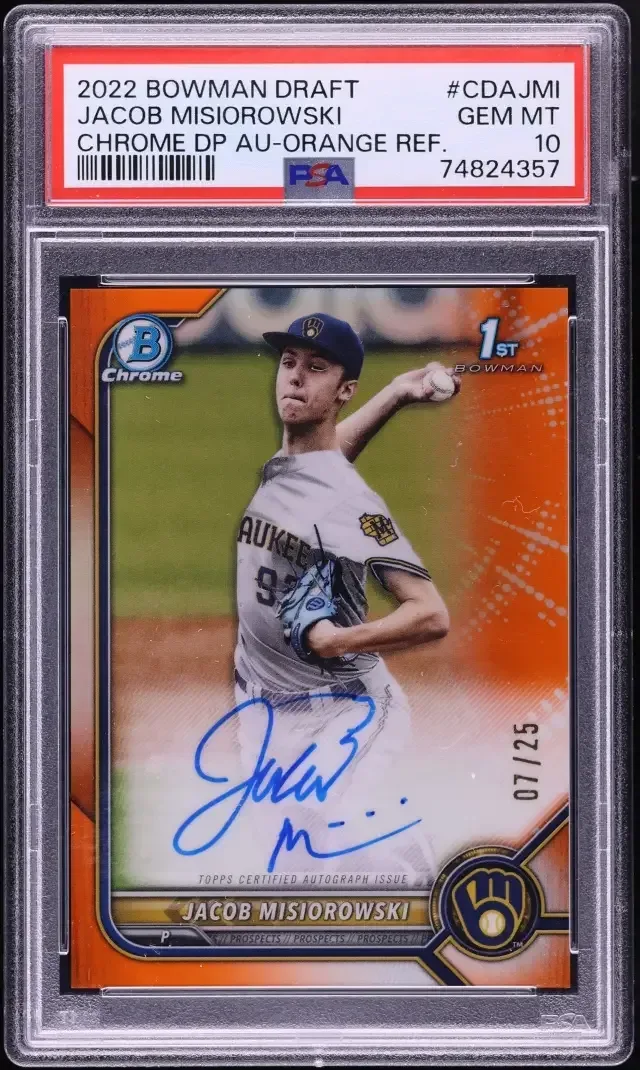
Jacob Misiorowski: $45,600
Misiorowski’s leading sale was a 2026 Bowman Anime Superfractor for $45,600 on June 19. His next two reported season highs were nearly identical: a 2026 Topps Chrome Black Superfractor Autograph, graded PSA 9, sold for $30,400 on September 13, while a 2022 Bowman Chrome Draft Superfractor Autograph 1/1 graded PSA 10 sold for $30,000 on May 3.
Related coverage includes Projected 2026 MLB Award Winners and Their Biggest Card Sales.
The shape of those results is notable even without trying to predict what happens after awards voting. A current-year card topped the group, but collectors also placed major value on a 2022 Bowman Chrome Draft issue. For prospect and rookie markets, that tension is familiar: newer releases can capture the immediate moment, while earlier Bowman cards can appeal to collectors looking for a player’s pre-major-league card lineage.
Dylan Cease: $1,159
Cease’s reported top sale is dramatically lower than the rest of the projected award field: a 2016 Bowman Chrome Draft Superfractor graded BGS 9.5 sold for $1,159 on August 7. Two cards tied behind it at $1,000: a 2020 Topps Archives Corn Field of Dreams Autograph 1/1 on September 19, and a 2020 Bowman’s Best Superfractor Autograph on March 25.
The contrast is worth treating as market context rather than a verdict on the pitcher or the award race. His listed sales still involve scarce and autograph-driven cards, including one-of-ones. Yet the price gap shows that an expected Cy Young outcome does not automatically translate into the same card-market ceiling as an MVP candidate, a breakout rookie, or a prospect whose cards have attracted intense speculation.
Sal Stewart: $20,000
Stewart has two reported co-leaders at $20,000. A 2026 Topps Chrome Superfractor Autograph reached that figure on August 20, and a 2022 Bowman Draft Superfractor graded PSA 8 sold for the same amount on April 15. Third was a 2026 Topps Chrome Sapphire Padparadscha 1/1 Autograph at $15,100 on September 12.
Stewart’s results underline why collectors should look past the grade alone. The $20,000 Bowman Draft Superfractor carried a PSA 8, a grade below the gem-mint labels that often dominate hobby headlines. But it was still a uniquely scarce early Bowman card. At the highest end of a player market, the precise card, its issue and its scarcity can be at least as central to a buyer’s decision as a numerical grade.
Kevin McGonigle: $48,000
McGonigle’s reported high is a 2025 Bowman Chrome Red Refractor Autograph numbered to five, graded PSA 10, which sold for $48,000 on April 30. Another PSA 10 copy of the same Red Refractor Autograph /5 sold for $34,200 on May 22. On that same date, a 2025 Bowman Chrome Sapphire Padparadscha Prospect Autograph 1/1 graded BGS 9.5 brought $34,500.
That is a useful miniature of why sales data should be read as a sequence rather than a single immutable price. Two copies of the same card and grade can sell at materially different amounts, even within weeks. The available results do not identify why those bids differed, so it would be speculation to assign one cause. The practical point is simpler: the latest comparable sale is evidence, not a guaranteed checkout price for the next copy.
What the card terms mean
Superfractor generally refers to a card positioned at the top of a parallel hierarchy and commonly presented as a one-of-one. Refractor describes a parallel treatment used in products such as Bowman Chrome and Topps Chrome; an Orange Refractor /25 has a stated run of 25, while McGonigle’s Red Refractor /5 is limited to five.
Rookie Patch Autograph, often shortened to RPA, combines a rookie-card designation, a piece of memorabilia material and an autograph. That combination explains why the Crow-Armstrong Dynasty examples stand apart from ordinary rookie issues. Prospect autograph cards, meanwhile, are cards from a player’s earlier collecting cycle, before or around the path to an established major-league résumé.
PSA and BGS are third-party grading labels attached to several cards in the reported sales. A card grade assesses the physical example submitted for review; an autograph grade, where listed, separately assesses the signature. Those labels are part of the specific item that sold. They should not be assumed to transfer to an ungraded copy, or to a different graded example of the same card.
Has the market already priced in the awards?
It is plausible that projected honors are already part of bidding decisions, particularly with the regular season nearly complete and the candidates described as having little remaining drama around them. But the supplied sales alone cannot prove that an award result is fully “priced in,” nor can they show whether the market will rise, flatten or retreat after the awards are announced.
For collectors, the sensible takeaway is to separate the sports narrative from the card itself. An award can increase attention, but scarcity is not interchangeable across products. A one-of-one patch autograph, a PSA 10 prospect parallel numbered to five and an ungraded base rookie each occupy very different parts of a player’s market. Check the exact year, product, serial number, autograph or memorabilia designation, grade and sale date before using any headline sale as a comparable.
That same discipline is useful across the broader hobby, whether the release in question is baseball or another trading-card game; see our coverage of the cancelled Magic: The Gathering Star Trek Beginner Box for an example of how product news can change the collecting conversation without automatically determining individual-item value.
For now, the six projected award winners offer a sharply varied set of high-end benchmarks. Crow-Armstrong leads the group at $66,000, followed by McGonigle at $48,000 and Misiorowski at $45,600. Alvarez’s peak sits at $17,690, Stewart’s at $20,000, and Cease’s at $1,159. The awards may add a new chapter, but these sales show that the market had already begun assigning very different premiums to each player’s rarest cards.