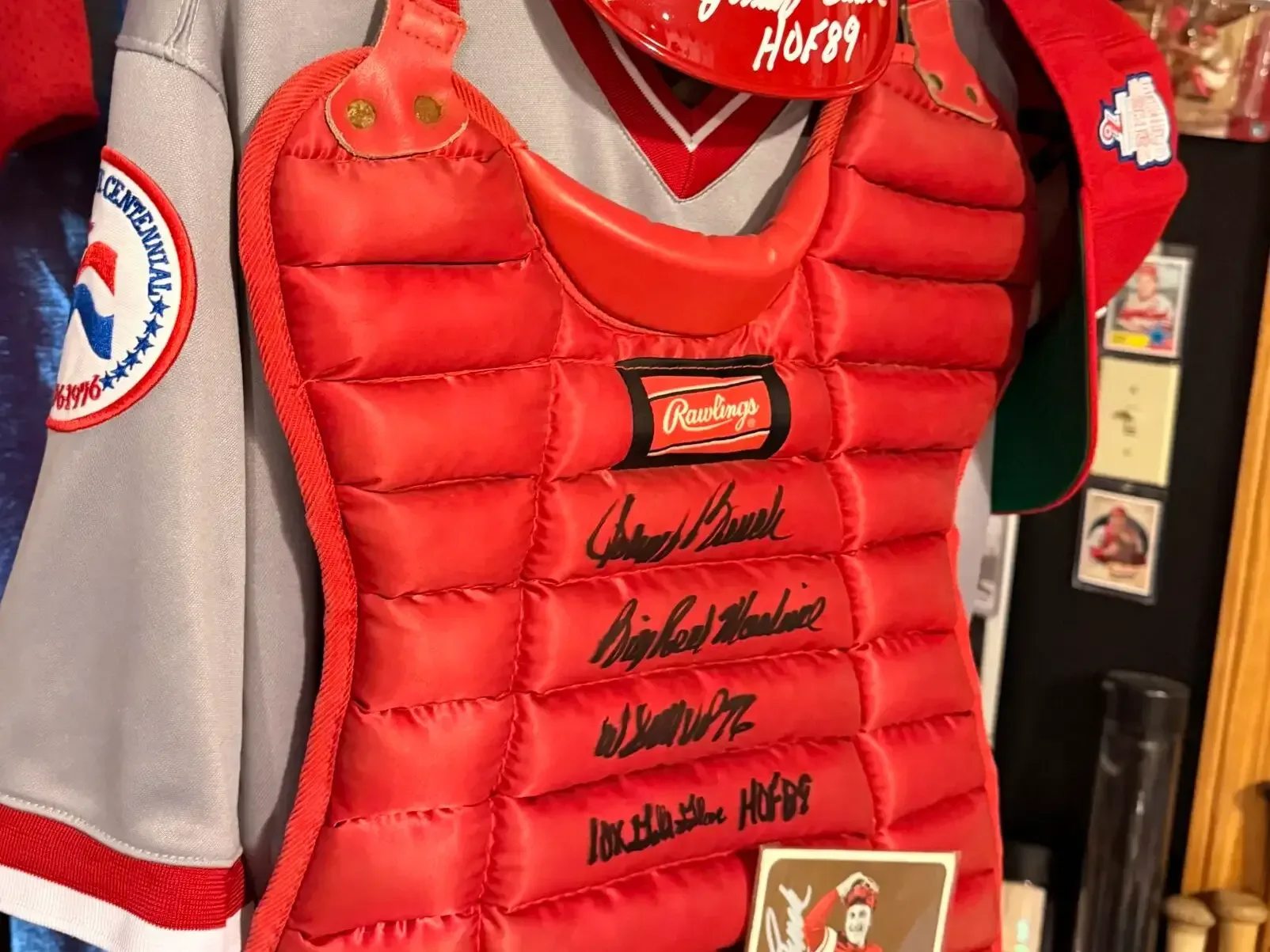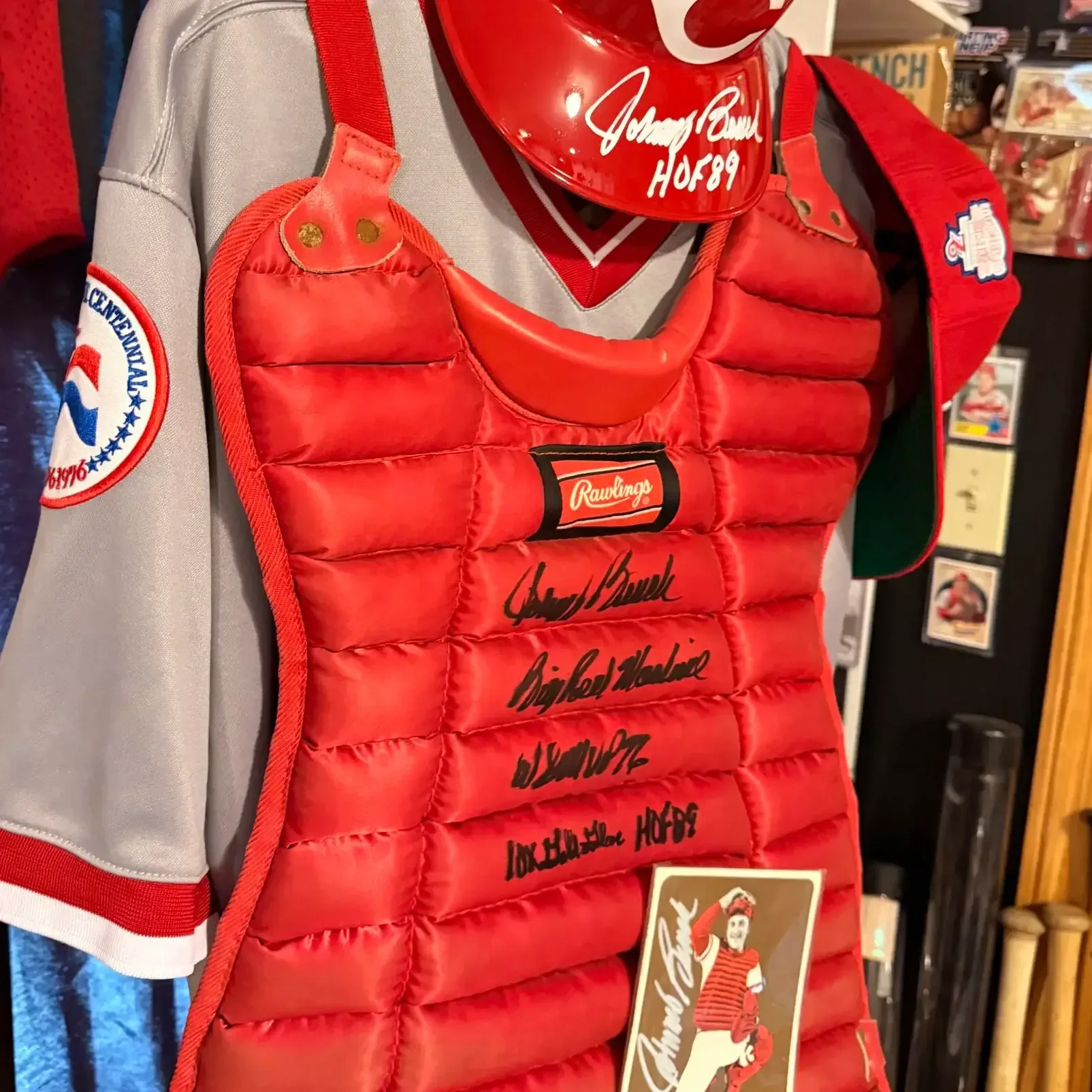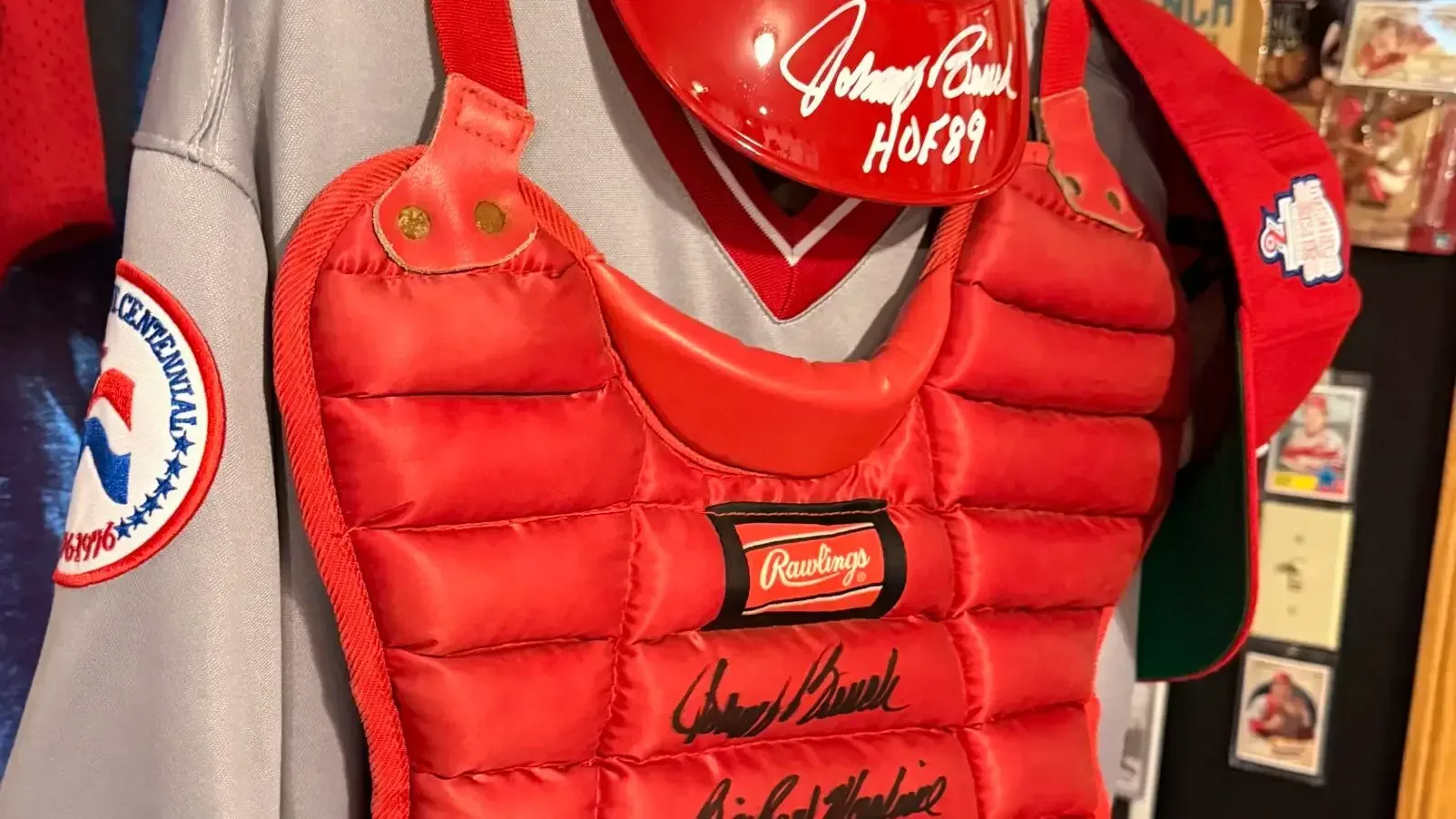
Some collections begin with a checklist. Others begin with a single moment that refuses to fade: a home run that silences an older sibling, a signed pennant handed over at a first ballgame, or a photo obtained in person and kept for decades. The Johnny Bench collections assembled by Ohio pastor Ted Rich and New York-based retired beauty editor Debbie Ward belong emphatically to the second category.
Both collectors built around one of baseball’s most decorated catchers, but neither treats the hobby as a narrow pursuit of cards alone. Their shelves, frames and boxes encompass autographs, photographs, bats, books, equipment, souvenirs and team-related material from the Cincinnati Reds’ Big Red Machine era. The shared subject is Bench; the real connective tissue is memory.
That is why their collections offer a useful snapshot of what player collecting can be at its best. A baseball card can be the starting point, a signature can be a direct link to a public figure, and a game-used object can be a major goal. But the personal history attached to an item often supplies the meaning that a catalogue entry cannot.
Why Johnny Bench remains such a powerful collecting focus
Bench’s career record provides a straightforward explanation for the lasting interest. He finished with a .267 batting average, 2,048 hits, 369 home runs and 1,376 RBI. His honors included 14 All-Star selections, two MVP awards, the National League Rookie of the Year award, 10 Gold Gloves and the 1976 World Series MVP.
His legacy is also visible in the way Cincinnati has commemorated him: his number has been retired by the Reds, he is represented in the Reds Hall of Fame and the Baseball Hall of Fame, and he has a statue outside Great American Ball Park. He was additionally named to MLB’s All-Century and All-Time teams.
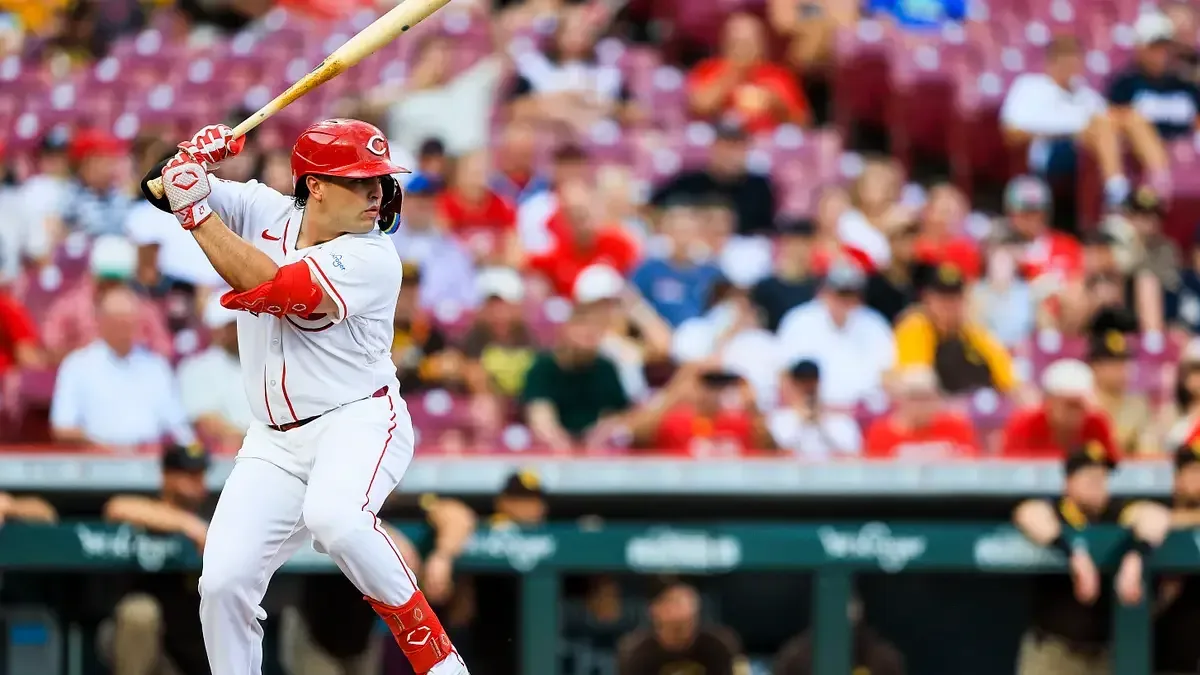
For collectors, though, Bench cannot be separated from the club around him. The Reds teams commonly known as the Big Red Machine included Pete Rose, Joe Morgan, Tony Perez, George Foster, Dave Concepcion and Ken Griffey Sr., with Sparky Anderson managing. Cincinnati reached four World Series during the 1970s and won two. Bench is therefore a natural focal point for a collection that can expand outward into a whole team, a championship era and the experience of following baseball through radio broadcasts, stadium trips and newspaper coverage.
That broader context is important. A player-focused collection need not be limited to the player’s own cards. Team scorebooks, signed equipment, commemorative items and period ephemera can all help document why a career mattered to a particular fan. The result is less like a standardized set registry and more like a personal archive.
Two routes into the same fandom
Rich traces his Reds and Bench allegiance to 1970, when he was 3 years old. While watching a Reds-Cubs game with his Cubs-supporting brother, Rich saw the Reds’ No. 5 hit a home run as Cincinnati came back to win. The immediate family drama helped seal the attachment. He went on to watch games at Riverfront Stadium and on television, and to listen to broadcasts on WLW with a transistor radio tucked under his pillow.
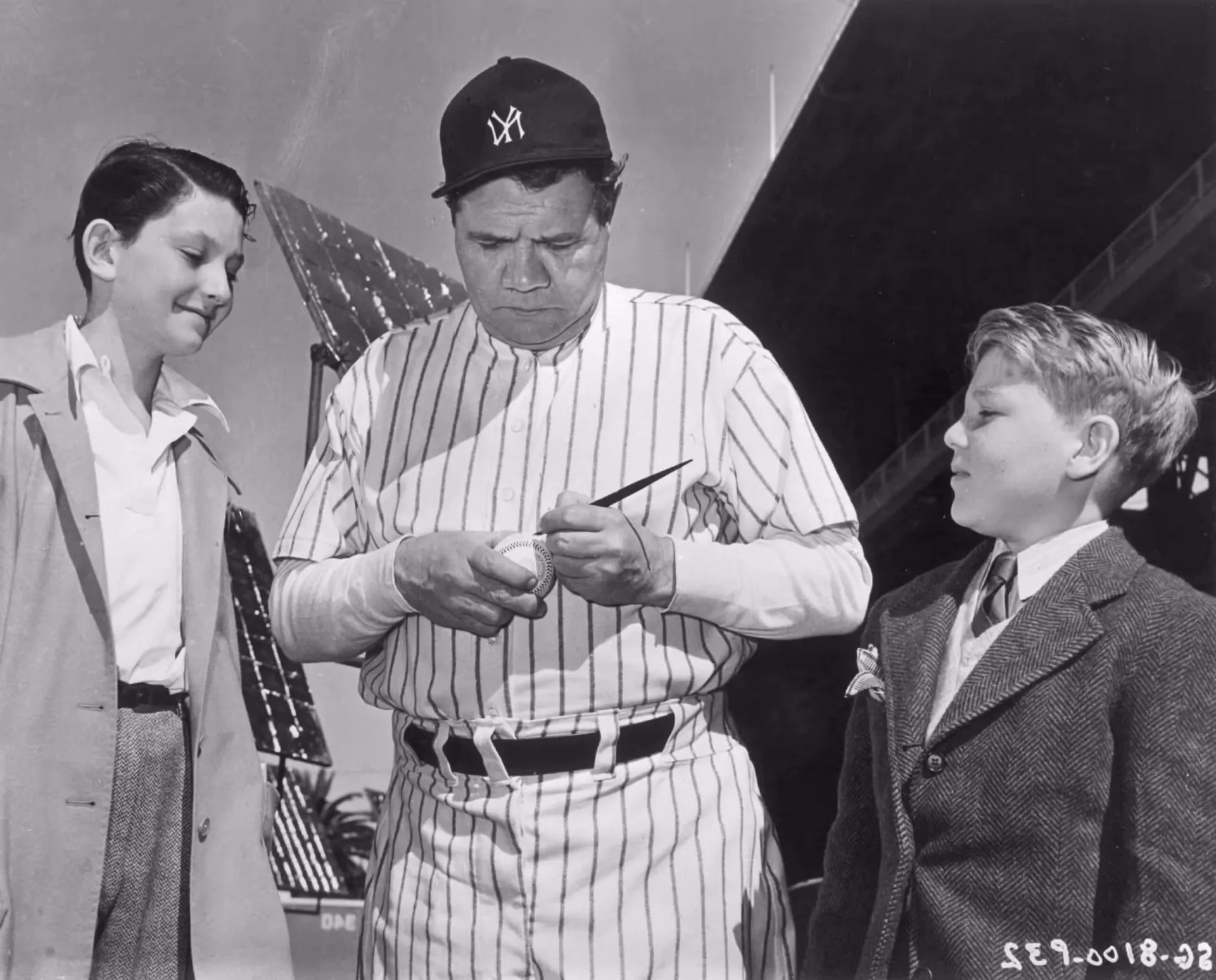
Ward’s introduction was just as specific, if very different. At her first baseball game at Shea Stadium in the summer of 1973, when she was 11, she spotted people talking with a couple seated nearby. They were Bench’s parents. Encouraged by her father, Ward took her Cincinnati Reds pennant to Ted Bench, who signed it. She became a Reds supporter that day.
Those origin stories explain why neither collection is merely a run of products. Rich eventually met Bench and his parents several times, while Ward met Bench at Shea Stadium on August 28, 1981. She attended Reds games at Shea as an adult, was present when the Mets honored Bench during his final season as a player, attended Johnny Bench Night at Riverfront Stadium on September 17, 1983, and later went to his Baseball Hall of Fame induction ceremony with her mother.
In collecting terms, provenance means an item’s documented history of ownership or origin. Neither collector’s stories should be mistaken for a universal substitute for formal documentation. Yet they do illustrate why direct personal knowledge matters emotionally: when a fan remembers receiving an autograph or being present for an interaction, the object carries a record that is inseparable from that fan’s life.
Cards form a foundation, not a boundary
Ward started by gathering photographs in the 1970s and 1980s, including two that Bench signed for her at Shea. She also used mail order to find a Topps card from every year Bench played, then added children’s books and further items found through card shows in New York City.
That approach speaks to the enduring appeal of a complete player run. Instead of chasing only a single standout card, Ward pursued a card representing every season of Bench’s playing career. The objective is clear, finite and tied directly to a career narrative. Each addition marks another year, while the full group provides a chronological view of a player’s time in the game.
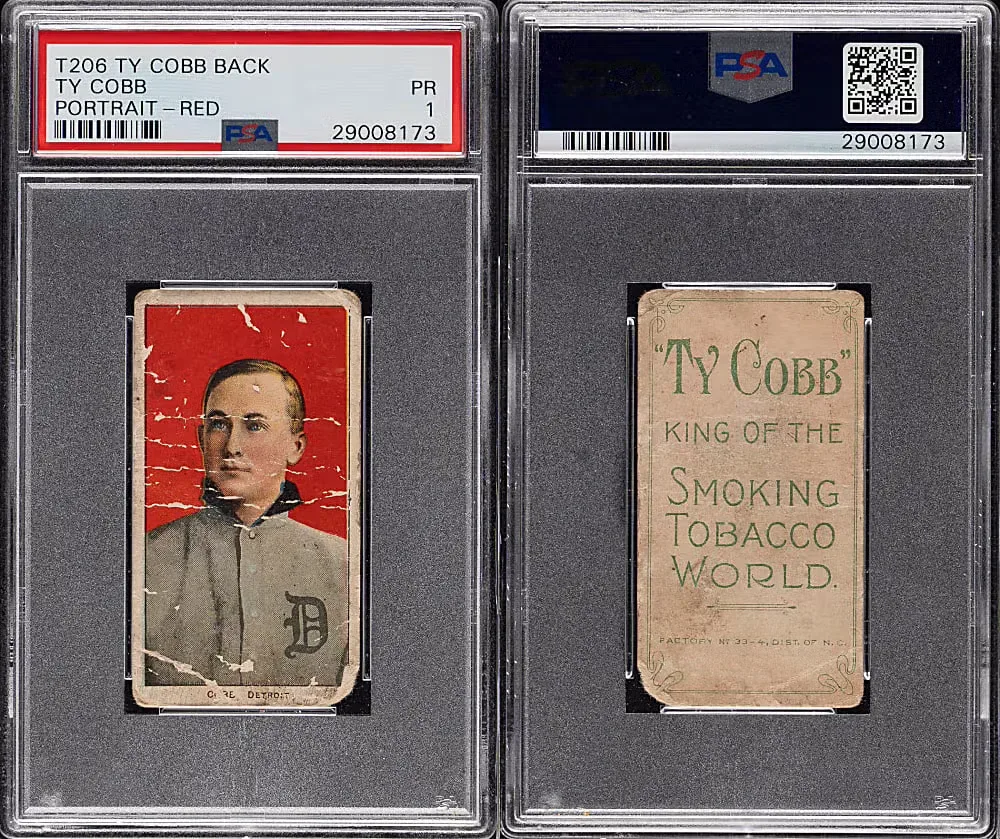
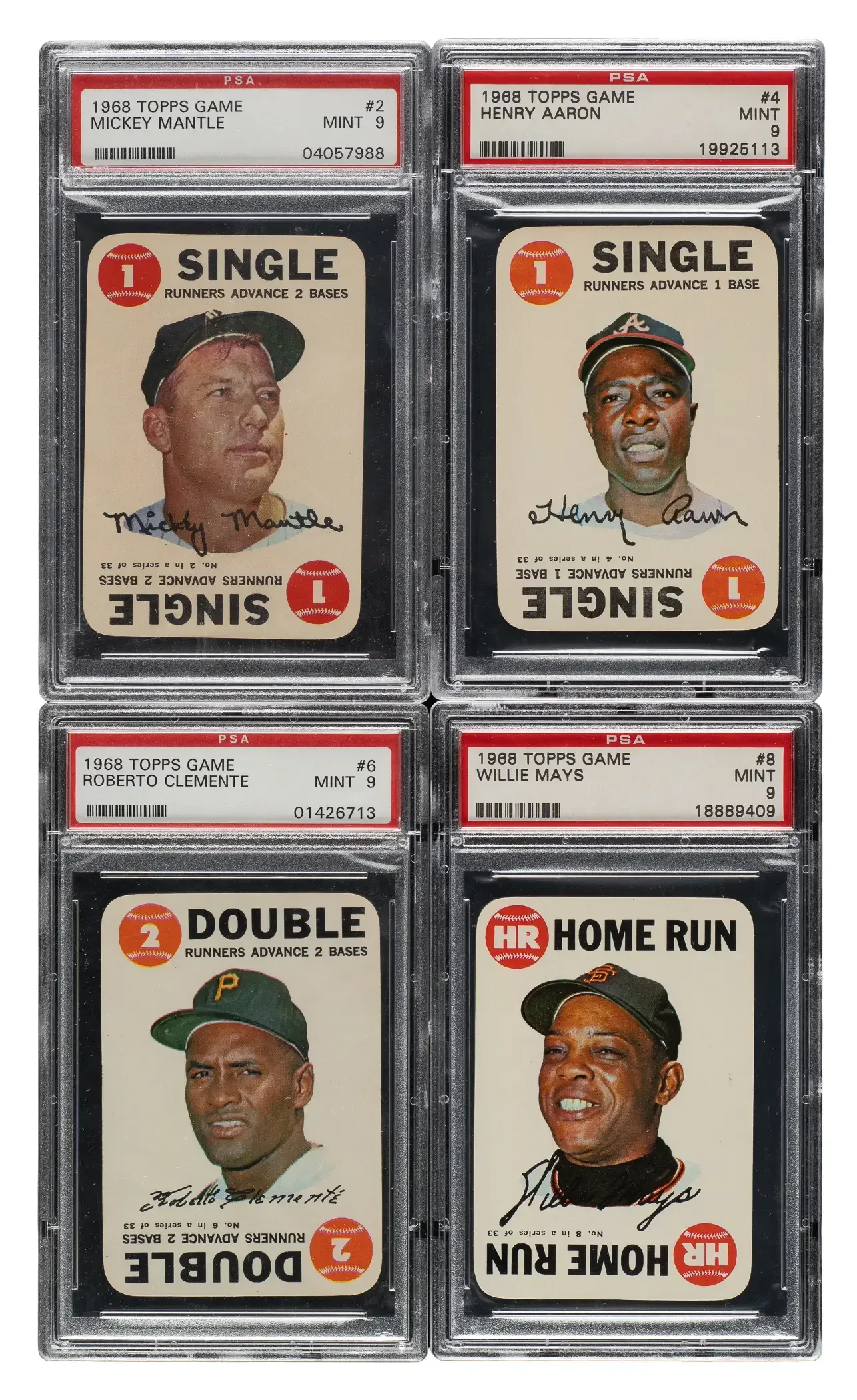
Rich’s early collecting was broader. He had classic cards of stars including Mickey Mantle, Willie Mays and Hank Aaron, along with players from the 1960s through the 1980s. He ultimately concentrated on Bench and the Big Red Machine. His current collection includes hundreds of autographs across cards, jerseys, gloves, photographs, scorebooks, hats, helmets and catcher’s equipment. Rich estimates that he has nearly 555 items signed by Bench alone.
His favorite pieces include signed 1976 baseball cards, including a particular Bench card he calls his all-time favorite. He also prizes a black 1976 World Series team bat won as a boy at the Reds 580 Shop and later signed by Bench, plus a 1976 game-issue bat signed in red with inscriptions.
The contrast between the two collections is instructive. Ward’s year-by-year Topps pursuit gives her collection a card-centered spine. Rich’s signed material gives his a dense autograph-centered identity. Both approaches remain coherent because the collector has identified a subject and allowed their own experiences to determine the scope.
Autographs, authentication and the gap between them
Autographs sit at the center of both stories, but they also introduce a distinction collectors should keep clear. An autograph is a signature. Authentication is the process of determining whether that signature, or the item itself, is genuine. Grading, meanwhile, is a separate assessment process often associated with condition and presentation. These terms can overlap in hobby conversations, but they are not interchangeable.
Rich is candid that many of his signed Bench items do not have formal authentication, citing the expense of certification and grading. He also says he was present when Bench signed much of the material, a firsthand connection that has great personal importance to him. His ultimate target is a guaranteed, certified and authenticated game-used glove, bat or piece of catcher’s equipment signed by Bench.
Ward’s wish is similarly focused: a game-used Bench catcher’s mitt. A game-used item is represented as equipment actually used in competition, not simply a retail or commemorative version. Because that claim adds a substantial layer to an object’s story, the supporting documentation can be especially important for a collector deciding what evidence they need before buying or trading.
Practical caution is not cynicism. It is simply a way to match an item’s claim with the proof available. That principle also applies beyond sports memorabilia; as explored in guidance on pricing untested retro games around missing proof, uncertainty should be recognized rather than priced as if it does not exist. For a signed or game-used baseball item, collectors can distinguish between what they know personally, what the seller represents and what is independently documented.
That does not diminish personal collections. In fact, Rich’s account makes the opposite point: an item personally received can be irreplaceable to its owner even if it lacks the kind of paperwork another buyer may want. The important practical distinction is between collecting for private meaning and assigning a market-facing claim during a sale or trade.
Collections can survive disruption and change direction
Rich’s collection also carries a difficult chapter. He survived a fire at Purdue University, rescuing his roommate before escaping from a third-story window, but lost more than half of his boyhood collection. As others learned of his situation, they gave him replacement items or traded with him, helping him rebuild with a tighter focus on Bench and the Big Red Machine.
It is a reminder that a collection is not static. Loss, available space, budget, friendships and changing priorities can alter its shape. A broad childhood assortment may become a player collection. A cards-only pursuit may widen into books, photographs and souvenirs. A duplicate can become a trading tool. Rich says he is open to trades involving doubles, another example of a collection being active rather than sealed behind glass.
Ward’s favorite items underscore the same point from a quieter angle. Her collection includes a Bench bobblehead gifted by friends for her 50th birthday, a Crush Cherry can given to her by a woman seated beside her at Bench’s Hall of Fame induction, a small decorative plate and a framed Bench poster sent by a relative in Cincinnati. These may not fit a conventional hierarchy of scarcity, but each has a clear relationship, event or act of generosity behind it.
Ward hopes eventually to donate her photographs and most of her collection to the Johnny Bench Museum in Binger, Oklahoma. Rich’s dream is more conversational: an uninterrupted afternoon spent talking baseball with the player he considers the greatest catcher of all time. One hope is about preserving objects for others; the other is about returning to the human connection that started the collecting journey in the first place.
For both, Johnny Bench memorabilia is not simply a way to own a piece of a celebrated career. It is a way to keep the sound, people and feeling of an era close at hand.