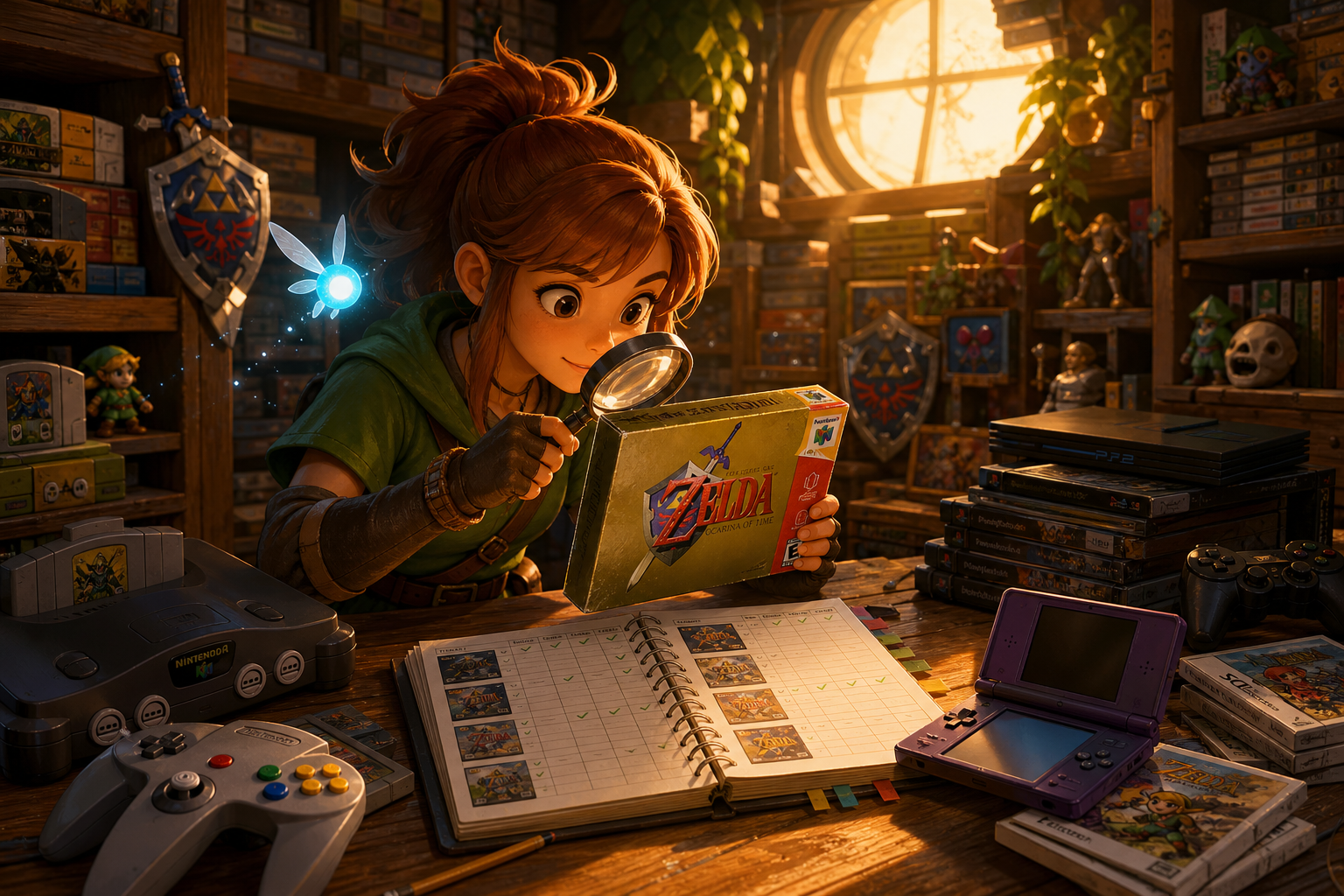
An untested listing should be treated as an unknown item, not as a working game with a small discount. The seller may lack the correct console, television, power supply or region-compatible hardware. They may also be using vague language to avoid describing a fault. Until the missing evidence is supplied, you do not know whether the game boots, loads consistently, saves correctly, matches the photographed item or is even the edition you want.
The right question is not “How cheap is this?” but “What would this purchase cost if the missing proof turns into a problem?” That calculation changes with your goal. A player who wants to start Shadow of the Colossus immediately needs strong functional evidence. A collector seeking a particular Nintendo 64 label variation may accept an untested cartridge, but should not pay as though its internal condition and authenticity were established. A buyer who already has qualified repair help can accept more uncertainty than someone who would have to replace every part of the testing setup.
This guide covers six examples across three different formats: Super Mario 64 and The Legend of Zelda: Ocarina of Time on Nintendo 64, Shadow of the Colossus and God of War on PlayStation 2, and Phoenix Wright: Ace Attorney and Final Fantasy III on Nintendo DS. The same decision framework applies to other cartridge, disc and game-card listings.
Define the risk before you compare listings
“Untested” establishes only that the seller has not provided usable functional evidence. It does not mean working, broken, nearly working or tested briefly. “Powers on” is also limited: it may describe a console rather than the game, and it does not prove recognition, stable loading, controls, audio, video or save retention. “Boots to title” is stronger, but still does not establish that a disc loads beyond its opening sequence or that a cartridge retains a save.
Separate four kinds of uncertainty. A seller may have a reasonable testing limitation, such as owning no Nintendo 64 or lacking a television. They may honestly know only that the game came from a stored collection. They may use careless marketplace wording. Or they may avoid a direct answer while making an optimistic claim such as “works perfectly.” The last situation deserves more caution because the evidence gap is not being explained clearly.
The platform’s condition label matters, but it is not a substitute for inspecting the actual listing. eBay describes a used item as fully operational and functioning as intended, while “for parts or not working” covers an item that is not fully operational, needs service or repair, or lacks essential components. A listing that says “used” while also saying “untested” deserves clarification rather than an automatic assumption that it has been tested. A listing explicitly sold as not working should be evaluated as a repair or parts purchase, not quietly upgraded to “probably functional.”
Decide which buyer you are before opening a calculator. A player should prioritize reliable operation and a usable return route. A condition-focused collector should prioritize exact edition, region, label, case and included materials. A repair-minded buyer can consider a nonworking item, but only when the cost and risk are deliberately limited. Do not let the title’s desirability make those categories blur together.
- Write down your intended hardware before shopping: Nintendo 64, PlayStation 2 model, Nintendo DS family system or another compatible device.
- Classify the listing as tested, partially tested, untested, explicitly nonworking or unknown. Do not upgrade “untested” based on a clean photo.
- Set a maximum checkout total before making an offer, including a possible failed item.
- Decide whether your acceptable outcome is a playable game, a collectible example, a repair project or a source of parts.
Use an evidence ladder, not a single promising photo
Evidence has levels. The weakest level is a stock image or a cropped photograph that shows only a title. A current photograph of the exact cartridge, disc or DS card can establish identity and visible condition, but not function. A seller’s description of a dated test on identified hardware is better. A current video that credibly links the exact item to the console screen is stronger still. Evidence of recognition, loading, controls and saving gives a more useful picture than a title screen alone.
A screenshot can show that some system displayed something at some time. It cannot prove that the pictured software produced it unless the item is credibly linked to the screen. Even a linked boot image does not prove long-term reliability. A game may boot once and fail during later loading, lose a save, freeze after warming up or work only with one console.
For a cartridge, the evidence ladder should progress from visible identity to repeated recognition and save verification. For a disc, it should progress from matching disc photographs to successful loading beyond the opening sequence and evidence of stable play. For a DS card, it should progress from card identity and menu recognition to game loading, touch input where relevant and save creation and loading.
Treat packaging evidence separately. An original-looking case, manual, seal or label may improve collector appeal, but it does not prove that the enclosed software is genuine, complete or functional. A screw type, board photograph or intact seal can contribute to an assessment, but none authenticates every copy by itself. When the evidence remains inconclusive, describe the item as uncertain and consider qualified specialist help rather than making a confident determination.
- Prefer photographs of the actual item, including front, back, edges, contacts or data surface, case contents and visible damage.
- Ask whether any boot image shows the exact item being sold, rather than assuming a generic title screen is proof.
- Record which facts are observed, which are seller claims and which remain unknown.
- Give more weight to specific test conditions than to labels such as “mint,” “clean” or “untested.”

Inspect the listing before contacting the seller
Start with the condition field, title, description and photographs together. Marketplace rules generally expect sellers to describe defects and show the actual used or flawed item, but rules do not make every listing accurate. Contradictions are therefore useful warning signs. A listing that combines “untested,” “works perfectly” and “no returns” has not answered the central question; it has created several competing claims.
Look for stock art, identical photographs across several listings, a missing back view, a deliberately cropped label or a disc hidden in a closed case. A seller may have a legitimate reason not to open a sealed-looking package, but you should not treat the absence of an inspection photo as positive evidence. Check whether the region, edition and included materials match the listing title. “Complete” can mean different things unless the seller identifies the case, manual, inserts and original disc or cartridge.
Visible wear should be recorded precisely. Scratches, cracks, corrosion, residue, staining, label lifting, shell gaps, stripped screws and warped packaging are observations. They are not automatic proof of failure or counterfeit status. Conversely, a clean exterior cannot clear an unverified connector, board, optical data layer or save function.
A listing photograph can support identity and visible-condition observations, but it cannot establish that the software boots. It also cannot prove that the item shown in a title-screen image is the item being sold unless the seller provides a credible link between the item and the test.
- Compare the condition field with the description. Save a copy of the listing and photographs before buying.
- Confirm that the photographed item is the item shipped, especially in multi-item or repeated-inventory listings.
- Ask for missing views rather than inferring that an unseen surface is undamaged.
- Treat a contradiction such as “untested” plus “works perfectly” as unresolved, not as a favorable combination.
- Check the stated region against the console and software format you intend to use.
Nintendo 64 cartridges: check more than the label
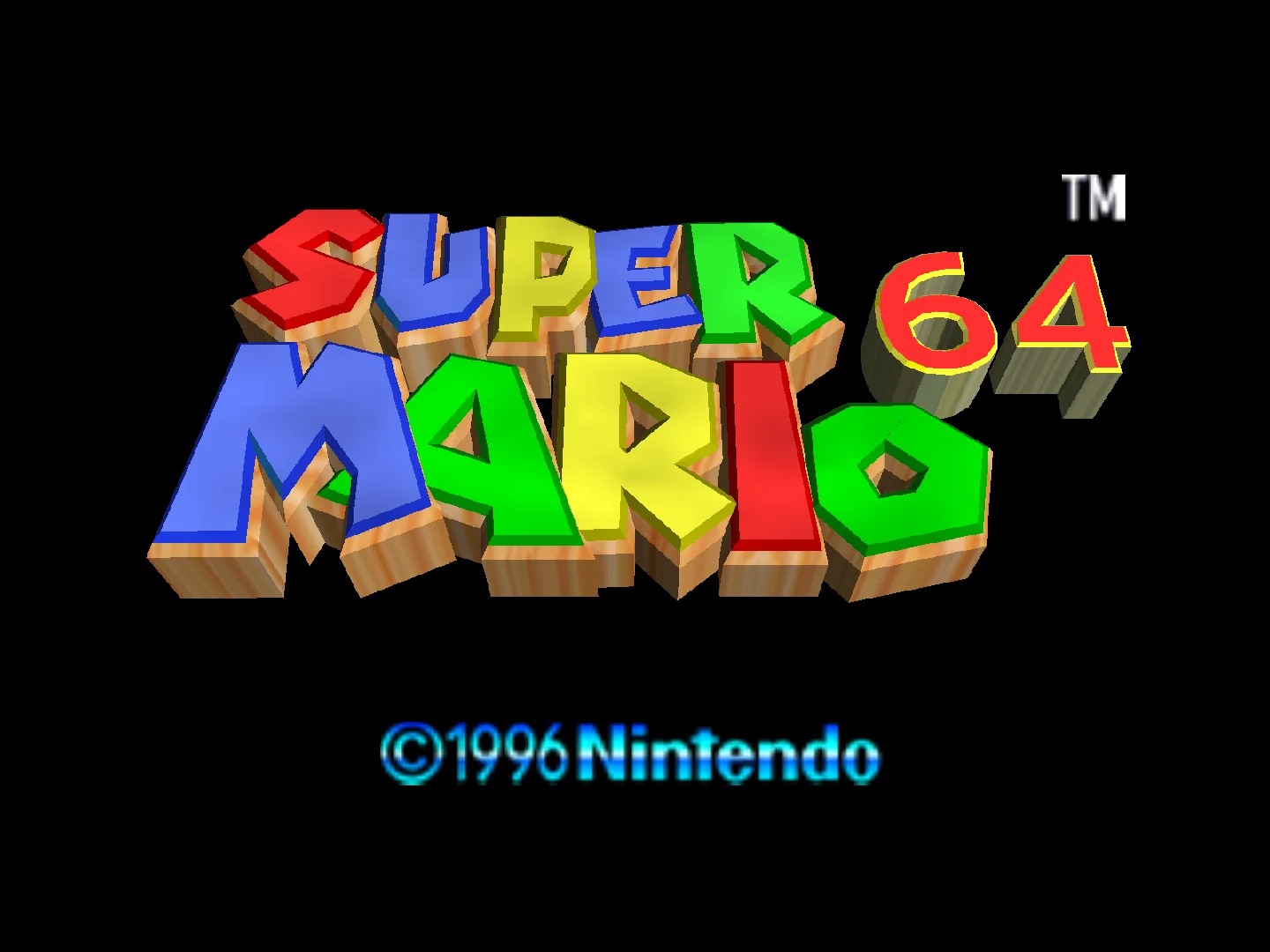
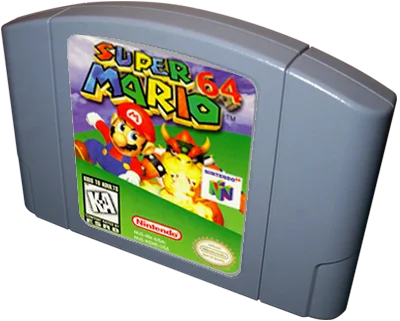
For Super Mario 64 and The Legend of Zelda: Ocarina of Time, divide the decision into identity, exterior condition, contacts, boot evidence and save behavior. The front label helps establish the apparent title and region, while the shell shape, molding, screw arrangement and rear details can support comparison with reliable catalog references. None of these alone proves authenticity. A reproduction, altered cartridge or swapped shell may imitate one visible feature while hiding another problem.
Look for liquid staining, corrosion, residue, heavy oxidation, lifted label edges, shell separation, mismatched or damaged screws and signs of prior opening. These are risk indicators, not diagnoses. A cartridge that looks clean can still have an unverified connector, damaged board, intermittent boot behavior or a save problem. Do not assume that a seller’s mention of cleaning means the game has been repaired or tested successfully.
Ask whether the exact cartridge reached the title screen on the seller’s console, whether it was recognized more than once, and whether a save was created and checked after power was removed and restored. The console model and region used for the test also matter. A title-screen photograph is weaker than a description that links the exact cartridge to repeated recognition and save verification.
Do not confuse a required accessory or console expansion feature with proof that the cartridge itself works. If the seller tested with an unfamiliar modification, adapter or substitute hardware, ask what was used and whether the result represents the original cartridge on compatible hardware.
Authenticity questions require restraint. A label that looks correct, a familiar screw, a clean shell or a board photograph can each add evidence, but none is decisive alone. If authenticity matters to the purchase, compare several observable features with dependable references or seek qualified specialist review. Do not open the cartridge merely to satisfy curiosity if doing so could damage it or affect a return.
- Request sharp photographs of the label, rear, edge connector and shell seams.
- Ask whether the exact cartridge was recognized repeatedly, not merely inserted once.
- Ask whether a save was created, power was removed, and the save was checked again.
- Walk away if corrosion or liquid damage is visible and the seller will not accept the resulting uncertainty at a suitably low total cost.
- Seek specialist inspection if board condition or authenticity matters and photographs cannot resolve it.
PlayStation 2 discs: readable-looking is not readable
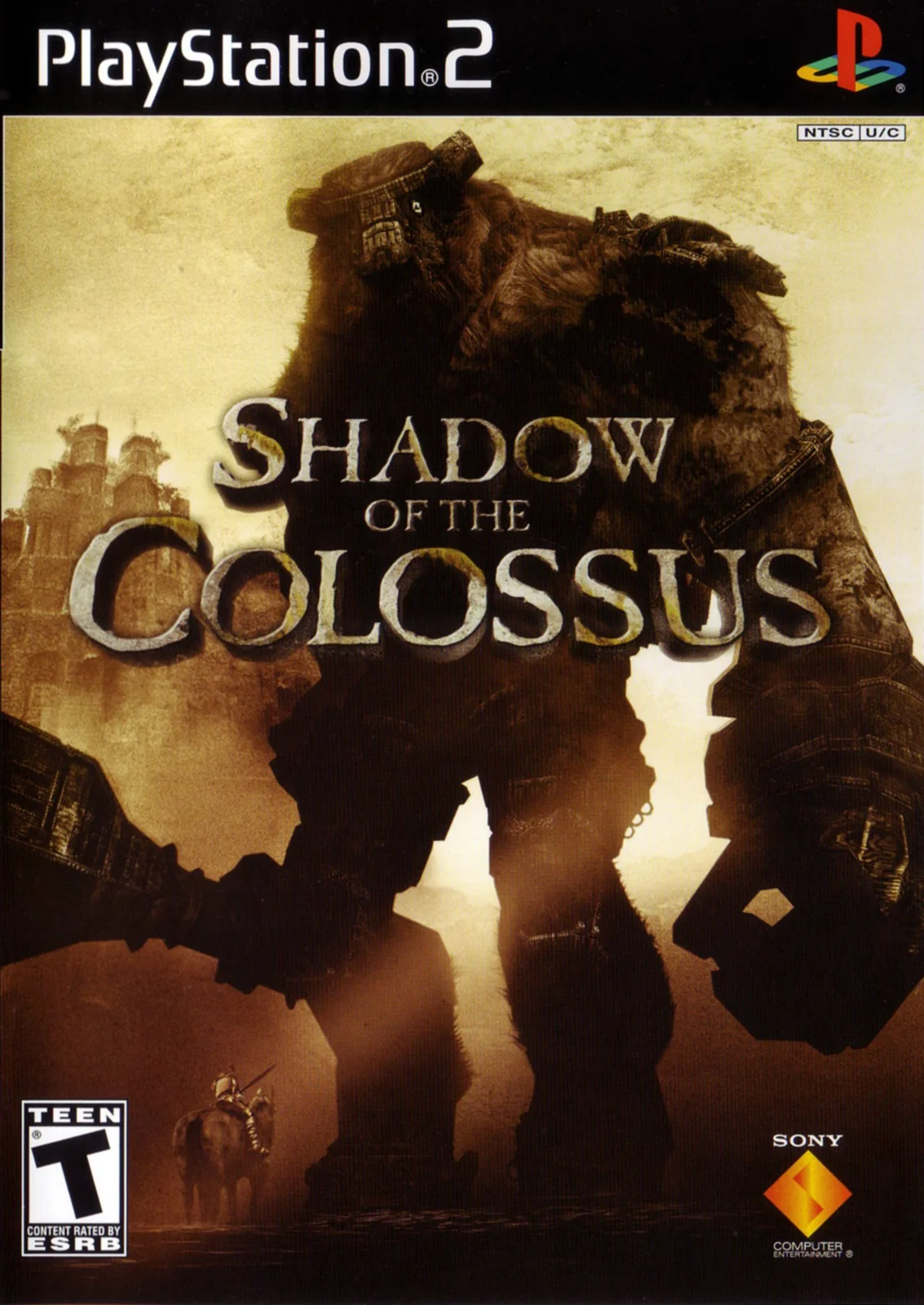
For Shadow of the Colossus and God of War, inspect the printed label side, data surface, center hub and case separately. Fine superficial marks may be less concerning than a crack radiating from the center hole, a deep gouge, delamination, warping or damage on the label side. The data surface can look attractive while still failing during loading. A resurfaced disc is not automatically bad, but visible machine marks or an unexplained surface history add uncertainty rather than proving recovery.
The PlayStation 2 user guide instructs users to place a game disc with the label side facing up, wait for the disc to stop before removing it, and lift it by the edges while holding the center of the disc holder. These are safe handling observations for inspecting a delivered disc; they do not establish that a used disc will work. Do not spin, bend or aggressively clean a disc to create evidence.
A boot screen may show that a console read the opening data once, but it does not prove consistent loading, later gameplay or compatibility with your particular console and region. Ask whether the disc loaded past the opening sequence and whether the seller observed read errors, freezes, audio problems or missing video. The exact PlayStation 2 model and region used for testing should be identified.
Check for a case mismatch, missing original disc image, loose hub or a disc that does not match the stated edition. A seller’s photo of a different copy is not evidence for yours. If the listing says tested, ask whether the seller observed only the opening screen or allowed the game to load into play. If the answer is vague, retain the untested classification.
A cracked center hub can worsen during shipping or normal handling, but it does not automatically prove that the disc cannot be read. Conversely, a smooth-looking surface cannot guarantee readability. Treat physical damage as a reason to increase the uncertainty allowance, not as a precise prediction of repair cost.
- Request photographs of both disc sides, with particular attention to the hub and label side.
- Ask whether the disc was tested on a PlayStation 2, which model and which region.
- Ask whether it loaded past the opening sequence and whether any read errors occurred.
- Treat center-hub cracks, label-side gouges, warping and severe scratches as reasons for a larger uncertainty allowance.
- Do not assume resurfacing guarantees a readable disc or that a single successful boot proves durability.
Nintendo DS cards: recognition is only the beginning
For Phoenix Wright: Ace Attorney and Final Fantasy III, inspect the card’s label, shell, contacts and edge profile, then confirm compatibility with the exact Nintendo handheld you intend to use. A DS card that fits the slot and is recognized by a menu has passed a useful basic check, but it has not necessarily demonstrated stable loading, touch-screen interaction or save operation.
Nintendo’s DS Browser instructions identify the DS card slot and describe inserting a card until it clicks. That supports a basic fit and recognition check, not a complete game test. The card’s ability to appear in a menu does not prove that the game will load correctly, respond to touch input, save data or remain stable during extended play.
Do not assume that Nintendo DS, DS Lite, DSi and 3DS-family hardware provide identical behavior for every game, accessory or feature. Match the game’s region and requirements to your intended system. A seller who tested on another model may have provided useful evidence, but you still need to know which model was used and whether any unusual feature was involved.
Inspect for a damaged shell, missing label, exposed contacts, unusual molding or artwork that does not match the claimed region. These signs should prompt comparison with dependable catalog references and additional photographs. They do not individually prove a reproduction. Packaging can support an edition claim, but the card inside remains the important object for identity and function.
A card that boots once may still have a save fault. Ask whether the seller created a save, powered down normally and later loaded that save. For a game that uses touch input, ask whether the relevant controls were observed to respond. You do not need the seller to complete the game, but you do need more than a menu icon if reliable play is your goal.
- Ask for front, rear, edge and contact photographs of the exact DS card.
- Confirm the test hardware model, region and whether the card was recognized repeatedly.
- Ask whether a save was created and later loaded, not just whether the game appeared in the menu.
- Check whether your intended handheld supports the game and any included accessory.
- Stop when the card’s identity cannot be established and the seller refuses a clear return route.
Ask questions that produce usable evidence
A good message is short but specific: “Is this the exact item in the photos? What did you test, on what hardware and region, and when? Did it reach the title screen, load into play, respond to controls or touch input, and retain a save after power was removed? Were there read errors, freezes, missing accessories, repairs or prior opening? Are the case and manual original, and will the listing’s stated condition apply if the item does not match the photos?”
Interpret the response, not just the speed of the response. “I do not own the console” is a reasonable limitation when stated plainly. “It worked years ago” is historical information, not current evidence. “Powers on” needs clarification about whether the game itself was recognized. A seller who provides the model, date, test scope and limitation gives you something to price. A seller who refuses current photographs, cannot identify the pictured item or changes “untested” into an unsupported guarantee increases the risk.
Ask about each format’s meaningful failure points. For Nintendo 64, ask about repeated recognition and saves. For PlayStation 2, ask about loading beyond the opening sequence, read errors and the disc’s region. For Nintendo DS, ask about card recognition, touch input where relevant and save creation and loading. These questions produce more useful evidence than asking simply, “Does it work?”
Keep all questions and answers on the marketplace. Do not move payment off-platform or accept instructions to evade marketplace protections. A friendly seller is not a substitute for evidence, and a terse seller is not automatically dishonest; the decision should follow the quality and completeness of the information.
- Ask about the exact item, test date, hardware model, region and accessories.
- Ask separately about recognition, loading, play, controls, audio, video and saves.
- Ask whether any repair, cleaning, resurfacing or opening occurred.
- Require the seller to clarify contradictions before you make an offer.
- Keep the conversation and transaction within the platform.
Price the missing proof with a total-cost worksheet
Do not invent a universal deduction for “untested.” Instead, compare the listing’s checkout total with verified working examples of the same title, region, edition and completeness. Use the same condition category and account for whether a case, manual or original label is included. The purpose is not to declare one fair price; it is to identify whether the uncertainty is being priced enough for your use case.
Begin with the item price, buyer-paid shipping, taxes and platform charges. Add the cost of a compatible console, controller, memory device, display connection or other missing test equipment if you do not already have it. Then consider professional inspection or repair, safe cleaning supplies, return shipping exposure and the value of your time. A cheap cartridge that requires a new testing setup is not cheap for that buyer. A disc that needs qualified assessment may be less attractive than a documented working copy even when its headline price is lower.
Separate costs into three categories. Certain costs are visible at checkout, such as the item, shipping, tax and platform charges. Conditional costs arise only if the game fails, such as specialist inspection, repair, replacement packaging or another purchase. Opportunity costs include the time spent communicating, testing, returning and finding a replacement. You do not need to predict each amount precisely; you do need to include the category before deciding what uncertainty you can afford.
Mercari’s current Buyer Protection fee is 3.6 percent of the item price and buyer-paid shipping for applicable listings. Mercari also states that buyers have 72 hours after confirmed delivery to report an item that is not as described, after which payment may be released automatically. Use the checkout total and plan to inspect immediately rather than relying on a general return assumption.
eBay’s Money Back Guarantee generally covers eligible transactions when an item does not arrive, arrives faulty or damaged, or does not match the listing. The exact return window and coverage depend on the transaction, listing language and applicable policy. An “untested” description can make a functional dispute harder when the uncertainty was clearly disclosed, so buyer protection should be treated as a process and evidence safeguard, not as a substitute for pricing risk.
- Record the complete checkout total, not just the item price.
- Add hardware, accessories, inspection, repair, return-shipping and time categories.
- Compare only with matching title, region, edition and completeness.
- Assign a personal uncertainty allowance rather than copying someone else’s discount.
- Reject the purchase if the adjusted total approaches a documented working alternative.
Set stop conditions before the listing feels irresistible
A walk-away rule protects you from escalating commitment. Stop when the seller refuses critical photographs, cannot say whether the exact item was tested, contradicts the condition field or asks you to pay outside the platform. Stop when corrosion, liquid staining, a center-hub crack, severe disc damage or a compromised DS shell creates a risk you cannot afford. Stop when the seller will not describe missing case contents or when the item’s region does not suit your hardware.
Stop when the item is being priced like a documented working copy despite having no meaningful functional evidence. A desirable title does not reduce the technical risk. In fact, a familiar game can make buyers more willing to rationalize incomplete photographs, vague answers or a seller’s unsupported claim.
Buyer protection reduces some transaction risk but does not turn unknown condition into guaranteed value. eBay warns that buyers can lose protection through actions such as fraudulent claims, returning a different item, damaging an item before return or opening duplicate claims through another protection program. Follow the platform’s stated process and do not assume a claim will succeed merely because a game was advertised as untested.
If you buy, preserve the listing, photograph the package before opening, retain packing materials and test promptly using your intended hardware. Follow the platform’s current reporting deadline. Document what happens without opening a cartridge, console or disc assembly unless you have the appropriate expertise and accept the consequences. If internal condition or authenticity cannot be resolved safely, use a qualified specialist rather than turning a purchase into an unsafe repair project.
- Do not buy when off-platform payment, account transfer or protection evasion is requested.
- Do not treat corrosion, cracks or missing identity evidence as minor cosmetic issues.
- Verify the current return and claim deadline before checkout.
- Photograph the delivered item and packaging, then test promptly and document results.
- Leave when the total risk exceeds the maximum you set before shopping.
An untested Super Mario 64 cartridge, Shadow of the Colossus disc or Phoenix Wright: Ace Attorney card may become a sensible purchase, but only when the uncertainty matches your purpose and the total cost leaves room for failure. Identity, visible condition, compatibility, function and return protection are separate questions; answer as many as possible before treating the item as collectible or playable.
The strongest buying decision may be a cautious offer, a request for better evidence or no purchase. Price the proof that is missing, keep the transaction protected, and let a clear stop condition matter more than the appeal of a familiar title.