A four-figure budget is not a requirement for building a meaningful baseball-card collection. The more practical question is what a collector wants the card to represent: a specific player, a landmark set, a rookie card, a difficult parallel, or simply an attractive vintage example. Recent cited sales and asking figures show that $500 can stretch from a 1915 Cracker Jack Miller Huggins to a 2018 Juan Soto on-card rookie autograph, though the grade and card format change dramatically along the way.
The important caveat is that the numbers below are individual reference points, not fixed market prices or promises of availability. Condition, authentication, centering, surface wear, scarcity and the timing of a sale can all materially alter a card’s cost. Still, the examples offer a useful map of where a $500 ceiling can intersect with major players and important issues across more than a century of baseball cards.
First rule: numerical grade is not the whole card
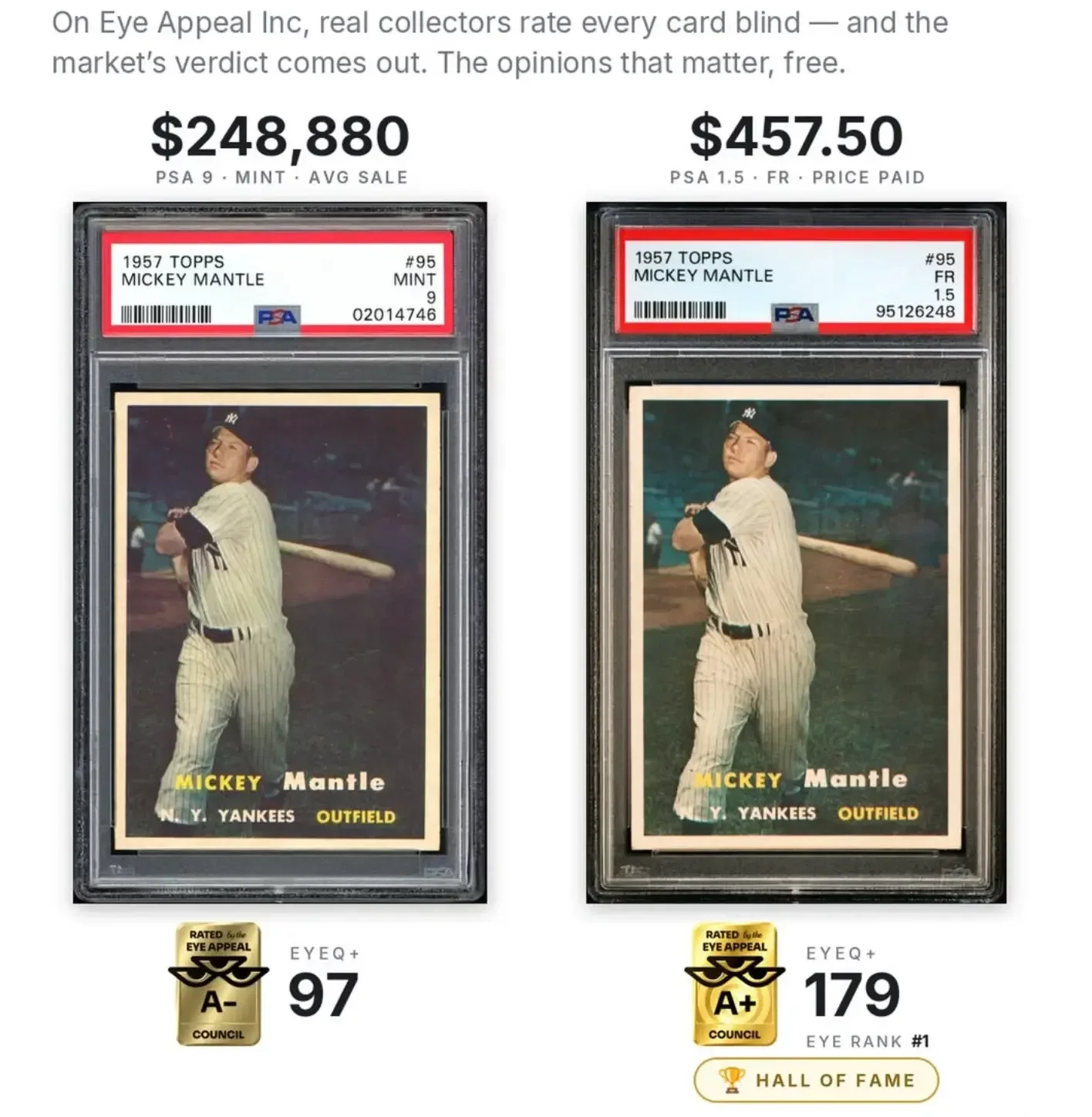
For vintage collectors especially, the most useful distinction is between a card’s technical grade and its eye appeal. Third-party grading companies assign a numeric grade after examining condition. A lower-grade card may have creases, worn corners, paper loss or other flaws that cap its number. Yet it can still present well from the front if its image is centered, colors remain strong, the surface appears clean and the printing is sharply registered.
Registration means the clarity and alignment of the printed image. It matters particularly on older cards, where an otherwise intact copy can look soft or visually off because the colors or image were not printed crisply. Centering is equally obvious: a card with balanced borders often has more immediate display appeal than a better-graded copy with a noticeably shifted image.
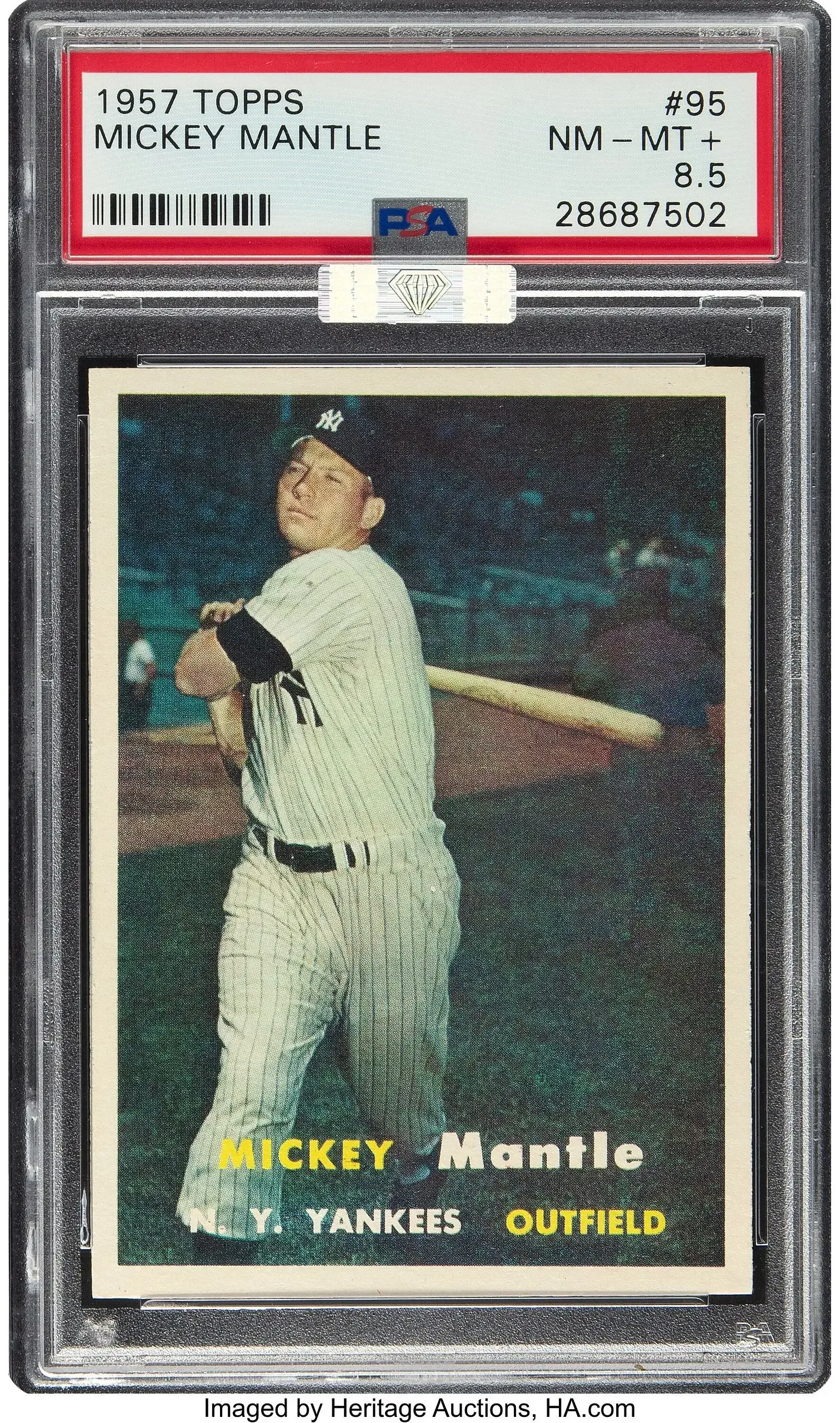
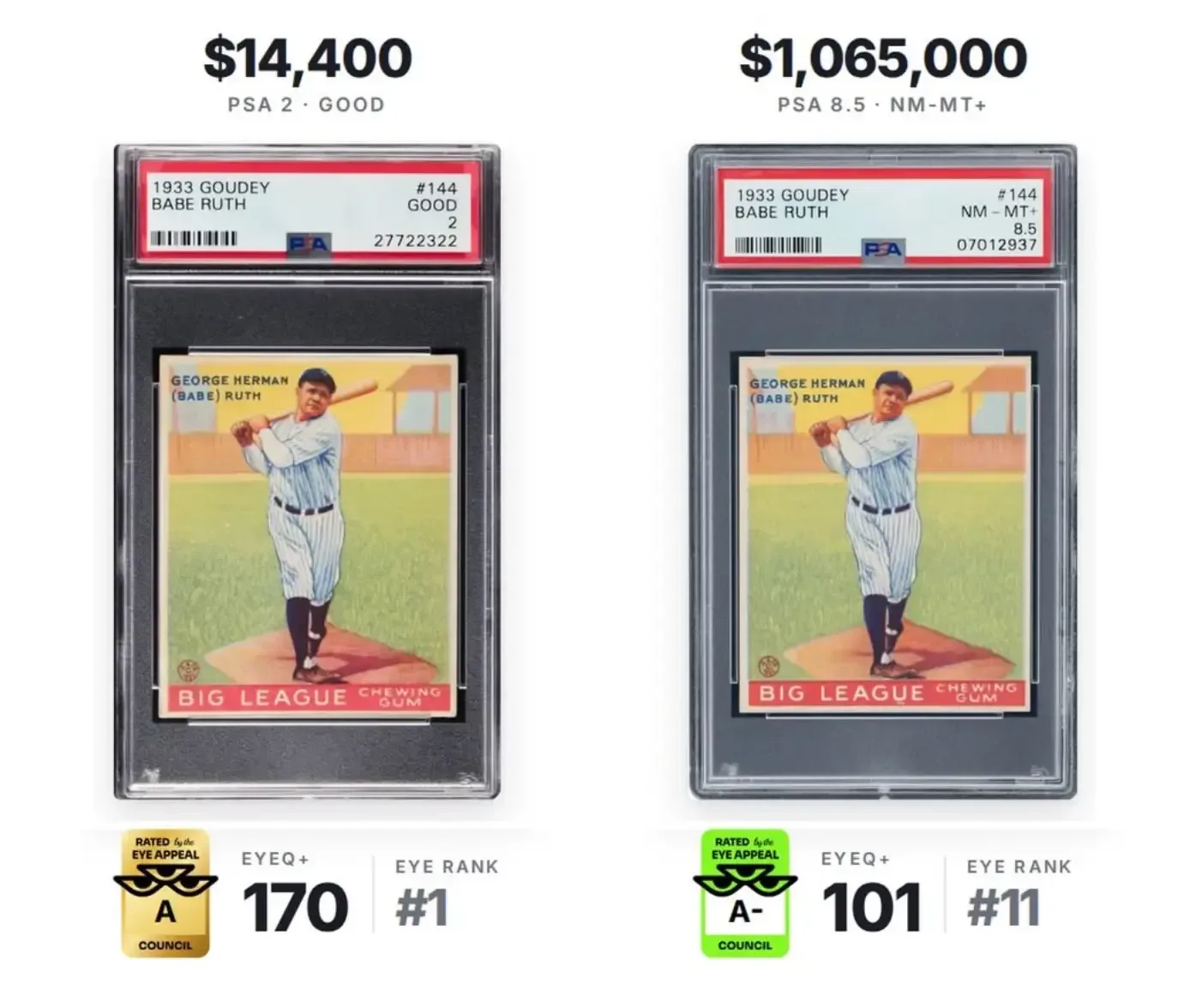
That is why a low number should not automatically be read as a poor-looking card. One cited comparison illustrates the point: a 1957 Topps Mickey Mantle graded PSA 9 sold for $248,880, while a PSA 1.5 example sold for $457.50. An independent eye-appeal scoring community rated the lower-grade example 179, ahead of the PSA 9’s 97. Another comparison involved a 1933 Goudey Babe Ruth PSA 2 at $14,400 and a PSA 8.5 at $1,065,000; the PSA 2 received the stronger eye-appeal score, 170 to 63.
Those examples do not mean low grade is universally better, nor do they erase the financial premium attached to high-grade copies. They do show why a budget collector should inspect the actual card rather than shop the slab label alone. At this price range, an appealing PSA 1, PSA 2 or comparable graded copy can be a deliberate collection choice, not merely a compromise.
A decade-by-decade $500 short list
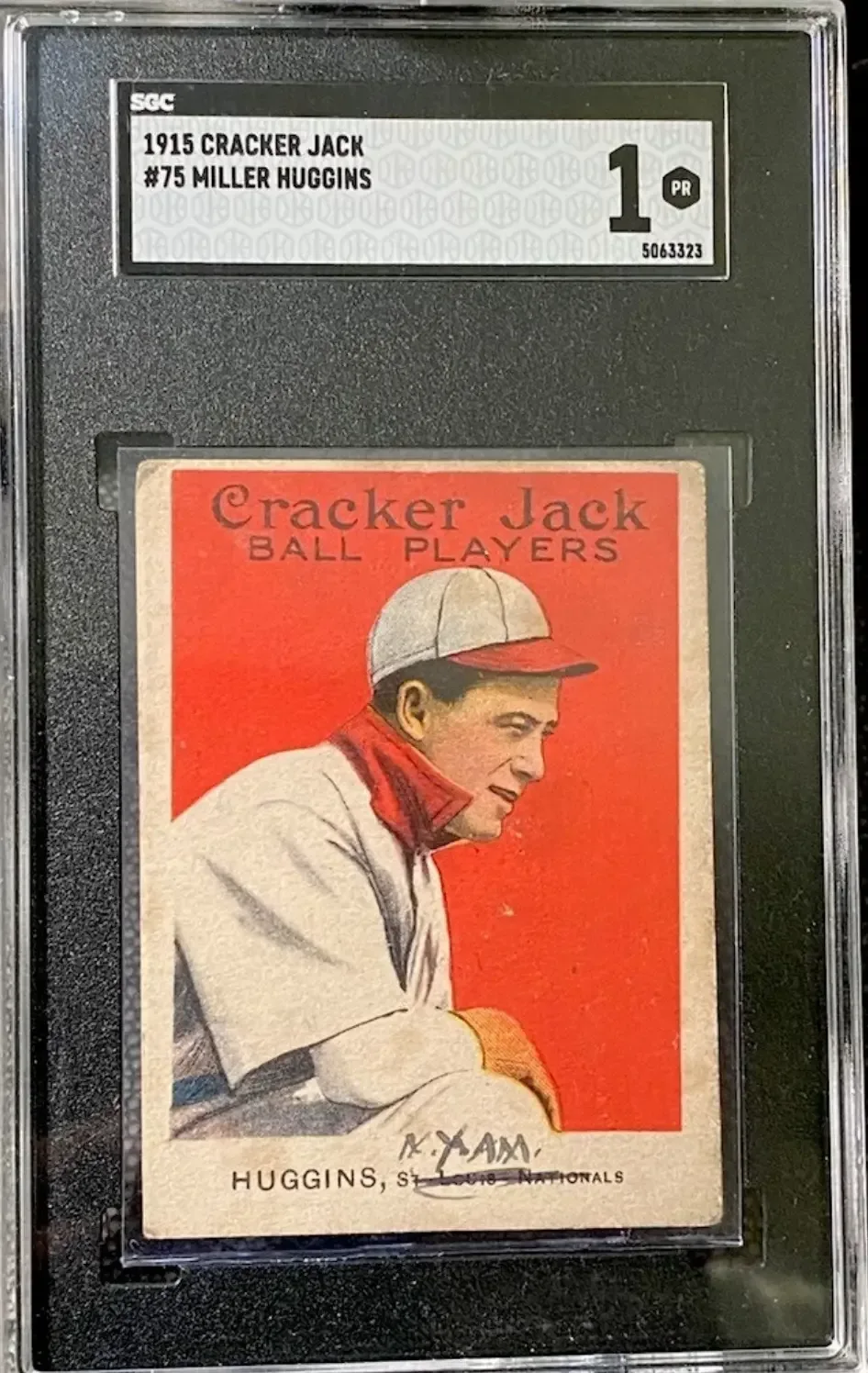
1910s: 1915 Cracker Jack Miller Huggins #75, SGC 1 — $270
Cracker Jack is one of vintage baseball’s most recognizable brands, and this Huggins offers an unusually direct connection to Yankees history. Huggins managed New York during the rise of Babe Ruth and Lou Gehrig, guided the club to three World Series championships, and became the first Yankee commemorated by a granite monument and bronze plaque in Yankee Stadium’s center field—an honor that later evolved into Monument Park.
At the cited $270 for an SGC 1, the appeal is not pristine condition. It is the combination of an early, famous issue and a Hall of Fame manager whose importance is tied to one of baseball’s defining teams. Other period options within the ceiling include a 1911 T205 Gold Border Closed Mouth Eddie Collins PSA 2.5 at $475 and a 1914 Cracker Jack Connie Mack BVG 3 at $480.
Related coverage includes Best Baseball Cards Under $500 From Every Decade.
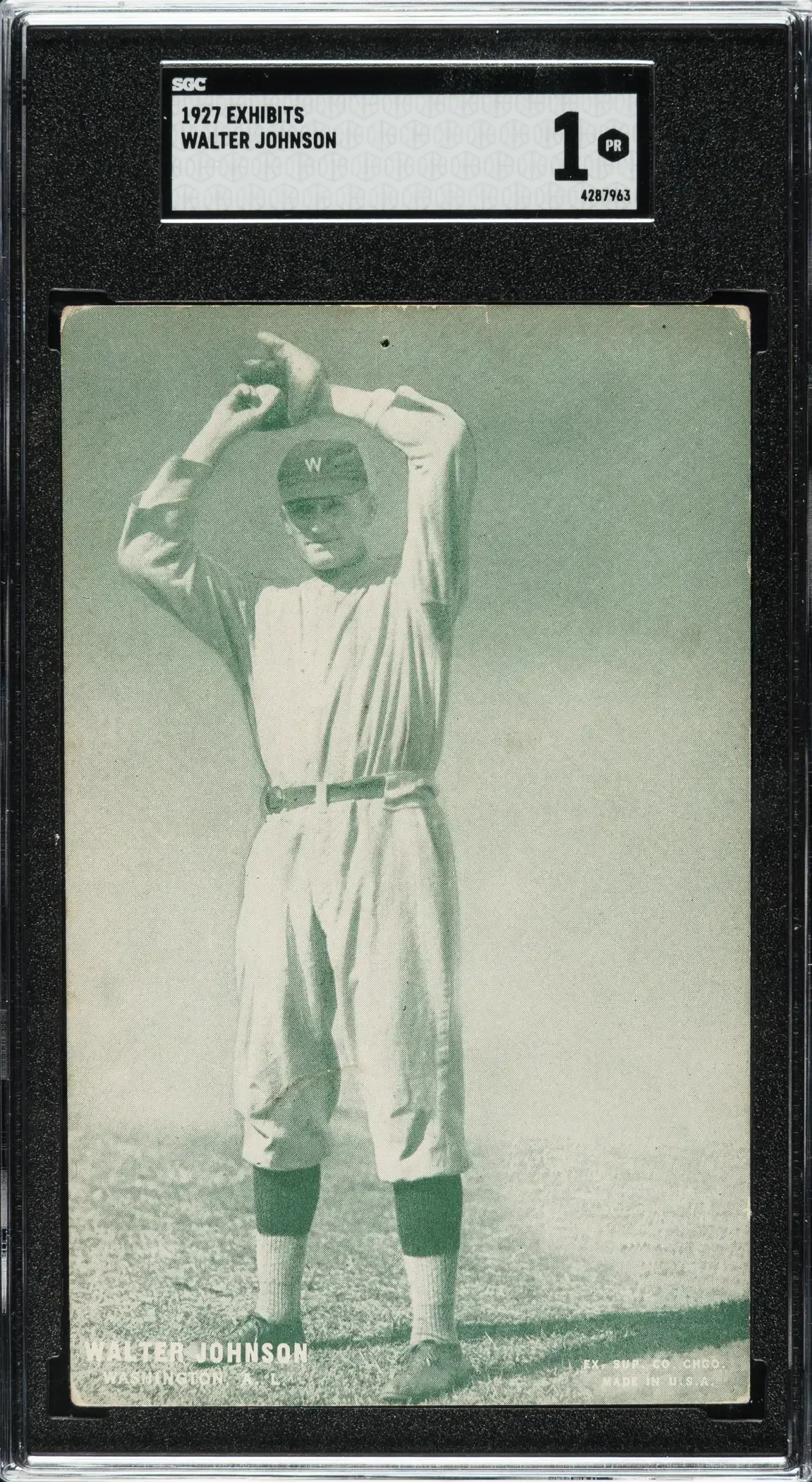
1920s: 1927 Exhibits Walter Johnson, SGC 1 — $489
Walter Johnson’s 1927 Exhibits card is a reminder that distribution format can affect both recognizability and price. Exhibit cards came from vending machines rather than the candy or tobacco packs associated with many earlier cards. Their 3 3/8-by-5 3/8-inch format is considerably larger than the modern standard, which may help explain why they can remain less conspicuous in the hobby.
For the budget, that format creates a route to Johnson, “The Big Train,” who won 417 games and two American League MVP awards. A $489 SGC 1 example is right at the cap, so flexibility on condition is essential. A 1923 W515-1 #55 hand-cut Rogers Hornsby PSA 3 at $420 and a 1929 W553 Lefty Grove in SGC Authentic condition at $300 provide alternatives. “Authentic” establishes that a card is genuine but does not assign a standard numerical condition grade, a distinction worth understanding before comparing labels.
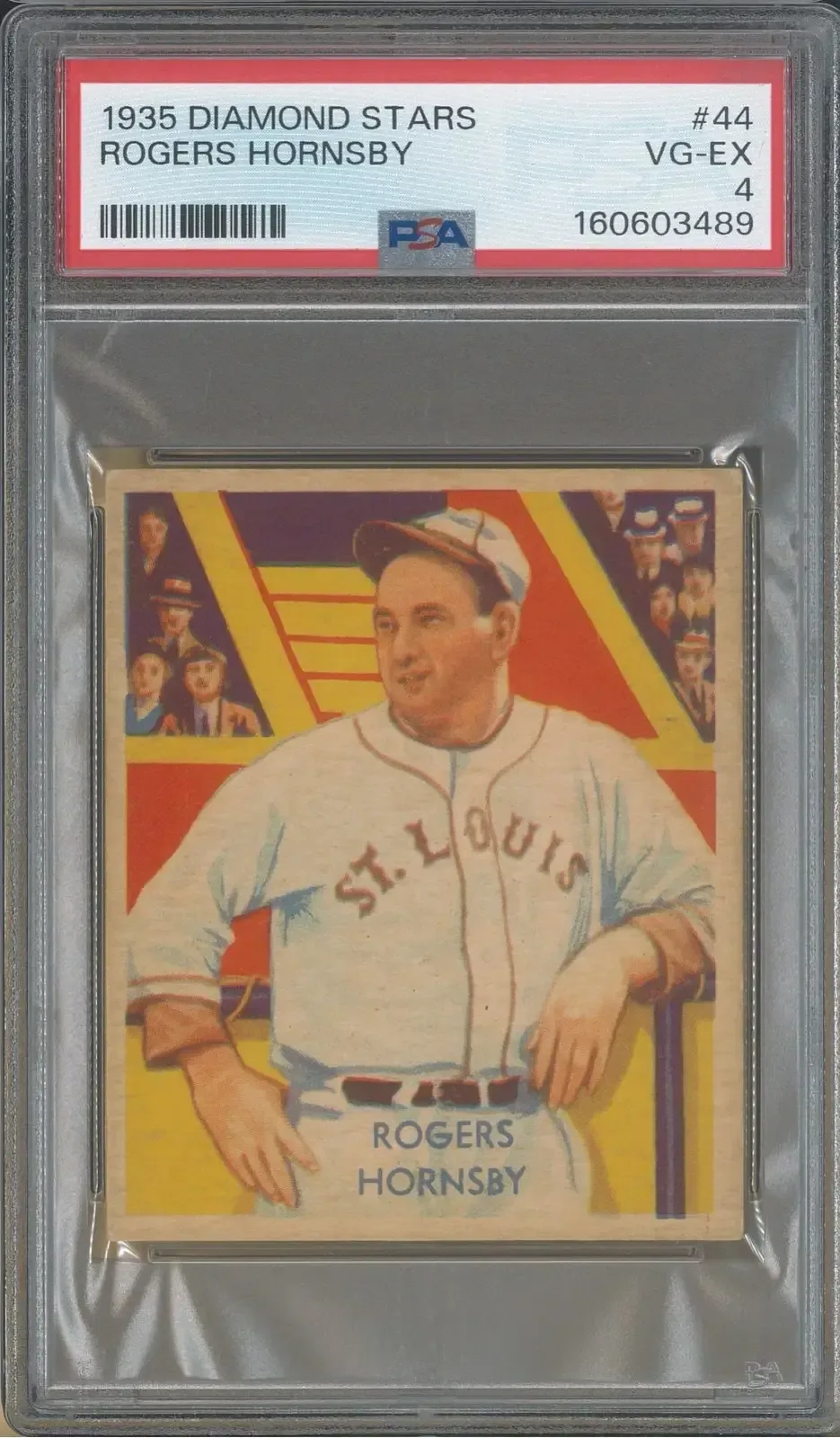
1930s: 1935 Diamond Stars Rogers Hornsby #44, PSA 4 — $473
Diamond Stars cards are prized for their artistic look, even though the set lacks Babe Ruth and Lou Gehrig and therefore tends to sit behind the decade’s Goudey releases in mainstream attention. Hornsby supplies the elite player résumé: a .358 career batting average, seven batting titles, two Triple Crowns and two MVP awards. Only 927 copies of this card had been graded by PSA in the cited population figure.
A PSA 4 at $473 is notable because it keeps both a high-profile player and a mid-grade vintage presentation in reach. Budget alternatives include a 1933 Goudey Jimmie Foxx #154 at $440, a 1933 Goudey Mel Ott #207 SGC 3.5 at $491, and a 1934–36 Diamond Stars Tony Lazzeri #74 SGC 5 at $439.
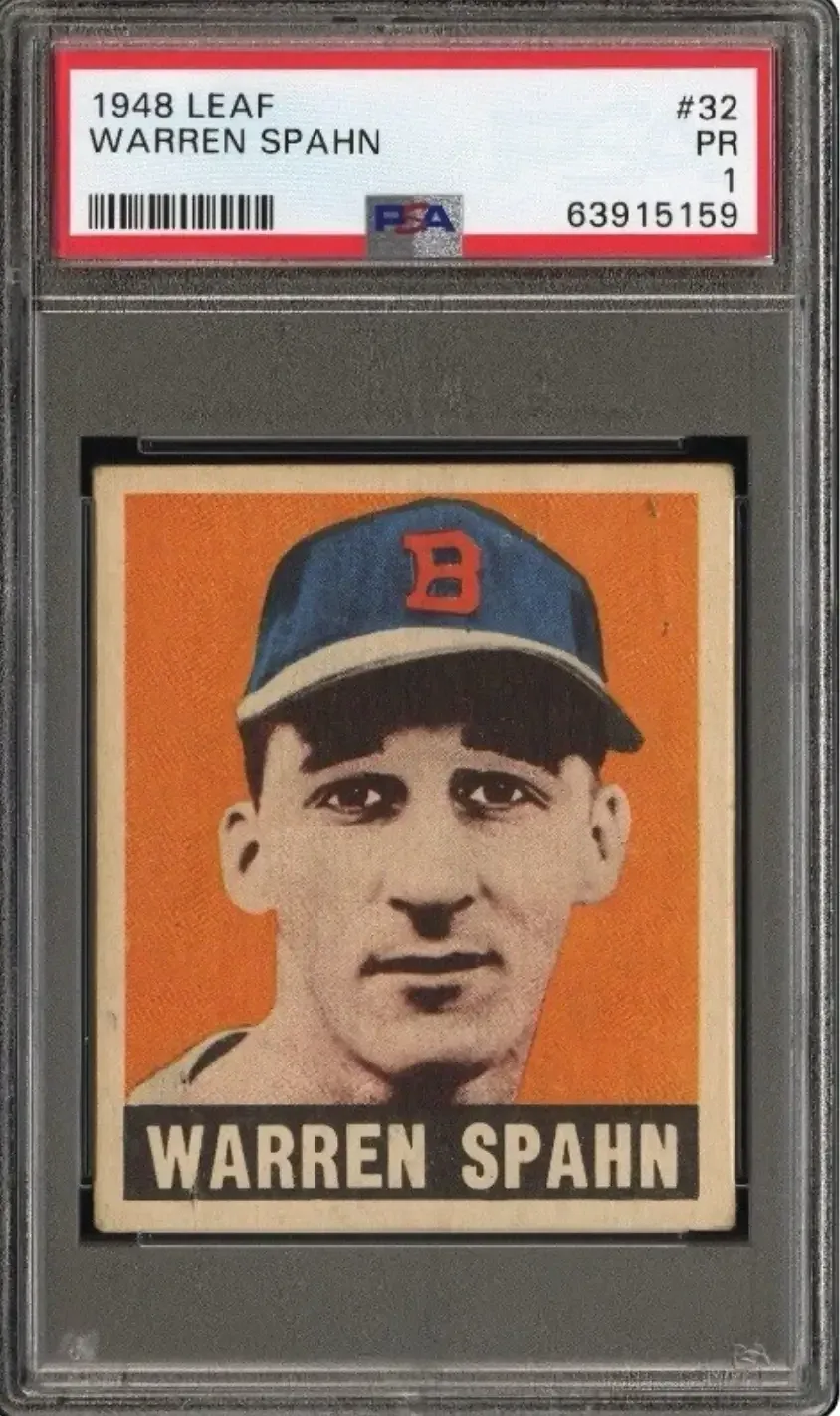
1940s: 1948 Leaf Warren Spahn #32 rookie card, PSA 1 — $450
Warren Spahn’s card has the appeal of a true postwar rookie from an enduringly popular set. Spahn debuted in Major League Baseball in 1942 but did not receive a baseball card until 1948, because cards were not produced during World War II. He eventually won 363 games, the most by a left-handed pitcher in MLB history.
The 1948 Leaf issue is among the hobby’s most recognizable sets, and the cited PSA population for Spahn’s rookie was 1,297. At $450 for a PSA 1, the card is a good example of the trade-off that defines vintage collecting: substantial wear in exchange for a landmark player, a rookie designation and a celebrated issue. A 1941 Play Ball Pee Wee Reese rookie PSA 1 at $355 and a 1948 Bowman Phil Rizzuto rookie PSA 1 at $450 offer similarly historic choices.
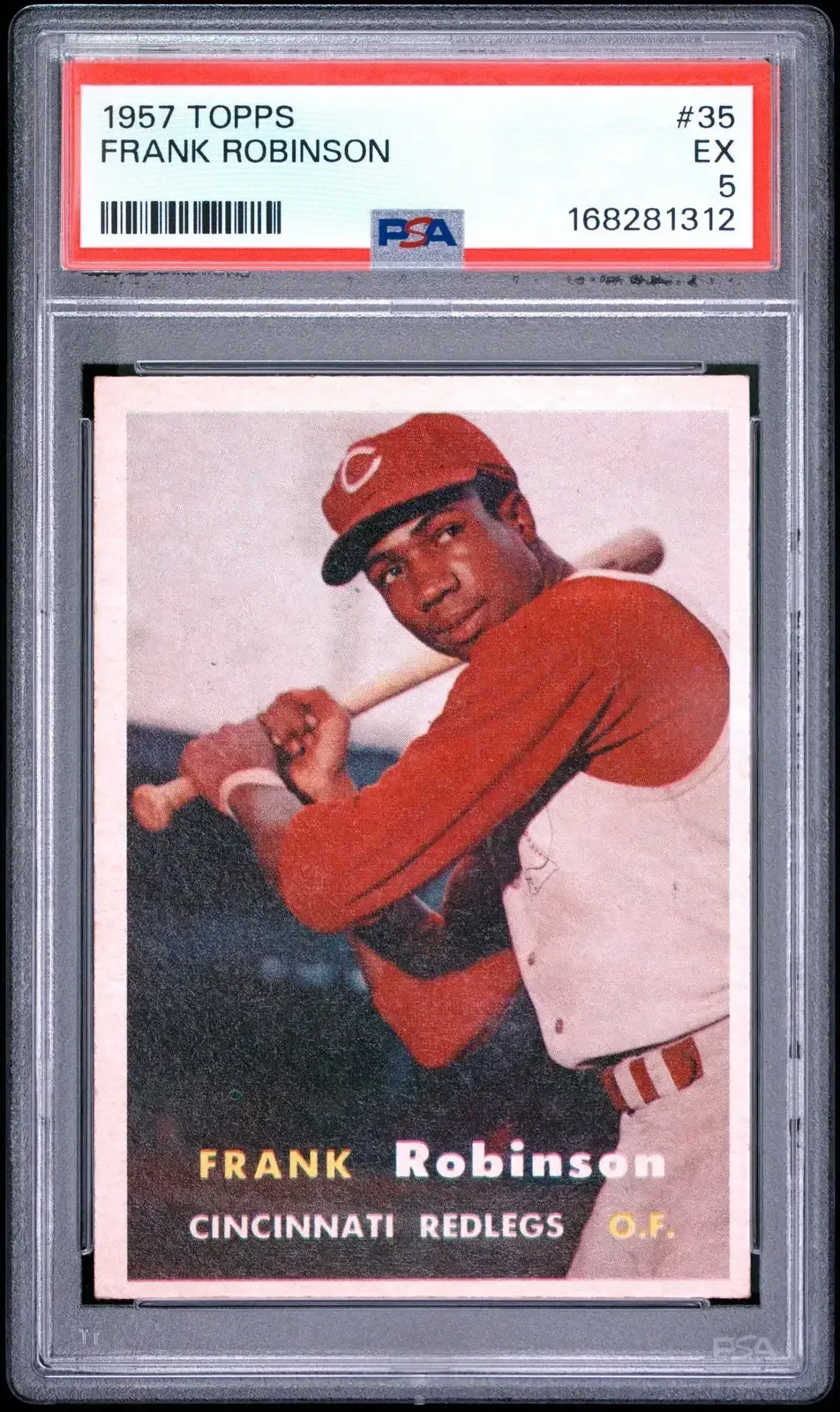
1950s: 1957 Topps Frank Robinson #35 rookie card, PSA 4.5 — $365
The 1957 Topps design is especially important because it introduced the 2.5-by-3.5-inch dimensions that became the familiar modern card standard. Its full-color photography and clean visual approach give this Frank Robinson rookie a design argument as well as a player argument.
Robinson hit 586 home runs, won MVP awards in both leagues, and later became MLB’s first Black manager. The cited $365 price for a PSA 4.5 leaves meaningful room below the $500 limit while retaining a stronger grade than many earlier vintage selections. Collectors who prefer Yankees imagery can consider the 1957 Topps #407 Mickey Mantle and Yogi Berra PSA 5 at $425. A 1950 Bowman Yogi Berra PSA 3 was listed at the full $500 threshold.
1960s: 1968 Topps Johnny Bench #247 rookie card, SGC 6 — $425
The Johnny Bench rookie is one of the clearest value propositions in the group. Bench won two National League MVP awards, 10 Gold Gloves and two World Series titles while helping lead Cincinnati’s Big Red Machine. The cited SGC 6 price of $425 pairs a comparatively solid grade with a catcher widely regarded as one of the position’s all-time greats.
Collectors focused on fellow Hall of Fame rookie cards have other near-cap options: a 1960 Topps Carl Yastrzemski #148 rookie SGC 6 at $494 and a 1960 Topps Willie McCovey #316 rookie SGC 6 at $495. The lesson is not that one is objectively superior; it is that $500 can still support a choice driven by player preference rather than forcing a collector out of Hall of Fame rookies entirely.
1970s: 1975 Topps Robin Yount #223 rookie card, PSA 8 — $444
Robin Yount’s 1975 Topps rookie stands apart because he received a solo rookie card rather than sharing space with other players, as happened with several major 1970s rookies. The card is also a dedicated Milwaukee story: Yount spent his entire 20-year career with the Brewers, won two MVP awards and finished with 3,142 hits.
A PSA 8 at $444 demonstrates how a well-preserved card from the era can fit under budget when the player-market balance cooperates. Other options include a 1974 Topps Dave Winfield rookie PSA 8 at $360 and a 1976 Topps Rookie Pitchers card featuring Ron Guidry, graded PSA 9, at $450.
1980s: 1982 Topps Traded Cal Ripken Jr. #98T, SGC 9 — $485
Ripken appeared on a multi-player Future Stars rookie in the regular 1982 Topps issue, but the Topps Traded #98T is his first solo card. That distinction is central to its appeal. The card was distributed in a 132-card boxed traded set rather than broadly through standard packs, adding a format difference collectors should understand when comparing rookie labels.
At $485 in SGC 9, the card reaches the cap but brings unusually high grade for a first solo card of a player who logged 2,632 consecutive games and won two American League MVPs. A PSA 9 1984 Donruss Don Mattingly rookie at $385 and a PSA 9 1987 Topps Barry Bonds rookie at $380 show the depth still available in the decade.
1990s: 1997 Flair Showcase Frank Thomas Hot Gloves #15, PSA 8 — $470
The 1990s choice shifts away from conventional rookie-card collecting and toward design, insert status and relative scarcity. The fiery Hot Gloves Frank Thomas is a memorable example of the era’s more elaborate card aesthetics. Only 51 copies had been graded by PSA in the cited total, giving the card a very different scarcity profile from a mass-produced base issue.
Thomas won two MVP awards and six Silver Sluggers before entering the Hall of Fame on the first ballot in 2014. A PSA 8 at $470 leaves little slack, but it delivers a visually distinctive premium insert. For different collecting priorities, a 1993 Topps Finest Greg Maddux PSA 10 at $490 emphasizes top condition, while a 1998 Topps Finest Alex Rodriguez The Man Refractor, numbered to 75 and graded BGS 9.5, was cited at $420.
2000s: 2002 Topps Chrome Ken Griffey Jr. #550 Gold Refractor, PSA 9 — $450
The 2002 Topps Chrome Griffey Gold Refractor represents the modern appeal of a parallel: a variation of a base card with a distinct finish or limited production. Gold Refractors have become particularly sought-after parallels, and only 71 copies of this Griffey had been graded by PSA in the cited count.
A PSA 9 example at $450 offers a recognized star and a premium Chrome parallel rather than a basic card. Comparable alternatives reveal how varied the decade can be: a 2002 Bowman Chrome Joe Mauer rookie autograph SGC 9.5 at $450, or a 2001 Topps Traded Albert Pujols/Ichiro Rookies of the Year Gold, numbered to 2,001, SGC 7 at $492. For another view of how star performance can shape card attention, see this look at milestone-driven interest in Connor McDavid cards.
2010s: 2018 Bowman’s Best Juan Soto Best of 2018 Autographs, SGC 10 — $455
The latest selection is an on-card rookie autograph of Juan Soto, cited at $455 in SGC 10. An on-card autograph is signed directly on the card rather than on a separate sticker later applied to it, a detail many collectors weigh when deciding among signed issues.
Soto had already accumulated six Silver Sluggers and passed Mickey Mantle’s record for career walks before turning 28. A Buster Posey 2010 Topps Heritage Real One Autographs Red Ink, numbered to 61 and graded PSA 9, was cited at $449, while a 2018 Topps Chrome Ronald Acuña Jr. Blue Refractor numbered to 150 in BGS 9.5 was cited at $480. These are not interchangeable cards, but together they underline a useful principle: under $500 in modern baseball can mean an autograph, a serial-numbered parallel or a high-grade card of a major player.
How to use the list without treating it as a price guide
- Pick the priority before the grade. Decide whether player stature, rookie status, set importance, visual design, serial numbering or autograph format matters most.
- Examine front-facing appeal. On vintage cards, study centering, print clarity, color and surface presentation before assuming a higher number is automatically the more satisfying copy.
- Read every label. PSA, SGC, BGS, BVG and “Authentic” are not interchangeable descriptions. Note the company, numerical grade and any qualifiers before comparing listings.
- Know the format. A vending-machine Exhibit, hand-cut strip card, boxed Topps Traded card, insert, refractor and standard pack-issued base card have different collecting contexts.
- Keep a margin below $500. A card cited at $489 or $500 may leave no room if the next available copy differs in condition or sale timing. A target nearer $400 can offer more choices.
The broad takeaway is encouraging: a strict budget does not prevent a collector from owning a card tied to Johnson, Hornsby, Spahn, Robinson, Bench, Ripken, Griffey or Soto. It does require informed compromises. The strongest purchase is usually the copy whose player, card type, grade and front-facing look fit the collector’s purpose—not simply the slab with the largest number within reach.