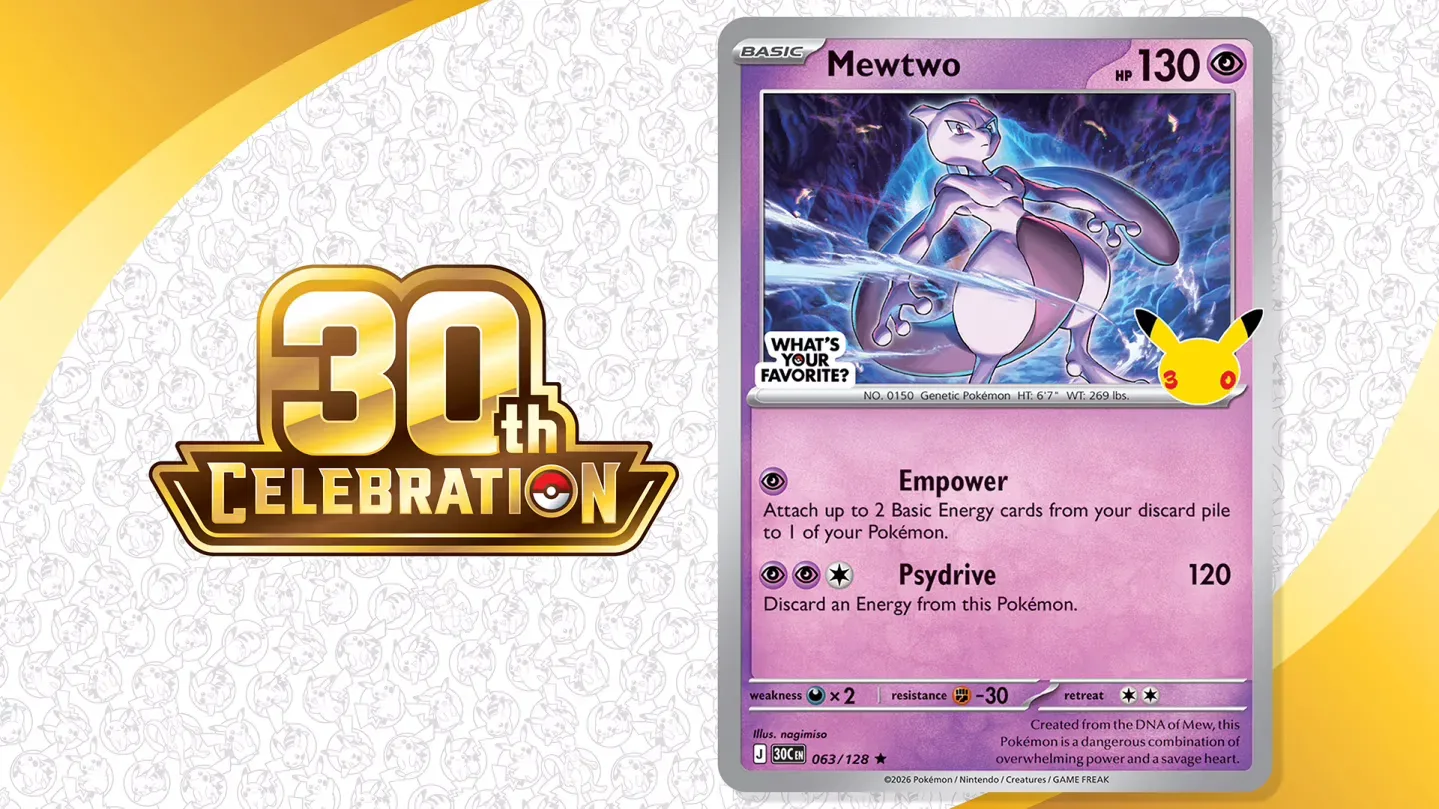
A newly noticed Pokémon card misprint is turning an otherwise serene Mew image into something far more ominous. Collectors have started calling the error “Blood Mew,” a nickname credited to card trader Miss Natoshi, after examples surfaced with vivid red ink spreading across roughly half of the artwork.
On the standard version, Mew is pictured in a golden, magical-looking grove. On the reported error cards, the unexpected red saturation makes it appear that the Pokémon is moving into—or out of—a pool of blood. The direction of the visual effect can vary with the printing issue, but the result is unmistakably dramatic: a card meant to look graceful instead resembles a horror-tinged alternate art.
The attention arrives alongside a commemorative Pokémon card release tied to the franchise’s 30th anniversary. The set was positioned with higher pull rates for shiny variants and popular Pikachu cards, part of an apparent attempt to ease the pressure created by limited supply. Yet the early conversation has quickly pivoted toward an accidental variation rather than the intentionally chaseable cards in the product.
That shift is familiar to anyone who follows modern trading cards. An unplanned defect can become a collectible category of its own when it is visually distinctive, associated with a beloved character, and believed to be scarce. It can also create a market where excitement moves much faster than verification.
What makes “Blood Mew” different from an ordinary card flaw?
A misprint is an unintended difference introduced during card production. That broad label can cover many possibilities, from altered ink coverage and alignment problems to missing or misplaced elements. In this case, the defining feature being discussed is the unusually heavy red ink over Mew’s art.
Not every imperfection creates a collectible identity. Small surface marks, rough cuts, and common production blemishes may matter to condition-focused buyers, but they do not necessarily make a card a recognized error. “Blood Mew” has gained traction because the issue produces a conspicuous image change. The red field is not a tiny technical irregularity that needs a magnifying glass to spot; it fundamentally changes the mood and presentation of the card.
That visual hook matters. Mew is Pokémon No. 151 and one of the series’ most recognizable mythical characters. A strange error involving such a character has an immediate story attached to it, and storytelling is often part of what collectors are buying. The nickname is memorable, the imagery is easy to share, and the accident is sufficiently strange to stand apart from standard variants.
Still, a nickname is not an official designation, a population count, or a guarantee of long-term value. It is community shorthand. The market will ultimately need clearer evidence about how many examples exist, whether they share the same production characteristics, and whether buyers actually complete transactions at the prices now being floated.
Related coverage includes Pokémon's 'Blood Mew' Misprint Is Becoming a New Collector Obsession.
Six-figure listings are signals, not sales records
Resellers have already begun testing very high numbers online, with some reported asks reaching six figures. That is enough to make “Blood Mew” a conversation piece, but it is important to separate an asking price from a realized price.
An asking price is the amount a seller hopes to receive. A realized price is the amount a buyer actually paid in a completed transaction. Those are different pieces of information, particularly for a newly discovered error with no established sales history. A seller can list a card at nearly any amount; the listing alone does not prove demand at that figure, scarcity, or a settled market value.
That distinction is worth keeping in mind across the hobby, not only for Pokémon. As explored in a look at high-dollar Michael Jordan card listings, headline-grabbing figures can be requests rather than evidence of a completed deal. For a card whose appeal is based on a newly circulating defect, the gap between a bold listing and a proven sale may be especially wide.
There is also a timing problem. When an oddity first appears, the available supply can seem extremely low simply because few people have opened product, recognized the issue, or posted their cards publicly. More copies can surface later. Alternatively, the defect could prove genuinely limited. The supplied information does not establish which of those outcomes applies to the red-ink Mew cards.
Why errors can become desirable so quickly
Rarity is only one part of the appeal. A collectible error is often valued through a mix of perceived scarcity, character popularity, visual novelty, condition, and confidence that the item is a legitimate production anomaly. “Blood Mew” checks several of the emotional boxes immediately: Mew has broad recognition, the ink effect is startling, and the fan-made name transforms a manufacturing issue into a miniature legend.
Modern shiny and holographic cards may also offer more opportunities for unusual-looking production issues to be noticed. Reflective or elaborate treatments can make color and ink abnormalities more conspicuous than they would be on a simpler design. In a hobby built around pictures, a defect that looks radically different can inspire more interest than one that merely changes a line of text or shifts an image slightly off-center.
But desirability is not the same thing as durability. The most intense early reaction often belongs to the discovery itself. Once the novelty fades, collectors may decide that only the clearest, most attractive, and best-documented examples deserve a premium. Some may regard the error as a fascinating oddity; others may prefer the intended card art. Both audiences can exist at the same time, and neither makes a price inevitable.
Practical checks for collectors considering an error card
For anyone who pulls or encounters a purported “Blood Mew,” restraint is more useful than rush. The conversation around an emerging error can create pressure to list instantly or buy before someone else does. A few basic checks can help distinguish a card worth researching from a listing built on hype.
- Document the exact card. Keep clear images of the front, back, edges, corners, card number, and the red-ink area. Good documentation makes comparisons possible and preserves a record of the card’s original state.
- Compare like with like. Look for other examples showing the same red-ink placement and intensity. A similar effect across multiple cards is more informative than a single unusual-looking image.
- Separate defect from damage. Ink-like discoloration, staining, alteration, or wear can be mistaken for a production issue in low-quality photos. The key question is whether the unusual appearance looks integrated into the card’s printing rather than added after it left production.
- Track completed transactions where possible. Active listings reveal ambition. Completed sales, if they emerge, provide a more meaningful indication of what buyers have actually accepted.
- Keep condition in perspective. An error card can still have bends, scratches, whitening, or other flaws. The error may be the draw, but condition remains relevant to many collectors.
- Avoid treating the nickname as proof. “Blood Mew” is useful shorthand for the community conversation, not verification that every reddish Mew card belongs to one confirmed production run.
Those checks are not a promise that a card will gain value. They are simply a way to make a more informed decision while the available evidence is still developing.
A broader market caution around unusual card supply
The rush around a striking Pokémon error also lands in a card market already sensitive to questions of legitimacy and supply. Earlier this year, attention turned to a seller with unusual access to uncut factory sheets featuring Blue Eyes Silver Dragon from Yu-Gi-Oh. The sheets were said to have been recovered from a dumpster, while members of the collecting community questioned whether the stock was legitimate.
That separate episode is a reminder that scarcity claims require context. Cards, sheets, test material, and production-related items can be exciting, but an unusual origin story does not automatically establish authenticity or lawful provenance. The same principle applies at a smaller scale to individual misprints: a compelling appearance is a reason to investigate, not a substitute for evidence.
Pokémon collecting has also faced broader strain from aggressive buying and hoarding of merchandise, creating headaches for retailers, ordinary collectors, Nintendo, and even fire marshals. A high-profile error card can intensify that speculative impulse because it gives people a new treasure to hunt inside already sought-after product.
For now, “Blood Mew” is best understood as a visually exceptional reported misprint with enormous collector attention and unproven price expectations. The red-ink cards may become a lasting Pokémon error favorite, or the frenzy may cool once more examples and actual sales data appear. What is already clear is why the cards caught on: they turn a gentle, golden Mew scene into an accidental image that is difficult to forget.