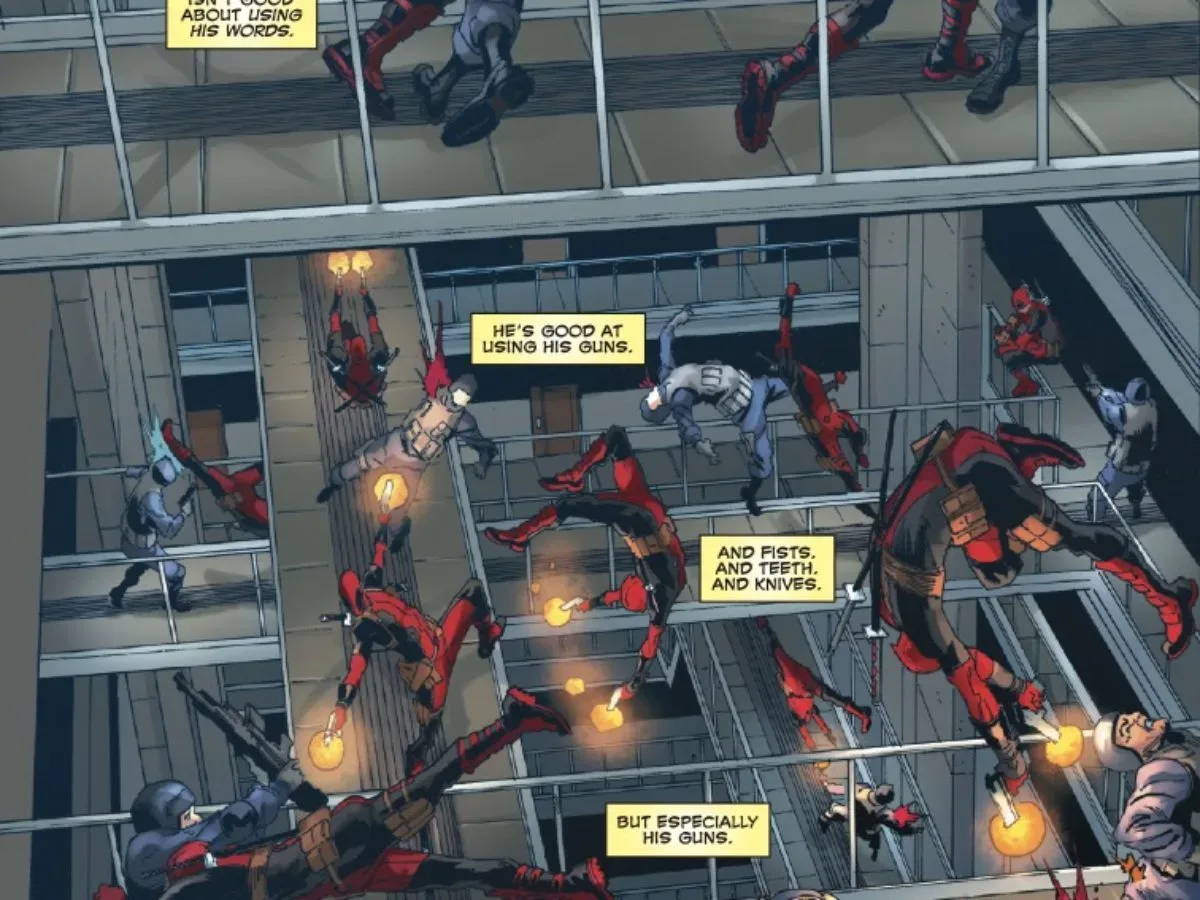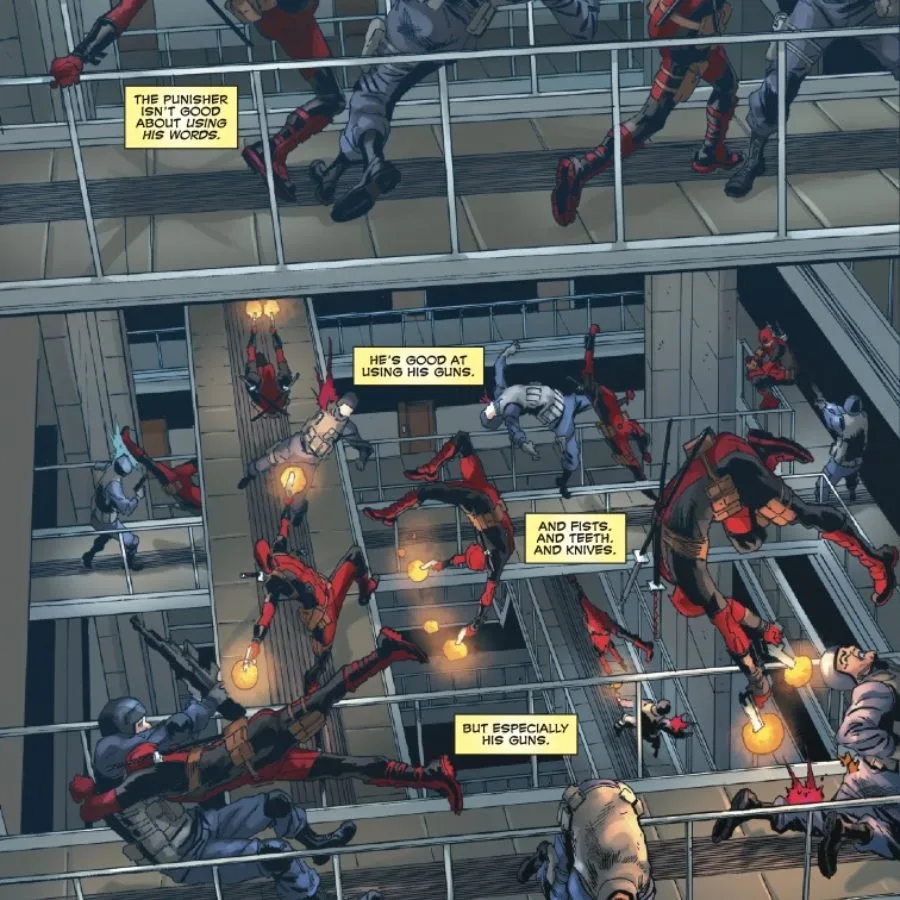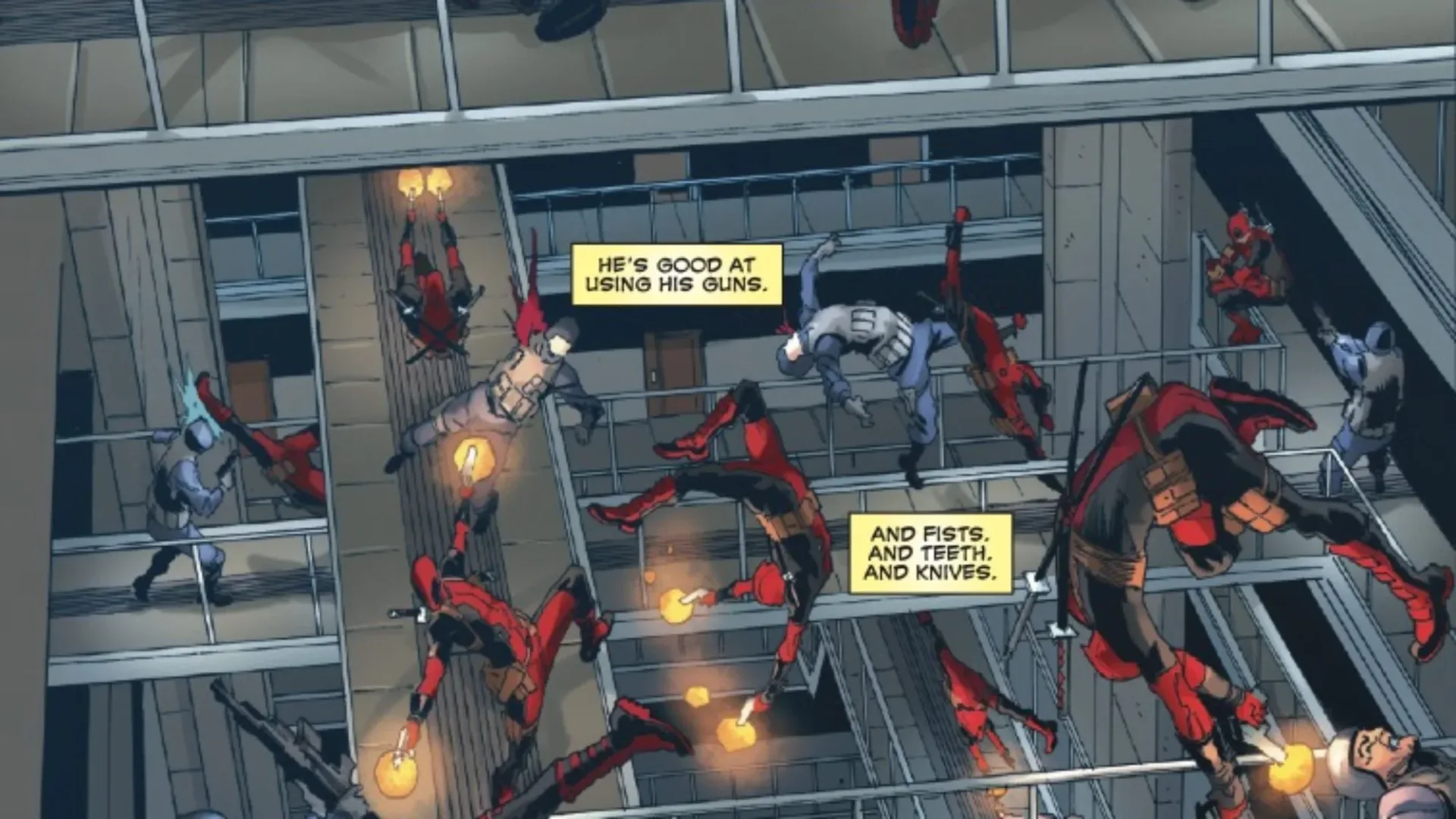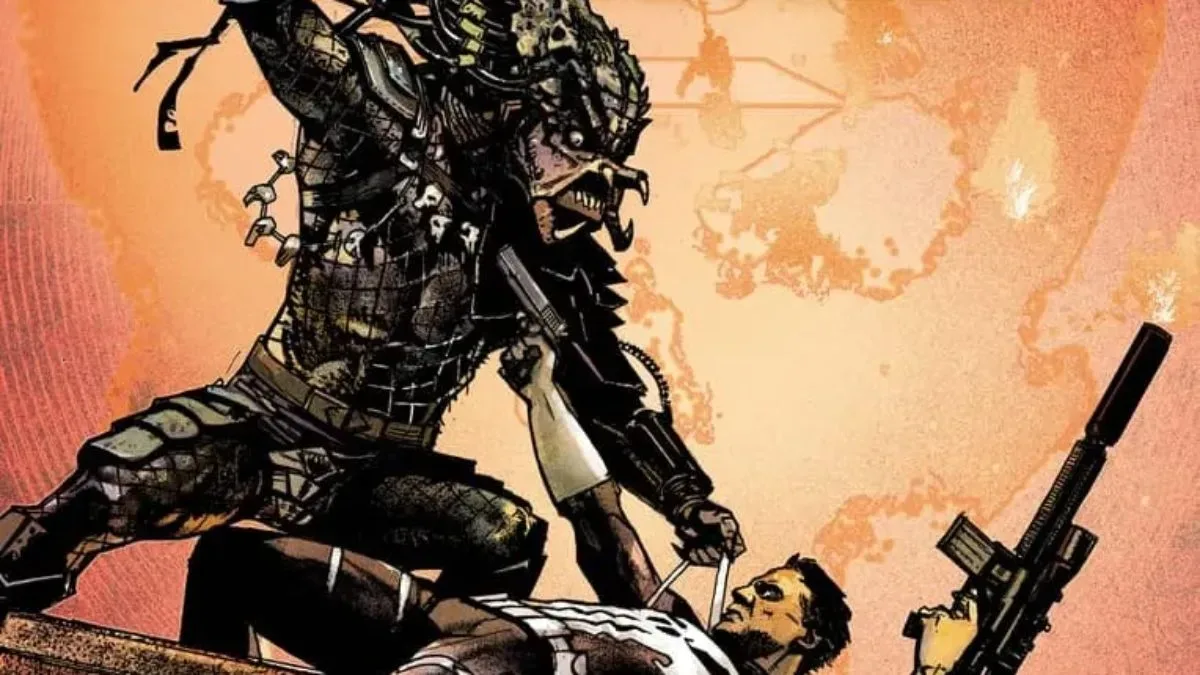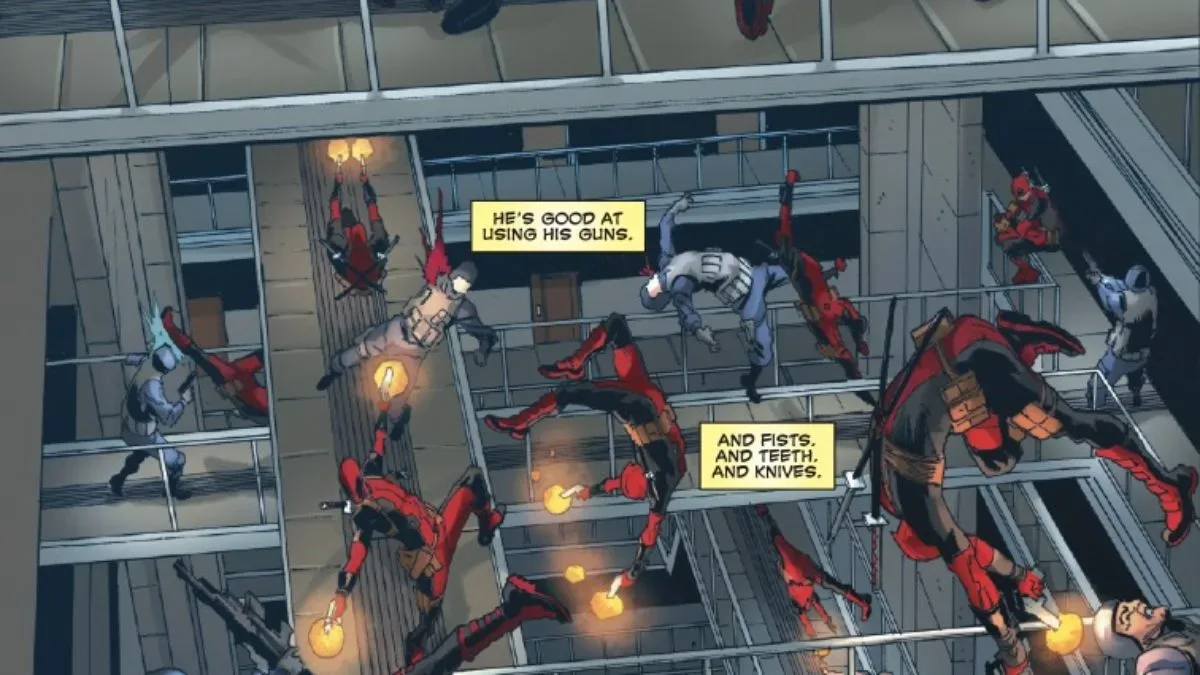
Wade Wilson: Deadpool #9 is set to put three of Marvel’s most dangerous gun-for-hire figures on a collision course. The issue continues the “BIG GUNS” storyline, bringing Bullseye into a race already involving Deadpool, the Punisher, and Black Hole. At stake is an unspecified weapon that each side wants to secure first.
The issue is scheduled to go on sale October 14, 2026. Benjamin Percy is credited as writer, Geoff Shaw as artist, and Shaw also provides the main cover. Marvel lists the comic as a 32-page, Rated T+ release with a $4.99 US cover price.
Bullseye joins an already crowded weapon chase
The official setup for “BIG GUNS” Part 3 is admirably direct: Punisher and Deadpool are hunting the same weapon as Black Hole, and Bullseye enters the story as the marksman who can put that weapon to use. The solicitation does not identify the weapon, explain Black Hole’s objective, or clarify whether Bullseye is working for one of the competing factions. Those unanswered points are the issue’s central hook.
What is clear is the kind of pressure the premise creates. Deadpool and Punisher are not simply confronting a shared enemy; they are pursuing the same prize. That makes cooperation uncertain by design. Even if their immediate goals overlap, the question of who gets possession of the weapon remains. Bullseye’s arrival adds another unpredictable participant to a contest where every character has an obvious reason to distrust the others.
The phrase “greatest marksman” is particularly meaningful in this setup. A marksman is someone defined by exceptional precision with projectile weapons, rather than mere firepower. In narrative terms, that makes Bullseye more than another person in the chase. If the mystery object is genuinely important, the story is positioning him as someone who could turn possession into an immediate tactical advantage.
What “Big Guns” appears to mean for the series
The story title can be read on two levels. Literally, the arc concerns a gun or weapon powerful enough to attract multiple violent rivals. Structurally, it is also assembling a cast of major Marvel combatants whose approaches to force are very different. Deadpool is typically associated with irreverence and chaos, while Punisher is framed around a harder, more severe brand of vigilante violence. Bullseye’s inclusion introduces a specialist whose defining contribution is lethal accuracy.
That combination gives the arc a strong built-in contrast. A weapon hunt can easily become a simple contest over who has the biggest arsenal, but Bullseye shifts the emphasis toward the person aiming it. The solicitation itself asks what good a gun is without the right shooter. It is a tidy piece of genre logic: an object may be powerful, but a character’s ability and intent determine what it becomes in a fight.
Black Hole is the least defined piece of the conflict based on the available description. That lack of detail is worth noting rather than filling in with guesses. The group is presented as a rival force in pursuit of the weapon, but the issue’s promotional information does not state who belongs to it, what it plans to do, or how it connects to Bullseye. Readers hoping for a complete explanation before release will likely need to wait for the comic itself.
A four-way conflict leaves room for shifting alliances
The most interesting practical implication of the premise is that it does not lock the issue into a straightforward hero-versus-villain structure. Deadpool, Punisher, Bullseye, and Black Hole have competing paths to the same objective. In a race like this, temporary partnerships can be useful, but they are inherently fragile because the desired item cannot be meaningfully shared if everyone wants control of it.
That is especially apt for a Deadpool title. The character’s presence allows a tense action premise to carry comic disruption, while the Punisher brings a more grounded sense of urgency. Bullseye, meanwhile, can make distance itself dangerous. A chase is no longer only about getting to the weapon first; it is also about whether anyone can get close to it safely once a precision killer is in play.
None of that confirms the issue’s plot beats, and the solicitation should not be mistaken for a full synopsis. Comic solicitations are advance sales descriptions: they establish the broad premise, credits, format, date, rating, and editions, while holding back the twists that make an individual chapter worth reading. Here, Marvel has provided the key ingredients without revealing the weapon or the eventual winner of the hunt.
Creative team and release details
Percy and Shaw are the credited creative leads for this issue, with Shaw also handling the regular cover. Readers who buy a single issue rather than wait for a later collected edition will have several cover options at the same listed US price.
- Regular edition: Geoff Shaw cover, $4.99 US
- Tyler Kirkham variant: $4.99 US
- Josemaria Casanovas four-part connecting variant: $4.99 US
- Gurihiru art-style variant: $4.99 US
- Klaus Janson variant: $4.99 US
The Casanovas option is described as a four-part connecting variant. That term generally means a cover image is designed to align visually with three related covers, forming a larger composite image when placed together. The provided listing identifies it as part of a four-cover design, but does not specify the other issues or images in the set. Collectors interested in completing the full display may therefore want to confirm the companion covers with their preferred comic shop before buying.
Likewise, a variant cover is an alternate cover for the same comic issue, not a separate story chapter. The listed variants share the issue’s $4.99 US price, though availability can vary between retailers because stores decide which editions to order. The Canadian price listed for each variant is $6.25.
Why Bullseye is the right complication for this chapter
Part 3 is often the point in a serialized comic arc where a premise needs to widen rather than merely continue. Adding Bullseye does exactly that without changing the central objective. The weapon remains the prize, Punisher and Deadpool remain in pursuit, and Black Hole remains a competing threat. But the new arrival changes the balance of the field.
It also neatly reinforces the “Big Guns” concept. The arc is not being sold solely on the mystery of what is being hunted; it is being sold on the collision of characters whose reputations make a weapons race inherently volatile. Bullseye’s role is presented as the answer to the question of who should wield an extraordinary firearm. Whether that makes him the biggest threat, the most useful ally, or both is the question the issue is built to explore.
For a wider Marvel screen-side detour into artificial intelligence and identity, readers can also revisit VisionQuest’s AI mystery. Wade Wilson: Deadpool #9, however, is firmly focused on a more physical kind of escalation: a coveted weapon, multiple competing claimants, and a marksman entering the picture at exactly the moment nobody needs the odds to get worse.
Wade Wilson: Deadpool #9 arrives October 14, 2026, from Marvel. It is 32 pages, Rated T+, and priced at $4.99 US.