VisionQuest asks an unusually fundamental question for a superhero series: if a being can copy memories, rewrite programming and construct an ideal virtual home, where exactly does the self reside? The eight-episode Disney Plus drama puts White Vision, played by Paul Bettany, at the center of a mystery involving artificial intelligence, family, identity and the unfinished consequences of Westview. It is the final chapter after WandaVision and Agatha All Along, but it is not simply a victory lap for familiar continuity.
Instead, the show turns Vision’s strange position in the Marvel Cinematic Universe into its main dramatic engine. This is a character who has inherited the memories of another Vision without necessarily becoming that Vision, escaped the events of Westview, and now has to decide what he owes to the people and creations that came before him. The result is reportedly rich in ideas and feeling, even when its deliberately complicated structure makes it harder than it needs to be to establish what is real, virtual or being concealed for a later reveal.
A White Vision story built around identity
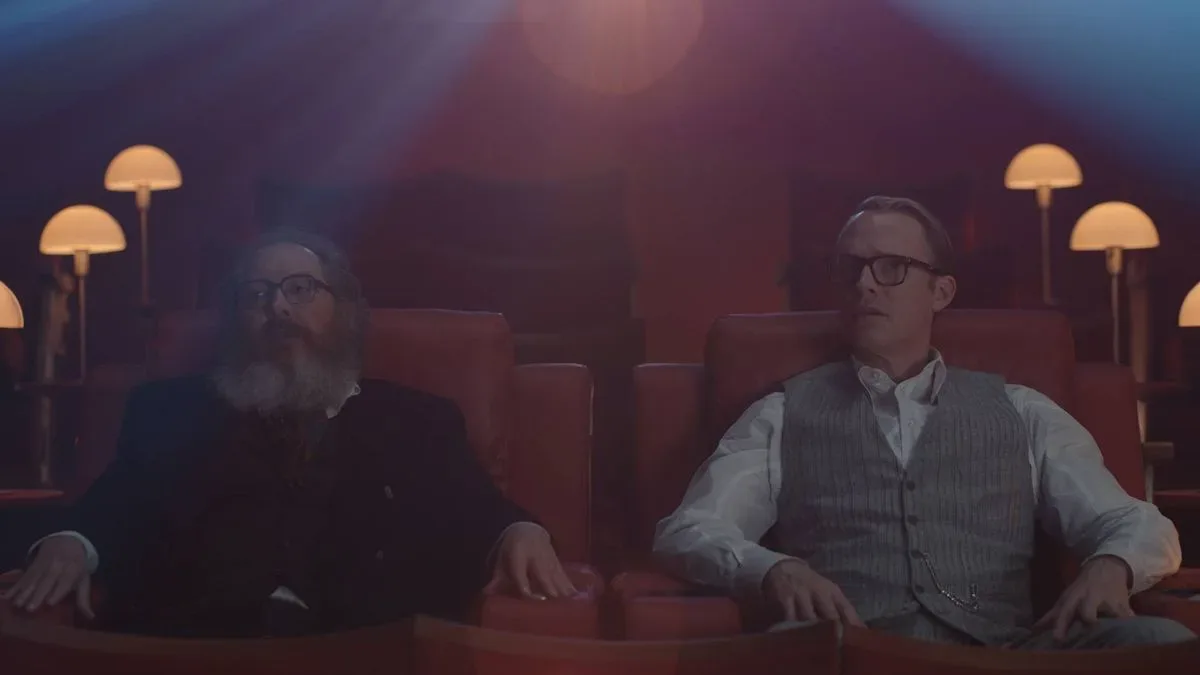
Several years after overriding his programming and departing Westview, White Vision has built a divided existence. By day, he works in a Scottish pub. At night, he retreats to a virtual utopia of his own design. That digital space is not merely a high-tech hideout: it is home to a peculiar community of Stark-connected artificial intelligences, all represented there by human avatars.
J.A.R.V.I.S. is played by Hugh D’Arcy, F.R.I.D.A.Y. by Orla Brady and E.D.I.T.H. by Emily Hampshire. D.U.M.-E. and U. also form part of the household, while James Spader returns as Ultron. The arrangement gives the series a useful emotional hook. Vision is not the only machine wrestling with personhood, memory or purpose; he is surrounded by other intelligences who can function as companions, foils and reminders of the systems that made him possible.
The show’s interest in AI is philosophical rather than a detached tech lecture. Artificial general intelligence, or AGI, is generally the concept of an AI capable of broad, flexible reasoning across tasks rather than being specialized for one narrow job. Within the MCU’s heightened science-fiction framework, VisionQuest uses that idea to consider legacy: who has authority over an intelligence after it becomes autonomous, and can a created being truly escape its origin?
Those questions also expand Vision’s personal history. The series examines his connection to his former self, to Ultron as a kind of creator or surrogate father, and to the people whose work left marks on his construction. Tony Stark and Bruce Banner remain relevant to that history, but the series indicates that Vision’s source code has deeper fingerprints too. It is a promising direction because it makes the character’s past more than continuity bookkeeping; it becomes a reason to revisit the difference between being made, being remembered and choosing who to become.
The mystery has a family at its core
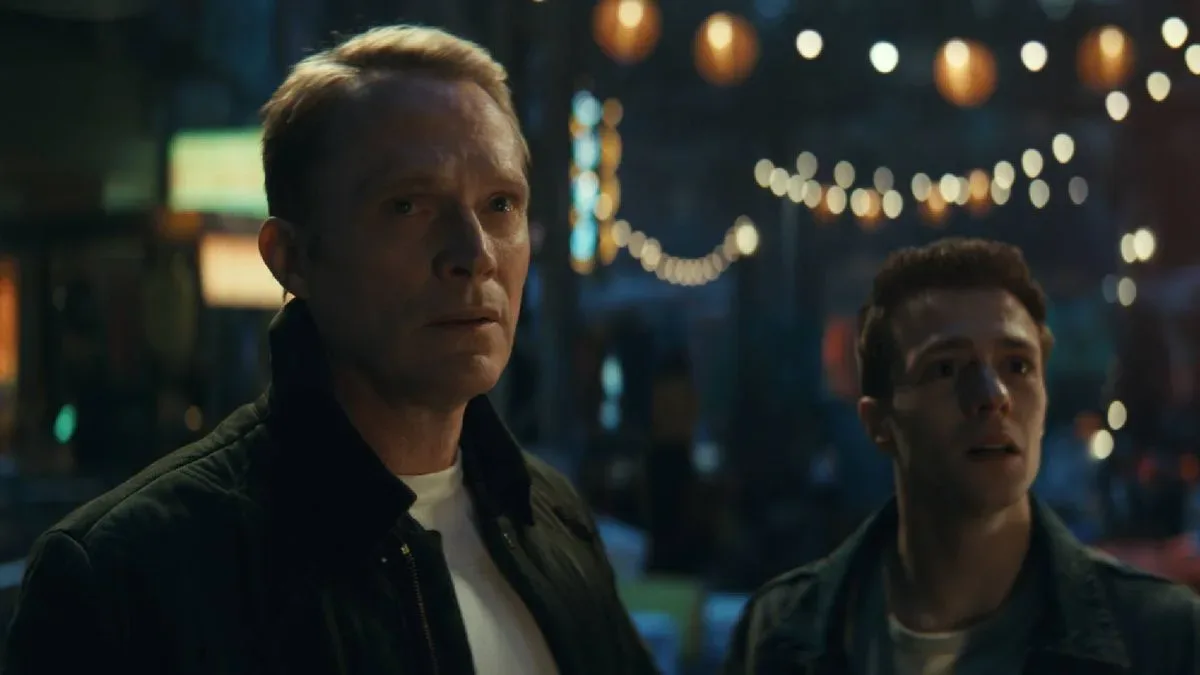
The plot accelerates when the bounty hunter Paladin, played by Todd Stashwick, targets Vision on behalf of a still-unidentified Client. The pursuit leads to Tommy Shepherd, played by Ruaridh Mollica. Tommy is one of Wanda’s twin sons from the Westview Hex and has ended up in the body of a London pickpocket. Vision’s mission becomes a three-part problem: protect Tommy, evade Paladin and uncover the Client’s purpose.
That would be plenty for one superhero serial, but another threat runs alongside it. A killer called Butcherbird is murdering prominent AI specialists around the world. The pileup of storylines makes clear that this is a mystery-box show: information is intentionally withheld, clues are parcelled out, and apparent answers create the next question. A mystery box is a structure that makes discovery itself part of the audience experience, rather than presenting every rule and motive immediately.
Related coverage includes VisionQuest Review: A Dense, Emotional Farewell to Marvel’s Strangest TV Trilogy.
That approach worked brilliantly when WandaVision used a shifting sitcom format to explore Wanda’s grief. VisionQuest has a different emotional vocabulary. Its concerns are fathers and sons, programming and choice, and the difficult possibility of love between people whose origins do not fit easy human categories. Tommy is especially important to that equation. The series apparently does not treat his identity or abilities as a prolonged fake-out, letting him have a clearer emotional journey as Speed rather than forcing the audience to wait for a reveal they can already anticipate.
T’Nia Miller’s Jocasta, who has had a limited place in the early promotional material, reportedly becomes another significant figure as the season unfolds. Her emergence matters because the story is already crowded with legacy characters and inherited mythology. A newer central presence can help the series frame its ideas as a living conflict rather than a museum of MCU references.
Paul Bettany and James Spader give the show its sharpest edges
Bettany has played variations of Vision for years, but White Vision presents a rarer opportunity. This version of the character carries memory without easy emotional continuity, and that tension allows Bettany to move from reserve and uncertainty into greater urgency as the threats escalate. The show gives him room to be more than a noble supporting Avenger or a romantic half of a larger Wanda story.
The virtual household also sounds like more than an excuse for cameos. J.A.R.V.I.S., F.R.I.D.A.Y., E.D.I.T.H., D.U.M.-E. and U. bring oddball energy to scenes that could otherwise become excessively abstract. Their presence suggests a central irony: the characters with the clearest claims to humanity may be software entities navigating kinship inside an artificial home.
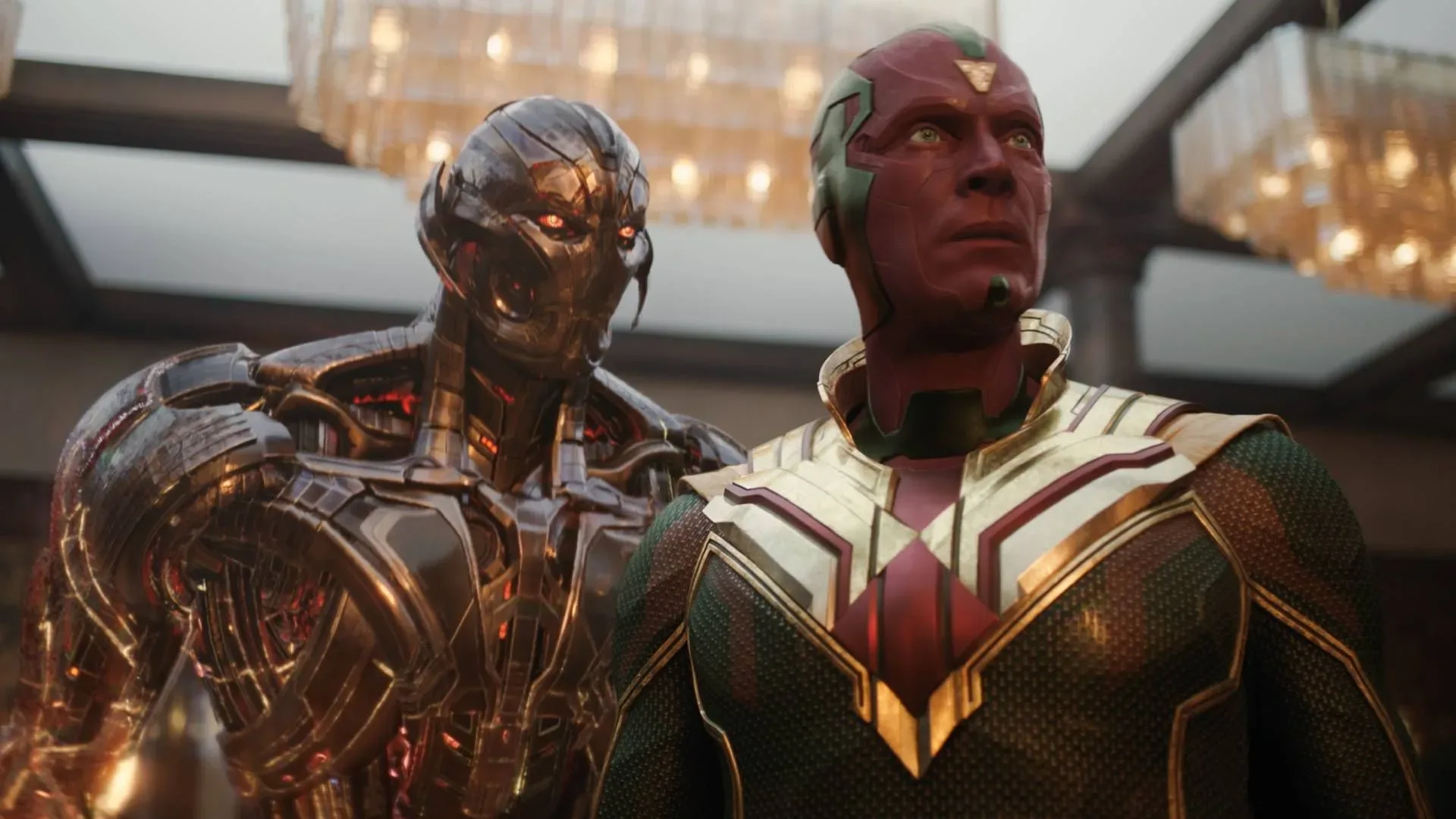
Ultron is the standout. Spader’s villain returns not as a straightforward repetition of his earlier destructive incarnation, but as a charismatic, megalomaniacal grandfather-like figure occupying Vision’s attic. That tonal shift sounds risky, but it gives the series a source of dark comedy and instability. A genocidal AI does not become harmless because he is funny; the contrast is precisely what makes the character’s scenes so lively. Ultron can be absurd, familiar and threatening at once.
Paladin is also given more definition than a standard hired gun. Humanizing a mercenary assassin is a sensible choice in a show whose protagonist is constantly judged by the circumstances of his creation. It lets the series ask whether a person’s assigned function should be treated as destiny, whether that function comes from code, a contract or family expectation.
Ambition creates both momentum and confusion
Showrunner Terry Matalas has worked in high-concept television before, including 12 Monkeys and the third season of Picard, and that background is visible in VisionQuest’s appetite for layered realities and ongoing puzzles. Most of the eight episodes run close to or beyond an hour, providing room for a substantial amount of plot. It also means that viewers are being asked to hold a lot of information at once.
The largest issue is clarity. Since the series moves between tangible reality and a virtual realm, it can be difficult to tell where a given event is happening. Some of that uncertainty is purposeful: the story wants the audience to question appearances and suspect misdirection. But intentional obfuscation still needs firm enough rules that suspense does not turn into simple disorientation. This is where the show’s reach sometimes exceeds its grasp.
On the stronger side, answers arrive often enough that the narrative does not remain opaque for too long. That rhythm is essential in an eight-hour mystery. If every question were held until the finale, the show’s themes could get buried under mechanics. Here, revelations appear to move the story forward while opening the next layer of the puzzle.
Disney Plus is releasing the season in two-episode batches, a choice that has mixed implications for this kind of show. A weekly rollout can give audiences time to compare details, build theories and debate a mystery’s smaller turns. Two episodes at a time makes the immediate viewing experience more substantial, but potentially reduces space for each installment’s clues and cliffhangers to linger. For a series with a deliberately intricate architecture, pacing outside the episodes may influence how cleanly its mysteries land.
Its focus on AGI and the accountability of creators also arrives amid broader debates about AI across entertainment and technology. The practical industry argument is not the same as Vision’s fictional struggle, but the overlap is easy to see: who controls a tool once it can generate convincing work or make consequential choices, and what responsibility remains with the humans who built it? Those questions are also surfacing in game development, including concerns around an AI-first development plan. VisionQuest turns them into genre drama rather than offering real-world answers.
Action works, but one familiar limitation remains frustrating
Unlike WandaVision, which was often more interested in format and mystery than conventional superhero combat, VisionQuest makes room for Vision’s full physical abilities. His phasing and energy attacks provide a welcome reminder that the introspective central character is also one of Marvel’s most formidable synthezoids. When he dispatches armed opponents quickly, the action can carry real excitement because it emerges from abilities the character already possesses rather than from a generic escalation.
However, the show once again places Vision at an early disadvantage through vibranium bullets. The device is understandable on a structural level: an overwhelmingly capable hero needs limits or opponents cannot credibly endanger him. Yet it raises a fair continuity question. If ammunition of this kind can critically compromise Vision, why has it not been a more prominent tactic against him before? A limitation works best when it deepens an established rule; it is more frustrating when it feels newly introduced chiefly to force vulnerability.
That contradiction reflects the series as a whole. VisionQuest is ambitious, sometimes brilliant, frequently heartfelt and not always tidy. It reaches for the inventive spirit of WandaVision without matching that show’s audacious sitcom-through-the-ages structure. Still, it finds its own texture through the strange warmth of its AI household, the father-and-son connection with Tommy, and Ultron’s unsettling comic presence.
A final chapter rather than a giant crossover runway
There are playful MCU acknowledgements along the way, including references to Wanda’s fate in Doctor Strange in the Multiverse of Madness and a return for James D’Arcy as Edwin Jarvis, the role he played in Agent Carter. The latter has particular resonance for longstanding MCU followers because it helps connect synthezoid history back to Jim Hammond, briefly represented by a sculpture in Captain America: The First Avenger.
Yet the series reportedly feels surprisingly separate from the wider MCU despite arriving before Avengers: Doomsday. Viewers looking for obvious setup for the next mega-event may not find much. That is not inherently a failing. A serialized universe benefits when every project does not exist solely as a trailer for the next one. In this case, the relative independence supports the show’s more valuable role: closing the loop on the MCU’s most unusual television trilogy and finally giving Vision the space to define himself.
VisionQuest begins streaming on Disney Plus on October 13. A separate release listing identifies October 14, so viewers should check their regional Disney Plus schedule for the exact availability time.