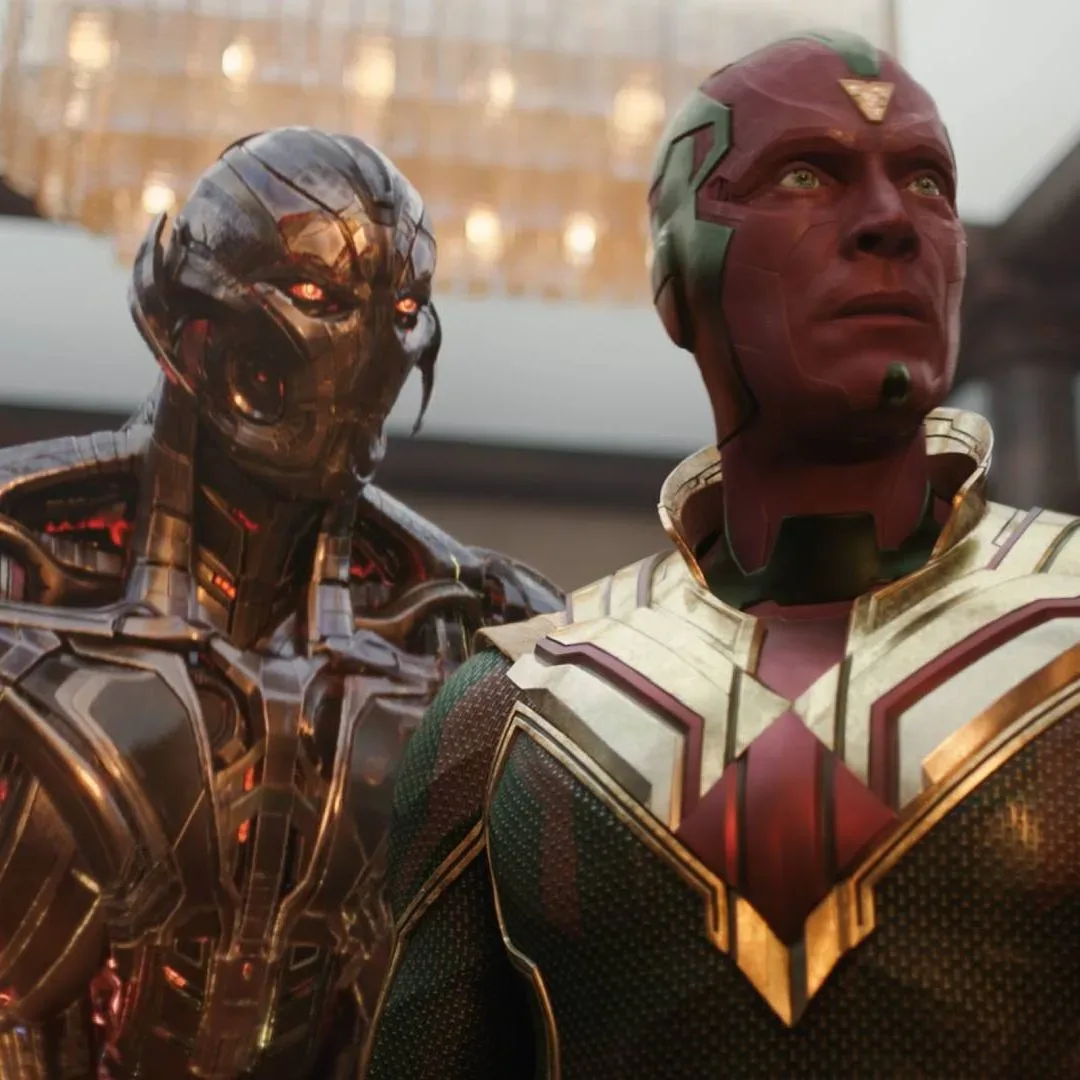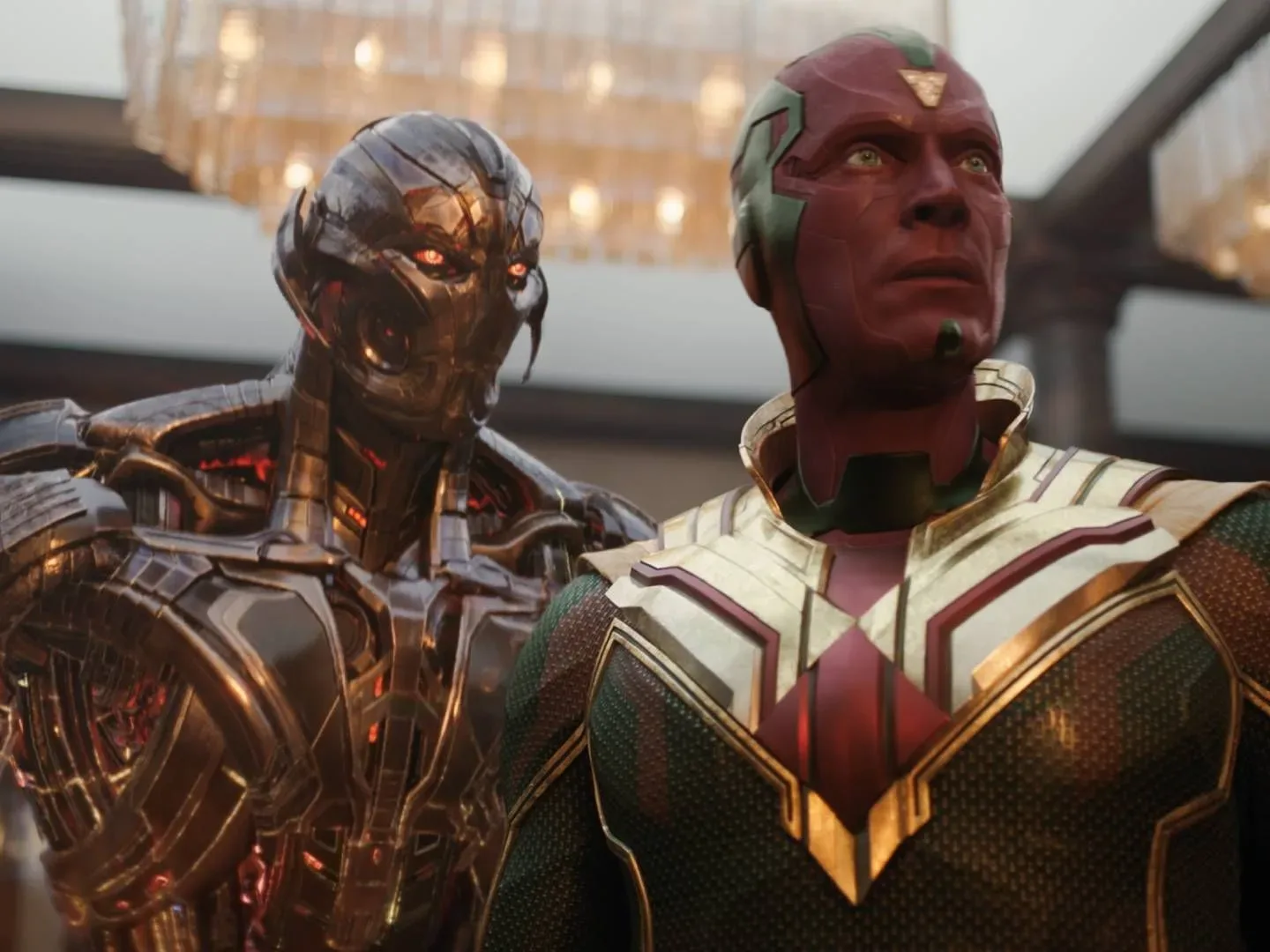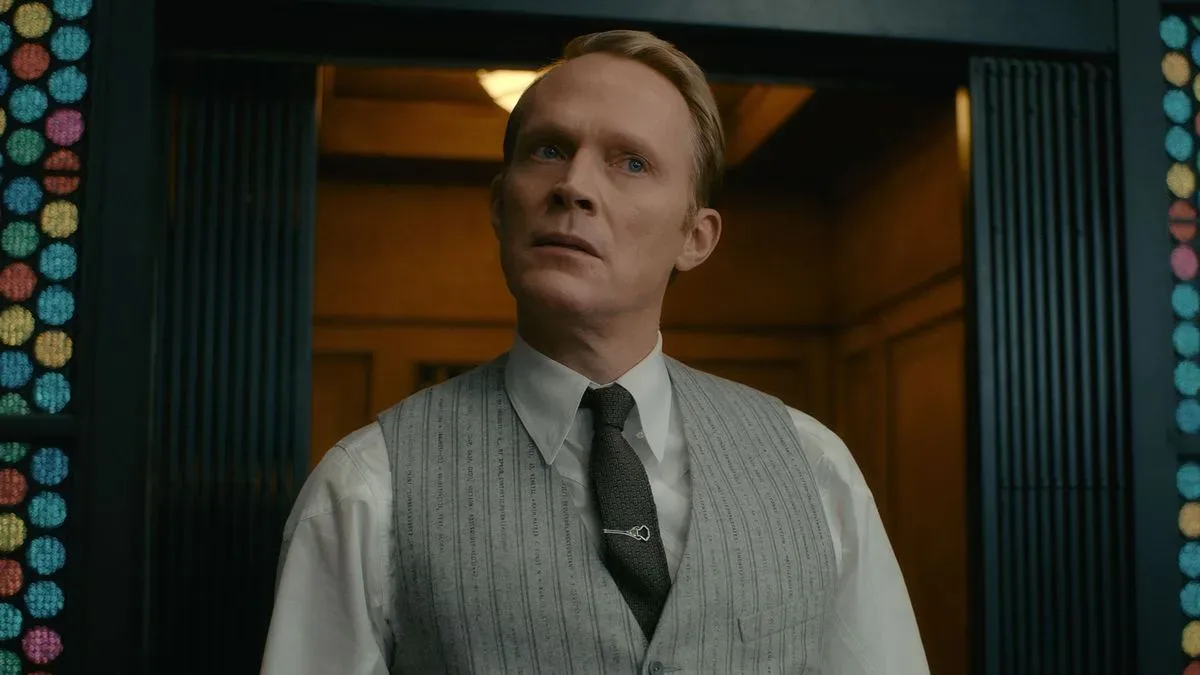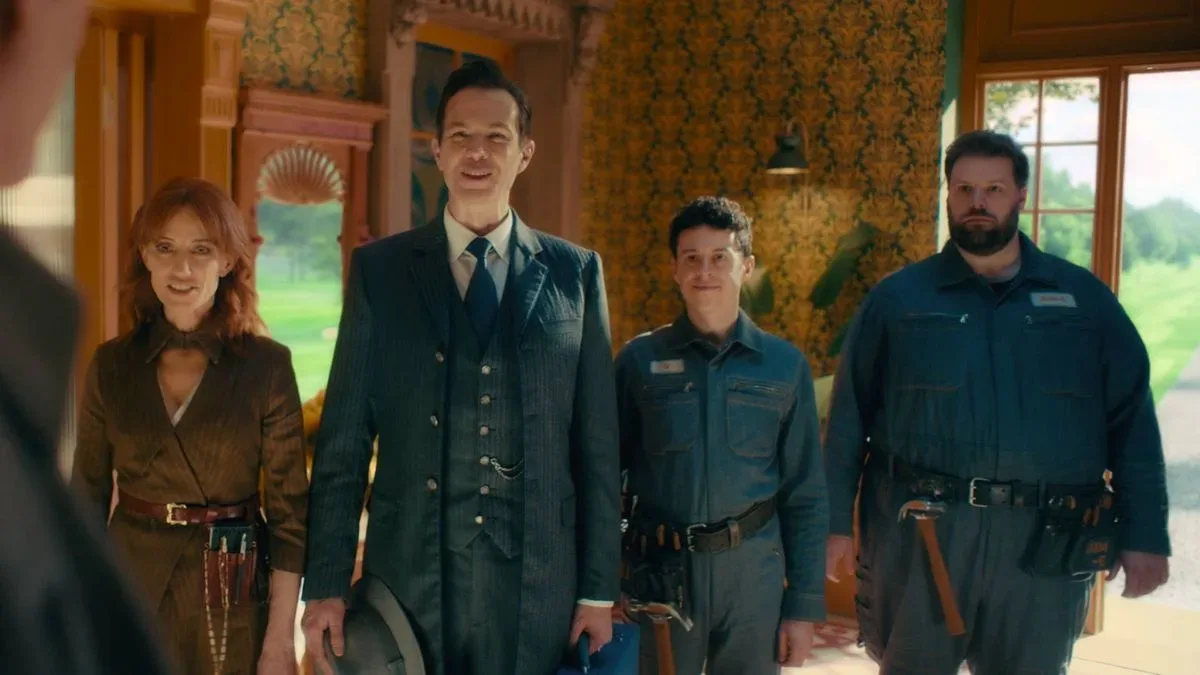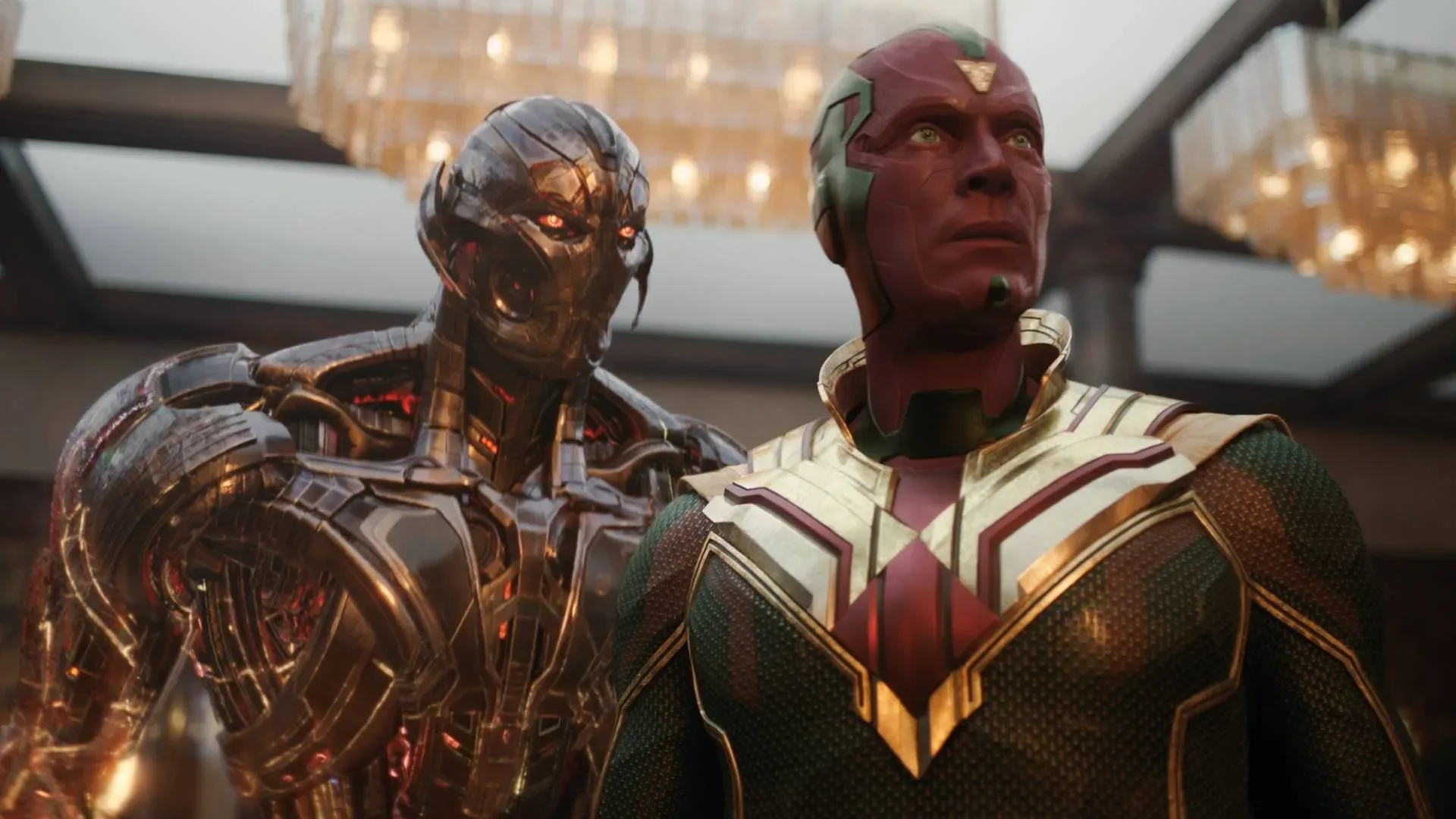
VisionQuest episode 2 has placed a blazing new mystery at the center of Vision’s concerns about artificial life and emotion. The character is not named on screen, and the series has not explicitly confirmed his identity. Still, the details presented so far strongly point toward Jim Hammond, the original Human Torch from Marvel comics.
That distinction matters. This would not be Johnny Storm, the Fantastic Four hero who shares the Human Torch name and flame-based power. Jim Hammond is a much older Marvel character: an android created decades before Johnny Storm entered the comics. In the context of VisionQuest, that history makes the possible introduction especially fitting. The show frames this fiery figure not simply as a powerful predecessor, but as a warning about what may happen when an artificial being’s emotions become destructive.
What VisionQuest episode 2 actually reveals
The evidence in episode 2 is deliberately incomplete. Jarvis speaks to Vision about the nature of emotion, describing it as capable of beauty but also of rashness, impulsiveness, and self-destruction. The discussion then turns to someone Jarvis says understood those dangers better than the others.
During that exchange, the series shows a painting of a man amid flames. Vision calls this figure “the first of us” and presents him as a cautionary example: someone whose emotions may have overwhelmed him, leaving him unstable and destructive. The show does not provide a name, an origin, or an explanation of the apparent catastrophe.
That uncertainty should remain front and center. The fiery android has not been formally identified as Jim Hammond in the material revealed so far. However, a humanoid artificial being associated with fire, described as an early example of his kind, aligns closely with Hammond’s comic-book identity.
Vision’s concern is not merely that emotions can create pain. The episode suggests that, for a being built with extraordinary capabilities, unchecked emotion can become physically catastrophic.
Why the clues point to Jim Hammond
Jim Hammond is best known in comics as the first Human Torch. He was created by scientist Phineas T. Horton in 1939 and was depicted as a remarkably advanced android. His body’s solar cells allow him to burst into flame, making the burning imagery in VisionQuest a significant potential clue rather than an arbitrary visual flourish.
The phrase “the first of us” also carries particular weight if Vision is referring to Hammond. Jim’s comic history positions him among Marvel’s earliest artificial heroes. VisionQuest appears interested in the broader lineage of constructed people—beings whose intelligence, self-awareness, and feelings invite questions that cannot be answered merely by describing them as machines.
Fire, then, works on two levels. It is Hammond’s recognizable superhero power, but within the episode it also becomes an image of emotional volatility. The painting’s flames may represent literal destruction, metaphorical turmoil, or both. The present evidence does not establish which interpretation is correct.
Jim Hammond’s place in Marvel comics
Hammond debuted in Marvel Comics #1 in 1939. The issue was published by Timely Comics, the company that would eventually become Marvel Comics, and the character was created by Carl Burgos. He appeared in that foundational issue alongside Namor the Sub-Mariner, another of Marvel’s earliest heroes.
His origin is straightforward in concept but rich in implications. Horton builds an android sophisticated enough to function as a person, while solar cells across Hammond’s body give him the ability to ignite. That makes his “Human Torch” title a literal description of his powers, not a connection to a family legacy or a cosmic accident.
For modern viewers, “android” can be a slippery term, often used for anything from a robot body to a digital assistant. In Hammond’s case, the term means an artificial being with a humanlike form. That is why his possible presence has such thematic value beside Vision. Both characters are artificial people, yet the important dramatic issue is their personhood: their ability to think, feel, make choices, and cause harm or good through those choices.
Hammond’s 1939 debut also makes him historically distinct from the better-known Human Torch, Johnny Storm. Johnny arrived in 1961 as part of the Fantastic Four, created by Stan Lee and Jack Kirby. The later hero uses the same name and similar flame powers, but he is not Jim Hammond and does not share his android origin. Marvel reused the name and power concept for Johnny’s era rather than presenting him as Hammond’s successor in a direct familial sense.
The Human Torch name can mean two very different heroes
- Jim Hammond: The original Human Torch; an android created by Phineas T. Horton; first appeared in 1939.
- Johnny Storm: The Fantastic Four’s Human Torch; debuted in 1961; a separate character with no stated relation to Hammond.
That difference is essential for interpreting VisionQuest. If the show is introducing Hammond, it is drawing from Marvel’s earliest superhero history while also adding another artificial person to a story already concerned with Vision’s emotional future.
The Invaders connection
Among Hammond’s most notable comic-book associations is the Invaders, a World War 2-era team. Its roster included Captain America, Bucky Barnes, Namor, Jim Hammond, and Hammond’s sidekick and ward Toro, whose name is Thomas Raymond.
This affiliation gives Hammond a place alongside some of Marvel’s most established early characters, particularly Captain America and Namor. It also supplies a useful explanation for why an old artificial hero could be relevant to an MCU story that treats the past as living history. VisionQuest has not said that its fiery android shares Hammond’s Invaders background, and viewers should not assume that every comics detail will transfer unchanged. Adaptations frequently select a character’s central ideas rather than duplicate a lifetime of continuity.
Still, the Invaders history shows that Jim Hammond is far more than a one-note relic from an early comic. He has been used as a hero connected to a major Marvel team and to a wartime generation of characters. That long history offers the series several potential directions without confirming any particular one.
A possible MCU thread that began at the Stark Expo
Hammond has not previously appeared as an active MCU character, but there is a notable earlier reference. In 2011’s Captain America: The First Avenger, a suit is visible at the Stark Expo and labeled “Synthetic Man.” The visual is an Easter egg that evokes Jim Hammond and his Invaders connection.
The reference did not establish Hammond as a fully developed figure in the MCU, and it did not explain his fate. Its purpose was closer to a background nod than a character introduction. But if VisionQuest’s flaming android is indeed Hammond, the earlier display becomes newly interesting: a small suggestion that the MCU had room for an artificial hero of this kind long before Vision’s story began.
There is also a playful layer to that earlier nod. Chris Evans played Johnny Storm before later portraying Steve Rogers/Captain America, and the Stark Expo image connected ideas associated with the Human Torch and Captain America’s era. That does not make the two Human Torches the same person, but it helps explain why the visual resonated with fans familiar with Marvel’s overlapping history.
Why Hammond is an effective foil for Vision
The most meaningful implication of the episode is not simply that a vintage superhero may have entered the MCU. It is the way Hammond’s apparent fate speaks to Vision’s fear of emotional excess.
Vision is presented with a difficult proposition: emotion may be beautiful, but it may also make a powerful artificial being dangerous. The fiery figure’s alleged instability turns that proposition into a cautionary example. If Vision sees Hammond as someone like himself, then the warning is intensely personal. It is not a philosophical discussion about people in general; it is a question of whether feelings can coexist with control, responsibility, and survival.
This does not mean the show has declared emotion itself to be a flaw. Jarvis’s description includes beauty as well as danger. The distinction is important. The issue appears to be whether a person can experience powerful feelings without being consumed by them. Vision’s account of Hammond suggests that his predecessor failed that test—or that Vision believes he did. Until the series provides the missing history, the audience cannot know whether Hammond was truly destructive, misunderstood, manipulated, or some combination of those possibilities.
That ambiguity gives the mystery real dramatic potential. A painting is a curated image, and a warning can reflect the fears of the person telling it. VisionQuest has shown a powerful symbol and an unsettling interpretation, but it has not yet provided the complete story behind either one.
For now, Jim Hammond remains the leading explanation for VisionQuest’s mysterious fiery android, not a confirmed identity. The character’s comic background nevertheless makes the theory persuasive: an advanced android, a body built to ignite, and a legacy that predates many of Marvel’s most famous heroes. Whether the series preserves that history, reshapes it, or uses it to challenge Vision’s understanding of himself is the question its remaining episodes will need to answer.
For another VisionQuest character breakdown, see our guide to Paladin’s role in the series.