Warning: This article discusses major plot developments from the first two episodes of VisionQuest.
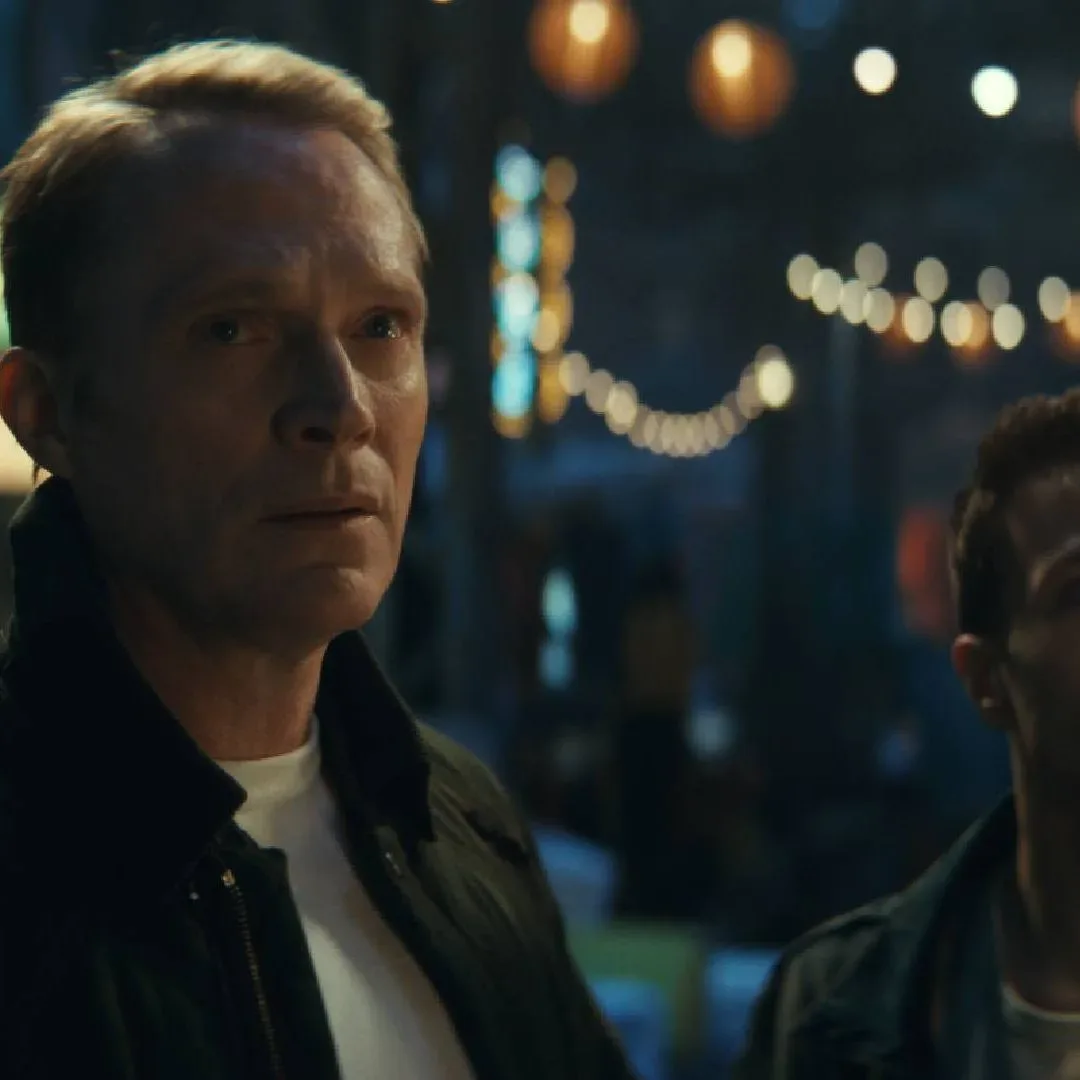
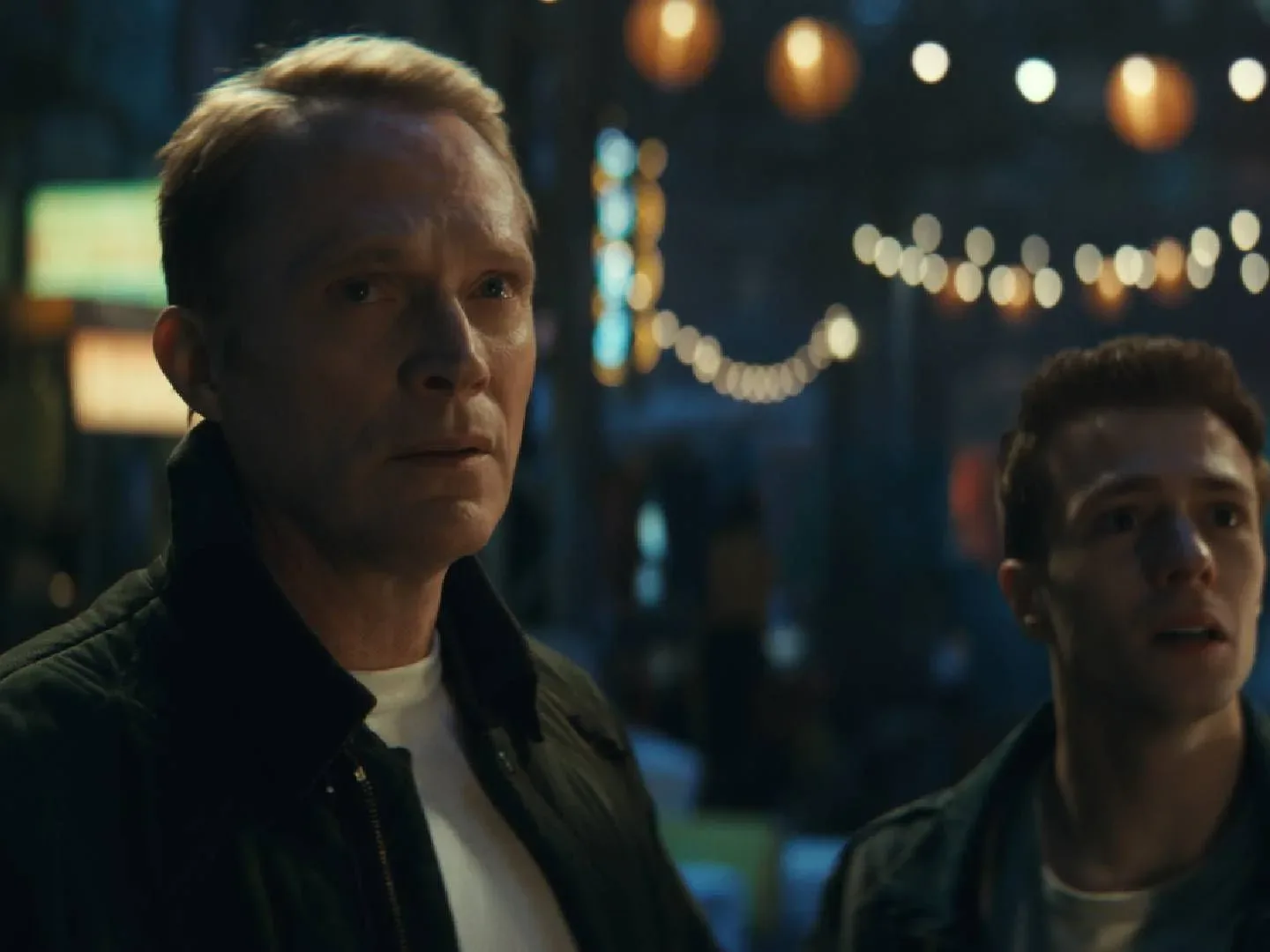
VisionQuest has brought Vision into the spotlight for an eight-episode story concerned with fathers, sons and the uneasy boundary between artificial and human life. Its most immediately dangerous new presence is Paladin, played by Todd Stashwick: a bounty hunter hired to locate and capture Vision.
That basic description undersells the trouble he represents. Paladin is not framed simply as a gun for hire who happens to cross Vision’s path. He has a stated rule against civilian deaths, considers his work righteous, operates under an unbreakable contract, and has connections extending beyond his handler to Ultron himself. By the end of episode two, he has also learned a crucial fact before Vision does: Tommy Shepherd is alive.
That makes Paladin a useful complication for the series. He is a physical threat to an extraordinarily powerful synthezoid, but he is also an opponent whose ethical language and professional limits make him harder to place than a conventional villain. His assignment is ruthless; his code appears real. The question is whether that code can ever protect the people Vision cares about when Paladin’s contract says otherwise.
What Paladin has done in VisionQuest so far
Paladin enters the story after an attempted ambush on Vision goes disastrously wrong. The sniper involved kills Fiona, a friend of Vision’s. Paladin then executes the sniper. The action establishes the hunter’s “no civilians” rule in blunt terms: he does not treat collateral damage as an acceptable part of the job, even when the damage is caused by someone on the same side of an operation.
That moment should not be confused with heroism. Paladin is still pursuing Vision for a paying Client whose identity and intended purpose remain unknown. The show has not explained why the Client wants Vision captured rather than killed, and that distinction could matter. A capture order implies Vision himself is valuable to the plan, whether as a person, a machine, a source of information, or something else entirely. For now, those possibilities remain speculation, not confirmed plot details.
Paladin’s known support network is already substantial:
- A mysterious Client has commissioned the hunt for Vision.
- A handler, played by Dianne Morgan, assists Paladin’s work.
- Ultron has secretly been corresponding with Paladin.
Ultron’s covert contact is the most ominous item on that list. James Spader’s Ultron is among the returning figures tied to the series, and the communication suggests Paladin’s mission may be connected to forces beyond an ordinary bounty job. It does not establish that Ultron is the Client, however. The story has kept that answer concealed.
Tommy turns the hunt into a personal crisis
Paladin’s most consequential advantage is informational rather than physical. He deduces that Tommy, Vision’s son, is alive—something Vision does not yet know. Paladin reaches Tommy first and holds him at Saint Mabyns, an asylum.
The hostage situation gives Paladin leverage that raw firepower alone may not provide. Vision can survive and counterattack in ways most human targets cannot, but a hunter who can choose the battlefield and threaten a loved one can force a stronger opponent into a terrible position. Saint Mabyns is therefore more than a setting for a confrontation: it is where Paladin converts his discovery about Tommy into control over Vision’s choices.
It also strengthens the show’s stated focus on fathers and sons. Paladin’s work is not only aimed at locating a synthezoid; it interferes with Vision’s chance to understand and reconnect with Tommy. The hunter is effectively positioned between parent and child, which gives the conflict emotional stakes alongside its larger Marvel machinery.
Why adamantium rounds matter
At Saint Mabyns, Paladin seriously damages Vision with shotgun ammunition made from adamantium. The result is important because it demonstrates preparation. Paladin does not approach Vision with ordinary weapons and hope for the best; he arrives with ammunition capable of critically harming him.
Adamantium is the name of an exceptionally durable metal in Marvel fiction. In this case, the relevant point is not a broad catalogue of every comic-book use for the material. It is that the series identifies Paladin’s rounds as adamantium and shows them doing real damage to Vision, immediately explaining why the hunter can challenge a target so much more durable than a normal person.
Paladin’s advantage does not last. His gun jams, or possibly runs out of ammunition; the exact cause is left uncertain. Vision recovers enough strength to send him flying. That defeat ends the immediate encounter but does not resolve the threat. Paladin has demonstrated that he can hurt Vision, has found Tommy, and remains tied to an unexplained contract. A single failed fight is not the same thing as a completed hunt.
Paladin’s code, contract and title
F.R.I.D.A.Y.’s research outlines an unusually mythic profile for a mercenary. Paladin is described as the last in a centuries-long succession of hunters. Crucially, he is a Paladin rather than the Paladin. That wording implies an inherited role or tradition, not merely a codename invented for one man.
He is reportedly trained in every art and every weapon, takes assignments for the highest bidder without discrimination, views himself as righteous, and is bound by a contract that cannot be broken. Taken together, these details explain the central contradiction of the character. His moral rule against harming civilians may be genuine, yet his willingness to work for any sufficiently wealthy employer makes that morality highly conditional in practice.
A code is not automatically justice. It can instead be a system someone uses to make violent work feel orderly and defensible. Paladin’s rule establishes a line he will not cross, but his hostage-taking and pursuit of Vision show that the line does not necessarily include compassion for everyone caught inside a contract. The series has not yet clarified how he reconciles those positions—or whether that tension will finally make him question the job.
The “unbreakable” nature of the contract is especially worth watching. It could be a figure of speech for an ironclad professional obligation, or it could point to a more literal constraint. The available episodes do not settle the matter. What is clear is that Paladin treats the assignment as something more binding than a conventional paycheck.
How the screen version compares with Marvel comics
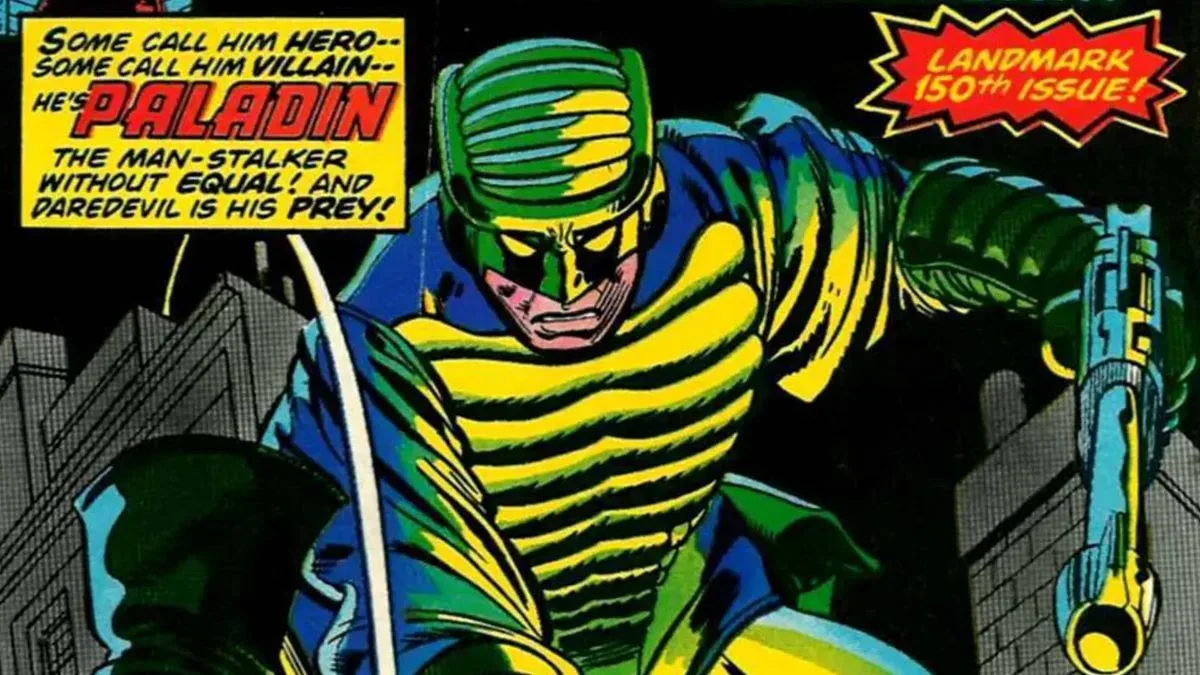
Paladin has a considerably older comic-book history than his live-action debut might suggest. The comics character is Paul Denning, first introduced in a 1978 issue of Daredevil. Like the television version, he is a mercenary rather than a straightforward supervillain, and his profession regularly puts him at odds with street-level heroes including Spider-Man.
That status is important. A hired operator can oppose heroes without being driven by personal hatred or a grand plan for domination. His loyalties are transactional, and the outcome can change if the employer, terms, or ethics of a situation change. In the comics, Paladin is usually a solo figure, though he has at different times belonged to Heroes for Hire and the Thunderbolts.
Comic Paladin has superhuman strength and speed and commonly uses a stun gun. He also has access to advanced resources. His ethical streak is part of the established character rather than a brand-new invention for VisionQuest: in one comic storyline, he turned against a corrupt government agency and backed the rebels he had initially been hired to neutralize. In another, he defeated Captain America with nerve gas.
Those examples paint a character capable of both principle and deeply dangerous methods. That combination is a meaningful foundation for the screen portrayal, even if the specific circumstances are different. Readers interested in adjacent Marvel comic-book coverage can also see our look at Darkwolf #4’s vengeful hunt.
The visual changes are deliberate, not a total reinvention
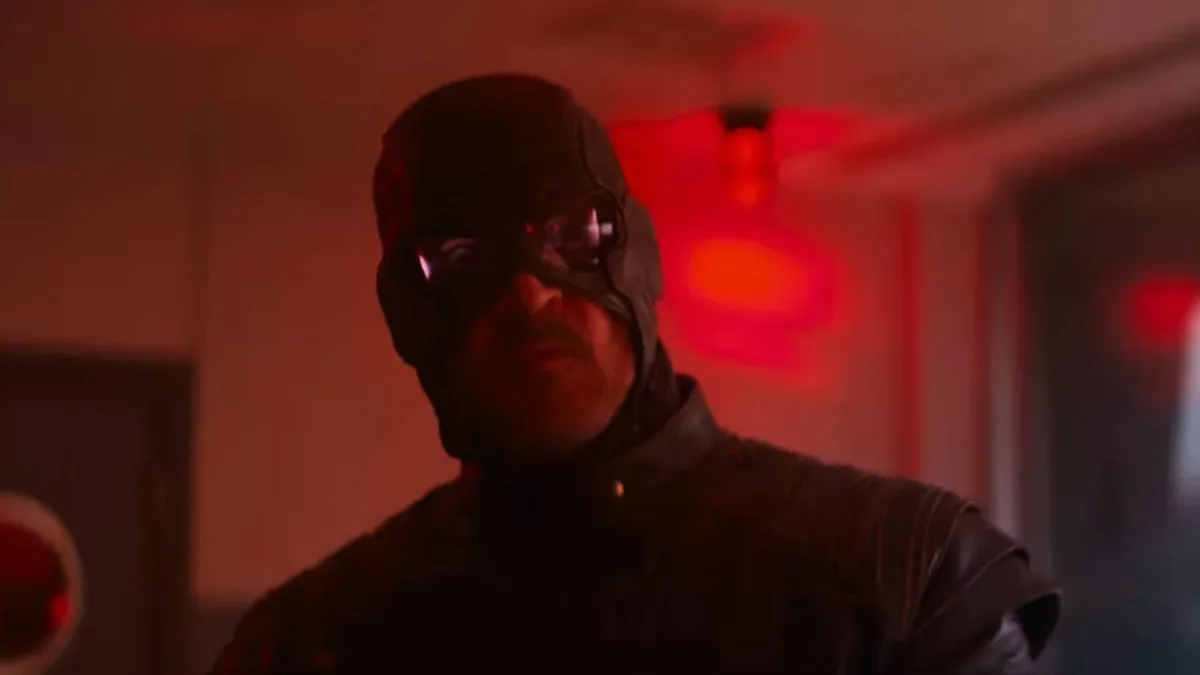
The live-action Paladin differs in look and equipment. Instead of relying on the comic character’s familiar stun gun, this version uses a shotgun loaded with adamantium rounds, a change tailored to an adversary such as Vision. His clothing has also shifted toward biker leathers.
Still, the series has not discarded every visual connection. The goggles and helmet he puts on to battle Vision recall the traditional comic-book design, which incorporates a head covering and lenses. It is a selective adaptation: the show updates the silhouette and weaponry while preserving a recognizable marker of the original costume.
VisionQuest is Paladin’s first live-action appearance. He had previously appeared in an episode of the 2017 animated Spider-Man series. The current portrayal therefore gives the character a larger opportunity to establish what “Paladin” means in a world where Vision, Ultron, E.D.I.T.H. and Tommy Shepherd are all part of the same unfolding conflict.
What remains unanswered
The first two episodes establish Paladin’s function without revealing the full shape of his role. Several key uncertainties remain:
- Who is the Client, and why do they want Vision captured?
- What is Ultron’s interest in Paladin’s mission?
- What, precisely, makes Paladin’s contract unbreakable?
- Will his civilian-protection rule collide with the tactics required to hold Tommy and pursue Vision?
- How will Vision respond now that Paladin has exposed Tommy’s survival and demonstrated a weapon that can damage him?
For now, Paladin works because he is neither safely predictable nor invincible. Vision beat him in their first major clash, but the bounty hunter left with the more strategically valuable information and an apparent route back into the story. He is a hunter with rules, advanced tools and powerful contacts—and the series has made clear that his rules do not make him harmless.