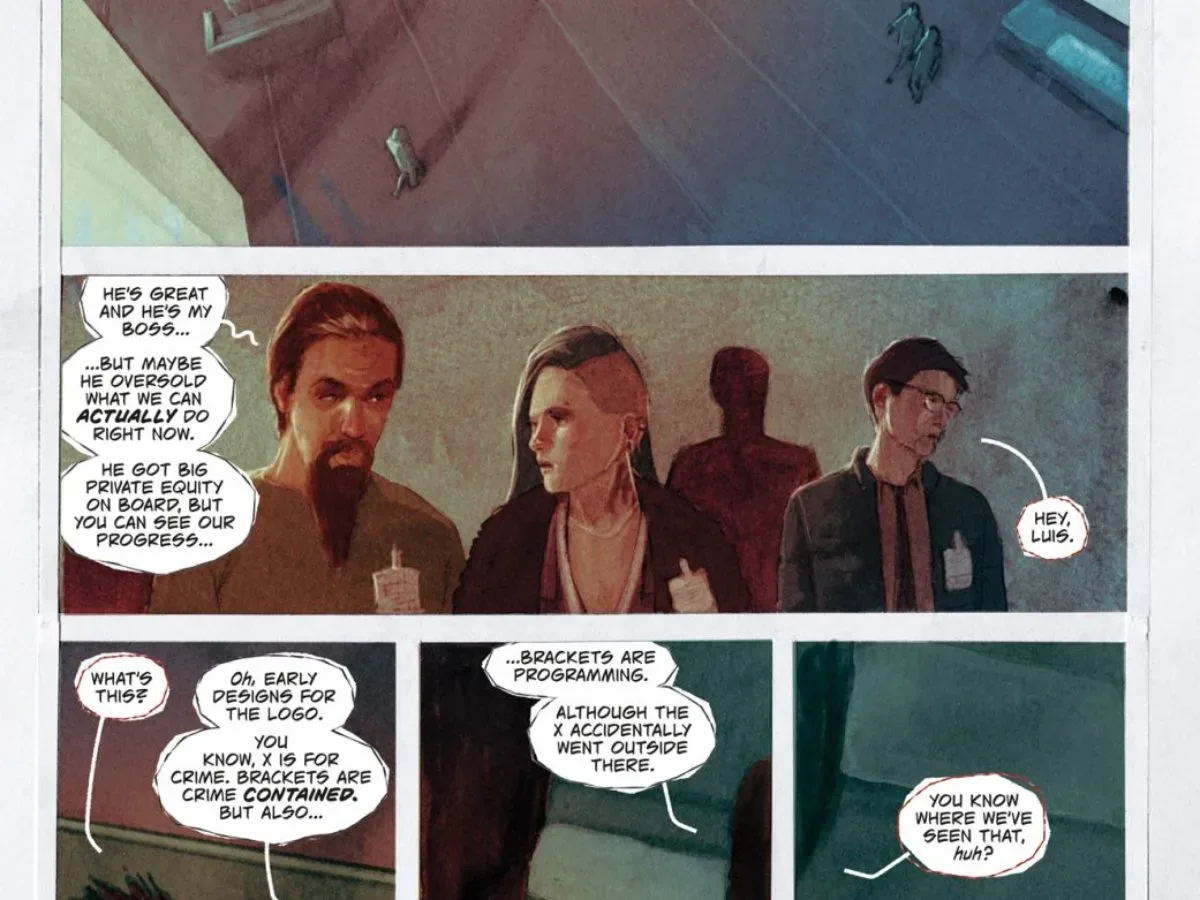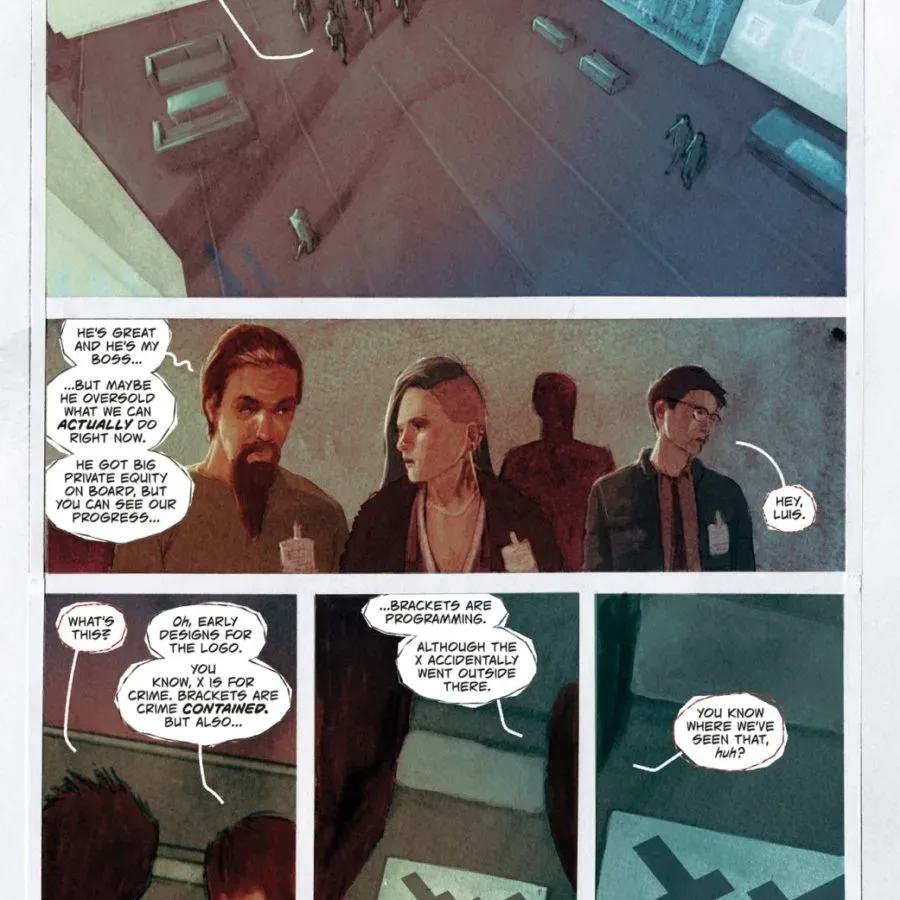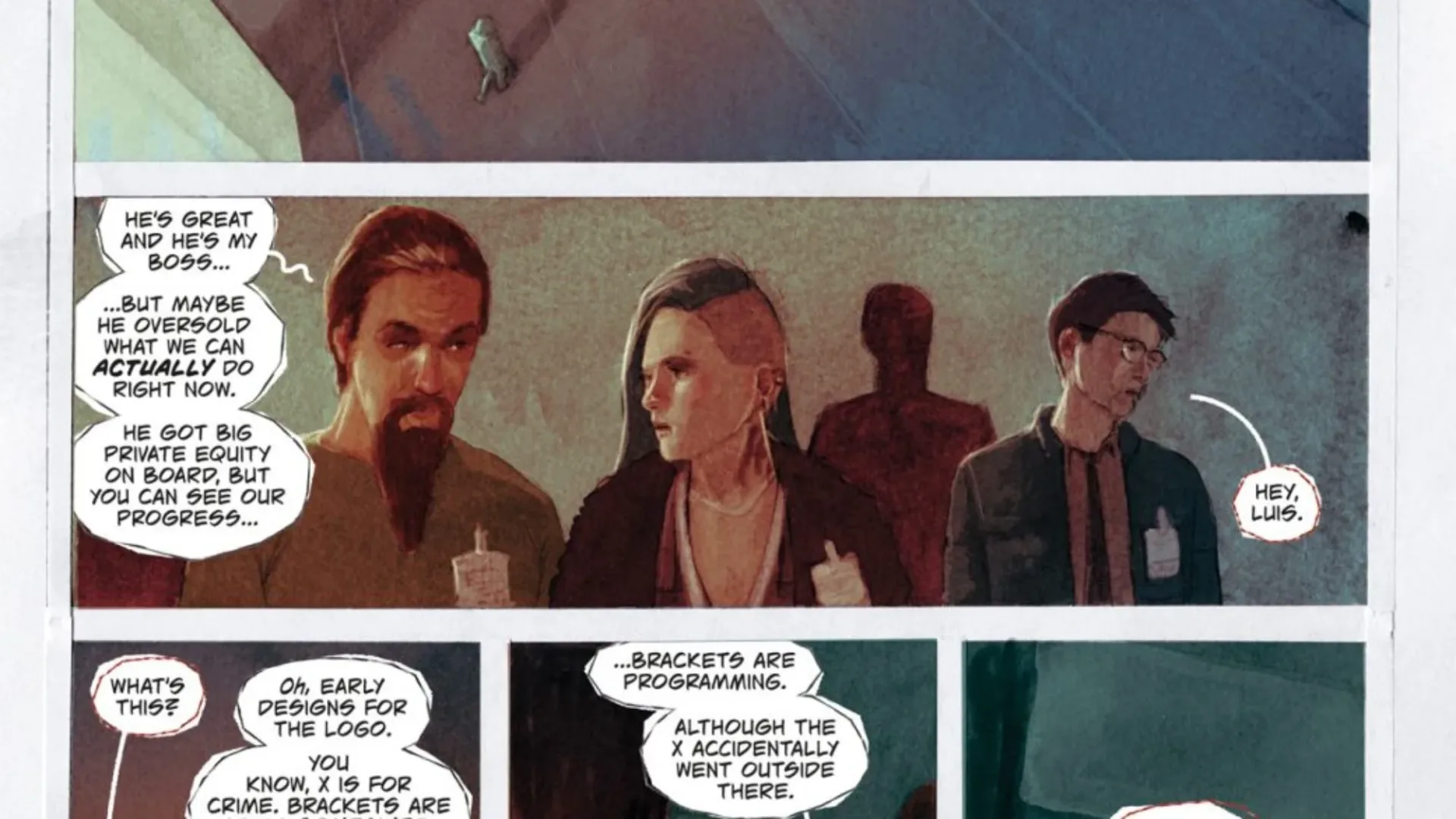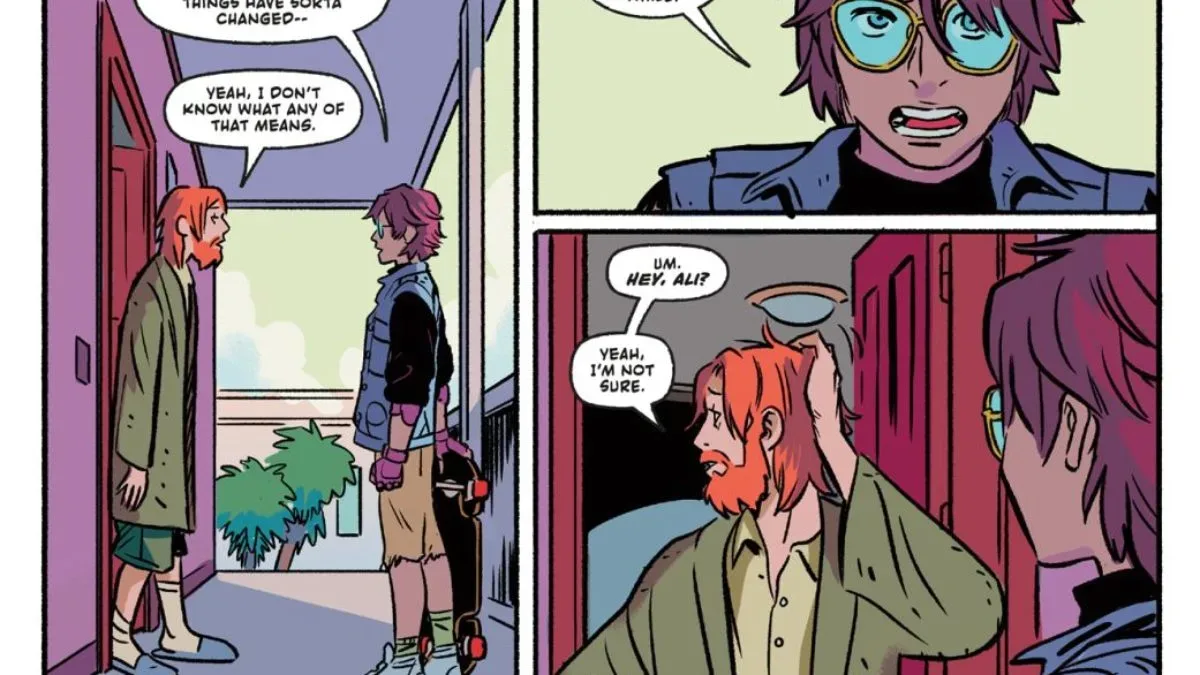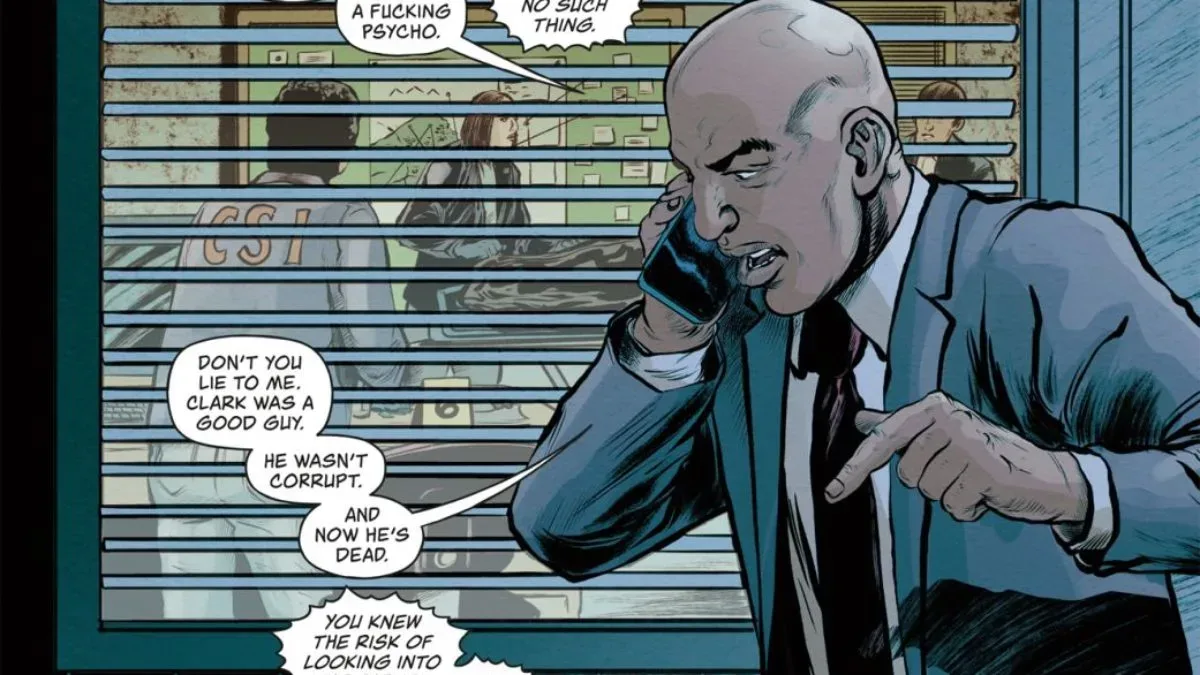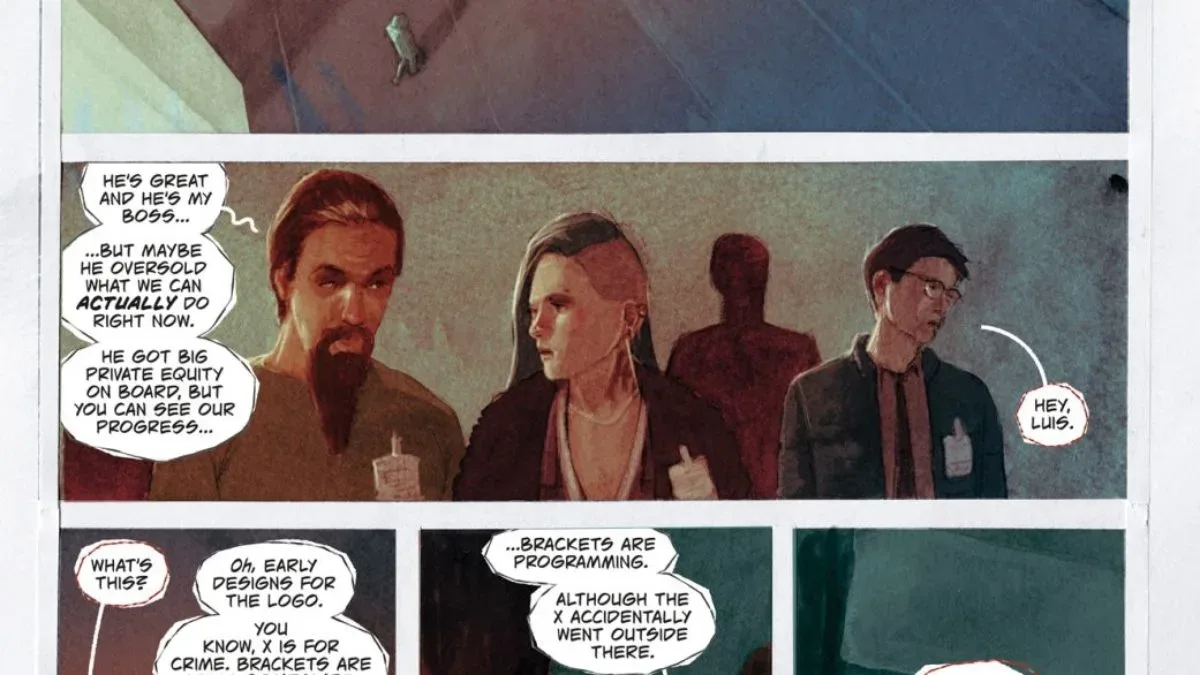
The Smart Division #2 is scheduled to go on sale September 30, 2026, from Dark Horse Comics. The 32-page, rated-T issue is the second chapter of a five-issue series and moves its newly paired investigators, Stevie Larque and William Bailey, toward a missing-developer case with an unusually contemporary set of hazards: cybersecurity conspiracy communities, covert app development and billion-dollar artificial-intelligence startups.
That setup gives the issue a focused mystery while leaving room for a larger argument between its leads. Stevie and William do not simply agree on the place AI should occupy in society; their disagreement is part of the case’s stated premise. In a story built around a person who has vanished and technologies whose inner workings may be obscured, that conflict can matter as much as the clues. The question is not merely who is missing, but which systems are being trusted, who benefits from that trust, and what gets overlooked when a technical answer is treated as an unquestionable one.
A missing-person investigation in a technological underworld
The solicitation places Stevie and William’s search in a “seedy” network of conspiracy theorists, underground app makers and major AI businesses. Those three settings point to different kinds of pressure around the investigation.
Cybersecurity conspiracy theorists bring a world of suspicion, partial information and people who may interpret every unexplained event as evidence of a broader plot. In fiction, this kind of setting can make a straightforward lead hard to evaluate. A tip might be valuable, deliberately misleading, or true only in a distorted sense. For detectives, the challenge is separating verifiable evidence from a persuasive story built around uncertainty.
Underground app development suggests software being made or distributed outside ordinary public channels. The description does not specify what apps are involved, how they work, or whether they are illegal. What it does establish is an environment where access and authorship can be difficult to trace. That is a natural fit for a missing developer narrative: code can travel much farther than its creator, and an app can have consequences that outgrow the person who first built it.
Billion-dollar AI startups add a third force: capital. The premise does not accuse any particular company of wrongdoing, but it deliberately sets a personal disappearance alongside entities with large resources and a stake in the future of AI. That contrast gives the mystery a potentially useful scale. Stevie and William are looking for an individual, while the trail leads toward institutions that can shape public narratives, build powerful tools and define what “progress” is supposed to mean.
Put together, those strands make The Smart Division #2 sound less like a simple gadget mystery than a procedural about information itself. Every part of the investigation is connected to systems that can create, hide, package or manipulate knowledge. The missing developer is therefore likely to be more than a person to locate; their absence is the point where competing stories about technology begin to collide.
AI is a debate within the case, not just a genre prop
Artificial intelligence is often used in thrillers as visual shorthand for the future: screens, predictions, automated decisions and ominous corporate presentations. The stated conflict between Stevie and William gives this series a more character-based route into the subject. Their partnership is new, and their dispute over AI’s social role means the book’s central technology is also a test of how they work together.
It is worth distinguishing a few terms that commonly get compressed under the label “AI.” In broad usage, AI can refer to computer systems that identify patterns, generate material, recommend options or make predictions from data. That umbrella does not make every AI system identical, nor does it establish that a prediction is correct, fair or appropriate for a high-stakes decision.
A predictive model, for example, is a system designed to estimate an outcome from patterns in available data. It may rank possibilities or identify relationships that deserve scrutiny. But a prediction is not an explanation, and it is not proof. A mystery story is an especially sharp setting for that distinction because detective work ultimately asks questions of evidence, motive and accountability. A system can surface a lead; someone still has to assess whether it deserves belief.
Likewise, cybersecurity is not simply a synonym for hacking. It concerns protecting devices, networks, applications and data from unauthorized access, disruption or manipulation. When a narrative passes through cybersecurity circles, it can involve genuine defensive expertise, opportunistic exploitation, paranoia or a mixture of all three. The premise for this issue plays in that uncertain space without spelling out which people or claims should be trusted.
That ambiguity is a useful source of tension. The issue’s advertised world is full of people who could say they are safeguarding users, exposing powerful actors, building a better tool or pursuing an innovation that others do not yet understand. Stevie and William’s opposing views on AI may affect which claims they initially find plausible. The promising dramatic angle is not that one character automatically represents technology and the other automatically represents humanity. It is that both will have to investigate a case where technical confidence and human judgment are constantly competing.
Readers interested in how AI systems are framed in practical consumer technology can also see why long-term context and approval controls matter for always-on AI agents. In fiction, systems that gather context and act with apparent autonomy can make ideal thriller material because they raise basic questions: Who gave permission? What information was used? And when does convenience become delegation of responsibility?
The Kaplan, Pearson and Otsmane-Elhaou creative team
The Smart Division #2 credits Zack Kaplan, John Pearson and Hassan Otsmane-Elhaou, with a cover by Pearson. Kaplan and Pearson are reuniting for the first time since Mindset, their sci-fi horror series. Their prior work together is relevant context, not a guarantee of where this new mystery will go: it establishes that this is a creative pairing returning to a science-fiction space, while the new book is presented through an investigative and technology-driven premise.
Kaplan is also credited for Kill All Immortals, Masterminds and Port of Earth. Pearson’s listed credits include In Bloom, The Infernals and The Department of Truth. The publisher’s materials identify Pearson as an Eisner-winning artist. For prospective readers, the concrete takeaway is simple: the issue brings together creators with established comics credits, rather than introducing this particular collaboration as a first meeting.
Otsmane-Elhaou’s presence on the creative team is also worth noting because a story about code, conspiracy and competing streams of information needs readable pacing. Comics do not merely present plot points; they choose the order in which a reader discovers them. Page turns, panel sequences, visual interruptions and the timing of a reveal all shape whether a technical clue feels clear, confusing or unsettling. The available description does not detail this issue’s page design, so it would be premature to make claims about specific techniques. Still, the format is well suited to a mystery where a withheld detail can change the meaning of what came before.
What issue #2 needs to establish
As the second installment of five, this chapter occupies an important structural position. A debut can establish the partners and identify a problem. A second issue has the opportunity to make the problem more complicated: to move the investigators beyond their first assumptions, put pressure on their working relationship and clarify why the missing developer’s trail reaches such disparate corners of the tech world.
The solicitation indicates that Stevie and William are already newly made partners, so readers can reasonably expect the case to double as an early measure of their partnership. Different views on AI are not automatically a weakness in a detective duo. They can create productive friction if each investigator notices risks the other is inclined to dismiss. One could be more open to a system’s analytical value, while the other could be more alert to the power structures around it. The specifics of their positions have not been provided, so the key fact remains their clash—not an assumed ideological split.
The five-issue format also makes it sensible to read the missing-developer plot as the opening of a larger chain rather than a matter guaranteed to be resolved immediately. The official setup connects the disappearance to underground software and AI enterprises, which creates several possible layers of investigation without confirming answers in advance. Is the developer a witness, a target, a participant or someone who uncovered information others wanted contained? The premise invites those questions, but does not yet settle them.
Release details and covers
- Title: The Smart Division #2
- Publisher: Dark Horse Comics
- On-sale date: September 30, 2026
- Format: 32 pages
- Series length: Five issues
- Rating: T
- Price: $4.99 US
- Primary cover: John Pearson
- Variant cover: James Stokoe, listed at $4.99 US and $6.99 CAN
For readers deciding whether to follow the series, the essential hook is the intersection of a missing-person investigation and a dispute over the human role in increasingly influential systems. The Smart Division #2 does not need to promise that every technological fear is correct to make that premise work. Its more intriguing possibility is that the case will force Stevie and William to interrogate both the people making the tools and the stories everyone else tells about them.