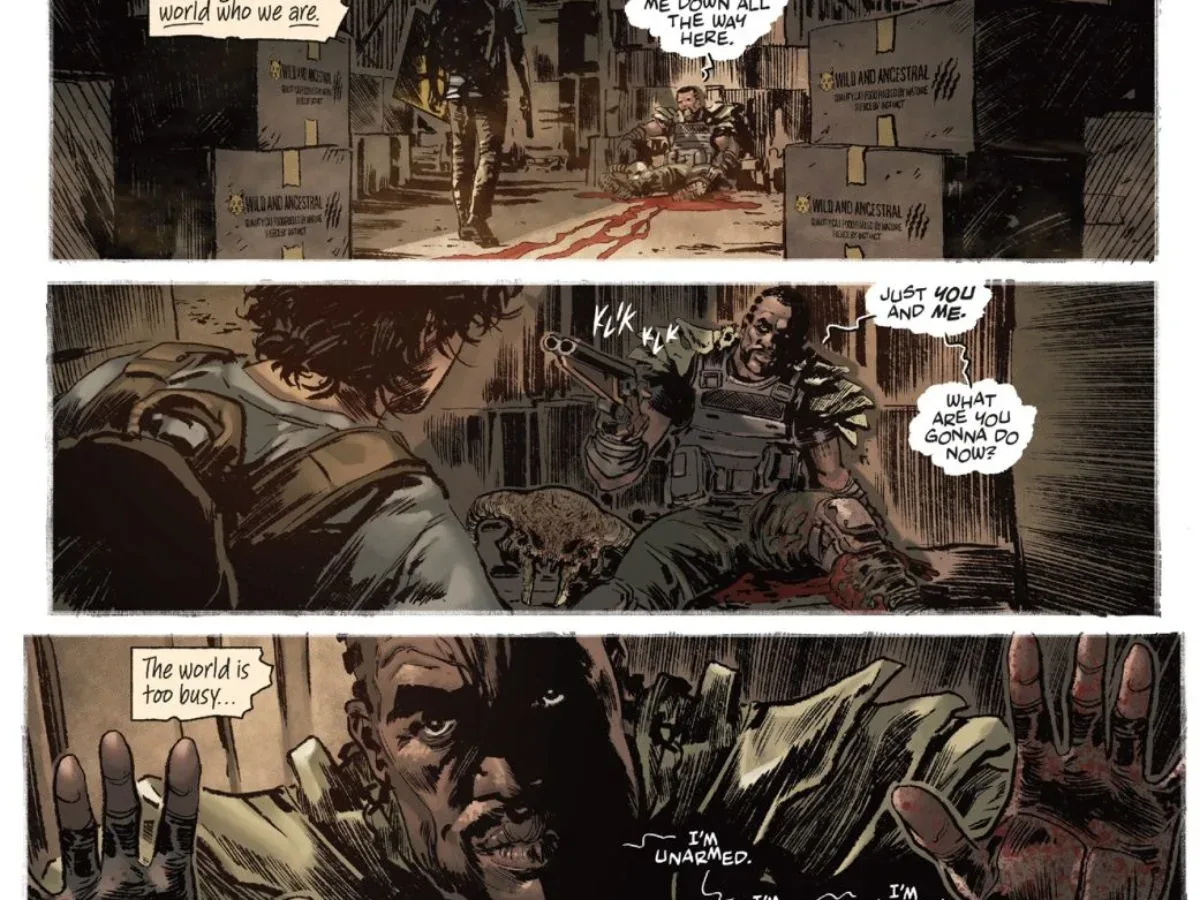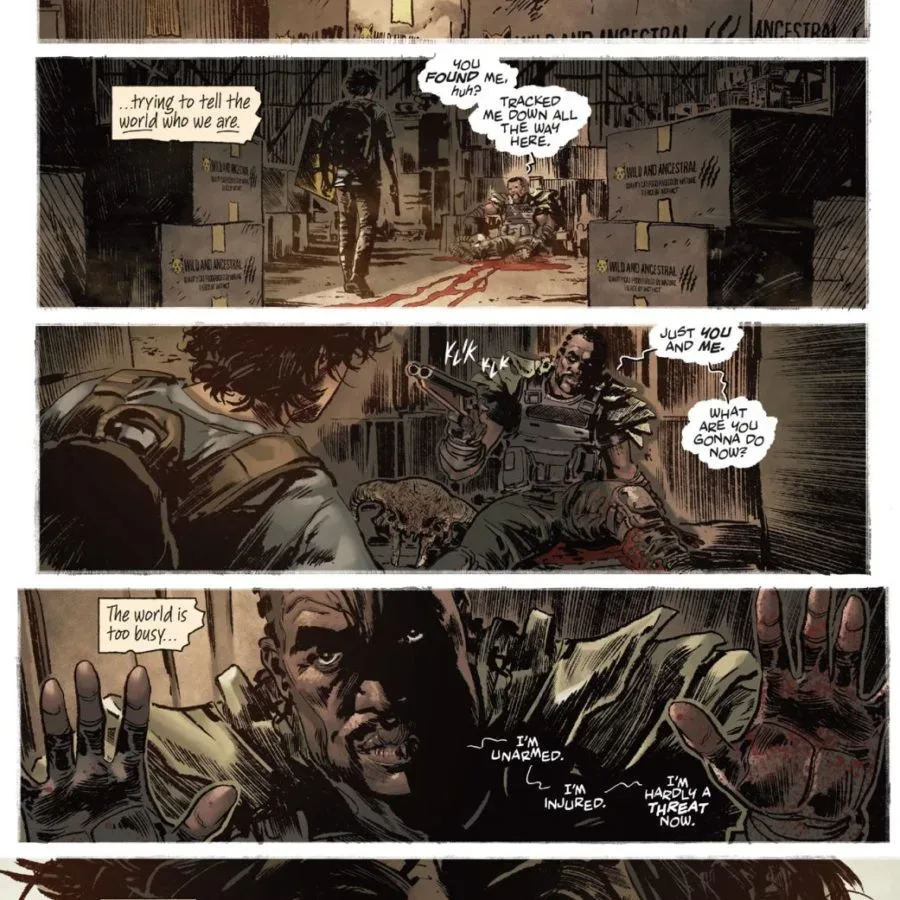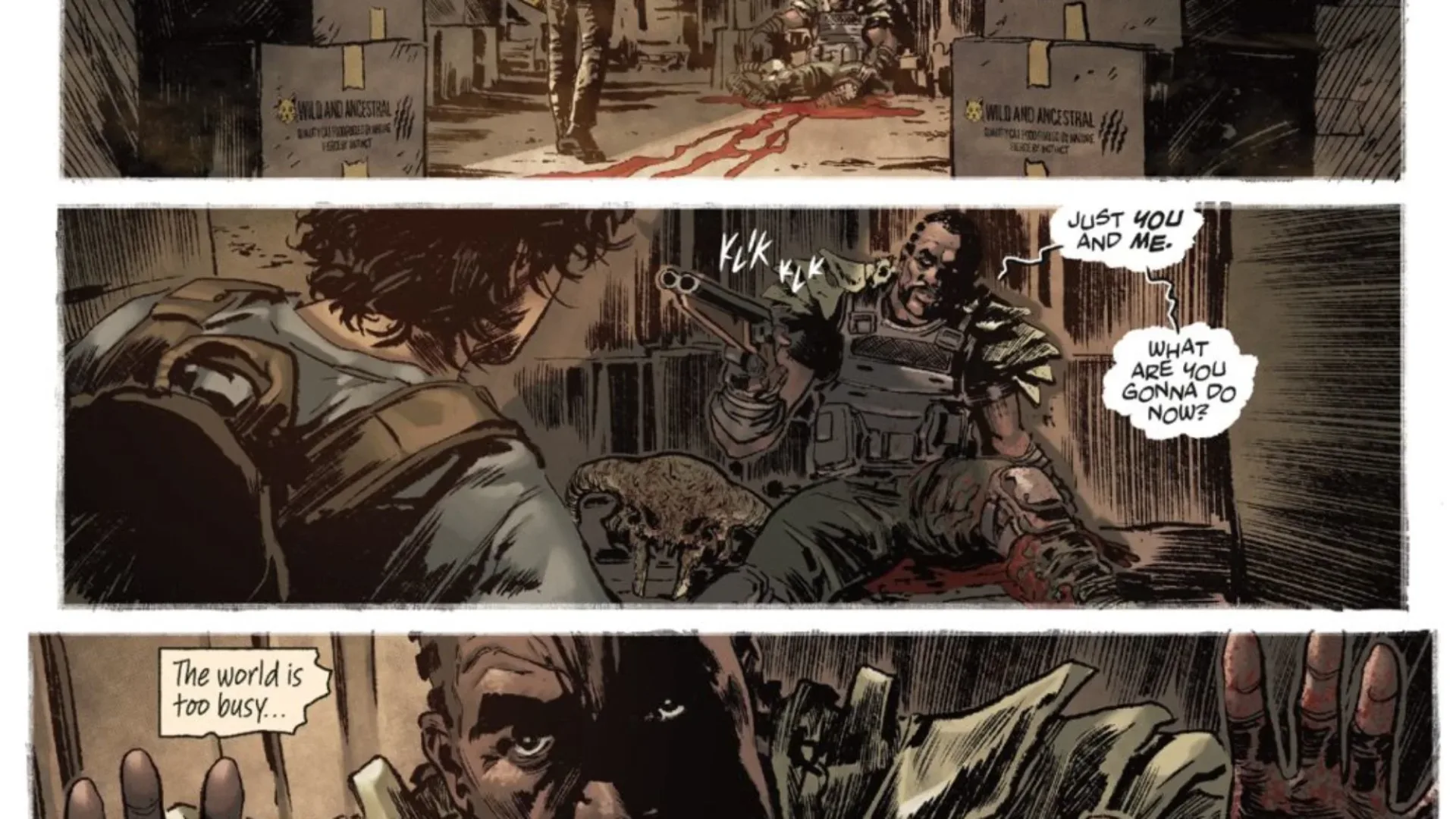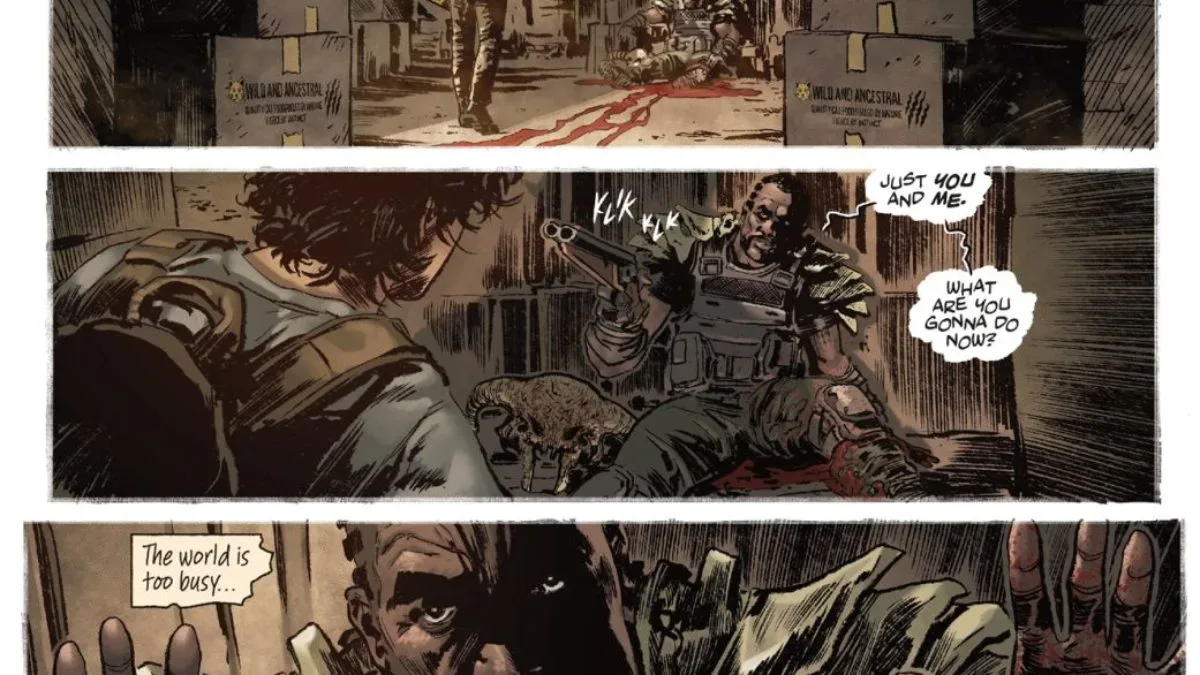
Only the Savage Are Left #4 is set to put Ryder under pressure from every direction. The fourth chapter of the five-issue postapocalyptic series arrives from Dark Horse Comics on October 7, 2026, and its premise leaves little room for a safe route forward: Ryder is at odds with his mentor, pursued by marauders, confronted by a horde of monsters, and trying to preserve the possibility of saving his first love.
The solicitation’s central tension is not simply whether Ryder can escape. It asks whether escape and rescue can coexist at all. Ryder is forced to confront the prospect that survival may demand an “ultimate sacrifice,” a phrase that deliberately avoids specifying what, or who, could be lost. With just one issue left after this installment, that uncertainty gives issue #4 the shape of a major turning point rather than a routine middle chapter.
A survival story with trust at its center
Postapocalyptic fiction commonly uses ruined conditions to make every practical decision consequential. Here, the stated dangers are immediate and external: marauders, monsters and broader mayhem. But the conflict with Ryder’s mentor adds a more personal threat. A mentor is ordinarily a figure associated with instruction, protection, experience or guidance. Calling Ryder’s mentor “depraved” turns that expected relationship inside out.
That distinction matters. A hostile creature or marauder is a danger Ryder can recognize on sight. A mentor who has become morally compromised complicates the choices around information, leadership and reliance. The preview does not establish the mentor’s identity, motives, past actions or exact role in Ryder’s journey, so readers should not assume details beyond the stated conflict. Still, the description clearly positions Ryder’s relationship with that figure as one of the issue’s key pressures.
It also suggests that the series is interested in survival as more than a physical contest. Ryder is navigating a hostile setting while evaluating whether someone who should represent knowledge and support has instead become another source of danger. That makes the conflict especially fitting for a story in which the environment already appears to have stripped life down to urgent, difficult choices.
What issue #4 establishes
The published description supplies several concrete pieces of the issue’s setup:
- Ryder is in conflict with his depraved mentor.
- He must get away from deadly marauders.
- A horde of monsters is among the threats he faces.
- The setting is a postapocalypse.
- Ryder’s first love is central to the stakes.
- The possibility of an ultimate sacrifice emerges as the dangers increase.
Notably, the wording connects these elements rather than presenting them as isolated obstacles. The danger is described as ever-growing, meaning the issue’s premise is one of escalation. Ryder is not merely dealing with the aftermath of an earlier crisis; he is moving through a situation that continues to worsen.
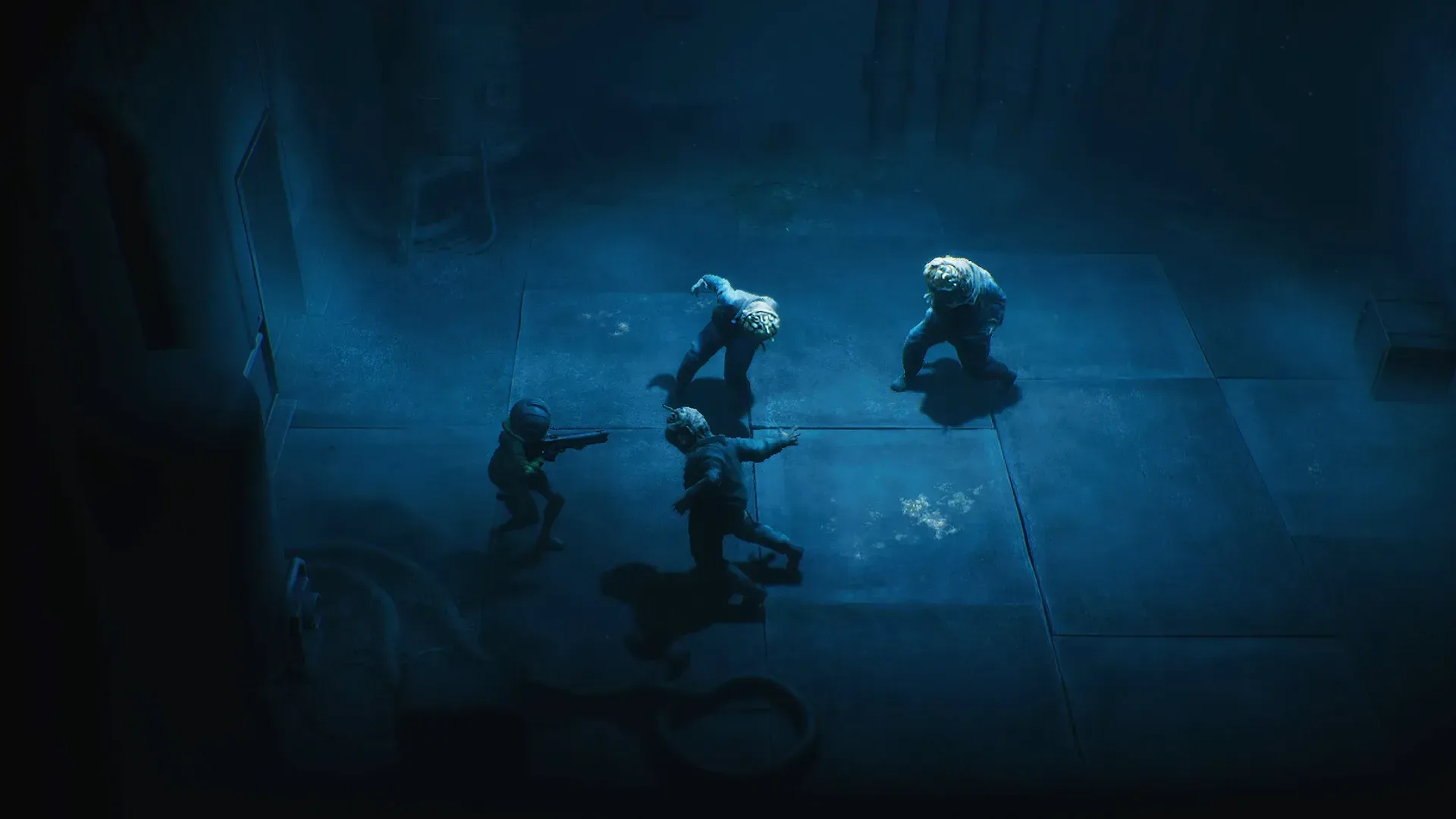
“Marauders” is useful genre shorthand for hostile human opponents who take what they need by force. “Horde,” meanwhile, emphasizes quantity. A single monster can create a direct confrontation; a horde changes the nature of the problem into one of movement, containment, evasion and dwindling options. The solicitation does not define the monsters or explain their origin, and it would be premature to treat them as any particular kind of creature. Their narrative function, at least from the material available, is scale: they make the world around Ryder feel crowded with threats.
The approaching endgame of a five-issue series
Only the Savage Are Left is identified as a five-issue series, making #4 the penultimate issue. In comic-book terms, “penultimate” simply means the installment immediately before the finale. It often carries a specific kind of dramatic job: tighten unresolved conflicts, remove apparent solutions and force the lead character toward a decision that the final issue must answer.
That structure makes the language about sacrifice more significant. The preview does not promise that Ryder will make the sacrifice, nor does it explain its form. It says he must confront the possibility. The difference is important. A possibility is not a confirmed outcome, and any reading that identifies the cost, predicts a death or declares an ending would go beyond the information available.
What can reasonably be said is that issue #4 appears designed to make Ryder weigh competing priorities. Saving a loved one and surviving a catastrophe are not presented as separate goals that can be easily accomplished in sequence. The description frames them as goals that may require an unbearable compromise. That is a strong setup for a final chapter because it makes the eventual resolution matter on both an emotional and practical level.
The title itself, Only the Savage Are Left, adds another layer to the situation without providing a literal definition. It can be read as a question about what remains when social order, trust and safety have collapsed. But the material does not state who is considered savage, whether that term applies to one group or another, or how the series ultimately answers it. At this point, it is better treated as a thematic provocation rather than a complete explanation of the world.
Creative team and edition details
Issue #4 is credited to Zack Kaplan, Stefano Raffael, Thiago Rocha and Hassan Otsmane-Elhaou. Stefano Raffael also provides the main cover. The issue is listed at 32 pages, rated T, and priced at $4.99 in the United States.
A Cover B variant by Vincenzo Riccardi is also listed at $4.99 in the United States and $6.99 in Canada. Variant covers are alternate cover artworks for the same numbered issue; they are not, by that term alone, evidence of a separate story or expanded edition. Readers deciding between editions can therefore treat the cover choice as an artwork preference unless further publishing details indicate otherwise.
The issue’s listed on-sale date is Wednesday, October 7, 2026. For readers drawn to survival narratives built around mounting pressure and difficult decisions, Joking Joystick’s look at End of Abyss explores a different medium’s use of tense survival-horror stakes.
Why the limited premise is effective
The available setup is deliberately economical. It gives Ryder several simultaneous problems but withholds the answers that would flatten them. Who is the mentor? Why are they depraved? What is required to save Ryder’s first love? What would the ultimate sacrifice actually cost? The issue description offers no confirmation, and that restraint preserves the central dilemma.
It also distinguishes the sources of danger. The marauders represent a human threat. The monsters represent a nonhuman or at least separately categorized threat. The mentor represents a relationship poisoned from within. Ryder’s first love represents the emotional reason that merely staying alive is not enough. Together, those elements make the coming installment sound less like a single escape sequence and more like a collision between immediate peril, damaged trust and personal obligation.
For a fourth issue approaching a finale, that is a focused proposition. Ryder’s next move may determine whether he can hold onto both his life and the person he is trying to save—or whether the story’s final chapter will begin after one of those hopes has already been surrendered.