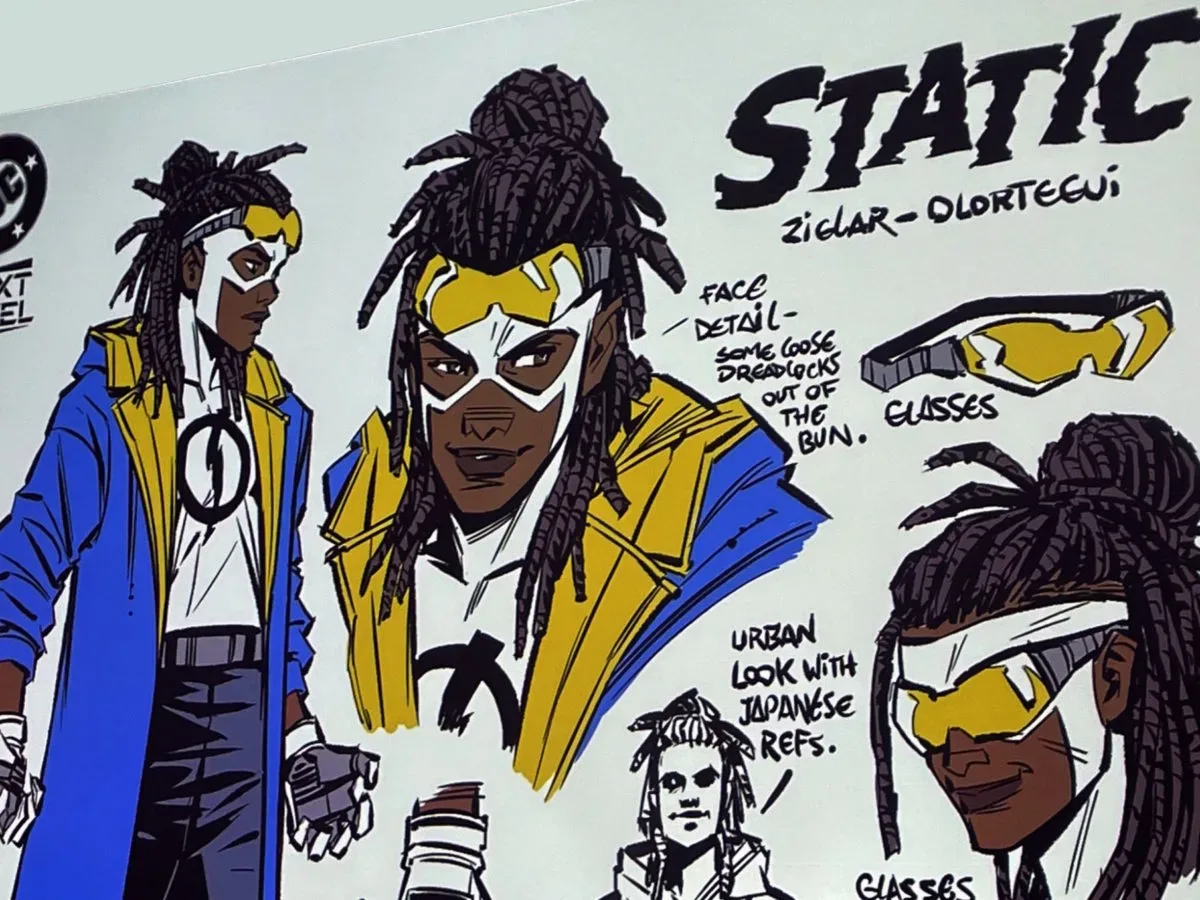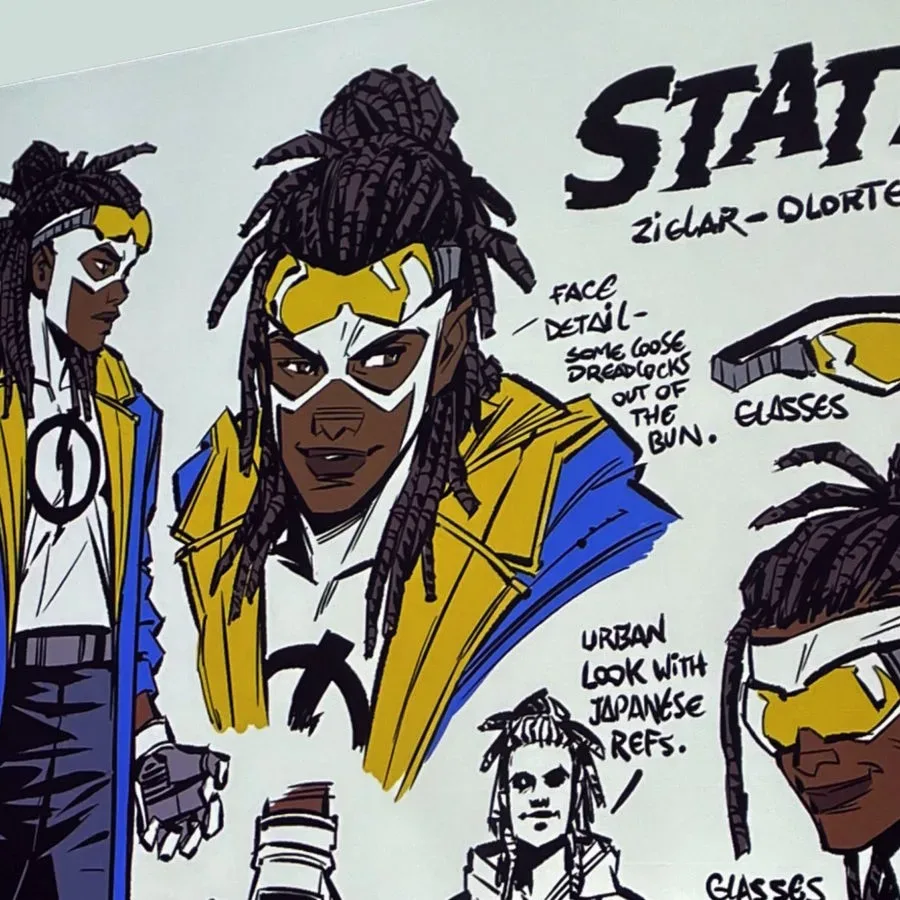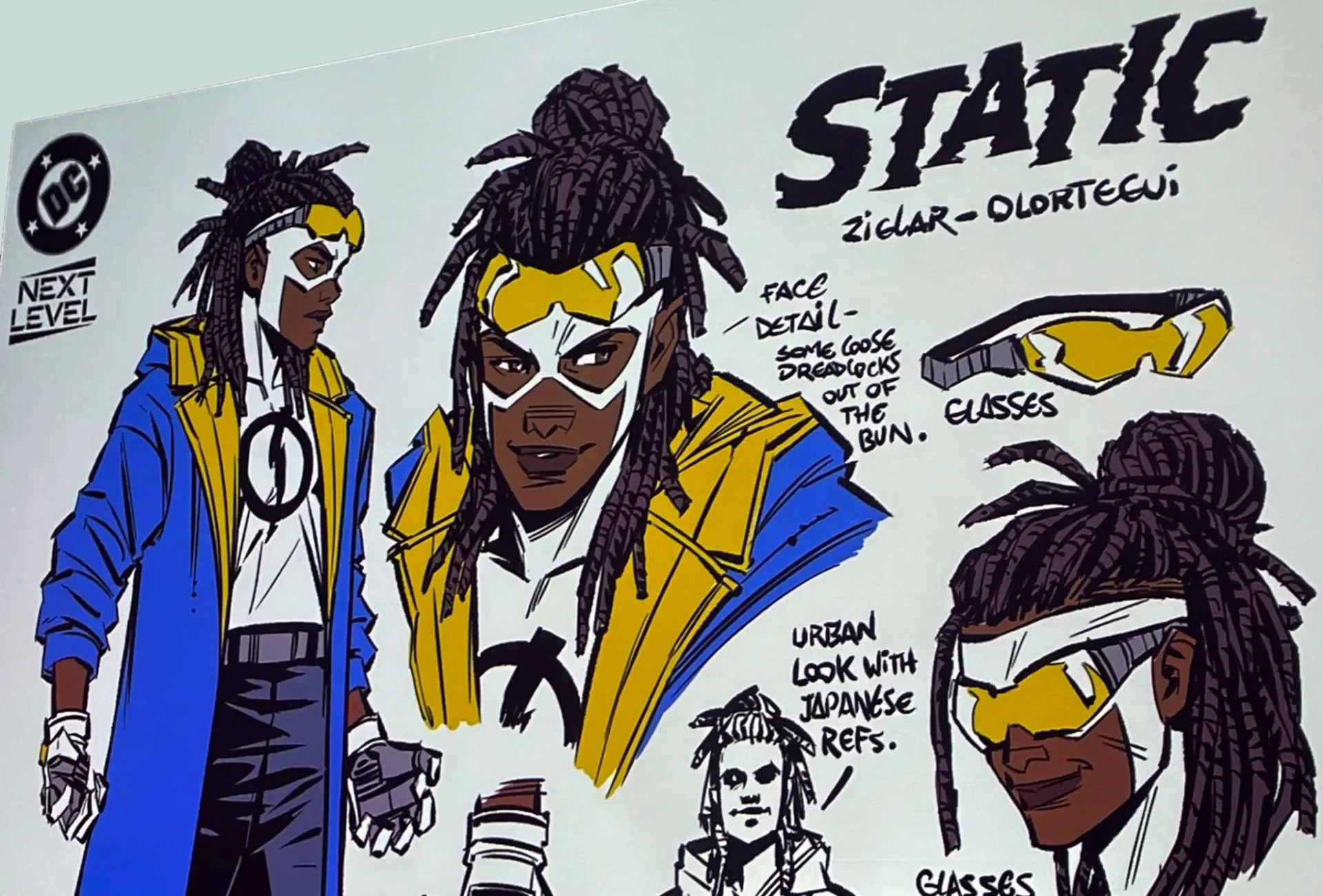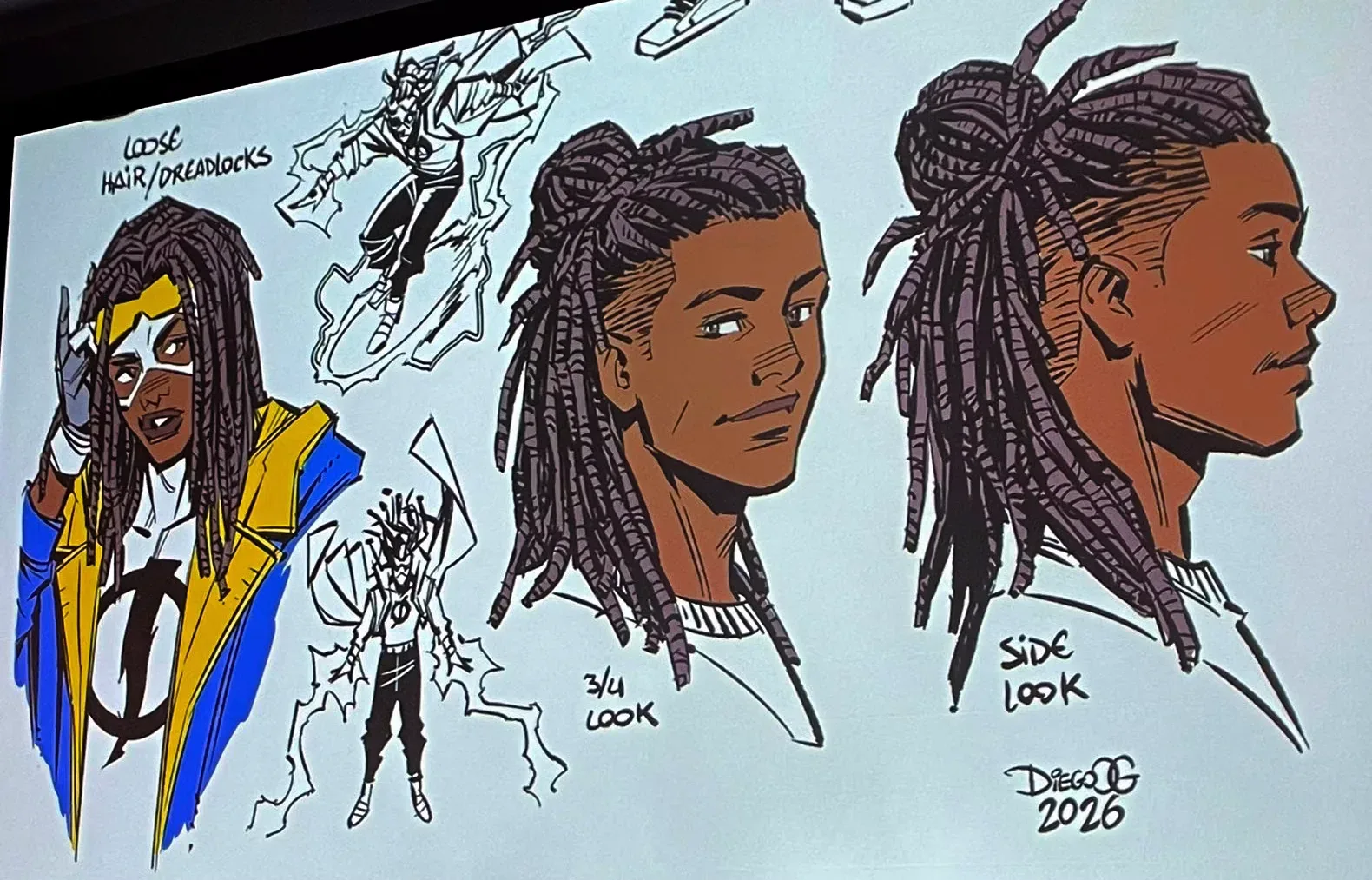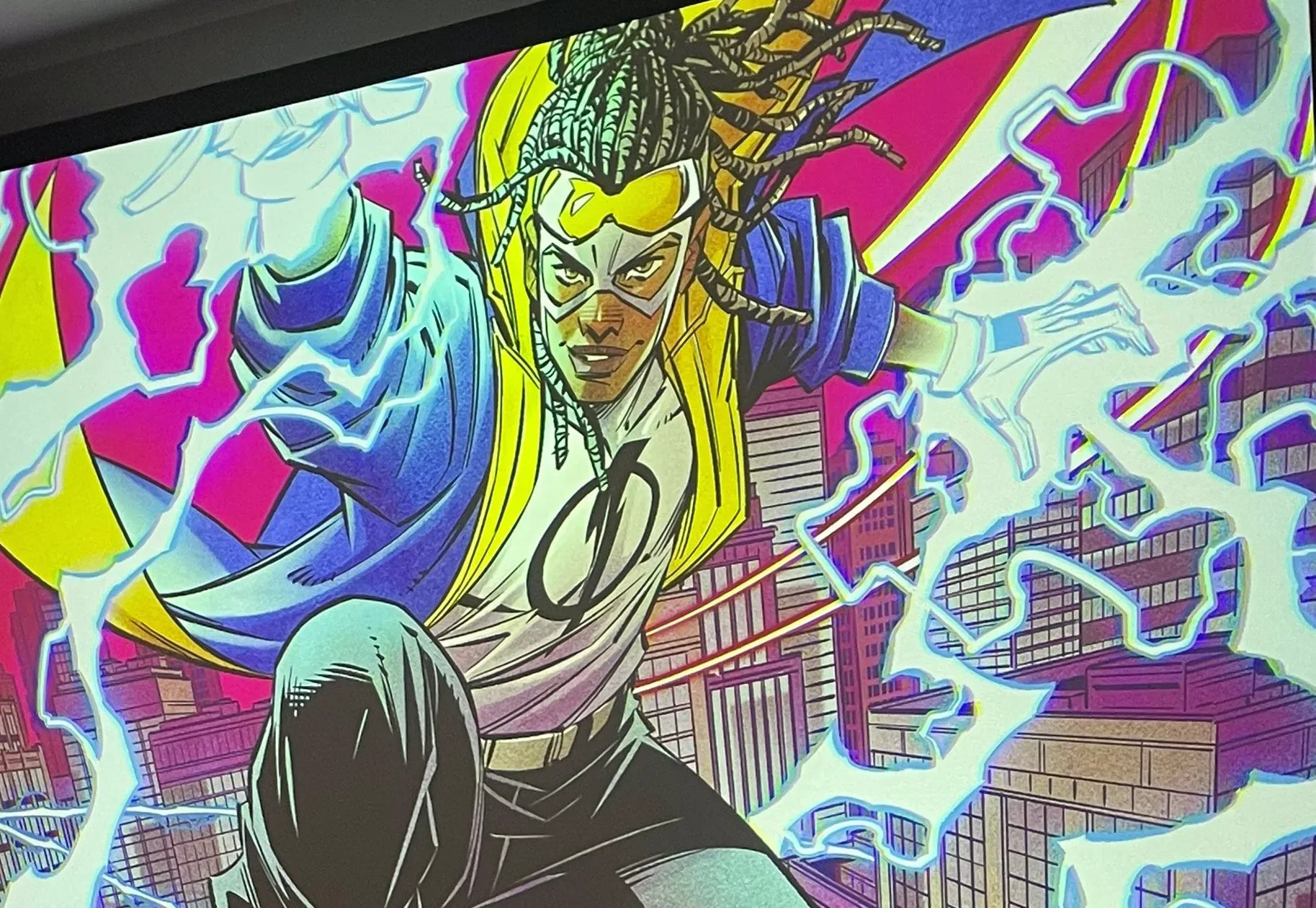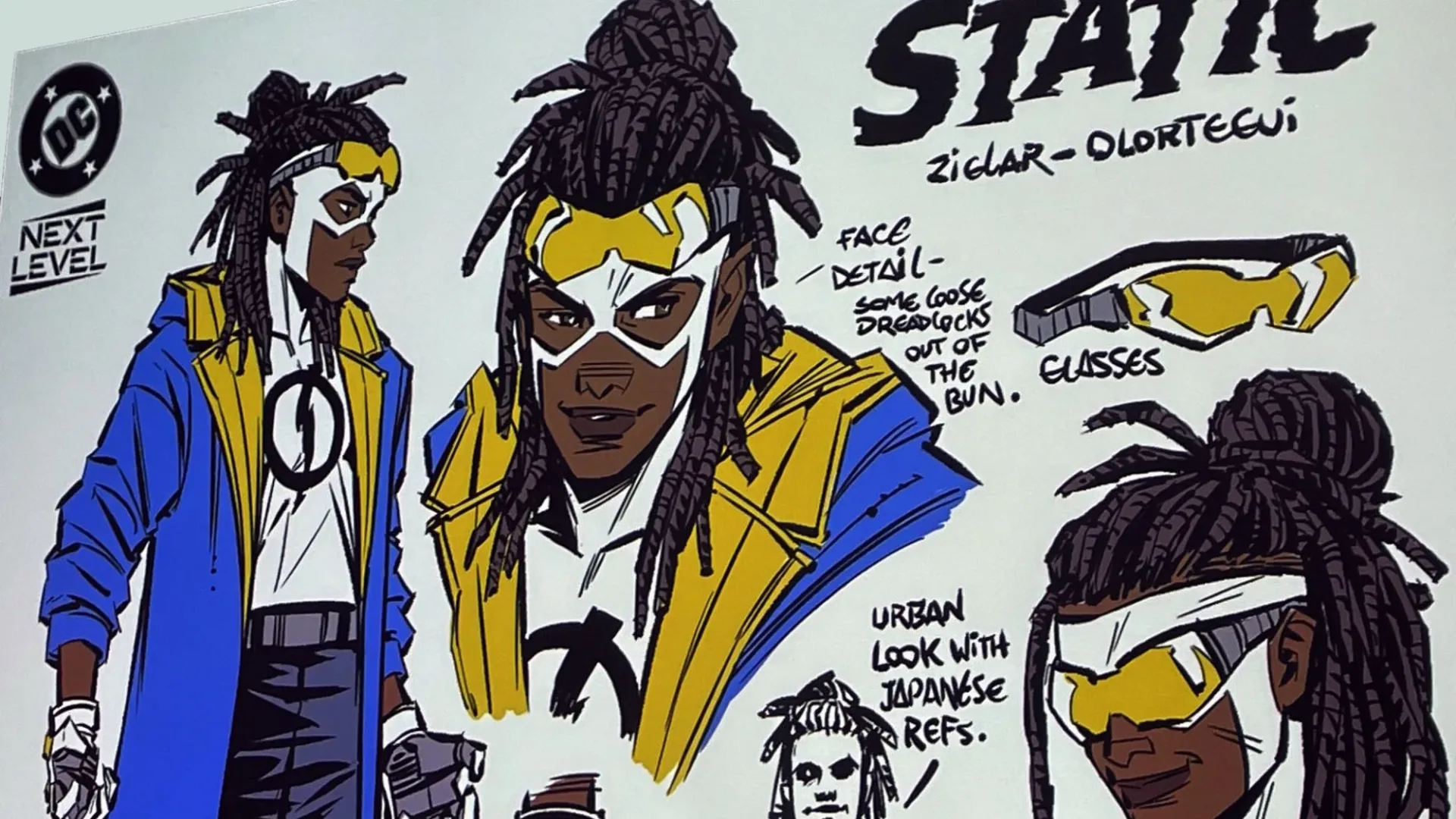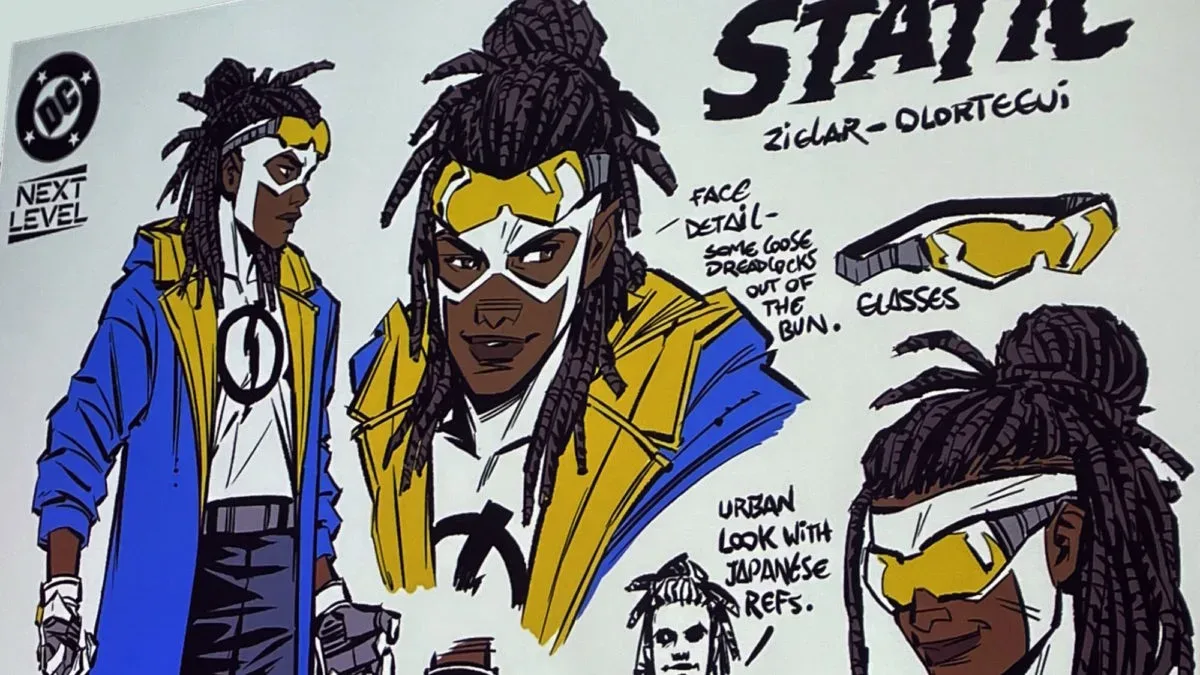
A new Static comic is set to return Virgil Hawkins to Dakota City with Cody Ziglar writing and Diego Olortegui providing the art. The series’ developing premise puts the emphasis on a relationship that can sometimes get lost when a superhero joins larger teams: the connection between a hero and the place that made him necessary.
Virgil is described as 19 or 20 years old in the new status quo. He has already spent substantial time operating as a hero, including time with the Titans, but has been away from Dakota. The series begins from a consequential interruption rather than a simple homecoming: Virgil has been forced to stand down, and Dakota has continued without its primary protector. That gives the comic two reintroductions to accomplish at once—Virgil returning to his city, and readers returning to a setting with its own history and population of powered characters.
The project was previously revealed as part of DC Next Level / Next Wave. A later New York Comic Con panel added a clearer picture of the creative approach, the current position of the character, and the reader interest that helped make the ongoing series viable. No official release date was provided.
Reader interest helped turn renewed attention into an ongoing
Ziglar credited sales connected to Dakota Incident and Milestone official-history material with helping the new ongoing Static comic get greenlit. That does not establish a formula in which one publication automatically produces another, but it does show why this kind of response matters. Sales can demonstrate that interest is not limited to a character’s name alone; readers may also be responding to the wider Dakota setting and to its unexplored history.
In comic-book terms, an ongoing series is a continuing title rather than a story announced with a fixed, limited issue count. That format gives a creative team room to develop a supporting cast, revisit locations, and let conflicts build over time. For this Static premise, that flexibility appears particularly useful. Dakota is not merely where the action happens; it is the story’s central concern, and Virgil’s absence means the city has had time to change on its own.
The most useful implication for readers is that the new comic is being framed as a place-based superhero story. Virgil’s previous experience, including his Titans period, matters because it establishes that he is not beginning at square one. Yet the series’ dramatic engine is not simply whether he can resume wearing the costume. It is whether he can reconnect with a community that did not stop moving when he left.
Dakota’s unusually dense metahuman population changes the stakes
One key piece of world-building shared at the panel is that Dakota has more metahumans than any other city. A metahuman is a person with superhuman abilities in this superhero-fiction context. The detail immediately makes Dakota distinct from a conventional hometown setting with one standout masked hero.
If a city contains an especially large number of powered people, the consequences can reach beyond a villain-of-the-month structure. There can be more potential allies, rivals, residents with complicated relationships to power, and conflicts that cannot be resolved by one hero arriving to save the day. The supplied details do not identify which characters or plots will appear, so it would be premature to predict the series’ roster. Still, the premise establishes a strong reason for Dakota to remain at the center of the book rather than simply functioning as a backdrop between larger DC Universe adventures.
That density also makes Virgil’s return more interesting than a straightforward restoration of the old order. Dakota has lacked him as its principal protector, but it is also home to many other metahumans. The tension is therefore likely to involve a changed social ecosystem, not just a vacant heroic job waiting for its former holder. Readers should expect the new status quo to ask what role Static has in a city that has had to adapt.
An internal bible gives the creative team more Dakota material to explore
Ziglar said he read the official Dakota Universe bible in preparation for the series. A series bible is an internal reference document used to organize a fictional world. It can track characters, history, settings, concepts, and future possibilities so different stories can work from a shared foundation. Crucially, it is not necessarily the same thing as published continuity. The material discussed here includes ideas that did not make it into previous comics or screen projects.
That distinction is important. “Unused” does not mean unfinished storylines are suddenly being printed exactly as they were written. Ziglar’s stated aim is to recontextualize some of the material for a modern audience. In practice, recontextualization means taking an existing concept or foundation and placing it in a new narrative context. The approach can preserve the appeal of a legacy idea while allowing it to serve the new series’ version of Virgil, Dakota, and their present circumstances.
For longtime Milestone readers, that offers the prospect of deeper connections without requiring the creative team to treat every unpublished idea as immovable. For newcomers, it could make the comic feel grounded in a substantial history rather than built solely around an entry-point relaunch. The balance will matter: the book needs enough of Dakota’s past to feel meaningful, but it also needs to communicate why this particular moment—Virgil’s return after being made to stand down—is the right moment for the story.
A slightly older Virgil can support a different kind of Static story
The age range given for Virgil, 19 to 20, may sound like a small adjustment, but it changes the texture of the premise. He is still young, yet he has already accumulated superhero experience and worked beyond his home city. That allows the series to draw on the contrast between broader hero-world experience and local responsibility.
It also avoids presenting Dakota solely through nostalgia. The story is not described as a reset to an earlier version of Static. Instead, it is a return shaped by absence, experience, and a city whose population and problems have continued evolving. Ziglar is drawing from classic Milestone ideas as well as internal material that had not previously reached the page or screen, while Olortegui is tasked with bringing that modernized Dakota and older Virgil to the page.
Joshua Williamson also expressed enthusiasm for the project during the panel. That is encouraging creative-room energy, though the more meaningful information for readers remains the concrete setup: Virgil Hawkins is coming back to Dakota, the city will be central to the narrative, and its large metahuman population gives the setting unusual scope.
What has and has not been confirmed
- Confirmed: Cody Ziglar is writing the new Static series, and Diego Olortegui is the artist.
- Confirmed: The comic is part of DC Next Level / Next Wave.
- Confirmed: Virgil is 19 or 20, has operated with the Titans, has been away from Dakota, and has been forced to stand down.
- Confirmed: The narrative focuses on Static’s relationship with Dakota City, which is said to have more metahumans than any other city.
- Confirmed: Ziglar consulted the Dakota Universe bible and plans to adapt or recontextualize previously unused ideas.
- Not confirmed: An official release date, a full cast list, specific story arcs, or which unused concepts will be incorporated.
The absence of those latter details is worth keeping in mind. The panel has established an appealing direction, but it has not supplied enough information to map the series issue by issue. For now, its clearest promise is a Static comic built around Dakota as an active, complicated superhero community—and around a more experienced Virgil figuring out how to return to it.
Readers looking for another very different, high-scale superhero comic premise can also see how Doctor Doom’s all-in-one battle with Marvel’s heroes takes the genre in an altogether more cosmic direction.