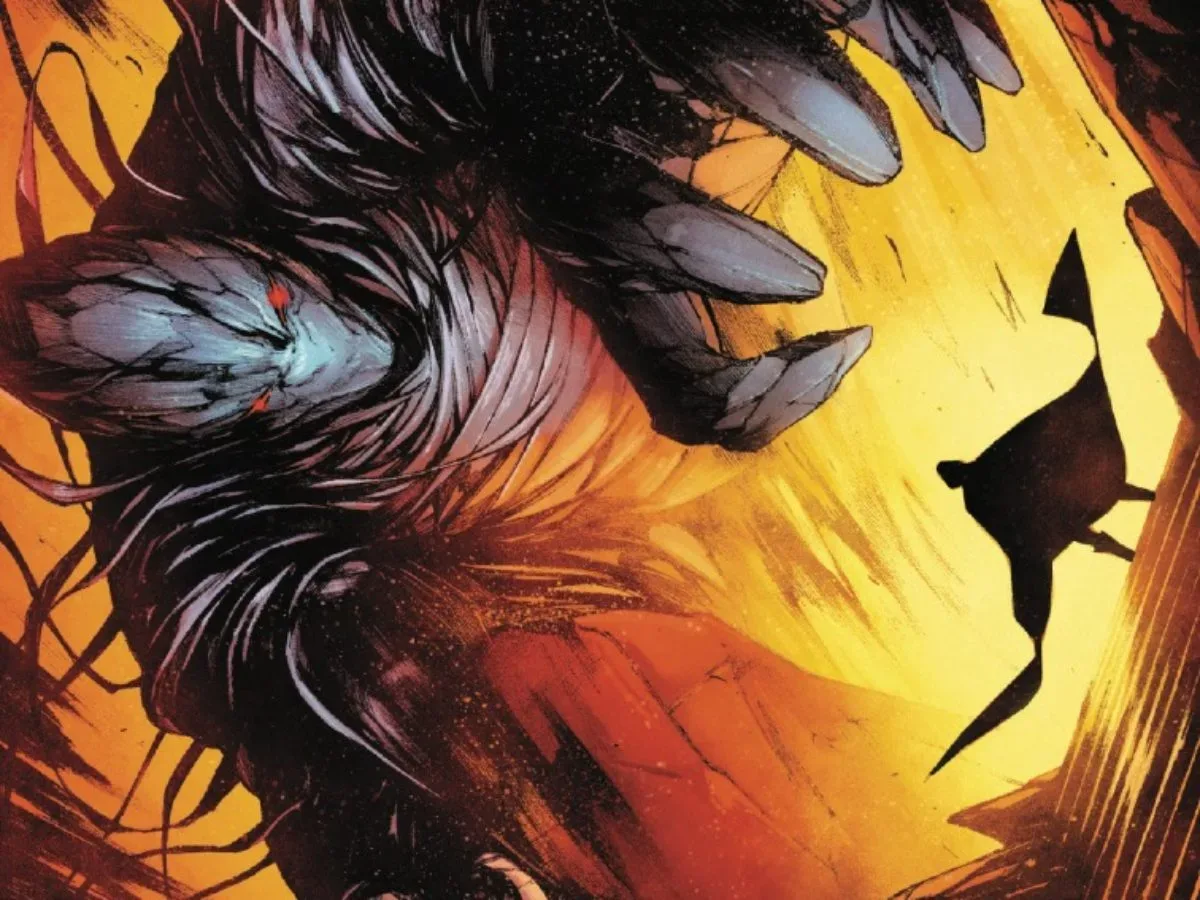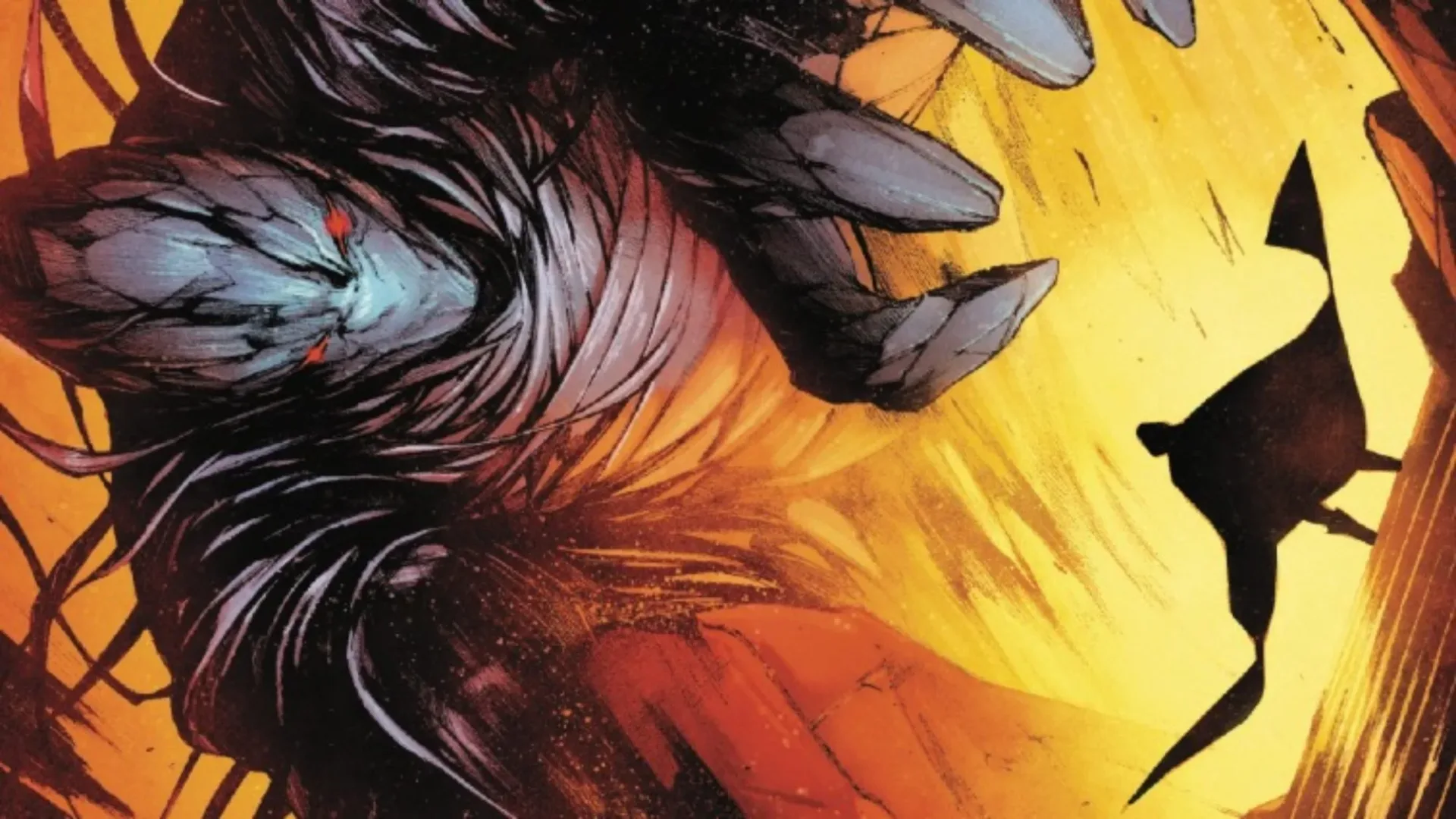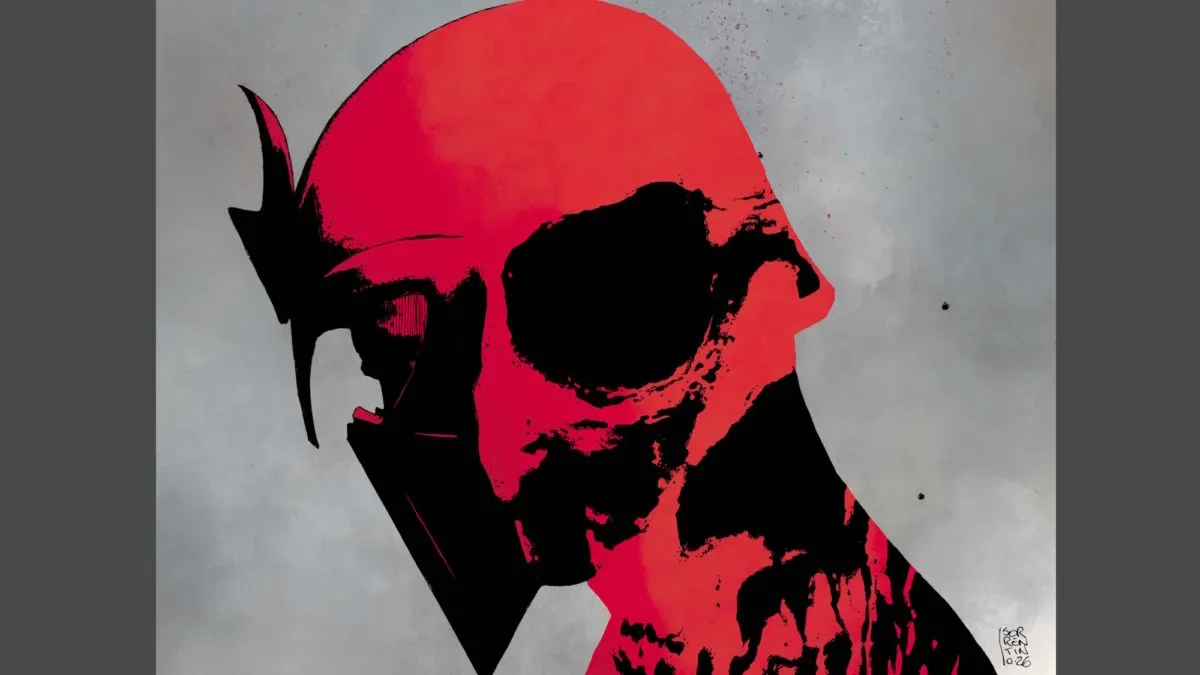
Doctor Doom is heading back to the most personal battlefield in his long Marvel history: the fate of his mother’s soul. Doom All-On-One #1, credited to Al Ewing and Alessandro Cappuccio, puts Victor Von Doom against Mephisto and the wider Marvel Universe in Hell itself. The one-shot is scheduled to go on sale October 14, 2026.
The premise is intentionally immense. Doom’s attempt to free his mother from Mephisto’s hold has endured for decades within Marvel storytelling, and this issue frames what it calls his greatest challenge: a confrontation with the entire Marvel Universe amid the fires of perdition. The unusual delivery mechanism is just as central to the pitch as the plot. The comic is set to contain 50 wide-screen, landscape-oriented splash pages.
That makes Doom All-On-One sound less like a standard superhero issue built around a conventional page grid and more like a deliberately sustained visual event. For a character who routinely treats subtlety as a design flaw, it is an unusually fitting proposition.
A Doom story where scale is part of the point
A splash page is a comics page dominated by one large image, often used to emphasize a reveal, an impact, a setting, or a character’s entrance. A landscape-oriented page is wider than it is tall, the opposite of the portrait format most comic books use. Here, the solicitation’s promise is not merely a handful of oversized moments; it is 50 landscape splash pages across a 64-page comic.
Those two numbers are worth separating. The book’s stated total length is 64 pages, while 50 of those pages are described as landscape splashes. That leaves room for other material, but the primary identity of the issue is clear: its storytelling is expected to lean heavily on full-page images and wide compositions.
The term “all-on-one” also reads as a useful description of the creative challenge. Doom is not entering a neatly divided series of duels. He is described as battling the Marvel Universe as a whole while fighting Mephisto for his mother’s freedom. Rather than positioning the title as another team-up or an ordinary villain-versus-hero encounter, the setup places Doom at the center of a cosmic-scale impasse in which every other force is potentially an obstacle.
It also gives the book a specific emotional engine. “Save the world” stakes are familiar in superhero comics; a battle conducted on a huge supernatural stage for one person is a different kind of escalation. Doom’s objective is deeply personal, but the method is uncompromisingly maximalist.
Mephisto, Doom and the personal stakes behind the inferno
Mephisto is identified here as the demon holding Doom’s mother’s soul, establishing the central conflict without requiring the issue to begin with a generic power struggle. Doom’s challenge is not simply to defeat a powerful adversary. It is to break Mephisto’s claim on someone he has pursued for decades.
That longstanding pursuit is important context for readers considering the one-shot. It means the issue is drawing on an established element of Doom’s history rather than inventing a sudden sentimental motivation to justify a huge crossover-style spectacle. The stakes are supernatural and vast, but the purpose is fixed: Doom wants his mother free.
The solicitation calls the setting “perdition,” a term commonly used for damnation or Hell. In practical story terms, it signals a setting defined by spiritual peril rather than merely an exotic alien realm or alternate cityscape. The issue’s stated visual focus on searing flames, Hell, and wide pages suggests that the environment is intended to carry as much weight as the roster of opponents.
There is a peculiar tension baked into the premise. Doom is the person challenging Mephisto, yet he is also said to be fighting the entire Marvel Universe. The available description does not explain why the universe’s heroes and other figures stand against him, how many characters will appear, or whether every opponent is acting independently. Those details remain unknown. What is confirmed is the basic shape of the event: Doom is outnumbered, in Hell, and refusing to retreat from a fight rooted in family.
Why the horizontal format matters
Comics format can shape pacing as much as dialogue or plot. A traditional portrait page tends to favor vertical movement, stacked panels, and a top-to-bottom reading rhythm. A wide landscape image can instead stress breadth: a large battlefield, multiple combatants sharing a frame, or an architecture-heavy environment spreading out beyond a single figure.
For Doom All-On-One #1, that orientation has an obvious connection to the advertised material. The book promises Doom facing the Marvel Universe across Hell, which is precisely the kind of confrontation that can benefit from a wide visual field. The format may allow Cappuccio’s art to frame Doom against crowds, armies, or expansive infernal surroundings without reducing the image to a series of smaller fragments.
That is analysis rather than a confirmed page-by-page preview, and readers should not mistake it for a guarantee of a particular visual sequence. Still, Marvel’s decision to foreground the page count and orientation shows that the physical form is a major part of the project’s appeal. This is not simply a 64-page comic with an unusually wide trim; the landscape splash-page concept is the headline feature.
The oversized visual approach has a natural correspondence with Doom himself. He is a character commonly associated with formal declarations, absolute goals and grand theatricality. A narrative in which he takes on every available obstacle to save his mother’s soul practically demands images that make the confrontation feel monumental. The format is therefore not just a production novelty; it appears tailored to the personality and scale of the lead character.
Release details, price and variant covers
Doom All-On-One #1 is listed as a Marvel Universe title, rated T+, with a cover price of $7.99 in the United States. It is listed at 64 pages and measures 6.65 inches wide by 10.14 inches high. Alessandro Cappuccio is also credited for the main cover.
Several alternate editions are listed at the same $7.99 U.S. price: a Taurin Clarke variant, a Ben Harvey Virgin Variant, a Greg Capullo variant, an Inhyuk Lee variant, an Alexander Lozano Marvel Studios Avengers: Doomsday variant, and another Ben Harvey variant. A Puppeteer Lee foil variant is listed at $10.99 U.S..
For readers choosing between editions, the available information confirms different cover treatments and artists but does not describe any interior-content differences. The named variants should therefore be understood as cover options unless further details establish otherwise. The foil edition’s higher listed price is the one clear pricing exception among the announced variants.
The comic arrives at a moment when Doom remains a major focus for Marvel readers. For another upcoming Doom-adjacent Marvel project with a very different emphasis, see the announced Magneto: End of Days creative team and release plans.
What readers can reasonably expect
The firm details point to a self-contained, premium-priced spectacle built around a classic Doom motivation: taking an impossible task personally and attempting it with total confidence. Ewing and Cappuccio are the credited creative team, Cappuccio provides the main cover, and the issue’s central conflict is Doom’s effort to liberate his mother’s soul from Mephisto while confronting the Marvel Universe in Hell.
What remains unspecified matters too. There is no confirmed character list, no explanation of the exact rules of the conflict, and no indication of the lasting consequences for Doom, Mephisto, or the other Marvel characters involved. There is also no stated breakdown of which pages are splashes beyond the advertised total of 50.
Even with those unanswered questions, the selling point is unusually direct. Doom All-On-One #1 is offering a single, large-format escalation of one of Doom’s most enduring personal battles. The scale is infernal, the opposition is enormous, and the objective is intimate. For a character defined by the conviction that no power should be beyond his reach, that combination is about as Doom as a comic-book premise can get.