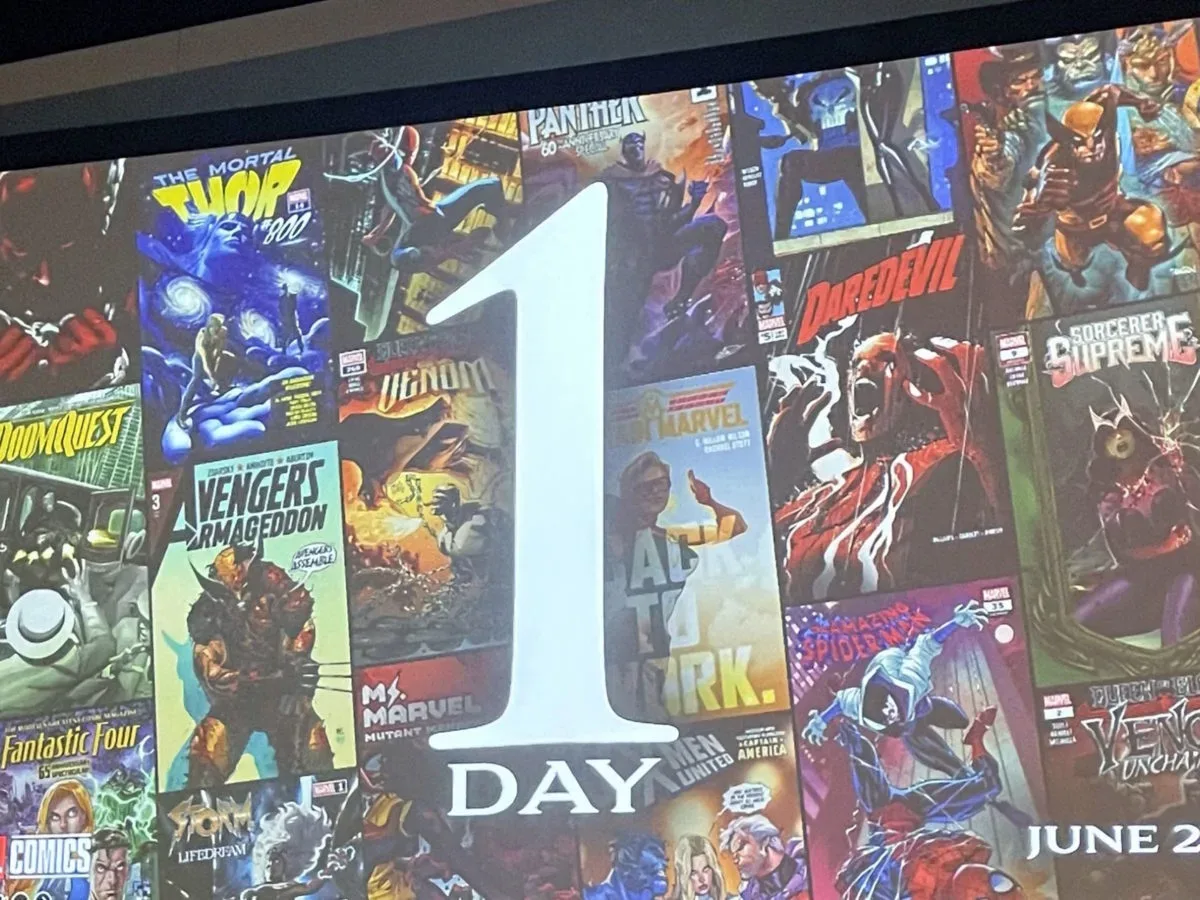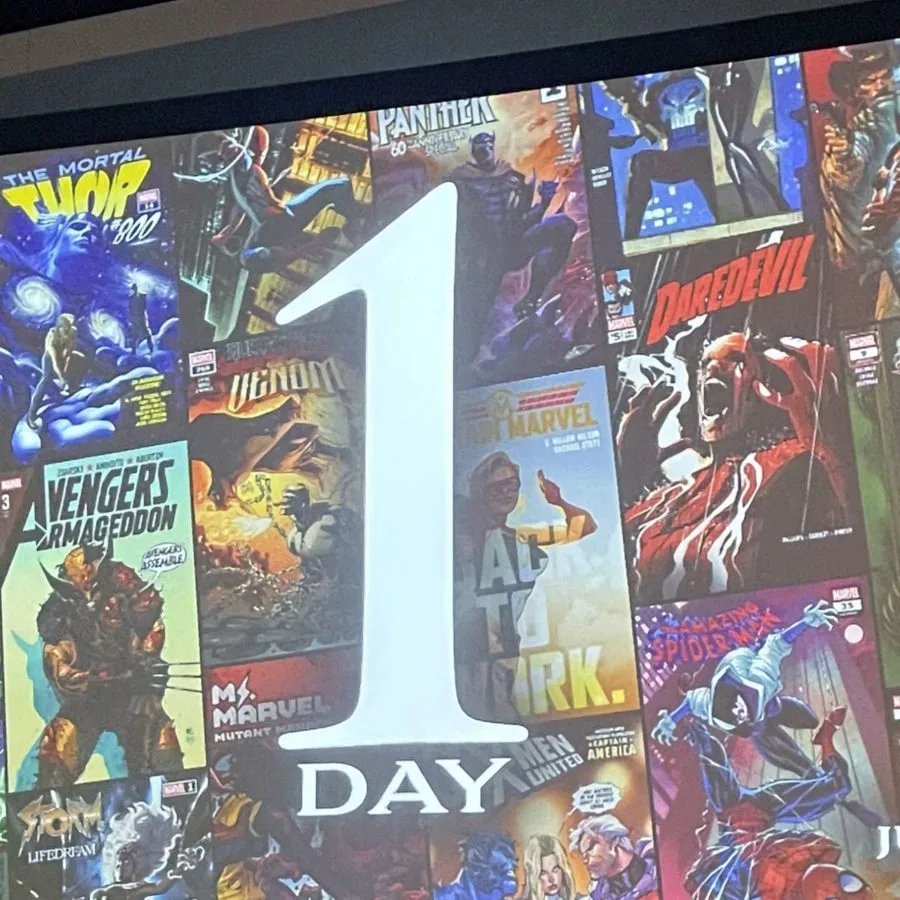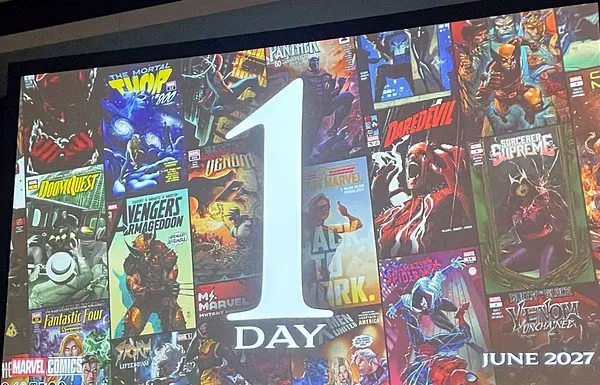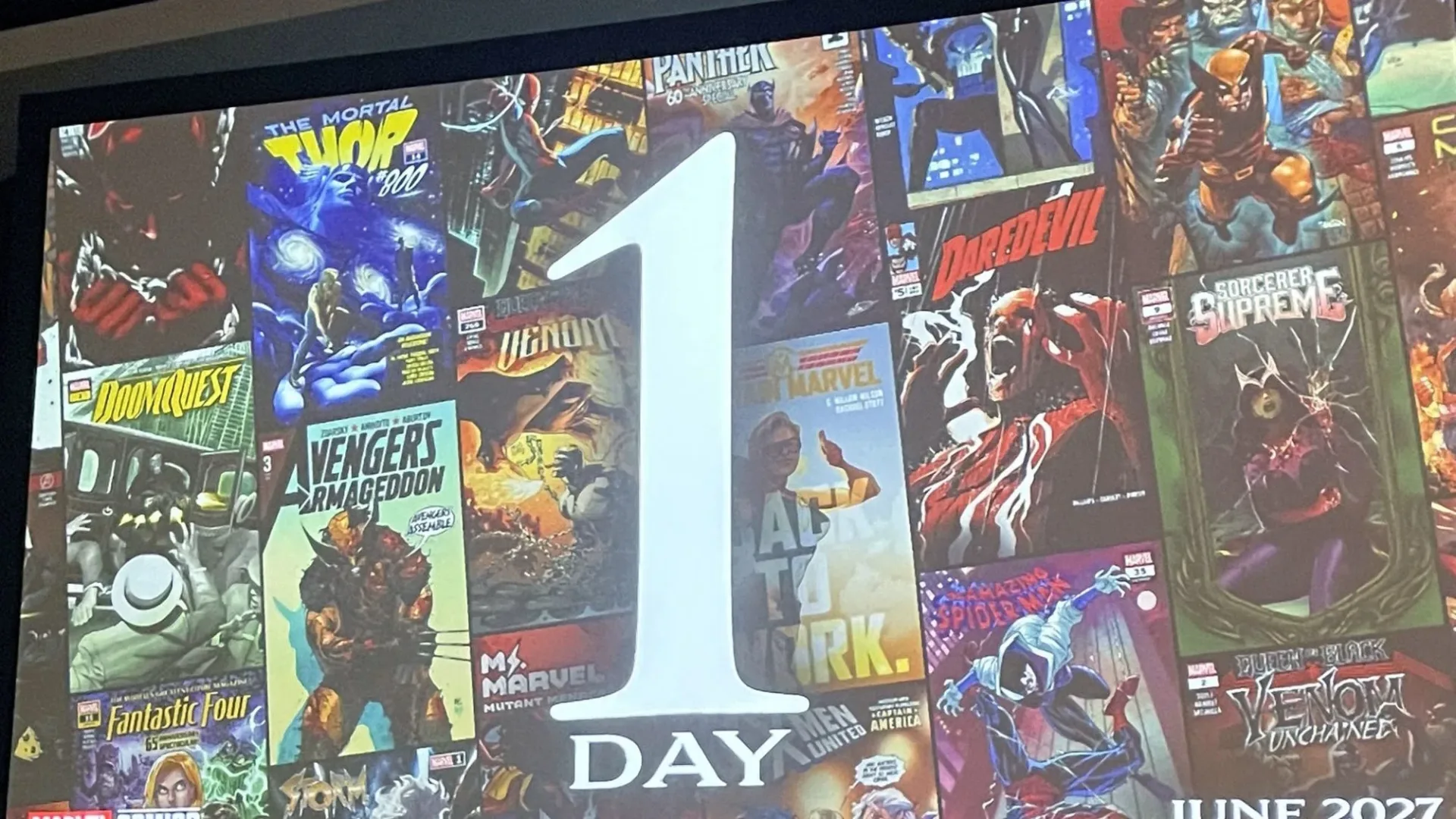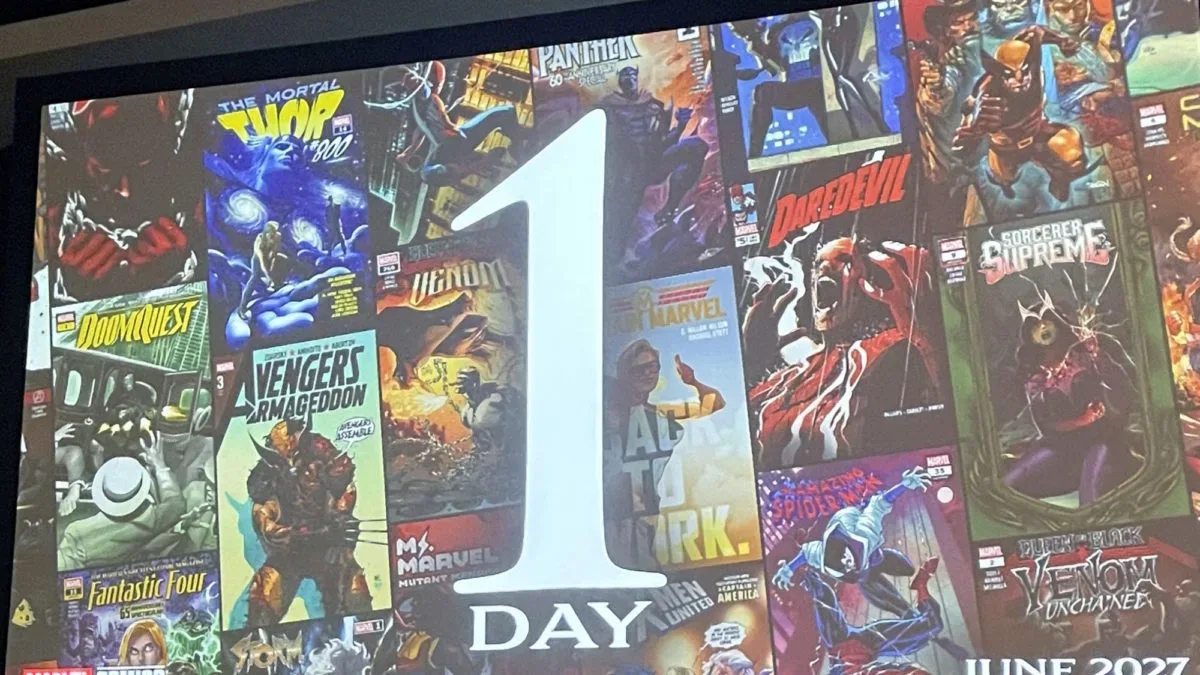
Marvel has put two very small words in front of comic readers—“1 Day”—and, for Spider-Man fans, they carry a very large shadow. During a New York Comic Con panel, Marvel editor-in-chief Steve Wacker teased something under that title for next June. No characters, format, creative team, plot, or wider publishing details were supplied with the tease.
That lack of detail matters. “1 Day” could refer to any number of stories or projects. But the name naturally evokes Spider-Man: One More Day, the 2007 four-issue storyline that remains one of the most argued-over decisions in modern Spider-Man continuity. Wacker’s connection to the Spider-Man line at the time only makes the comparison harder for longtime readers to ignore.
For now, a connection is speculation, not confirmation. Still, the tease invites a fresh look at why One More Day has endured as a fault line in discussions of Peter Parker, Mary Jane Watson, and the role of continuity in superhero comics.
Why “1 Day” immediately points readers toward One More Day
One More Day arrived in late 2007, written by J. Michael Straczynski with art by Joe Quesada. Its core premise grew out of Peter Parker’s public unmasking during the Superhero Registration Act era of Civil War. After a sniper targeting Peter shot Aunt May, she was left in critical condition. Peter and his wife, Mary Jane Watson, pursued medical and mystical ways to save her, but found no answer.
Then came Mephisto, Marvel’s devil-like figure. His offer was simple in structure and massive in consequence: Aunt May would live, but Peter and Mary Jane’s marriage would be removed from reality. It was not merely a divorce or a separation. Their history as a married couple, including the world’s memory of it and their own, would be erased. The wedding would effectively never have occurred.
Peter and Mary Jane agreed. Aunt May survived. Peter was subsequently single again, living with Aunt May, and his secret identity had been restored.
That is why a phrase as brief as “1 Day” can produce such immediate reactions. In serialized superhero storytelling, titles are often signals as much as labels. A similar title does not establish a sequel, reversal, revisit, or retelling. It does, however, activate the memory of a storyline built around a single bargain that changed the personal status quo of one of comics’ most prominent couples.
The continuity change at the center of the debate
To understand the intensity around One More Day, it helps to separate the story’s event from the broader editorial objective behind it. Peter and Mary Jane’s marriage began in Amazing Spider-Man Annual #21 in 1987. By the time One More Day arrived, the marriage had been part of Spider-Man comics for 20 years in real time.
Joe Quesada had long argued that a married Spider-Man narrowed the range of stories available for the character, particularly stories centered on a younger, more relatable “everyman” version of Peter. The reset returned Peter to an unmarried status quo intended to restore that storytelling flexibility.
Continuity, in this context, means the accumulated fictional history that later comics generally treat as having happened. Changing continuity is not unusual in superhero comics; characters age slowly, multiple creative teams contribute over decades, and major events can reshape the setting. What made this change especially combustible was the method. The marriage was not developed toward a conventional ending. It was removed through Mephisto’s supernatural intervention.
For supporters of a more single, improvisational Peter Parker, the outcome represented a return to a familiar version of Spider-Man. For many critics, the mechanism undercut the emotional meaning of Peter and Mary Jane’s long relationship. Their choice was framed as a sacrifice to save Aunt May, yet the story’s magic-driven rewrite also erased the life and character growth readers had followed for years.
The argument was therefore never only about whether Peter Parker should be married. It was also about what readers expect from an ongoing narrative: whether a long-running relationship can be reset for a new direction, and whether the plot device used to do so honors the characters involved.
Mephisto is more than a villain in this conversation
Mephisto’s involvement explains much of the lasting reaction. A deal with the devil is a recognizable dramatic device: a character accepts an unbearable personal cost in return for something they cannot otherwise obtain. In One More Day, that cost was Peter and Mary Jane’s marriage and the reality built around it.
For readers dissatisfied with the storyline, Mephisto became shorthand for a particular kind of continuity reset—one that uses supernatural power to bypass consequences rather than resolve them through character-driven development. That does not make every Mephisto appearance an automatic return to the subject, but it explains why his name remains tied closely to discussion of Peter and Mary Jane.
The proposed June project has not been identified as a Spider-Man title, a Mephisto story, or a line-wide event. Those distinctions are important. A title echo can be intentional misdirection, a thematic nod, or simply unrelated wording. Until Marvel provides further information, claims about a restored marriage, a new bargain, or a universe-wide change go beyond what has been announced.
What a revisit could mean—and what it would not automatically mean
If “1 Day” does connect to One More Day, there are several broad narrative possibilities, none of which has been confirmed. A project could revisit the original decision from Peter’s or Mary Jane’s perspective. It could examine Mephisto’s role. It could use the older story as a point of contrast without undoing it. Or it could reference the title while telling an entirely different story.
A direct reversal would also be more complicated than a simple restoration of a wedding. The original story removed memories and altered the status quo across the fictional world. Any attempt to revisit that premise would need to address what exactly is changing: the characters’ relationship, their memories, public knowledge, previous events, or the larger reality around them. Those are separate narrative levers, even if readers understandably discuss them together.
There is also a practical publishing reason that ambiguity is powerful. Spider-Man’s relationships are not background decoration; they are central to how audiences interpret Peter’s responsibilities, failures, hopes, and growth. Teasing any material that may touch Peter and Mary Jane will invite close attention because the pair’s history has become a lasting symbol of competing views about Spider-Man.
Marvel’s wider schedule is already being watched closely, including the publisher’s announced early-year slate featuring Captain Marvel, Daredevil and X-Men titles. But “1 Day” presently stands apart as a deliberately sparse tease. Its most concrete detail is its planned June timing.
Mary Jane’s place in the speculation
Mary Jane is essential to why the old story remains emotionally charged. She was not an incidental piece of Peter’s past; she was his wife and his partner in the decision at the heart of One More Day. The rewrite affected both characters, and criticism of the story has frequently focused on the loss of their shared development.
That history means future stories involving Peter and Mary Jane face an unusually attentive audience. Readers may be looking for romance, reconciliation, a confrontation with the past, or simply a clearer acknowledgment of what the couple represented before the reset. Yet none of those hopes should be mistaken for a stated premise for “1 Day.” The current information supports questions, not answers.
It is worth noting that the controversy has lasted nearly two decades precisely because it combines an editorial change with a deeply personal story. Aunt May’s life, Peter’s guilt, Mary Jane’s relationship with Peter, Mephisto’s bargain, and Spider-Man’s identity all collide in the same decision. That density gives the storyline unusual staying power, regardless of whether a reader views it as an effective tragedy, an unwanted reset, or both.
What readers can responsibly take from the tease now
- Confirmed: Steve Wacker teased a Marvel project called “1 Day” for next June during New York Comic Con.
- Confirmed: The title resembles Spider-Man: One More Day, a 2007 four-issue story by J. Michael Straczynski and Joe Quesada.
- Confirmed: Wacker had been a Spider-Man editor during the One More Day period.
- Unconfirmed: That “1 Day” is a Spider-Man project, involves Peter Parker, Mary Jane, Aunt May, or Mephisto, or changes Marvel continuity.
- Unconfirmed: That the project will reverse, revisit, defend, or otherwise directly address the marriage reset.
That gap between confirmed information and inference is the key to reading the tease. The phrase has obvious baggage, and Marvel is well aware of the cultural weight attached to the older story. But the actual announcement remains minimal.
For fans who remember the 2007 debate, the suspense is not just about a title. It is about whether Marvel might return to one of Spider-Man’s most consequential editorial turning points—and, if it does, whether the story will ask Peter Parker and Mary Jane Watson to reckon with it in a new way. Until June’s project receives a fuller reveal, “1 Day” is best treated as exactly what it currently is: a loaded name, a date on the horizon, and a prompt for intense Spider-Man speculation.