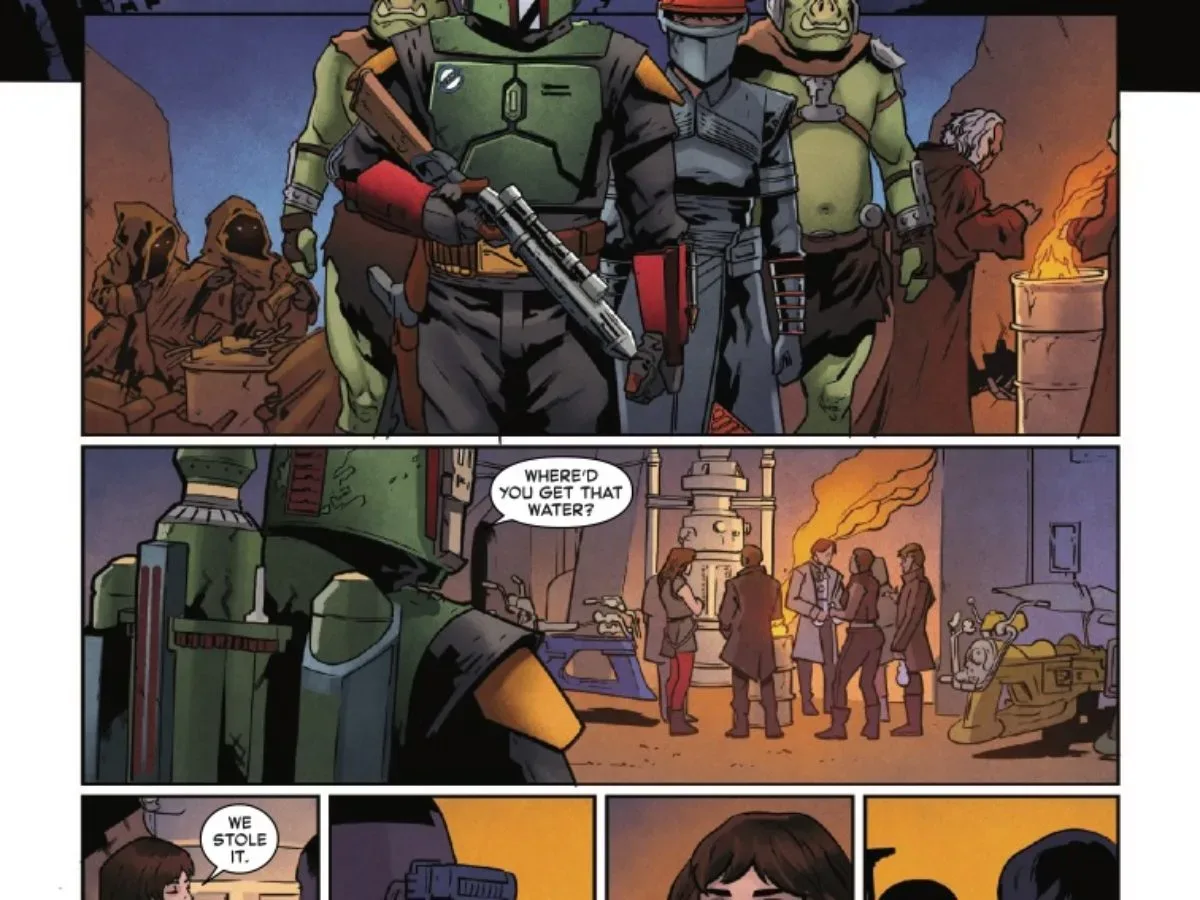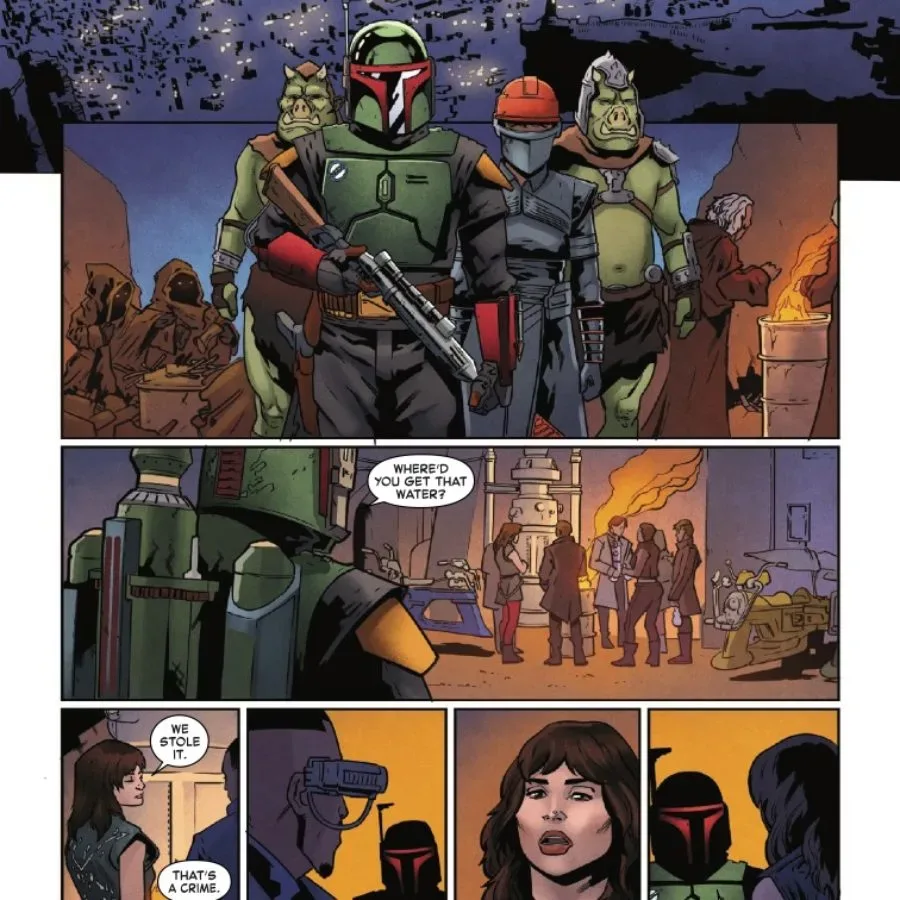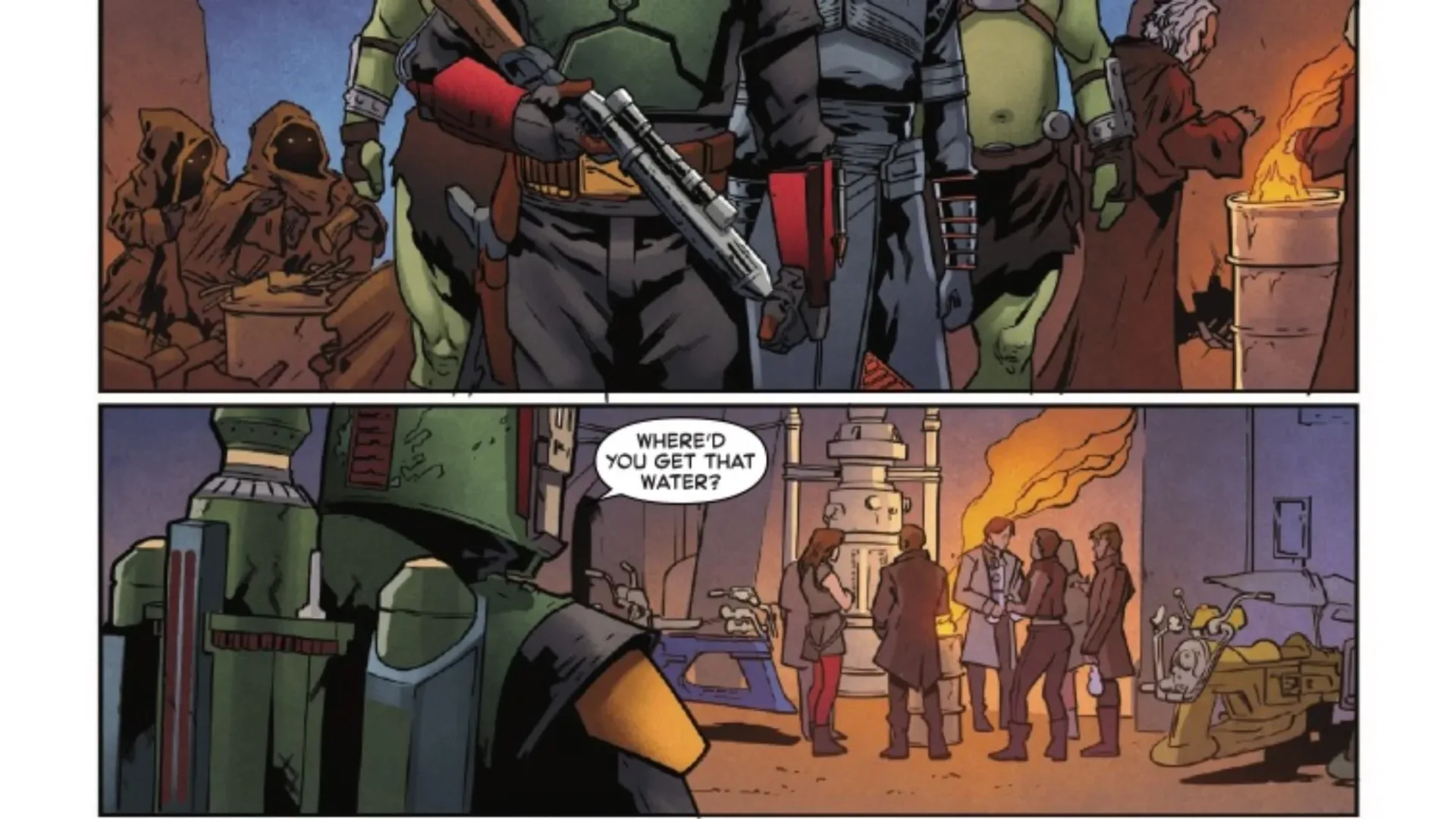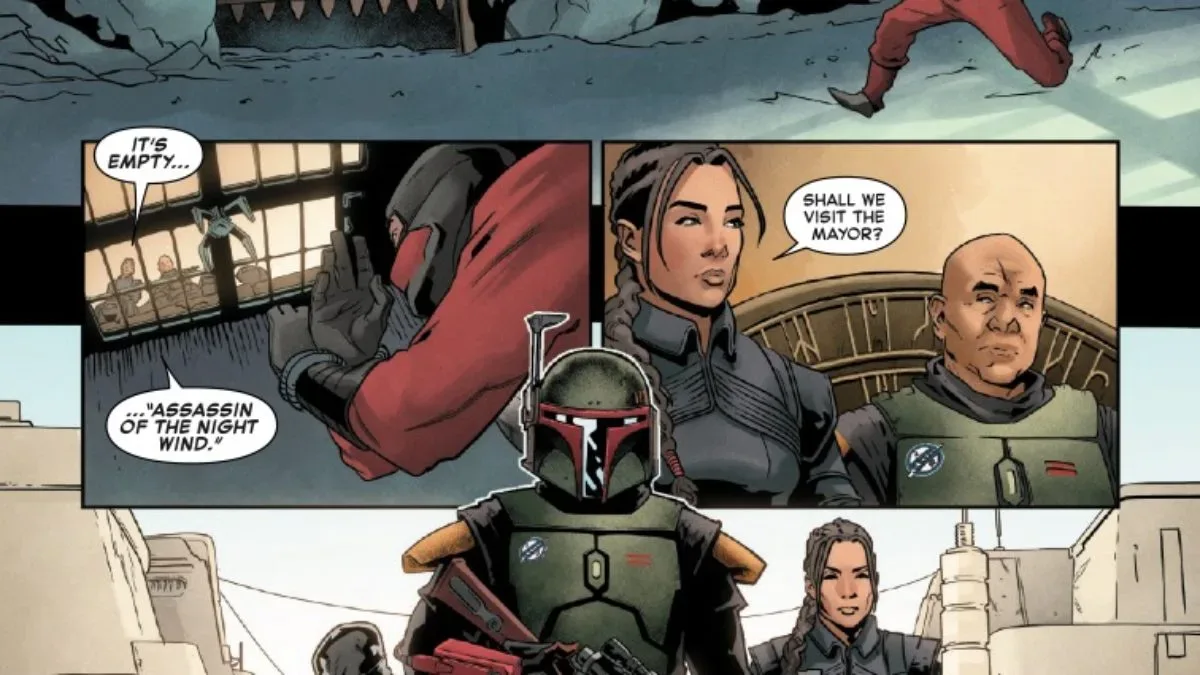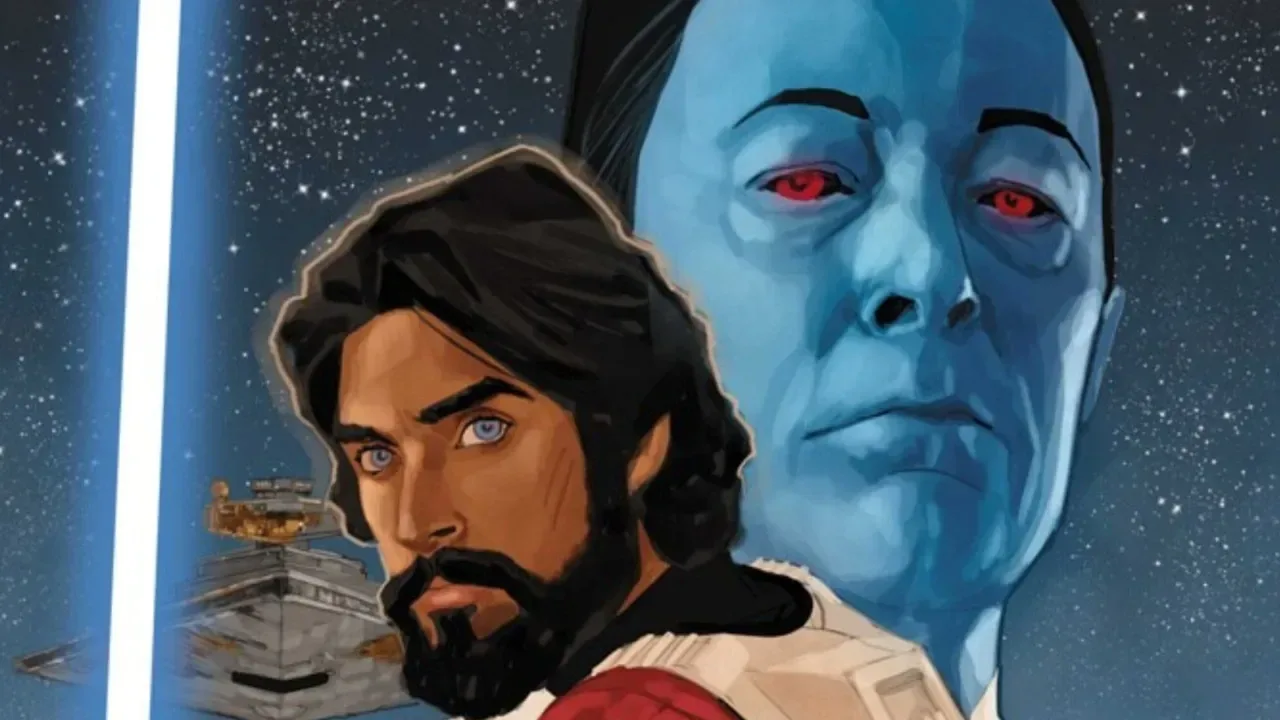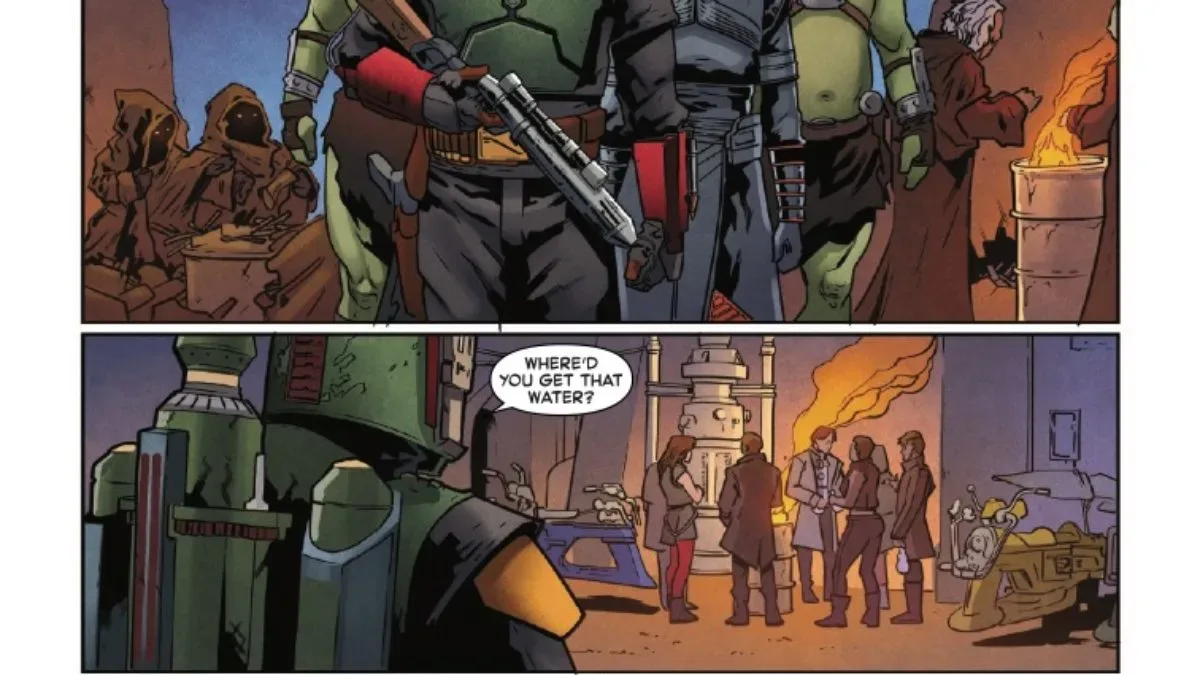
Boba Fett’s attempt to rule Mos Espa faces a fresh test in Star Wars: The Book of Boba Fett #3, arriving from Marvel on October 14, 2026. The 40-page issue shifts the focus from Fett’s celebrated reputation as a hunter to the far messier reality of holding territory: keeping control when danger can arrive as open violence, a political challenge, or both at once.
The central setup is deliberately direct. Fett must confront two different threats while trying to maintain his position in Mos Espa. Alongside that present-day conflict, the issue revisits his training with the Tusken Raiders. The stated danger is Krrsantan, the formidable Wookiee whose assault raises a simple question for the issue: can even Boba Fett withstand it?
A crime boss story, not simply a bounty hunt
The premise makes an important distinction between the roles Boba Fett has occupied in Star Wars stories. A bounty hunter works toward a defined assignment, generally tracks a target, and ultimately collects payment for a completed job. A crime lord, by contrast, is responsible for maintaining authority over a place and the people operating within it. The work does not end with one victory. Every dispute, threat and challenge to the hierarchy can become a test of whether that authority still means anything.
That is the pressure point for this issue. Mos Espa is not merely a backdrop for a fight; it is the territory Fett is trying to control. The story’s “chaos on the streets” framing suggests that the conflict has consequences beyond a private clash. If Fett cannot respond effectively, the threat is not just injury or defeat. It is the possibility that the city sees him as unable to protect his own position.
That gives the comic a potentially useful tension between spectacle and governance. Boba Fett is one of the franchise’s most recognizable armored figures, but the hook here is not solely whether he can win a physical confrontation. It is whether force remains an adequate answer to the continuing, unglamorous demands of being Daimyo in Mos Espa.
Krrsantan is the immediate physical problem
Krrsantan’s presence establishes the issue’s clearest danger. The solicitation describes his attack as brutal, which sets an expectation of a close-quarters confrontation rather than a distant tactical standoff. For Boba Fett, that matters: leadership can create a buffer between a ruler and day-to-day conflict, but an assault by a figure as formidable as Krrsantan collapses that distance immediately.
The appeal of that setup is the collision between two kinds of power. Fett’s authority in Mos Espa is institutional: he is attempting to hold territory and direct the response to instability. Krrsantan represents a more immediate and personal kind of threat, one that cannot be solved by declaring control. The issue can therefore treat the attack as more than an action scene. A public loss, or even an inability to deal decisively with the assault, could undercut Fett’s standing at the exact moment he is meant to project stability.
Marvel has not provided story details beyond that broad conflict, so readers should not assume how the confrontation ends, what prompts it, or which other characters may become involved. The preview’s value is in its situation: the ruler of Mos Espa is under pressure, and an exceptionally dangerous opponent is coming directly at him.
The Tusken Raider flashbacks add another perspective
The issue also returns to Fett’s training with the Tusken Raiders. A flashback is a scene set before the main present-day action, used to reveal background, explain a character’s outlook, or create a contrast with the current dilemma. Here, the structure connects Fett’s past survival and learning with a present situation in which he must govern.
That pairing is significant because the two circumstances demand different strengths. Training and survival are personal experiences; control over Mos Espa requires decisions that affect an entire territory. The flashbacks may illuminate how Fett approaches responsibility now, but the solicitation does not say that they provide an easy solution. Instead, their inclusion makes the comic’s two timelines feel thematically connected: the lessons Fett carried out of the desert are being tested amid the responsibilities of power.
It also keeps the issue rooted in Tatooine. Mos Espa and the Tusken Raider memories are distinct settings and experiences, yet both are part of the same world that has shaped Fett’s trajectory. The comic’s conflict is therefore not a random detour from its setting. It is built around the practical and emotional weight of attempting to lead on Tatooine.
What readers can expect from issue #3
Based on the published description, this is an issue centered on a stressed leader rather than an uncomplicated victory lap. Its main components are clear:
- Mos Espa under strain: Fett is trying to preserve control of the territory he rules.
- Two fronts of trouble: the issue explicitly positions the challenges as distinct, suggesting that one answer will not necessarily resolve everything.
- A dangerous assault: Krrsantan provides the story’s stated physical confrontation.
- Past meeting present: scenes involving Fett’s Tusken Raider training run alongside the conflict in Mos Espa.
There is a pleasingly grounded angle to all of this. Galactic adventure frequently turns on vast political movements or planet-level stakes. This issue instead locates tension in the difficult work of holding one city together. That does not make the danger small. In a crime-boss story, local control is the whole point, and losing it can be every bit as consequential to the character as escaping a larger battlefield.
Readers interested in comic stories built around leadership pressure may also find a useful comparison point in Teen Titans #2’s Seattle-set team conflict, though Boba Fett’s problem is distinctly his own: imposing order in a city where strength, loyalty and fear may not always align.
Creative team, format and covers
Star Wars: The Book of Boba Fett #3 is written by Rodney Barnes with art by Will Sliney. Ken Lashley supplies the main cover. The issue is rated T and carries a US price of $5.99, with a Canadian price of $7.50 listed for the variant editions.
Two variants are listed alongside the main issue: a Mico Suayan variant and a Mike Hawthorne variant. The main edition is identified by UPC 75960620601800311; the Mico Suayan variant is 75960620601800316, while the Mike Hawthorne variant is 75960620601800321. The issue is listed at 40 pages.
For readers deciding whether the release is for them, the clearest draw is the combination of character-focused flashbacks and a present-day territorial crisis. Fett’s identity as a feared hunter remains relevant, especially with Krrsantan in the picture, but the story’s sharper question concerns what happens after the hunter takes the throne. Issue #3 places that question in the streets of Mos Espa, where maintaining control may prove harder than earning it.