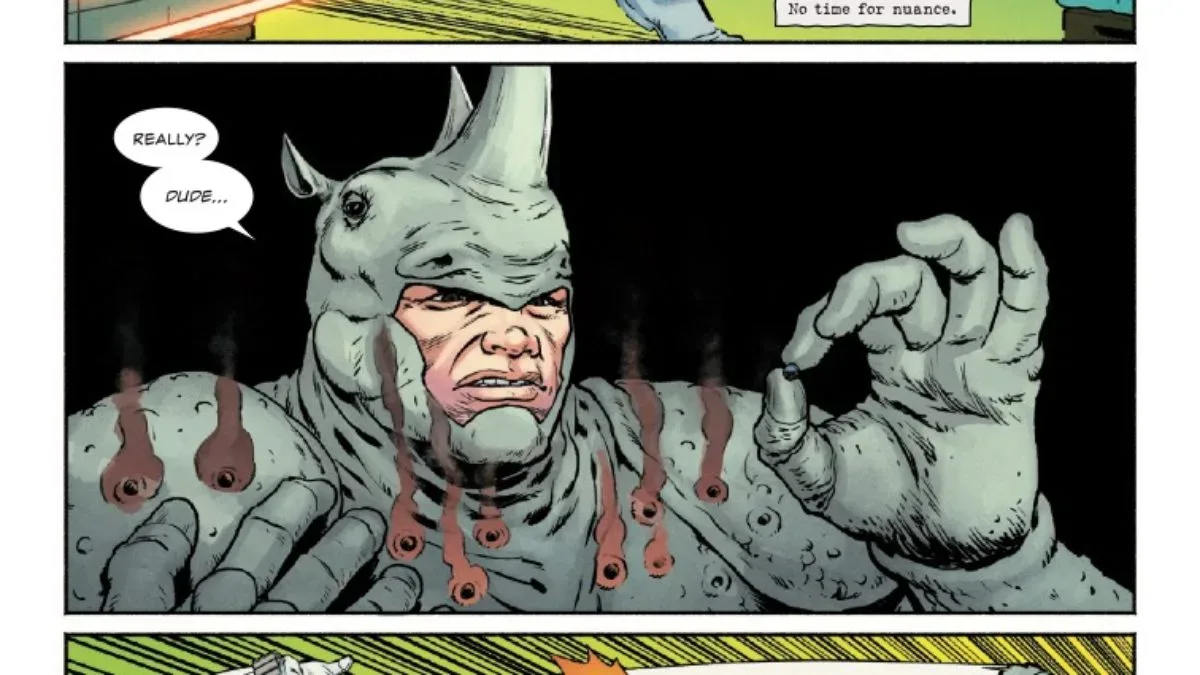
Star Wars: The Book of Boba Fett #2 is set to bring Boba Fett’s difficult tenure on Tatooine into sharper focus. The new Marvel issue, written by Rodney Barnes with art by Will Sliney and a cover by Alex Maleev, follows Fett as he attempts to preserve a precarious arrangement with the other syndicates operating around Mos Espa.
The central problem is not simply whether Boba can defeat an immediate opponent. The solicitation frames his position as one of ongoing maintenance: he is trying to safeguard a peace that is already described as fragile. That wording suggests a story about the pressure of leadership, where every competing interest can turn into a potential threat and where ruling is markedly different from completing a contract as a bounty hunter.
At the same time, the issue returns to Fett’s recovery and training with the Tusken Raiders. The flashback material places the character’s current authority beside an earlier, more vulnerable stage of his life. Rather than treating Tatooine merely as a backdrop for criminal intrigue, the premise connects the desert world to the experiences that helped shape the version of Boba now trying to govern it.
A crime lord facing a balancing act
Boba Fett’s situation in Mos Espa is built around a contradiction. He has claimed a criminal empire, but the description of the issue emphasizes protection of peace rather than a bid for new territory. That distinction matters. A crime lord’s power may be visible through guards, territory and intimidation, but maintaining an arrangement among rival syndicates requires alliances to hold even when nobody involved has a strong reason to trust anyone else.
Syndicates, in this context, are organized criminal groups competing for influence. A fragile peace is therefore not a settled condition. It is an agreement that can fail when one party sees an advantage in breaking it, when a new actor arrives, or when an old conflict returns. For Fett, the challenge appears to be less about declaring control than proving that his control can last.
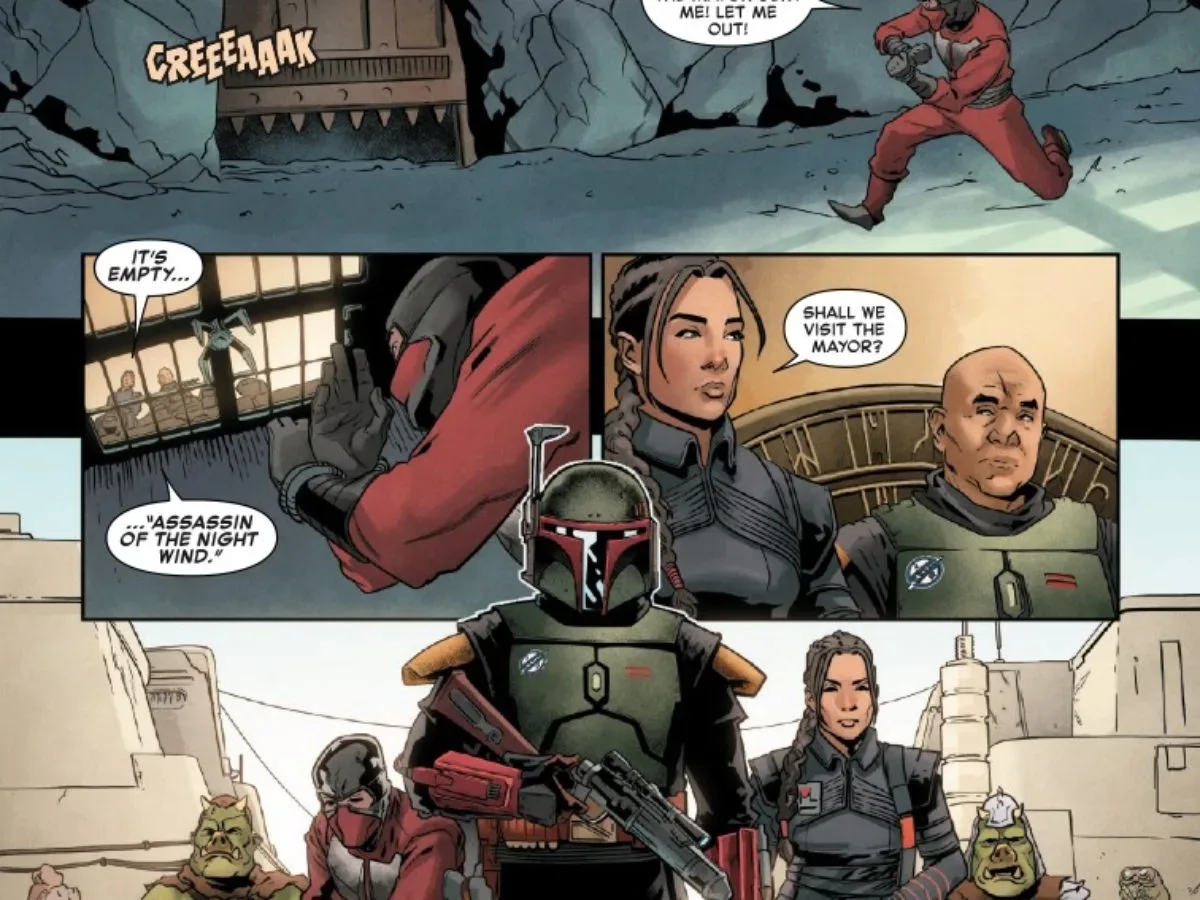
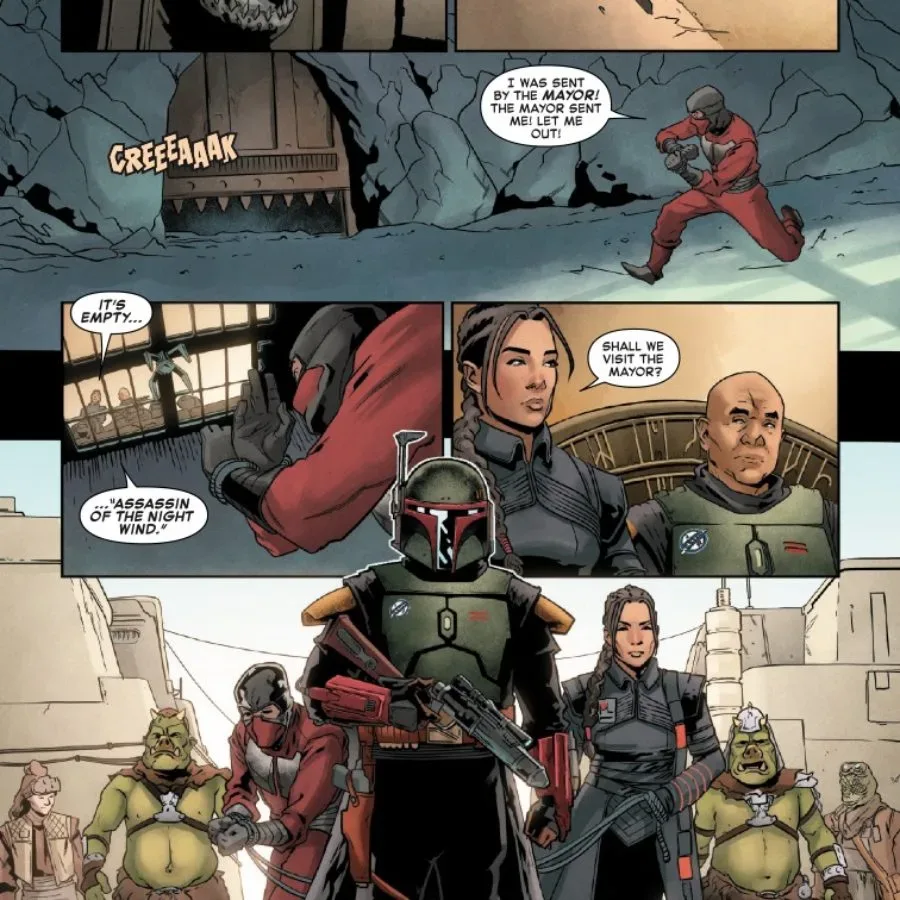
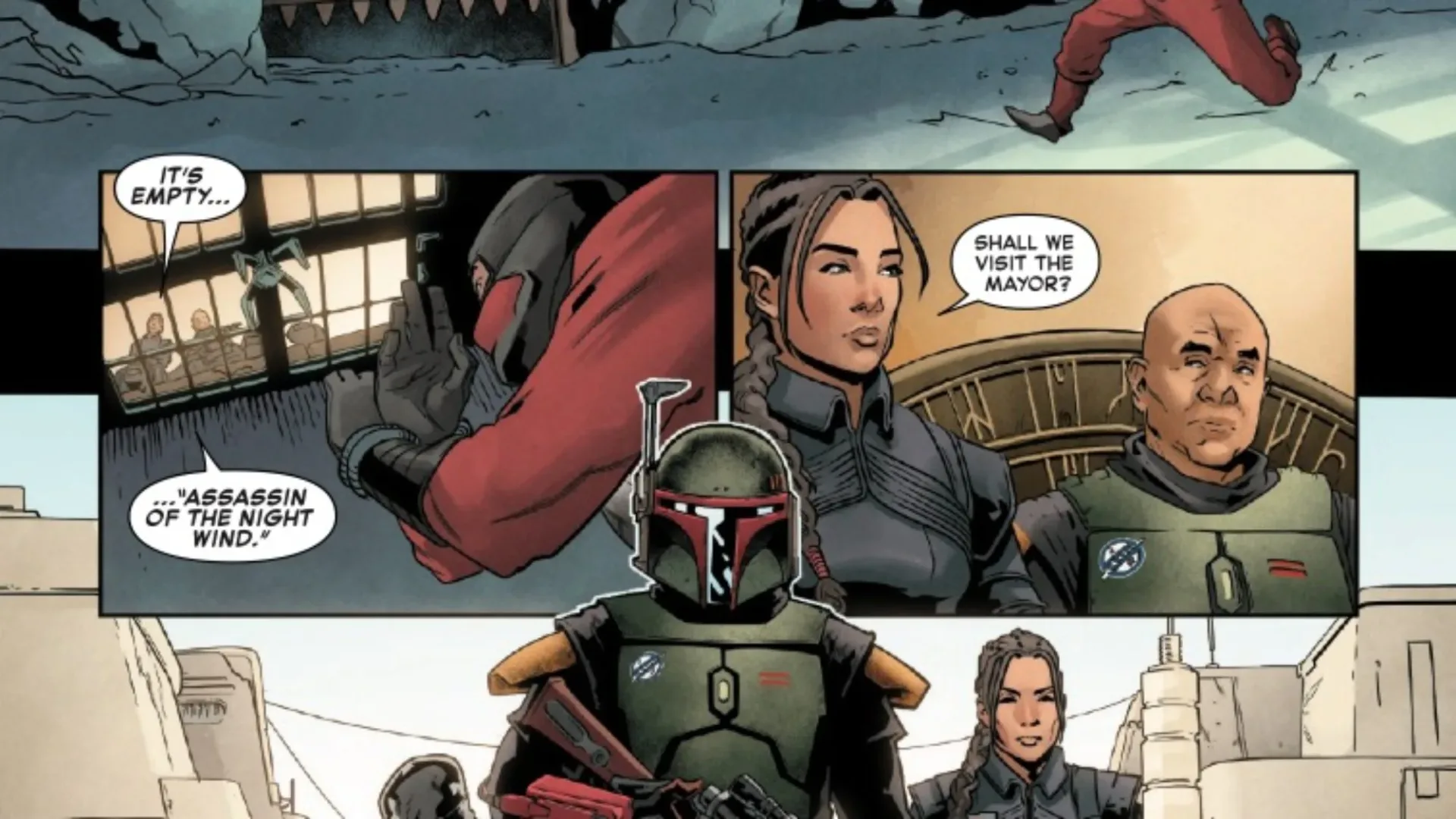
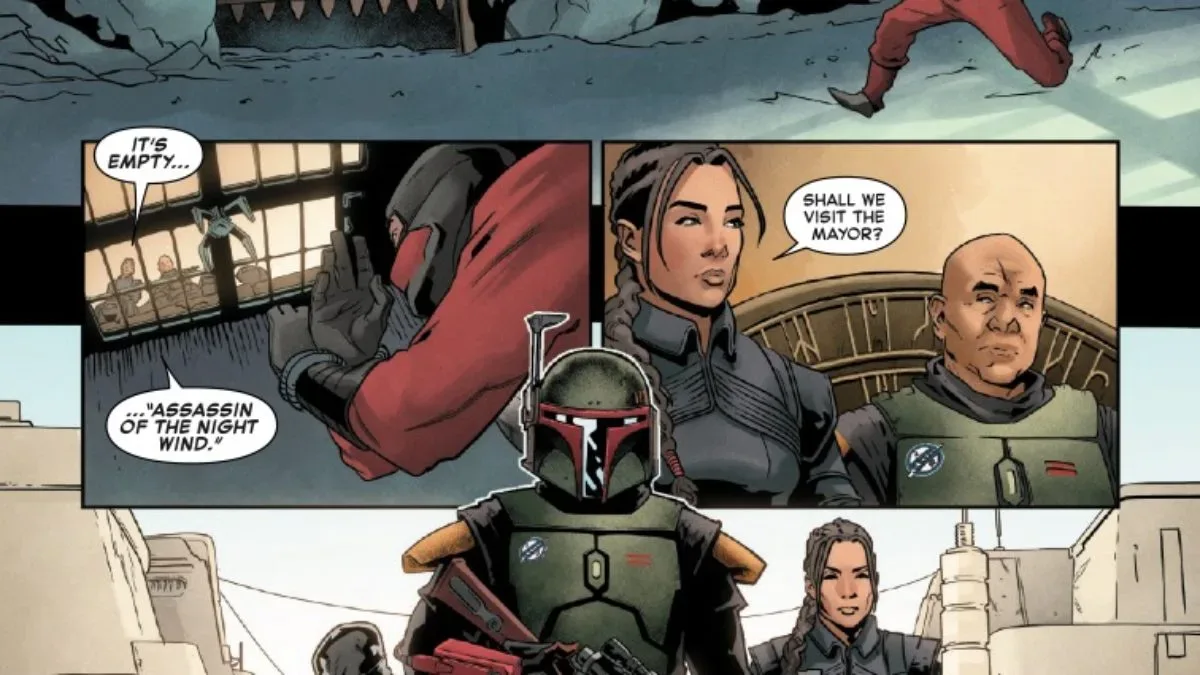
The available preview material also points to an assassin connected to an organization called the Order of the Night Wind. Fett’s people interrogate the captive, who identifies “the mayor” as the person who sent him. The scene gives the issue a concrete threat beneath the broader political premise: someone is acting against Fett’s group, and the question of who commissioned the attack could turn a tense political landscape into open conflict.
That is an effective fit for a Boba Fett story. The character’s history and reputation invite direct action, but a ruler cannot solve every pressure point with the same response. If Mos Espa’s rival powers are to remain contained, Fett must contend with both the obvious danger of violence and the subtler consequences of how authority is exercised.
The Tusken flashbacks are part of the premise, not an aside
The other half of the issue’s stated focus is Boba’s grueling recovery and instruction among the Tusken Raiders. “Recovery” establishes that the memories revisit physical hardship; “training” makes clear that this is also a period of change. Together, those ideas give the flashbacks a practical narrative role. They are positioned as material that informs how Fett became the leader seen in Mos Espa rather than simply a detour away from the current plot.
That structure can create a useful contrast. Present-day Boba is responsible for a claimed empire and a politically uneasy city. The earlier Boba is recovering and learning under the Tuskens. One thread concerns the instability around his authority; the other concerns the process through which he was rebuilt. The parallel is especially fitting for a character who must project certainty in public while his past recalls a far less secure time.
The premise does not establish every detail of how the two timelines will meet, so readers should not assume the flashbacks resolve the assassination plot or reveal all of Fett’s strategic thinking. What is clear is that both threads are integral to the advertised conflict. The issue is designed to examine present leadership alongside the difficult experiences that shaped it.
What the preview suggests about the issue’s tension
Fett is shown moving through Mos Espa with Gamorreans and red-armored allies, underscoring the public-facing side of his position. These images communicate security and status, yet the story’s language repeatedly qualifies that strength. The peace is fragile, rival syndicates remain a concern, and an assassin has been captured. The visual impression of control is therefore set against circumstances that test whether that control is real.
This is a useful distinction for readers approaching the comic from Boba Fett’s screen story or from the larger Star Wars comics line. A character can occupy a throne, command guards and issue orders, but those symbols do not eliminate competing power centers. The issue’s hook lies in the gap between possessing authority and successfully holding together the people and factions affected by it.
The “Night Wind” name also adds an element of uncertainty. An assassin is a targeted threat rather than a battlefield opponent: the attack implies planning, concealment and a client with something to gain. The interrogation scene may produce a lead, but identifying a mayor as the sender does not automatically make the broader situation simple. In a setting defined by syndicates and a tenuous truce, a single revelation can create as many complications as it answers.
Creative team and edition details
Barnes writes the issue and Sliney handles interior art, while Maleev provides the main cover. Marvel lists the comic as a 40-page release, rated T, with a U.S. cover price of $5.99. It is scheduled to go on sale September 23, 2026.
Three listed variant editions give collectors different cover choices without changing the core story: a Taurin Clarke variant, a Rod Reis variant and a Josemaria Casanovas variant. Each is listed at $5.99 in the U.S. and $7.50 in Canada. Readers who primarily want the next chapter can choose the standard Alex Maleev-covered edition, while cover-focused buyers have the additional options at the same stated U.S. price.
- Title: Star Wars: The Book of Boba Fett #2
- Writer: Rodney Barnes
- Artist: Will Sliney
- Main cover artist: Alex Maleev
- On-sale date: September 23, 2026
- Format: 40 pages, rated T
- U.S. price: $5.99
Why this issue’s setup matters for Boba Fett
Boba Fett works particularly well as a character caught between reputation and responsibility. The issue’s setup makes room for both. The syndicate storyline asks whether he can keep a complicated peace intact; the Tusken material looks back to the adversity and training that contributed to the person attempting that task. The result is a premise centered on pressure rather than a straightforward bounty.
It also gives Mos Espa an active role in the story. The city is not presented as a neutral location for action scenes. It is the place where competing syndicates, a mayor’s alleged involvement and Fett’s newly claimed empire converge. Every step toward stability has political stakes because the status quo itself is unsettled.
For readers following Star Wars stories across comics and screen projects, the release arrives in a broader franchise environment in which the way audiences access streaming entertainment continues to change. That makes developments such as Disney+ terms allowing advertising before and after playback on every plan relevant context for fans who move between TV and print Star Wars storytelling. The comic itself, however, stands on the clearly defined conflict of Fett’s leadership, the syndicates’ uneasy peace and the memories of his time with the Tusken Raiders.
Star Wars: The Book of Boba Fett #2 is therefore positioned as a chapter about the cost of maintaining power. Boba may have taken control, but the announced story makes clear that taking control is only the beginning. The harder question is whether he can preserve a peace that looks vulnerable from every direction.