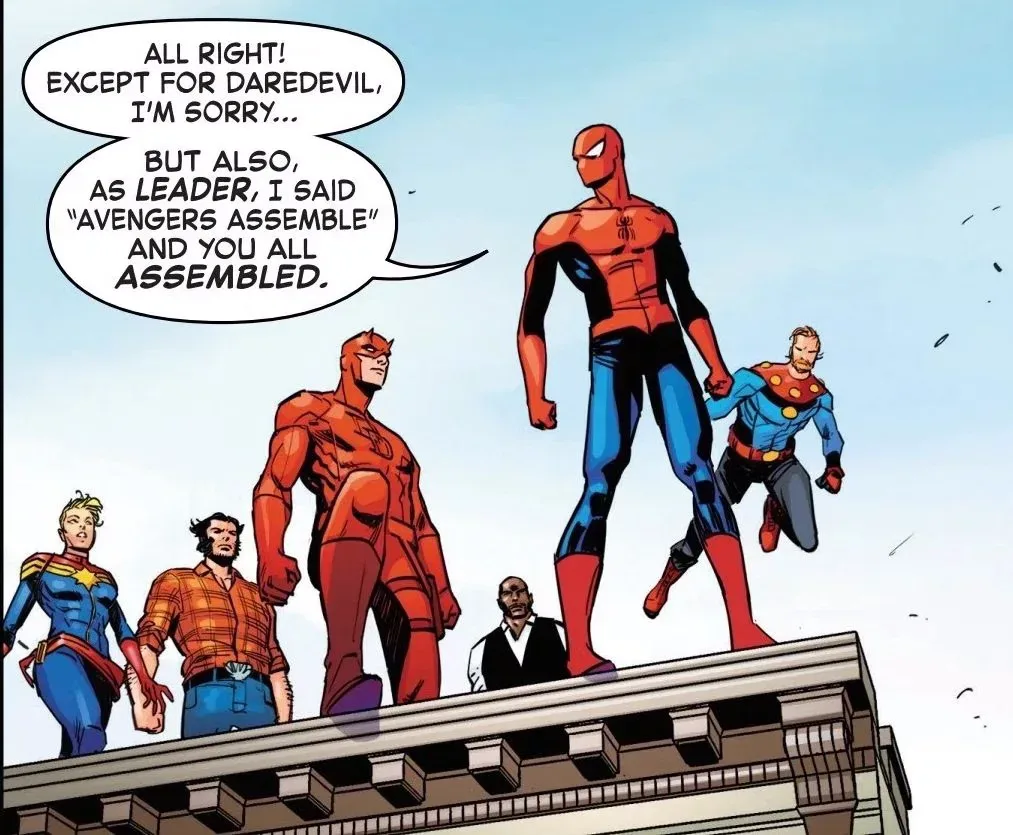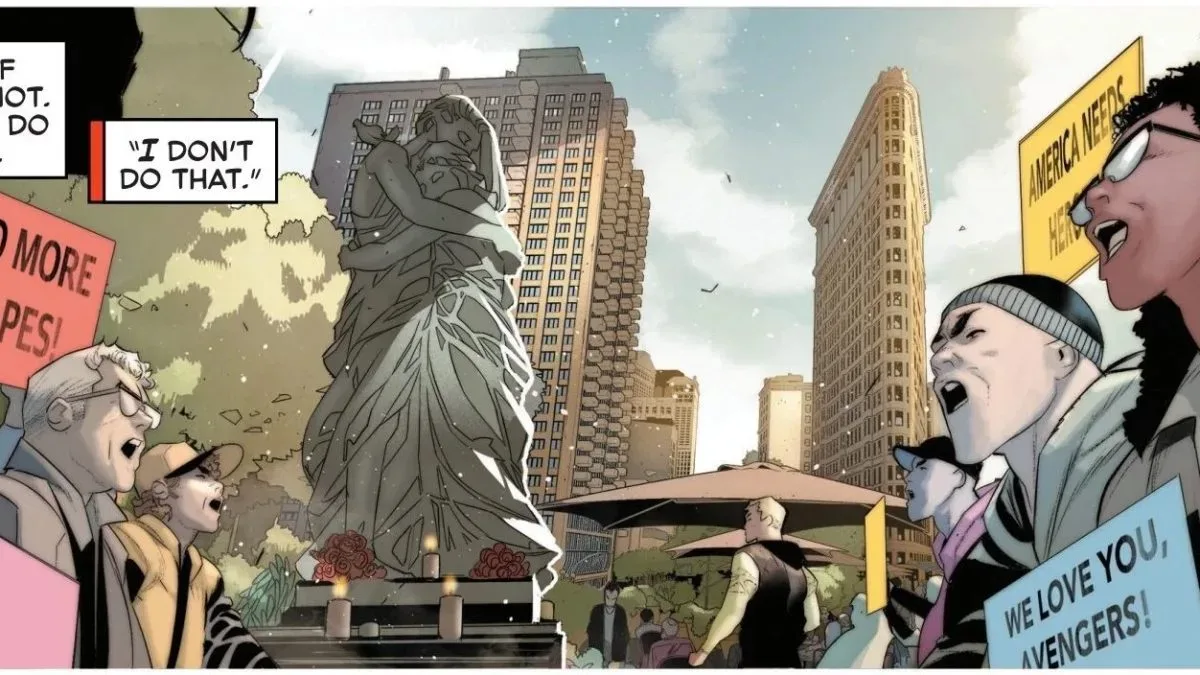
Spider-Man is officially leading the Avengers. Amazing Spider-Man #1004 confirms Peter Parker’s place at the head of Marvel’s new team following the reality-shaking events of Avengers: Armageddon. The confirmation arrives not in the core Avengers title, but during a very Spider-Man-shaped emergency: a mission to save J. Jonah Jameson from Itsy Bitsy.
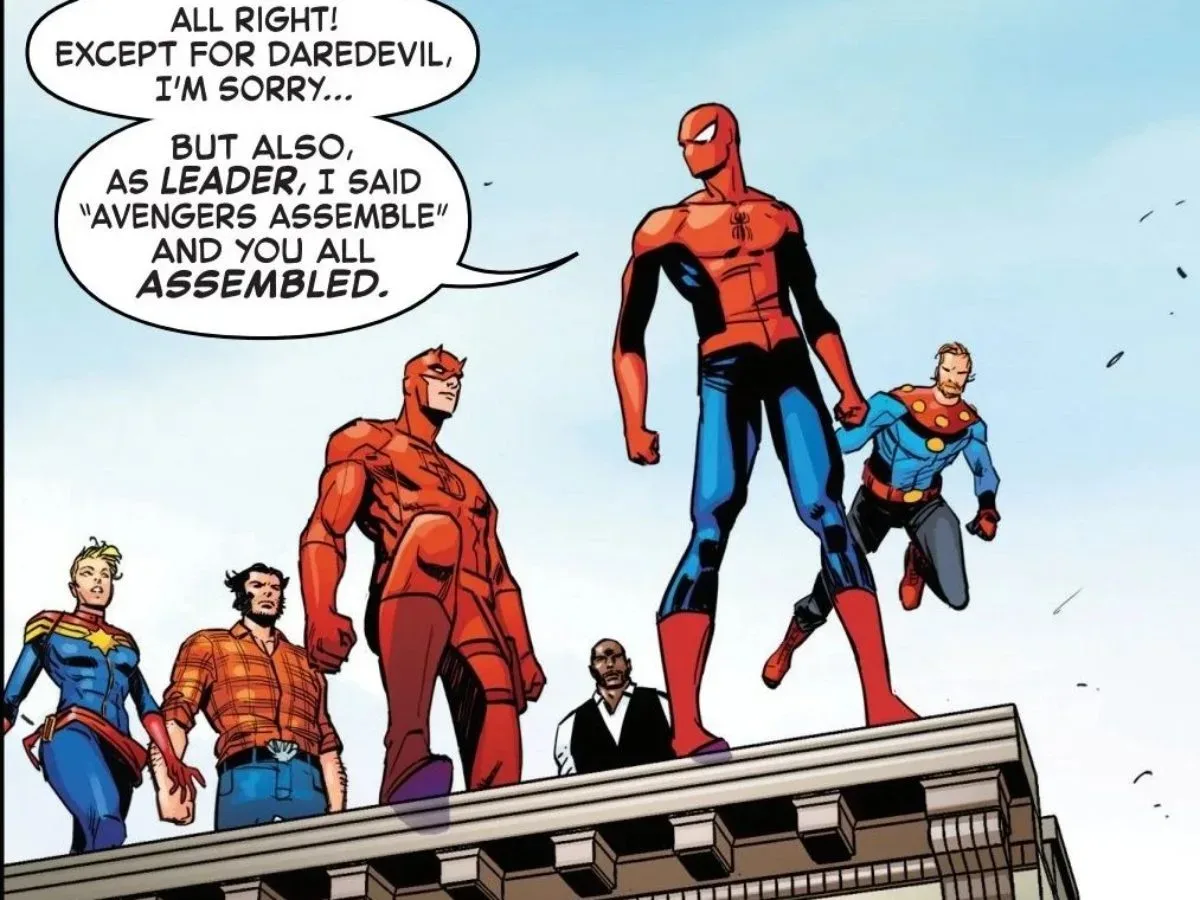
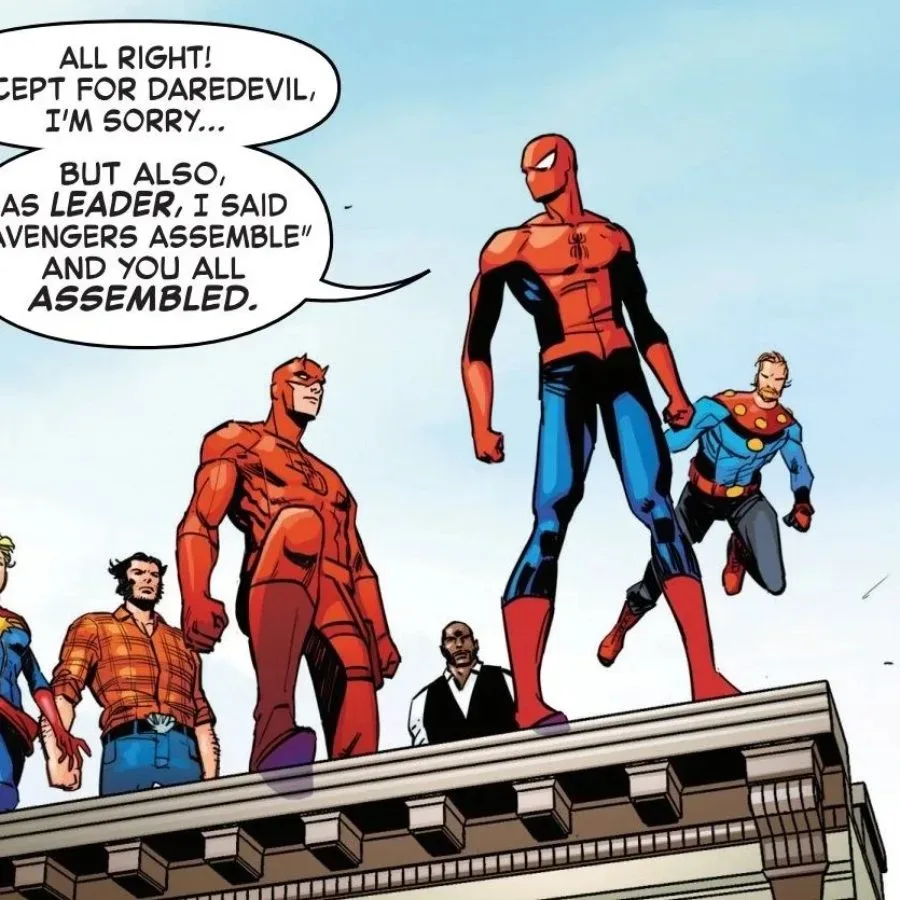
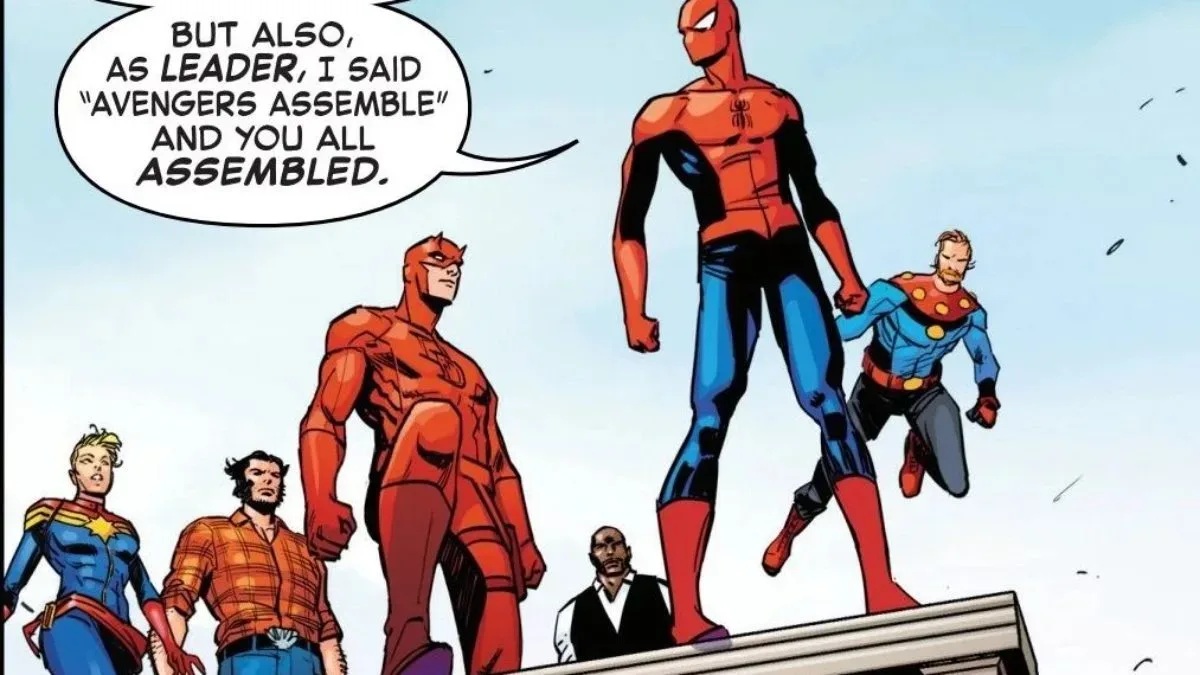
The issue, written by Joe Kelly with art by Francesco Manna, places Spider-Man on New York rooftops with Luke Cage, Wolverine, Daredevil, Captain Marvel and Miracleman. That lineup matches the group presented as the new Avengers in Avengers #1, but Amazing Spider-Man #1004 makes the hierarchy explicit. Peter is the leader.
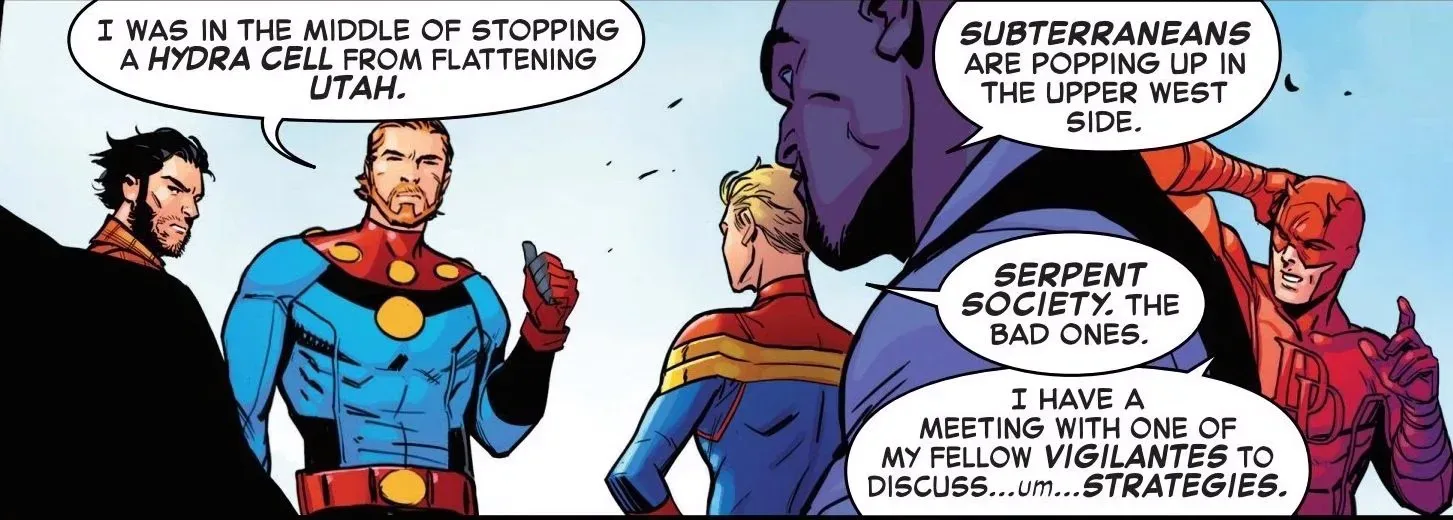
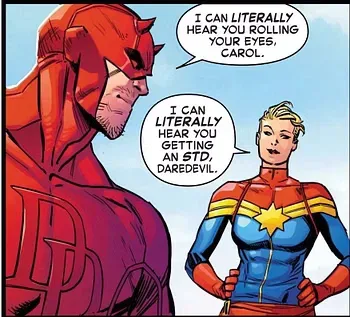
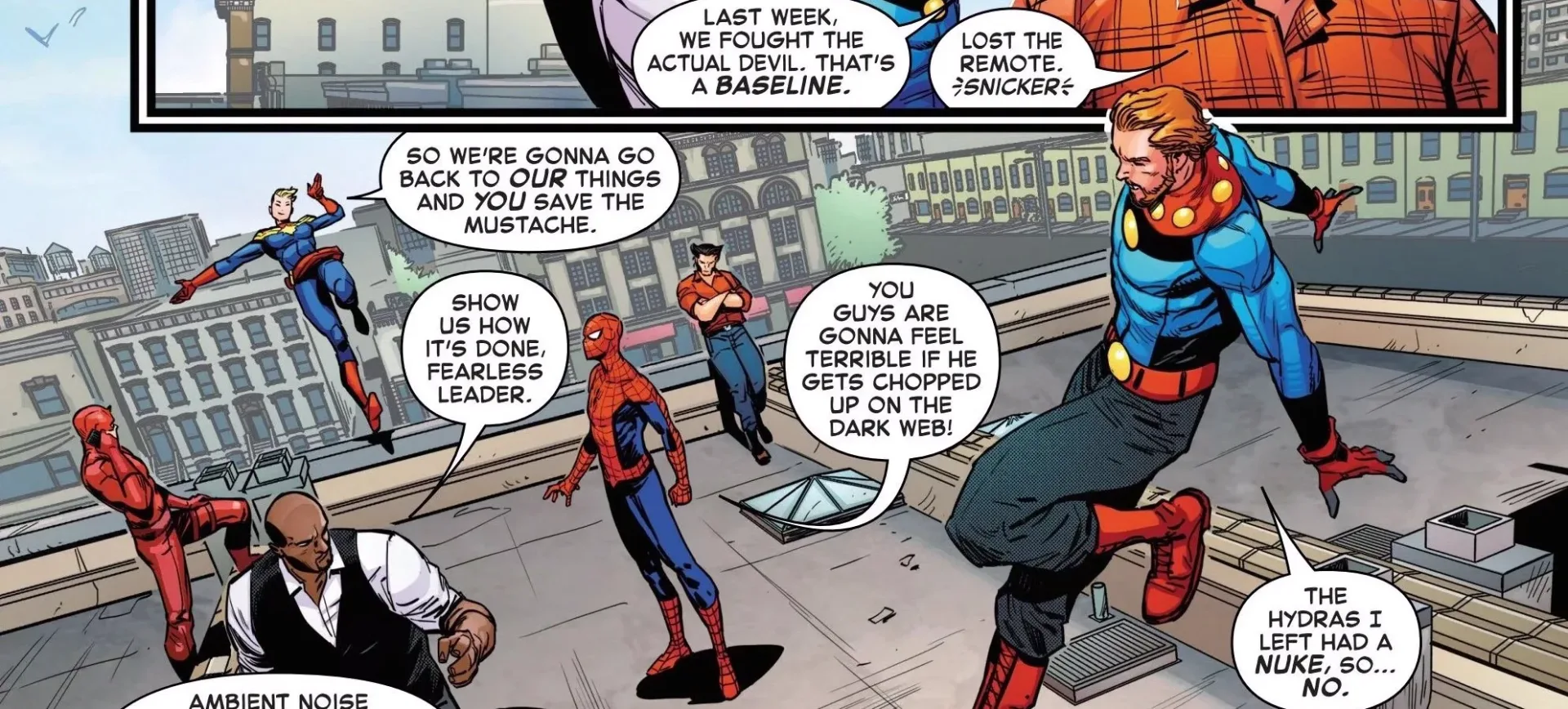
It is a major status-quo point, but it is not framed as a neat coronation. The assembled heroes do not appear automatically convinced that answering Spider-Man’s call to rescue Jameson is an appropriate use of the Avengers’ time. The tension is the feature, not a bug: Peter has the title, while the practical work of getting this particular collection of heroes to follow him remains unresolved.
A team assembled after Armageddon
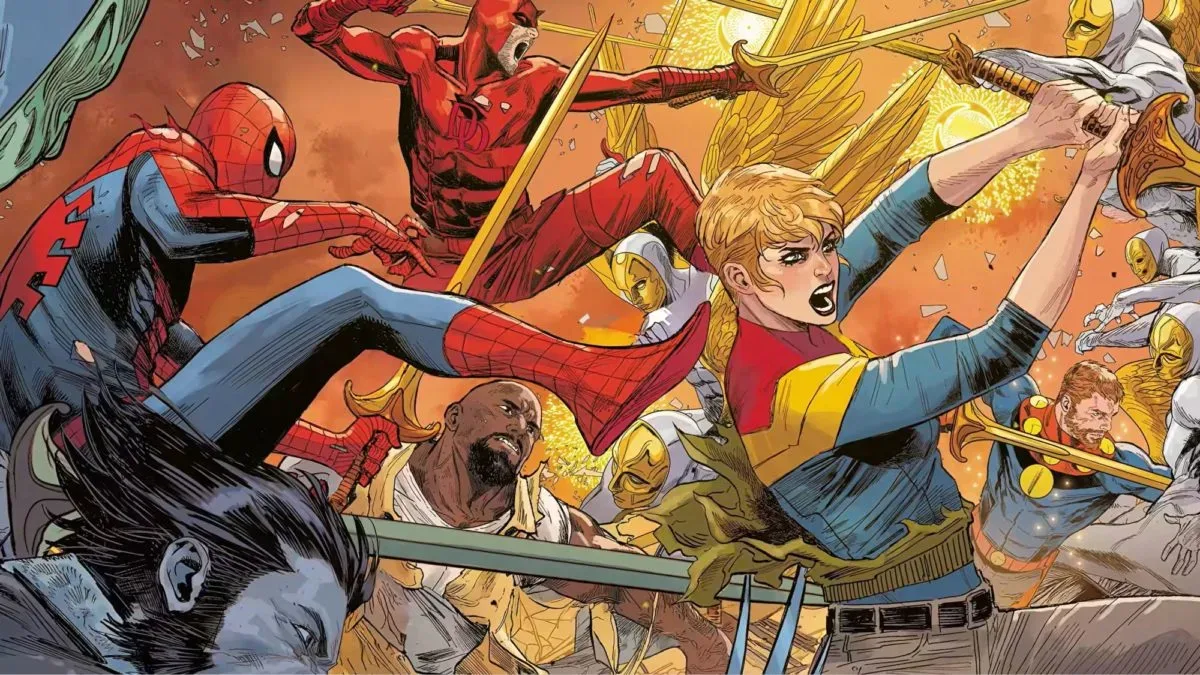
Marvel has positioned the current Avengers era in the aftermath of Armageddon, a crisis whose effects are spreading through multiple series. The new Avengers #1 describes a world order rewritten by Avengers: Armageddon and brings together Spider-Man, Wolverine, Captain Marvel, Daredevil, Luke Cage and Miracleman as a new version of Earth’s Mightiest Heroes.
That phrase, status quo, is worth clarifying in comics terms. It does not mean an unchanging situation. It means the central setup a line of stories is currently built around: who is on the team, what their mission is, how the world has changed, and which relationships are meant to generate drama. Here, the new status quo is an Avengers team led by Spider-Man in a Marvel Universe still absorbing Armageddon’s consequences.
Amazing Spider-Man #1004 is especially useful because it shows how that setup operates outside the title bearing the Avengers logo. Rather than wait for a massive cosmic threat, the team is drawn into a rescue involving one of Peter’s most enduringly complicated personal connections. Jameson is a newspaper figure central to Spider-Man’s life, and Itsy Bitsy has targeted him. The mission turns a personal Spider-Man problem into an Avengers problem.
That is also a concise statement of what Peter’s leadership could look like. His instinct is to respond when someone is in danger, even if the situation may look comparatively small beside world-ending stakes. His teammates’ apparent skepticism establishes the counterargument: should a group of heroes this formidable be mobilized for every crisis connected to Spider-Man’s city and history?
Why the leadership confirmation matters
There is a meaningful difference between being the character who assembles a team for one mission and being named its leader. A temporary organizer needs to get the group through the immediate problem. A leader must set priorities, make calls under pressure and persuade strong personalities that the group’s direction is worth following.
Amazing Spider-Man #1004 supplies the latter designation while immediately challenging the former. Luke Cage, Wolverine, Daredevil, Captain Marvel and Miracleman are not portrayed as blank slates waiting for orders. They arrive with their own perspectives and, in the issue’s opening team dynamic, doubts about the value of the assignment. That does not invalidate Peter’s position. It gives the new series a conflict that cannot simply be punched away.
For Spider-Man readers, the development also raises the scale of Peter’s regular world. Jameson’s kidnapping is not merely another chapter in a neighborhood battle; it becomes the incident that calls in a roster of major heroes. Yet the character’s grounding remains intact. Peter is still acting to save someone from his own orbit, rather than being detached from the problem by the grandeur of the Avengers brand.
For Avengers readers, the issue offers an important character lens. Spider-Man’s leadership is not presented as a command structure backed by unanimous confidence. It is a responsibility he is taking up amid doubt, after a universe-altering event, with allies who may question his decisions. That combination has obvious narrative potential: the real test may be less whether Peter can defeat an enemy than whether he can build consensus before the next emergency gives the team no time to argue.
The immediate rescue: J. Jonah Jameson and Itsy Bitsy
The centerpiece of Amazing Spider-Man #1004 is the attempt to rescue J. Jonah Jameson from Itsy Bitsy. Marvel’s description characterizes Itsy Bitsy’s message to Jameson in unmistakably lethal terms, putting Peter in motion to save him. A further complication is promised when another friend turns and places Spider-Man in the path of revenge.
Those points establish a personal threat with broader consequences. Jameson’s danger is enough to bring together the entire new Avengers roster, while the betrayal element puts pressure directly on Spider-Man rather than on the team as an abstract institution. It is a logical way to test a newly designated leader: force him to balance an urgent rescue, a fraught relationship and a group of peers who are not fully sold on his judgment.
The issue’s team sequence also emphasizes the contrast within the roster. Wolverine is singled out as a reliable presence for Spider-Man, an indication that Peter has at least one ally prepared to stand with him even while the larger group’s cohesion is unsettled. That is not the same as an answer to every leadership issue, but it gives the team a human center amid a deliberately unwieldy collection of heroes.
How Armageddon is reshaping the wider line
The post-Armageddon setting is not confined to the Avengers books. The published descriptions for several series describe a Marvel Universe disrupted at every level. Captain America #16 places a battle for Hell’s throne on a collision course with the living world, leading toward Armageddon. The subsequent Captain America issues follow Steve Rogers as he deals with the fallout, including conflict with a U.N.-backed S.H.I.E.L.D., the child clone of Doctor Doom called Vic, altered history and a dystopian future.
Meanwhile, Maximum X-Men begins with Storm and Wolverine assembling a mutant team when an Avengers-level threat emerges after Armageddon. Its later solicitations say the Avengers are no more, even as the new Spider-Man-led team is taking shape elsewhere. Read together, those descriptions signal a fractured universe rather than a simple replacement of one stable team with another. Different corners of the line are reckoning with the crisis from their own vantage points.
That broader context makes the Avengers’ uncertainty feel intentional. Armageddon is not just background wallpaper; it is the condition under which Spider-Man is being asked to lead. The world has changed, heroes are scattered or reorganizing, and the precise role of an Avengers team has become a question the stories can explore.
Readers following Marvel’s wider superhero publishing can also find another team-oriented, time-displacement premise in this look at Golden Years and its creative team.
What Avengers #2 and beyond have set up
The immediate next stage is Avengers #2, by Chip Zdarsky and Marco Checchetto, scheduled for December 16, 2026. Its solicitation puts Aunt May in danger as demons flood New York City. It also raises the question of Mephisto’s goals and introduces a mysterious young woman with a prophetic book, with the Adjudicator positioned as the figure who knows the answer.
The Mephisto thread matters beyond the demonic invasion. Amazing Spider-Man #1004 raises an unresolved question about why the nullification of a Mephisto contract has not yet affected Mary Jane Watson. The issue does not provide the answer, so it should be treated as an open plot point rather than a settled explanation. Still, its presence ties Peter’s personal continuity to the supernatural crisis gathering around the new Avengers.
Solicitations for subsequent issues make that connection clearer. Avengers #3 begins a storyline titled “Chase the Devil,” with Spider-Man’s team pursuing Mephisto after Hell has been unleashed on Earth. By Avengers #4, Mephisto is described as building his own Sinister Six from Abomination, Sabretooth, Kraven the Hunter, Carnage and Green Goblin, with the solicitation itself leaving a question mark beside Green Goblin’s name.
Those are future-story descriptions, not proof of exactly how every revelation will play out. What they do establish is the escalation path: a rescue of Jameson in Amazing Spider-Man #1004 sits at the beginning of a period in which Spider-Man’s Avengers will be pulled into a confrontation with Mephisto and a widening Hell-on-Earth crisis.
A leadership role built for friction
Marvel’s new Avengers lineup does not make Spider-Man’s authority feel ceremonial. It makes it precarious. Peter is leading heroes with immense experience and force of personality in a world destabilized by Armageddon, and his first visible team action is driven by the need to save Jameson from Itsy Bitsy.
That framing gives the development its appeal. Spider-Man has a title that signals responsibility, but the story is already asking whether he can turn a collection of powerful individuals into a functioning unit. With demons headed for New York, Mephisto looming over the next arc and questions surrounding Mary Jane still unanswered, Peter’s Avengers tenure starts with pressure from both outside enemies and inside the team.
Amazing Spider-Man #1004 is available now. Avengers #2 is scheduled for December 16, 2026, followed by Avengers #3 on January 27, 2027 and Avengers #4 on February 10, 2027.
Shop the products
Check current price, model and availability at the retailer.