Warning: this article discusses plot developments from Captain America #16 and premise-level details for upcoming Marvel issues.
Marvel’s forthcoming Avengers and Maximum X-Men launches are being positioned as two very different responses to the same disaster. The shared point of rupture is Armageddon, with Captain America #16 providing a supernatural consequence that is at least as significant as the event’s physical destruction: Doctor Doom has taken control of Hell, and Mephisto’s agreements have been torn apart.
That premise gives the word “Armageddon” a broader meaning than a single explosion, battle or city under siege. It describes a world whose rules have stopped holding. Demons and damned souls once bound to Hell can spill outward, Mephisto’s old bargains are no longer secure, and Earth’s heroes must respond to disasters that do not necessarily share one enemy, one location or even one genre of threat.
For readers deciding where to begin, the clearest route starts with Captain America #16, moves into Avengers #1, and then branches into the new X-Men series. The books are not simply retelling the same crisis. Instead, the Captain America title concerns the political and personal fallout around Steve Rogers and Doom’s child clone, Vic; Avengers takes the supernatural emergency to New York; and Maximum X-Men shifts attention to mutants facing threats from the Negative Zone.
Doom’s victory changes the terms of the conflict
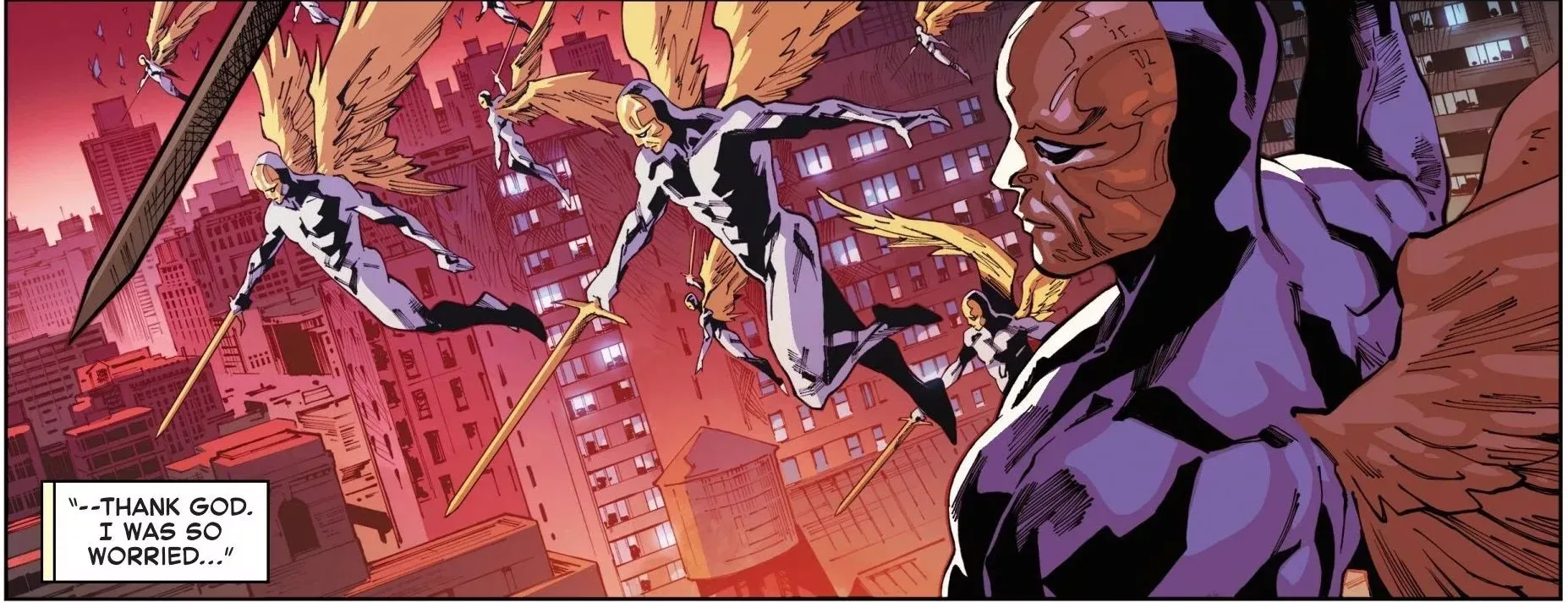
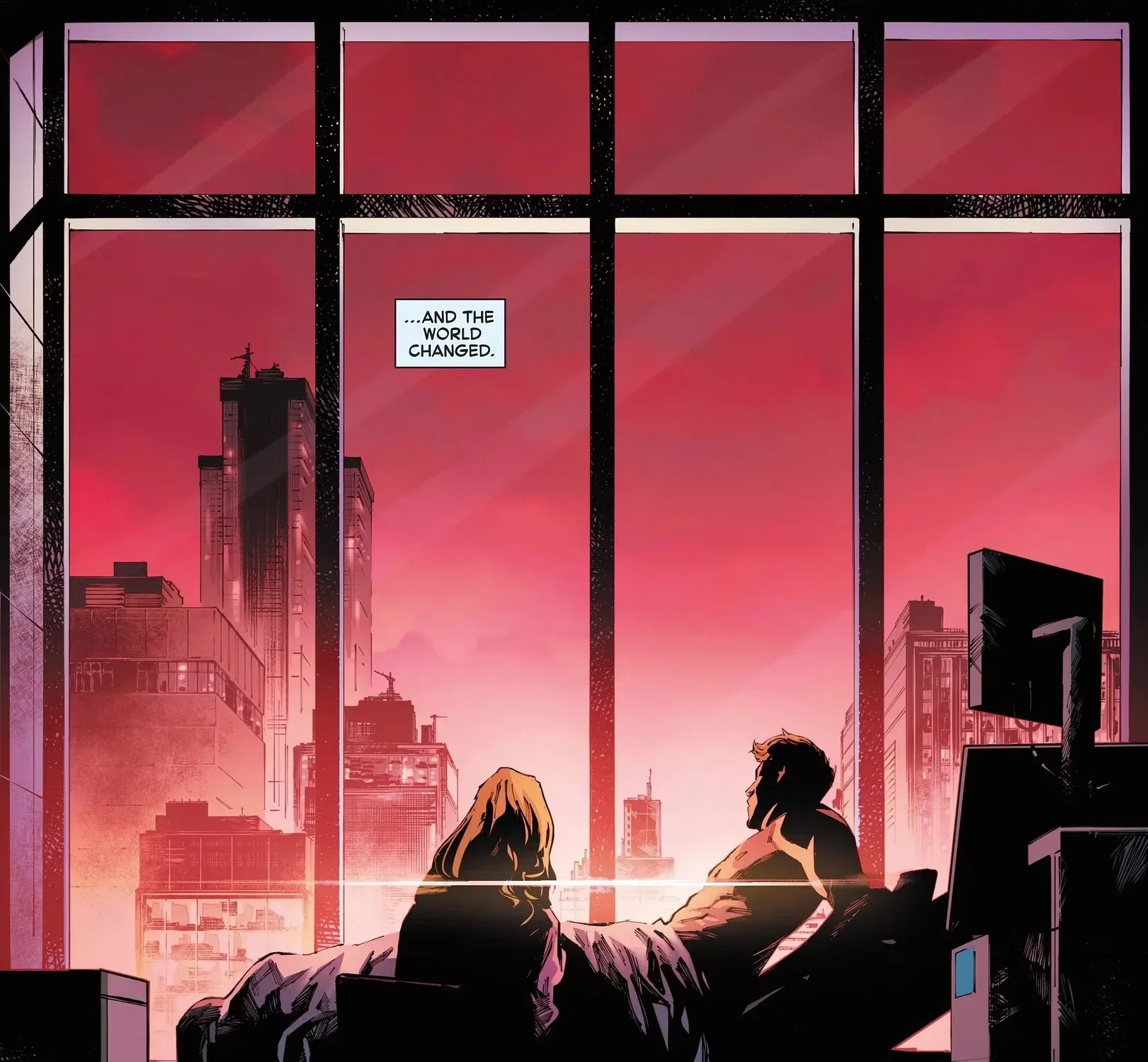
Captain America #16, by Chip Zdarsky and Valerio Schiti, frames its climax around the question of who will rule Hell. Its outcome leaves Steve Rogers waking in the living world to red skies and angel-like beings descending on New York City. The immediate spectacle is ominous, but the key continuity change is Doom’s takeover of Hell and the destruction of Mephisto’s contracts.
In Marvel storytelling, Mephisto’s contracts are not routine paperwork. They are magical bargains: deals that establish obligations, consequences and leverage. Breaking them potentially turns every person, demon or soul previously tied to those terms into a loose end. One deal specifically implicated is One More Day, making the development especially relevant to Spider-Man’s corner of the universe. That connection gives the new Avengers book a direct reason to keep Spider-Man at the center of the response.
The idea is not merely that Hell has opened and monsters escaped. Doom’s action appears to have dismantled a system of control. Mephisto may no longer be secure in his own realm, but neither is anyone who relied on the stability of his bargains. In practical story terms, that creates room for supernatural threats to manifest on Earth while allowing Mephisto to pursue a new source of power.
It also establishes a major contrast between Doom and Mephisto. Doom taking Hell may look like a victory in the moment, yet the resulting chaos is not contained below. Mephisto, meanwhile, is associated with the surviving demons and with an apparent hunt for heart-related magic. The exact goal has not been confirmed, so it is best treated as a looming mystery rather than a settled explanation for every attack that follows.
Avengers #1 puts a new team in a demon-struck New York
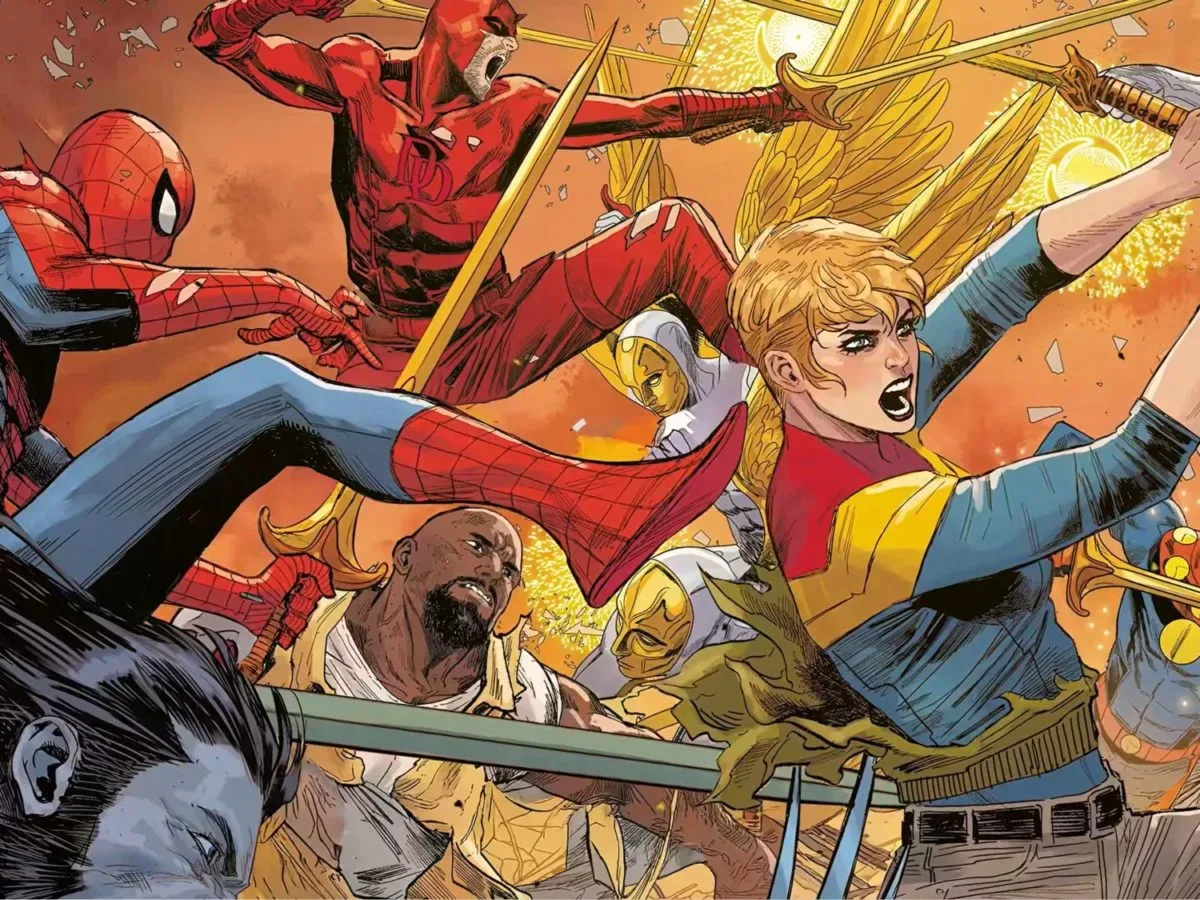
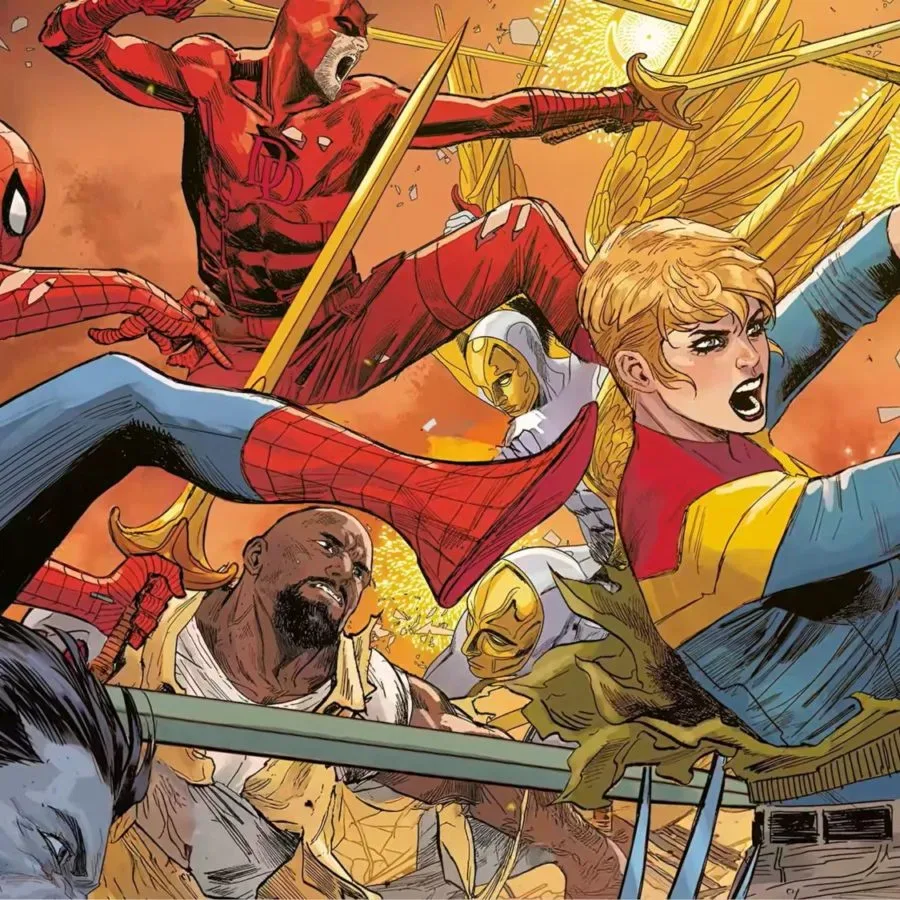
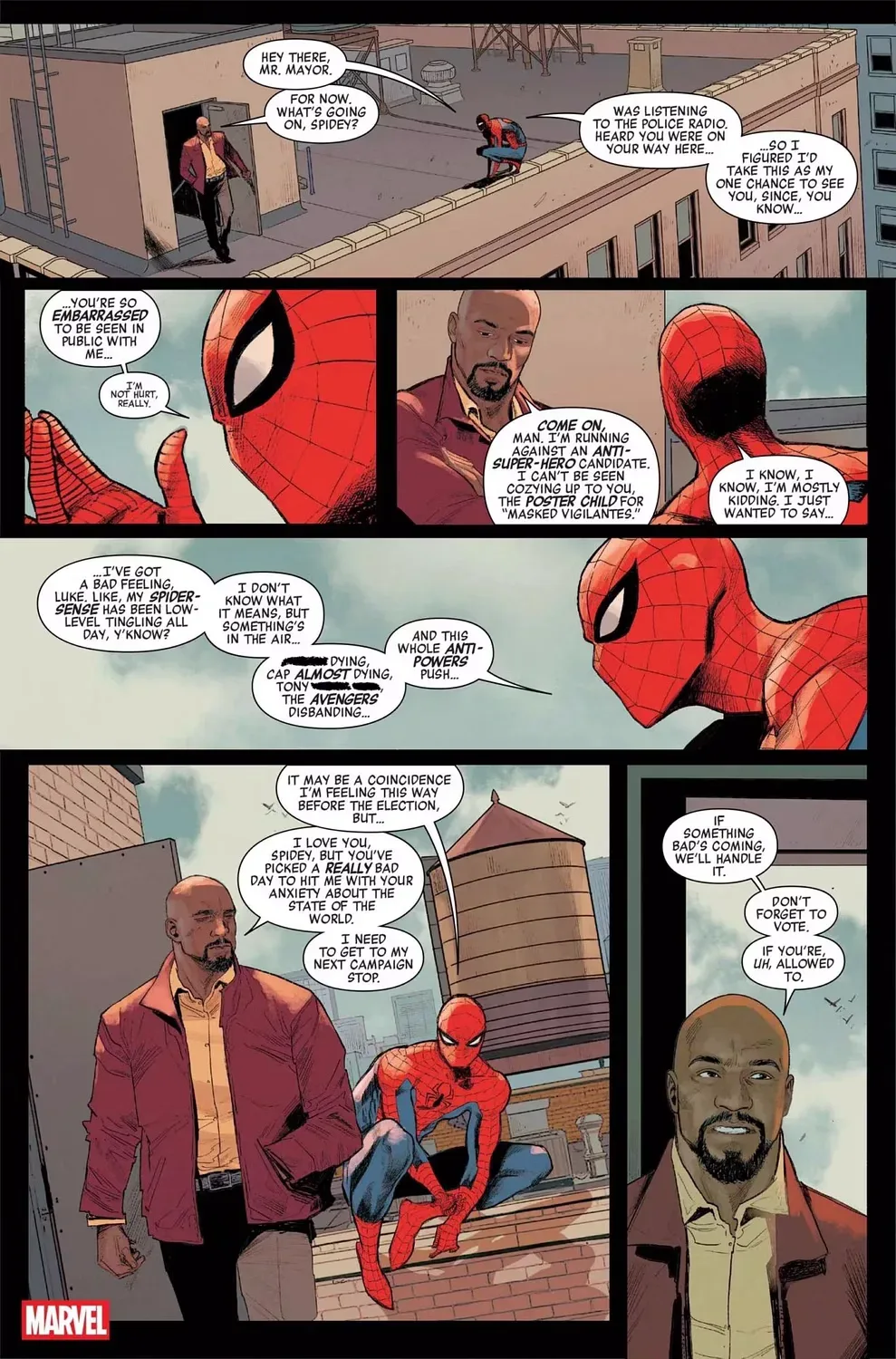
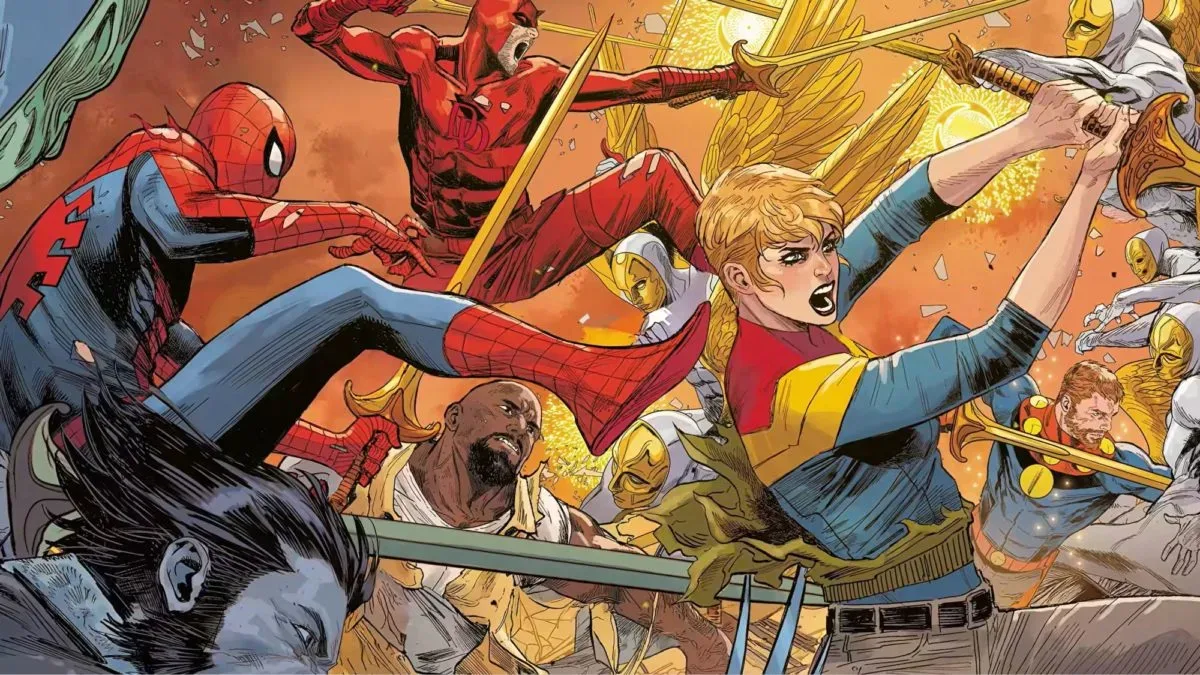
Avengers #1, written by Zdarsky with art by Marco Checchetto, arrives November 4, 2026. It introduces a lineup of Spider-Man, Wolverine, Captain Marvel, Daredevil, Luke Cage and Miracleman. The solicitation calls them a newly assembled Avengers team in a world order rewritten after Armageddon.
The phrase “world order” matters. A new roster is one thing; a new roster formed after the universe’s social and supernatural assumptions have changed is another. The series appears to begin with the heroes acting amid an unfolding catastrophe rather than gathering after it has been neatly explained. Preview material shows the team facing luminous winged figures in New York, creatures that visually evoke angels but appear dangerous enough to require a full-scale superhero response.
That ambiguity is one of the more intriguing elements of the setup. The beings are not presented as conventional demons, even though demons are central to the wider crisis. Their celestial appearance and violent behavior suggest that the supernatural fallout may be more complicated than a simple invasion from Hell. The imagery supports the possibility of a conflict involving opposing supernatural forces, but it does not yet establish who these winged attackers are or what they want.
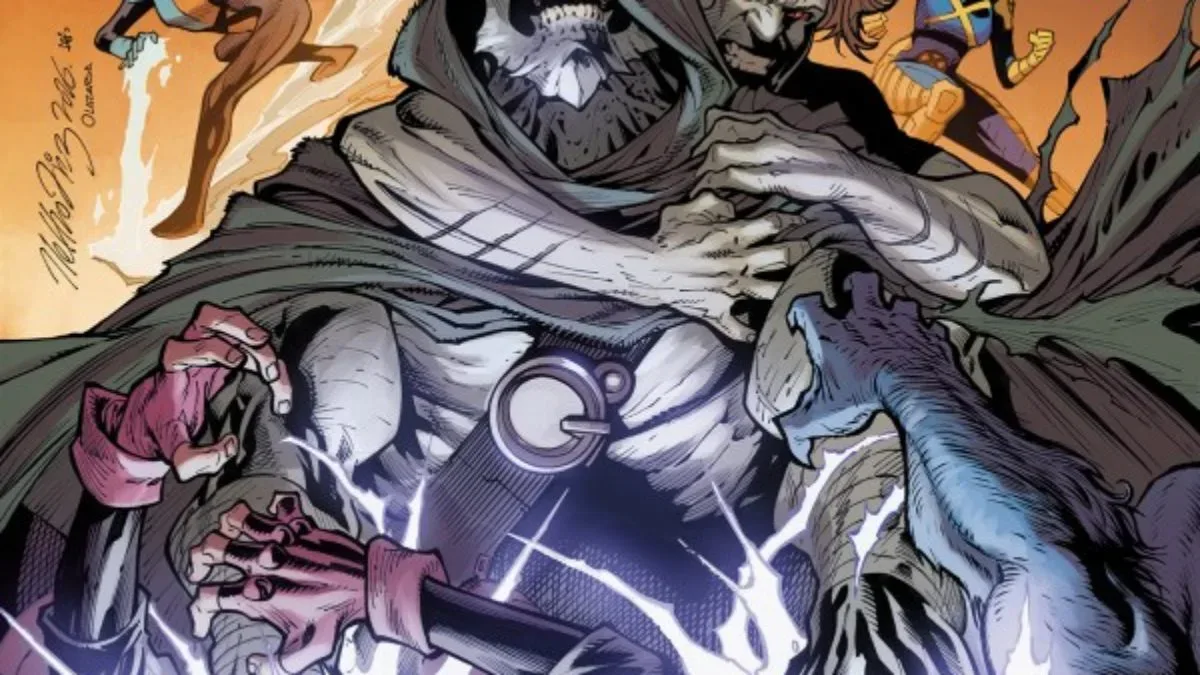
Mephisto is present around the edges of the material, an important reminder that the villain has not been removed from the board by Doom’s seizure of Hell. A white-haired older man also appears amid the violence, while another figure is marked by a purple clawed hand and carries a sword. Neither identity nor allegiance has been established in the provided material. Treating either as an answer to the event’s central mystery would be premature.
One character whose role is more clearly named is the Adjudicator. Promotional art identifies him as the Adjudicator, armed with a double-ended hammer. “Adjudicator” is a term for someone who judges or decides a dispute, which naturally makes the name feel suited to a story built around contracts, broken obligations and a realm of the dead thrown out of order. That is interpretation based on the character’s revealed name and the event setup, not confirmation of his mission or moral position.
Preview scenes also show Daredevil, Luke Cage and Wolverine fighting the winged threat directly. Those images establish action, but they do not establish a victory. The larger series direction is clearer in Avengers #2, due December 16: demons have flooded New York, Spider-Man’s past places Aunt May in danger, a mysterious young woman possesses a prophetic book, and the Adjudicator is said to know the answers surrounding her.
A prophetic book is a familiar kind of narrative device: a text that contains, predicts or interprets future events. Here, it could give the story a route through the chaos, but it also raises questions about who can read it, who trusts it and whether knowing a disaster is coming makes it easier to stop. None of those answers have been announced, but the book makes the Adjudicator more than simply another hammer-wielding combatant.
Spider-Man’s Mephisto connection is a meaningful pressure point
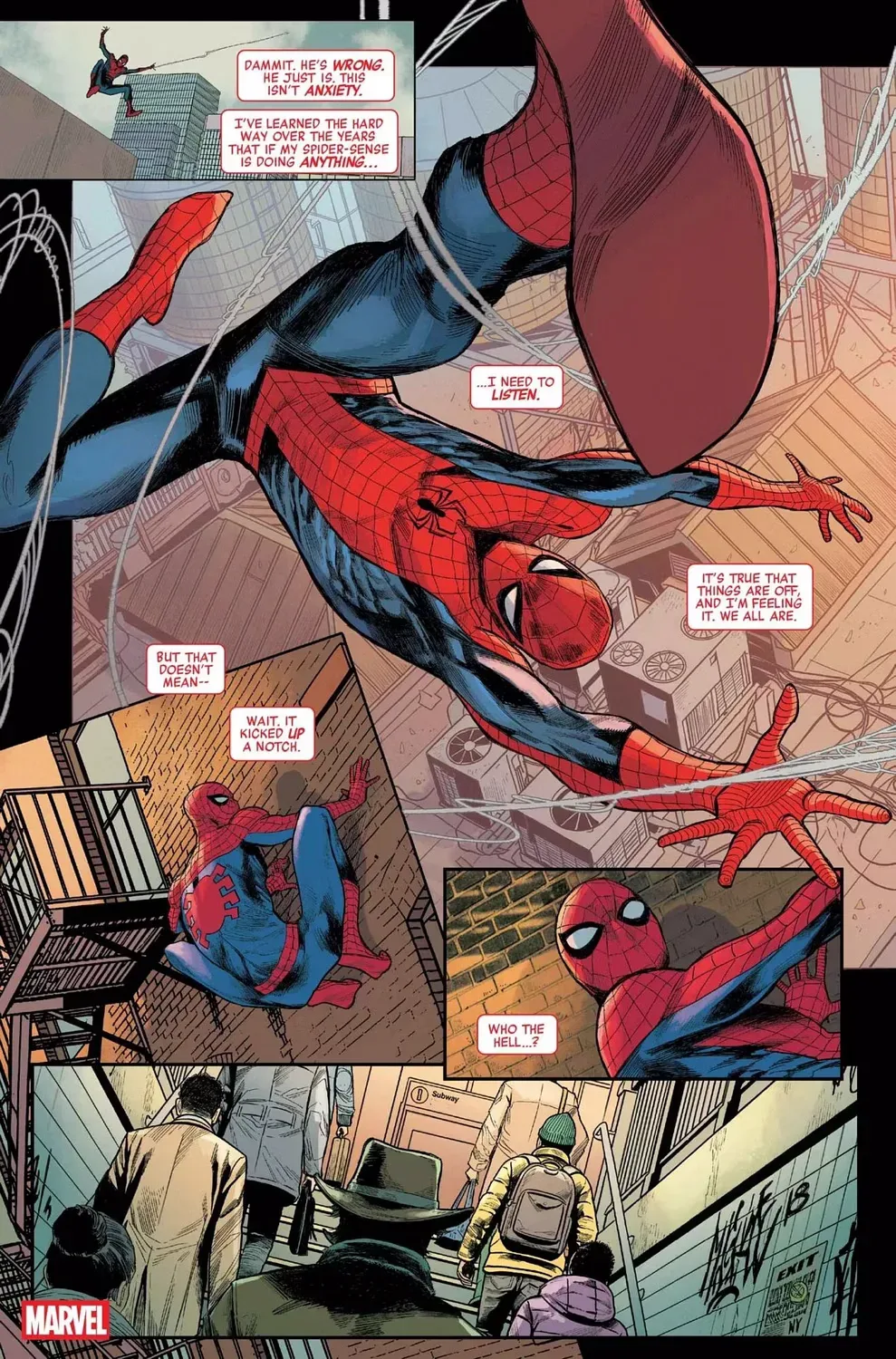
Spider-Man’s place on this Avengers roster is especially notable because Mephisto’s broken agreements include One More Day. The public description for Avengers #2 says Spider-Man must move quickly when his past again puts Aunt May in jeopardy. It does not spell out the exact mechanics of that danger, but the juxtaposition is hard to miss: an old Mephisto-related bargain is destabilized, and Aunt May is again placed at risk.
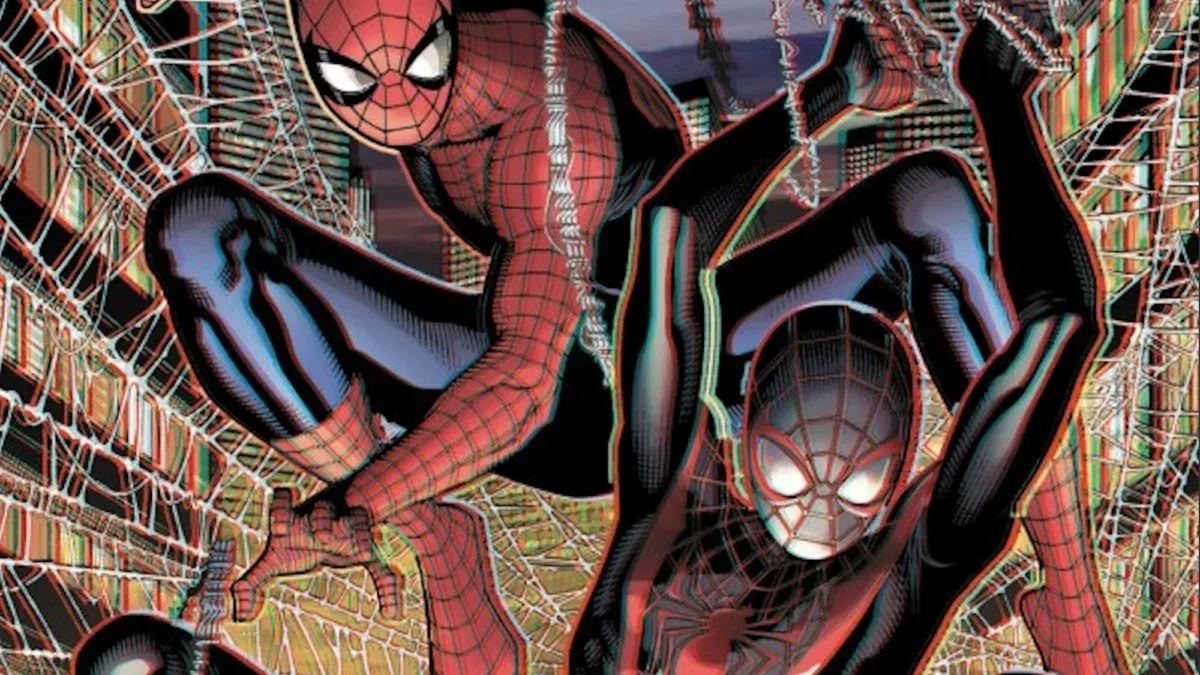
That setup may make Avengers important for readers who usually follow Spider-Man rather than team books. It also arrives during a period in which Marvel’s Spider-Man publishing continues to revisit visually distinct ideas, including the planned 3D reprint of Spider-Men #1. The projects are separate, but together they underline how central multiversal, legacy and continuity-aware material remains to Spider-Man’s publishing orbit.
By Avengers #3, scheduled for January 27, 2027, the conflict becomes even more direct. The issue begins “Chase the Devil,” with Spider-Man’s Avengers determined to make Mephisto answer for unleashing Hell on Earth. The complication is that Mephisto has new allies. That phrasing confirms the team’s target without revealing the full coalition standing with him.
Maximum X-Men expands the disaster beyond New York
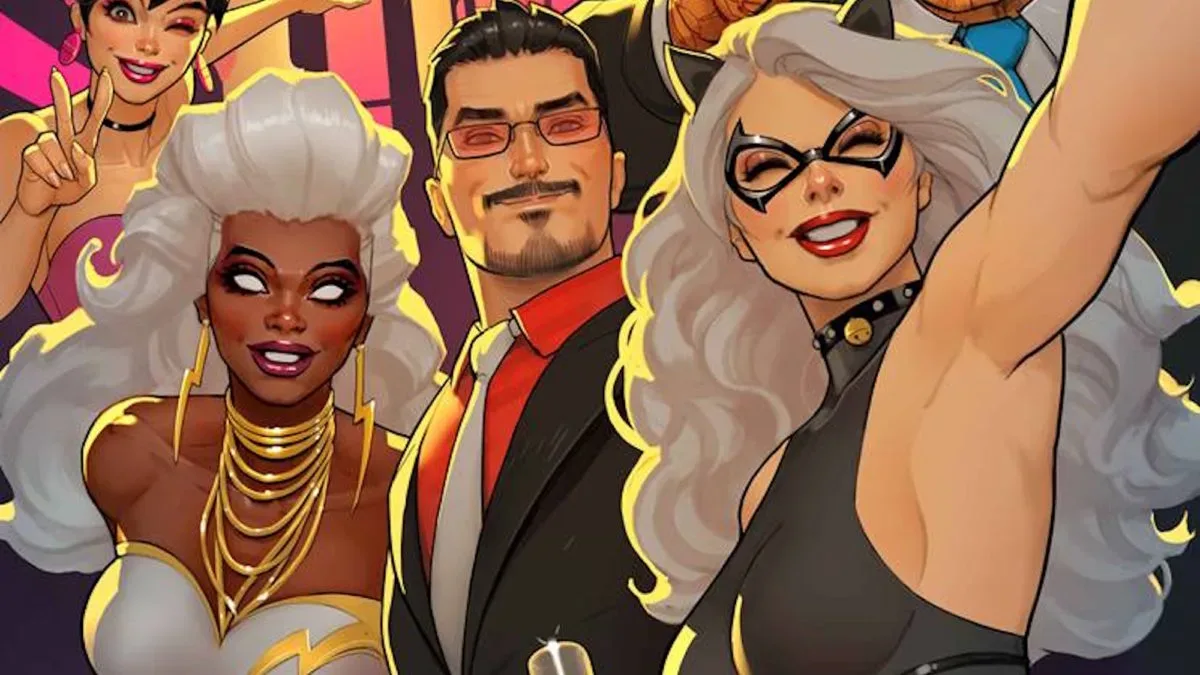
Maximum X-Men #1, by Christopher Yost and Tony Daniel, arrives December 2, 2026. Its central idea is clean: in the aftermath of Armageddon, Storm and Wolverine assemble a new mutant team because an Avengers-level threat still needs an answer. The first crisis is the arrival of the Annihilation Wave on Earth.
The Annihilation Wave gives the X-Men title a cosmic and invasion-driven direction rather than the supernatural panic surrounding the Avengers. Wolverine provides an obvious bridge between books, as he is on the Avengers roster and works alongside Storm in the mutant series. But the pitches make a point of saying the Avengers are absent when Storm and Wolverine must act. The overlapping use of Wolverine therefore looks less like a simple duplicate assignment and more like a signal of how badly the normal hero infrastructure has been disrupted.
The second issue, part two of five and due after the launch, broadens the danger again: the Negative Zone has burst into Atlanta, and an army featuring Annihilus, Blastaar and the Night Lord threatens Earth. The Negative Zone is presented here as a hostile dimension whose breach brings powerful enemies into the human world. That distinction matters because it separates the X-Men crisis from the Hell-based chaos in New York, even if both stories grow from the same post-Armageddon instability.
Maximum X-Men #2 also warns that the named villains may not be the real threat, setting up the arrival of Retribution and the debut of a new mutant. The book’s structure suggests that the Annihilation Wave is a visible emergency but perhaps not the final explanation. That echoes Avengers, where angelic-looking attackers, Mephisto, the Adjudicator and a prophetic book all point toward a conflict with several layers.
Captain America remains essential to the aftermath
Readers should not treat the Avengers and X-Men launches as replacements for the Captain America story. Steve Rogers remains at the heart of the consequences. In Captain America #17, on sale November 11, he is on the run with Vic, the child clone of Doctor Doom, after U.N.-backed S.H.I.E.L.D. demands that Vic be surrendered. That puts Captain America opposite Nick Fury while an old adversary returns.
The following issues promise an even larger disruption. Captain America #18 says one of Steve’s greatest enemies exploits both his long coma and Doom’s death in a plan that could rewrite the world. Captain America #19 then describes history itself as changed, leaving Steve, Tony Stark and Vic to navigate that altered reality and attempt to restore matters before time runs out.
Those descriptions are important because they caution against treating every effect of Armageddon as only a demon problem. The event’s fallout includes Hell, New York, the Negative Zone, political pressure from S.H.I.E.L.D., a child clone tied to Doom, and a potentially rewritten history. The books seem designed to show different communities of heroes dealing with different fractures in the same damaged universe.
Release order and what each book promises
- Captain America #16 — October 28, 2026; Zdarsky and Schiti. The Hell conflict reaches its climax and the living world feels the consequences.
- Avengers #1 — November 4, 2026; Zdarsky and Checchetto. A new roster forms as New York faces the winged supernatural threat.
- Captain America #17 — November 11, 2026; Zdarsky and Ton Lima. Steve and Vic flee a S.H.I.E.L.D. demand.
- Maximum X-Men #1 — December 2, 2026; Yost and Daniel. Storm and Wolverine form a mutant team as the Annihilation Wave arrives.
- Captain America #18 — December 9, 2026; Zdarsky and Schiti. An enemy uses Steve’s coma and Doom’s death to pursue a reality-altering plan.
- Avengers #2 — December 16, 2026; Zdarsky and Checchetto. Demons flood New York, Aunt May is endangered, and the prophetic-book mystery deepens.
- Captain America #19 — January 9, 2027; Zdarsky and Lima. Steve, Tony and Vic confront a world whose history has been changed.
- Avengers #3 — January 27, 2027; Zdarsky and Checchetto. The team pursues Mephisto as his new allies emerge.
The strongest confirmed throughline is not that every invading force is secretly the same. It is that Doom’s victory in Hell has destabilized the Marvel Universe at a foundational level. Mephisto is active, demons are loose in New York, the Avengers are reorganizing, and the X-Men are being asked to shoulder threats normally met by Earth’s Mightiest Heroes. Whether the angel-like figures, the Adjudicator, the Negative Zone breach and Mephisto’s plans ultimately connect remains one of the central questions these books are setting up.
Shop the products
Check current price, model and availability at the retailer.