Marvel’s December 2026 comic-book schedule is shaping up to be an unusually busy one for readers who like their capes tangled in continuity, alternate realities and deeply inconvenient cosmic disasters. The available solicit information outlines several new #1 issues, pivotal ongoing installments and a mix of legacy-minded specials across the X-Men, Spider-Man, Avengers, Fantastic Four and Wolverine corners of the line.
The clearest thread is transition. Maximum X-Men begins after Armageddon, the main X-Men title deals with the fallout of DNX, and the Avengers are reportedly absent just as an Annihilation Wave-level threat arrives. Spider-Man, meanwhile, is everywhere at once: in a new young-Peter series, a Venom retelling, an animated-continuity annual, an incursion one-shot, a milestone-sized Spectacular Spider-Man issue and the ongoing Midnight story.
These are solicit descriptions, meaning they describe intended stories, creative teams, cover formats and listed on-sale dates rather than completed issues. They are useful for mapping the line’s direction, but readers should treat the plot teases as deliberately incomplete. In superhero comics, “the future of the team” is both a dramatic promise and a very strong hint to keep an eye on the next issue.
Maximum X-Men launches into an Avengers-sized vacuum
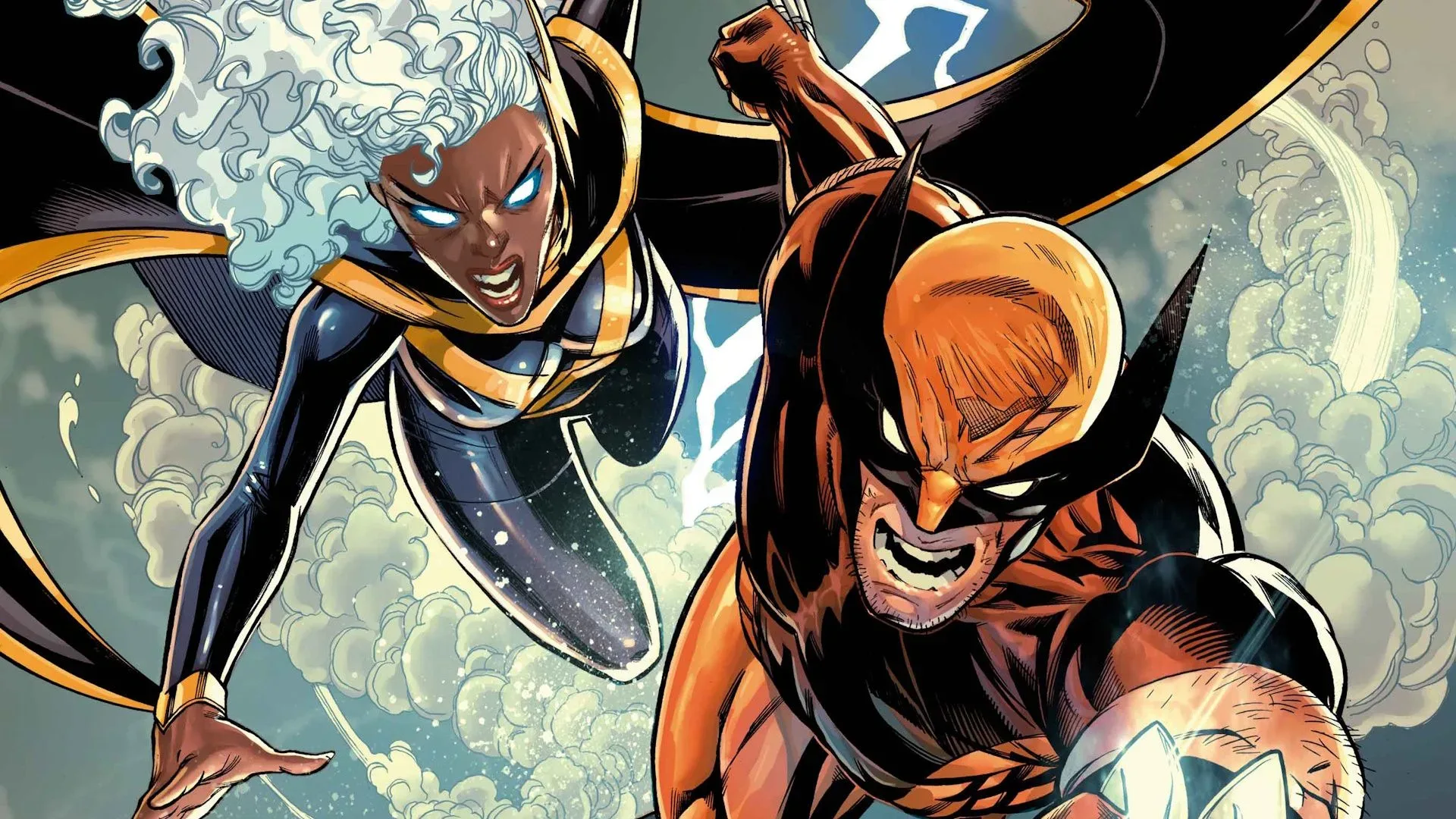
Maximum X-Men #1, written by Christopher Yost with art by Tony S. Daniel, is listed for December 2 at $4.99. Its premise has Storm and Wolverine assembling what is described as Earth’s Mightiest Mutants after Armageddon, with the Avengers unavailable to face a threat on their usual scale. The immediate danger is the Annihilation Wave arriving on Earth.
That framing matters because it gives the new team a mission beyond simply being another mutant roster. An “Avengers-level threat” signals a crisis that cannot be contained as a local X-Men problem, while the lack of Earth’s Mightiest Heroes creates room for Storm and Wolverine to take the lead. The solicitation’s suggestion that they may regret assembling this specific group is the interpersonal hook: the danger is not merely extraterrestrial destruction, but whether the people selected can function together under that pressure.
December also supplies the core-team context. X-Men #42, by Jed MacKay and Vincenzo Carratù, arrives December 9 and concerns the team grieving a lost comrade in DNX’s wake. X-Men #43 follows on December 23 with Magneto restored and Jean Grey back from space. The title says the group must choose who leads amid diverging personalities and priorities, with the solicitation leaning hard into the language of a ballot.
Put together, those issues suggest two distinct but related X-Men pressures: a flagship team deciding its structure after catastrophe, and Storm and Wolverine building a separate response unit for a threat too large for one hero. It is a sensible division on paper, though “sensible” is rarely the adjective that survives an Annihilation Wave.
More mutant launches and a Wolverine past revisited
Fugitive X-Force #1 arrives December 9 from writer Tim Seeley and artist Áthila Fabbio. Cable’s mind has apparently been compromised, Boom-Boom takes leadership for the first time, and the team is on the run after being framed for a horrific crime. Domino’s search for Cable provides the other half of the setup.
The title’s “fugitive” label is direct: the team’s central problem is survival under pursuit, not just winning a straight fight. Boom-Boom’s first leadership role also makes the series’ premise more than a routine mission change. The description gives her command at the worst possible moment, when the group is discredited and Cable’s status is uncertain.
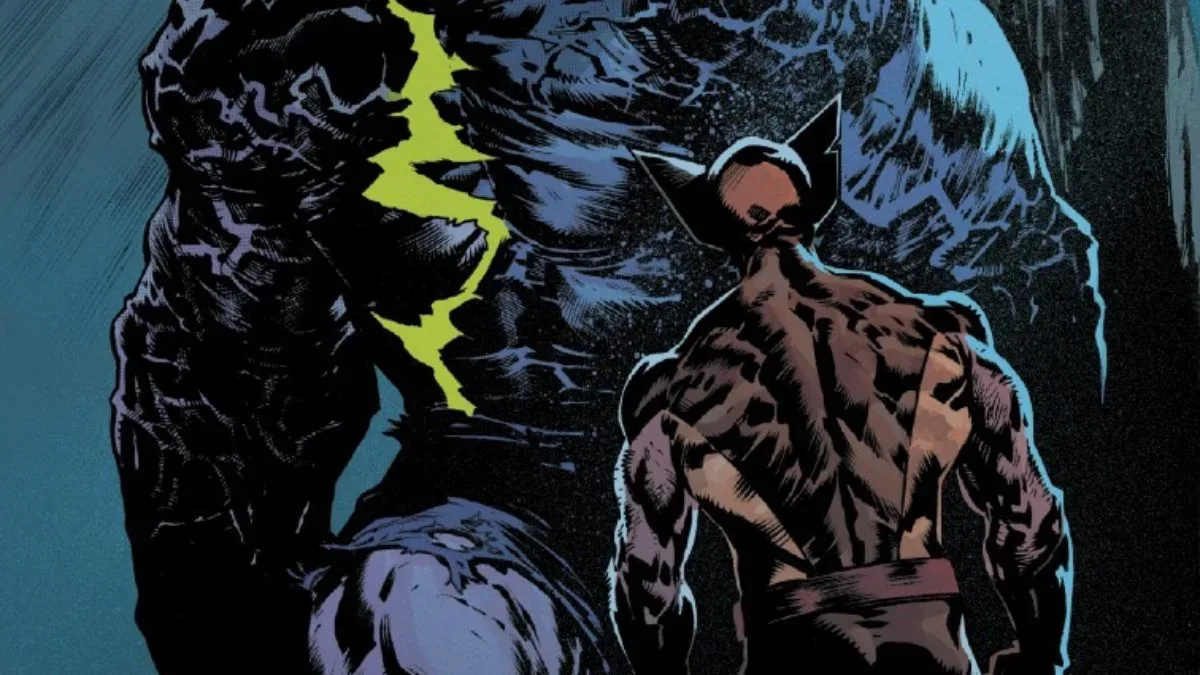
Wolverine has two major December assignments. In Wolverine #30, by Saladin Ahmed and Martin Coccolo, Logan’s feral nature fully emerges, raising the question of whether he can stop himself before innocent people are hurt. Then Wolverine: Origin III – The Dark Age #1 launches December 16, reuniting writer Paul Jenkins with the character alongside artist CAFU. Set in the 1950s after Logan has endured two World Wars and personal losses, the new miniseries is positioned as an exploration of an unrevealed, formative dark period in his life and memory.
There is a useful distinction between those projects. The ongoing issue concerns an immediate loss of control in the present, while Origin III is framed as historical excavation: a story intended to explain how a past experience helped shape the Wolverine readers know. Neither premise needs the other to land, but together they make December an especially Logan-heavy month.
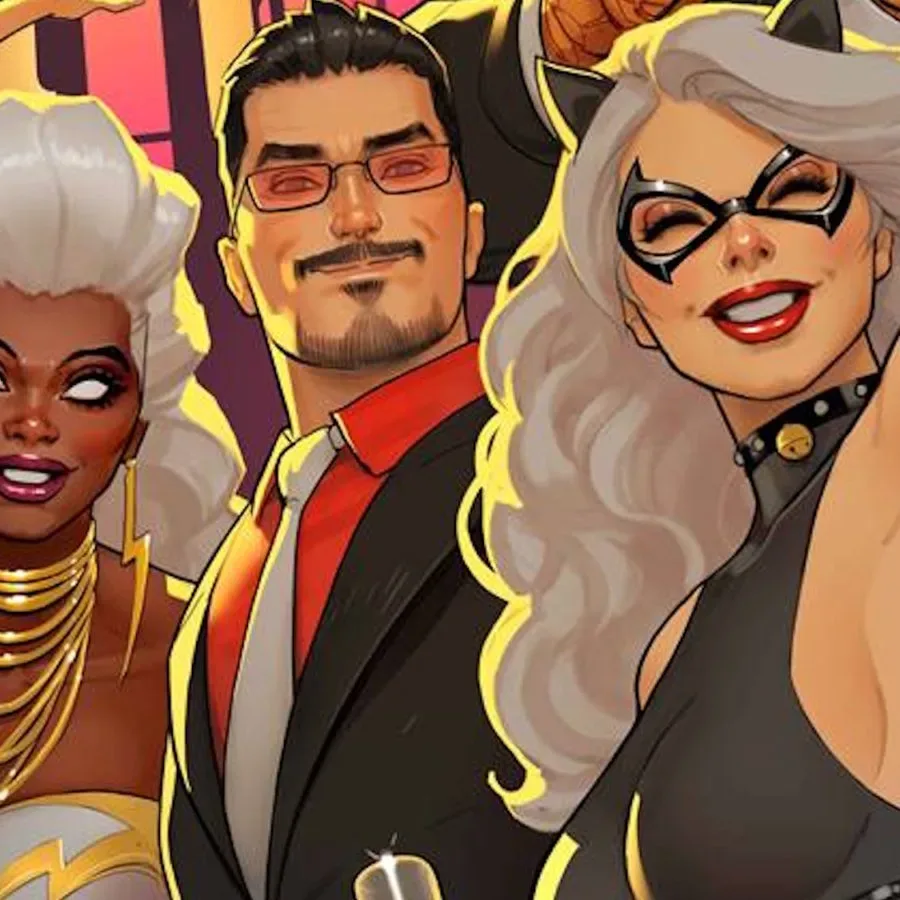
Other mutant material includes Jean Grey #2 on December 30, in which Jean adjusts to life on Earth after her return from space while an ancient and dangerous presence stirs in Merle, Alaska. Black Cat #17 says an encounter with Emma Frost has changed Felicia Hardy into the X-Men’s newest mutant. Gambit: Wanted #5 concludes its pre-X-Men Remy LeBeau adventure, and Midnight X-Men #3 continues the darker, deliberately cryptic Midnight line.
Spider-Man gets a crowded, varied December
The Spider-Man portion of the schedule is broad enough to suit readers looking for almost any flavor of web-slinging. The new Your Friendly Neighborhood Spider-Man #1, by Christos Gage and Eric Gapstur, focuses on a young Peter Parker becoming distant from friends as strange activity at Oscorp pulls him, Harry Osborn and others toward answers. Norman Osborn may be done with “the spider business,” but Harry does not believe the matter is settled.
Venom: P.O.V. #1, written by Ryan Stegman with art by Carlos Gomez, takes a familiar Eddie Brock and alien symbiote origin setup and explicitly shifts the perspective to Venom. A point of view, or P.O.V., is the lens through which a story presents events. In this case, the announced concept is not simply a new encounter between Eddie, the symbiote and Spider-Man; it is a reframing of that history from Venom’s side.
The Amazing Spider-Man: Symbie #1, from Joe Kelly, Jacob Chabot, David Baldeón and Chabot, takes another route into symbiote history. The issue traces Symbie’s journey back to the beginnings of the Klyntar race connected to Venom and Carnage, with an additional story from Chabot in the spirit of a vertical-scroll Infinity comic. The two new books therefore approach related territory from different directions: one reconsiders Venom’s beginnings, while the other follows a smaller symbiote figure through its own history.
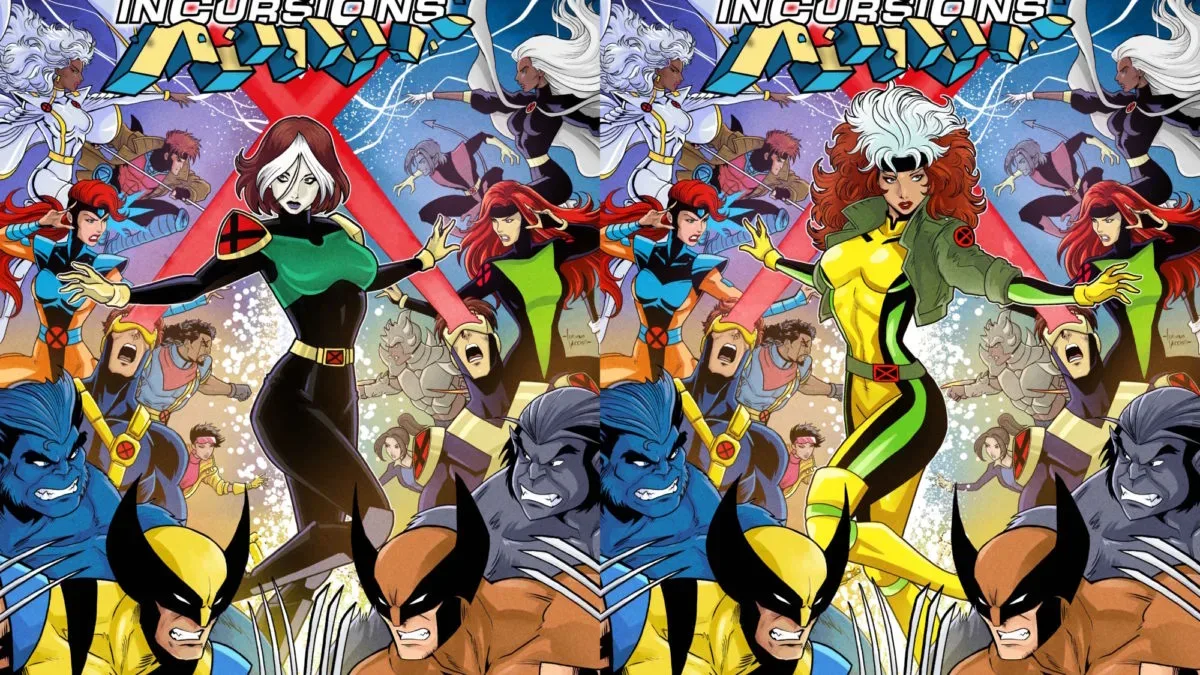
Readers interested in multiverse stories should note Spider-Man: Incursions #1, written by Christos Gage with art by Ron Lim, on December 9. It brings Ghost-Spider from Earth-65 into contact with Mayday Parker, Spider-Girl of Earth-982, when their worlds collide. An incursion is a collision or overlap between universes, and here the term is literal: two Earths are involved. Marvel’s wider Incursions initiative has already pointed toward animated-era mutant crossovers, including a planned X-Men ’92 and X-Men: Evolution matchup.
Two projects speak directly to older Spider-Man continuities. Spider-Man ’94 Annual #1 is written by John Semper Jr. with art by Alessio Cammardella, and is set to dramatize Peter Parker and Mary Jane Watson’s reunion after the sixth-season cliffhanger of Spider-Man: The Animated Series and before the Spider-Man ’94 comic series. Spectacular Spider-Man #7, by Dan Slott, J.M. DeMatteis, Marcus To and Jonas Scharf, is an oversized 50th-anniversary issue. Its current-day component puts Peter back in the Big Time status quo after Brand New Day against the Scavenger, while DeMatteis and Scharf contribute a commemorative story.
Finally, Midnight Spider-Man #3 continues its horror-leaning premise on December 16. Peter is trying to reclaim his humanity while Oscorp hunts the urban legend known as the Spider-Man. Doctor Octavius has also used knowledge of the “Parker Incident” to create a second synthetic mutant. “Synthetic mutant” here describes an artificially engineered being, rather than a naturally born mutant, and the solicitation positions it as a potential replacement—or nightmare version—of Spider-Man.
Avengers, armor and the road to Hulk War
Infernal Hulk vs. Avengers #1, from Phillip Kennedy Johnson, arrives December 2 and ends the March to Hulk War. The Infernal Hulk has amassed armies, a fortress and champions, while nearly all of Marvel’s greatest heroes have been corrupted. The remaining Avengers face what is presented as a final battle before the larger war begins.
That is a particularly event-shaped premise, but the same week also opens a more mechanical storyline in Iron Man #12. Joshua Williamson and Carmen Carnero begin “War Machines,” a four-part arc in which James Rhodes leads armored heroes against A.I.M. The listed lineup includes Melinda May taking on the Cavalry identity and an unspecified familiar figure becoming Iron Patriot. Iron Man #13, with art by Gleb Melnikov, reinforces the situation on December 16: Tony Stark is incarcerated as Rhodey assembles the team.
The overlap of “War Machines” and Tony’s imprisonment makes the arc’s stakes easy to parse without pretending the solicits reveal all its turns. Rhodey is not operating as a casual backup while Tony is busy elsewhere; he is filling a vacuum, leading a new armor team and targeting A.I.M. Marvel also flags the storyline as part of the run-up to Iron Man #700 in 2027.
Avengers #2 by Chip Zdarsky and Marco Checchetto, on December 16, presents a demonic crisis in New York City. Spider-Man’s past puts Aunt May in danger, Mephisto’s plans remain unclear, and a mysterious young woman possesses a prophetic book. The Adjudicator is named as the figure with the answers, but that is more question mark than resolution.
Fantastic Four, Doom, Punisher and December’s other standouts
Marvel’s Fantastic Four output splits cleanly between classic rivalry, cosmic disaster and the unsettling Midnight branch. The Fantastic Four: First Foes – The Wizard #1, by Fabian Nicieza and Mark Buckingham, has Bentley Wittman attempting to prove his superiority by taking the Baxter Building and forming the Frightful Four. Fantastic Four: Incursions #1, by Ethan S. Parker, Griffin Sheridan and Paco Medina, is the more apocalyptic alternative: two universes have eight hours before colliding, with a gamma-powered Fantastic Four, a cosmic-powered Bruce Banner and Reed Richards confronting an impossible problem.
Midnight Fantastic Four #3 sends its version of the team to Jornada del Muerto in New Mexico, where they find signs of another world left by a rupture in reality. Its language of a “crack in the firmament” is intentionally mythic, while its setting keeps the mystery rooted in a real place associated in the solicitation with the first atomic-bomb detonation.
Elsewhere, Doomquest #6 sends Doctor Doom to lunar orbit in July 1969—not into an astronaut’s body, but into the command module Columbia. Doom has no intention of letting someone else reach the moon first, and heroes from the future are coming after him through their own body-commandeering method. It is a time-travel premise built around a very Doom-like technicality: even being safely in orbit is insufficient if another person gets the historic accomplishment.
Punisher Showdowns: Winter Soldier #1 places Frank Castle against Bucky Barnes during Barnes’ era as a mind-controlled Soviet sleeper agent. Later in the month, Punisher #12 traps New York City in an unprecedented blizzard for a silent holiday issue drawn by Declan Shalvey, complete with a new costume. Black Widow: Black, White & Red Room #1 launches an anthology-style issue featuring Natasha Romanoff, Yelena Belova and Nadia Van Dyne, with stories by Stephanie Phillips, Devin Grayson and Jeremy Whitley and art by Giuseppe Camuncoli, J.G. Jones and Bradley Clayton.
The month closes with Marvel Winter Break Special 2026 #1 on December 30. Ryan North, Christina Strain and a wide group of artists deliver New Year’s Eve stories, plus a Wolverine-organized Avengers-versus-X-Men hockey game. After universes collide, teams fracture, demons invade and Doom tries to improve on the moon landing, a hockey game may be the most reasonable idea on the board.
Key December 2026 on-sale dates
- December 2: Maximum X-Men #1, Venom: P.O.V. #1, Infernal Hulk vs. Avengers #1, Iron Man #12, Wolverine #30, Doomquest #6 and Punisher Showdowns: Winter Soldier #1.
- December 9: X-Men #42, Fugitive X-Force #1, Your Friendly Neighborhood Spider-Man #1, Spider-Man: Incursions #1, Fantastic Four: Incursions #1, The Amazing Spider-Man: Symbie #1 and Spider-Man ’94 Annual #1.
- December 16: Avengers #2, Iron Man #13, Wolverine: Origin III – The Dark Age #1, Black Widow: Black, White & Red Room #1, Spectacular Spider-Man #7 and the third Midnight issues.
- December 23: X-Men #43, Punisher #12 and Spider-Man: Long Way Home #5.
- December 30: Jean Grey #2 and Marvel Winter Break Special 2026 #1.