Marvel’s upcoming Incursions one-shots are built around a brutally simple multiverse rule: two Earths collide, and only one can remain. Across five issues scheduled from November 2026 to January 2027, that premise will bring together sharply different versions of the X-Men, Spider-heroes, Fantastic Four and Avengers.
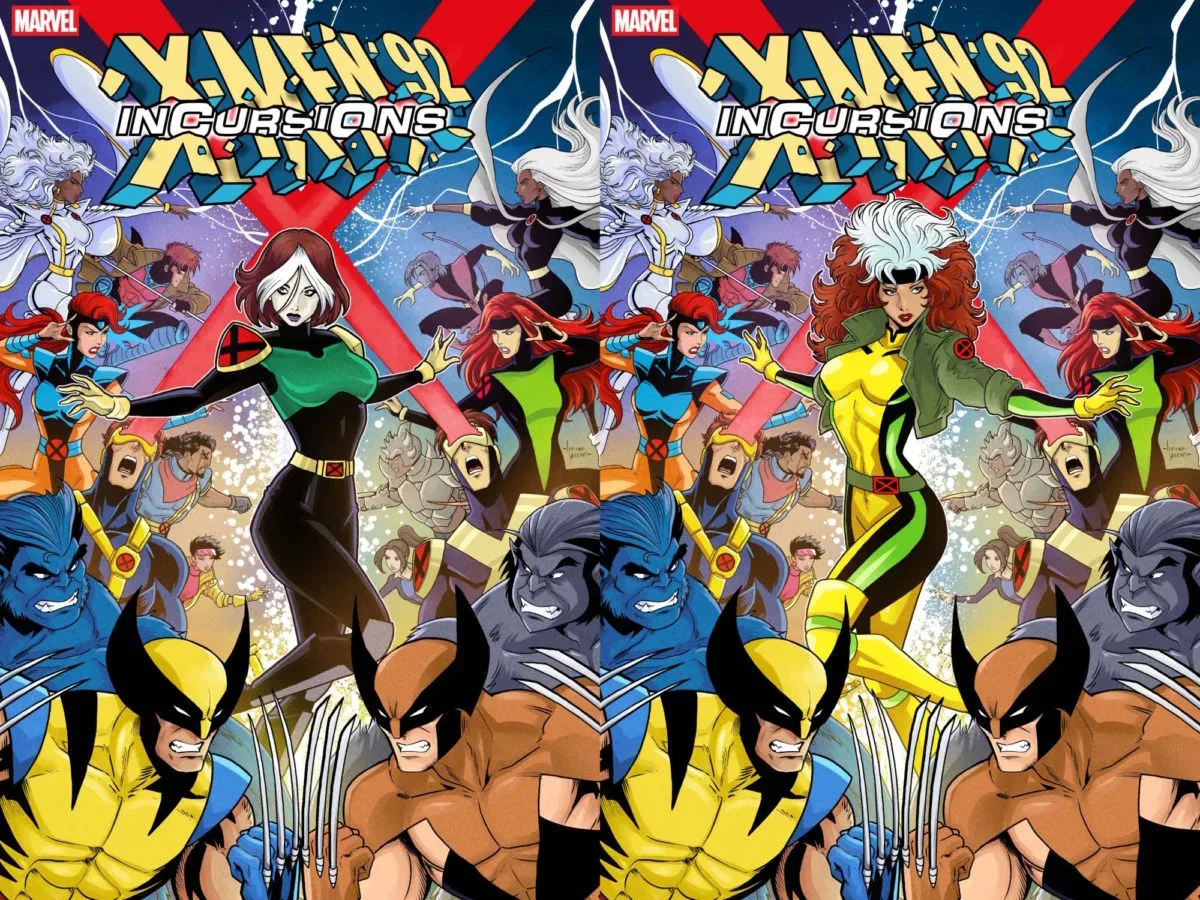
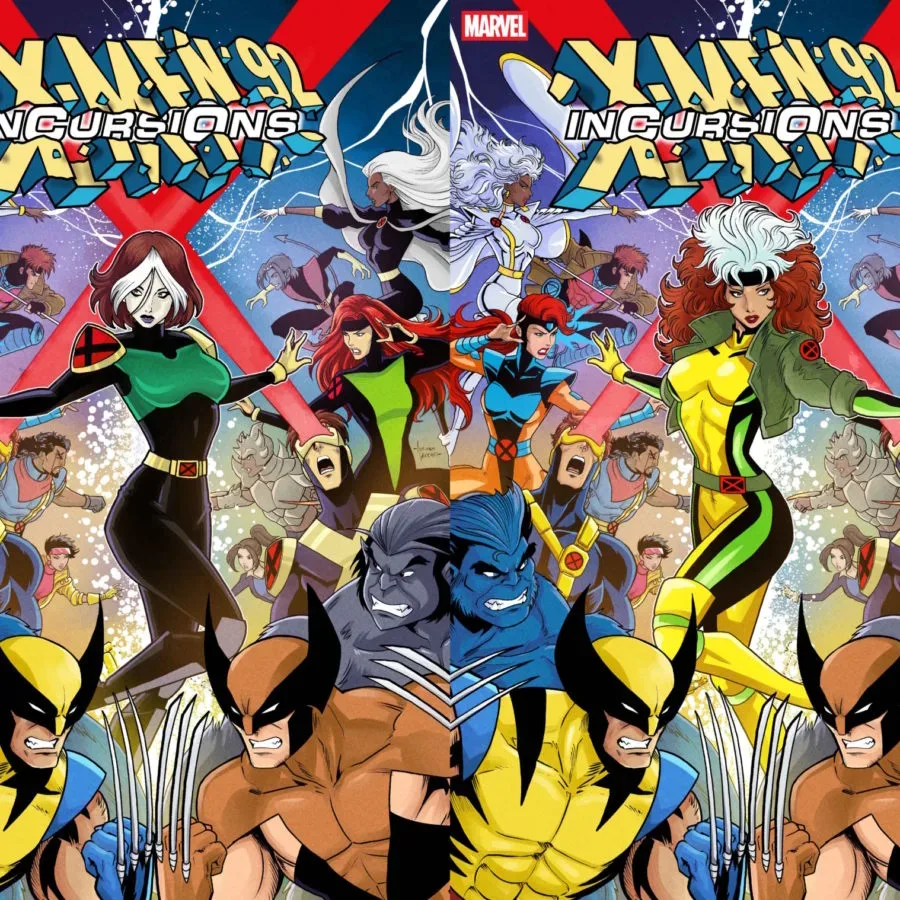
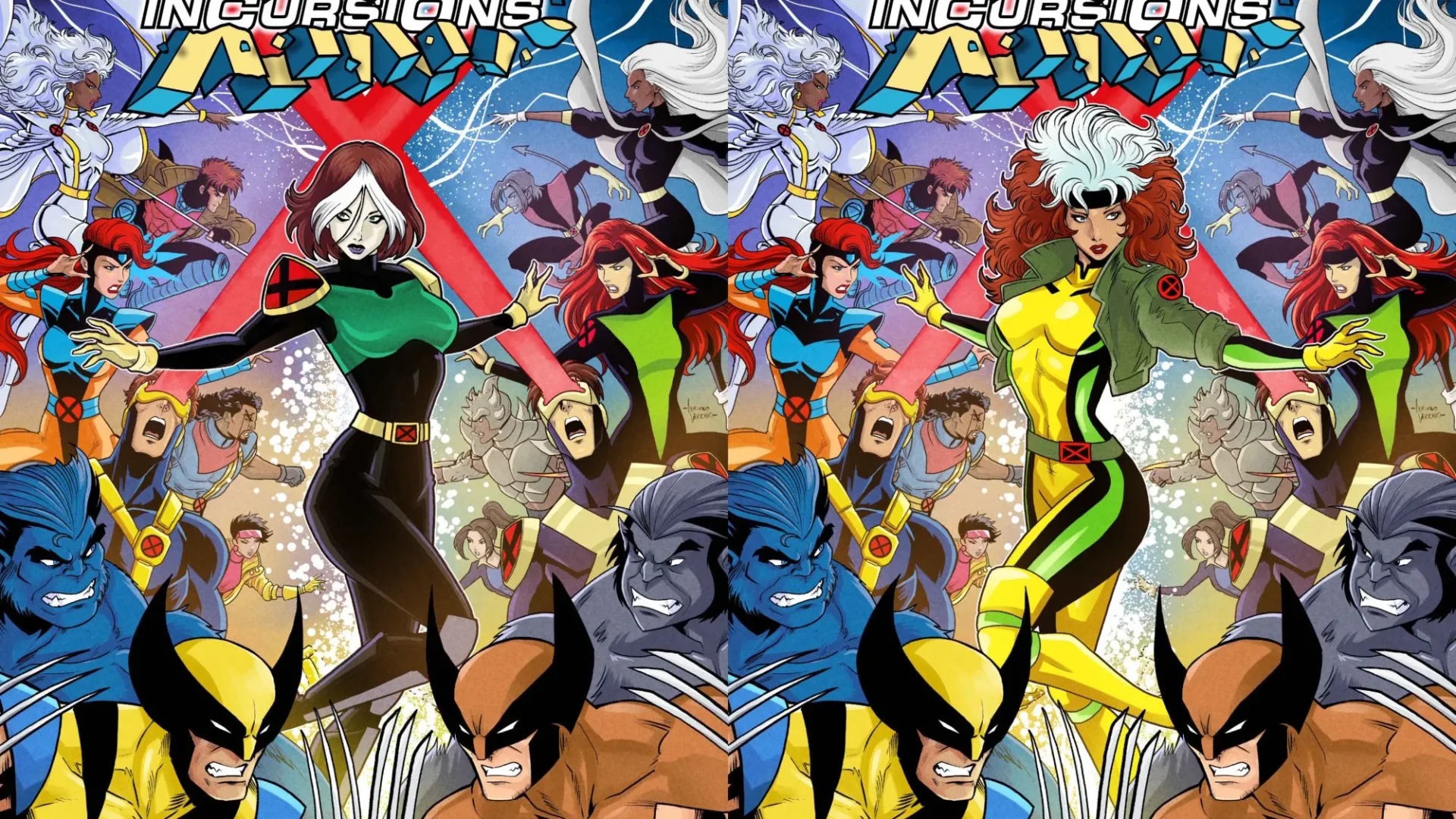
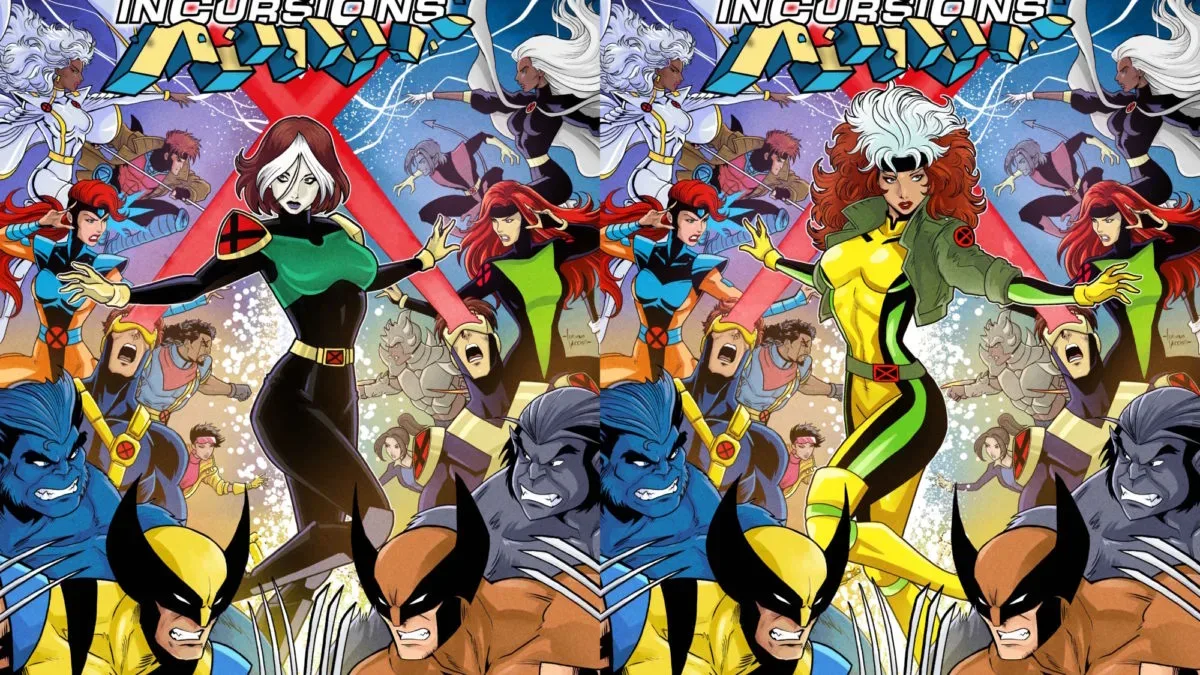
The most nostalgia-charged matchup arrives last. X-Men ’92: Incursions #1, on sale January 6, pairs the X-Men associated with the 1990s animated era against the younger mutant heroes of X-Men: Evolution. Craig Kyle and Christopher Yost write the one-shot, Salva Espin draws it, and Luciano Vecchio supplies the main and mirror covers.
It is a crossover designed around more than a simple argument over which animated team wins. The 1990s X-Men are tasked with saving their own reality, but doing so would mean destroying a second world—one inhabited by younger versions of themselves who still retain faith in Xavier’s dream. In other words, the book turns a decades-old fan comparison into an ethical trap with a ticking clock.
What an incursion means in this series
In Marvel multiverse fiction, an incursion is a collision between separate universes, usually represented by one Earth appearing in the sky of another. The stakes are existential rather than local: if the crisis cannot be resolved, both worlds are destroyed. The new one-shots explicitly operate on an eight-hour deadline.
That structure is significant because it does not leave much room for the usual crossover solution of every hero eventually joining forces against a shared villain. Each issue starts with two populations whose survival needs directly conflict. Allies may still be found, but the premise insists that saving one home may require the loss of another.
Marvel is using that framework to stage self-contained encounters between distinctive continuities. Rather than asking readers to follow a long event immediately, each release offers a focused question: Which world should survive, who gets to make that decision, and what does each version of a hero reveal about the other?
X-Men ’92 faces X-Men: Evolution
X-Men ’92: Incursions #1 has the clearest generational contrast in the lineup. The central comparison is between the iconic 1990s-era team and the teen-focused heroes of the 2000s animated series X-Men: Evolution. The setup makes that contrast part of the drama instead of just an aesthetic difference.
The younger mutants are described as versions who still have hope for Professor Xavier’s ideal. That puts the older team in a particularly difficult role. Their need to protect their world is tied to the possibility of extinguishing a world whose heroes embody a less compromised, more hopeful stage of the same broad mission.
Kyle and Yost are reunited as the writers for the issue. Espin handles interior art, while Vecchio’s covers anchor both the standard and mirror editions. The issue is scheduled for January 6, following four other Incursions releases.
For readers who prefer a single-issue Marvel story with a recognisable hook, it may be the most immediately accessible entry in the slate: the opposing teams and the moral question are clear before any wider multiverse mechanics need to be unpacked. It also has the advantage of treating two separate animated interpretations as worlds with equal stakes, rather than presenting one simply as a novelty guest.
The full Incursions schedule
The five one-shots move through several corners of Marvel continuity. Each has a different creative team and a different Earth-versus-Earth problem, while retaining the same survival countdown.
- X-Men: Incursions #1 — Written by Alex Paknadel, with art by Jim Towe and main and mirror covers by Gleb Melnikov. On sale November 18. The mutant-dominant world of House of M collides with the dystopian future of Days of Future Past, leaving Kate Pryde with a decision over which reality survives.
- Spider-Man: Incursions #1 — Written by Christos Gage, with art by Ron Lim and main and mirror covers by Gleb Melnikov. On sale December 9. Ghost-Spider, Gwen Stacy of Earth-65, meets Mayday Parker, Spider-Girl of Earth-982, as their worlds collide.
- Fantastic Four: Incursions #1 — Written by Ethan S. Parker and Griffin Sheridan, with art and main and mirror covers by Paco Medina. On sale December 23. A gamma-powered Fantastic Four and a cosmic-powered Bruce Banner are at the center of a crisis that forces Reed Richards to confront a problem he may not be able to solve.
- X-Men ’92: Incursions #1 — Written by Craig Kyle and Christopher Yost, with art by Salva Espin and main and mirror covers by Luciano Vecchio. On sale January 6.
- Avengers: Incursions #1 — Written by Al Ewing, with art by Fran Mariscal Mancilla and main and mirror covers by Francesco Mobili. On sale January 20. An Earth where the Avengers’ founding lineup remains active and Spider-Man is still in high school is set against an Earth controlled by Thanos and the Cabal.
Why the X-Men book stands apart
Every announced installment has an immediately understandable contrast. House of M and Days of Future Past set two famous mutant timelines against each other. Spider-Gwen and Spider-Girl place two prominent Spider-legacy heroes in direct conflict. The Avengers issue makes its divide unusually blunt: an optimistic early-Marvel-style Earth faces one run by Thanos and the Cabal.
The X-Men ’92 issue is different because its two opposing worlds are not introduced mainly as a heroic world and a villainous world, or as a utopia against a nightmare. Its tension comes from alternate portrayals of the same franchise, one associated with an established 1990s lineup and the other with youthful characters still forming their identities.
That gives the premise a useful emotional angle. A collision between worlds is massive by design, but the question of whether a more seasoned team can justify sacrificing younger counterparts makes the catastrophe personal. The conflict also naturally invites the sort of comparison that has long followed superhero adaptations: whether character age, team dynamics and the degree of optimism alter what the X-Men stand for.
The stated story does not answer which side is right or reveal how the confrontation ends. It does, however, establish that the old and younger teams are not merely sharing panel space. The survival of one world is framed as potentially contingent on the destruction of the other.
Incursions, Secret Wars and the broader Marvel setup
The one-shots revisit the multiversal collision concept associated with Marvel’s larger Secret Wars-era storytelling. That background matters less as required homework than as an explanation for the term “incursion”: it is a scenario in which the scale of danger makes a conventional superhero victory uncertain.
The January Avengers chapter directly draws on that territory by deploying Thanos and the Cabal, described here as villains connected to Time Runs Out, against a much brighter Silver Age-style setting. The Fantastic Four story similarly leans into a scientific disaster framework, with Bruce Banner discovering the two-world collision and Reed Richards seeking an answer in the shrinking time available.
The format also makes these releases a practical way to sample several Marvel concepts without committing to a single ongoing event. The announced issues have separate writers, artists and casts, with their release order spread over approximately two months. Readers interested only in the animated X-Men confrontation can identify its January 6 date, while those drawn to the larger premise can follow the sequence from the November 18 mutant issue through the January 20 Avengers finale.
One-shots remain a familiar vehicle for these concentrated “what if these worlds met?” scenarios. A single oversized premise can be given room to land without obliging every reader to pick up every chapter. Marvel is also using mirror-cover variants throughout the announced line, paired with each issue’s primary cover artist.
What readers can expect from the premise
The evidence available so far establishes the matchup, creators, cover artists, release dates and central survival dilemma. It does not establish whether the five books connect through a continuing narrative beyond their shared incursion premise, nor does it confirm a larger event series after the one-shots. The sensible expectation is therefore a line of linked thematic confrontations, not assumptions about crossovers that have not been detailed.
For X-Men ’92: Incursions #1, the most concrete promise is also the most compelling one: a clash between two animated X-Men eras in which neither team’s home can be treated as disposable. With the older heroes forced to weigh their own survival against the future represented by the younger team, the comic has a premise sharper than a straightforward nostalgia bout.
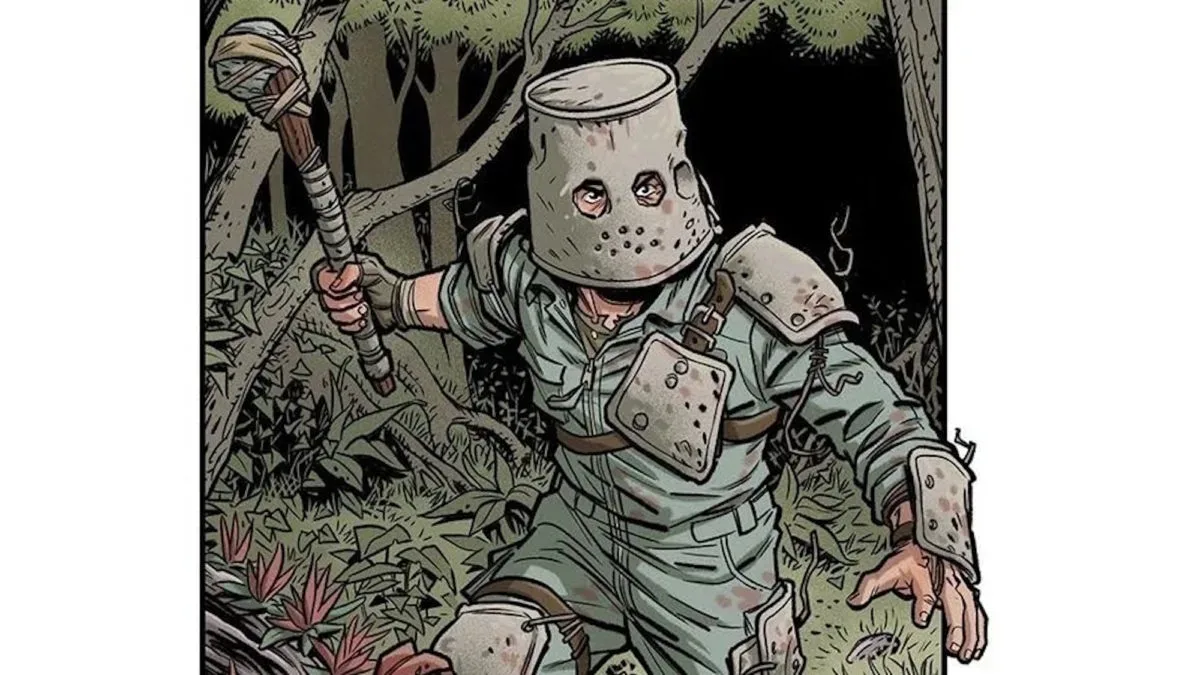
Marvel’s slate also arrives amid a continued appetite for short-form comics concepts with a distinct hook. Another upcoming standalone comic project, a 2027 one-shot centered on an island prison run by five-year-olds, illustrates how the one-shot format can support highly specific premises. Incursions takes a more continuity-driven approach, using alternate Earths and familiar Marvel identities as its pressure point.
The publishing schedule begins with X-Men: Incursions #1 on November 18, 2026. X-Men ’92: Incursions #1 follows on January 6, 2027, before Avengers: Incursions #1 closes the announced rollout on January 20.