Marvel’s February 2027 comic-book schedule is set to bring several new number-one issues into a month already crowded with ongoing X-Men, Spider-Man, Hulk, Avengers-adjacent and Midnight Universe plots. The headline launches are Magneto: End of Days #1, Hulk War: Infernal Rage #1, X-Men: Regulators #1 and Spider-Man: Noir #1. Each is listed as a 32-page, $4.99 issue, with the first three scheduled for February 3 and the Noir debut following on February 10.
For readers trying to parse a comic-book release list, a solicit is the advance catalog copy that identifies an issue’s creative team, premise, format, price and planned release date. It is designed to establish the immediate hook rather than explain every plot point. That makes this month’s descriptions particularly useful for seeing where Marvel is concentrating its attention: character-defining consequences for Magneto, a major-scale Hulk conflict, a new historical mutant series, and a new mystery for a version of Peter Parker facing Venom.
Magneto receives a near-future series
Magneto: End of Days #1 is written by Brian Michael Bendis, drawn by Andrea Sorrentino and colored by Dave Stewart. The premise returns to Magneto’s long and contradictory history through a story set in the near future, where the results of his choices are beginning to play out. Marvel also signals substantial X-Men involvement through guest appearances.
The creative pairing is central to the pitch. Bendis and Sorrentino are identified as returning X-Men collaborators, while Stewart is described as an Eisner-winning colorist. Rather than presenting the book simply as another team adventure, the description frames it as a fresh perspective on one of Marvel’s most contested figures. That is a meaningful distinction: the stated subject is not merely what Magneto does next, but how the accumulated decisions of his life are understood when viewed from a later point in time.
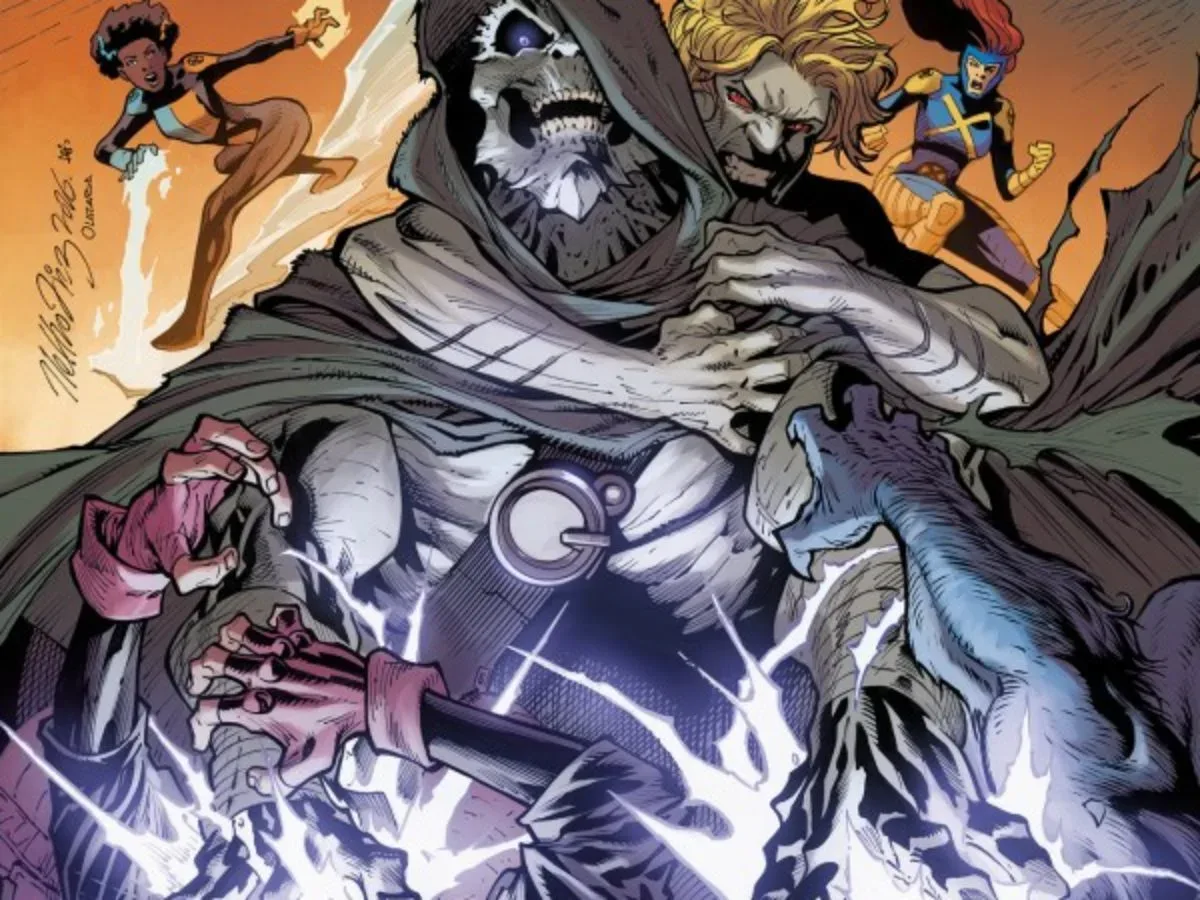
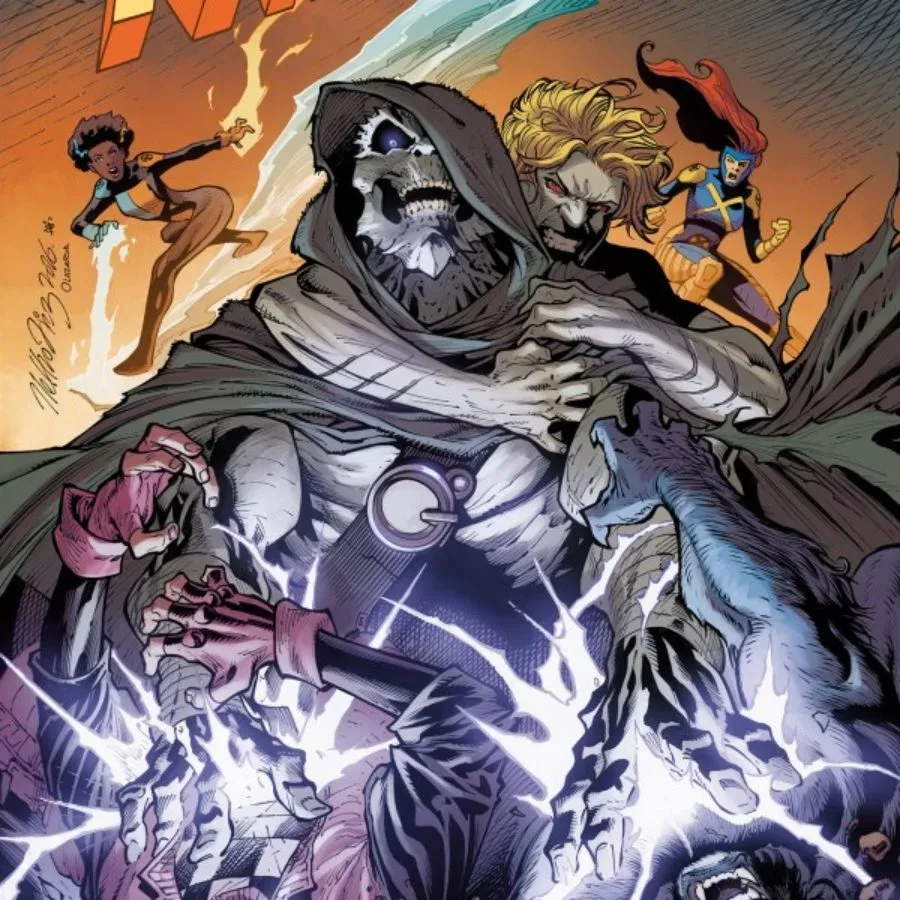
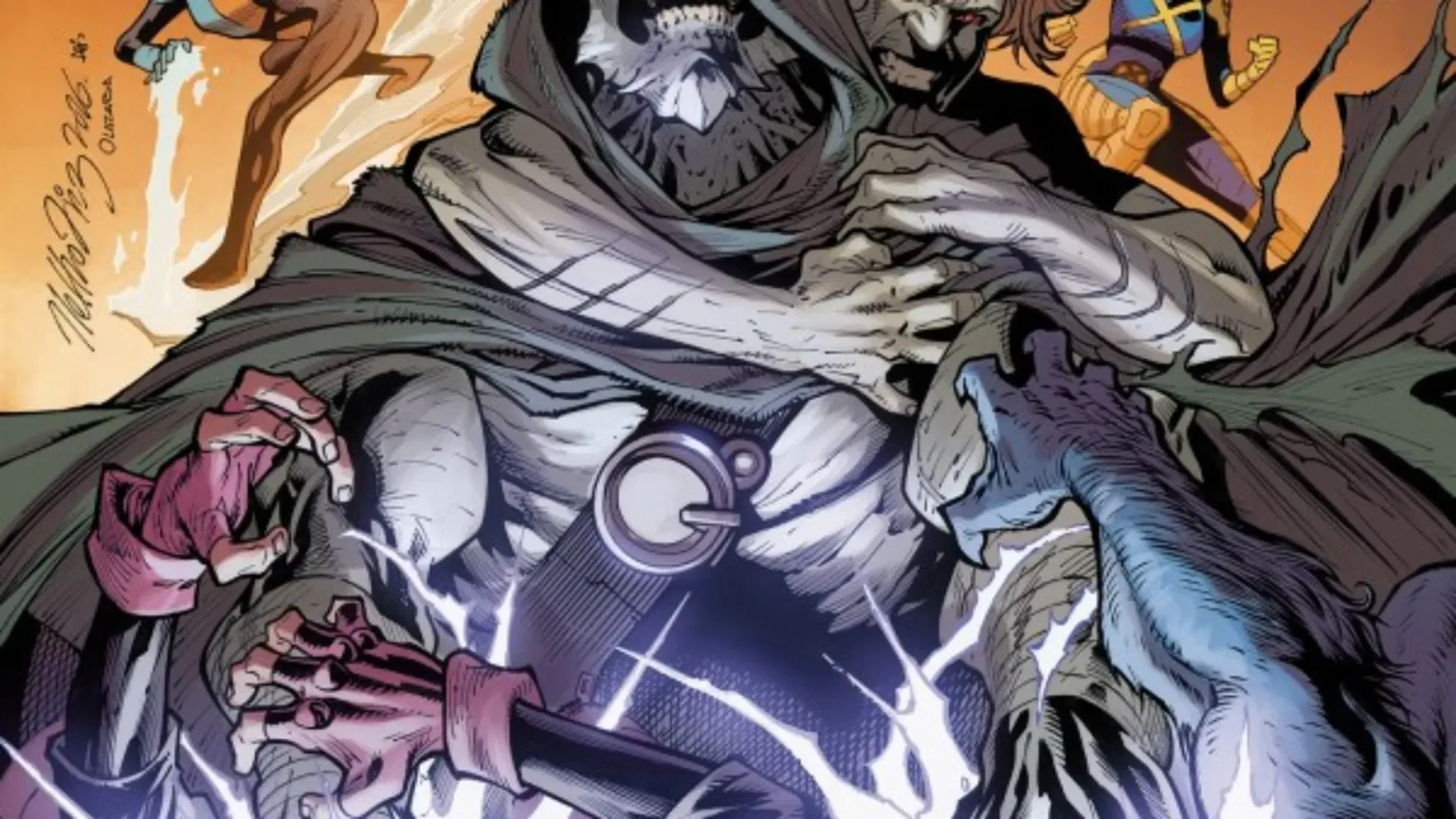
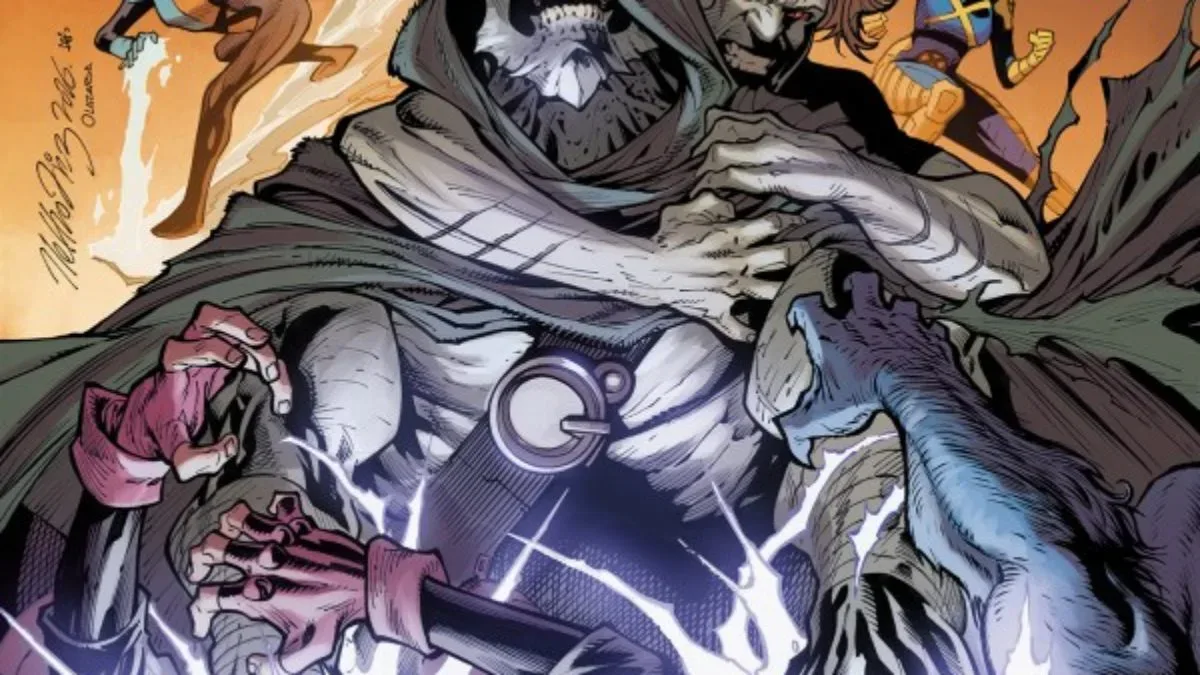
It is also one of several February books showing the mutant line operating across different time frames and formats. The main X-Men #45, by Jed MacKay with art from Netho Diaz, Victor Olazaba and Arthur Hesli, keeps its focus on District X. Revelation and the X-Men are attempting to help the mutants there when a new mutant named Grievance disrupts their leadership. The solicitation positions Grievance as revenge-driven, but leaves the exact cause of that revenge unrevealed.
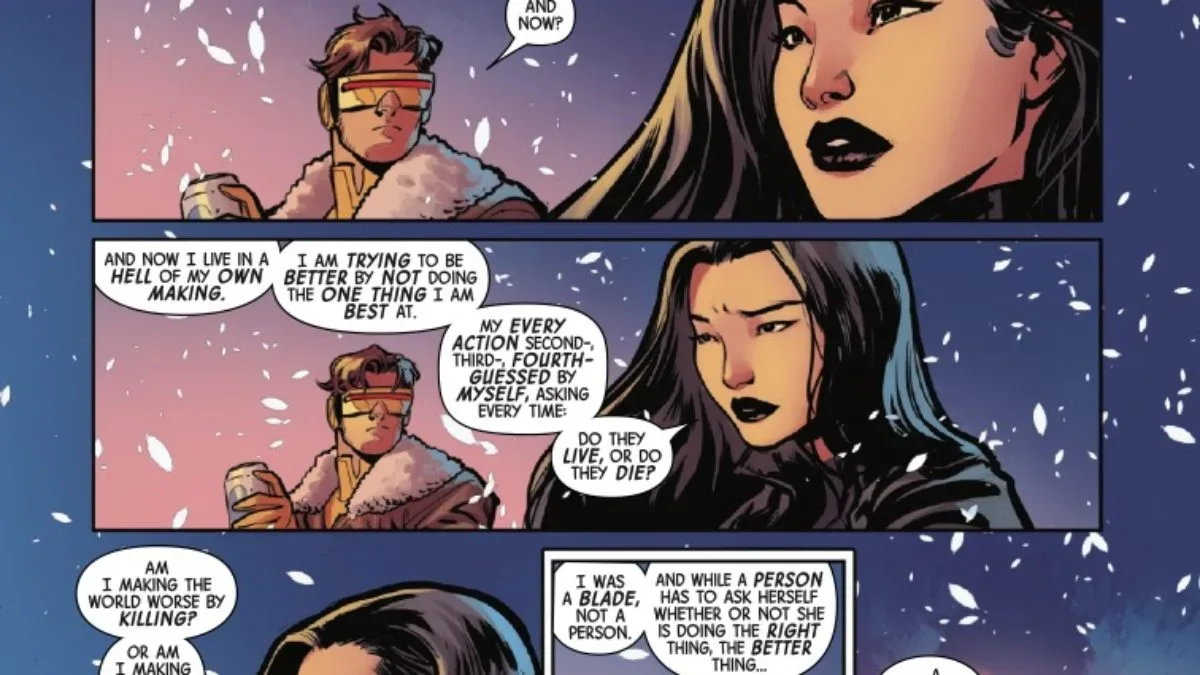
That immediate uncertainty gives the issue a political as well as action-oriented tension: the X-Men are not only confronting a threat but being challenged over who has the authority to lead and protect a community. Readers following the current run may also want to revisit the line’s recent direction through X-Men #40’s Psylocke-focused mission.
Three more mutant stories, three distinct pressures
February’s mutant material does not stop with the core title and Magneto. X-Men United #11, credited to Evan Narcisse and Eve L. Ewing with art by Ruairí Coleman, deals directly with escalating anti-mutant prejudice following the events of DNX. The issue places Daredevil alongside the X-Men as they fight to establish the innocence of New York City’s most vulnerable mutants. At the same time, Justina LaGuardia’s psychological campaign is said to threaten Emma Frost’s sanity.
In other words, the conflict described for X-Men United is not limited to a physical opponent. Psychological warfare means efforts to damage or manipulate a target’s thoughts, confidence or perceived reality. The book’s setup therefore puts legal or public proof, social hostility and a personal attack on Emma Frost into the same crisis.
X-Men: Regulators #1 takes a different route. Mikki Kendall writes and Georges Jeanty provides the art for a new adventure starring the Regulators, whose prior debut is referenced but not specified in the available description. The series looks back more than a century, to an era when mutates found refuge at Haven House. A threat appearing in alluring form has emerged in the bayou, placing that sanctuary and its inhabitants in danger.
The term mutates is used in the book’s own setup for people of that period, while the story’s setting points toward a historical branch of Marvel’s broader mutant fiction. Importantly, the synopsis promises a danger tied to Haven House and the bayou but does not identify the antagonist. It is a deliberately contained entry point for a new #1, contrasting with the continuity-heavy social stakes described in X-Men United.
Then there is Midnight X-Men #5, written by Jonathan Hickman and illustrated by Matteo Buffagni. Its brief setup brings Ronin and Reaver together through an “infernal compact,” with old scores expected to be settled. The issue’s final line, “the Peace Must Hold,” suggests that the consequences of that arrangement extend beyond a straightforward duel, although the available details do not say what peace is at risk.
Hulk War moves toward an endgame
Hulk War: Infernal Rage #1 is the other large-scale launch of the month. Phillip Kennedy Johnson writes, and Nic Klein supplies the art. The story begins what is described as the final fight against corruption spreading through the Marvel Universe. Manhattan has fallen to twisted monsters, the Baxter Building has become the center of a nightmare, and the Infernal Hulk has revealed both fallen Avengers and a plan capable of transforming life across Earth.
Against that backdrop comes a new Gray Hulk. The distinction made by the solicitation is simple and important: this Hulk does not arrive with a grand purpose or a moral mission. He is there to smash the Infernal Hulk. The issue will also bring back an unspecified person from Bruce Banner’s past before the battle ends.
The word infernal conventionally signals something associated with Hell or a hellish state, and it fits the book’s imagery of corruption, monstrous armies and a nightmare-ridden Baxter Building. But the specific mechanics of the corruption and the identity of the fallen Avengers have not been disclosed. Readers should treat those as the central unanswered questions rather than assume the new #1 has already explained them.
Spider-Man faces street-level muscle, noir darkness and Midnight horror
Spider-Man appears in three very different corners of the February list. In The Amazing Spider-Man #1009, Joe Kelly and Ed McGuinness put Peter between Rhino and Tombstone. The solicitation boils the clash down to a classic collision of brute force and entrenched resistance: Rhino’s rage against Tombstone’s immovability, with Spider-Man stuck in the middle. That is the full stated premise, but it is a clean hook for an issue driven by competing villains rather than a single enemy.
Spider-Man: Noir #1, by Alex Segura and Farid Karami, introduces Venom to the Noir Universe. Here Peter Parker is investigating what happened to his new girlfriend’s former boyfriend while a new foe offers the temptation of limitless power. The choice is framed sharply: pursue the murderer or embrace that power, with a potentially devastating personal cost either way.
“Noir” in this title signals a darker mystery framework, and the solicitation itself supports that reading through murder, darkness, moral temptation and uncertainty surrounding a missing person. It does not say how Venom enters the setting or whether Venom is the murderer, so those remain questions for the debut rather than confirmed plot answers.
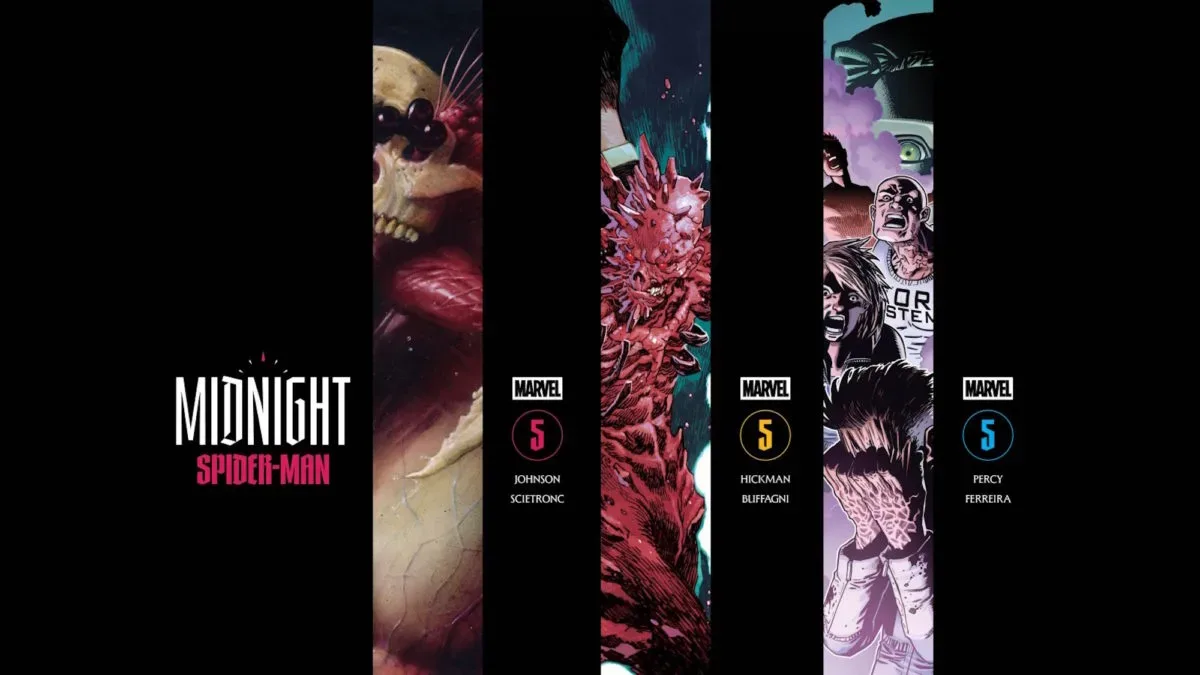
Meanwhile, Midnight Spider-Man #5 continues the horror-leaning Midnight Universe strand. Phillip Kennedy Johnson writes the issue, with ScieTronc on art. Oscorp’s second-generation monstrosity is loose and targets Spider-Man first, while the mutation that created Spider-Man has spread to another host. That shared mutation is the significant connective element: the danger has expanded beyond Peter, rather than remaining a threat directed only at him.
The issue is also listed with multiple cover treatments: Marcelo Ferreira’s Midnight Bloodbath cover, Peach Momoko’s Midnight Special, an unnamed Midnight Horror Homage artist, and Benjamin Su’s Midnight Gallery cover. The latter carries a 1:25 designation. In comic-book distribution, that notation identifies an incentive cover associated with a ratio of one copy for every 25 qualifying standard copies ordered by a retailer. It identifies the cover type; it does not, by itself, establish a guaranteed market value or availability at any specific shop.
The Midnight Universe’s physical changes continue
The other Midnight titles keep the line’s body-horror emphasis intact. Midnight Fantastic Four #5, from Benjamin Percy and Marcelo Ferreira, finds the team’s physiological changes continuing. Reed Richards is expected to provide answers, but cannot do so quickly enough to prevent tension from rising. Elsewhere, something new stalks the woods surrounding Storm Systems HQ.
“Physiologies” refers to the functions and conditions of the characters’ bodies, so the issue’s wording suggests that the Four’s transformation is not cosmetic. It is affecting them in a way that demands explanation, while the outside threat around Storm Systems HQ makes Reed’s failure to resolve the situation more urgent. The synopsis does not identify either the stalker or the nature of the changes.
Ongoing heroes get sharply focused February installments
Several continuing titles arrive February 3 with compact but notable hooks. Captain America #20, by Chip Zdarsky and Ton Lima, takes Steve Rogers into a dystopian future shaped by one of his greatest enemies. He is attempting to repair the timeline alongside Tony Stark and a child clone of Doctor Doom, but his oldest allies no longer trust him.
Iron Man #16 is the third installment of the four-part “The Incarcerated Iron Man.” Joshua Williamson and Carmen Carnero have Tony Stark fall under Moonstone’s influence, prompting a journey through memories centered on love. Its “Part 3 of 4” label is the clearest practical reading-order marker in the month’s list: readers who want the full arc will likely need the preceding chapters and should expect another issue to complete it.
In Wolverine #32, Saladin Ahmed and Julius Ohta reunite Logan with Victor Creed while Wolverine is in his Feral form. The solicitation promises a violent pursuit of truth but does not clarify the terms of the reunion. Marc Spector: Moon Knight #13, by Jed MacKay and Dev Pramanik, moves Moon Knight and Hunter’s Moon into a party hosted by criminal syndicate Agence Byzantine. The formal event provides an unusual setting, though the description makes clear that danger is expected.
Finally, Wade Wilson: Deadpool #13 sends Deadpool and Blind Al toward the sea after one of Al’s predictions hits close to home. Benjamin Percy and Geoff Shaw’s “Curse of the Sea Hag” involves missing children and an underwater danger that may exceed what either character can handle.
Marvel’s February 2027 lineup is therefore less one unified premise than a set of distinct entry points: Magneto’s legacy viewed from the future, mutant communities under pressure, an Earth-scale Hulk conflict, a murder mystery in the Noir setting, and the increasingly unsettling transformations of the Midnight Universe. All 15 listed issues are 32 pages and priced at $4.99, with releases spread across February 3, 10 and 17.