Long before encrypted radios and digital surveillance became the default shorthand for espionage, a message could be carried by a bird. Sheena, Queen of the Jungle #2, published by Fiction House in 1942, turns that old-fashioned method into a cliffhanger-sized problem in its wartime jungle story, “Swastika Plague.” A British intelligence agent has been captured, sensitive documents are at risk, and an enemy operative at a secret jungle outpost dispatches a carrier pigeon before Sheena and her companion Bob can intervene.
It is an unusually direct collision of adventure-comic ingredients: a jungle heroine, World War II espionage, a secret enemy base and a tiny airborne courier carrying information with potentially enormous consequences. The premise is especially notable because carrier pigeons were genuinely used for military and other communications over centuries, including widespread use during both World War I and World War II. In this case, the comic does not merely borrow the visual of a bird with a message; it makes the pigeon the plot’s urgent moving target.
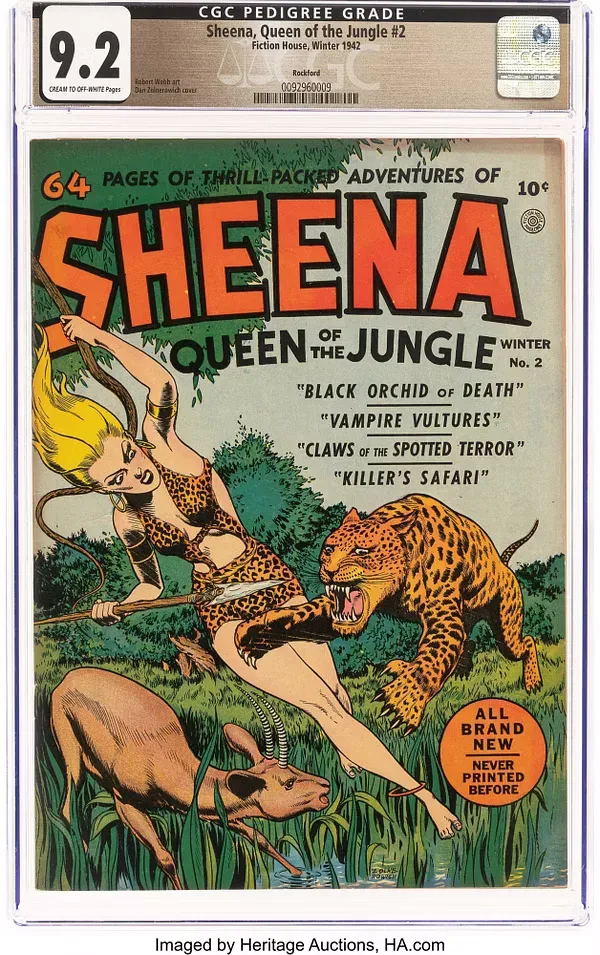
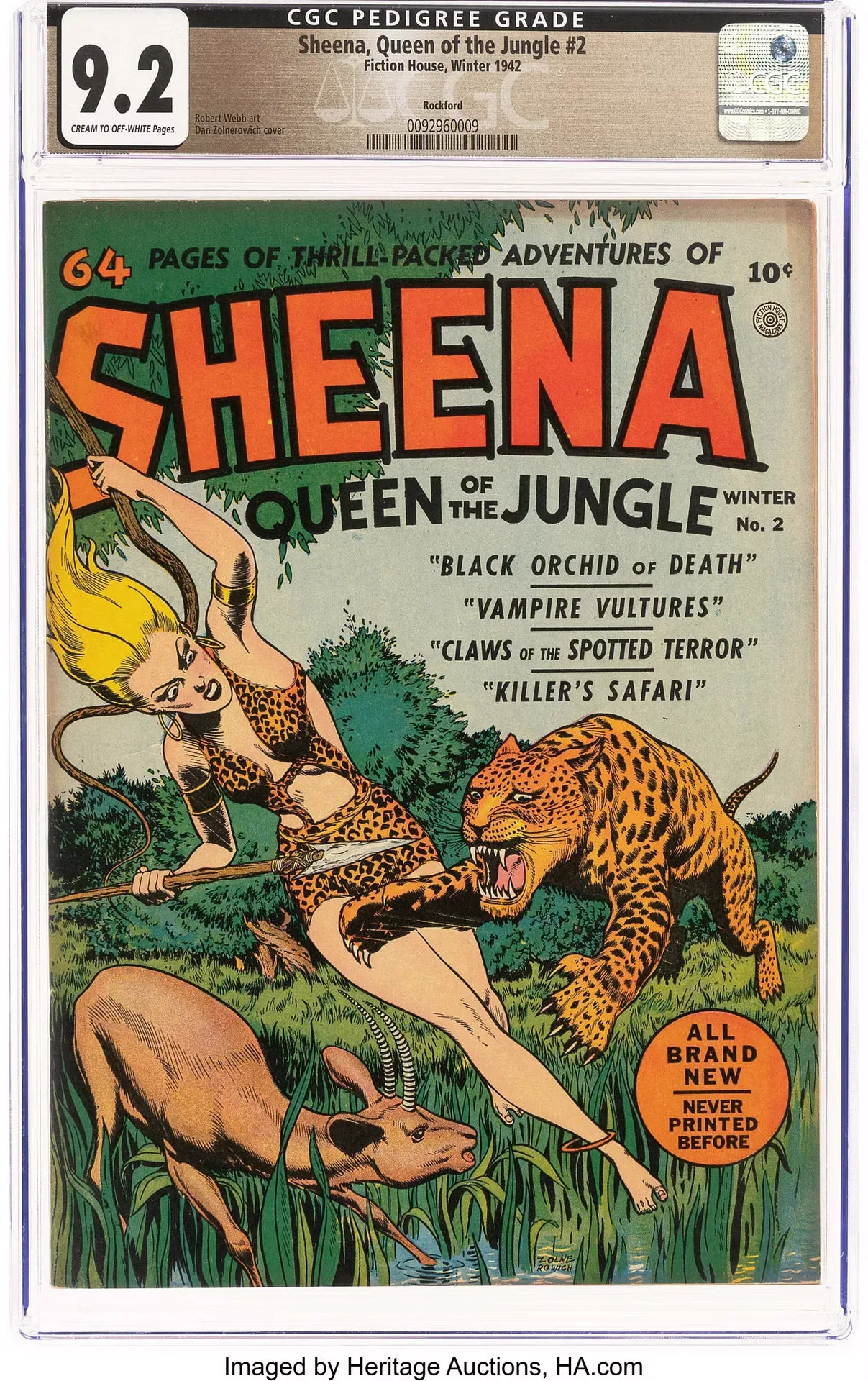
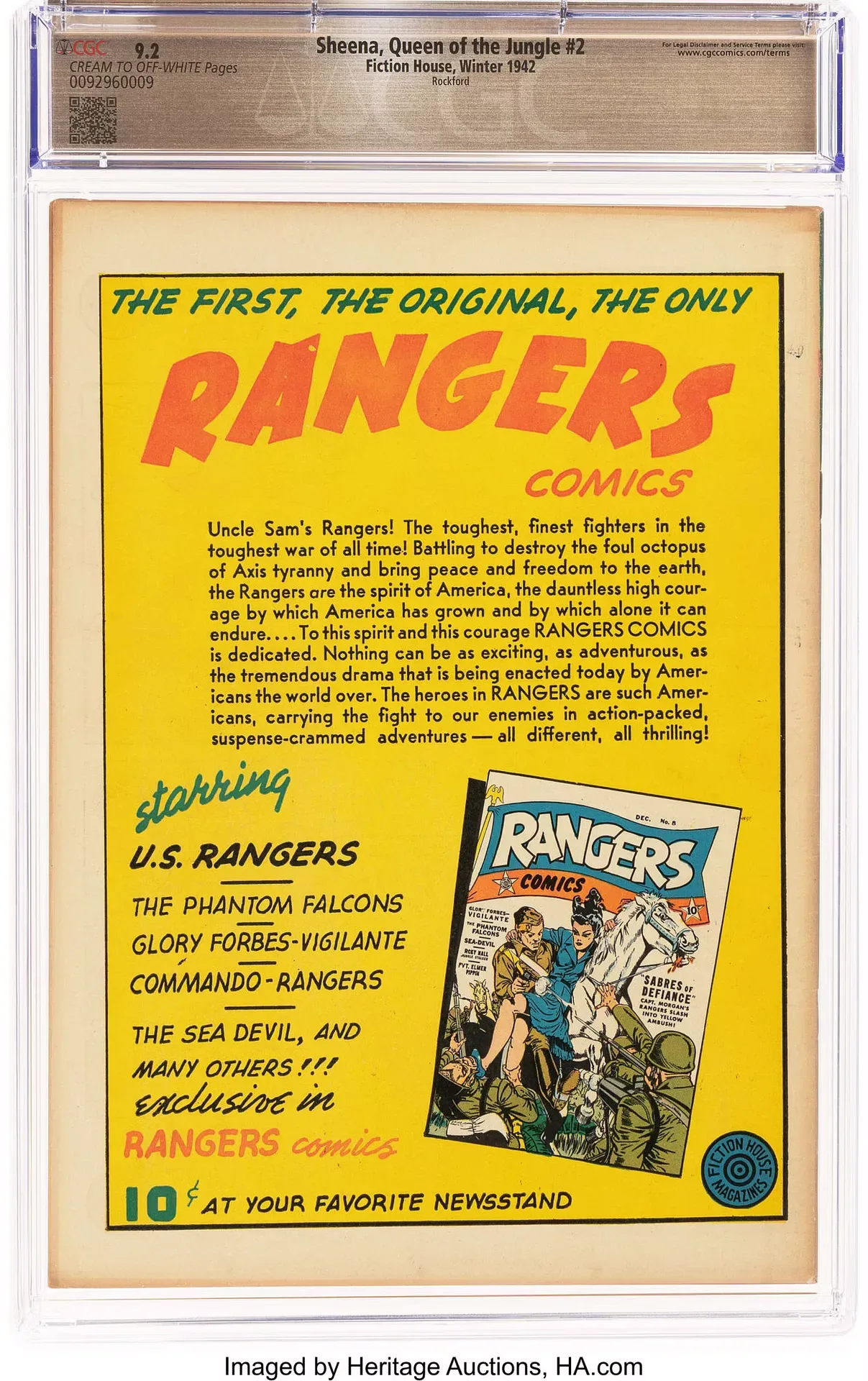
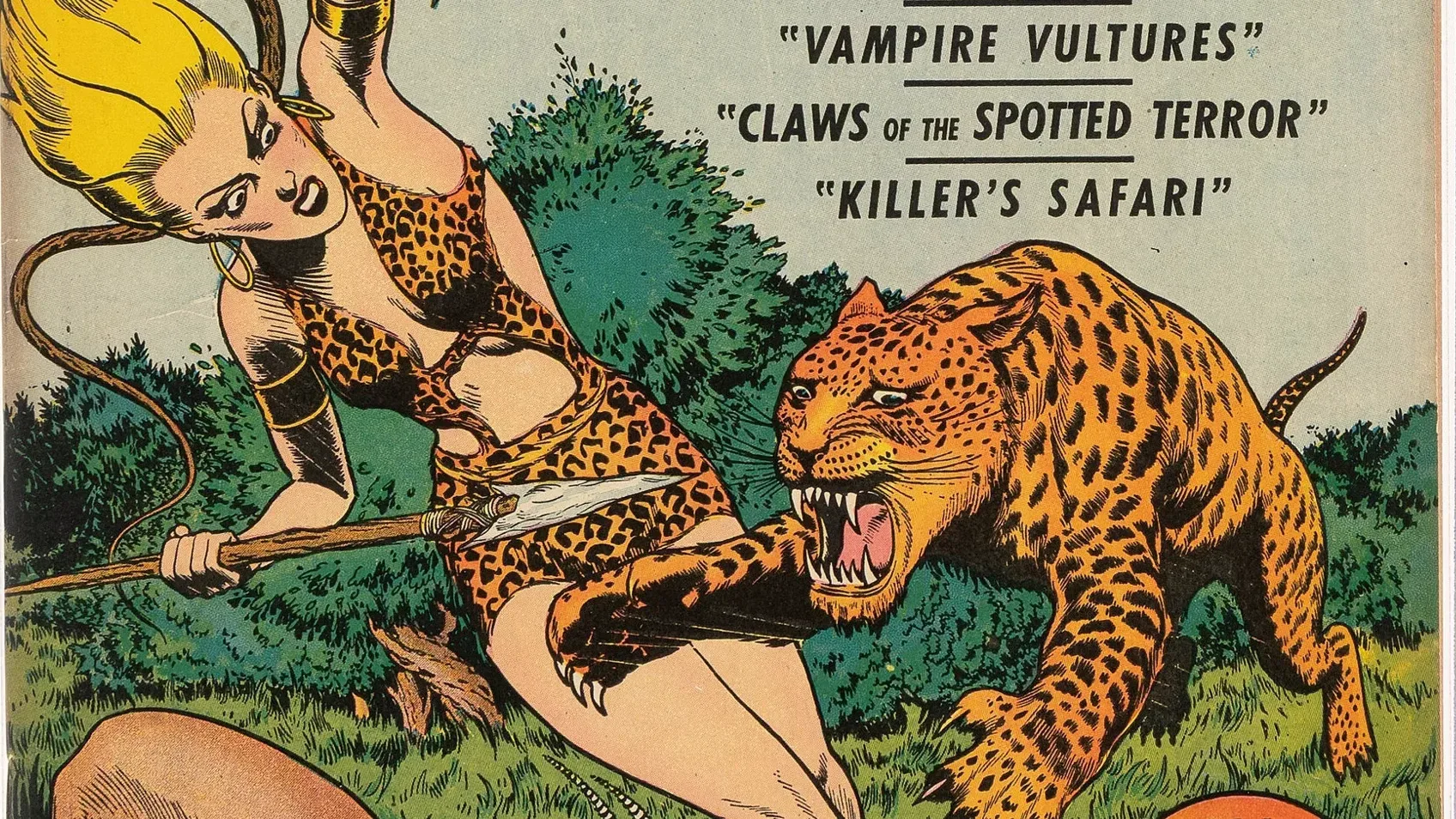
Now, a CGC NM- 9.2 Rockford pedigree copy of the issue, with cream-to-off-white pages, is listed for the September 24-26, 2026 Comic Books Signature Auction #7469. The supplied CGC census count lists 20 Universal-certified copies, with this 9.2 as the sole example at that grade and no copy recorded higher. For collectors, that combination of an early issue, a pedigree designation, a strong technical grade and a cover by Dan Zolnerowich makes the book’s auction appearance more than a novelty built around its memorable bird-based spy plot.
A jungle thriller with a wartime deadline
“Swastika Plague”, penciled by Bob Webb, gives Sheena a mission with a clear escalation. Getting the captured British agent out is not enough. The intelligence documents taken from him could expose his network if they reach German headquarters. The enemy operative’s use of carrier pigeons means the intelligence can leave the outpost even if the humans responsible are stopped.
For more context, explore JDM: Japanese Drift Master Patch Retunes Suspension, Brings Back Tire Pressure Controls.
That is a solid piece of pulp-story logic. A physical document has to travel somehow, and the bird makes the threat immediate. There is no lengthy chase across an abstract battlefield; the danger becomes visible the moment the pigeon is released. Sheena’s answer is equally blunt: she throws a dagger and stops the pigeon. It is a sensationally economical resolution, the kind of decisive action that suits a short-form adventure comic, even as its stakes are tied to wartime intelligence work.
The story’s premise also reflects how wartime material could fold contemporary anxieties into genre entertainment. Reports about military pigeon use appeared during the period, while the R.A.F. had “Pigeon Spies” and Nazi spy organizations were reportedly associated with the birds as well. The comic reframes that real communications practice into a lurid jungle-espionage scenario rather than presenting it as a technical account. That distinction matters: the issue uses an authentic broad concept as a device for adventure fiction, not as documentary history.
What a carrier pigeon changes in the story
A carrier pigeon is a messenger bird trained to return to a particular home location. In narrative terms, it solves a problem for the villain: a message can be sent from an isolated site without requiring the operative to safely travel the entire route. It also gives the hero a sharply defined objective. Once the pigeon flies, stopping the person who released it may no longer prevent the information from reaching its destination.
That makes the bird a compact version of the familiar “message already sent” thriller complication. In modern spy fiction, the equivalent might be a transmitted file or a radio call. Here, the delivery system is tangible enough to see on the page and fragile enough for a thrown weapon to settle the immediate crisis. The premise is both practical within its pulp framework and wonderfully heightened in execution.
More than one kind of jungle peril
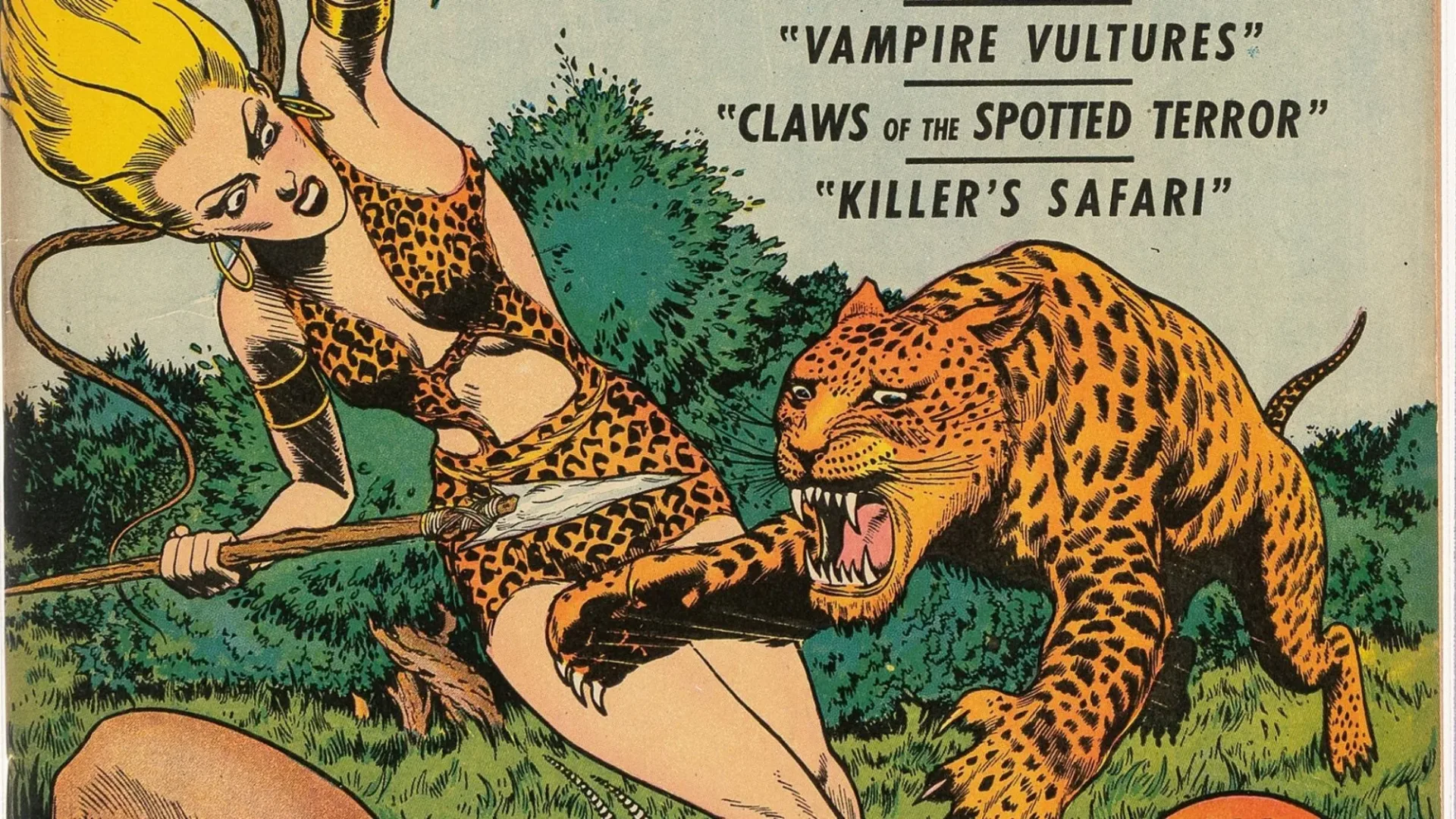
The pigeon plot may be the issue’s clearest wartime hook, but it is not the only dramatic material in the book. Sheena, Queen of the Jungle #2 also includes leopard cults, vampire vultures and ivory hunters. Taken together, those elements show the broad adventure palette expected from an early Fiction House Sheena comic: danger could arrive as a hostile human group, predatory animals, exploitative hunters or an international military conspiracy.
That density is useful context for collectors assessing the issue’s appeal. The book is not solely a World War II comic and not solely a jungle-adventure comic. It combines the two modes, while filling out the issue with other heightened threats. The result is a snapshot of an era when a single title could move freely between exoticized jungle fantasy, animal menace, treasure-and-ivory conflict and wartime espionage.
It is also why the pigeon material sticks in the memory. Leopard cults and vampire vultures sound like immediately pulpy adventure fixtures. A covert communications network reliant on a bird feels more specific. The contrast between the extraordinary setting and the functional espionage concern—protecting documents and preventing their delivery—gives “Swastika Plague” a different texture from pure monster or hunting stories.
The creative names attached to the issue
Bob Webb penciled the wartime story featuring the captured agent and carrier pigeon. Penciling refers to the stage in comic production where an artist lays out and draws the visual storytelling, establishing figures, action, settings and panel-to-panel flow before other production steps. In an action sequence built around a released bird and a thrown dagger, that visual clarity is central: the reader needs to understand what has escaped, why it matters and how Sheena responds.
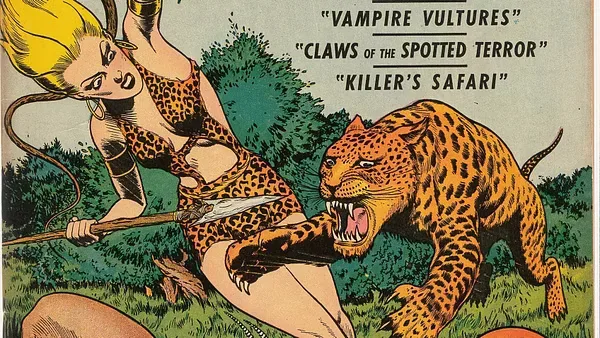
Dan Zolnerowich is credited for the issue’s cover. For a vintage comic offered at auction, the cover carries special weight beyond its role as packaging. It is the book’s immediately visible art object, the element most often encountered in catalog imagery and the first visual impression for collectors evaluating an issue. The supplied information identifies Zolnerowich’s cover as a standout component of this copy’s appeal, alongside the interior Webb work and the issue’s blend of genres.
Why the 9.2 grade and pedigree designation matter
CGC’s Universal label is used for standard, unrestored comic books. The census figure supplied for this issue counts 20 Universal certifications. Census data should be read carefully: it represents certified submissions recorded by the grading service, rather than a total count of every surviving copy in existence. Still, it is a useful measure of how frequently, or infrequently, a book appears in that certification population at particular grades.
For Sheena #2, the relevant headline is unusually simple. The 9.2 copy in the sale is the only Universal-certified example reported at that level, with none higher in the supplied census. “NM-,” or Near Mint Minus, is the grade notation attached to 9.2. Rather than treating a numeric grade as a complete substitute for examining a comic, prospective bidders can regard it as one established part of the description alongside the book’s page quality, cover appeal and provenance.
The copy is also identified as a Rockford pedigree. In comic collecting, a pedigree designation points to a recognized collection or provenance, which can give a book additional collector interest beyond grade alone. Here, the designation works in tandem with the census standing: the offering is not simply a high-grade copy of an early Sheena issue, but a pedigree copy that currently sits at the top of the supplied Universal census information.
Its cream-to-off-white pages are another catalogued characteristic. Page-quality descriptions are distinct from the overall numeric grade. They describe the paper’s appearance and are typically considered by collectors of vintage books, particularly for an issue published in 1942. The combination of the 9.2 grade, cream-to-off-white pages and Rockford pedigree provides a more complete description than any one of those details would on its own.
A distinctively specific early Sheena issue
For someone interested in early comics as historical objects, Sheena #2 offers several entry points at once. There is the period-specific wartime plot, the unusual pigeon-message mechanism, Webb’s interior pencils, Zolnerowich’s cover, and the wider array of jungle-adventure threats. For a collector focused on condition and provenance, the auction copy adds its census-leading 9.2 grade and Rockford pedigree status.
The premise remains the easiest way into the book’s identity, though: secret intelligence is airborne, and a jungle heroine must prevent it from reaching its destination. In a medium full of elaborate super-weapons and grand conspiracies, there is something admirably concrete about the peril in “Swastika Plague.” The crucial enemy transmission is not hidden in a machine. It is flapping away.