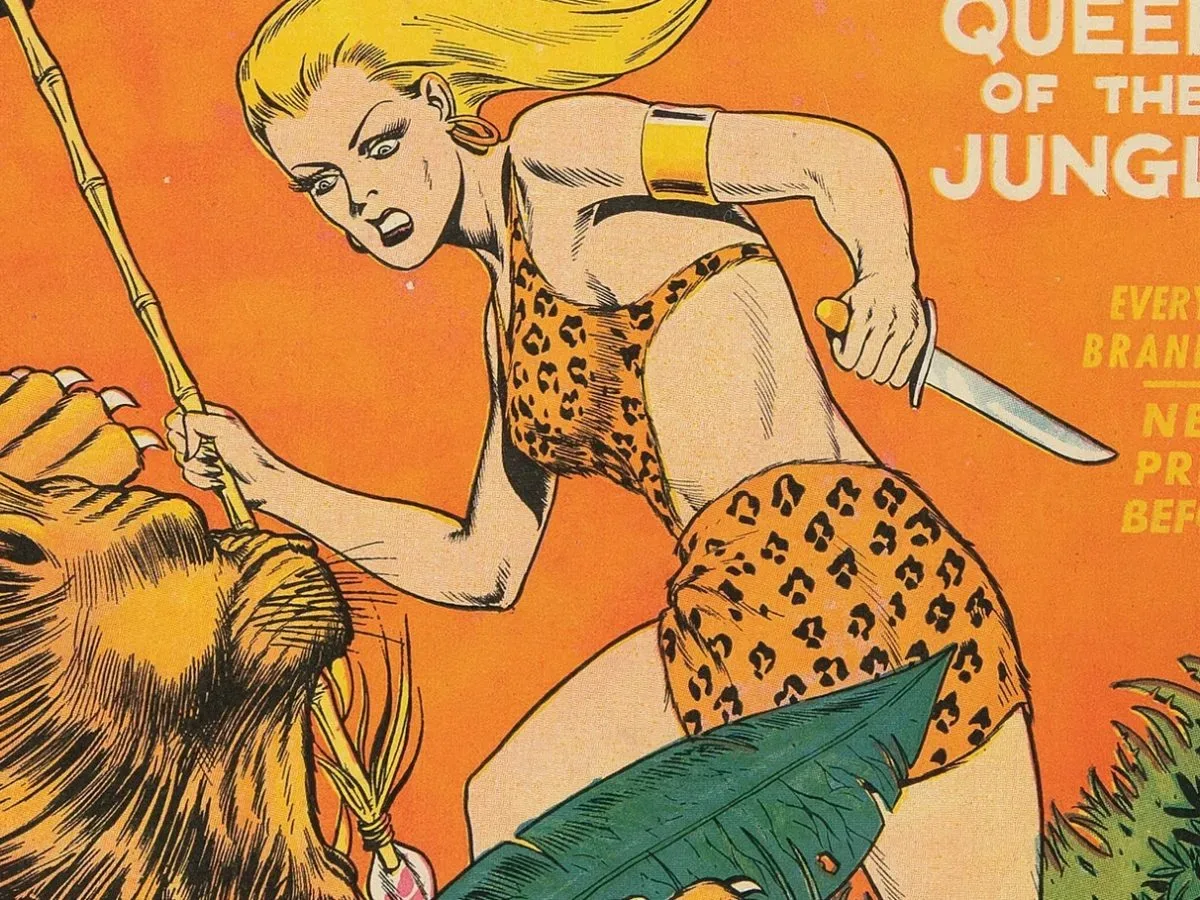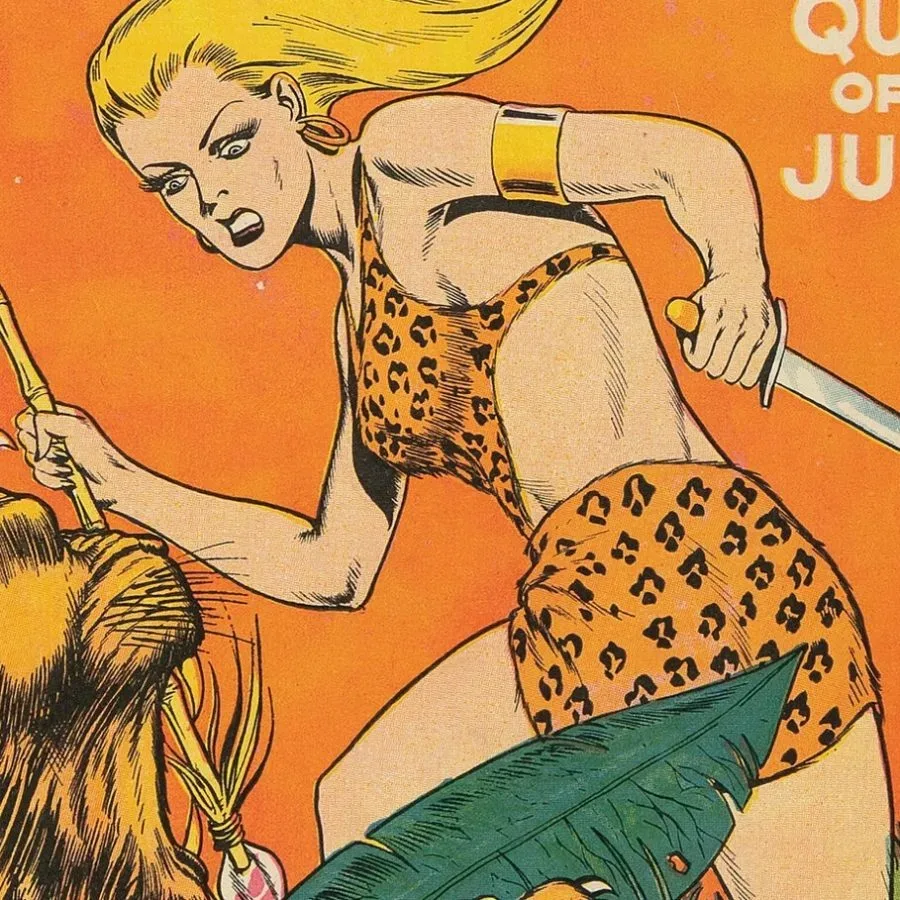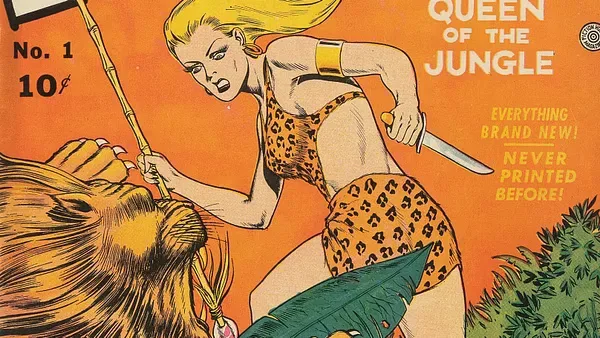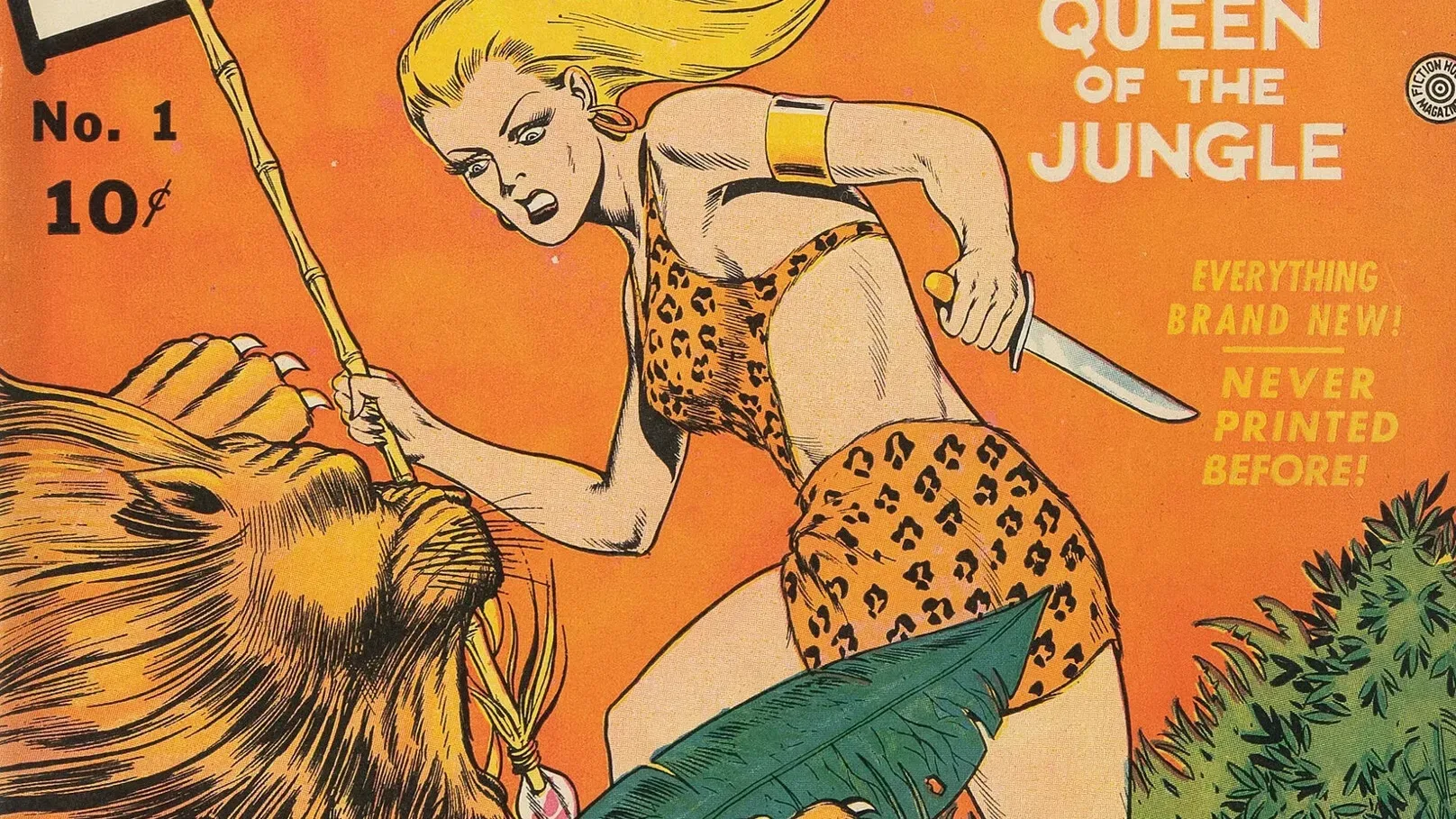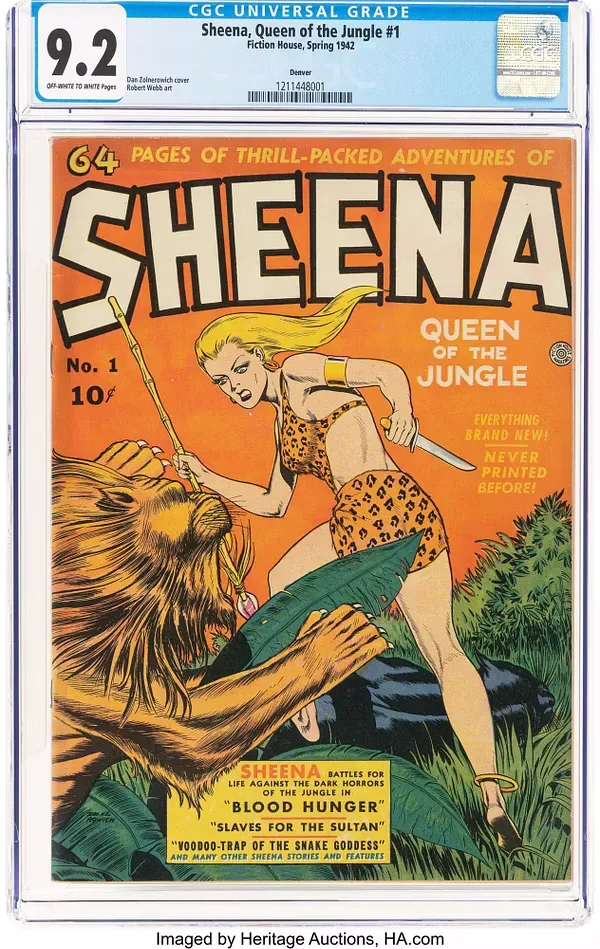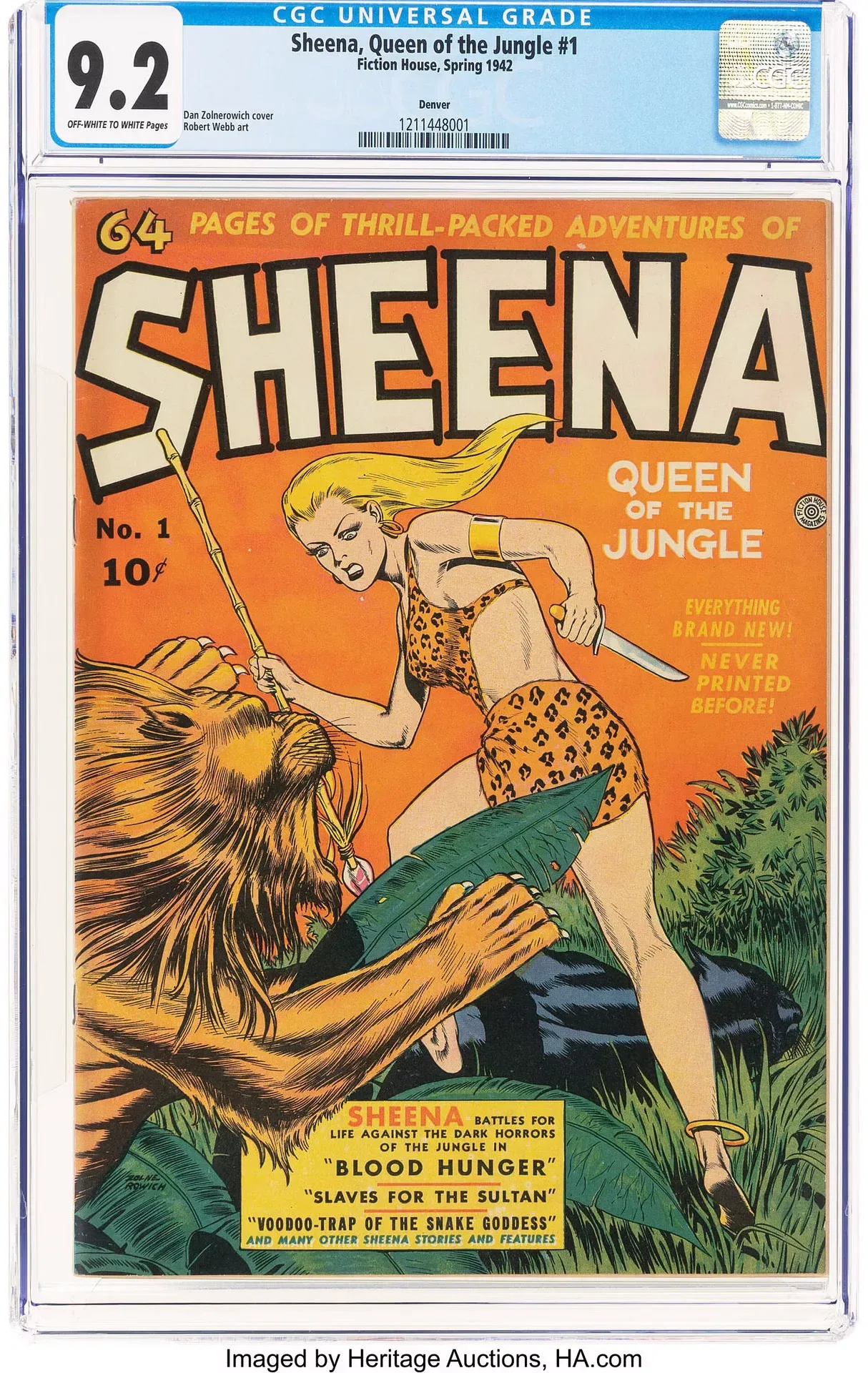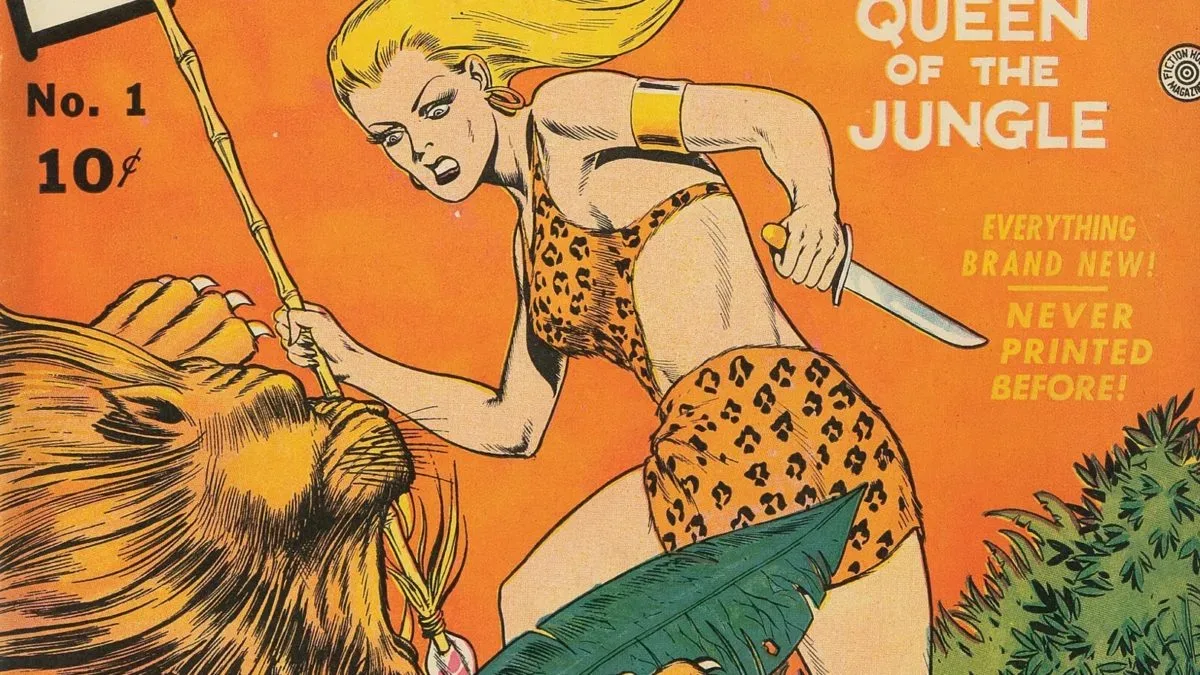
One of the toughest early milestones for a major Golden Age comic heroine is returning to the auction block: Sheena, Queen of the Jungle #1 from Fiction House, bearing a CGC NM- 9.2 grade and identified as a Denver pedigree copy. The issue is scheduled to be offered in the September 24-26, 2026 Comic Books Signature Auction #7469.
The appeal here is more substantial than a high number on a label. This 1942 comic represents Sheena’s first issue in her own ongoing title, arriving after the character had already become a familiar presence in Jumbo Comics. It is also the single highest-graded Universal-label copy recorded on the CGC census: 46 Universal copies are listed, with this lone 9.2 example at the top and none recorded higher.
For collectors, that combines three distinct pieces of significance: a solo-series launch for an established heroine, a scarce Golden Age survival story, and a condition outlier from a recognized pedigree collection.
Sheena’s solo title arrived early in 1942
Sheena, Queen of the Jungle #1 carries a Spring 1942 cover date, while a Catalog of Copyright Entries record gives its publication date as December 12, 1941. That distinction matters because cover dates and actual publication dates are not always the same thing. In the periodical business, the cover date could be set ahead of the date an issue reached readers.
That recorded December 1941 publication places Sheena’s dedicated series ahead of Wonder Woman’s Summer 1942 solo comic, though it does not predate Wonder Woman’s debut in All-Star Comics #8. For another perspective on Diana’s continuing comic-book presence, see Absolute Wonder Woman #24.
Sheena was not an unknown character being asked to carry a book for the first time. Fiction House had already established her in Jumbo Comics, meaning readers of the new title encountered a heroine with existing associates, adversaries and narrative territory. The solo launch therefore worked less like a character introduction and more like an expansion of a proven feature into its own package.
That is a familiar pattern in superhero and adventure comics: a breakout anthology feature earns a separate title while continuing to appear in the publication that helped establish it. In Sheena’s case, the result is a clear collection landmark even though the character’s publication history reaches further back.
Why issue #1 is important, but not her first appearance
Comic collecting uses terms such as key issue, first appearance and solo debut with specific meanings. They can overlap, but they should not be treated as interchangeable.
- First appearance: the earliest known publication appearance of a character.
- U.S. comic-book debut: the character’s first appearance in an American comic book.
- Solo-title debut: the first issue of a character’s own named series.
- Key issue: a collector term for a comic with a significant event, debut, creative connection or other notable place in publishing history.
Sheena’s true first appearance is identified as Wags #46, a UK weekly that is exceptionally difficult to find. There appears to be no record of a copy reaching public auction in the United States. Her U.S. comic-book debut, Jumbo Comics #1, is another notably difficult book for collectors to obtain.
That makes Sheena, Queen of the Jungle #1 a different kind of target. It is not being presented as the earliest Sheena appearance; its importance comes from launching her own series. For collectors who care about the evolution of female-led Golden Age comics, that can be a compelling and historically legible milestone—especially when the earlier books are so elusive.
The issue’s reputation as an underappreciated key follows from that position. It has a direct connection to an important Fiction House character, a distinctive solo-series status, and a level of scarcity that becomes especially visible at the highest condition levels.
The Dan Zolnerowich cover connection
The cover of Sheena, Queen of the Jungle #1 was drawn by Dan Zolnerowich, an artist whose Golden Age output was extensive even if his name is less commonly foregrounded than some of his contemporaries. Born in 1915 and deceased in 1995, Zolnerowich worked during comics’ formative 1940-1953 period and contributed to more than 400 comic books, including more than 200 covers.
His career included time at the Eisner & Iger Studio. After Will Eisner and Jerry Iger split in 1940, Zolnerowich worked through both Iger’s studio and Eisner’s studio. Those operations supplied material to multiple publishers, and Zolnerowich’s credits extended to companies including Prize, Quality Comics and Hillman Periodicals. His broader work also included collaboration with Eisner on The Spirit and P.S. Magazine.
Fiction House was a particularly important home for his cover work. He is credited with 101 covers there across titles including Fight Comics, Jumbo Comics, Jungle Comics, Planet Comics, Rangers Comics, Sheena Queen of the Jungle and Wings Comics.
For a debut issue, choosing an artist so closely associated with the publisher’s visual output is notable. It ties Sheena’s new title to the house style and talent infrastructure that powered Fiction House’s adventure line. The cover is consequently part of the issue’s collecting case, rather than a merely decorative detail.
What the 9.2 grade and Denver pedigree mean
The offered copy is graded CGC 9.2, designated Near Mint minus, with off-white to white pages. CGC’s number is an assessment of the individual comic’s physical condition; it is not a score for story quality, cultural importance or cover art. A 9.2 on a comic from 1942 is meaningful because old comics were printed as disposable entertainment, then subjected to decades of handling, storage and environmental risk.
The word Universal also matters in the census reference. A Universal label is CGC’s standard blue-label classification for comics without the special qualifiers or restoration designations associated with other label categories. The relevant census count here is 46 Universal examples of Sheena #1. Of those, only one has reached 9.2, and no higher Universal copy is recorded.
It is worth retaining the appropriate boundary around any census claim: a population report records books submitted to that service, not every surviving copy in private hands. Still, it is a useful snapshot for evaluating where a certified copy stands among those documented by CGC. In this case, the available census information identifies the auction copy as the sole highest-graded Universal example.
The Denver pedigree adds a separate layer of provenance. The collection was assembled by a Denver, Colorado newsdealer who saved and carefully stored 153 issue #1 comics published between 1938 and 1944. In comic collecting, a pedigree refers to a recognized original-owner collection with a documented identity or history. Such pedigrees are prized because they can give buyers more confidence about a comic’s preservation background and often represent unusual concentrations of high-grade material from an era when that was uncommon.
That background does not replace scrutiny of the comic itself, nor does a pedigree guarantee that every buyer will value it identically. It does, however, explain why the Denver designation is central to the lot’s identity. The book is not only a top-census copy of an early Sheena key; it comes from a collection built around carefully kept number-one issues from the late 1930s and early 1940s.
What makes this auction lot distinctive
Collectors considering a Golden Age book commonly weigh historical role, scarcity, visual appeal, grade and provenance. This Sheena #1 has evidence-backed strengths in each category:
- Series significance: it begins Sheena’s own Fiction House title after her established run in Jumbo Comics.
- Character context: it sits below the near-unobtainable Wags #46 first appearance and difficult Jumbo Comics #1 U.S. debut, but remains a consequential early Sheena milestone.
- Artist significance: it has a Dan Zolnerowich cover, linking the issue to an artist with a broad Fiction House body of work.
- Certified standing: its 9.2 grade is the highest recorded Universal grade for the issue on the CGC census, with no higher example listed.
- Collection history: it carries the Denver pedigree designation and off-white to white pages.
No sale result is stated ahead of the auction, and the eventual hammer price will depend on bidding rather than on a census rank alone. But the offered comic’s significance is clear: it is a rare chance to see a top-certified copy of Sheena’s 1942 solo launch, preserved within one of the hobby’s recognized pedigree collections and fronted by work from a prolific Fiction House artist.