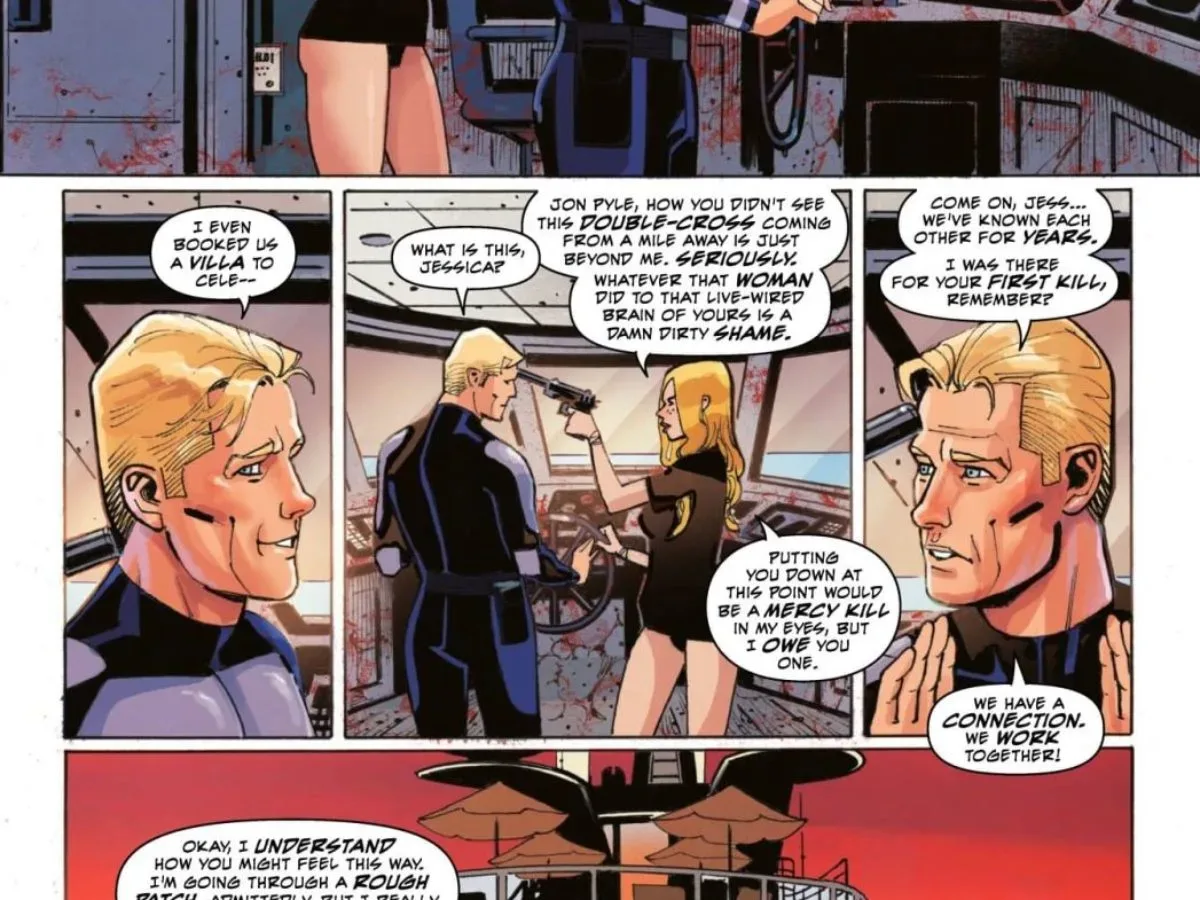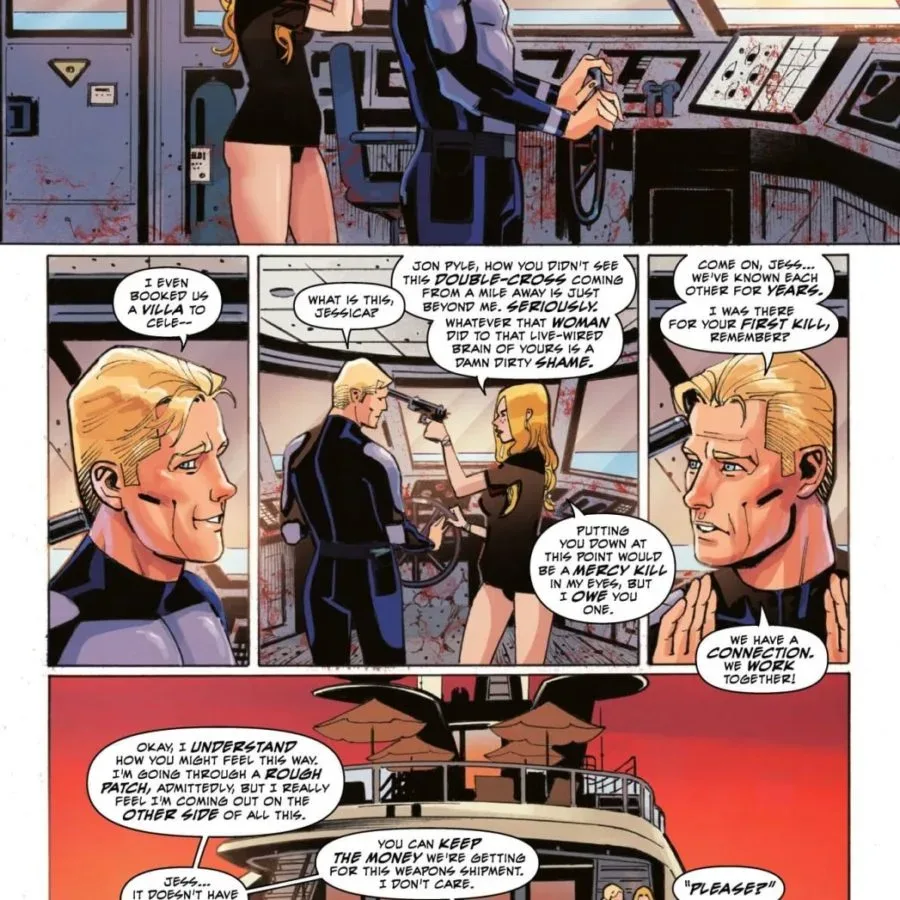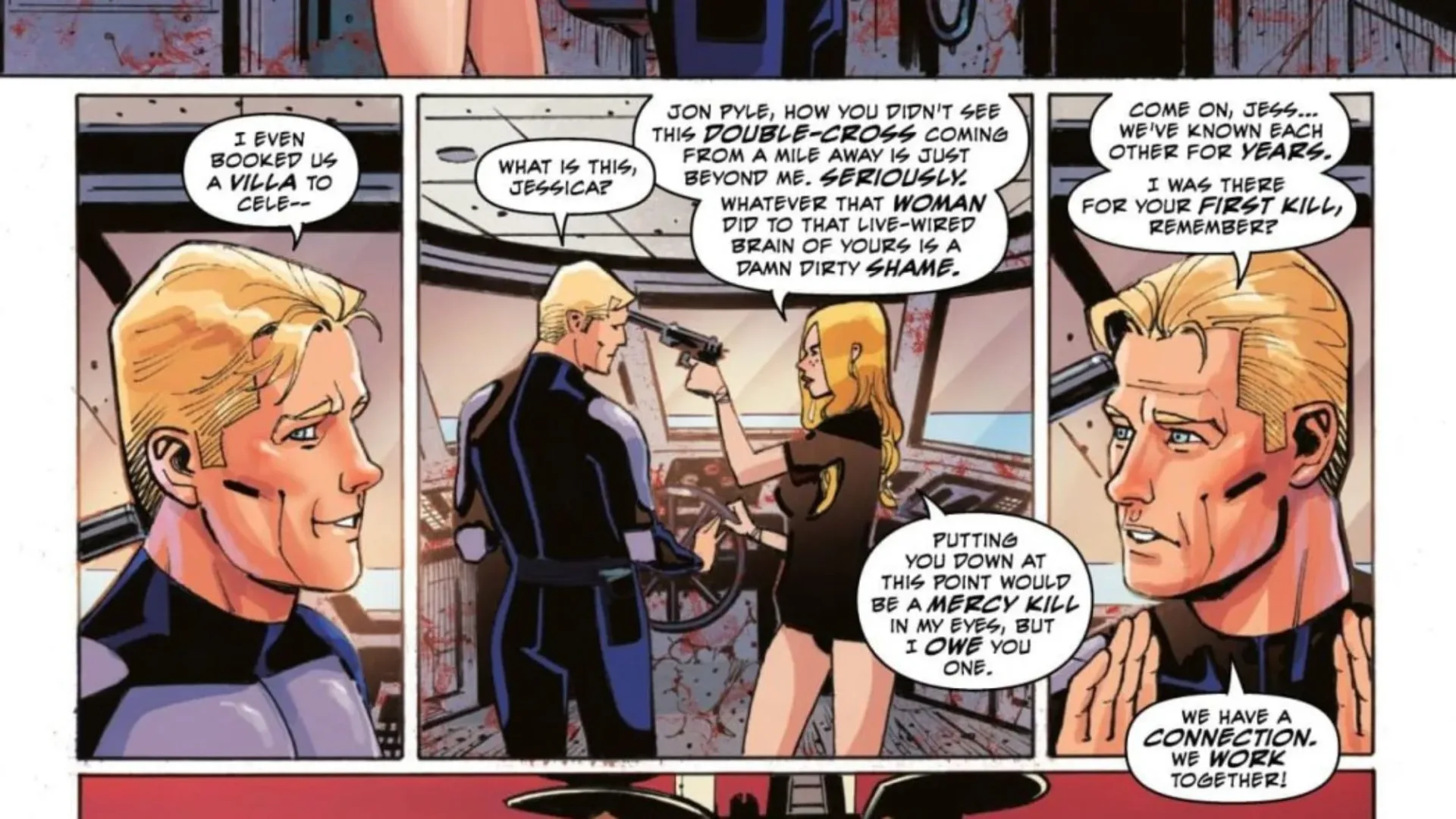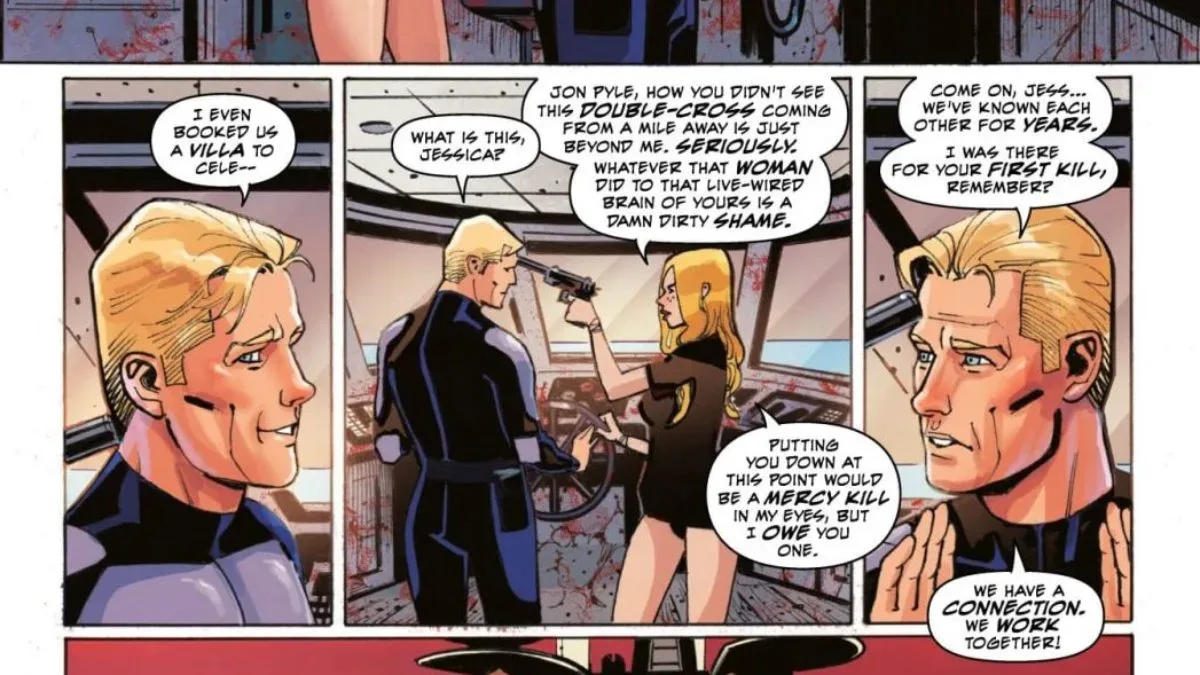
Pop Kill: Big Candy #1 is set to begin a new chapter for Jon Pyle and Dina Deluxe, moving the series from the aftermath of its earlier chaos into a conflict framed as the “Sugar Wars.” Mad Cave Studios lists the debut for comic shops on October 7, 2026, with Jimmy Palmiotti and Dave Johnson credited as writers, Juan Santacruz on interior art, and Dave Johnson providing the main cover.
The hook is immediately, deliberately oversized: Dina has created a revolutionary sugar substitute, and the development is serious enough to threaten the fortunes of the world’s largest candy companies. That puts both Dina and Jon in the crosshairs of a secret candy consortium. The pair survived the events of Pop Kill, but the new story begins eight months later, with their relationship described as unstable and the danger returning at the exact moment they are trying to move forward.
It is a premise with an effective pulp-comic equation: take a familiar consumer-world concern, exaggerate the corporate stakes to an absurd degree, then make the personal consequences immediate. A sugar substitute is not merely a product in this setup. It is the catalyst for a chase story, an industry conspiracy, and a renewed test for two characters whose connection is already strained.
A sequel built around consequences, not a clean reset
The solicitation positions Big Candy as “a brand-new Pop Kill saga,” while also making clear that it follows the original story rather than starting over with unrelated heroes. Jon and Dina have survived before; their past is part of the point. Eight months have passed, which gives the premise a useful amount of narrative distance. The new threat is not presented as a direct continuation of the same immediate catastrophe, but neither are the protagonists untouched by what happened.
That detail matters because it establishes two simultaneous forms of pressure. Externally, a consortium wants them dead because of Dina’s invention. Internally, the two leads are struggling to move on from each other. The solicitation does not specify what has gone wrong between them, whether they are separated, or how the earlier events shaped their bond. Those are open questions rather than details to assume. What is established is that the relationship is shaky before the plot’s new pursuit begins.
In practical storytelling terms, this lets the book use action without making the action the only thing at stake. A run-for-your-life premise naturally creates momentum: characters must escape, make decisions quickly and discover who is targeting them. Relationship friction can make those same decisions harder. Trust, communication and old resentments can complicate a situation where cooperation is essential.
The setup also avoids treating survival as a simple happy ending. Jon and Dina made it through the previous chaos, but survival did not apparently solve everything. That is a strong foundation for a follow-up because it recognizes that a sequel needs more than a larger version of the previous danger. It needs consequences that change how the characters meet the next crisis.
What the “Sugar Wars” premise is doing
The phrase “Cola Wars are over. The Sugar Wars are about to begin” gives the issue its broad satirical frame. The conflict is not described as a scientific disagreement or a routine business dispute. It is presented as a war over an invention that might disrupt powerful companies. The secret consortium is the central expression of that escalation: a hidden alliance of candy interests willing to pursue lethal measures rather than accept a threat to its wealth.
“Consortium” is a useful genre term here. It generally suggests a group of organizations or interests acting together around a shared goal. Within this solicitation, the word signals that the antagonism is bigger than one executive or one brand. Dina and Jon are not simply up against a single rival; they are marked by an organized, concealed power bloc.
The sugar substitute is similarly more than background flavor. It turns a consumer product into what might be called a disruptive invention: an innovation capable of upsetting an established market and the people who profit from it. The comic’s premise takes that idea to a heightened, violent extreme. There is no basis here to judge the substitute’s real-world scientific plausibility, ingredients, health claims or commercial viability, and the solicitation does not offer those specifics. Its role is dramatic. Dina has made something consequential enough that major candy interests see it as an existential threat.
That leaves room for several tensions without pre-writing the issue’s plot. Who is in the consortium? How much does it know about Dina’s work? Is Jon targeted solely because he is connected to her, or does he have a larger role in the conflict? Can the invention be protected, replicated or suppressed? The available description does not answer these questions, but it is built to make them matter quickly.
The creative team and cover lineup
Palmiotti and Johnson are credited as writers on Pop Kill: Big Candy #1, with Santacruz handling the art. Johnson is also credited for the primary cover. The issue’s announced cover program extends beyond the main edition, giving collectors several choices at different listed prices.
- Main issue / JG Jones cover: $6.99
- Amanda Conner cover: $6.99
- Ben Caldwell cover: $6.99
- Dave Johnson cover: $7.99
- Blank sketch cover: $7.99
- Brian Stelfreeze cover: $9.99
These are listed cover options and suggested retail prices, not evidence of a scarcity hierarchy or of any future aftermarket value. A higher listed price can reflect the publisher’s cover program, but it should not be read as a promise of rarity, demand or collectibility. Readers who simply want the story can use the lineup as a matter of visual preference and budget; collectors interested in a particular artist have clear options, but should check with their preferred comic shop on ordering and availability.
The blank sketch cover is especially distinct from a standard illustrated variant because it is designed around open space rather than finished cover art. That can make it appealing to buyers who want an artist sketch or signature later, but no signing opportunity, convention appearance or commissioned sketch is established by the issue information itself. It remains an option, not an included experience.
Why the personal angle may be the book’s sharpest ingredient
On its face, a comic about candy companies resorting to murder over a sweetener is knowingly outrageous. The premise benefits from that scale. It turns an everyday subject—sugar, snacks, competing products—into a dangerous world of secrecy and pursuit. But the relationship setup is what may give the issue a more pointed emotional center.
Jon and Dina are not introduced as a newly assembled team with nothing to lose. The description says they are trying to move on from each other, a phrase that suggests emotional distance and unresolved history. That ambiguity is useful. It lets the comic begin with a question about their personal status while the external threat forces them back into the same orbit.
There is a built-in irony to that structure. Dina’s invention may be a substitute, but there may be no substitute for the two leads having to rely on one another again. The story’s central business conflict is driven by replacement—the prospect of a new sweetener displacing what came before—while its character conflict is shaped by whether two people can replace an old way of relating with something healthier or more sustainable. That is analysis of the premise, not a claim about where the issue takes the characters. Still, it shows why the concept has more going on than a single food-industry joke.
There is also a useful mismatch between scale and intimacy. The alleged threat comes from the world’s most powerful candy companies, a vast and impersonal force. Yet the consequence lands on two specific people. Big systems often work well as comic-book antagonists because they create stakes too large for one protagonist to defeat by simply punching the correct villain. A secret consortium can be everywhere and nowhere until the heroes identify the people, leverage and weak points behind it.
What readers can expect—and what remains unknown
The confirmed setup supports clear expectations: this is a new Pop Kill storyline; Jon and Dina return; Dina’s sugar substitute triggers the conflict; a secret candy consortium targets them; and the pair will once again be running for their lives. The issue is being sold as a blend of corporate-conspiracy stakes, action-thriller momentum and troubled relationship drama.
Beyond that, caution is warranted. The available information does not identify individual consortium members, explain the science of Dina’s invention, disclose the full supporting cast, describe the issue’s setting, or establish how many issues the new saga will run. It also does not state whether prior knowledge of Pop Kill is required. The phrase “a brand-new saga begins here” suggests an entry point, but that is not the same as a formal accessibility guarantee.
For returning readers, the eight-month jump and the return of Jon and Dina offer a direct continuation with new stakes. For curious newcomers, the core pitch is legible even without additional context: an invention threatens a powerful industry, and the inventors—or those closest to it—are forced into danger. Readers looking for the detailed backstory behind the original chaos may still want to seek out the earlier Pop Kill material.
Comic fans who enjoy heightened genre premises may also appreciate the way the setup treats an ordinary commercial category as the terrain for a full-scale conspiracy. It is a mode that embraces the absurdity of “Big Candy” while using it as the engine for genuine peril. The resulting tone will ultimately depend on the finished issue, but the solicitation’s language clearly points to a story willing to make its central pun loud, then make the threat behind it real for its protagonists.
Pop Kill: Big Candy #1 arrives in shops October 7, 2026, at a listed standard price of $6.99, alongside its announced variant and specialty cover options. For more comic-book coverage on the site, see our latest pop-culture news.