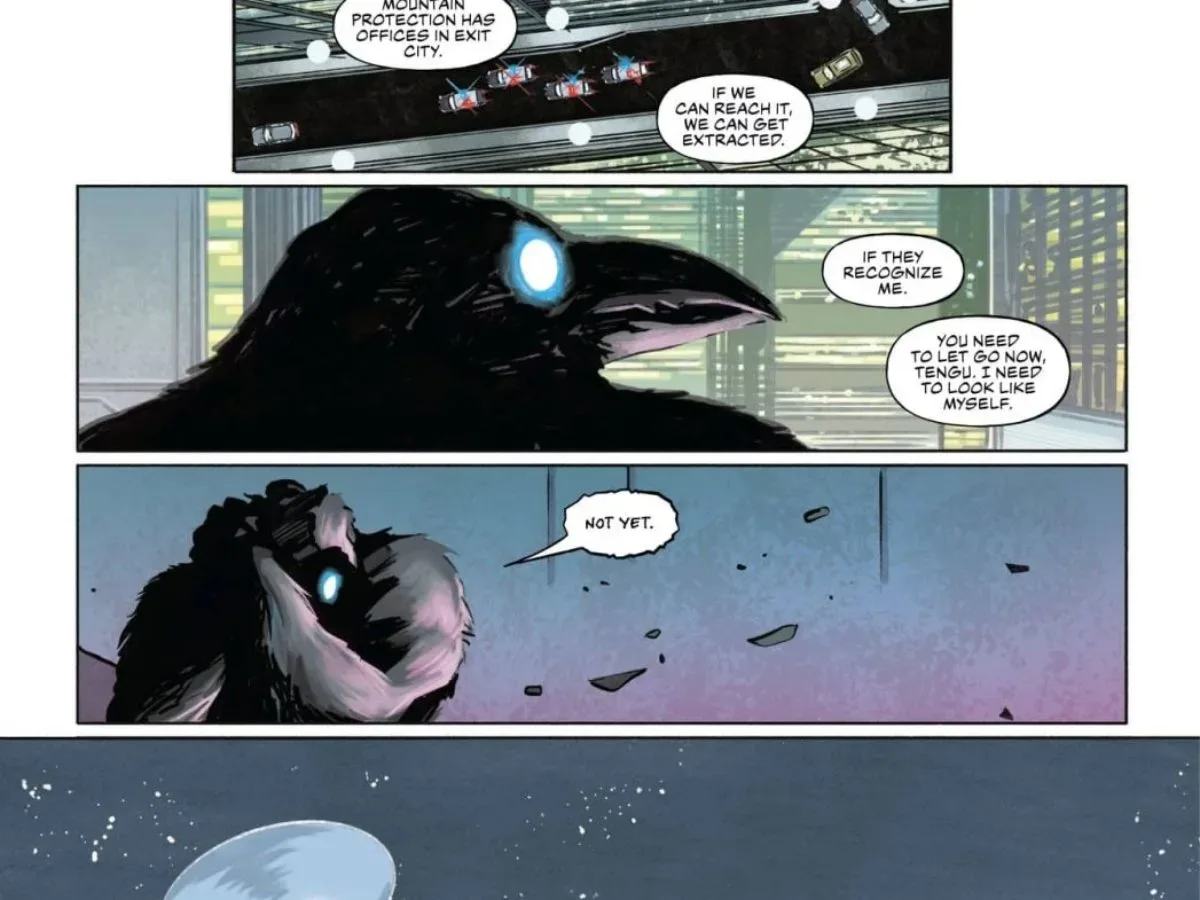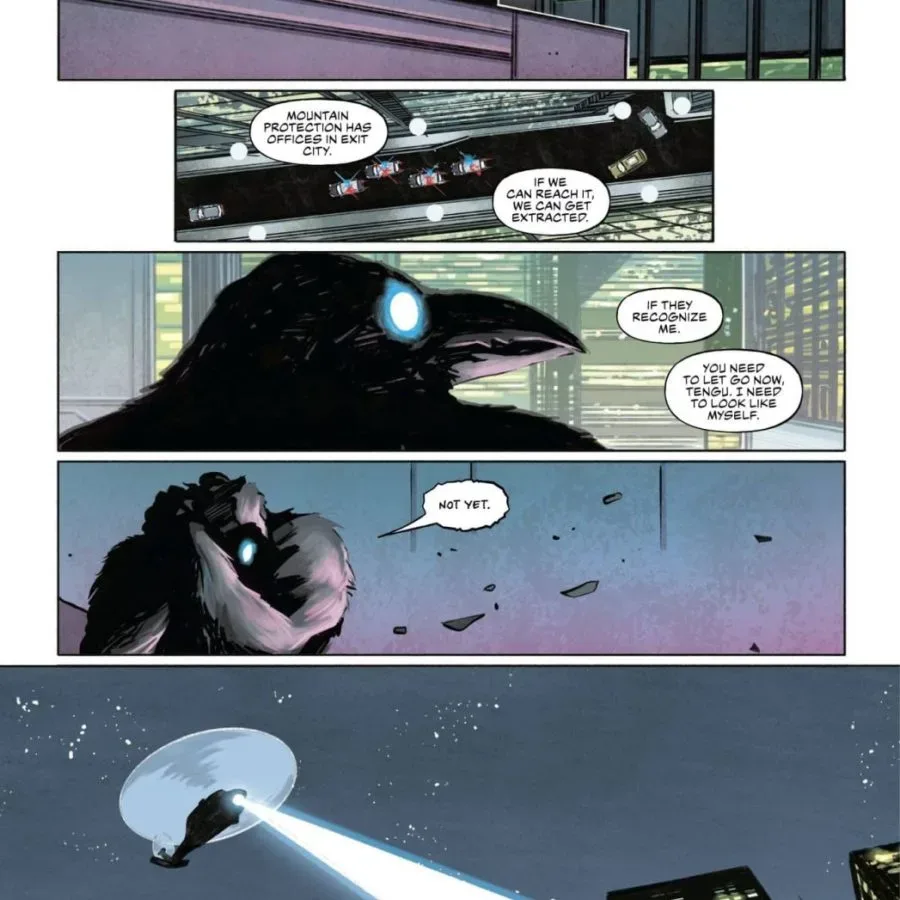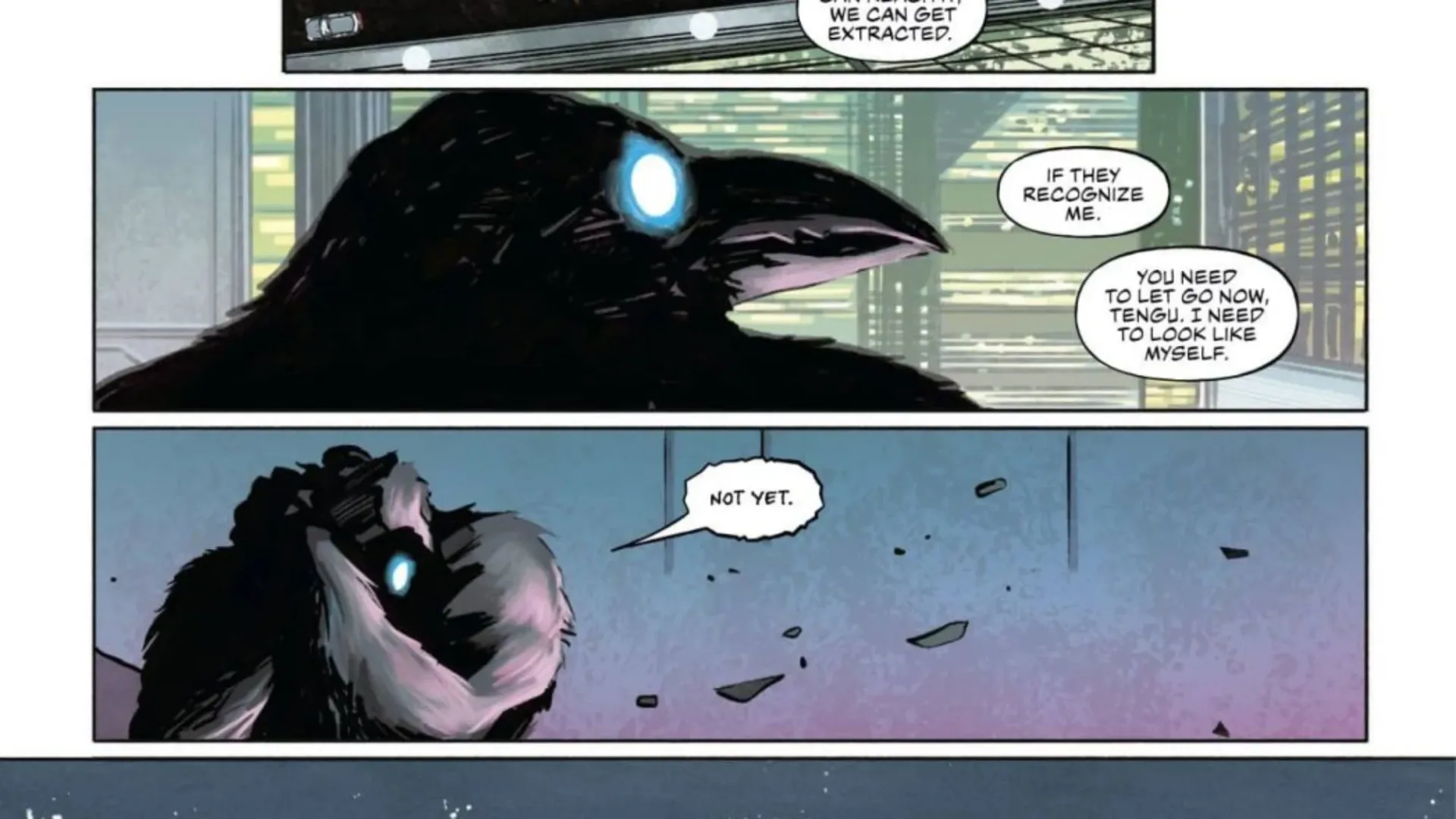
Honor and Curse: Eternal #7 is scheduled to arrive in comic shops on October 7, 2026, bringing Genshi to a particularly ugly kind of crossroads: he is trying to race through Exit City toward the safety of Mountain Protection while a monstrous Tengu continues to hold his soul in its grip. If that were not enough supernatural baggage for one sprint, the issue’s setup also promises bullets, alliances turning hostile, and a betrayal positioned to change the situation completely.
That is an efficiently nasty premise. Genshi is not merely fleeing a dangerous location or pursuing an objective; the stakes are internal as well as external. He needs to reach a place described as safe, but he is doing so while bound to a monstrous force that will not release him. The result sounds less like a straightforward dash to shelter and more like trying to speedrun an escape sequence while the game keeps adding cursed status effects.
What Honor and Curse: Eternal #7 has in store
The official description places the action in Exit City, with Mountain Protection serving as Genshi’s destination. Those two names create a clear contrast even before the issue reveals the specifics of either setting. Exit City suggests departure, flight and movement; Mountain Protection suggests refuge, defense and a destination that may be difficult to reach. Genshi is caught between them, and the Tengu’s grip on his soul ensures that getting to safety may not mean being free.
The central threat is described as a monstrous Tengu. In the immediate context of this issue, the important detail is not a broad definition or an assumed set of rules: it is the creature’s active connection to Genshi’s soul. That language makes the conflict feel deeper than a physical chase. A gunfight can be escaped. A treacherous ally can be confronted. A supernatural hold on someone’s soul is a much more intimate, potentially inescapable problem.
The solicitation also says that allies become enemies as bullets fly. That does not identify which characters will change sides, why they do so, or whether the shift is permanent. It does establish that trust is an active point of pressure in the issue, not just background drama. When a protagonist is already navigating a cursed connection to a monster, the support network around him matters enormously. Take that network away—or turn it against him—and every route through the city gets narrower.
Genshi races across Exit City to reach the safety of Mountain Protection, but the monstrous Tengu refuses to release its grip on his soul. Allies become enemies, bullets fly, and a shocking betrayal changes everything.
A chase where the destination may not solve the problem
“Reach safety” is one of fiction’s most direct objectives. It gives the protagonist a concrete direction and gives readers a practical question: can they get there? Here, though, the wording leaves room for a more complicated outcome. Mountain Protection may represent safety from the immediate violence in Exit City, but the description does not say it can sever the Tengu’s hold. Genshi could potentially arrive at his destination and still carry the story’s biggest danger with him.
That distinction gives the issue a useful layer of tension. External danger refers to threats in the environment: hostile people, bullets, a difficult route, and whatever conditions make Exit City perilous. Internal danger, as the phrase applies here, is the burden Genshi himself carries in the form of the Tengu’s grip on his soul. The former can block his movement. The latter can complicate every decision he makes, even if the path ahead opens.
The promised betrayal is also doing a lot of work. Preview copy frequently holds back the identity of a turn like this because the uncertainty is part of the appeal. Calling the betrayal “shocking” indicates a major reversal, but it does not confirm the betrayer, the target, or the consequences. Readers should be wary of assuming that the obvious suspect is guilty—or that the apparent victim is entirely blameless. In a story where allies become enemies, loyalties are clearly meant to be read as unstable.
There is a practical pacing implication, too. A race across a city naturally creates momentum. Adding gunfire creates immediate danger, while a betrayal can interrupt the route with a new emotional and strategic problem. The Tengu’s grip provides the issue’s persistent supernatural pressure. Those pieces point to an installment structured around escalation: Genshi is moving, but the threats around and within him are likely to keep making that movement more costly.
The creative team and cover information
Mark London is credited as writer and Jaime Infante as artist for Honor and Curse: Eternal #7. Nick Marinkovich is credited for the cover. A Jason Masters cover is also listed for the issue.
For readers tracking single-issue credits, it is worth separating those roles. The writer credit identifies the creator responsible for the script; the artist credit identifies the creator responsible for the interior visual storytelling; and the cover credit refers to the art used on a particular edition’s front cover. Variant or alternate covers can offer a different exterior presentation while the listed issue’s core story remains the same. The available listing identifies both the standard item number and a separate item number for the Jason Masters cover.
That matters for shoppers who are particular about which physical copy goes into the long box. The issue is listed at a suggested retail price of $4.99. The main listing is identified as 0826MA0999, while the Jason Masters cover is identified as 0826MA1000. Those codes can be useful reference points when speaking with a comic shop, especially when multiple covers are in circulation for the same numbered issue.
- Title: Honor and Curse: Eternal #7
- Publisher: Mad Cave Studios
- Writer: Mark London
- Artist: Jaime Infante
- Cover artist: Nick Marinkovich
- Additional listed cover: Jason Masters
- On-sale date: October 7, 2026
- Suggested retail price: $4.99
Why the issue’s language signals a major turning point
The phrase “changes everything” is intentionally broad, but it is significant in combination with the other details. Genshi is already racing toward protection, the Tengu is refusing to relinquish its supernatural claim, and alliances are already breaking. A betrayal introduced into that combination has the potential to alter the meaning of the entire escape. It could change who Genshi can trust, whether Mountain Protection remains viable, or what the Tengu’s hold actually means. None of those outcomes is confirmed, but the issue’s setup makes each a reasonable question to carry into it.
What is confirmed is that the book is not presenting danger as a single opponent waiting at the end of the road. The danger is layered. There is physical conflict, indicated by bullets. There is social conflict, indicated by allies turning into enemies. And there is supernatural conflict, indicated by the Tengu’s hold on Genshi’s soul. A story with three pressures operating at once can make even a simple destination feel uncertain, because overcoming one obstacle does not automatically resolve the others.
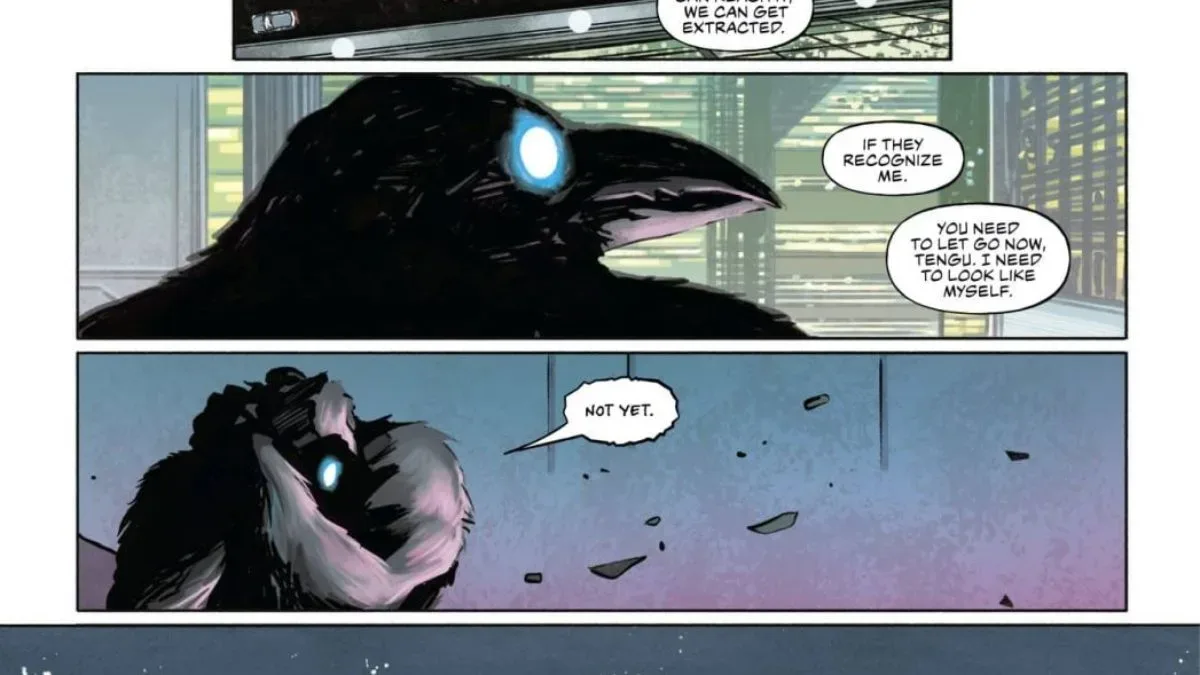
The cover-side imagery described in the available material includes an enormous raven with a glowing eye. Readers should not mistake an evocative visual for a complete explanation of plot mechanics, but it aligns closely with the issue’s ominous supernatural framing. The key narrative promise remains Genshi’s predicament: he is moving toward refuge while something monstrous refuses to let go.
For comic readers who like to compare dark fantasy setups across new releases, Joking Joystick has also covered another story built around a dark Wonderland conflict. The connection is thematic rather than narrative; Honor and Curse: Eternal #7 stands on its own with Exit City, Mountain Protection and Genshi’s supernatural pursuit at the center.
What readers can reasonably expect on October 7
Readers heading into issue #7 can expect a high-pressure chapter centered on pursuit and fractured trust. Genshi has a stated destination, but his crisis is bigger than geography. The Tengu’s continued grip on his soul makes the threat personal, while the promised enemy shift and betrayal suggest that reaching Mountain Protection will demand more than simply outrunning danger.
As always with a short preview description, the unanswered questions are the hook rather than a gap to fill with certainty. Who betrays whom? What drives the allies into conflict? Can Mountain Protection offer more than temporary shelter? And, perhaps most importantly, what does freedom look like for Genshi if the Tengu is still attached to his soul? Honor and Curse: Eternal #7 is positioned to push those questions forward when it reaches shops on October 7.