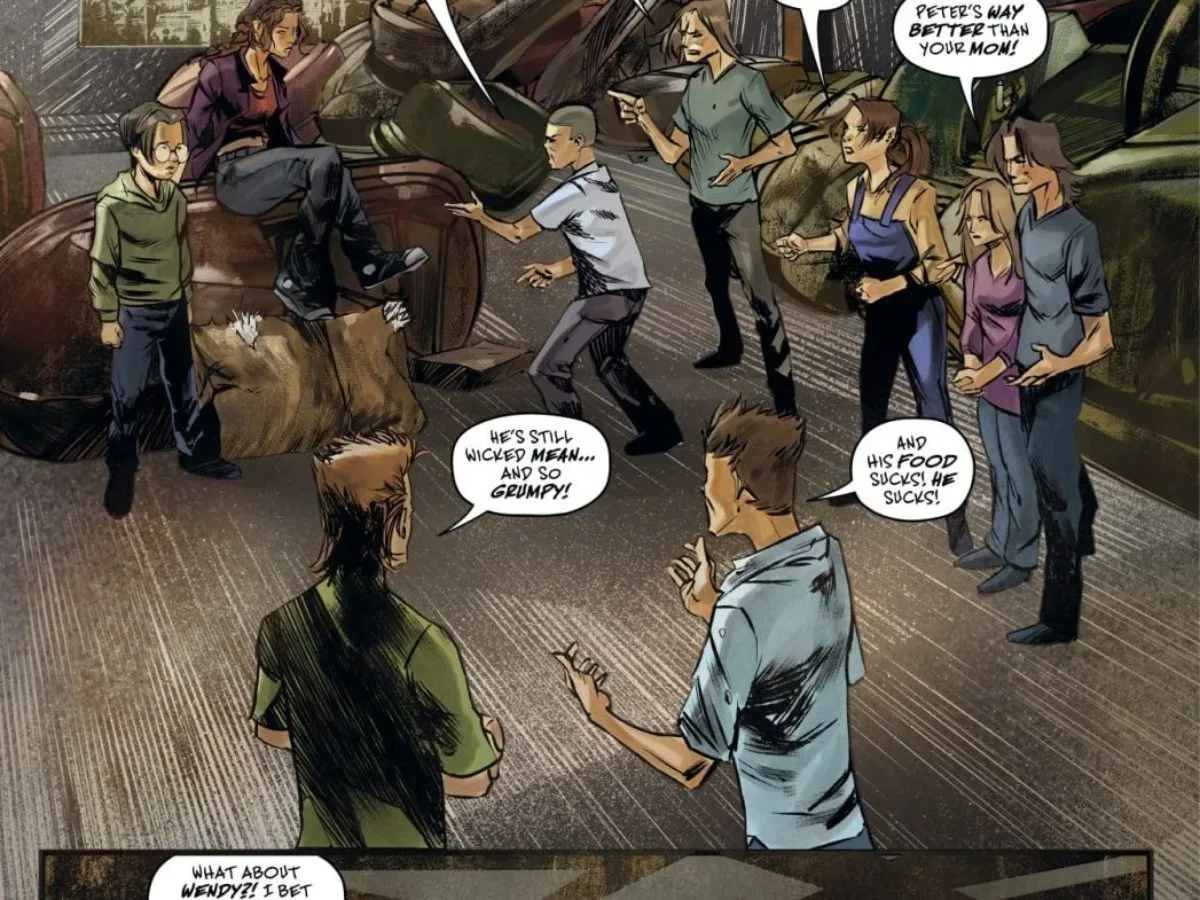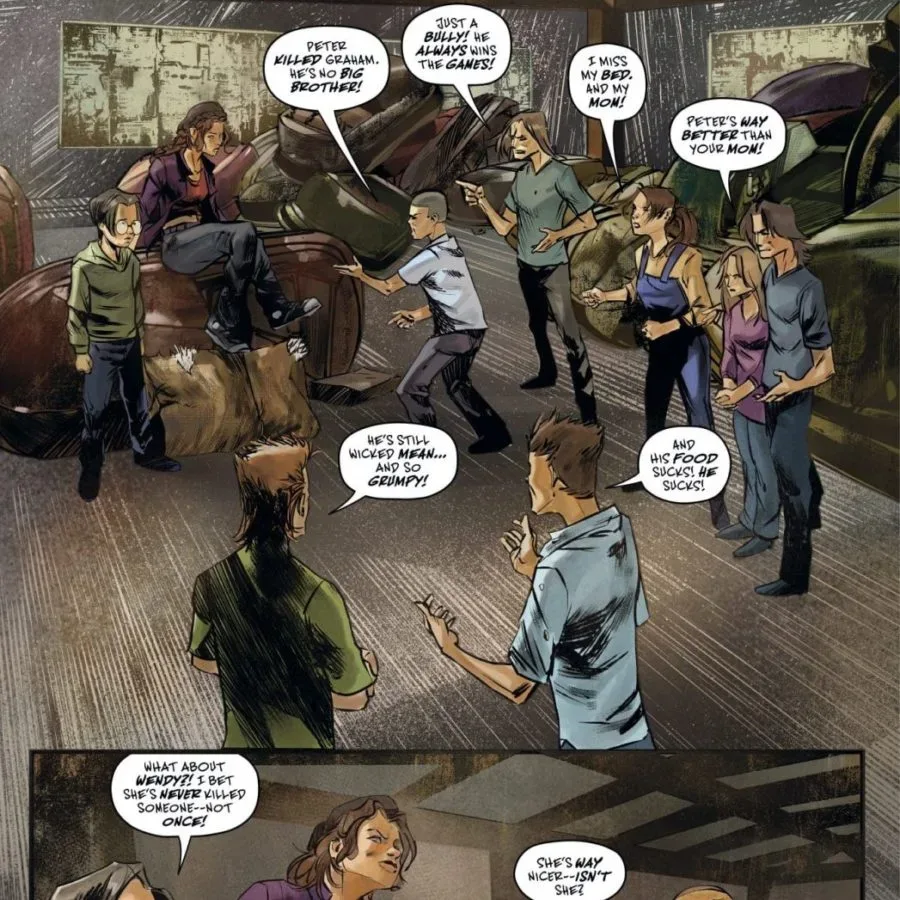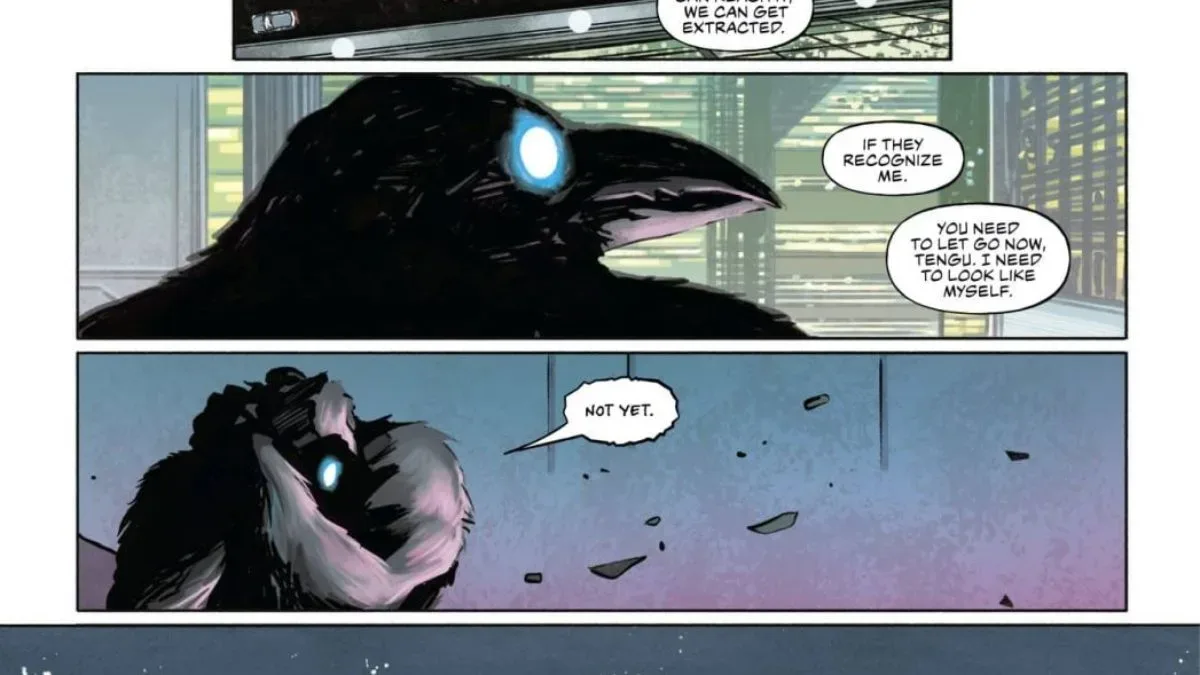
Land of Never #4 is set to bring its two-part rescue story into sharper focus on October 7, 2026. The Mad Cave Studios issue follows Jim Hoke and Casey Smith as they move closer to their missing children, Wendy Hoke and Rufus Smith, while the children themselves attempt something far more dangerous: turning rebellion into a weapon inside the Floating Man’s wonderland.
Steve Orlando writes the issue, with Miguel Mora handling both art and cover duties. The listed cover price is $4.99.
A rescue mission with two fronts
The premise splits the cast across connected but very different conflicts. Jim and Casey are pursuing answers on the adult side of the story, confronting Doctor Lily Williams, the headmaster of Lighthouse Orphanage. Wendy and Rufus are living the immediate danger of the other side: survival within a fantastical realm controlled by the Floating Man.
That division gives the issue a potentially tense structure. The fathers’ search is driven by investigation, confrontation, and the need to uncover what happened to their children. Wendy and Rufus, meanwhile, are not simply waiting to be found. The solicitation frames them as active participants who are spreading the idea of rebellion through the Floating Man’s domain.
“Wonderland” is an important word in the setup. In ordinary use, it suggests marvel, play, and discovery. Here, it is attached to a figure whose origins are explicitly described as nightmarish. That contrast positions the setting as a corrupted version of childhood fantasy: outwardly imaginative, but structured around control and fear.
Doctor Lily Williams stands at the crossroads
Doctor Lily Williams appears to be the issue’s key point of contact between the two story threads. As Lighthouse Orphanage’s headmaster, she has a clear institutional connection to the missing children. More significantly, she previously spoke out against the Floating Man’s creation and suffered consequences for it.
The material does not specify what that price was, how the Floating Man came to exist, or exactly what Williams knows. Those omissions matter. They make the confrontation less like a routine stop on a search and more like an encounter with someone who has firsthand knowledge, a longstanding grievance, and an apparent opportunity to seek justice.
For Jim and Casey, Williams could represent a source of vital information, an uneasy ally, or both. The setup identifies the fathers as “unstoppable,” but determination does not necessarily mean they understand the forces they are up against. If the issue begins opening up the Floating Man’s origins, persistence may need to give way to painful context: how a nightmare was made, who objected, and why those objections failed to stop it.
Why rebellion is the issue’s central idea
The solicitation calls rebellion one of childhood’s most powerful ideas. It is a revealing choice of language because it treats rebellion as more than simple defiance. In a world where children are trapped in a ruler’s wonderland, resistance can mean refusing to accept the logic of that world.
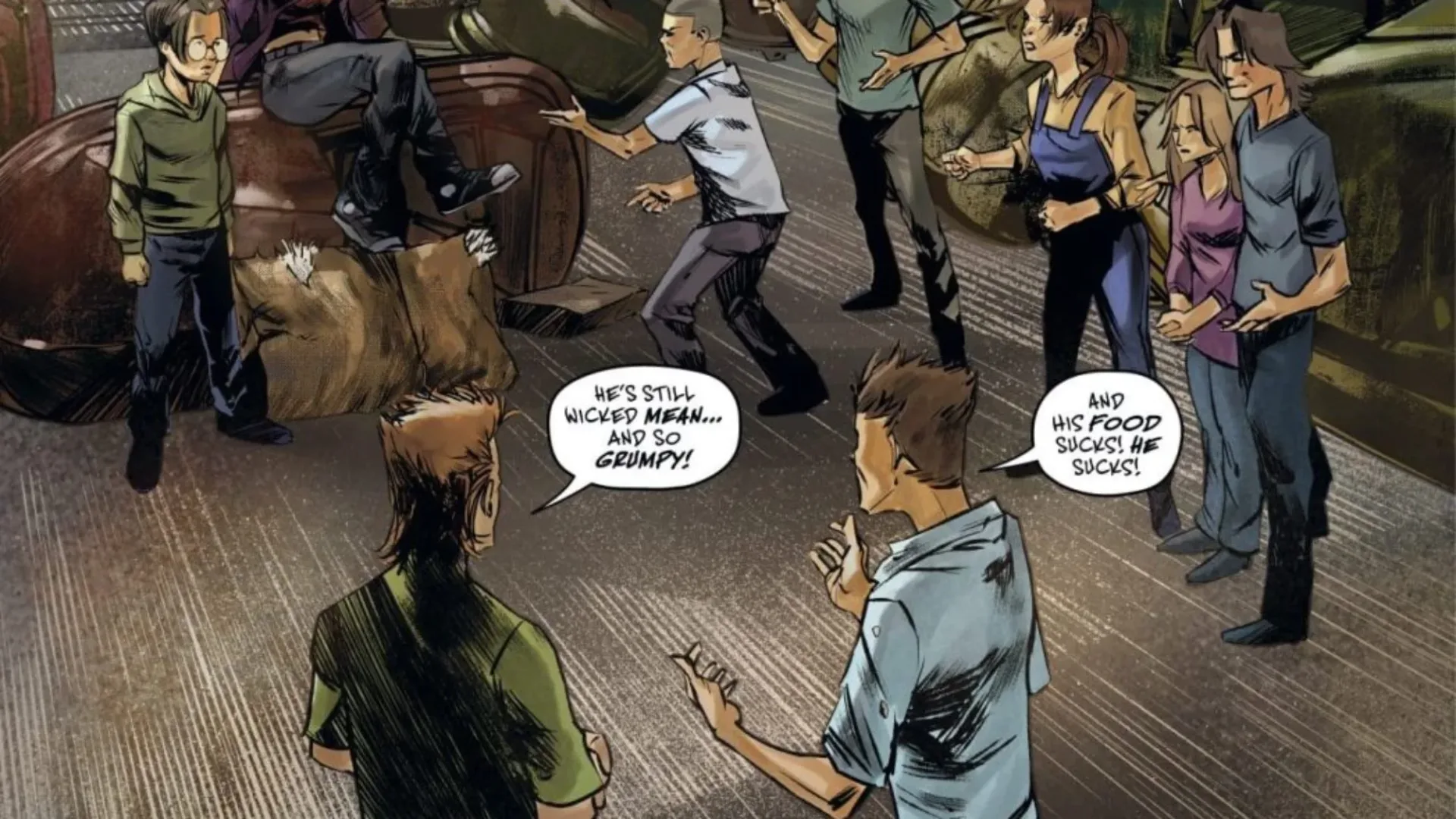
Wendy and Rufus are described as seeding rebellion, suggesting an approach that spreads rather than a single direct attack. The word evokes something small taking root in hostile ground. Their efforts may be covert, incremental, and collective—a counterweight to the apparent power of the Floating Man.
That makes the children’s storyline distinct from the fathers’ mission. Jim and Casey are trying to recover what was taken from them. Wendy and Rufus appear to be working to change the conditions that made their captivity possible. Both aims are necessary, but they are not interchangeable. A rescue can remove someone from danger; an uprising can challenge the system creating that danger.
It also raises a natural point of uncertainty going into the issue: will the adults and children be able to coordinate their goals, or will each group be forced to act with only partial knowledge of the other’s plans? The premise supports the possibility of convergence, but it does not promise one.
What “nightmarish origins” can signal
The phrase “nightmarish origins” does not confirm a complete origin reveal in this installment. It does, however, indicate that the comic is moving beyond the Floating Man as a distant menace and toward the history behind him. In comics storytelling, an origin is the chain of events that explains how a person, creature, or threat came to be. It can provide motivation and rules, but it can also complicate the moral picture.
Here, the known details keep the mystery intact. Williams opposed the Floating Man’s creation. Something about that creation caused her harm. Hoke and Smith are uncovering its horror. Those points establish that the Floating Man is not merely an unexplained fantasy-world ruler; his existence is tied to a past event that people attempted to resist.
Readers should not take that as evidence that the issue will excuse the character or deliver every answer at once. What it does suggest is a story increasingly interested in cause and consequence. The Floating Man’s present-day threat, Williams’s desire for justice, and the children’s resistance all appear to grow from the same buried history.
The appeal of parallel family stakes
The immediate emotional engine of Land of Never #4 is family separation. Jim Hoke and Casey Smith are searching for Wendy and Rufus, respectively, but the solicitation avoids making the children passive objectives. The adults’ urgency and the children’s agency run in parallel.
That approach offers room for the issue to treat the rescue as a shared struggle rather than an adult-only solution. The fathers’ determination has weight because their children are in danger. Wendy and Rufus’s rebellion has weight because it gives them purpose and influence even under extreme circumstances.
There is a broader horror-fantasy tension at work in that setup. Childhood stories often use strange worlds to test independence, courage, and imagination. Land of Never appears to push those ideas through a darker lens, where imagination has been claimed by an oppressive force and must be reclaimed by the children inside it. Readers interested in stories where family bonds and horror intersect may also find thematic overlap in this look at a new interpretation of Carrie and its family relationship.
Release details
- Title: Land of Never #4
- Publisher: Mad Cave Studios
- Writer: Steve Orlando
- Artist and cover artist: Miguel Mora
- On sale: October 7, 2026
- Cover price: $4.99
- Item code: 0826MA1005
Issue #4 is positioned as an escalation point rather than a quiet detour. The fathers are finally confronting a figure tied to the Floating Man’s creation, while Wendy and Rufus are attempting to make resistance contagious in the place that holds them. Whether those efforts produce a breakthrough—or make the situation still more dangerous—is the unresolved question carrying the series into its next chapter.