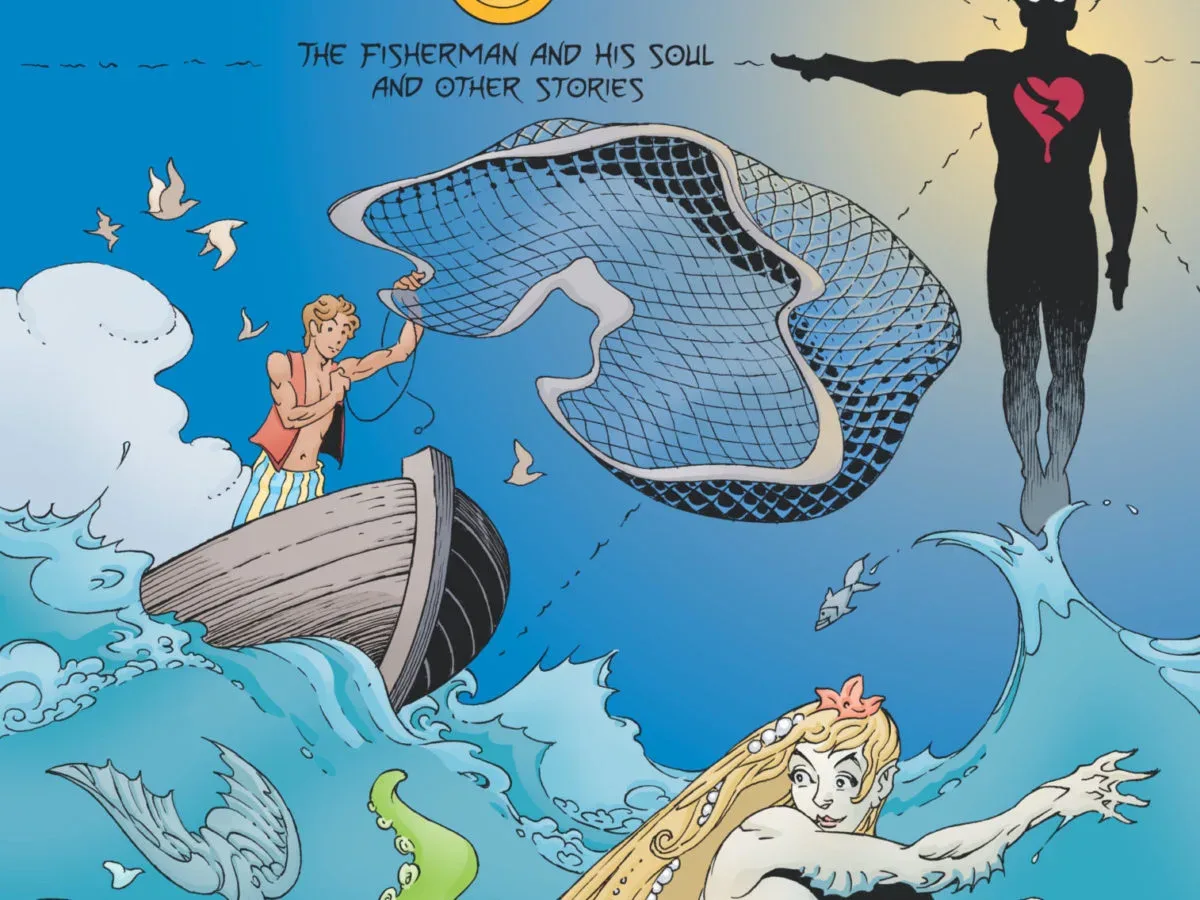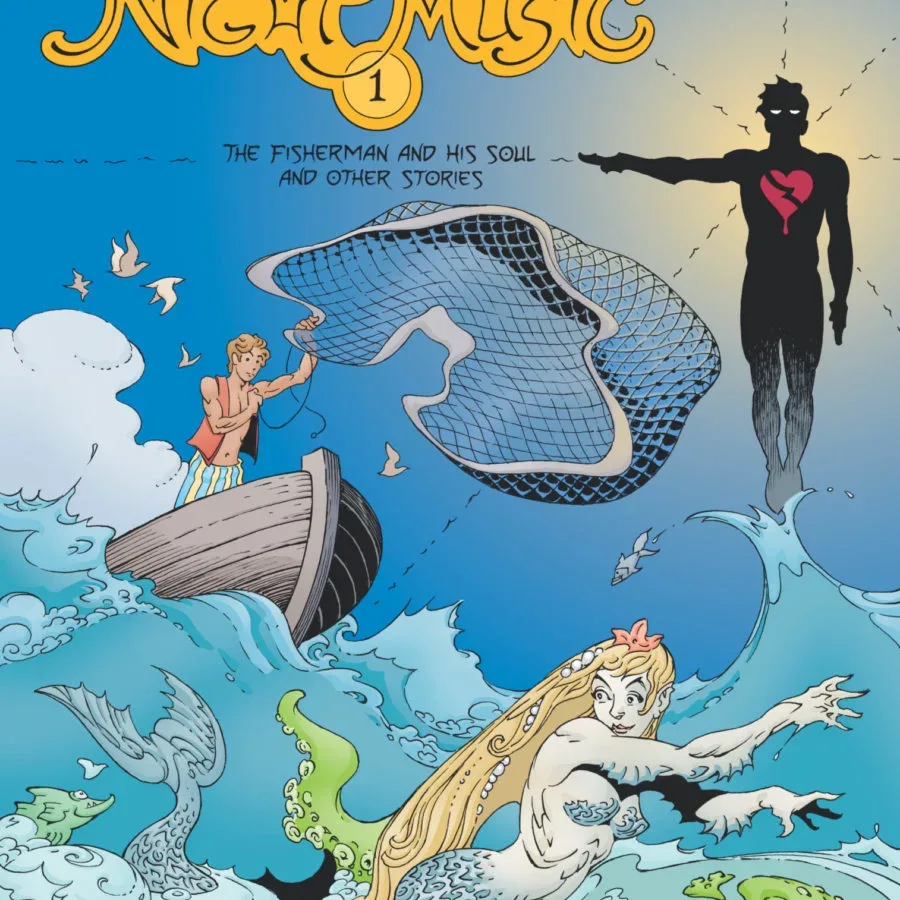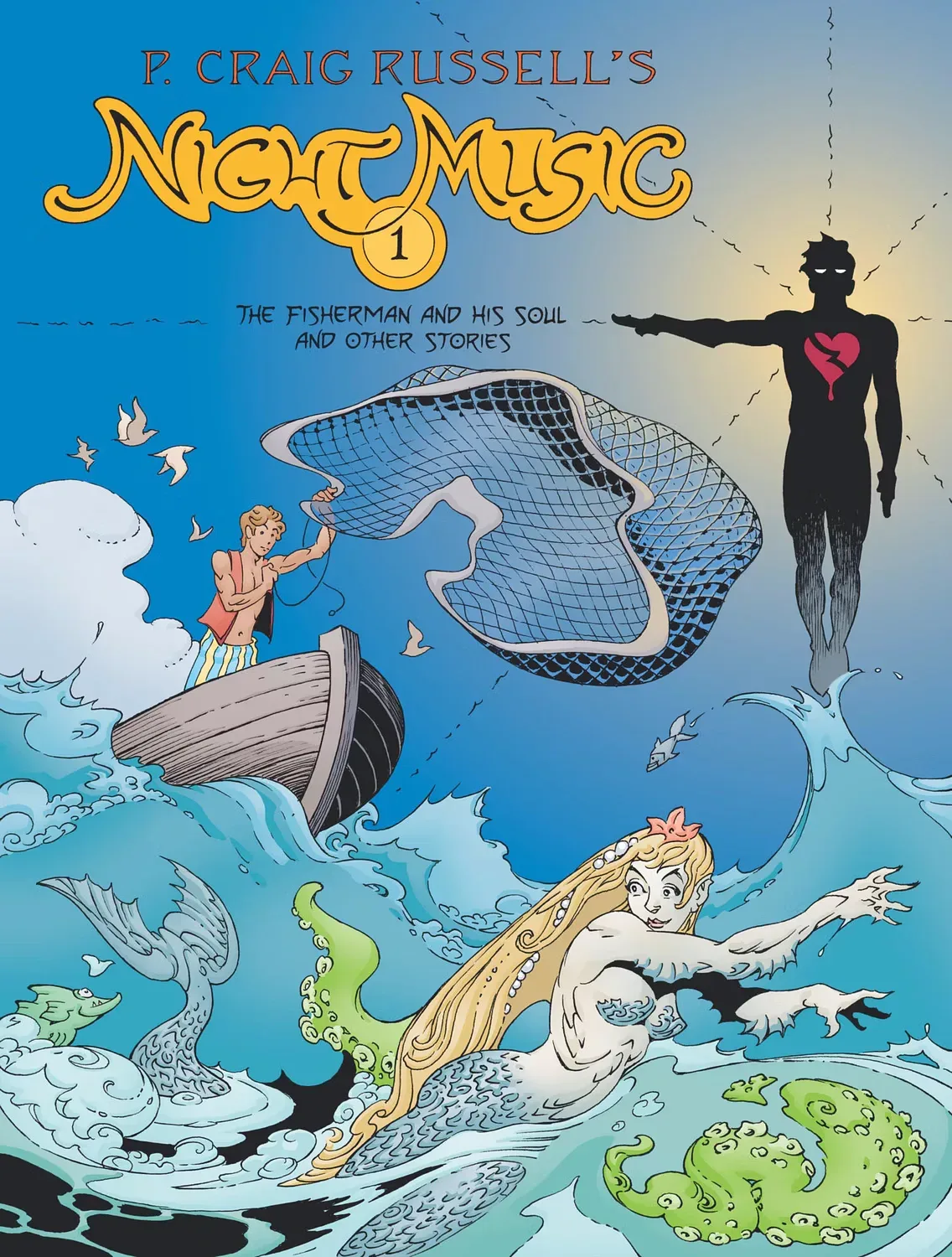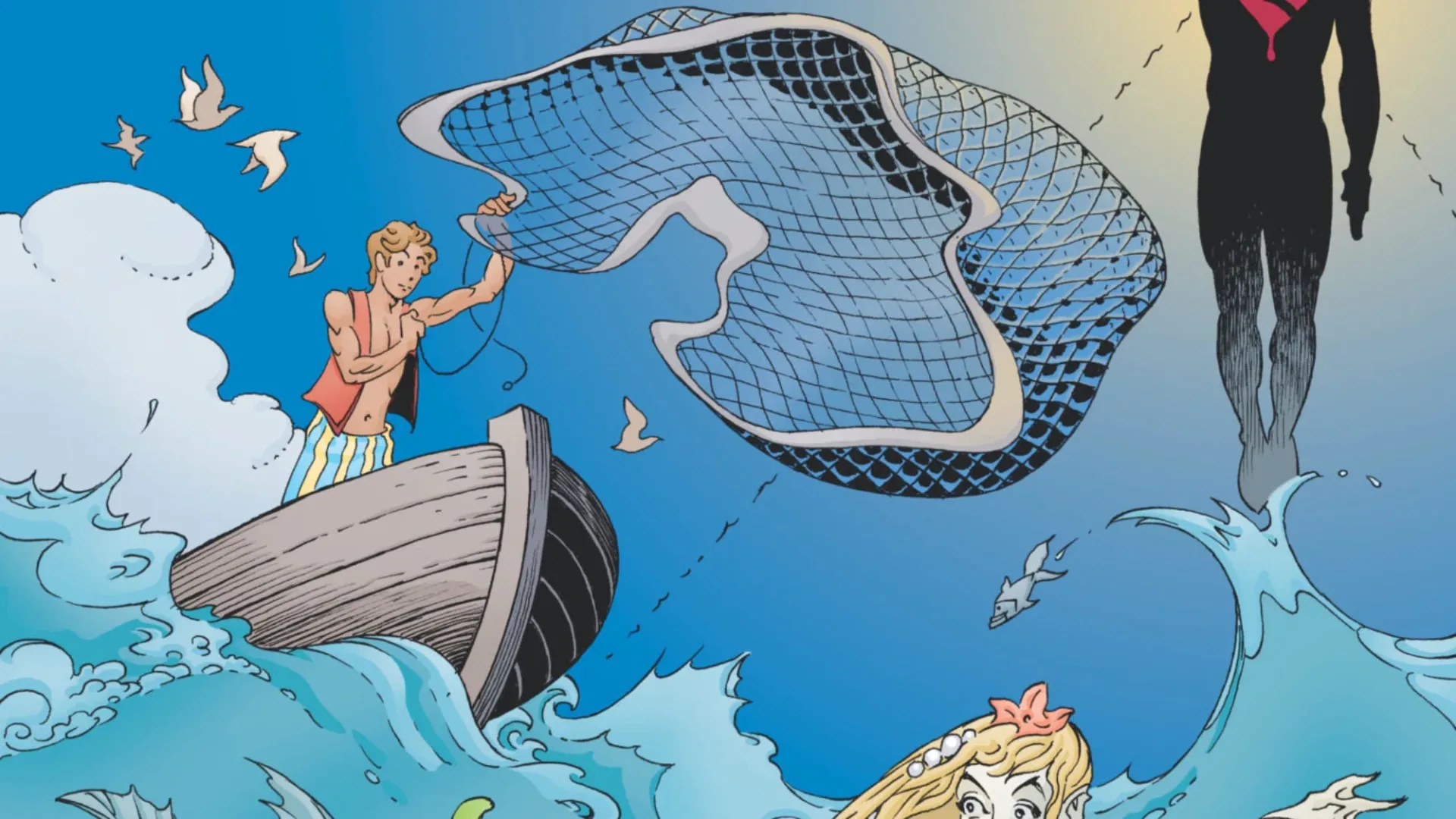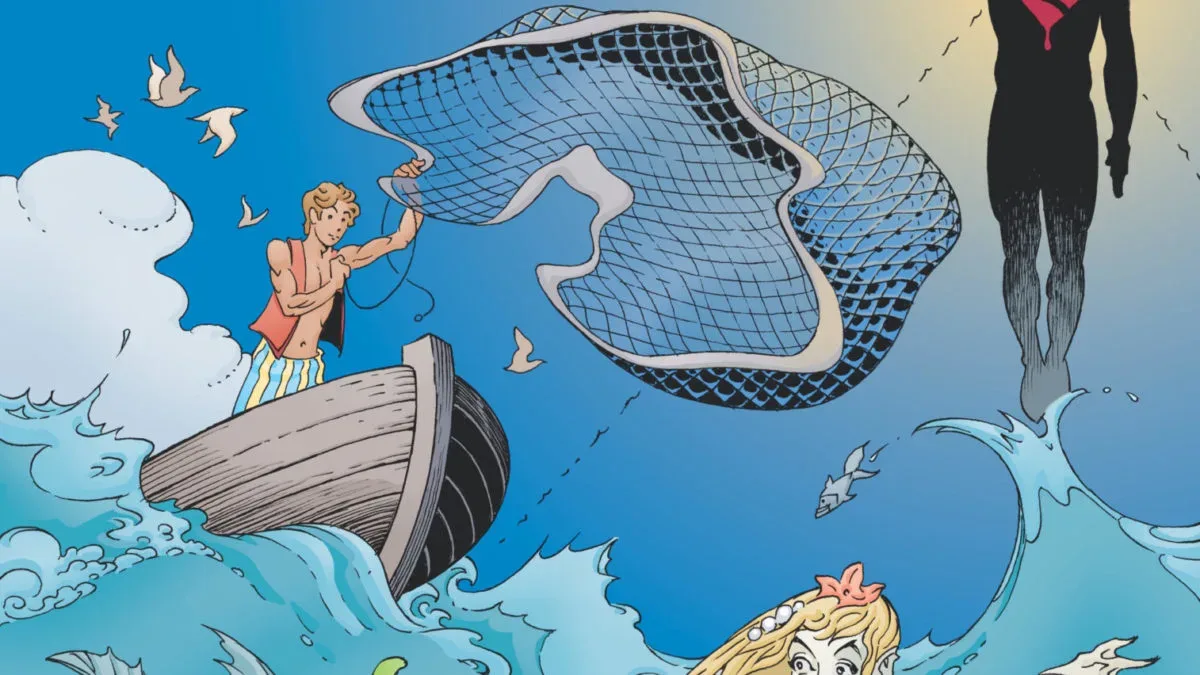
P. Craig Russell is returning to Night Music, the creator-led graphic-album series he launched in 1979. The revived line begins with a hardcover whose central feature is a 44-page adaptation of Oscar Wilde’s The Fisherman and His Soul. The book is planned for Kickstarter through Russell’s original-art agent and publishing partner, Wayne Alan Harold.
For readers who know Russell primarily through his work on Sandman, Elric, or Marvel’s Killraven, the news points back to a more personal strand of his bibliography. The original Night Music ran for 11 volumes, ending in 1990, and gave Russell room to pursue projects outside the constraints of a conventional shared-universe comic. Its subjects included The Magic Flute, Salome, The Jungle Book, science fiction, fantasy, and other material that caught the artist’s interest.
A return to a creator-driven format
The original run arrived through Eclipse Comics, where stronger printing and creator ownership enabled Russell to make more experimental work. Creator ownership, in this context, means the artist retains control of the underlying work rather than producing a character or property owned by a publisher. That distinction matters especially for a project such as Night Music, which was designed around a maker’s changing interests instead of a fixed cast, continuity, or monthly serial formula.
Eclipse later went bankrupt, while Russell’s subsequent work made him familiar to many readers through Sandman comics and his work on Neil Gaiman’s The Dream Hunters. Yet Night Music remained meaningful enough to lend its name to the 2008 documentary Night Music: The Art of P. Craig Russell, which examined his career and technique.
The new version is not being positioned as a reprint program. Russell describes it as a continuing series of hardcover graphic albums containing new stories. That makes the first book a fresh project with a historic title attached, rather than simply a repackaging of the 1979–1990 material. It also leaves the scope of future albums open: the announced volume establishes the format, but no further individual adaptations or stories have been specified.
Why Wilde’s final fairy tale is the centerpiece
The Fisherman and His Soul is the final and longest story in Wilde’s fairy-tale cycle that Russell began adapting in 1992. Russell’s 44-page version is set to be the centerpiece of a 72-page anthology. That arithmetic leaves room for several shorter, all-new works and a gallery of commissioned illustrations that have not previously been printed.
The distinction between an adaptation and an original comic is useful here. An adaptation takes an existing literary work and translates it into the visual language of comics: page composition, panel progression, lettering, color, pacing, and the relationship between image and text. The source story provides the foundation, but the comic’s storytelling decisions still determine how a reader encounters it. With Russell both writing and drawing the material, the project continues the approach that made the earlier Night Music books a place for literary, musical, and fantastical subjects.
The announced balance also gives the hardcover a broader purpose than a single-story edition. The Wilde adaptation supplies a substantial main feature, while the new shorts make the book a contemporary anthology. The illustration gallery adds another view of Russell’s work: commissioned art is typically created for a specific assignment rather than as pages in a narrative comic, and placing it in the album means it can be considered alongside his sequential storytelling for the first time in print.
“After nearly half a century, I’m rounding out my career in ‘bucket list’ mode. I’m returning to Night Music and tackling projects that I’ve been waiting years to do.”
Russell has said the completed material will be previewed in excerpts over the coming weeks. The key limitation for now is that the full contents of the shorter pieces have not been identified. Readers interested specifically in the Wilde material should therefore view the 44-page count as the confirmed figure, while treating the rest of the announced 72-page book as a mix of new stories and art rather than a fully detailed table of contents.
Color and lettering are part of the project’s identity
Lovern Kindzierski, Russell’s longtime colorist, is coloring all 44 interior pages of The Fisherman and His Soul. Galen Showman is hand-lettering directly on the original art boards. Both credits are notable because they identify distinct craft stages that can be obscured when a comic is discussed only as an illustrated story.
Coloring does more than fill shapes. It establishes atmosphere, separates forms, controls emphasis, and influences a page’s rhythm from panel to panel. In an adaptation of a fairy tale, color can be especially consequential because it helps establish shifts in mood and distinguish the story’s fantastical elements without the need for additional explanation in dialogue or captions. The available details do not describe the specific palette or visual treatment, so it would be premature to predict how Kindzierski will approach the finished pages. What is confirmed is that he is handling the entire interior adaptation rather than contributing to only selected pages.
Hand-lettering on original art boards is equally specific. Lettering is the design and placement of dialogue, captions, sound effects, and other readable text within comic art. When it is placed by hand onto the boards, the words and balloons are physically integrated into the page’s original artwork. That is different from lettering added digitally after the art has been scanned. Neither method alone defines quality, but the traditional approach underlines the book’s connection to physical drawing and original comic pages.
For collectors and art-minded readers, this production detail may be as interesting as the literary selection. It signals that the new Night Music is being made with attention to the original boards as objects, while the hardcover is the form through which most readers will experience the finished sequence. It also fits the involvement of Wayne Alan Harold, identified as Russell’s original-art agent as well as the publishing partner behind the Kickstarter effort.
What the revival means—and what remains unknown
The strongest takeaway is simple: Russell is resuming a title associated with artistic freedom and using it for a substantial Wilde adaptation he has been building toward since 1992. At 75, he has characterized the work as part of a “bucket list” phase, centered on projects he has long wanted to make. That framing makes Night Music less like a nostalgia exercise and more like an avenue for unfinished ambitions and newly chosen subjects.
It is also a reminder that a series title can function as a creative container rather than a continuing narrative. Unlike a superhero book, where a return might suggest the reappearance of familiar characters or plot threads, Night Music is defined by Russell’s authorship and by a willingness to move across genres and source material. The headline project is Wilde, but the presence of all-new short works and unpublished illustration suggests a deliberately varied first album.
Practical details remain limited. No campaign date, funding target, reward structure, retail plan, or release date has been specified in the available information. There is likewise no announced list of the shorter stories, no preview art described in detail, and no stated plan for how frequently later hardcover albums might arrive. Those omissions are important for readers deciding whether to wait for fuller campaign information rather than assume a broader release path.
Still, the confirmed ingredients are unusually coherent: a revived creator-owned banner, a 44-page literary adaptation, a 72-page hardcover format, new accompanying material, unpublished commissioned images, colors by Kindzierski, and Showman’s hand-lettering on the original boards. In a comics landscape that often treats archival and new material as separate propositions, this first new Night Music book is intended to be both: a return to Russell’s long-running personal platform and a newly made anthology led by a story he has pursued for decades.
Readers following comics with strong visual authorship can also find broader discussion of current superhero-comics attention in this look at Venom variants and Spider-Man #1000. Russell’s project occupies a very different corner of the medium, but its return reinforces the range that still exists between franchise-driven comic conversation and a single artist’s personally selected adaptations.