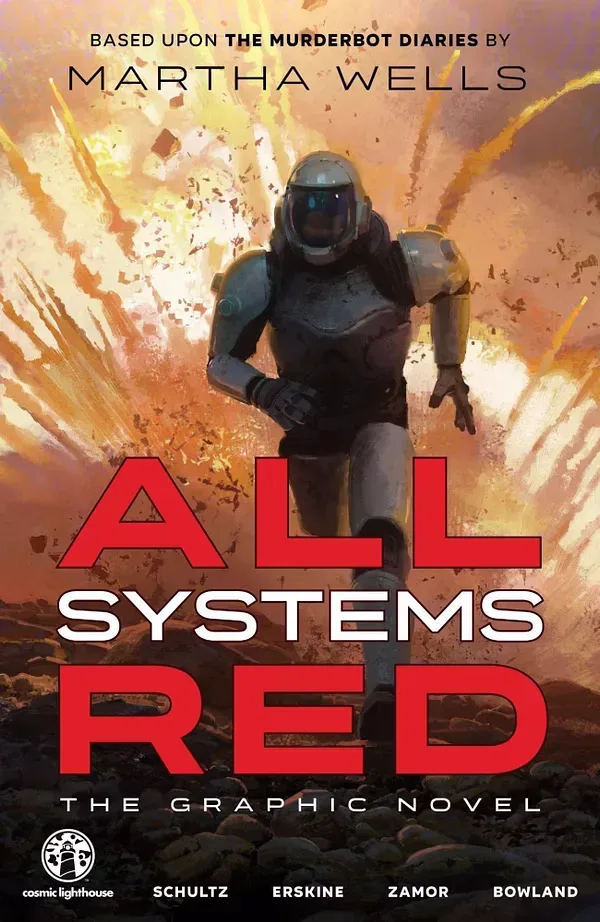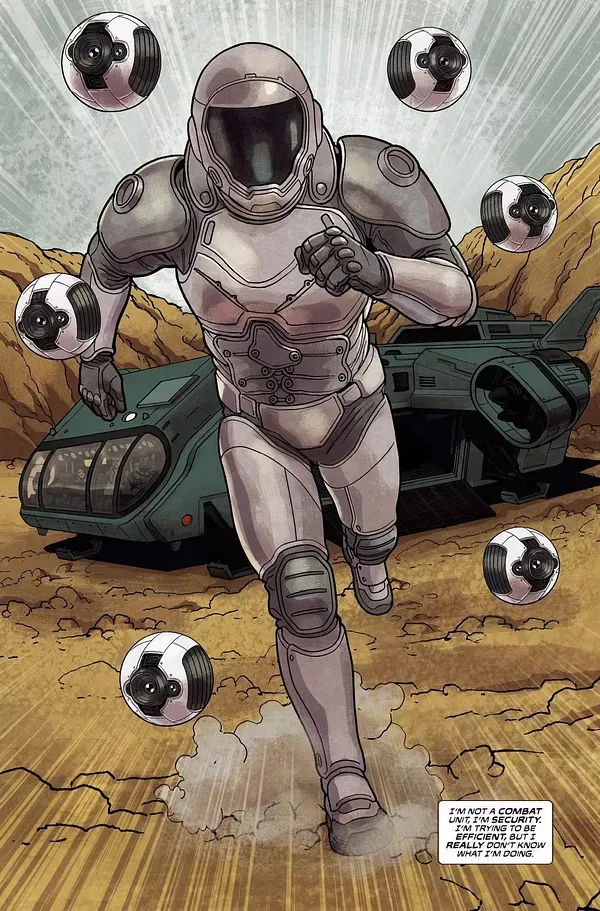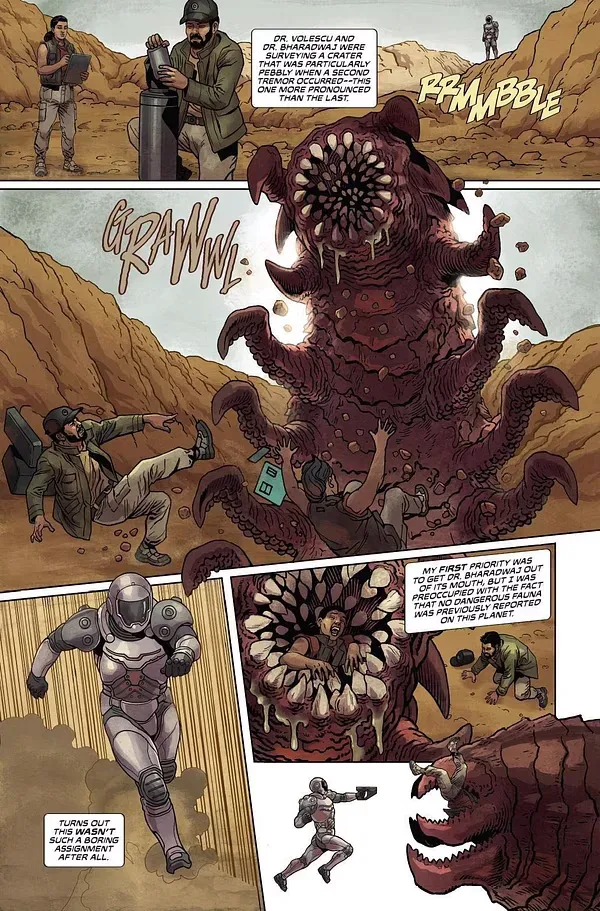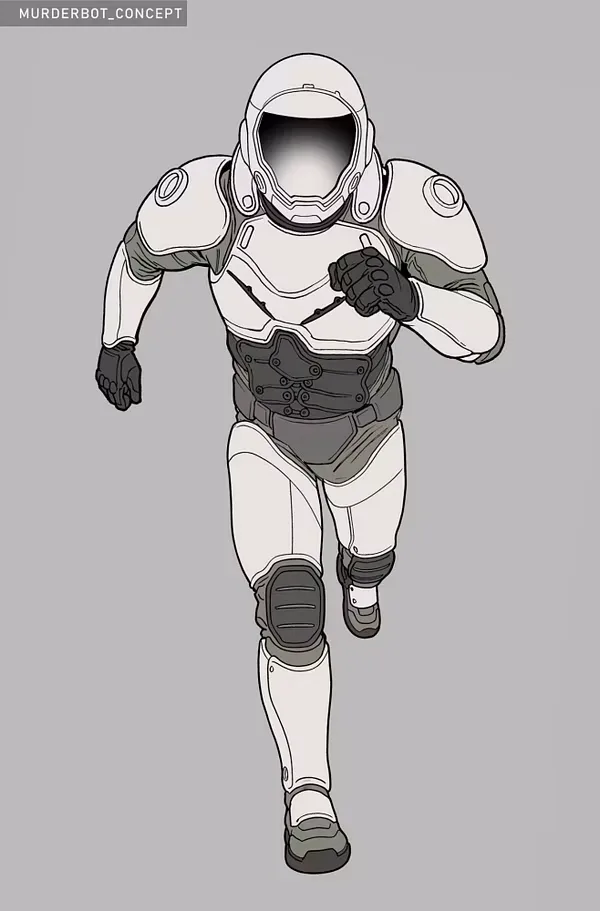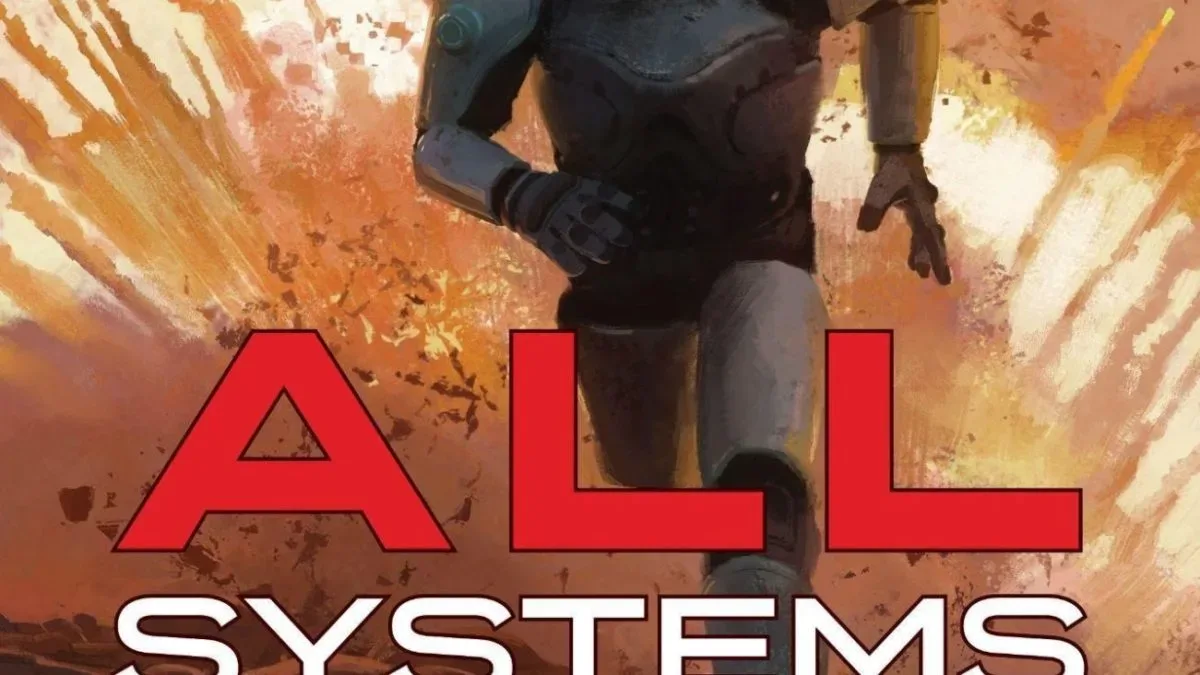
The Murderbot Diaries is headed to comics. Cosmic Lighthouse is preparing All Systems Red: The Graphic Novel, an official adaptation of Martha Wells’ opening Murderbot novella. Erica Schultz is adapting the book, with Gary Erskine providing the art. The release will also include a new Murderbot short story by Wells that is exclusive to the graphic novel.
That combination makes the project more than a straightforward change of format. All Systems Red will remain the foundation for the comic, while the exclusive prose contribution gives established readers material not included in the existing books. Wells is involved as script consultant, providing another direct connection between the adaptation and the author of the original series.
Kickstarter arrives first; retail follows later
All Systems Red: The Graphic Novel is scheduled to launch as a Kickstarter exclusive on October 15. The campaign will offer limited collectible editions, and supporters may have an opportunity to be drawn into the comic. Preregistration is already open, with special items and discounts promised for people who sign up before the campaign begins.
Retail editions are planned for early 2028. That creates a clear split between the crowdfunding campaign and the eventual bookstore or comic-shop version: the former is the first route to the project and is tied to limited editions and campaign-specific incentives, while the latter is the wider retail release. Specific prices, edition quantities, and the precise nature of the special items have not been detailed here.
For readers who want the new Wells story, the stated point to watch is its exclusivity to the graphic novel. For collectors, the important practical distinction is that “limited” does not by itself reveal a print run, scarcity level, or future market value. Prospective backers will need the campaign’s final reward descriptions to determine which editions, if any, are of interest beyond the standard reading copy.
The creative team behind the adaptation
Schultz brings experience from comics including Daredevil, Spawn, and X-Men. Erskine’s credits include Dan Dare, Hellblazer, Punisher, and Wolverine. Their roles matter because an adaptation is not simply an illustrated transcript: the writer must decide how narration, pacing, interiority, action, and dialogue will work on a comics page, while the artist gives places, people, machines, and movement a consistent visual language.
Yel Zamor is colouring the book, Simon Bowland is lettering it, and Paul Cornell is editing. Each discipline serves a different function. Colour can establish mood, distinguish environments, and help direct a reader’s eye through a page. Lettering encompasses dialogue balloons, captions, sound effects, and their placement; on a story involving a security android with a distinct point of view, legible control of those elements is especially central to how information reaches the reader. Editing helps coordinate the adaptation’s storytelling and production choices.
Wells’ consulting role does not establish that she wrote the comic script; Schultz is identified as the adaptor. It does mean the creator is participating in the process while the original novella is translated into a visual medium. The accompanying short story is the separate new work credited directly to Wells.
A familiar visual history, plus several cover options
Jaime Jones, whose art has appeared on the original Murderbot novels and novellas, has created the main-edition cover. That choice gives the graphic novel a visible link to the books’ established presentation, even as the interiors become a new interpretation by Erskine and the wider comics team.
Variant covers are planned from Tommy Arnold, John Picacio, and Francesca Myman. Arnold also worked on design for the television adaptation of Murderbot, adding another connection across the property’s different forms. David Dastmalchian, who plays Gurathin in the Apple TV adaptation, is contributing an introduction.
Covers and interiors are worth separating when evaluating an edition. A variant cover changes the exterior presentation and may affect a particular edition’s appeal, but it does not automatically mean a different adaptation or additional interior story. The confirmed new narrative material is Wells’ exclusive short story; other contents, formats, and distinctions between editions will depend on the campaign’s final details.
What makes Murderbot’s premise fit a comics page
The series takes place in a future dominated by interstellar corporations. Its central character is a self-aware security android that secretly hacks the governor module intended to control it. That act grants it freedom, but leaves it vulnerable: discovery could mean destruction. It calls itself Murderbot, though its preferred use of independence is watching favourite soap operas without interruption.
The tension in that premise is not merely whether the character can fight. Murderbot is reluctant, private, and intensely invested in avoiding unwanted human interaction, yet repeatedly becomes involved in protecting people nearby. In comics terms, that offers two complementary engines for storytelling: outward danger and the gap between what the character wants—privacy and entertainment—and what circumstances demand.
“Governor module” is the key technical term in the setup. Here it refers to the control mechanism meant to govern Murderbot’s actions. Hacking it is therefore not a routine upgrade; it is the event that makes secret self-determination possible and makes exposure dangerous. The corporate setting intensifies the stakes, because Murderbot exists in a system where an android’s autonomy is not treated as an uncomplicated right.
Graphic storytelling can make that pressure immediate without relying only on descriptive prose. A page can juxtapose Murderbot’s guarded behavior with the risks in its surroundings, use panel rhythm to slow a moment of observation or accelerate a confrontation, and give visual presence to the corporate-controlled setting. Those are general strengths of the comics form, not confirmed choices for this specific adaptation. The actual approach will be revealed when pages and the completed book are available.
From novella to a wider screen-and-page presence
All Systems Red began the Murderbot saga as a novella. The series has since grown to eight books. It also reached television in 2025 through an Apple TV adaptation starring Alexander Skarsgård, with its second season recently concluded. Readers tracking that side of the franchise can also see how streaming programming is being handled in Apple TV’s planned free viewing windows for the Peanuts holiday specials, a separate example of the service’s pop-culture rollout strategy.
The graphic novel sits alongside, rather than replaces, those versions. The original novella supplies the core story; the television series is an on-screen adaptation; and the comic is a page-based retelling with a new Wells short story added to the package. For newcomers, that makes the book a potential illustrated entry point into the setting. For existing fans, the main confirmed draw is the chance to see the first story reinterpreted by a dedicated comics team and to read the new official Murderbot fiction.
What is confirmed—and what remains to be revealed
- Confirmed: Cosmic Lighthouse is publishing an official graphic-novel adaptation of All Systems Red.
- Confirmed: Erica Schultz is adapting it and Gary Erskine is drawing it, with colours by Yel Zamor, lettering by Simon Bowland, and editing by Paul Cornell.
- Confirmed: Martha Wells is the script consultant and has written a new Murderbot short story exclusive to the graphic novel.
- Confirmed: The Kickstarter campaign begins October 15, while retail editions are planned for early 2028.
- Confirmed: The project has a main cover by Jaime Jones and variants by Tommy Arnold, John Picacio, and Francesca Myman.
- Still unspecified: prices, print quantities, the full edition breakdown, and the exact special preregistration items.
The adaptation’s most interesting promise is its balance of continuity and change. It begins with the work that introduced Murderbot, retains Wells’ involvement, and brings in Jones for the main cover. At the same time, Schultz, Erskine, Zamor, Bowland, and Cornell are building a distinct comics version, while the exclusive short story ensures that the release has a piece of new canon-minded reading material for the character’s audience.