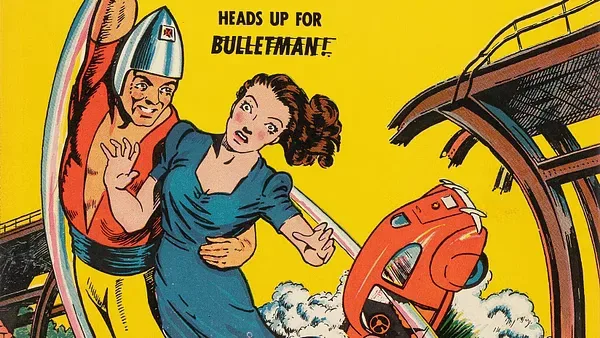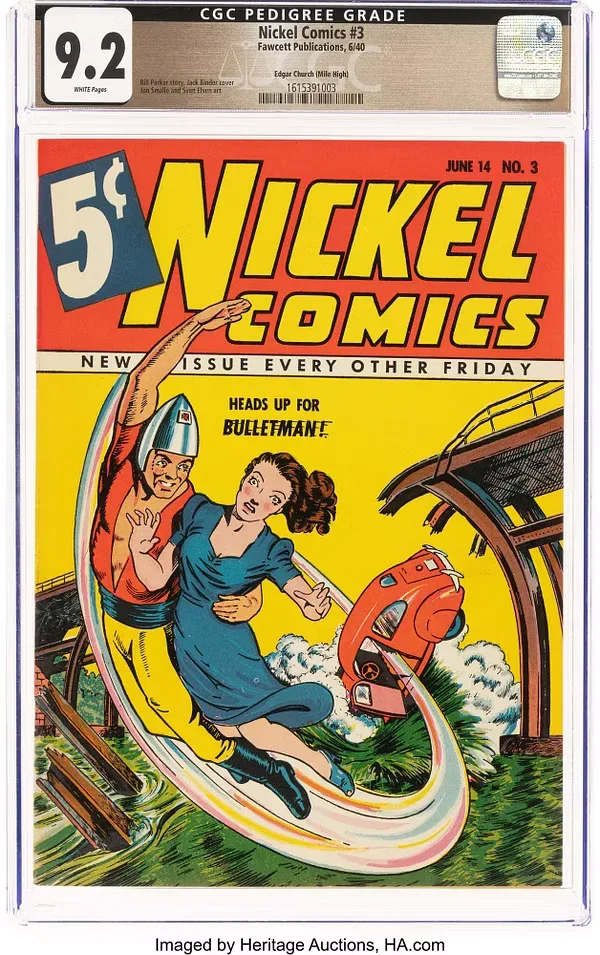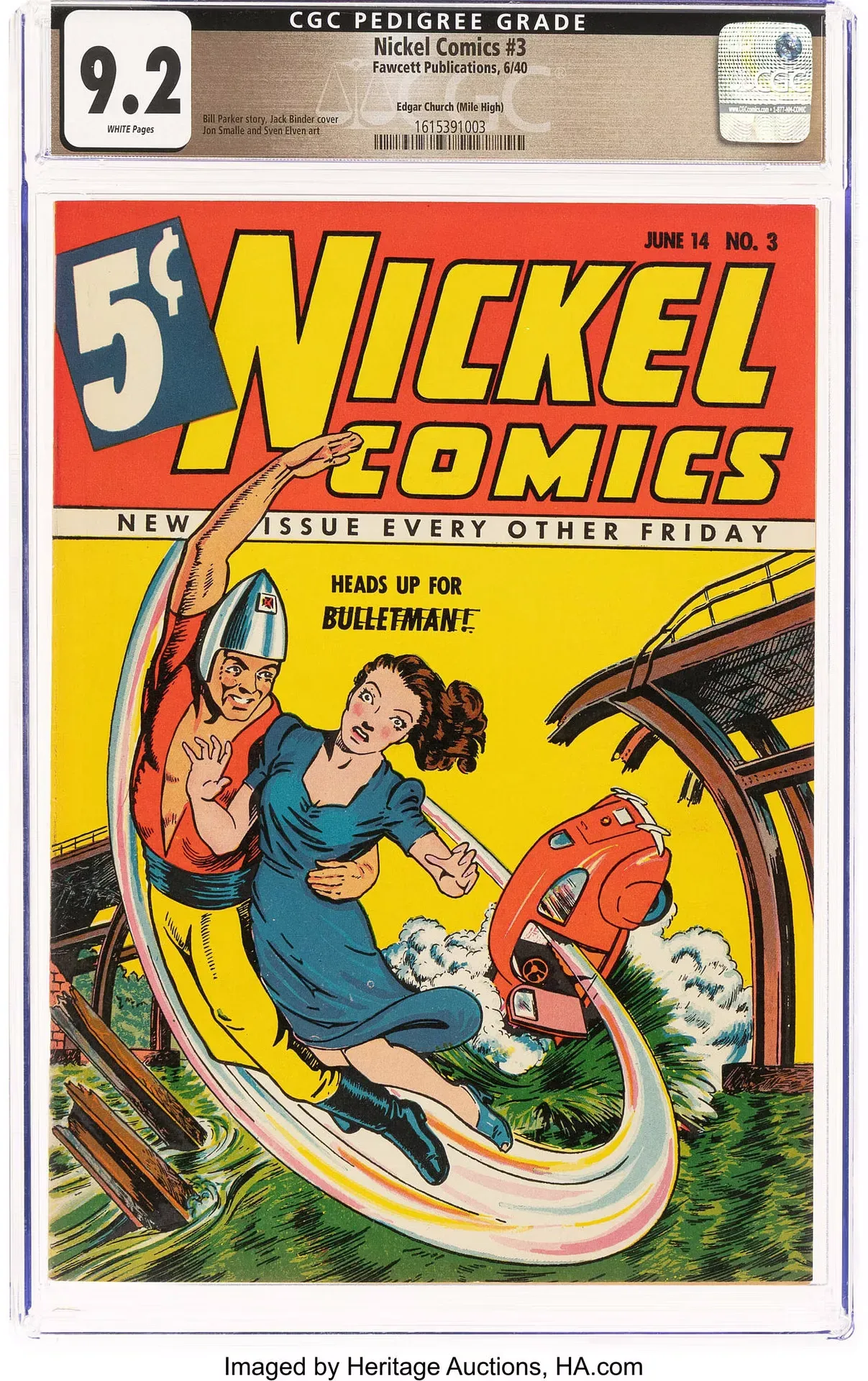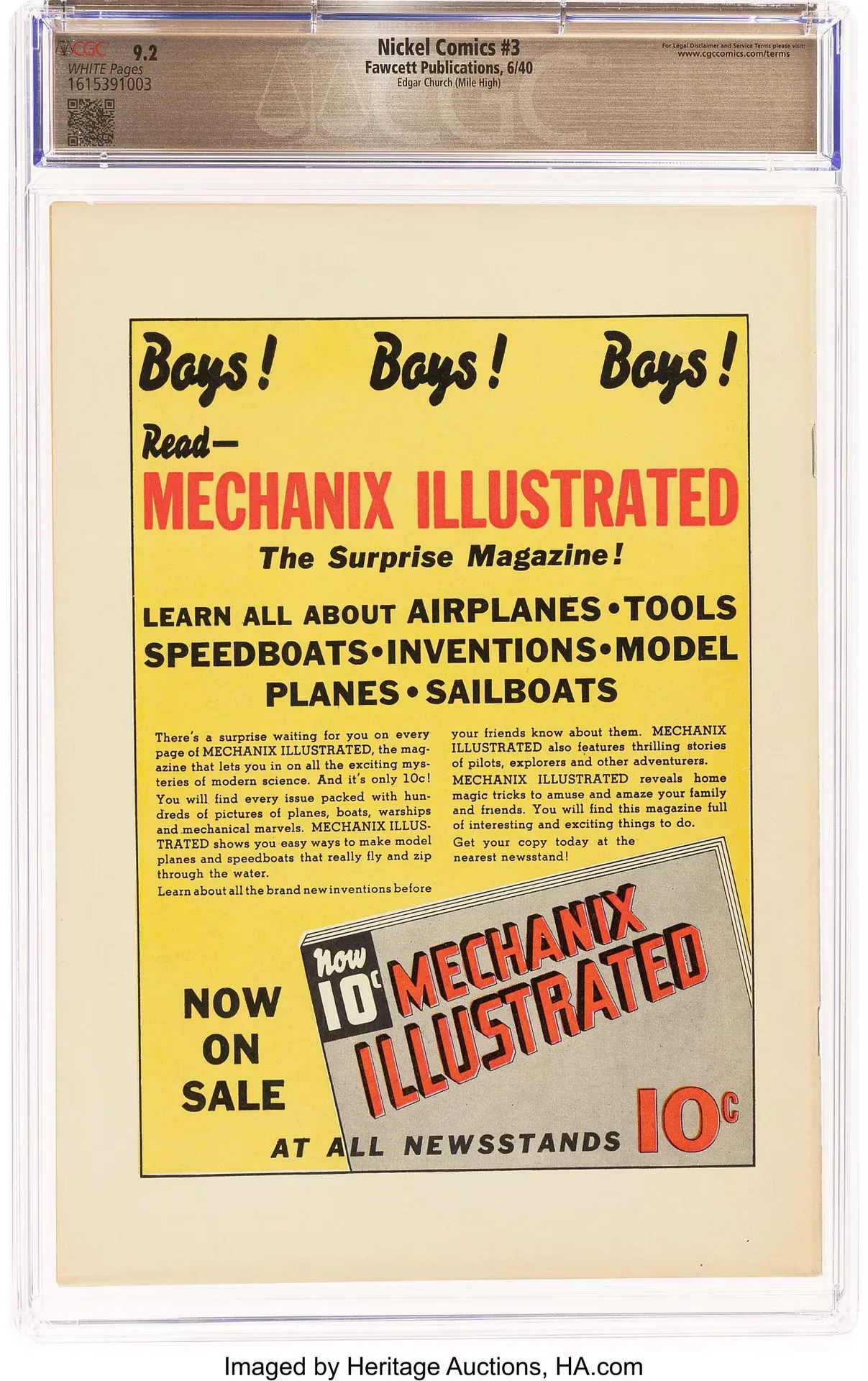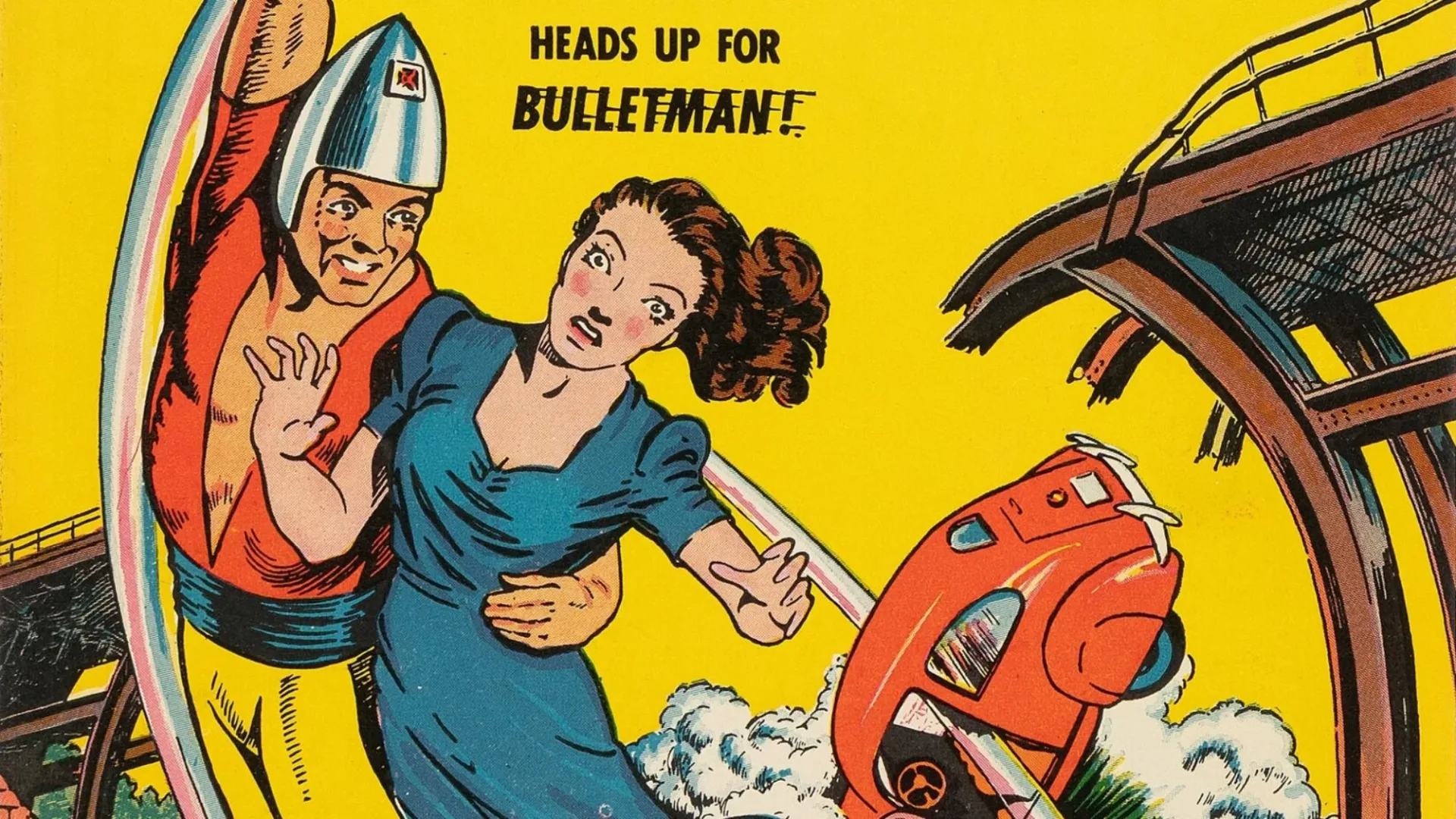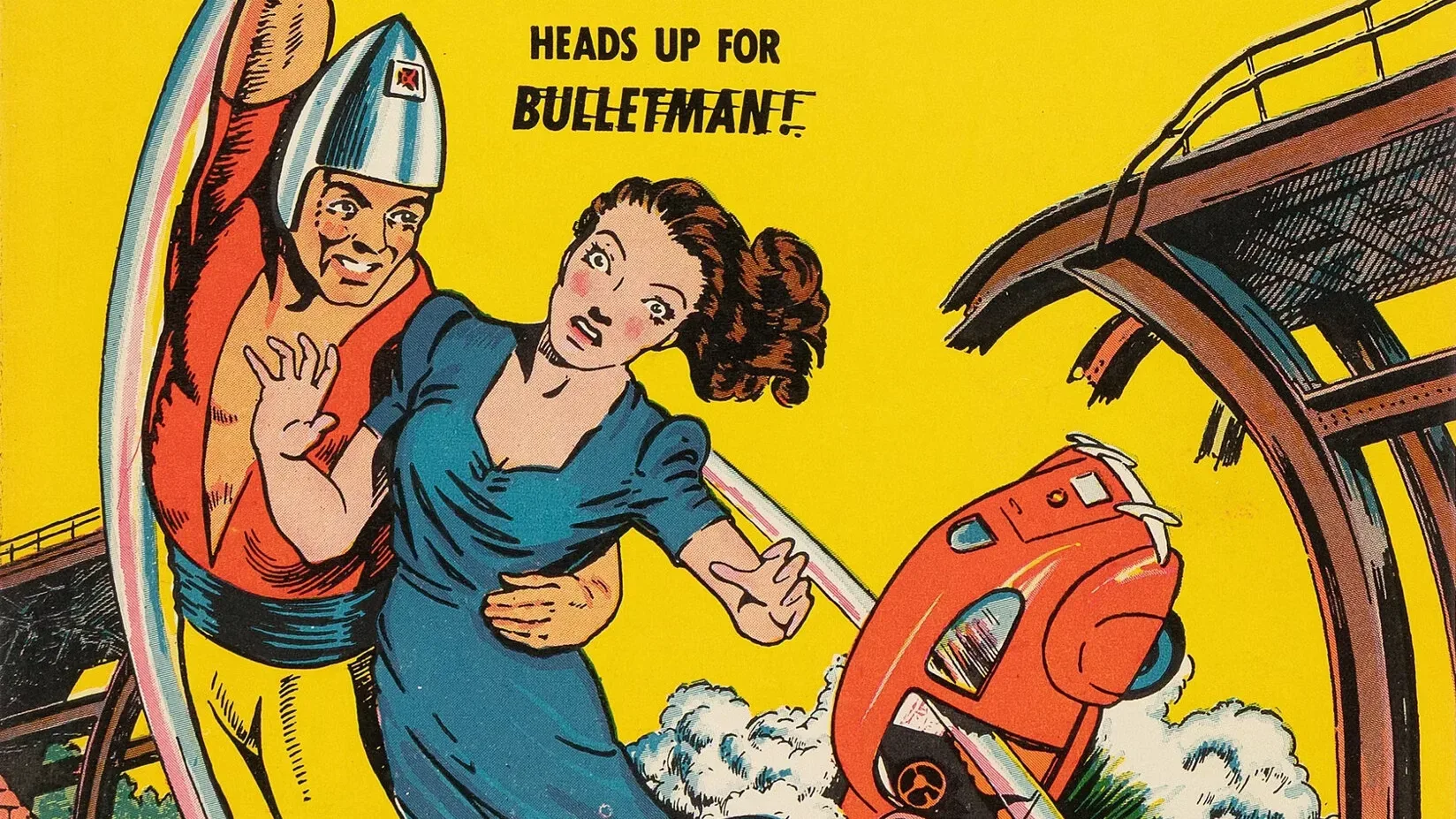
A high-grade copy of Nickel Comics #3 is set to cross the auction block, putting a spotlight on an unusually ambitious—and remarkably brief—chapter in early superhero publishing. The 1940 Fawcett issue carries a Bulletman cover by Jack Binder and comes from the Edgar Church/Mile High collection. It has been graded CGC 9.2 with White pages, making it a particularly scarce surviving example of a comic built around a low-price, rapid-release publishing experiment.
The copy is included in the September 24–26, 2026 Comic Books Signature Auction #7469. For collectors, the attraction is not only its condition. Nickel Comics was an eight-issue series with an unconventional business model, while Bulletman was a character who survived the magazine’s cancellation and became an important part of Fawcett’s wider superhero line. Issue #3 captures those two stories at once: a short-run title still establishing its identity, and a hero already positioned prominently enough to dominate its cover.
A five-cent comic with a different release plan
Fawcett launched Nickel Comics as a five-cent comic published every other Friday. That price was half that of much of the comics field at the time, and the book also had half the page count of the standard format. The title’s name was therefore a direct description of its pitch: a comic intended to reach readers at a nickel rather than a dime.
That combination matters because it was not merely a cover-price discount. A bi-weekly schedule asks a publisher to keep material moving quickly, and the smaller format changes what a reader receives for each purchase. In practical terms, Fawcett was testing whether a cheaper, more frequent comic could create enough repeat buying to compensate for a thinner individual issue. The experiment anticipated a second proposed title, Five-Cent Comics, if Nickel Comics proved successful.
There was some precedent inside Fawcett’s publishing operation. Its Hollywood Magazine had been reduced from ten cents to five cents and apparently found success for several years around 1937 through 1940. But the comic-book test did not last. Nickel Comics concluded after only eight issues.
It is tempting to treat the five-cent price or reduced page count as a complete explanation, but the available history does not establish a single reason for the cancellation. The comic line was changing much more broadly in fall 1940. Over roughly two months, Fawcett ended Nickel Comics, converted oversized Master Comics to a standard format, ended Slam-Bang Comics, and shifted Bulletman plus several Slam-Bang features into Master Comics. The result was a streamlined line of two standard-format titles.
That makes issue #3 more than an early superhero collectible. It is evidence of a publisher testing formats, prices, schedules, and title lineups while deciding where its characters fit. A short publication run can make every surviving issue feel like a fragment of an abandoned plan; in this case, the plan was visibly being revised even as Bulletman continued forward.
Bulletman’s scientific path to heroism
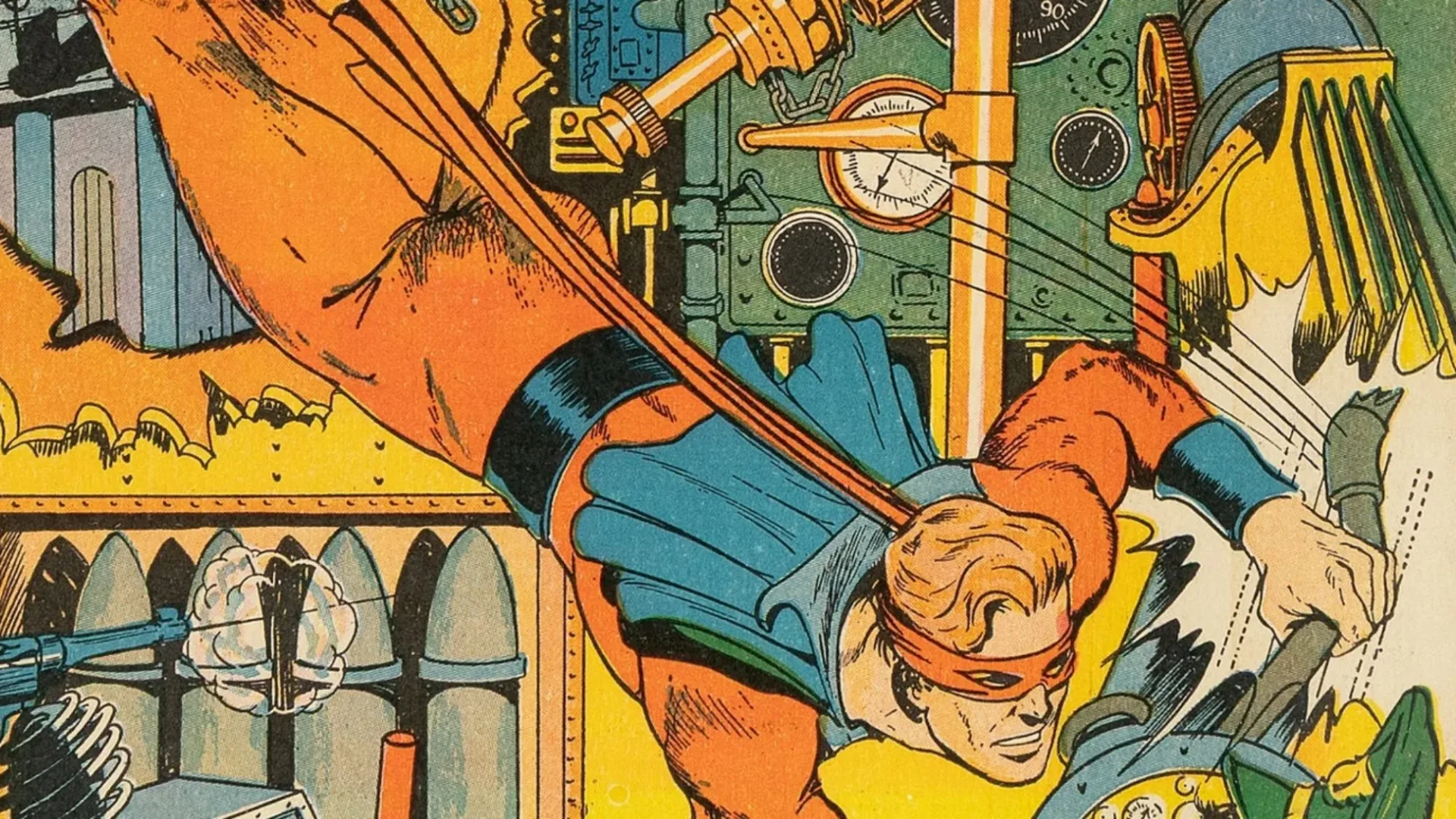
Bulletman debuted when Nickel Comics launched, in an issue cover-dated May 1940. The character was created by Fawcett editor and writer Bill Parker with artist Ed Smalle. In the character’s origin, Jim Barr is the son of a police officer killed in the line of duty. He hopes to follow that path, but regards himself as physically inadequate and is also a poor marksman.
Rather than abandoning law enforcement, Barr redirects his efforts toward science and forensics, ultimately assisting police as a criminologist. His transformation into Bulletman comes from research into a theory that criminality is a bodily disease. He tests a serum on himself; it grants exceptional strength and durability by destroying the poisons that weaken other men. He then completes the identity with an anti-gravity helmet.
The origin is a useful example of the science-driven logic often found in early superhero fiction. A criminologist here is a crime specialist working through investigative knowledge rather than a conventional masked vigilante’s fighting prowess. The anti-gravity helmet supplies the other half of the premise: not simply enhanced physical ability, but a visual and functional device that distinguishes Bulletman as a costumed hero. The result is a protagonist whose heroic identity grows from a perceived physical disadvantage, scientific study, and technology.
Issue #3’s lead Bulletman story is credited to Parker and Smalle, keeping the character’s original creative pairing in place. Jack Binder handled the cover, as he did for the full Nickel Comics series. That division of work gives the issue two clear creative touchstones: Parker and Smalle inside, Binder on the exterior image through which readers first encountered the character on the newsstand.
Why cancellation did not mean the end for Bulletman
The fate of Nickel Comics and the fate of Bulletman were not the same. Although the title ended, the character was folded into Master Comics. This is a crucial distinction for anyone assessing the issue’s place in a collection. The comic is from a discontinued experiment, but its lead hero had enough value to be transferred into a continuing publication.
Bulletman subsequently expanded beyond the original feature. The franchise added Bulletgirl and Bulletdog, and Bulletman later received both his own title and the continuing Master Comics presence. That survival gives Nickel Comics #3 an unusual position: it is not the start of the character—that honor belongs to the launch issue—but it belongs to the fleeting original venue from which a longer-running franchise emerged.
There was also significant uncertainty around Fawcett’s comic plans at the time. A report suggested that the company could have reduced its line even more severely, leaving Slam-Bang Comics as the sole surviving title while Nickel Comics, Master Comics, and Whiz Comics ended. That account may have reflected a miscommunication, so it should not be treated as a settled description of Fawcett’s final plan. What is clear is that the company was managing disruption across its publishing operation as editors were drafted for World War II service.
Parker, who combined editorial duties with scripting for numerous features, passed the comics editorship to France E. Herron after the line was streamlined. The personnel change adds context without answering every question about the restructuring. It does, however, underline how precarious a comic’s future could be in this period: format changes, editorial turnover, title cancellations, and character migrations were happening together.
What the grade and collection pedigree communicate
The offered copy’s CGC 9.2 grade is accompanied by the designation “White pages.” In comic collecting, those labels are important shorthand for a professionally graded copy’s condition assessment and paper quality notation. They do not change what the issue is, but they materially affect how collectors evaluate an example of a fragile 1940 comic that was originally sold for five cents.
The Edgar Church/Mile High provenance is another major part of the listing’s appeal. Provenance means an item’s documented collecting history or prior ownership background. Here, the named collection helps separate this copy from a typical surviving issue and places attention on its preservation as well as its age, character, and cover. For a book created as an inexpensive, frequently released periodical, a well-preserved copy stands in sharp contrast to its original everyday purpose.
The CGC census records 20 Universal entries for Nickel Comics #3. Of those, one is graded 9.2 and three are graded higher. A census is a count of copies submitted and recorded within that grading system, not a count of every copy that exists in private hands or elsewhere. It is still useful as a narrowly defined snapshot: it shows that this grade sits close to the upper end among the recorded Universal copies, while also making clear that higher-graded examples are listed.
The auction description characterizes this as the highest-graded offering of the issue in 24 years. That wording is specifically about offerings, not an assertion that no better copy exists. The distinction is worth retaining. Auction records, grading census data, and collection pedigree each illuminate a different part of a comic’s collecting profile: public market visibility, recorded certification population, and ownership history.
What collectors can take from this issue
Nickel Comics #3 has several overlapping reasons to draw attention. It is a Golden Age superhero comic from 1940. It features Bulletman during the character’s original run in the title that introduced him. It has a Jack Binder cover, a Parker-and-Smalle Bulletman story, a short-series connection, and a high-grade Edgar Church/Mile High pedigree.
Yet its strongest historical hook may be the failed format experiment surrounding it. Fawcett tried to make the comic cheaper and more frequent than the prevailing format, then abandoned the title after eight issues amid a larger consolidation. Bulletman endured, while the nickel comic did not. For a physical-comics collection, that contrast is precisely the point: the issue preserves a moment when a publisher’s distribution idea vanished quickly, but one of its characters proved portable enough to outlive the original vehicle.
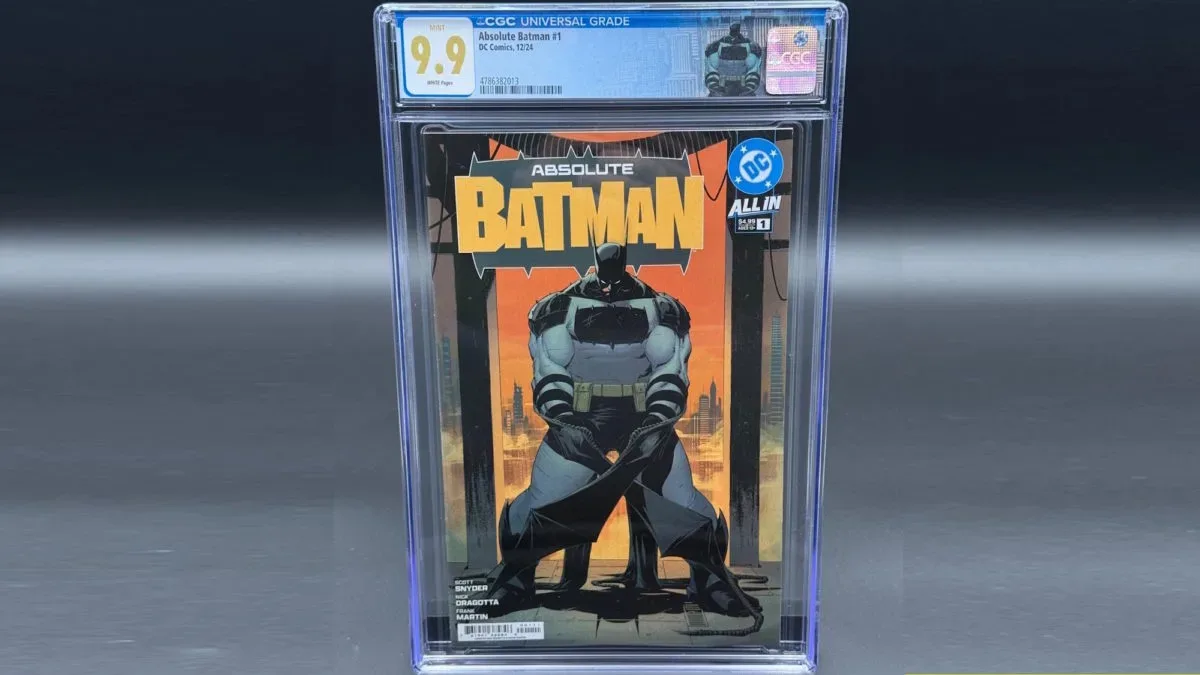
For a look at how certified comic sales and condition can shape attention around a much newer book, see this recent CGC 9.9 sale of Absolute Batman #1. The eras and books are very different, but both cases show why collectors closely read a slab’s grade alongside the issue’s creative and historical context.
In the case of Nickel Comics #3, the 9.2 grade, White pages, collection pedigree, and limited census standing are all part of the collectible proposition. The comic’s deeper appeal is that its cover promises a superhero adventure while its publishing history tells a sharper story of experimentation, consolidation, and survival.