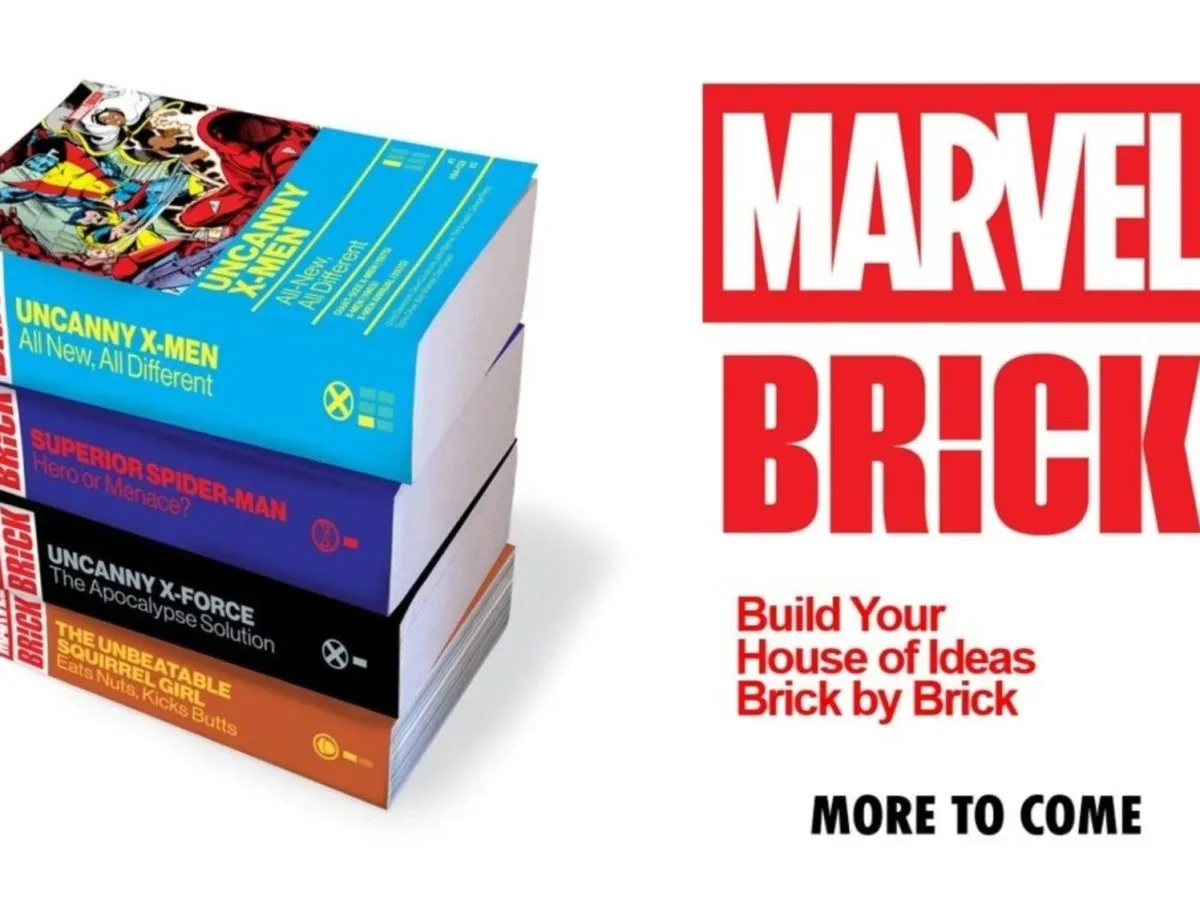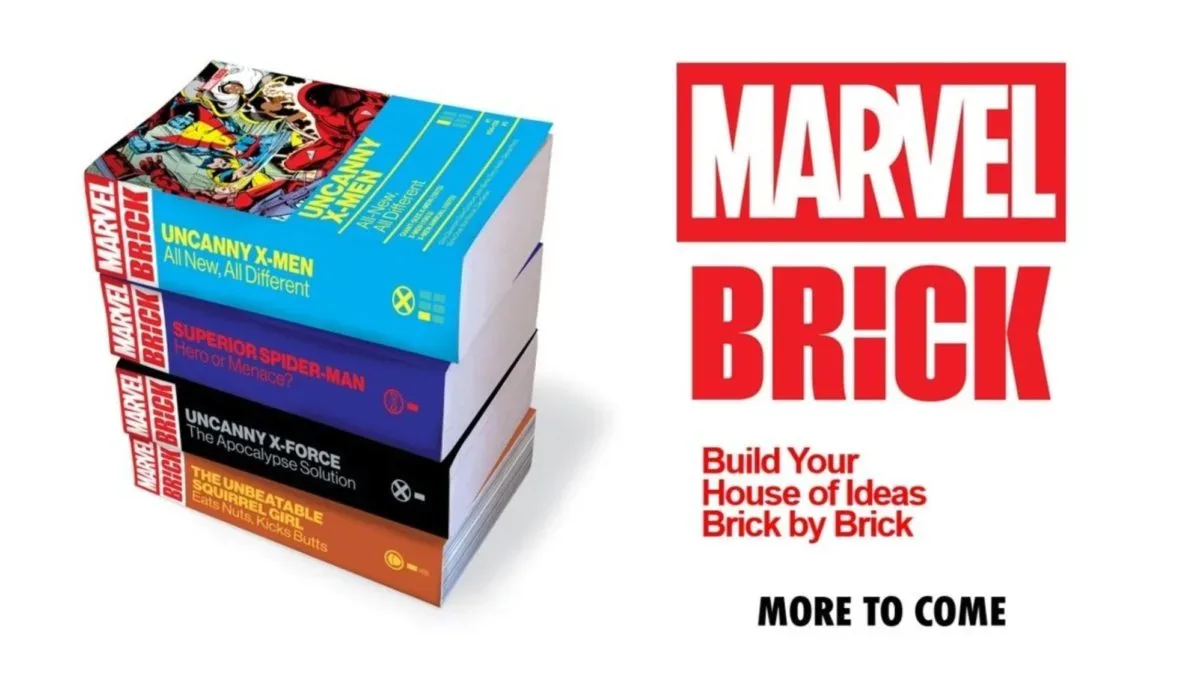
Marvel has announced a new thick-paperback publishing line called Marvel Brick at New York Comic Con, and the name has promptly done its job: it is memorable, slightly cheeky and suggests a book with enough physical heft to qualify as a minor defensive structure.
The available information establishes the key point without overcomplicating it: Marvel Brick is a line of thick paperbacks. Specific volumes, page counts, creative teams, release dates and pricing were not included in the material available here, so readers should be cautious about filling in those blanks. “Brick” may sound like a format promise, but it is not yet a detailed reading list.
Even so, the announcement is meaningful in a convention week that has placed a conspicuous emphasis on how comics are packaged, kept available and sold to readers. New York Comic Con coverage has also pointed to Marvel’s new Renown line being intended to remain in print, while retailer-focused conversations have addressed distribution and comic-shop business. Together, those threads make the Marvel Brick news more than a funny label for a bulky book.
What a “thick paperback” signals
A paperback is a book with a flexible paper cover rather than hard boards. Within comics publishing, the label can cover many shapes and sizes: a slim collection of a story arc, a larger anthology, or a substantial compilation of multiple issues and related material. Calling a line “thick” is a format description, not a complete specification. It tells readers to expect a physically substantial collection; it does not yet tell them exactly what will be collected.
That distinction matters. Comics readers often make purchasing decisions based on details that remain unannounced for Marvel Brick, including the contents of each book, reproduction choices, paper stock, extras and the relationship between a paperback collection and other editions of the same material. For now, the safest takeaway is simply that Marvel is creating a named paperback line whose defining trait is size.
The “Brick” branding also gives the publisher a concise shorthand for the line. Rather than merely advertising another collected edition, Marvel can present a recognizable format with a clear physical identity. In a market where format names can help readers understand a product at a glance, that directness could be useful. The name tells a prospective buyer what kind of object to expect before they know a single story inside it.
A format announcement in a larger publishing conversation
Convention announcements can sometimes be all fireworks and no furniture: new series, new costumes, a giant teaser image and everybody racing to decode a silhouette. Marvel Brick is different in that its central news is the container. The story is about books as durable, shelf-visible editions, not an announced character twist or a newly named creative team.
That puts the line alongside another reported Marvel publishing initiative, Renown, which is intended to be kept in print. “Kept in print” means a publisher plans for a title or line to remain obtainable through additional printings instead of treating its initial run as its only practical window. That intention does not answer every availability question, but it does indicate an emphasis on longevity.
Marvel Brick has not been described with the same keep-in-print language in the available information. It would be a mistake to assume the two lines have identical policies or purposes. Still, both topics reflect an industry-facing question with a reader-facing consequence: how will comics remain findable after the immediate buzz around a new issue, convention panel or social-media reveal fades?
This is particularly relevant to comic shops. Retailer-day headlines from the convention have included discussion of a “Great Lunar Divide,” while another report says comic-store revenue is up by more than a quarter compared with the same period a year earlier. The available material does not establish a causal link between those developments and Marvel Brick. But it does show that the announcement arrived amid active concern about retail conditions, publisher distribution and the kinds of products stores can put in customers’ hands.
Why the physical format still matters
For readers, a large paperback can serve a simple practical purpose: it bundles more reading into one object. For shops, it can be a prominently displayed product that is visually and physically distinct from a monthly single issue. For publishers, a named format can offer a recurring, easily explained way to present library material.
None of those potential advantages guarantees that every thick collection will suit every reader. Larger books take up more shelf space, can be heavier to carry and may be less convenient for someone looking for a smaller entry point. The appeal of a “brick” is inherently tied to the appeal of its contents. A famous run, a self-contained saga or a carefully selected theme could make the format compelling; without announced contents, that remains a question for later.
It is also worth separating a collected edition from a new series. A collected edition repackages material, usually comics first released in another form, into a book. A new series begins a fresh publishing run. The current Marvel Brick announcement concerns a paperback line, and the supplied information does not identify it as a slate of new serial comics.
That may sound elementary, but convention coverage often moves rapidly between new titles, relaunches, merchandise and collected editions. This week alone has brought reported plans for Buffy and Angel relaunches in March 2027, Firefly in April, Marvel’s push for Spider-Woman to become a long-running series, and the corporate news that Boom Studios will become an imprint of Random House Worlds. Those are distinct kinds of news. Marvel Brick belongs squarely to the collected-edition side of the ledger.
What readers should watch for next
The useful next questions are straightforward:
- Which comics will be included in the first Marvel Brick volumes?
- How many pages will each paperback contain?
- Will the books focus on particular characters, creators, eras or storylines?
- Will they include bonus material such as covers, introductions or contextual notes?
- When will they arrive, and through which retail channels?
Until Marvel answers those questions, readers can treat the announcement as an early format reveal rather than a fully mapped programme. There is no need to guess at contents, availability or how the books compare with existing Marvel collections.
The broader New York Comic Con picture does make one thing clear: publishing formats are part of the news cycle, not background logistics. Readers are being asked to care not only about what fictional universes do next, but how their stories will be preserved, presented and kept on shelves. A thick paperback called Marvel Brick is an unusually literal expression of that reality.
For another recent comics-related publishing and adaptation development, see our coverage of Mark Millar’s plans for King of Spies and the Nemesis trilogy.