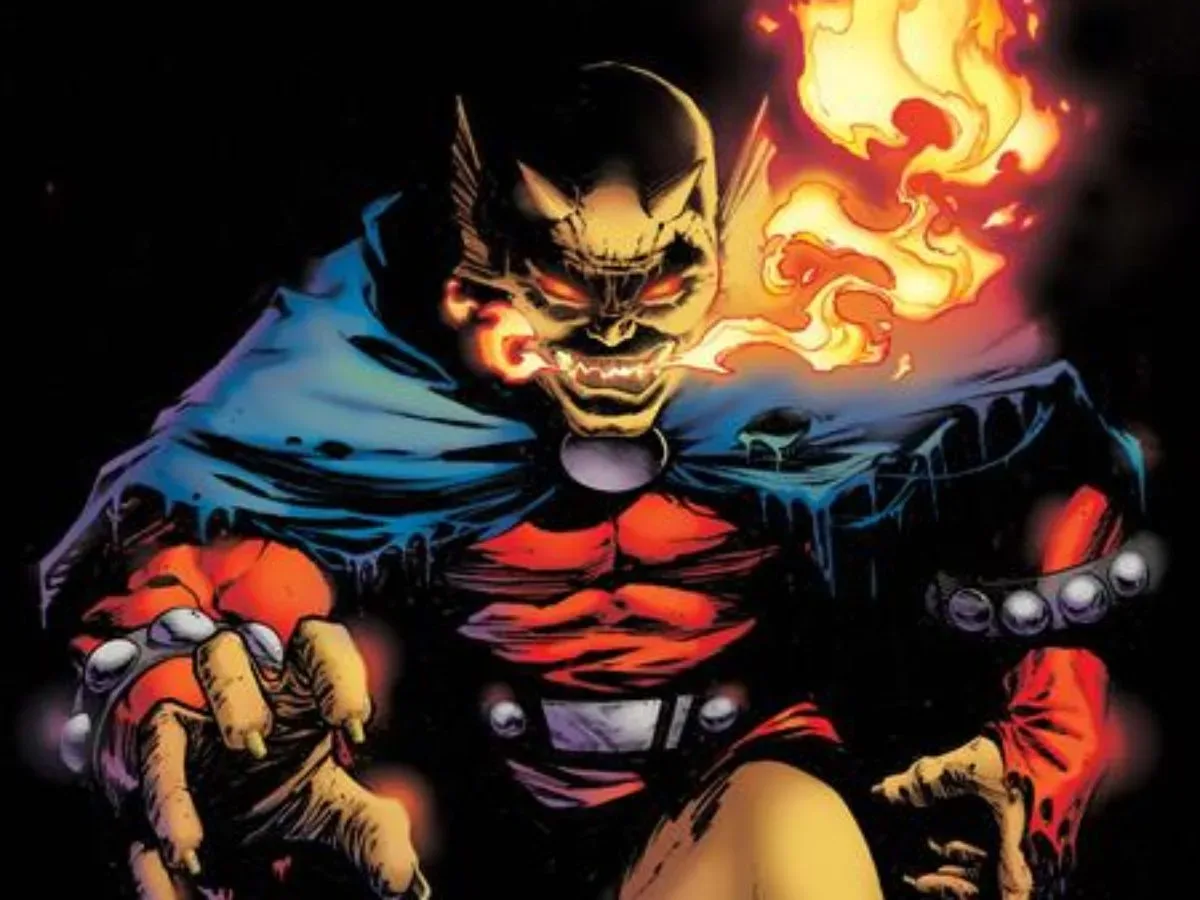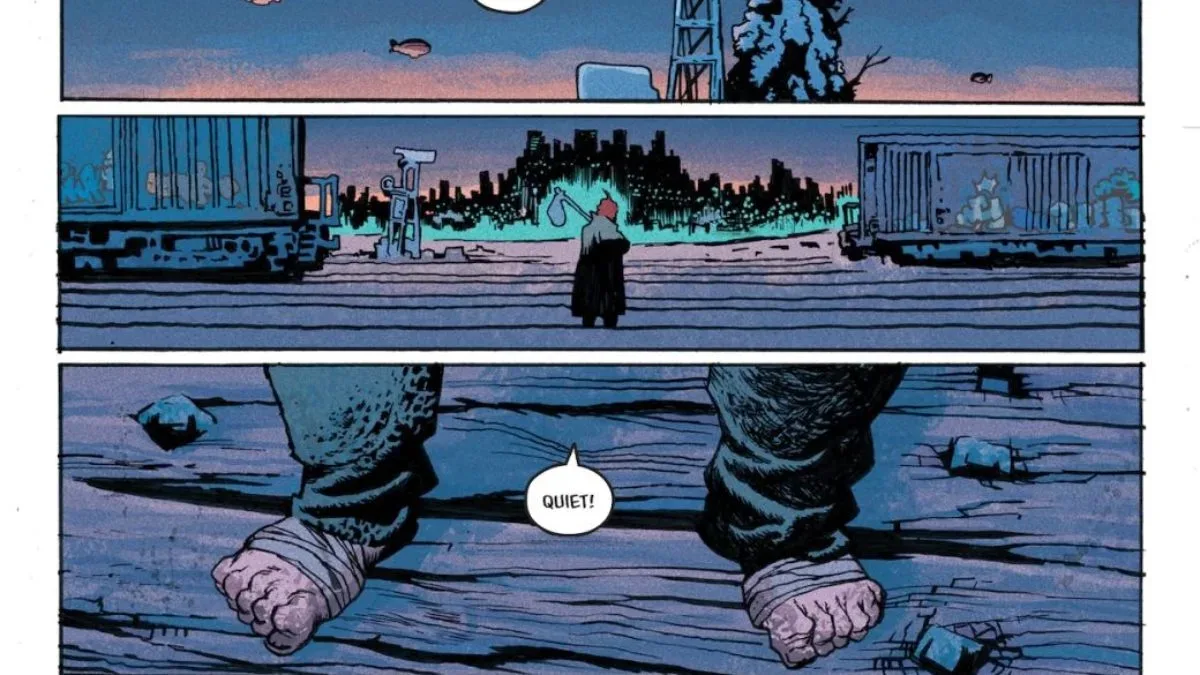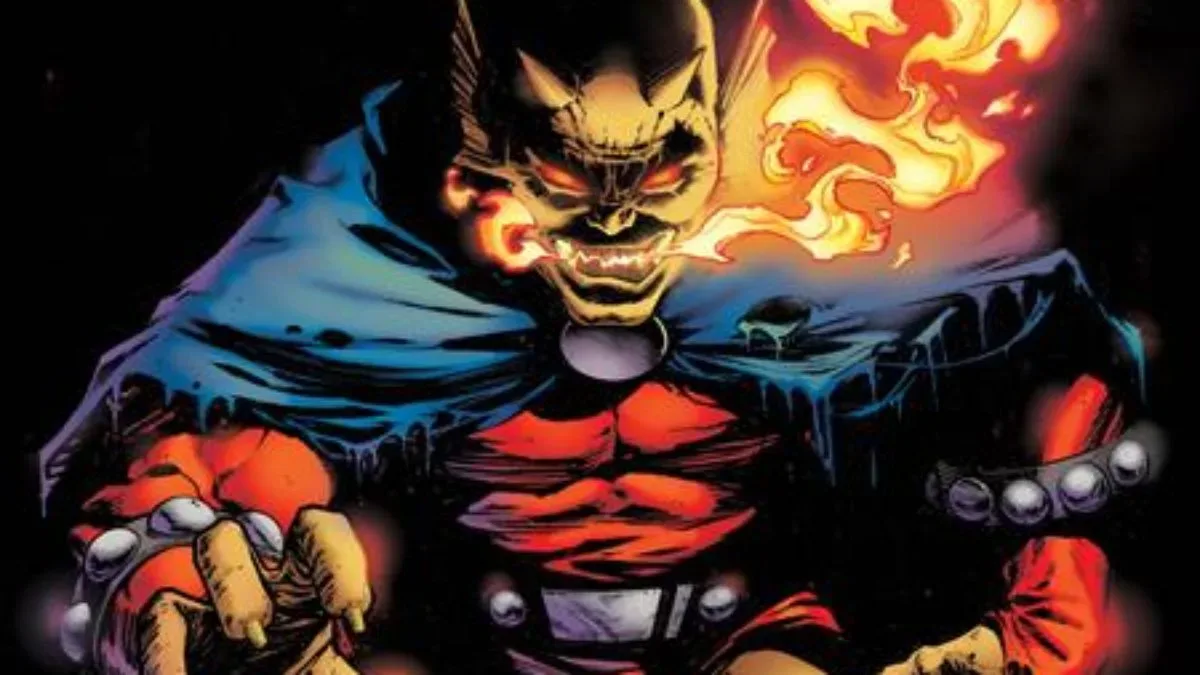
James Harren’s The Demon is taking a deliberately character-first route into DC’s supernatural corner. The writer-artist presented the ongoing series at New York Comic Con 2026 with its first issue newly on sale, framing Jason Blood not merely as the human half of Etrigan, but as a man visibly exhausted by the price of carrying that connection for a century.
That emphasis matters. Jason Blood’s condition is not being treated as an excuse to bring out a demonic brawler whenever the story needs a bigger punch. Harren’s stated interest is the burden: the accumulated strain of an extremely long life and a demon bound to his soul. In visual terms, the approach gives Blood a weathered, lived-in appearance. In dramatic terms, it makes the central question less “can Etrigan win?” than “what does Jason lose whenever Etrigan is allowed out?”
The series is both written and drawn by Harren, who traced his affection for Etrigan back to seeing the character in Batman: The Animated Series. That background helps explain why this version can support a horror-leaning sensibility while still embracing the character’s larger-than-life appeal. Etrigan is an inherently heightened comic-book figure; Jason’s curse supplies the human cost that can keep that spectacle from becoming consequence-free.
A horror book built around a divided protagonist
The Demon arrived through DC’s Next Level initiative and was positioned as a horror-leaning series intended to be approachable for new readers. “Horror-leaning” is useful shorthand here, but it does not necessarily mean a story whose only goal is shocks. The supplied setup points instead to horror arising from loss of control, pursuit, unnatural incursions and the prospect of releasing something dangerous from within.
Jason and Etrigan are the engine for all of that. The demon is not simply an outside enemy that Jason can investigate from a safe distance. He is part of Jason’s immediate problem, an entity tied to his soul and increasingly eager to be released. That creates a built-in tension between practical necessity and personal danger: if an enemy is too formidable for Jason to overcome alone, calling on Etrigan may be the obvious answer. It may also be the choice that deepens the threat.
Harren’s design work is central to that idea. He intended the demons to feel monstrous, though early reader reactions reportedly included people calling them “cute.” That is not necessarily a contradiction. A stylized, expressive or oddly appealing creature can still be unsettling, especially when the story’s perspective treats it as a manifestation of demonic danger. The reaction does suggest that Harren’s creatures have a distinct personality rather than aiming for anonymous, interchangeable horror imagery.
For a title centered on Etrigan, that tonal tension may be an advantage. A comic about demons needs memorable demons, not just shadows at the edge of a panel. If the reader can find them charming, bizarre or funny in addition to frightening, the visual world has more range—and Jason Blood’s fear of what he carries can stand in sharper contrast to the appeal of what audiences see on the page.
What issues #2 and #3 establish
The next two solicitations lay out the early escalation without resolving it. Demon #2, listed for November 4, 2026 at $3.99, introduces a prince of Hell with a personal score to settle with Etrigan. Jason’s fight against demons reaches an apparent stopping point in this formidable adversary, forcing the question of whether he is ready to unleash the Demon.
The wording is significant because the prince of Hell’s grievance is specifically with Etrigan, not merely with Jason. Jason therefore faces danger generated by his own supernatural bond and by the history attached to it. A villain with unfinished business makes Etrigan more than a tool Jason can reluctantly deploy; he becomes a source of liabilities that can arrive at Jason’s door.
Demon #3, scheduled for December 2, 2026 and also priced at $3.99, broadens the series’ immediate plot. Merlin sends Jason on a mission to find the Eternity Book and stop a demonic incursion. The search takes him to a magical village, where he is pursued by multiple enemies while the Demon inside him continues to strain toward freedom.
Several parts of that premise point to a story with different layers of pressure. A demonic incursion, in this context, means an encroachment or invasion by demonic forces. It gives Jason a threat beyond his internal struggle. The Eternity Book functions as a sought-after magical object in the setup, but its exact powers have not been detailed. And Merlin’s involvement ties the quest to a larger magical mission without revealing why Jason, specifically, must complete it.
Most importantly, issue #3’s solicitation combines an external hunt with the internal threat of Etrigan’s yearning for release. Jason is not only trying to reach an objective before enemies catch him. He is attempting to do it while the supernatural power that could help him is actively becoming harder to contain. That is a strong structure for horror action: every solution can create a fresh problem.
What new readers can take from the setup
The series’ stated new-reader focus is practical rather than ceremonial. Readers do not appear to need a long list of prior continuity to identify the core conflict presented here: Jason Blood is bound to Etrigan, that curse has worn him down, hostile demons are closing in, and a Merlin-directed mission puts him in the path of a magical crisis.
It is worth separating what is established from what remains unknown. The available material confirms the prince of Hell in issue #2, the quest for the Eternity Book in issue #3, a magical village, pursuing enemies and Etrigan’s desire to be released. It does not explain the book’s capabilities, the prince’s particular history with Etrigan, Merlin’s full objective or the nature of the incursion. Those are story hooks, not answered lore.
That restraint is a positive fit for a launch-era supernatural comic. New readers get immediate stakes while the series holds back the answers that ought to be uncovered in the pages. Longtime fans, meanwhile, have a familiar foundation—Jason, Etrigan and Merlin—filtered through Harren’s preference for a visibly aged and emotionally taxed Blood.
Harren’s place in DC’s supernatural push
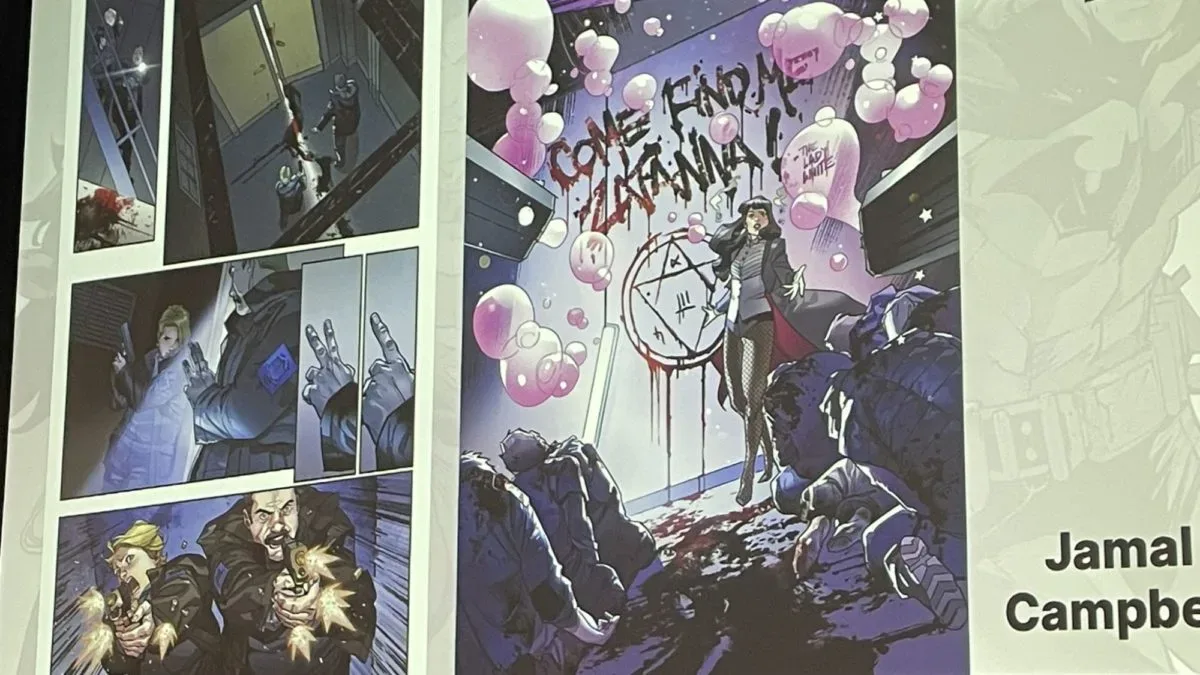
Harren described The Demon as a DC passion project following his work on Ultramega. The title sits alongside other creator-driven supernatural material involving Zatanna and Deadman, giving it a clear place in a broader occult-facing stretch of DC comics. That does not mean these books need to tell one continuous story; the more immediate commonality is the willingness to let distinctive creators approach magical and horror-adjacent characters through their own visual language.
For The Demon, that language begins with contrast. Jason Blood is drawn as someone whose longevity has not made him invulnerable. Etrigan and the other demons provide the visual spectacle. The prince of Hell and an oncoming incursion supply scale. Merlin’s assignment and the Eternity Book add a magical-objective framework. Together, those pieces leave room for action while repeatedly returning the focus to the person who must live with every supernatural consequence.
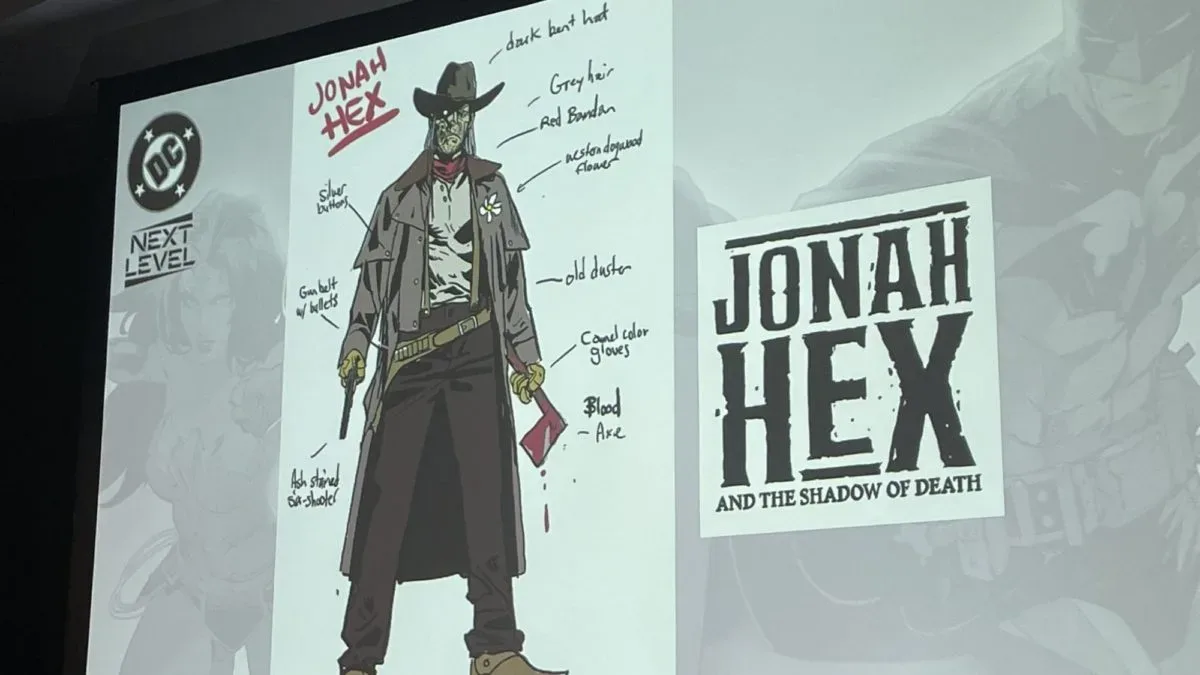
There is a useful comparison point in another DC horror direction: Jonah Hex’s horror-facing DC outing similarly shows how established characters can be used as anchors for genre-led projects. Harren’s book, however, has a more intimate trap at its center. Jason cannot simply ride away from the monster. The monster is bound to him.
That is the promise carried into November and December. The prince of Hell tests whether Jason can resist—or survive—the need to release Etrigan. The Eternity Book mission turns the story toward a wider demonic emergency. And the “cute” response to Harren’s monsters is an unexpected reminder that horror designs do not have to be aesthetically one-note to feel threatening. In this series, the strongest danger may be the one Jason knows best, has carried longest, and can never completely leave behind.