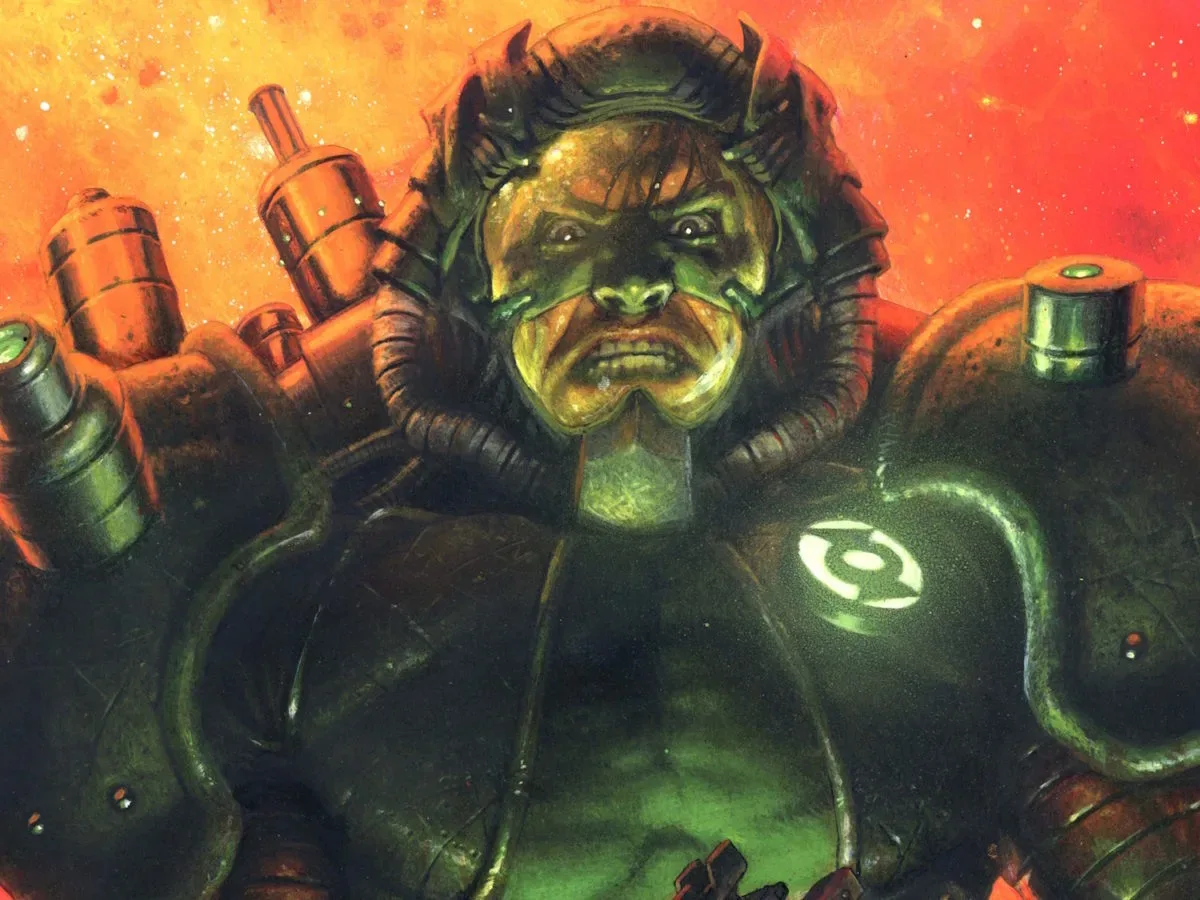
Green Lantern is heading into a universe where the familiar moral map has been turned upside down. Green Lantern: Doomed Cosmos, a six-issue DC Elseworlds miniseries from writer Dan Watters and artist Kyle Hotz, begins January 20, 2027. Its central reversal is blunt: humanity is not the civilization in need of protection. It is the empire spreading across the stars, while the Green Lantern Corps serves as the resistance fighting to stop it.
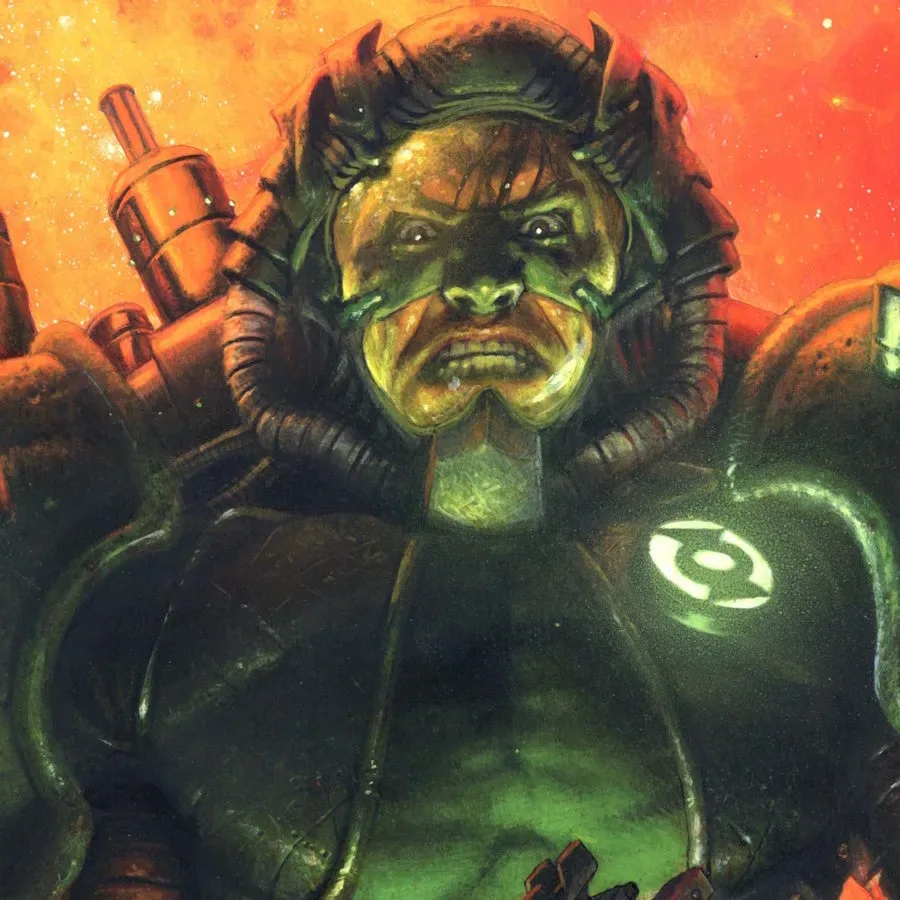
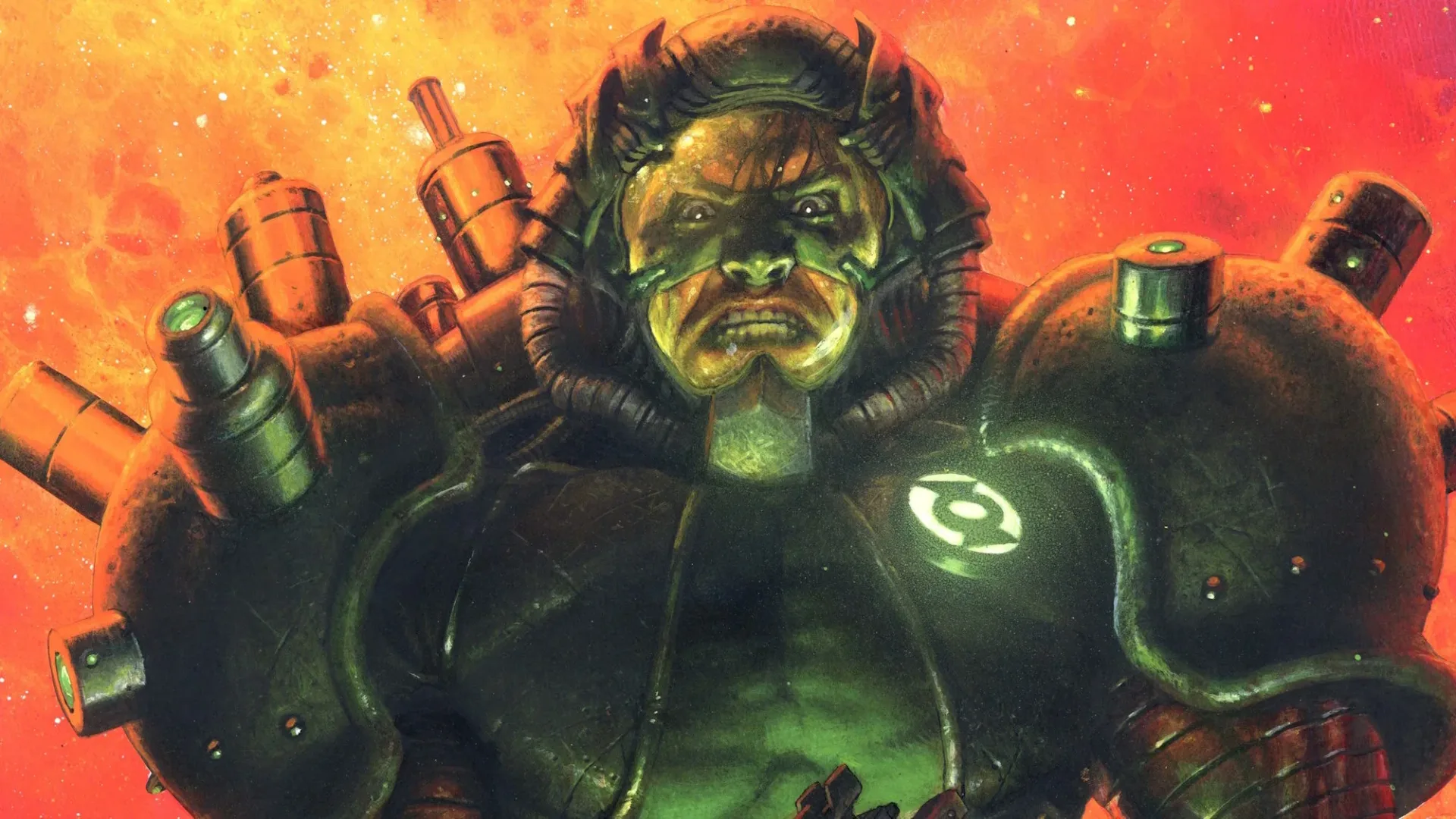
That premise puts Hal Jordan in a radically different role. Rather than beginning as a heroic human representative of the Corps, this version of Hal starts as a soldier for the Empire of Humanity. After his fellow human combatant Oliver Queen betrays him and leaves him to die on an alien world, Hal is recovered by the Lanterns and deprogrammed. He subsequently becomes the Corps’ only human warrior in its war against humankind.
The result is a story designed less around a standard recruitment narrative than an ideological break. Hal is not simply changing teams in a cosmic conflict; he is confronting the cause he once fought for and becoming a strategic asset for the force resisting it. The series frames that transformation against a campaign that has already devastated worlds, with Hal’s journey ultimately taking him toward Hell itself.
A Green Lantern story with the allegiance switch already flipped
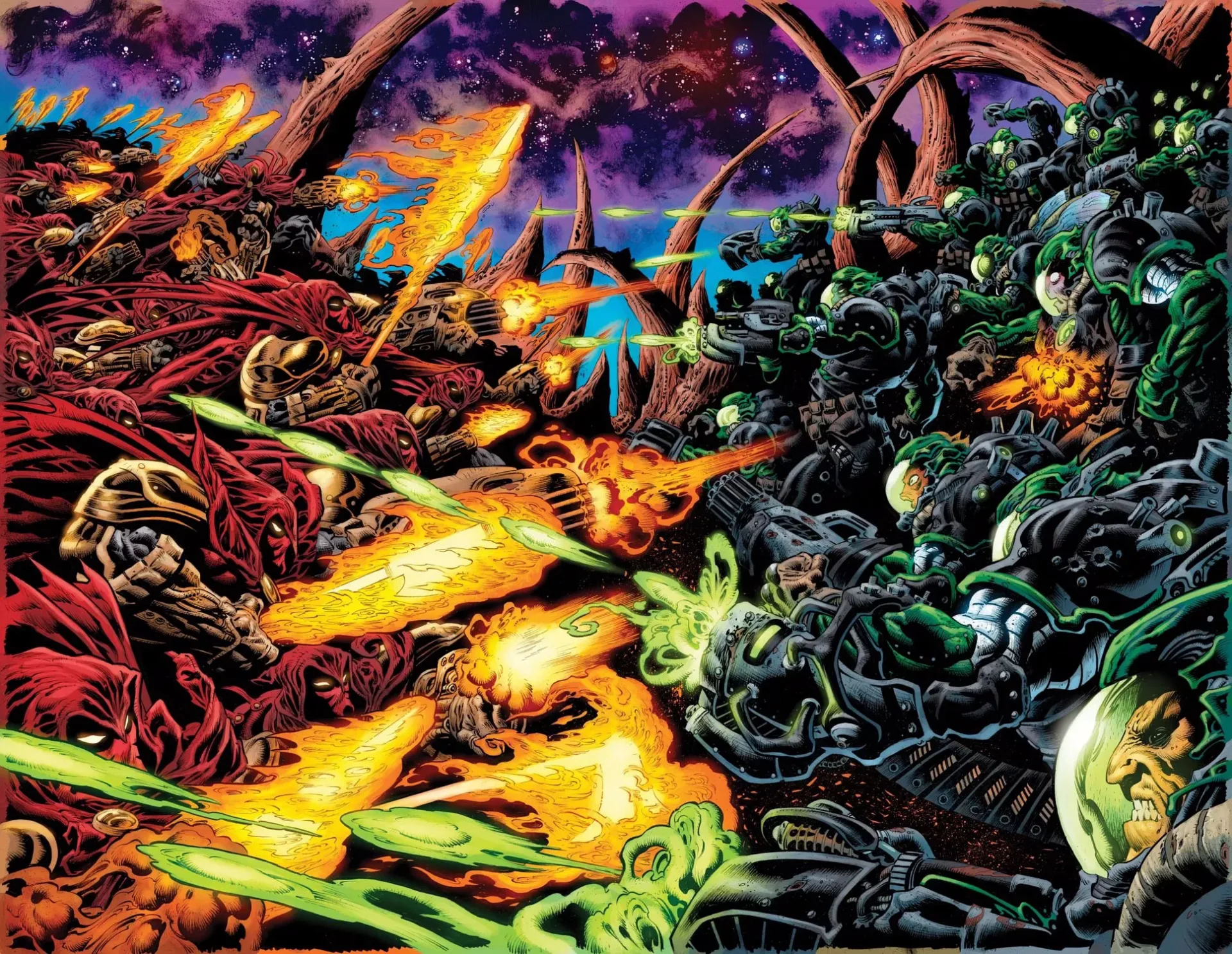
Doomed Cosmos uses its Elseworlds setting to change the fundamental position of several recognisable DC figures. In this world, the Empire of Humanity has spent centuries taking planet after planet and demanding submission. The Green Lantern Corps is heavily militarised because it is opposing that imperial advance, not operating from a position of broad security or unquestioned power.
That shift gives the book a clear dramatic engine. Hal is human, but the people now sheltering and training him have been fighting humans as an existential enemy. The Corps’ willingness to rescue and deprogram him establishes the possibility that an individual can be separated from the regime that shaped him. At the same time, the description makes clear why the Lanterns would view him as more than another recruit: he has direct experience of the empire’s military structure and becomes a uniquely useful weapon against it.
Oliver Queen’s role is equally notable, even with only a small amount revealed so far. He is identified as Hal’s battle-brother before betraying him. That wording makes their relationship personal as well as military. Hal’s break from the human empire is therefore rooted in abandonment by someone close to him, then sharpened by what he learns after the Corps rescues him. Whether Oliver remains a recurring adversary or primarily a catalyst has not been detailed, but his betrayal gives the first issue’s setup an immediate human conflict inside the larger interstellar war.
There is also an intentionally stark irony at the center of the premise. A character strongly associated with Earth is now the only human among the Lantern resistance, and the faction bearing humanity’s name is the aggressor. The book’s language presents Hal as a possible hope for the universe precisely because he rejects humanity’s conquest. It is a reversal that lets the series ask what loyalty means when one’s own species has become the invading power.
What “Elseworlds” means for Doomed Cosmos
Elseworlds is the label attached to this miniseries, and its value here is apparent in the scale of the changes. The project can start from a DC Universe where the political and moral roles of major characters have been rearranged: Hal begins in humanity’s army, Oliver is the person who leaves him behind, and the Corps is the battered opposition to an Earth-led empire.
For readers, that means the hook is not simply “a darker Green Lantern story.” It is a story built around altered assumptions. The familiar names are present, but their starting points and allegiances are substantially different. The announced premise does not establish every character’s role, nor does it explain the full history of the Empire of Humanity, so those elements remain to be revealed in the six issues. What is clear is that the series intends to explore a war-torn setting where Earth’s people have become the force other worlds fear.
The approach also separates the project from continuity-heavy expectations. The announced details position Green Lantern: Doomed Cosmos as a self-contained six-issue story with its own version of the cosmos, rather than presenting it as an ordinary chapter in Hal Jordan’s better-known status quo. Readers interested in another recent Gotham-centered DC conflict can also find coverage of Batman’s Bad Seeds Crisis and its Gotham cast.
Military science fiction, not polished space cops
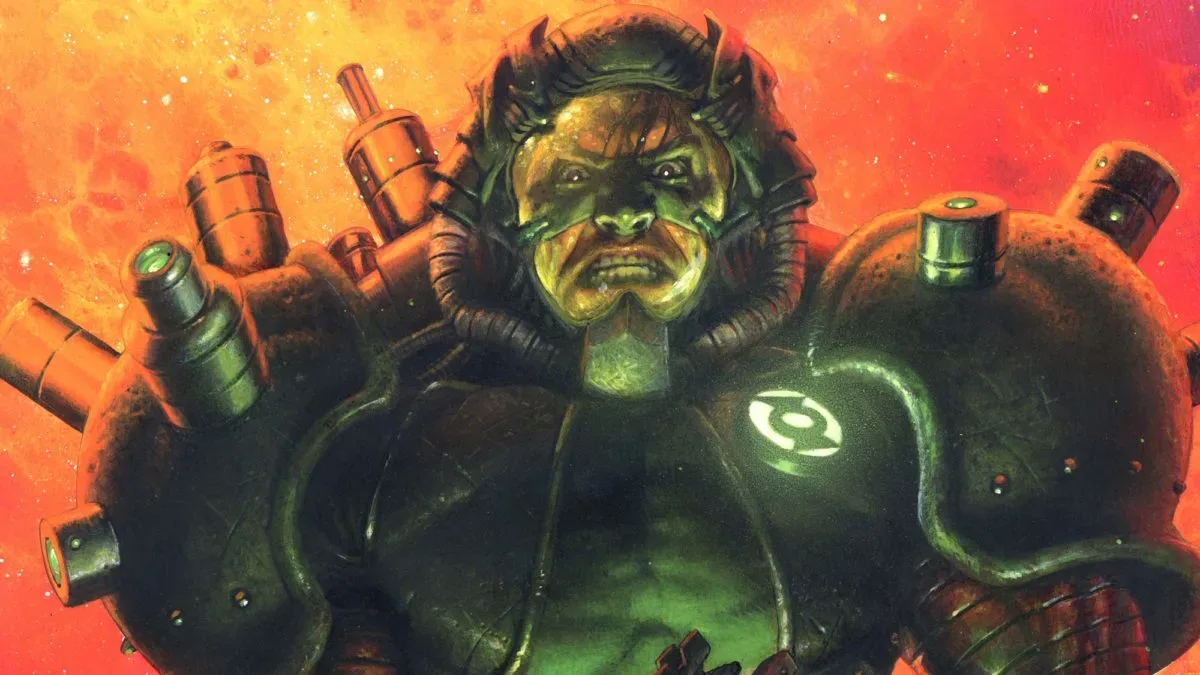
Hotz has described a visual target that combines space opera with the physical strain of exhausted soldiers. The Lanterns are meant to look battered, worn down and outmatched. Their armour is cracked; their weapons appear held together with tape and wire. Those details matter because they define the balance of power before the plot begins.
Space opera generally refers to large-scale science-fiction drama built around planets, star-spanning conflict and heightened adventure. Here, its scope comes from an empire laying siege to worlds across the cosmos and a Corps fighting back on a galactic scale. But Hotz’s visual emphasis points away from sleek, untouched spectacle. The resistance is supposed to feel like it has survived a long campaign at a steep material cost.
The “underdog” quality is especially important to the premise. Green Lantern stories can naturally evoke powerful imagery through rings, energy constructs and a galaxy-wide organisation. Doomed Cosmos is instead presenting the Corps as a force under pressure: militarised, depleted and visibly damaged. A Lantern’s equipment may still be formidable, but the announced aesthetic insists that capability does not equal comfort, superiority or safety.
This is also where Hal’s arrival has practical narrative weight. The Corps gains someone who once served within the enemy empire, while Hal gains a cause distinct from the system that used him. The synopsis describes him as a “strategic weapon,” which suggests his knowledge and his identity will be central to the resistance’s efforts. The announced material does not specify the missions, planets or fellow Lanterns involved, but it clearly sets up a story in which intelligence, defection and trust matter alongside direct combat.
The creative team and issue-one editions
Watters and Hotz lead the series, with colours by Dan Brown and lettering by Steve Wands. In a comic structured around broken armour, alien battlefields and a resistance at war, colour and lettering are more than a production footnote: Brown will shape the visual atmosphere around Hotz’s damaged, fatigued Corps, while Wands will carry the dialogue, captions and on-page sound through a high-conflict setting. The story’s full execution will not be known until the issue arrives, but the announced team establishes the credited creators for the first chapter.
Green Lantern: Doomed Cosmos #1 is scheduled for January 20, 2027. The debut is listed at 32 pages and $4.99. Cardstock variant editions are listed at $5.99, while a foil variant is listed at $7.99.
Variant covers for the first issue are credited to Björn Barends, Steve Beach and Ashley Wood. Barends also has a foil variant. A variant cover is an alternate cover edition of the same comic issue; it does not indicate a separate chapter or an additional story in the announced information. Cardstock refers to the heavier cover stock listed for those variants, while the foil edition is the separately priced foil-cover option.
- Series: Green Lantern: Doomed Cosmos
- Format: Six-issue Elseworlds miniseries
- Issue #1 date: January 20, 2027
- Writer: Dan Watters
- Artist: Kyle Hotz
- Colours: Dan Brown
- Letters: Steve Wands
- Standard edition: 32 pages, $4.99
- Variant artists: Björn Barends, Steve Beach and Ashley Wood
Why the premise stands out
The notable element of Doomed Cosmos is not merely that it places Green Lantern in a brutal war. It makes humanity’s expansion the catastrophe at the center of that war. By placing Hal on the opposing side after his rescue and deprogramming, the miniseries creates room for a character-led conflict within its cosmic one: a former imperial soldier must decide what responsibility he has after learning to see his former cause differently.
The announced focus on ruined worlds, a depleted Corps and a trek toward Hell suggests an operatic scale, but the premise remains anchored in one defection. Hal is the human who has crossed the line the Corps has never seen crossed before. Whether he can be trusted, how he carries the consequences of his past service, and what Oliver’s betrayal means for the war are the questions the opening setup leaves hanging. Answers will begin when the first of the six issues arrives in January 2027.