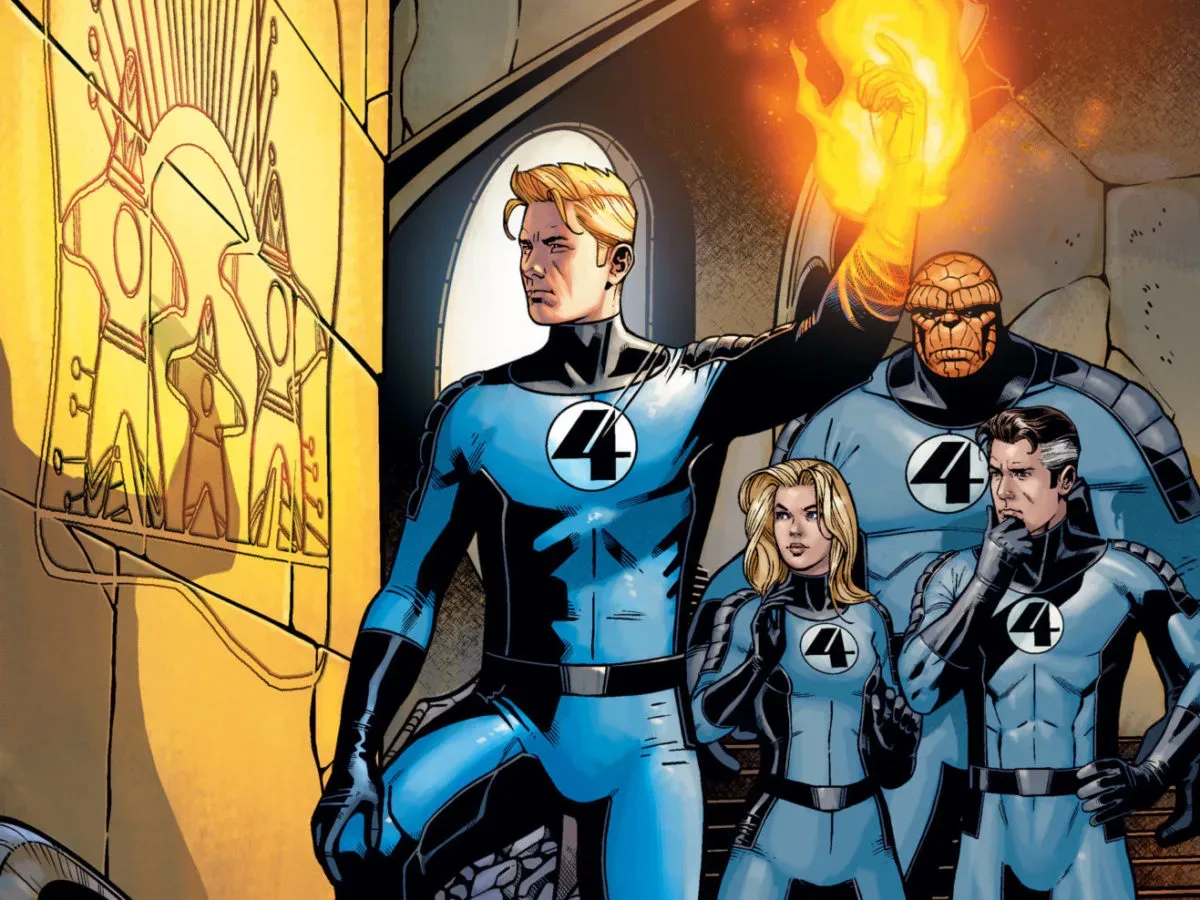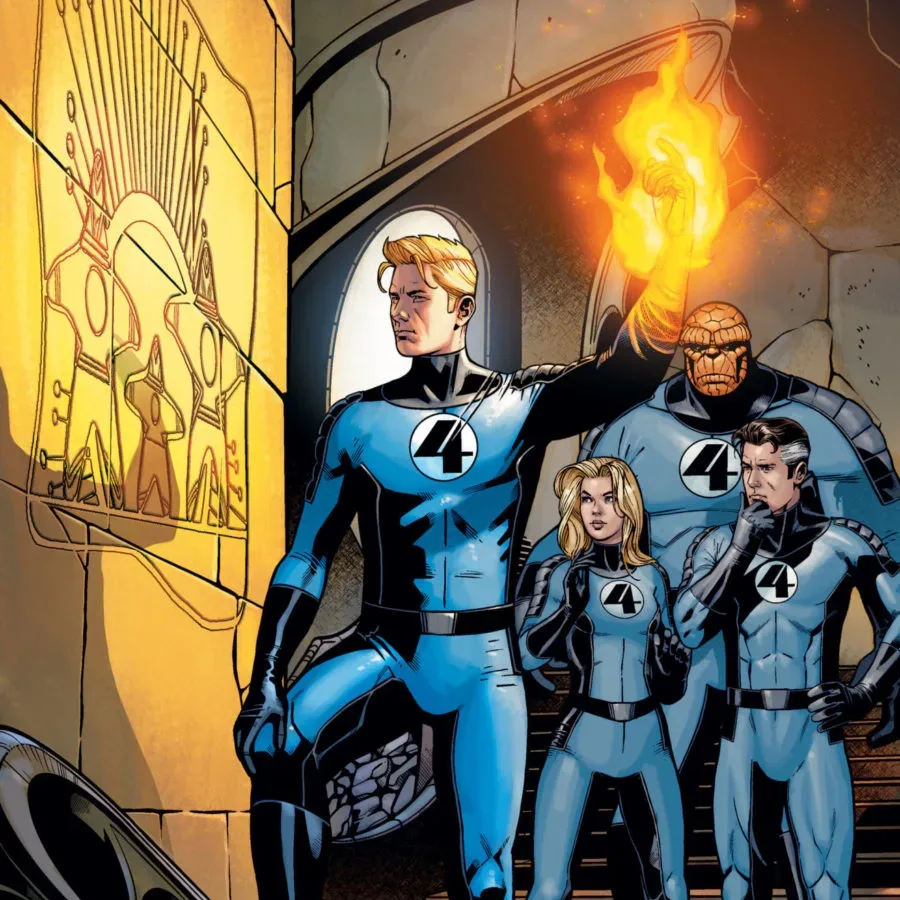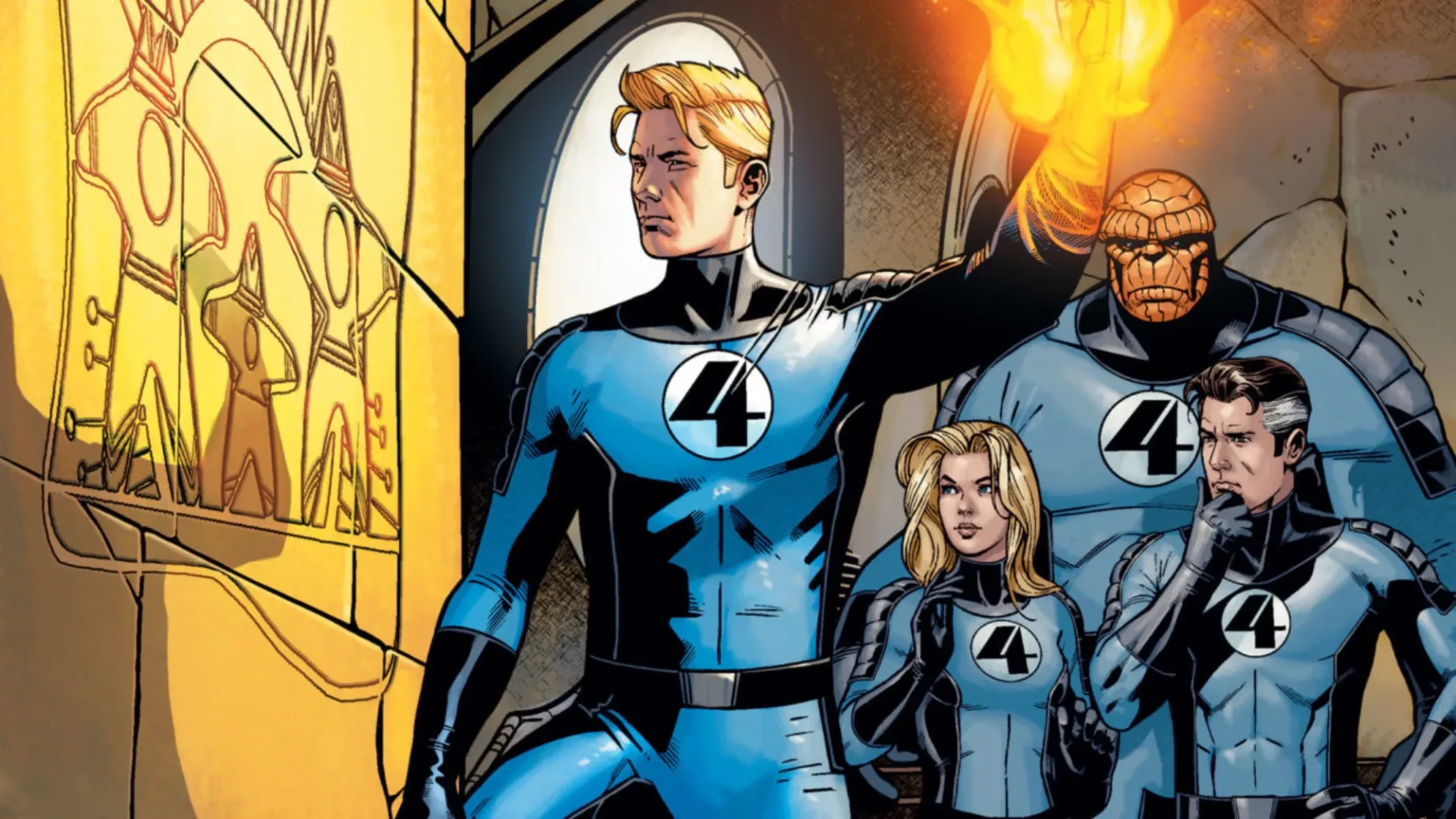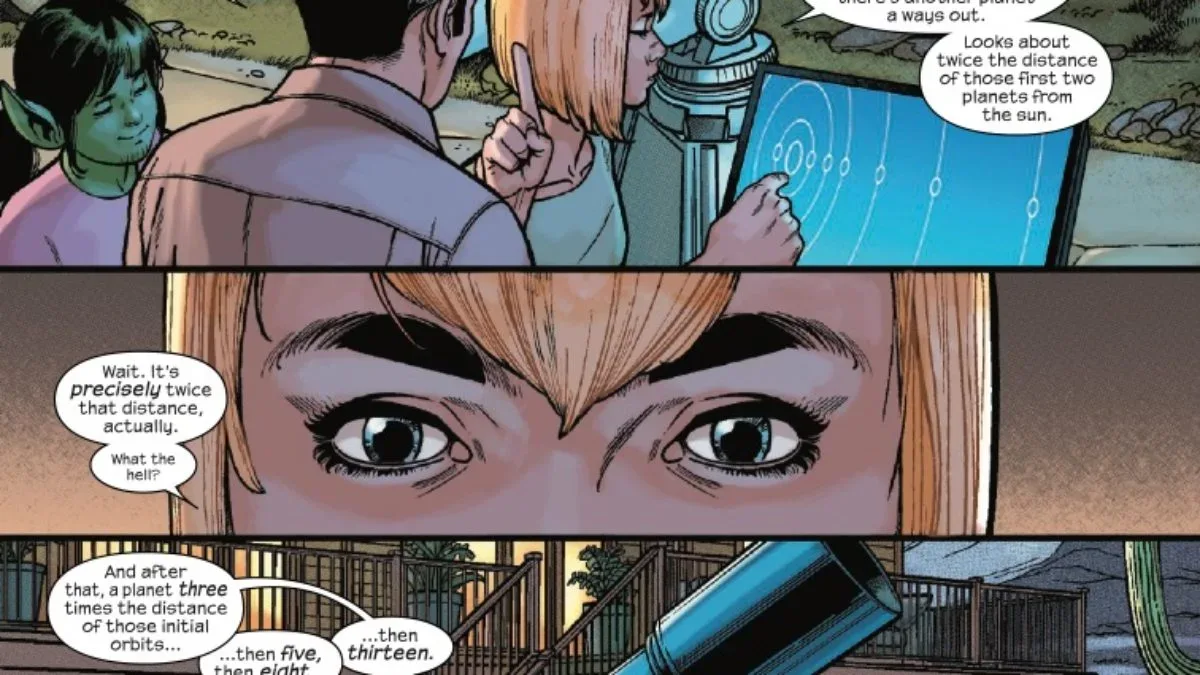
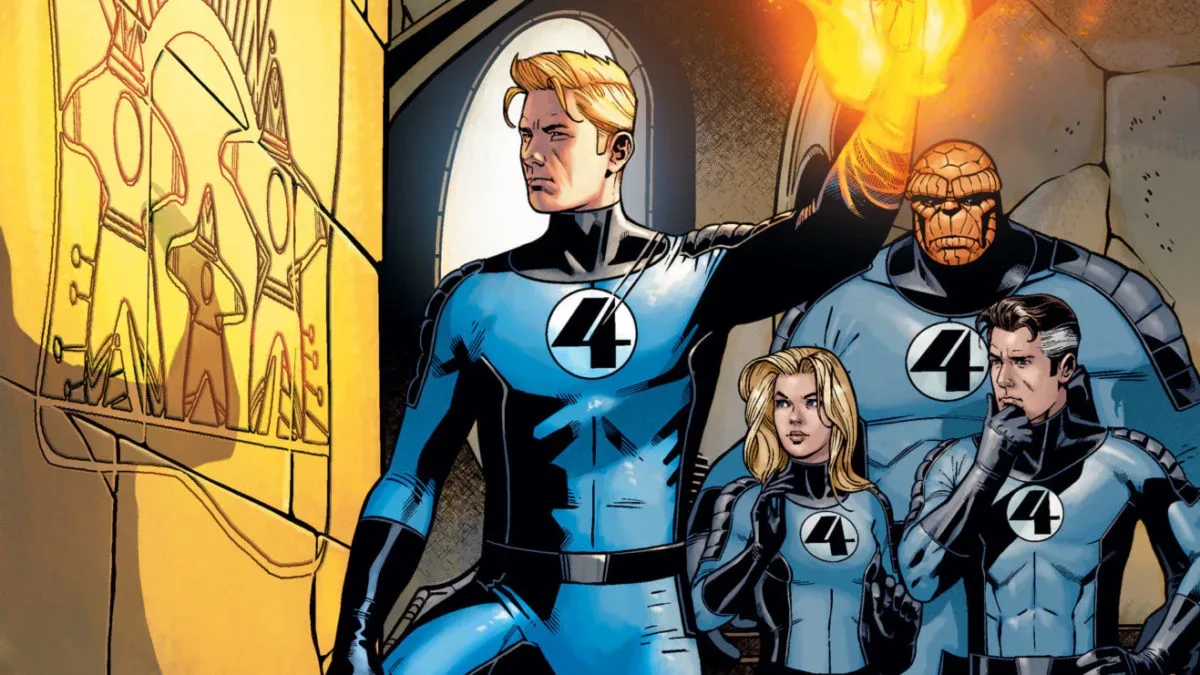
Marvel’s Fantastic Four #19 opens a new arc, “The Dark Forest,” by sending Reed, Sue, Ben, Johnny and their children toward an astonishing clue: evidence of solar engineering created by a civilization advanced enough to reshape a star’s output. It is a technosignature, rather than a biosignature—evidence of technology rather than evidence of life—and it functions as an invitation written on a planetary scale.
That setup gives writer Ryan North and artist Ramon Rosanas an especially fitting problem for the Fantastic Four. The team is not simply facing something powerful in deep space. They are trying to interpret a message left by people who are gone, separated from the present by distance, extinction and millennia. In a story concerned with signals, ruins and the limits of translation, the issue also turns its attention toward the language of comics itself.
A message that survives its makers
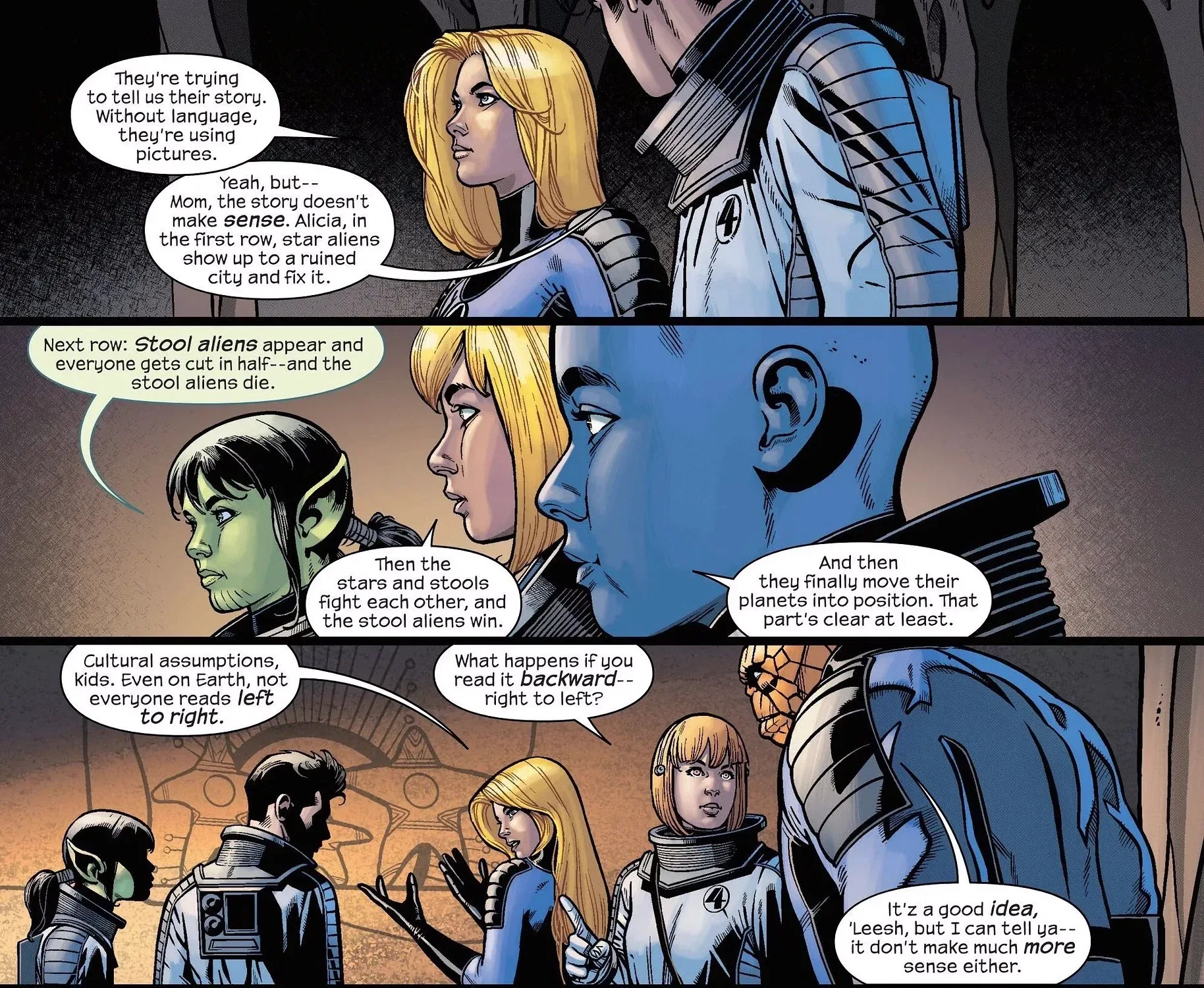
The issue’s central idea is deceptively direct: speech and writing can become unreadable across enough time, cultural change and physical separation. An alien civilization may have built its invitation with extraordinary scientific capacity, but that does not guarantee its meanings will arrive intact. Vocabulary, references and assumptions can all disappear with the people who made them.
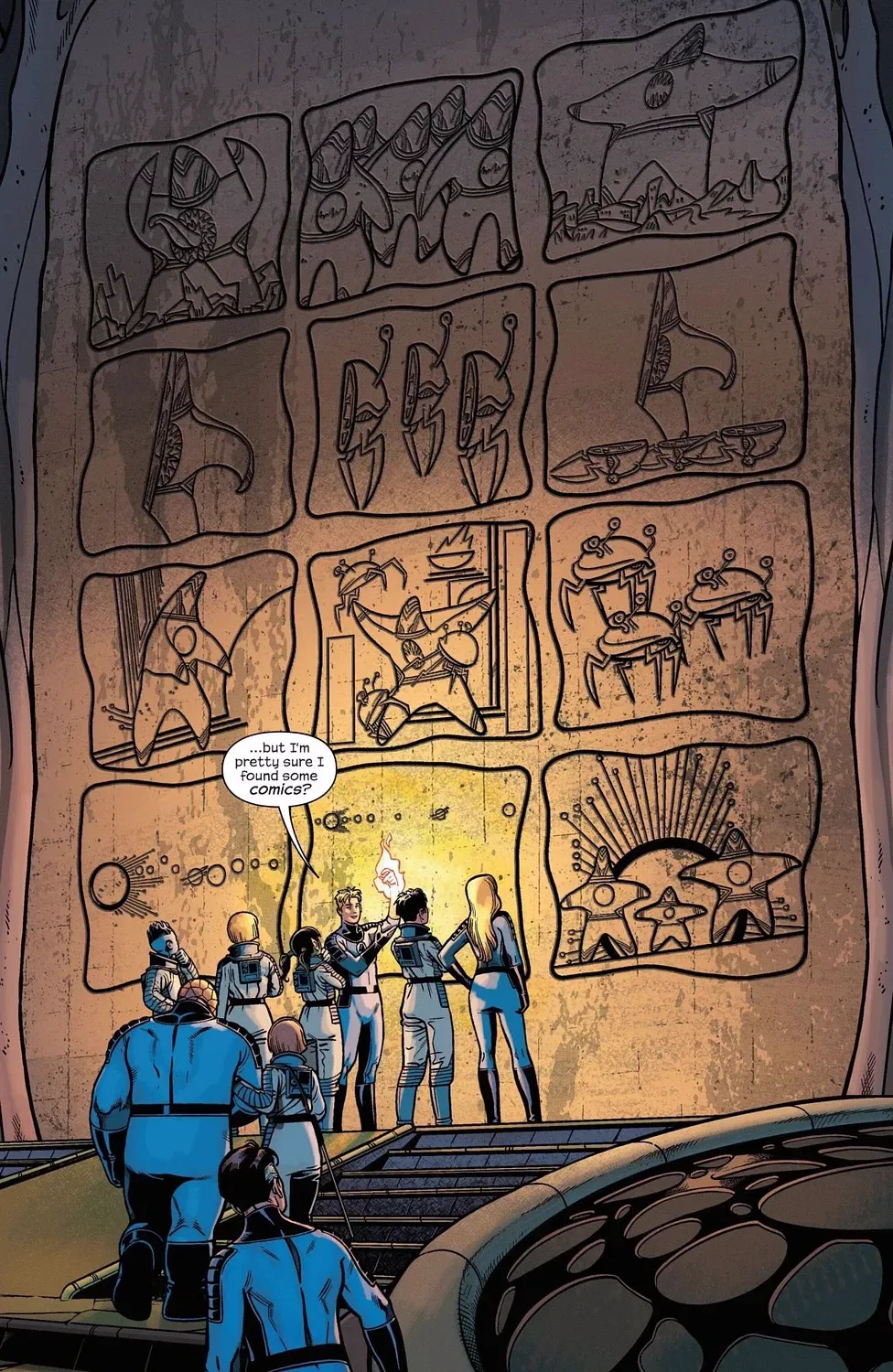
Pictures, sequences and recurring visual symbols offer a different route to communication. They are not automatically universal—readers still need context to understand what a symbol means—but they can convey action, scale, emotion, danger and cause-and-effect with fewer shared words. Comics are built from exactly those tools: an image placed beside another image, with the reader connecting the movement or missing moment between them.
That makes the medium more than a delivery system for the story. It becomes part of the story’s argument. Fantastic Four #19 suggests that sequential art may be one of the most durable ways to bridge an impossible gap. A reader can recognize a figure running, an object breaking, a crowd reacting or an event unfolding even where dialogue is inaccessible. The joke is wonderfully self-aware: a comic book is presenting comics as a potential intergalactic communications format.
What “universal language” means here
The phrase should not be read as a claim that any illustration can be understood perfectly by anyone, anywhere. Rather, the issue’s premise uses comics as a shorthand for communication that can retain meaning when ordinary translation fails. The distinction matters. Visual storytelling does not erase ambiguity; it gives characters another set of clues when words alone are insufficient.
For the Fantastic Four, that is an unusually appropriate challenge. Their defining strength is not merely that each member has a spectacular ability. They approach the unknown as a family of explorers, scientists and improvisers. A strange construction in the heavens is not just an obstacle to punch. It is evidence to inspect, a puzzle to solve and, possibly, a plea to answer.
The story also gives that lofty premise a small, sharp gag: even on a distant world in a remote era, manga may be more popular. It is a throwaway idea with a larger purpose. The joke prevents the issue’s meditation on art and survival from becoming overly solemn, while acknowledging the diversity within comics rather than treating the form as one monolithic thing.
“The Dark Forest” raises the stakes quickly
The invitation is not a safe inheritance from a vanished people. The civilization that made it is already gone, and the force responsible may still be present. That converts the opening mystery into a survival problem. The Fantastic Four and their children are placed far from help, where the most important discovery is also potentially a trap.
Solicitation details for the arc lay out an escalating three-part structure:
- Fantastic Four #19: The family investigates the solar-engineering technosignature and discovers that the society behind the message has disappeared.
- Fantastic Four #20: Aliens seeking the team’s extermination prove too powerful to defeat conventionally. Communication, not combat, becomes the apparent path to survival, with language and dimensional barriers complicating every effort.
- Fantastic Four #21: The conflict expands into higher dimensions, involving beings that can perceive the whole universe at once and are altering it for their own survival. The issue is positioned as the conclusion to the dimension-hopping adventure.
That progression makes the language theme practical rather than decorative. In #20, the family’s chance to live may depend on making themselves understood by entities they cannot overpower. The premise is a recognizable science-fiction pressure point: the inability to communicate is not merely frustrating; it can be fatal.
Johnny Storm is singled out as potentially crucial to finding an answer. The available details do not explain what solution he discovers, so readers should not expect a confirmed method before the issue itself supplies one. Still, his apparent role reinforces the series’ emphasis on collective ingenuity. The crisis is framed as one no other being in the universe has solved, a challenge designed to demand more than force.
Technical terms behind the cosmic hook
Technosignature: In the issue’s terms, this is detectable evidence that an advanced civilization has used technology to alter its environment. Here, the clue is solar engineering. The important narrative implication is intentionality: natural phenomena can be strange, but engineered changes suggest someone made a decision, left a structure or created a signal.
Biosignature: This refers to evidence that may point to life. The issue contrasts it with the technosignature to clarify that the Fantastic Four have not simply found life somewhere remote. They have found signs of civilization-level activity.
Solar engineering: The solicitation describes technology capable of manipulating or constructing around a star. It is deliberately immense in scale, immediately establishing that the absent civilization had capacities beyond ordinary planetary industry.
Extradimensional: The enemies in the latter chapters are described as coming from beyond the team’s normal dimensional frame of reference. This is not just a power-up label. It supports the arc’s communications problem: if two groups perceive reality in fundamentally different ways, shared language may be even harder to establish.
Why the comic-within-a-comic idea fits the Fantastic Four
Fantastic Four stories have long been well suited to high-concept scientific mysteries because discovery itself is part of the drama. “The Dark Forest” leans into that tradition while keeping the emotional question clear: what do people leave behind, and can someone else understand it after they are gone?
The answer offered in #19 is not that images solve every divide. It is that art can carry a signal surprisingly far. A panel-to-panel sequence can depict an event without requiring its audience to share a spoken language. A visual joke can cross an enormous conceptual distance. And a comic can make that point without pausing the adventure, because the reader is actively using the medium’s grammar while reading the argument.
That self-reference helps distinguish the arc’s opening from a standard “ancient alien ruins” setup. The lost civilization is not only a source of lore or a threat trigger. Its remains create a question about interpretation—and the book’s own form offers one possible response.
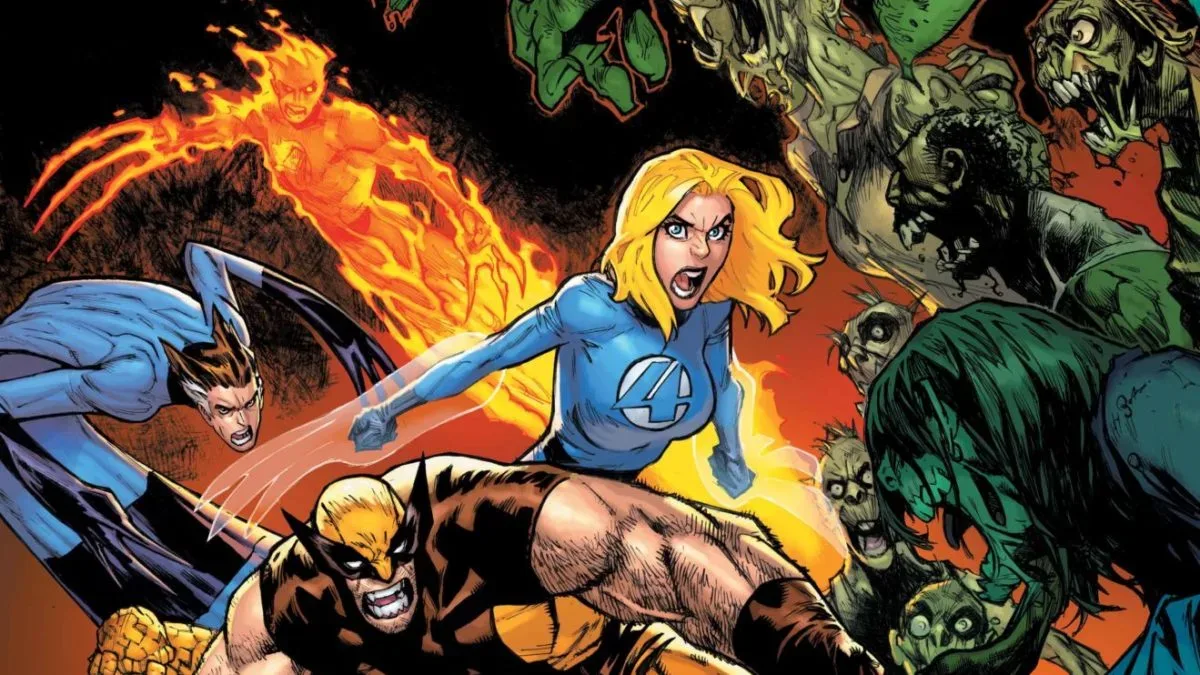
After the cosmic storyline, Fantastic Four #22 is set to move the team to rural Canada, where the dead are rising and Wolverine joins the investigation. The shift promises a smaller-scale setting after the universe-spanning material, although its premise still mixes horror, science and a mystery connected to the team’s past. Readers who enjoy comics built around unexpected genre collisions may also appreciate the latest Archie vs. The Terminator crossover news.
Fantastic Four #19 is credited to Ryan North and Ramon Rosanas, with a listed 32-page, Rated T format and a $4.99 price. Whatever the full answer to its alien message proves to be, its opening proposition is already clear: when civilizations vanish and words fail, a sequence of pictures may still be waiting for someone to read it.