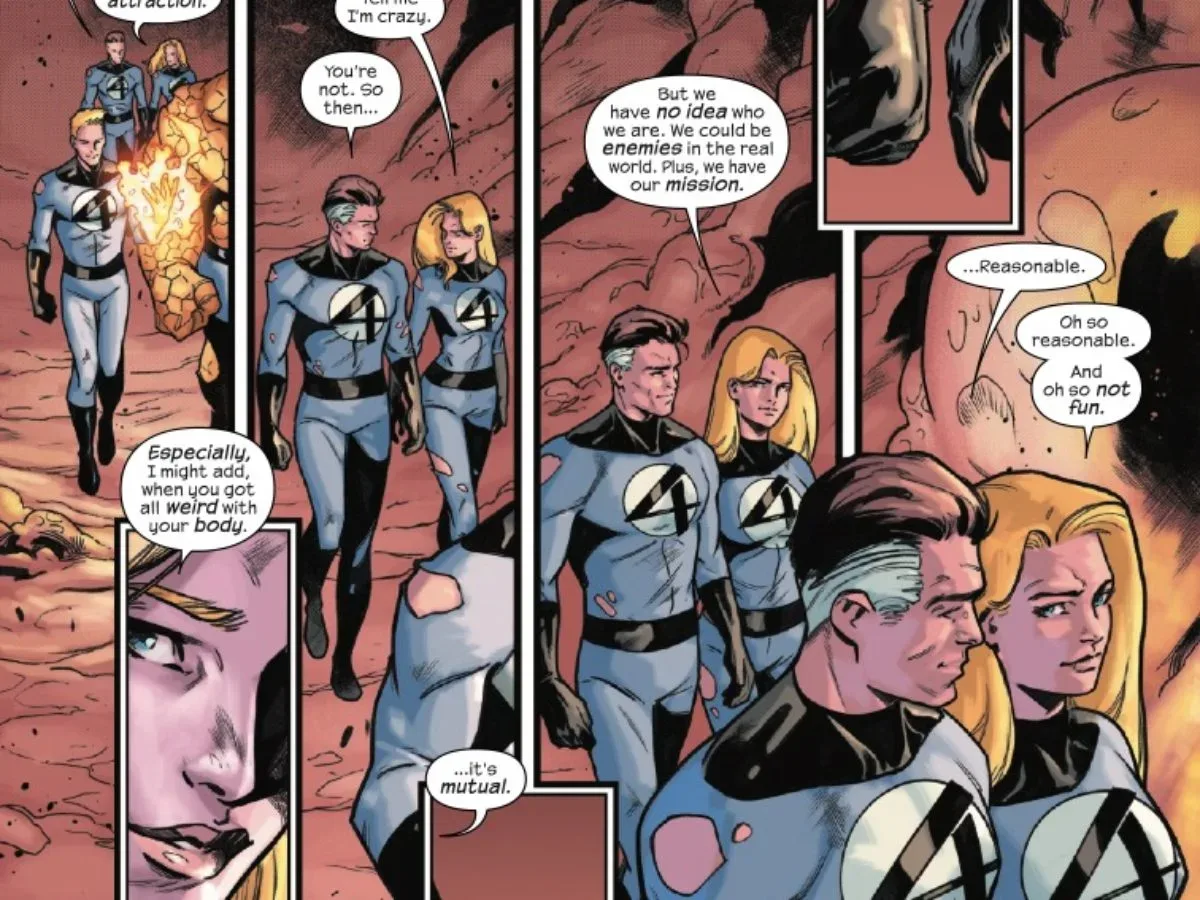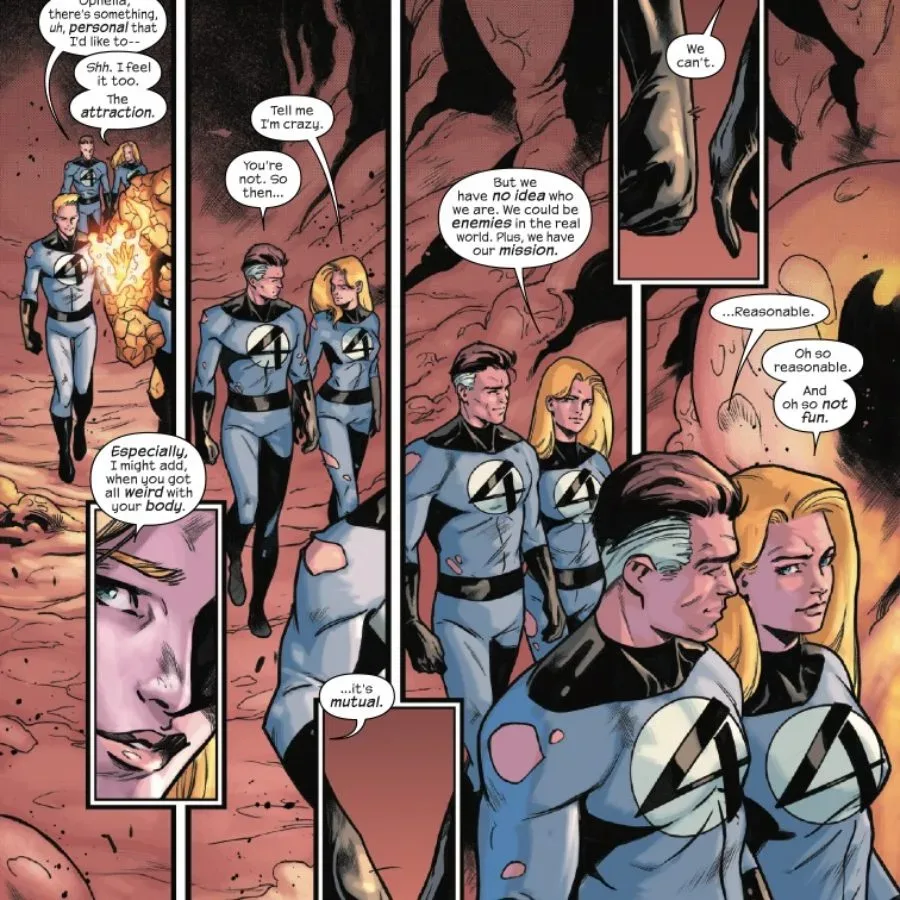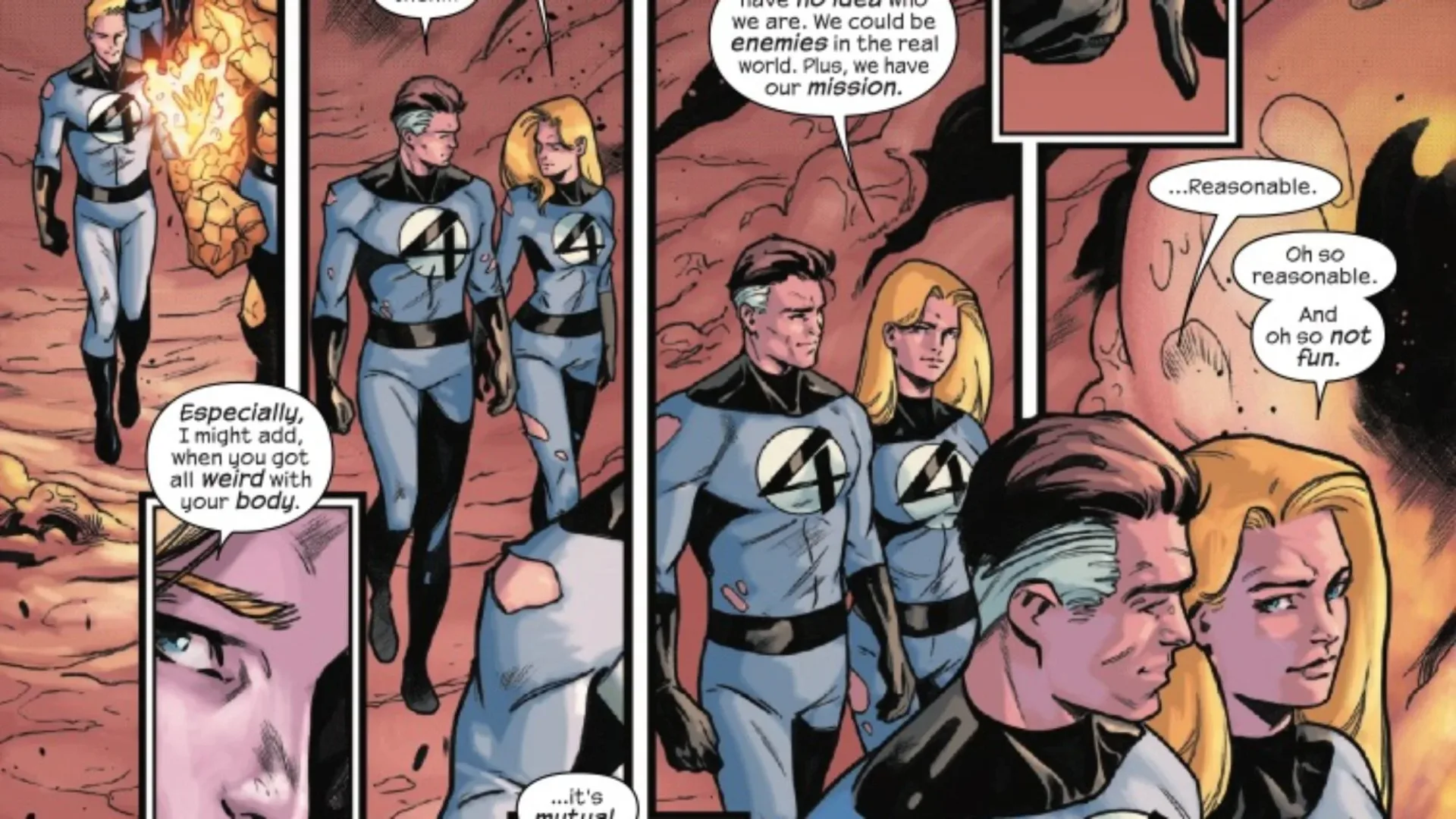
Fantastic Four #18 arrives October 28 as the conclusion to the team’s DNX tie-in, placing Marvel’s First Family in a particularly unstable version of a familiar superhero problem: they do not remember who they are, why they are where they are, or how their extraordinary abilities are supposed to work. The immediate stakes are not merely personal. Magneto’s life hangs in the balance, meaning the team must recover enough of its shared purpose to act before the crisis becomes irreversible.
The issue is written by Ryan North, with interior art by Vincenzo Carratu and a cover by Giuseppe Camuncoli. It is a 32-page, Rated T Marvel comic with a listed US price of $4.99. Jorge Fornés, Netho Diaz and David Yardin variants are also listed at the same US price.
A Fantastic Four story built around identity
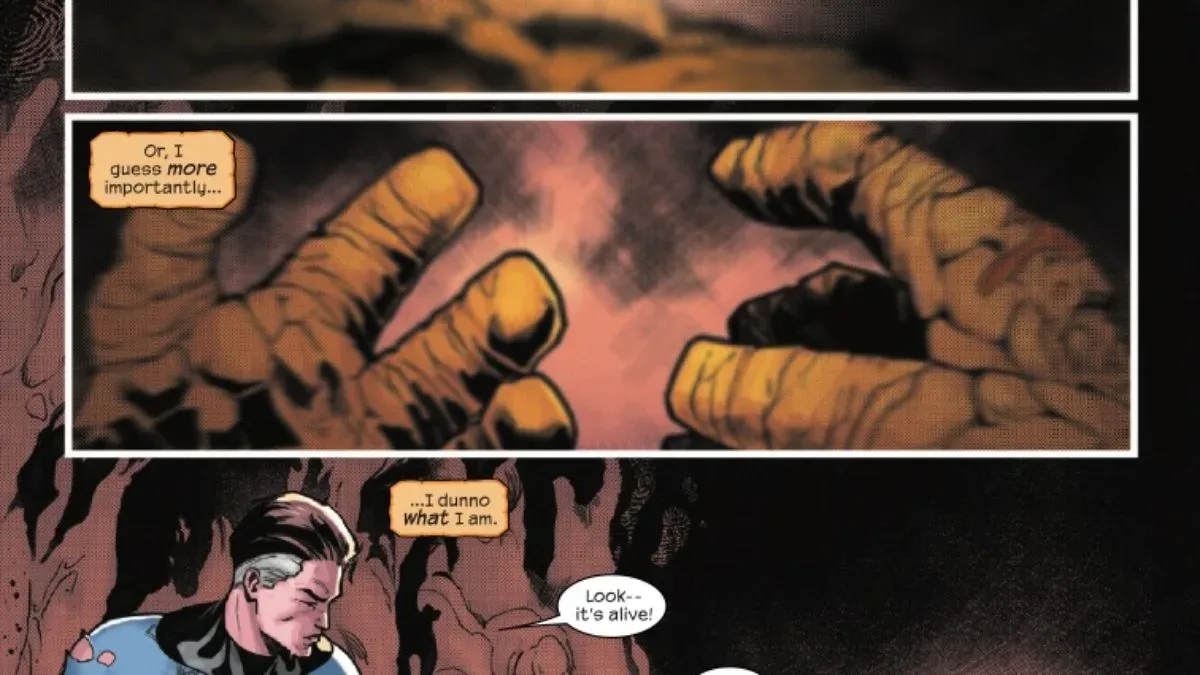
Memory loss is more than a temporary obstacle when the affected characters are the Fantastic Four. The group is defined by the distinct roles and personalities that shape how its members operate together. In the premise for this issue, that framework has disappeared. The team is not only without its history; it also lacks a clear understanding of what each member can do.
That distinction matters. A hero forgetting a name is one thing. A hero unable to safely interpret or control a power is another. The setup turns the Fantastic Four’s abilities into potential liabilities. Rather than beginning with a practiced response to danger, the team must first work out their own limits while confronting unfamiliar opponents.
The solicitation explicitly frames the Four as a danger to themselves as well as anyone standing against them. That is a useful way to read the issue’s central tension. The characters’ powers are normally sources of confidence and cooperation; here, uncertainty changes the same capabilities into a practical problem. The race to save Magneto therefore has two tracks: determine what has happened to the team, then survive the consequences of acting without the knowledge that usually makes them effective.
Why Magneto raises the pressure
Magneto’s threatened life supplies the issue with a specific deadline and keeps the amnesia concept from being only an internal character exercise. The preview information does not explain what has put him in danger or identify the enemies the Fantastic Four will face, so those details remain open. What is clear is that the team needs answers fast, even though it has lost the personal and tactical context that would normally guide a rescue.
That makes the issue a tie-in conclusion with a self-contained dramatic engine: the protagonists are confused, their powers are unreliable in practice, and someone’s life depends on them finding their footing. Readers following DNX can expect this chapter to resolve the Fantastic Four-specific portion of that event material, while the core premise is straightforward enough to identify the immediate conflict.
For readers watching Marvel’s wider line, it is also worth separating confirmed information from implication. The issue is identified as a DNX tie-in and as the conclusion to that tie-in. Beyond that, the available description does not establish the larger event’s rules, the origin of the memory loss, or Magneto’s exact condition. Those are story questions, not details that have been spelled out in the solicitation.
Acid, romance and a conversation between Ben and Johnny
The issue’s tone appears deliberately wide-ranging. Alongside the jeopardy surrounding Magneto and the team’s amnesia, the description promises romance and kissing, the Beast, and a meaningful conversation between Johnny Storm and Ben Grimm about their relationship. That combination is recognizably suited to a Fantastic Four story: a family unit can move from catastrophe to friction to affection without treating any of those elements as separate from the main plot.
Ben also gets dunked in acid, an encounter described in no uncertain terms as painful. The available material does not say how he gets there, who is responsible, or what the long-term effect will be. It does, however, signal that the issue will not handle the team’s collective confusion as a purely abstract threat. The danger has an immediate physical cost, even for a member of the Four known for unusual durability.
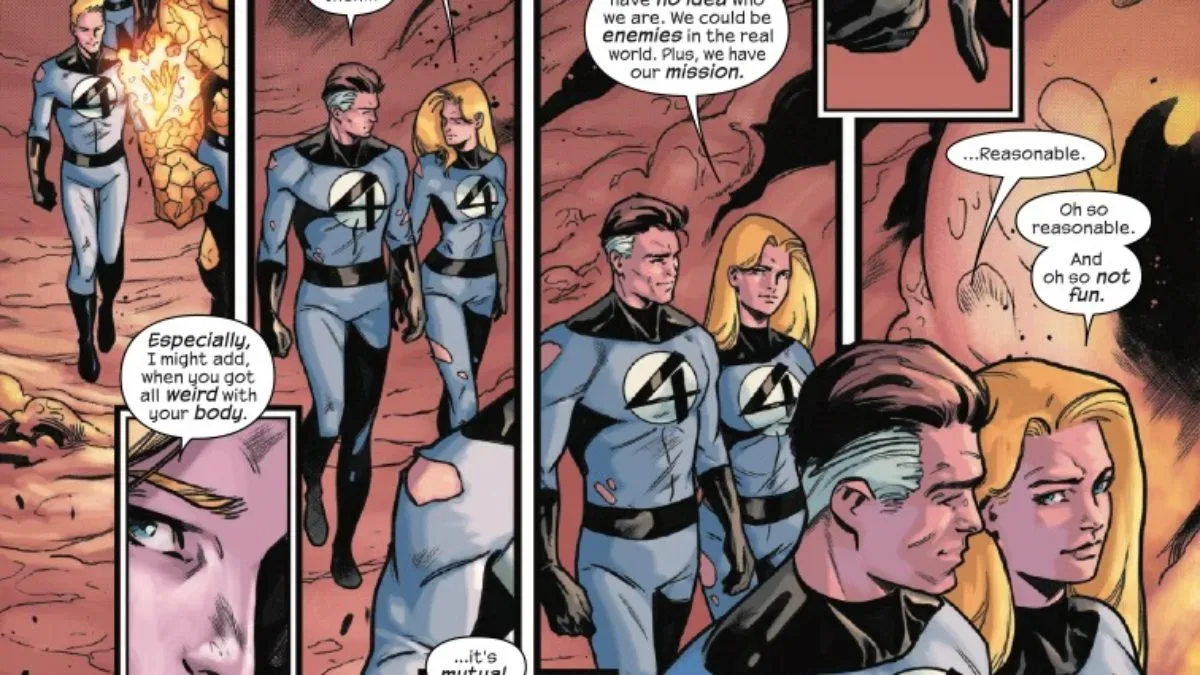
The Johnny-and-Ben material may be especially important to the issue’s broader idea of identity. Their relationship is one of the team’s enduring interpersonal dynamics, but this setup removes the memories that would usually define it. A direct conversation between the two can therefore serve more than one function: it can bring emotional texture to the story while helping establish what their connection means when neither character has full access to the past.
That is analysis rather than a confirmed plot beat. The confirmed point is simply that Johnny and Ben will have a real talk about their relationship. Still, placing that promised moment beside total memory loss naturally makes it one of the elements to watch when the comic arrives.
What “tie-in conclusion” means here
In comic-book publishing, a tie-in is an issue connected to a larger storyline or event. The label can indicate that the issue shares a setting, crisis or consequences with that broader narrative, while still centering a particular ongoing series and its cast. In this case, Fantastic Four #18 is billed as a DNX tie-in and as the conclusion to the title’s part of that material.
That wording does not, by itself, tell prospective readers whether they need other DNX chapters to follow every detail. It does confirm that this is not being presented as an unrelated detour. Readers primarily interested in the Fantastic Four have a clear entry point into the issue’s immediate premise: the team has no memories, their powers are dangerously unfamiliar, and Magneto needs saving.
That blend of a wider-line connection and a focused character predicament is often what makes tie-ins appealing. The event label increases the stakes around the issue, while the title’s own cast still gets a problem tailored to its specific strengths. Here, those strengths have been temporarily removed from the characters’ understanding, which gives the premise an added twist.
Creative team and edition details
North and Carratu are the credited creative team for Fantastic Four #18, with Camuncoli handling the main cover. The issue carries the identifier 75960621122701811. For collectors who prefer alternate artwork, the listed options are a Jorge Fornés DNX variant, a Netho Diaz art-style variant and a David Yardin DNX variant. Each has a listed US price of $4.99 and Canadian price of $6.25.
- On sale: October 28, 2026
- Publisher: Marvel
- Format: 32 pages
- Rating: T
- US cover price: $4.99
- Main cover: Giuseppe Camuncoli
- Variants listed: Jorge Fornés, Netho Diaz and David Yardin
Its $4.99 price is shared by the main edition and the listed variants, based on the available solicitation details. No story differences between the editions are described, so the distinctions readers can confirm are the covers and variant designations rather than alternate interiors or expanded content.
What readers can expect on October 28
Fantastic Four #18 has a notably direct hook: Marvel’s First Family has to save Magneto while lacking the identities, memories and power knowledge that make them the Fantastic Four. The premise leaves ample room for action, but the announced mix of romance, the Beast, Ben’s painful acid encounter and the Johnny-Ben conversation suggests a story that is also interested in the human bonds holding the team together.
Readers wanting another example of a Marvel issue positioned as a welcoming starting point for a fresh storyline can also see Daredevil #8’s new-reader-friendly arc. Fantastic Four #18, meanwhile, places its accessibility in the premise itself: even the heroes begin without their usual context.
Whether the Four regain their memories, what their unfamiliar foes want, and how Magneto’s crisis is resolved are questions the solicitation appropriately leaves for the comic. What is already established is a conclusion built around uncertainty: the team must rediscover who it is under pressure, because standing still is not an option.