Riverdale is getting an unusually severe attendance problem in Archie vs. The Terminator #2. The second chapter of Dynamite’s four-issue crossover miniseries is listed for comic shops on November 18, 2026, and its central hook is wonderfully direct: teenage John Connor enrolls at Riverdale High, a Terminator follows him, and Archie’s usual circle of friends becomes responsible for helping him escape.
That setup is the story’s real selling point. Archie stories are commonly built around a close-knit cast, a familiar town, school life, friendships and romantic complications. Terminator fiction, as framed by this solicitation, brings a relentless machine hunter and a target whose survival is urgent. Putting John Connor in Riverdale High does not merely place two recognizable properties beside one another. It gives the crossover a clear pressure point: an ordinary high-school environment suddenly has to accommodate the logic of a chase thriller.
A transfer student with very dangerous baggage
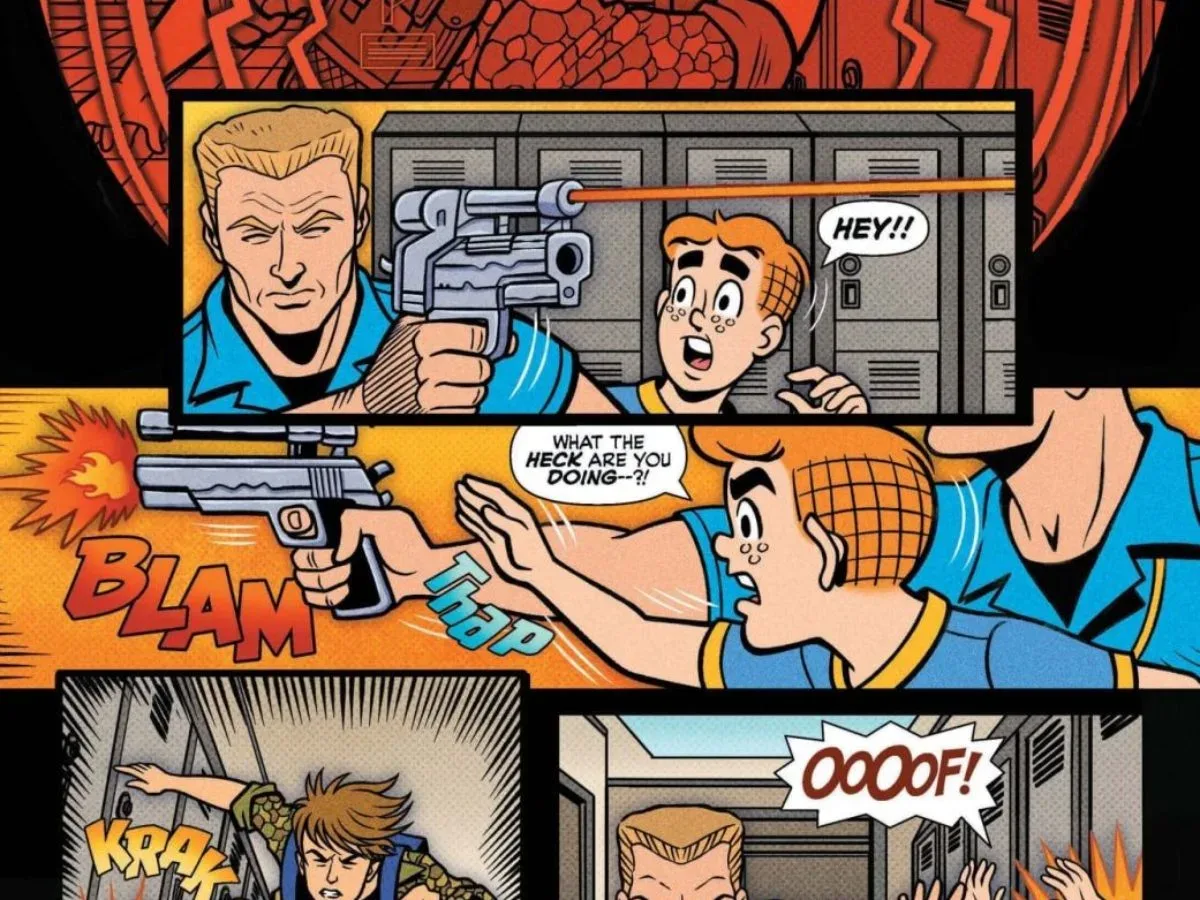
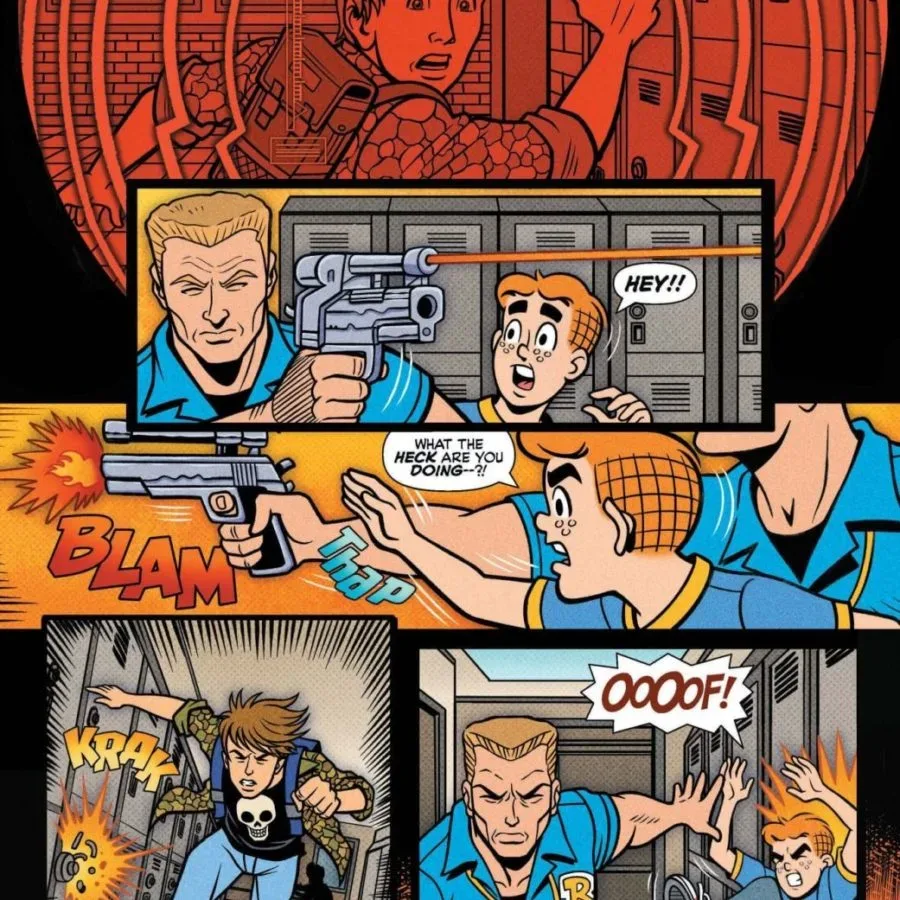
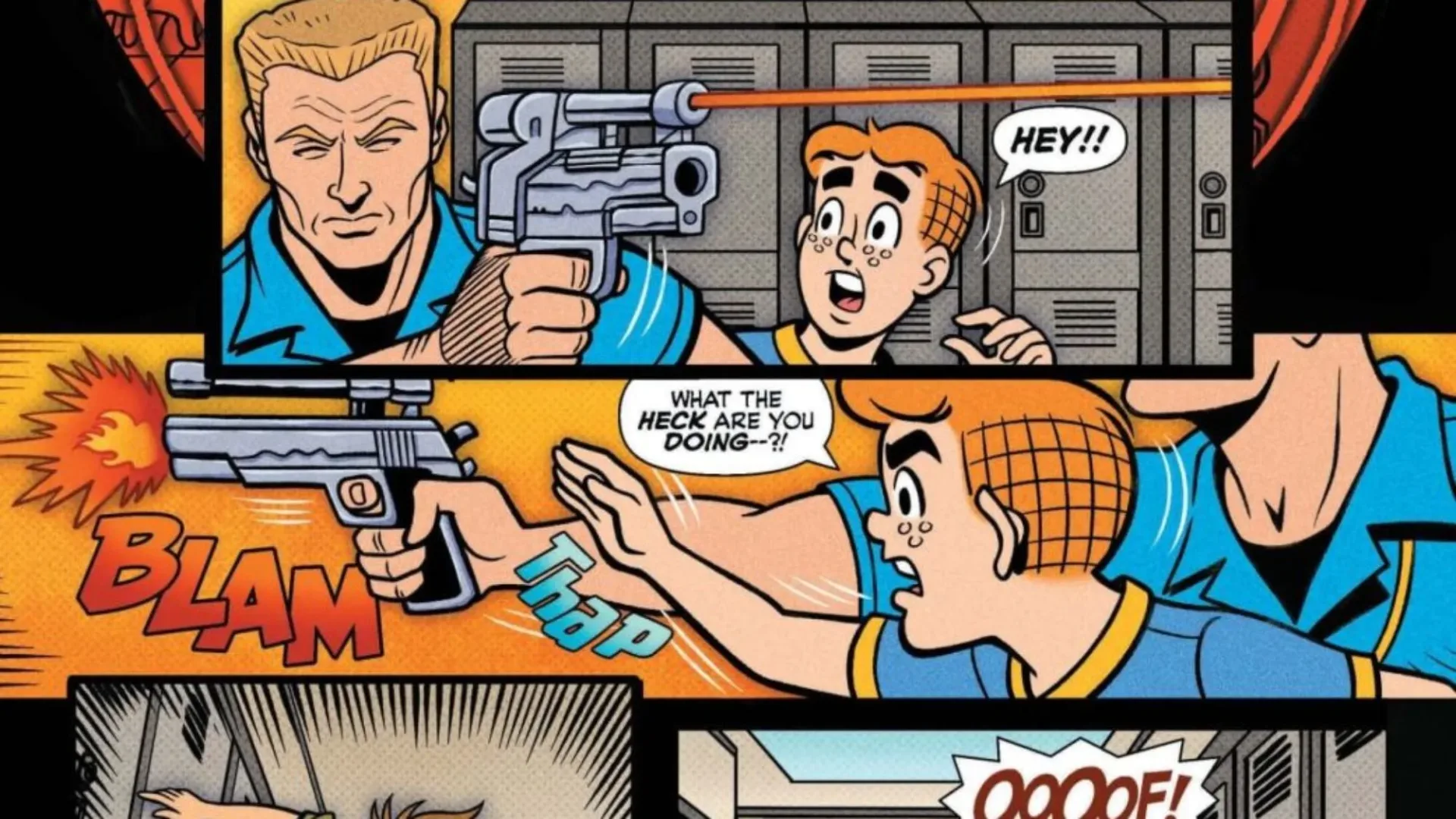
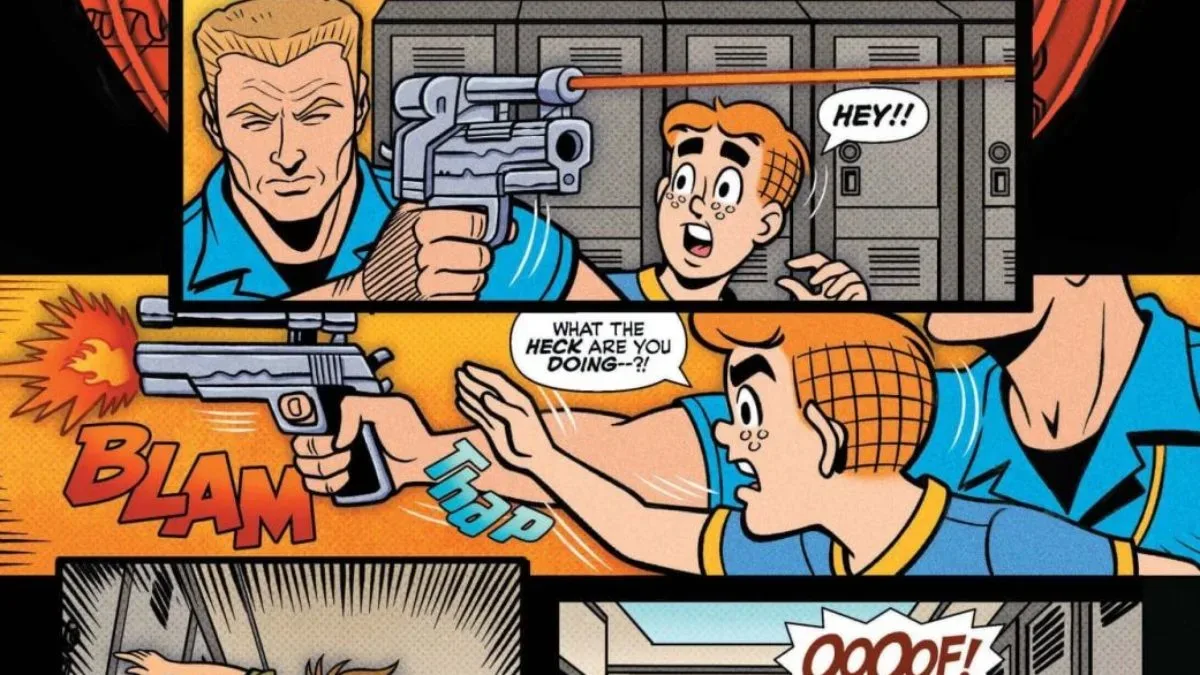
The official premise identifies John Connor as a teenager when he arrives at Riverdale High. Archie and the gang soon find themselves “in the crosshairs” of the Terminator hunting him. The danger then expands beyond the school campus, with the group helping John evade the machine as chaos unfolds across Riverdale.
That wording establishes a useful distinction. John is the pursued figure, but the solicitation does not present Archie and his friends as passive witnesses. They are drawn into the escape, becoming active allies as the pursuit moves through town. For a four-issue miniseries, that is enough of a framework to sustain escalating trouble without revealing exactly how the Terminator operates, what routes the group takes, or which Riverdale characters shoulder the greatest risk.
“Crossover” can mean a lot of things in comics, from a brief shared appearance to a story designed around the collision of two very different tones. Here, it means the core premise itself depends on the meeting. Remove John Connor and the Terminator, and there is no machine-driven hunt across Riverdale. Remove Archie’s community, and there is no distinctive civilian group positioned to help a newcomer survive it. The premise is built around both sides affecting one another rather than one merely making a cameo in the other’s setting.
Why Riverdale is a strong setting for the chase
Riverdale is described as the place where the chaos plays out, which matters because it turns the setting into more than the location of John’s enrollment. A Terminator pursuit is not being confined to an isolated confrontation. The threatened space is a town, and Archie’s friends are caught up in events that spread beyond the initial classroom-level disruption.
There is a practical storytelling advantage to that approach. A school transfer is a simple, understandable entry point for John Connor: he can meet the cast in the place where Archie stories naturally bring characters together. Once the Terminator’s presence breaks that normality, the story can move outward into Riverdale. It provides a clean transition from a familiar teenage routine to a town-wide emergency, without requiring the solicitation to over-explain the crossover’s mechanics.
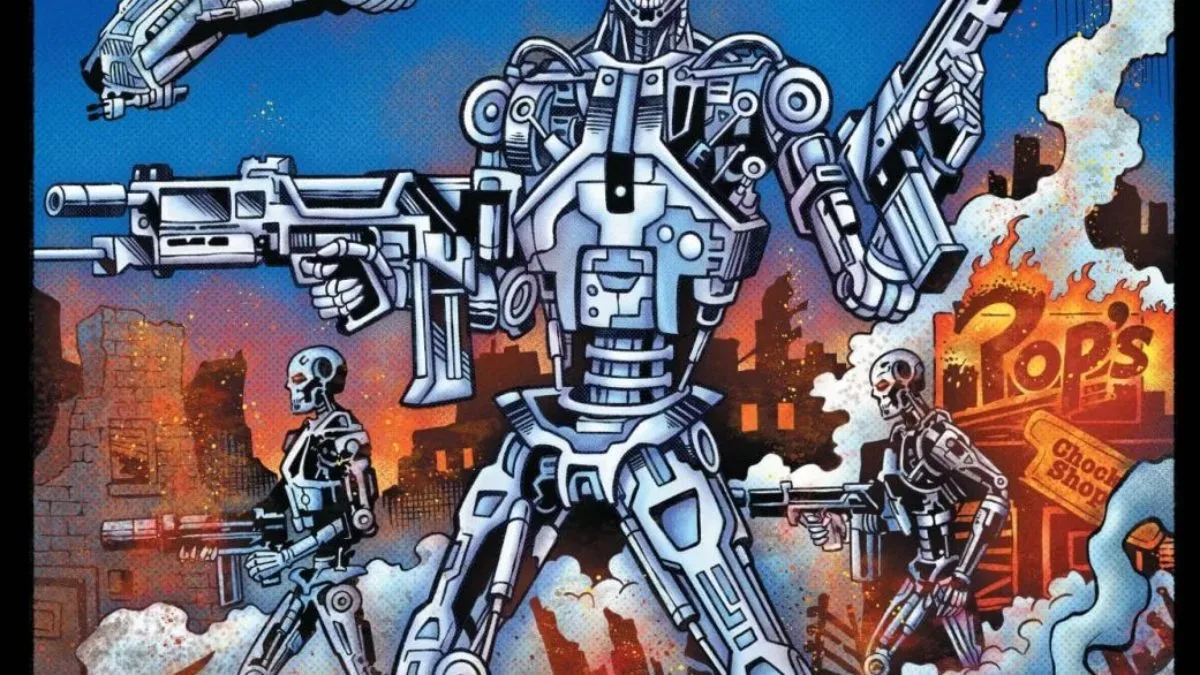
The available details do not say whether the issue leans primarily toward horror, action, comedy or another balance of those modes. Readers should therefore be cautious about assuming a particular tonal formula from the premise alone. What is confirmed is the dramatic contrast: a “killer robot” threat is introduced into a setting strongly associated with high school and Archie’s ensemble. That contrast is likely to be the series’ immediate appeal, regardless of precisely how the creative team calibrates it on the page.
Creative credits and a detail worth watching
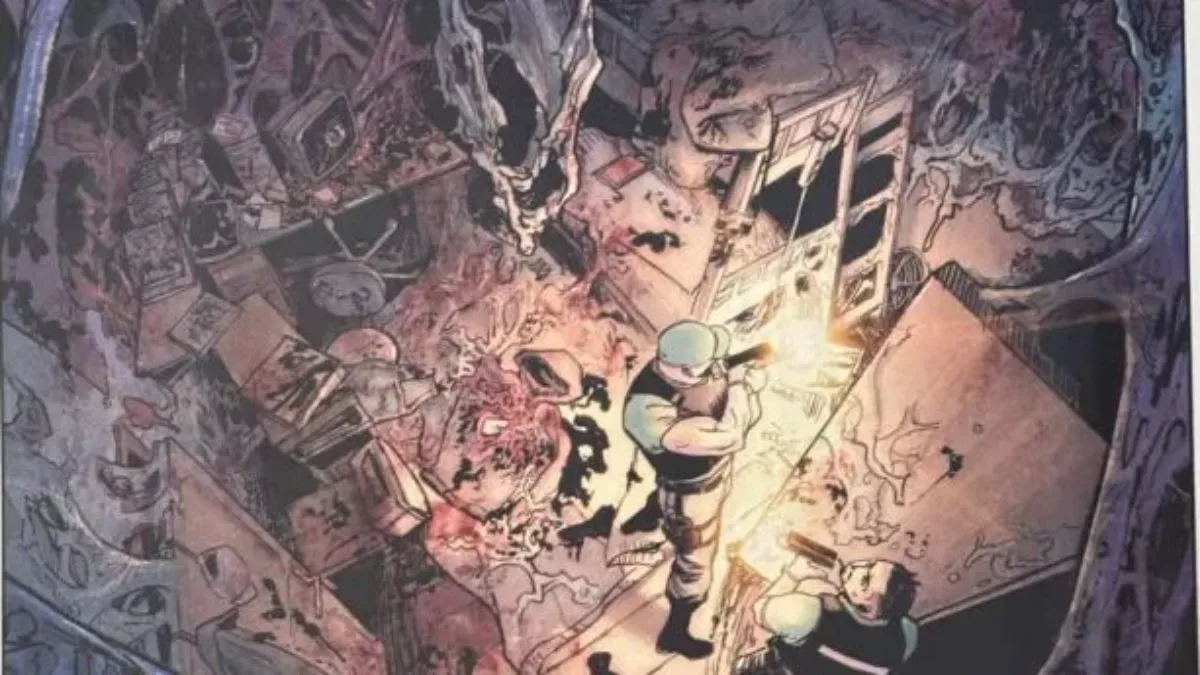
Rory McConville is credited as writer. The listing also identifies him through work on Terminator, Red Sonja and Spawn. For the visual side, the promotional description says the series is drawn by Archie artists Steven and Lily Butler. However, the detailed issue listing separately credits Bill Galvan for interior art and names Francesco Francavilla as cover artist.
Those credits are not fully aligned in the supplied material. Rather than treating that conflict as confirmation of an expanded or divided art team, the safest reading is that prospective buyers should check the final issue’s indicia or retailer listing for the most definitive interior-art credit. Comics solicitations can distinguish between series-level promotion and issue-specific credits, but the information supplied here does not explain the difference.
That ambiguity does not affect the announced plot, but it is relevant to readers who follow specific artists or collect by creator. It is also a good reminder that a cover credit and an interior-art credit are different roles. The cover is the image used to represent and market an individual edition; interior art refers to the sequential pages that carry the narrative itself.
Four cover artists, four ways into the issue
The issue is set to have covers by Francesco Francavilla, Robert Hack, Bjorn Barends and Bill Galvan. The listing assigns $4.99 pricing to the identified Francavilla, Hack and Barends variants, while also listing a standard entry at that price. It gives a direct point of comparison for anyone deciding between editions: the story content is the reason to pick up the issue, while the cover is the principal stated difference among the listed versions.
Francavilla is identified as the cover artist in the issue’s detailed credits, and the supplied description specifically calls out a Francavilla image involving Jughead’s crown, a skull and a robotic foot. That imagery signals the book’s basic collision of symbols: a recognizable Riverdale element under a piece of Terminator-style menace. It does not reveal the narrative outcome, but it captures the appeal of placing comic-book iconography from two radically different fictional spaces in one visual composition.
For collectors, “variant cover” generally means an alternate cover edition of the same numbered issue. Nothing in the listing indicates that these covers represent different stories or additional interior material. Shoppers interested in a particular cover artist should use the listed edition names and item numbers carefully, especially because the copy includes multiple entries: 0926DE0633 for the Bjorn Barends cover, 0926DE0634 for the Robert Hack cover, 0926DE0635 for another listed cover, and 0926DE8433 for the Francesco Francavilla cover.
What issue #2 needs to establish
As the second installment of a four-issue event, this chapter has a relatively clear job based on the synopsis. The crossover premise has already put John Connor in Riverdale; now the Terminator’s hunt forces Archie and company into motion. The issue can therefore deepen the immediate stakes of the chase, show how the ensemble responds to John, and make Riverdale feel meaningfully affected by the intrusion.
The solicitation does not disclose a specific villain identity beyond “a Terminator,” nor does it reveal who is injured, captured, rescued or otherwise changed by the issue’s ending. It also does not specify whether familiar supporting characters such as Betty, Veronica, Jughead or Reggie take particular roles in John’s protection. Those unanswered questions are not gaps to be filled with speculation. They are simply the territory the comic still has to cover.
Still, the basic scenario provides a readable promise. Archie and his friends are not being asked to solve an abstract science-fiction puzzle from a safe distance. They are being pursued around their own town alongside a teenager who is already a target. In a miniseries built on a sharp genre collision, that makes #2 the point where the concept must demonstrate how the collision functions as a story rather than only as a title.
Release and buying details
- Title: Archie vs. The Terminator #2
- Publisher: Dynamite Entertainment
- Release listing: November 18, 2026
- Format: Issue #2 of a four-issue crossover miniseries
- Writer: Rory McConville
- Interior-art credits: Promotional copy names Steven and Lily Butler; the issue listing names Bill Galvan
- Cover artists: Francesco Francavilla, Robert Hack, Bjorn Barends and Bill Galvan
- Listed price: $4.99
The release arrives alongside a broader run of genre-bending comic premises; for another current example of a familiar hero reframed through horror, see the latest details on Midnight Spider-Man #2.
For Archie vs. The Terminator #2, the key promise remains unusually simple and unusually specific: Riverdale’s newest student is John Connor, something lethal has come looking for him, and Archie’s friends are now part of the escape route.