The Fantastic Four’s 2027 itinerary is shaping up to be aggressively unfriendly to the human nervous system. A newly revealed pair of issues from writer Ryan North and artist Ramon Rosanas moves first into a higher-dimensional survival story, then straight into a zombie crisis in rural Canada—with Wolverine arriving to help contain the outbreak.
Fantastic Four #21 is scheduled for January 2027, followed by Fantastic Four #22 in February. Both issues are written by North, drawn by Rosanas, and feature covers by Humberto Ramos. The first is identified as the third chapter of “The Dark Forest,” while the second begins the Canada-set horror premise.
The two solicitations suggest a deliberate tonal pivot rather than a change in creative team: cosmic and conceptual danger in one issue, then a more immediate monster outbreak in the next. That is a useful fit for a Fantastic Four series, whose basic tool kit can accommodate scientific puzzles, family dynamics, large-scale threats and unnerving speculative ideas without treating those modes as mutually exclusive.
Fantastic Four #21 takes the team beyond ordinary perception
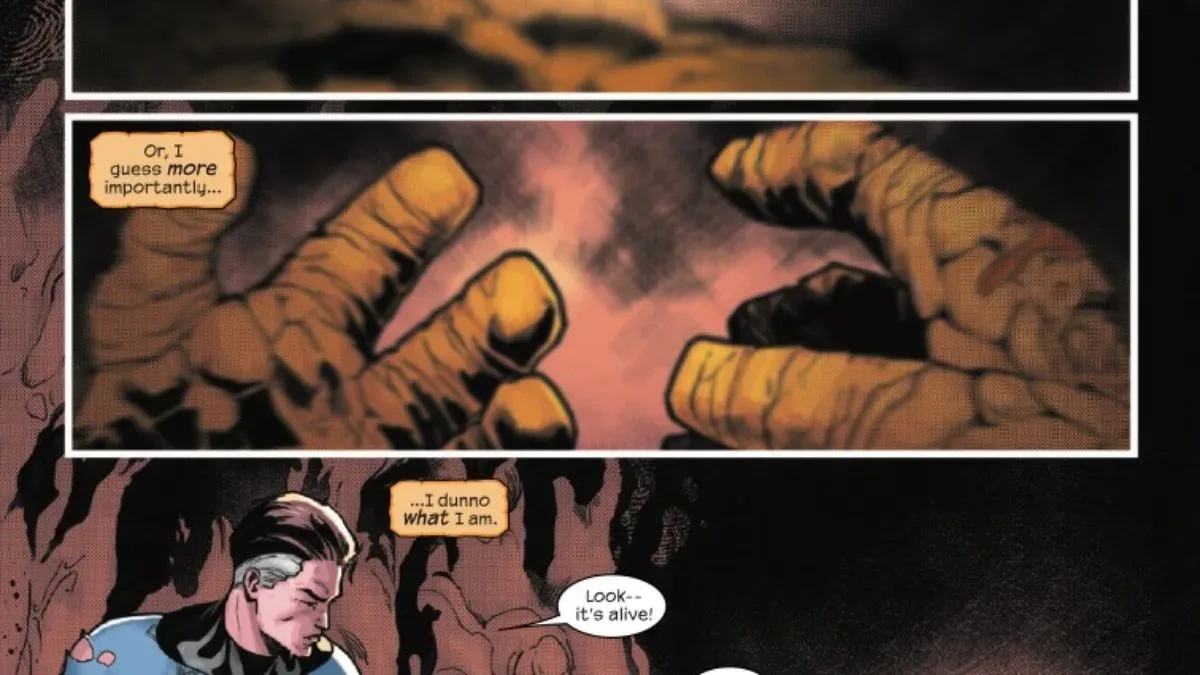
January’s Fantastic Four #21 continues “The Dark Forest.” The team has encountered extradimensional aliens described as able to perceive the whole of the universe at once. Those beings have been altering reality in brutal ways to preserve themselves, but they are not invulnerable: they fear entities capable of destroying them with a thought.
That fear is bad news for the Fantastic Four, because the aliens have sent the team to confront it. The family is stranded in higher dimensions, facing phenomena their minds did not evolve to interpret. The issue’s description promises an eventual revelation concerning those creatures and says the dimension-hopping storyline ends on a universe-spanning scale.
“Extradimensional” here means originating outside the normal dimensions of the characters’ reality. In superhero science fiction, it is a compact way of establishing that a threat may not follow ordinary physical assumptions. The premise is not simply that the enemies are powerful; it is that their perspective and nature are fundamentally difficult for human beings to comprehend.
Higher dimensions likewise does not necessarily mean a faraway location. The term generally frames a reality beyond familiar space, with rules or forms that ordinary senses and reasoning cannot fully process. In the context of this story, the phrasing raises the stakes through disorientation as much as raw force. The Fantastic Four cannot rely solely on hitting a clearly defined villain or escaping a recognizable room. First, they must understand enough of what they are seeing to survive it.
That setup puts the series’ scientific-adventure identity front and center. Reed Richards and the rest of the team are often called upon to investigate the impossible, but “The Dark Forest” appears to make the act of investigation dangerous in itself. The aliens’ ability to see reality all at once also creates a sharp contrast with the heroes’ limited viewpoint. The team may be facing adversaries that possess an overwhelming informational advantage, only to learn those adversaries are terrified of something still greater.
February brings the dead back in rural Canada
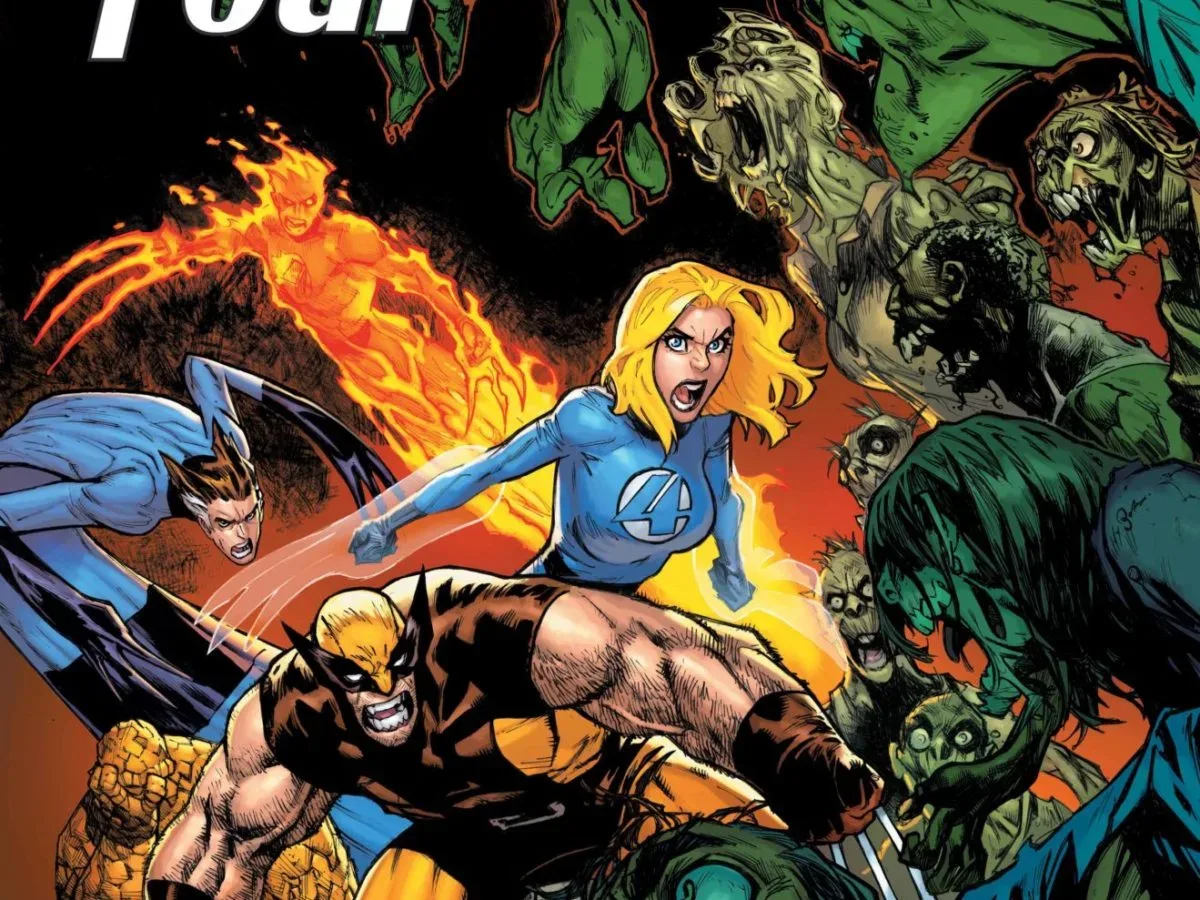
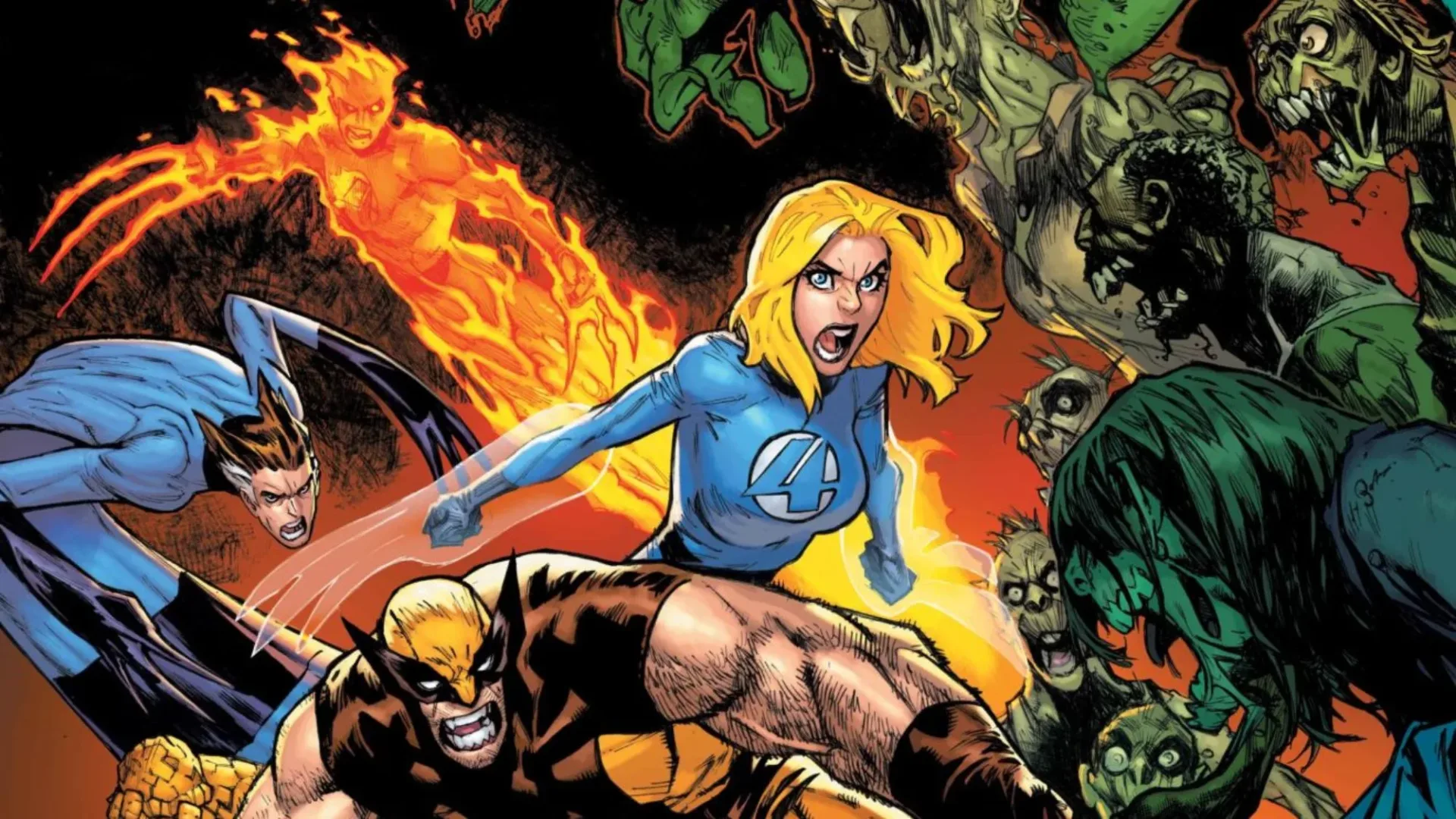
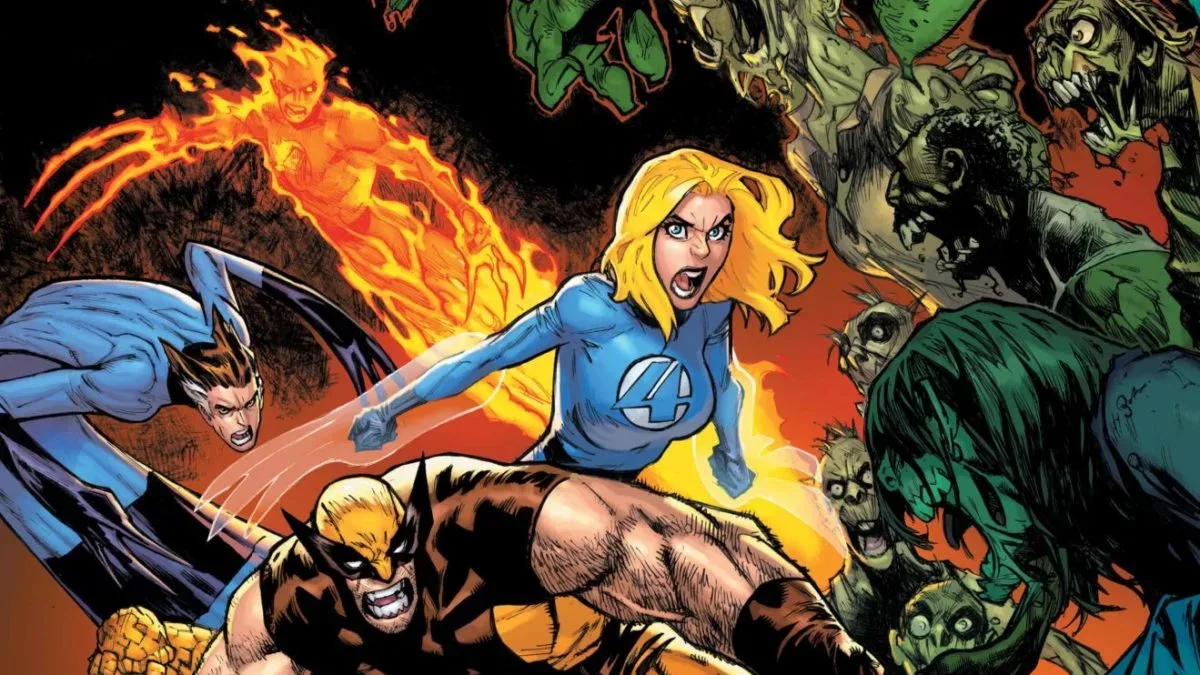
The atmosphere changes substantially in Fantastic Four #22. Something has gone wrong in a very rural part of Canada, where the dead are rising and attacking the living. The Fantastic Four are on the scene, but the threat is presented as difficult both to stop and to repair. Wolverine joins them in the effort.
The issue’s description frames the outbreak as a mystery as well as a survival emergency. Why has this particular town been targeted, and why has it happened now? Those questions point toward an intentional cause rather than a random disaster. The solicitation further teases that someone from the Fantastic Four’s past may be behind the plan, though it does not identify the figure.
“Zombie outbreak” is the accessible label, but the announced story is not presented as a simple wave of undead action. The central problem includes containment—keeping the crisis from spreading—and diagnosis—determining why it began. That makes the Fantastic Four especially appropriate investigators. The group’s role is not only to protect people during a dangerous event, but also to identify the mechanism at work and find a way to reverse or neutralize it.
Wolverine’s presence adds an X-Men connection to an issue already rooted in Canada, while the available details wisely leave the scale of his role unspecified. Readers know he will be alongside the Fantastic Four against the outbreak; they do not yet know whether the town, the suspected mastermind or the nature of the zombies bears a deeper connection to him.
The solicitation promises blood, gore and scientific adventure. Those elements can coexist cleanly in this setup: the horror comes from the immediate danger and bodily stakes of the undead, while the Fantastic Four angle lies in studying the event, limiting its reach and uncovering whoever engineered it. The important unanswered question is whether the apparent zombie menace follows a supernatural, scientific, extradimensional or other explanation. No answer has been revealed.
What the two-issue setup establishes—and what remains unknown
With just the announced information, the clearest throughline is breadth. Fantastic Four #21 pushes outward toward cosmic-scale and higher-dimensional danger. Fantastic Four #22 brings the focus to an isolated community threatened by the dead. The situations are very different in size and texture, but each starts with a problem that conventional strength alone cannot solve.
That contrast could make the January-to-February transition especially effective. A story about reality-altering beings whose perceptions exceed the heroes’ own asks readers to think on an enormous scale. A zombie outbreak in a rural town is more intimate and visceral: the danger is local, the victims are close at hand, and delaying containment has obvious consequences. Both premises, however, make room for the Fantastic Four’s classic balance of horror, discovery and rescue.
It is also worth separating confirmation from inference. Confirmed details include the creative team, the January and February 2027 release windows, the higher-dimensional premise in #21, the rural Canadian undead outbreak in #22, Wolverine’s involvement and the tease of a past Fantastic Four figure. The identity of that figure, the cause of the outbreak, the exact nature of the extradimensional beings, and any direct plot connection between the two issues remain unrevealed.
The broader Marvel calendar is already looking toward 2027 in other corners of pop culture, including a planned Marvel-themed Magic: The Gathering crossover whose card details are still under wraps. For Fantastic Four readers, though, the immediate story is simpler: survive what cannot be comprehended in January, then stop the dead from spreading in February.
Release details
- Fantastic Four #21 — on sale January 2027
- Written by Ryan North
- Art by Ramon Rosanas
- Cover by Humberto Ramos
- Story: “The Dark Forest, Part Three,” featuring reality-changing extradimensional aliens and the Fantastic Four’s trip into higher dimensions.
- Fantastic Four #22 — on sale February 2027
- Written by Ryan North
- Art by Ramon Rosanas
- Cover by Humberto Ramos
- Story: a rural Canadian zombie outbreak, Wolverine’s team-up with the Fantastic Four, and a possible connection to a figure from the team’s past.