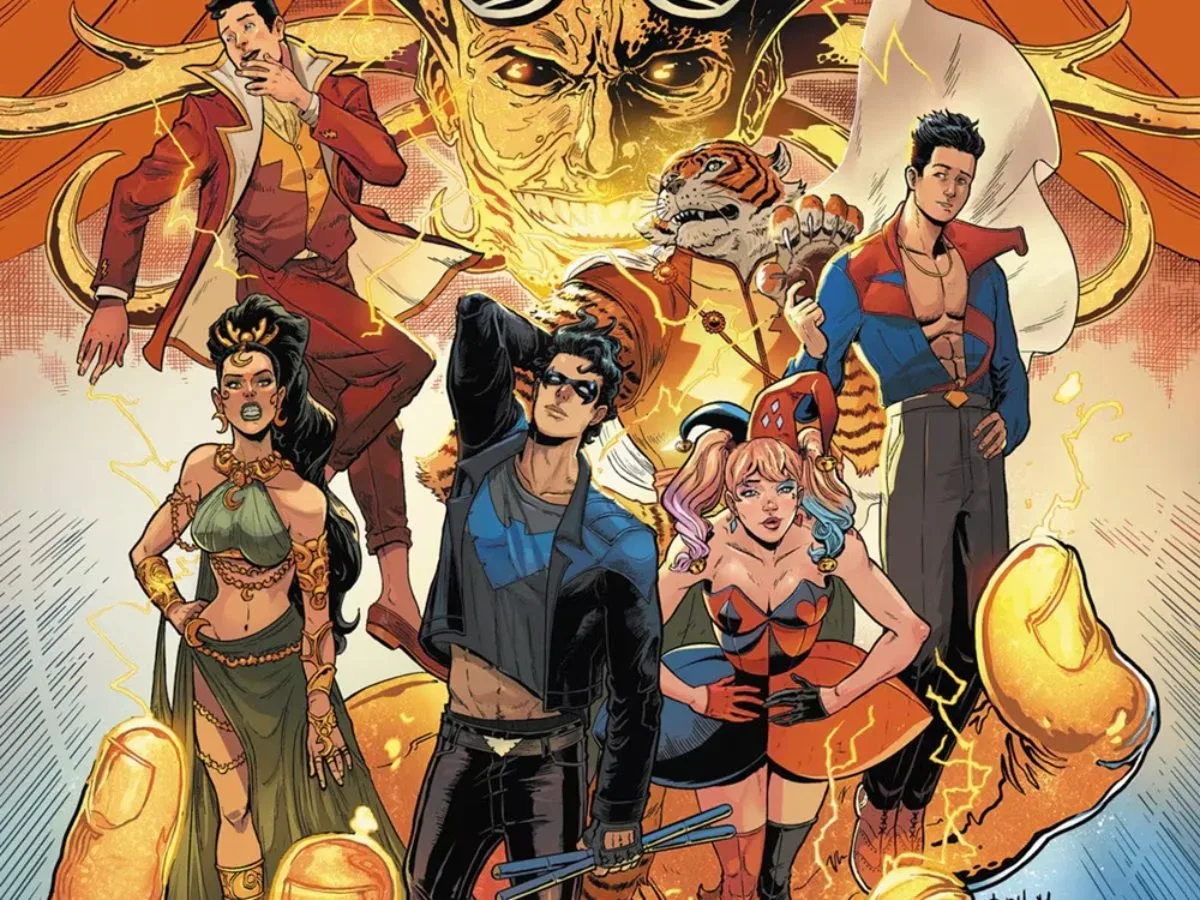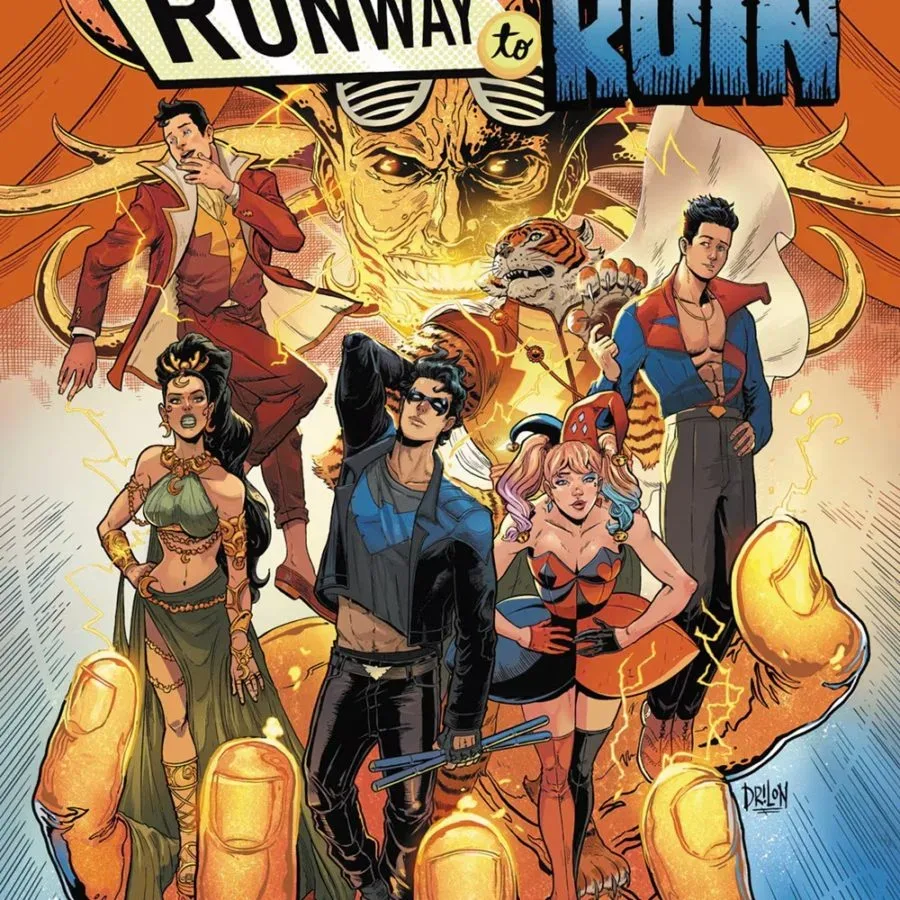
DC GO!’s first crossover is about to turn awkward history into an intergalactic crisis. Runway to Ruin launches October 1 on DC Universe Infinite, uniting characters from five of the publisher’s mobile-first original webcomic series in a connected story that runs across the month.
The event opens with Runway to Ruin Alpha and closes with Runway to Ruin Omega at the end of the month. Both bookend chapters are written by Patrick R. Young and illustrated by Andrew Drilon. Readers will be able to access every episode free after registering for DC Universe Infinite.
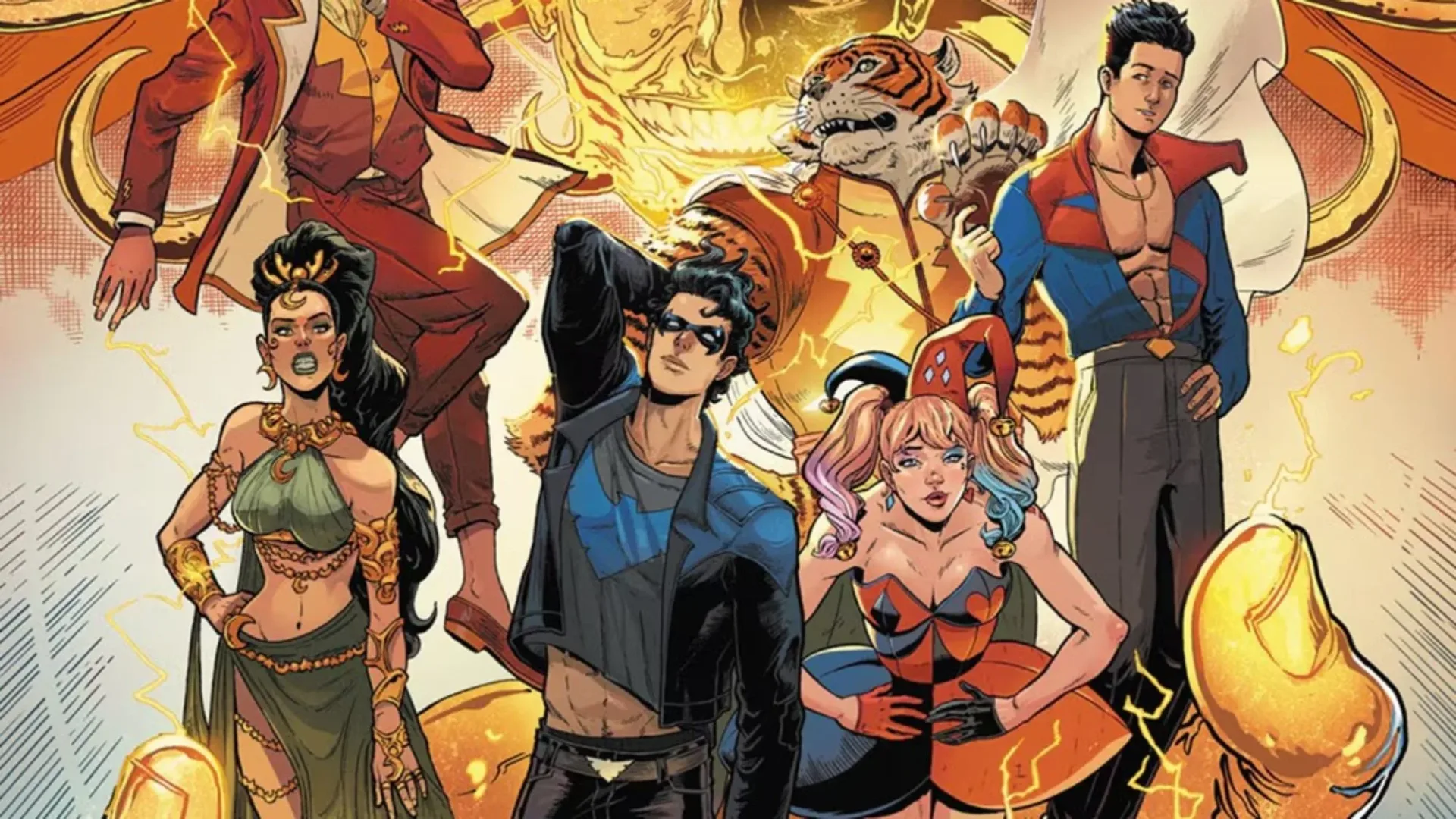
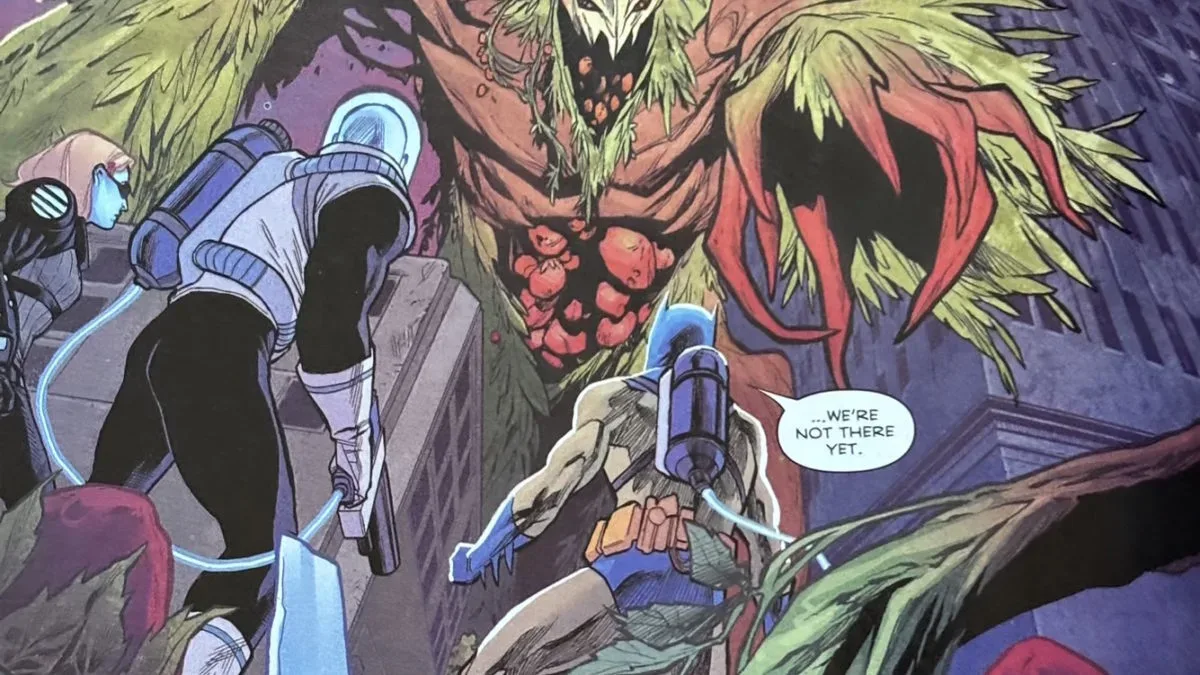
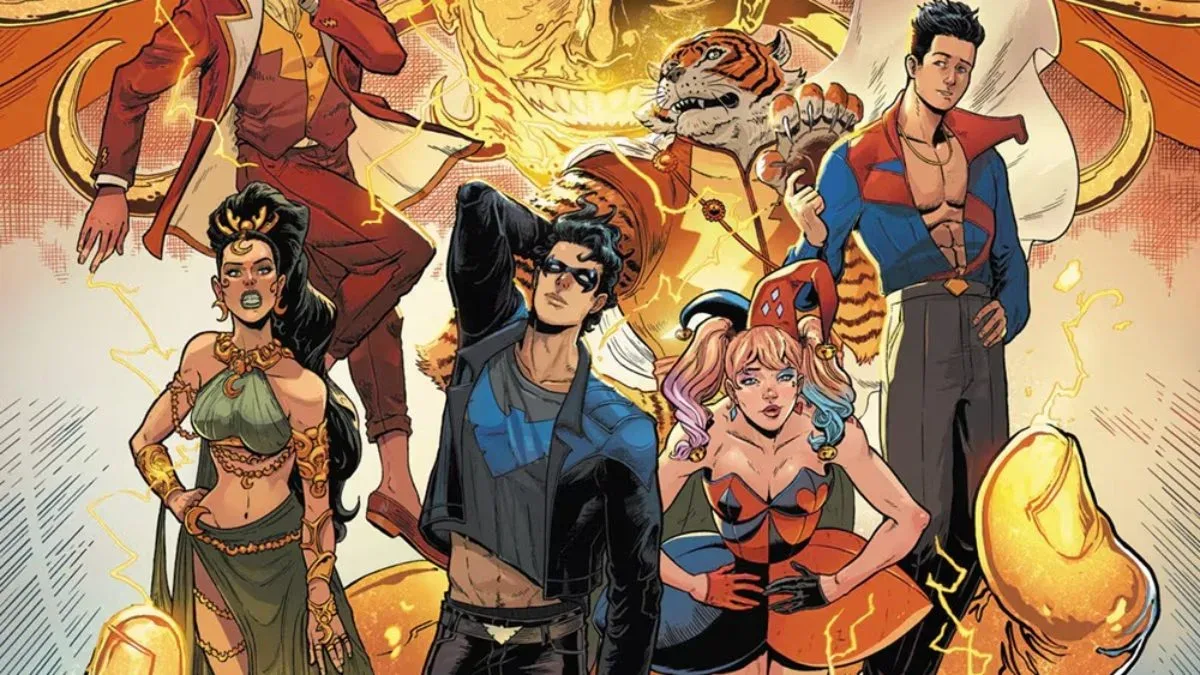
Its premise is intentionally flamboyant: a group of heroes is pulled into an intergalactic fashion showcase, only to face a new villain called King Cringe. The threat is not merely physical. King Cringe weaponizes the characters’ most embarrassing memories, forcing Harley Quinn, Nightwing, Jon Kent, Billy Batson and others to confront episodes they would plainly prefer to leave buried.
That setup makes the crossover a natural fit for DC GO!’s tone and format. The imprint is built around vertical, mobile-first webcomics rather than the conventional paged comic-book reading experience. In practical terms, “mobile-first” means the stories are designed for phone-based reading and released as episodes. DC GO! seasons run to 26 episodes, with weekly or bi-weekly release schedules.
Five series enter the crossover
Runway to Ruin brings together the casts of the current DC GO! originals, rather than functioning as a standalone event with an unrelated roster. The participating series are:
- Nothing Butt Nightwing, by Patrick R. Young and Moy R. Marco
- Harley Quinn in Paradise, by CRC Payne, Siobhan Chiffon and Cathy Le
- Warriors and a Wee Wonder, by Stephanie Williams, Jane Pica, Emily Pearson and Dominic Bustamante
- Jon Kent: This Internship Is My Kryptonite, by Sam Camp, Daimon Hampton and Seraji
- The Magical Mysteries of Shazam!, by Steve Orlando and Giopota
That collection spans a deliberately broad mix of DC characters and premises. Nightwing, Harley Quinn, Wonder Woman, Jon Kent and Shazam represent very different corners of the line, but the shared event gives them a common problem: memories that can be turned against them. The fashion-show framing also signals that the crossover is approaching its drama through heightened comedy and character embarrassment rather than positioning itself as a conventional universe-threatening battle.
“Crossover” can mean several things in comics. Sometimes it denotes a story that interrupts many separate titles and requires readers to follow a long reading order. Here, the supplied plan is more approachable: a month-long connected adventure beginning with Alpha and ending with Omega, built around the five existing DC GO! series. Those opening and closing chapters establish a visible entry point and finish line for anyone who wants to follow the event as a complete story.
For readers already following any one of the five series, the benefit is straightforward: the crossover places its regular characters alongside heroes they would not usually encounter in their own ongoing webcomic. For newcomers, free registered access to all episodes lowers the barrier to sampling the format and the involved casts. Registration is still required, so “free” here should not be read as no-account access.
King Cringe turns vulnerability into a supervillain weapon
King Cringe’s power is built around a particularly recognizable kind of superhero weakness: not kryptonite, magic or a cosmic artifact, but humiliation. The villain exploits the uncomfortable memories that heroes would rather never revisit. It is a premise that gives each character room for a personal obstacle while retaining a shared external threat.
The idea also makes the fashion-show setting more than decorative. Fashion is public presentation: who someone chooses to be seen as, how they are judged, and the confidence needed to step into the spotlight. King Cringe’s attack works in the opposite direction, dragging private or painful moments into view. The resulting conflict is likely to hinge on whether the heroes can face those memories instead of letting shame dictate their actions.
That is an interpretation of the announced premise, not a claim about unreleased plot turns. What is confirmed is the central conflict: King Cringe is using embarrassing memories as a weapon, and the heroes must face those moments to stop the threat. The details of how the five series connect, what memories are involved, and how the event resolves will unfold in the episodes themselves.
There is also an obvious thematic contrast between the guest characters. Harley Quinn’s chaos, Nightwing’s acrobatic heroism, Jon Kent’s Superman legacy and Billy Batson’s Shazam identity all provide different avenues for comedy and sincerity. Jon Kent remains part of the broader Superman family; for adjacent Superman conversation beyond the comics page, see Nicolas Cage’s recent comments on superhero spectacle.
November brings three new DC GO! originals
Once Runway to Ruin concludes, DC GO! is set to add three new original series in November. Each has a distinct genre hook, keeping with the line’s character-led approach.
- Supergirl: Accidental Chef follows Kara Zor-El as she looks for herself and discovers the healing value of cooking while apprenticing aboard a floating food truck.
- Green Lanterns: Bad Boys for Light teams Hal Jordan and John Stewart as they investigate cold cases that may be connected across the universe.
- Finding My GCPD Dad a Girlfriend centers on Barbara Gordon’s attempt to help her perennially single father find love.
The three premises indicate a line comfortable moving outside the expected genre lanes. Supergirl: Accidental Chef uses food and apprenticeship as the foundation for Kara’s self-discovery story. Green Lanterns: Bad Boys for Light frames its leads through connected cold cases, a term generally used for investigations that have gone unresolved for a long time. Finding My GCPD Dad a Girlfriend draws its comic engine from Barbara Gordon intervening in Commissioner Gordon’s personal life.
Importantly, these are not described as replacements for the current stories. DC GO! will also continue several existing threads and series. Poison Ivy in Briarwood, written by CRC Payne with art by Bailie Rosenlund, continues the story begun in Harley Quinn in Paradise. Warriors and a ’Tween Wonder, by writer Stephanie Williams and artist Dominic Bustamante, carries on Diana of Themyscira’s adventures after Warriors and a Wee Wonder.
Additional chapters are also planned for Jon Kent: This Internship Is My Kryptonite, The Magical Mysteries of Shazam! and Nothing Butt Nightwing. Together, that schedule makes the October crossover look less like a stopping point and more like a junction: one shared story connects the initial group, then the overall DC GO! slate expands into new series and direct continuations.
What the rollout means for readers
The immediate reading path is clear. Readers interested in the event can register for DC Universe Infinite, start with Runway to Ruin Alpha on October 1, and follow the connected episodes through the month until Runway to Ruin Omega. Because DC GO! uses episodic releases, the crossover can be followed as it arrives instead of requiring readers to wait for a single collected edition.
At the same time, the line is moving beyond digital-only consumption. Beginning the following week, select DC GO! originals will receive their first print collections: Nothing Butt Nightwing Vol. 1, Harley Quinn in Paradise Vol. 1 and Renaissance of Raven. Those editions offer a separate route for readers who prefer printed collections, though the crossover itself is being presented through DC Universe Infinite.
For DC GO!, Runway to Ruin is a meaningful first test of how its original series can coexist within a shared event. A crossover is often a way to reward ongoing readers while introducing audiences to neighboring titles. This one has an unusually concise elevator pitch—superheroes at an intergalactic fashion showcase fighting an enemy powered by cringe—which may be exactly what a scrolling webcomic event needs: a premise clear enough to grasp in a moment, but flexible enough to involve five casts and their individual vulnerabilities.
The full outcome remains under wraps, but the schedule is set. October belongs to King Cringe’s fashion-fueled assault on the DC GO! heroes; November expands the imprint with Supergirl, Green Lantern and Barbara Gordon-led series while several familiar stories continue.