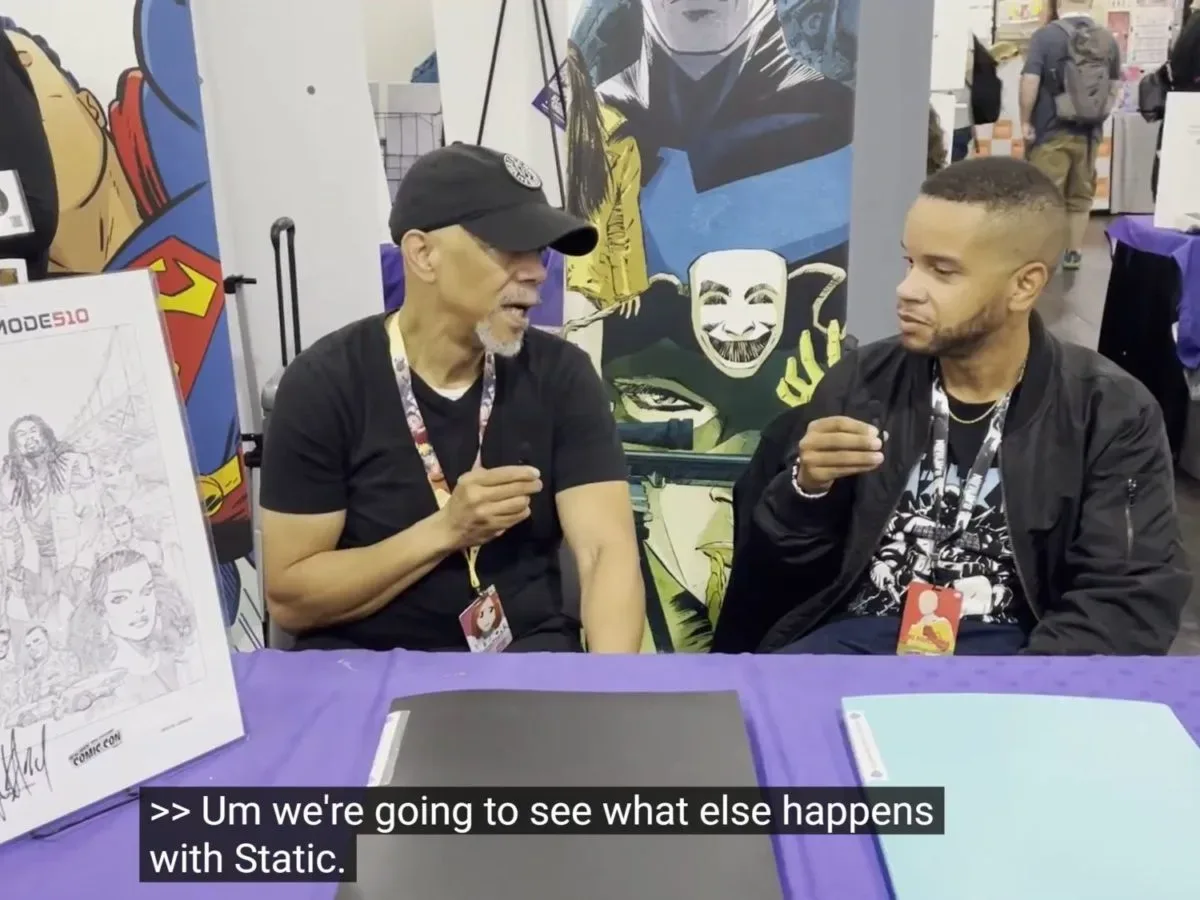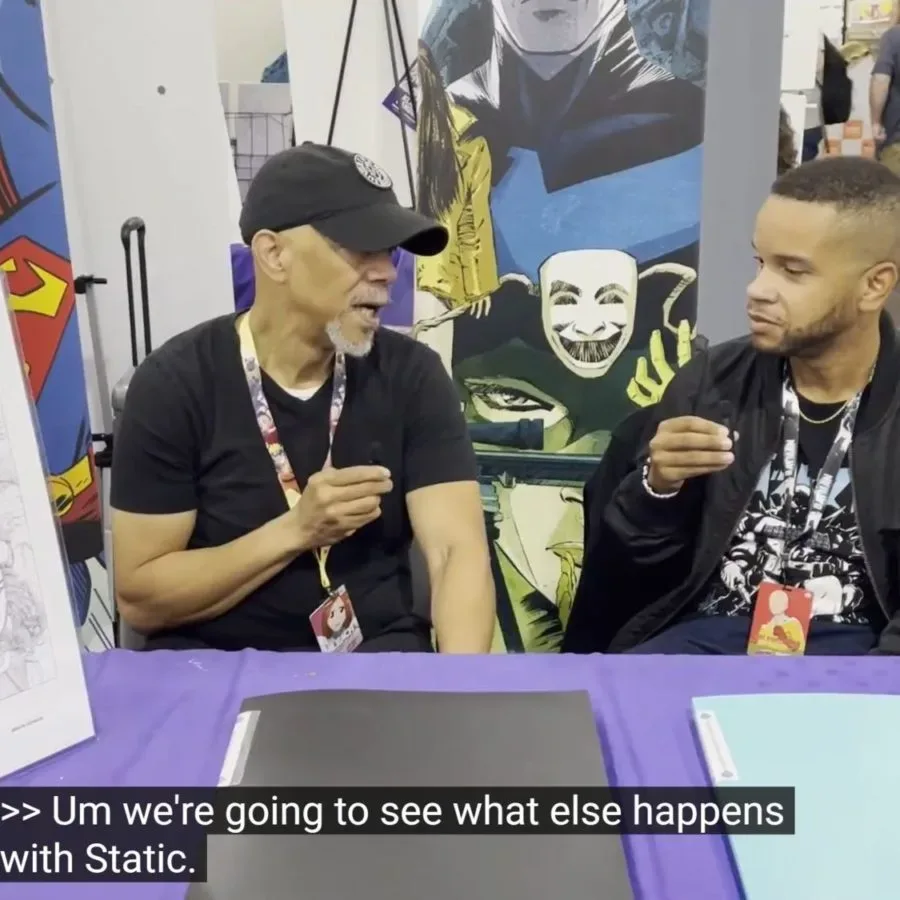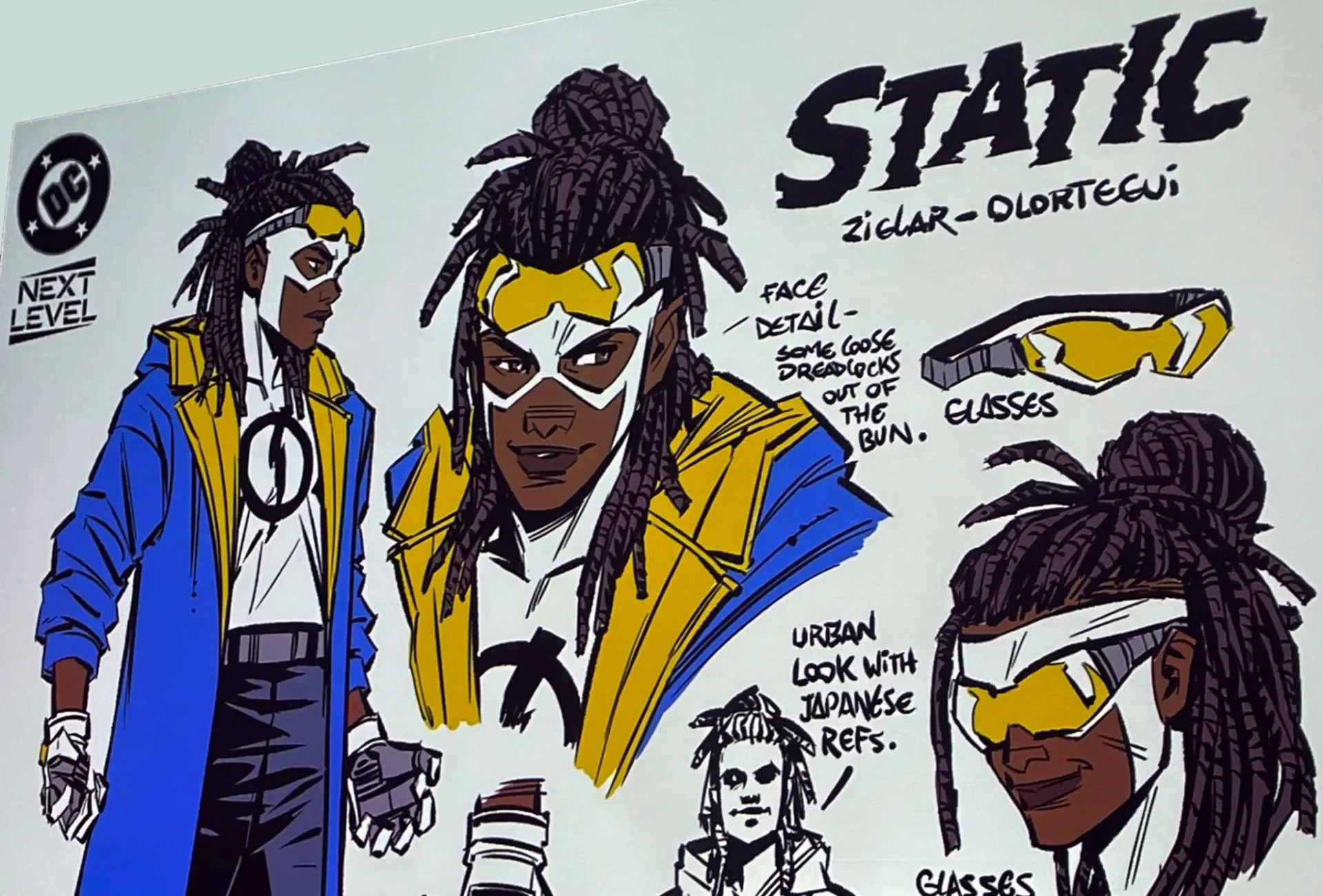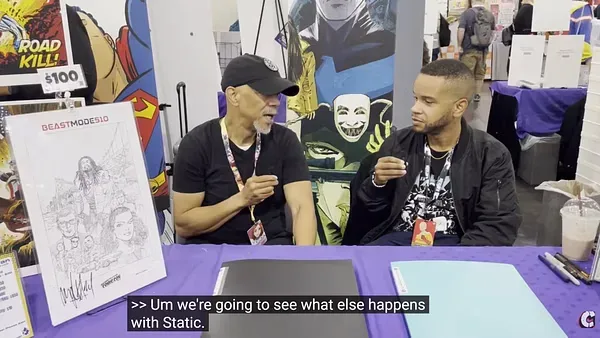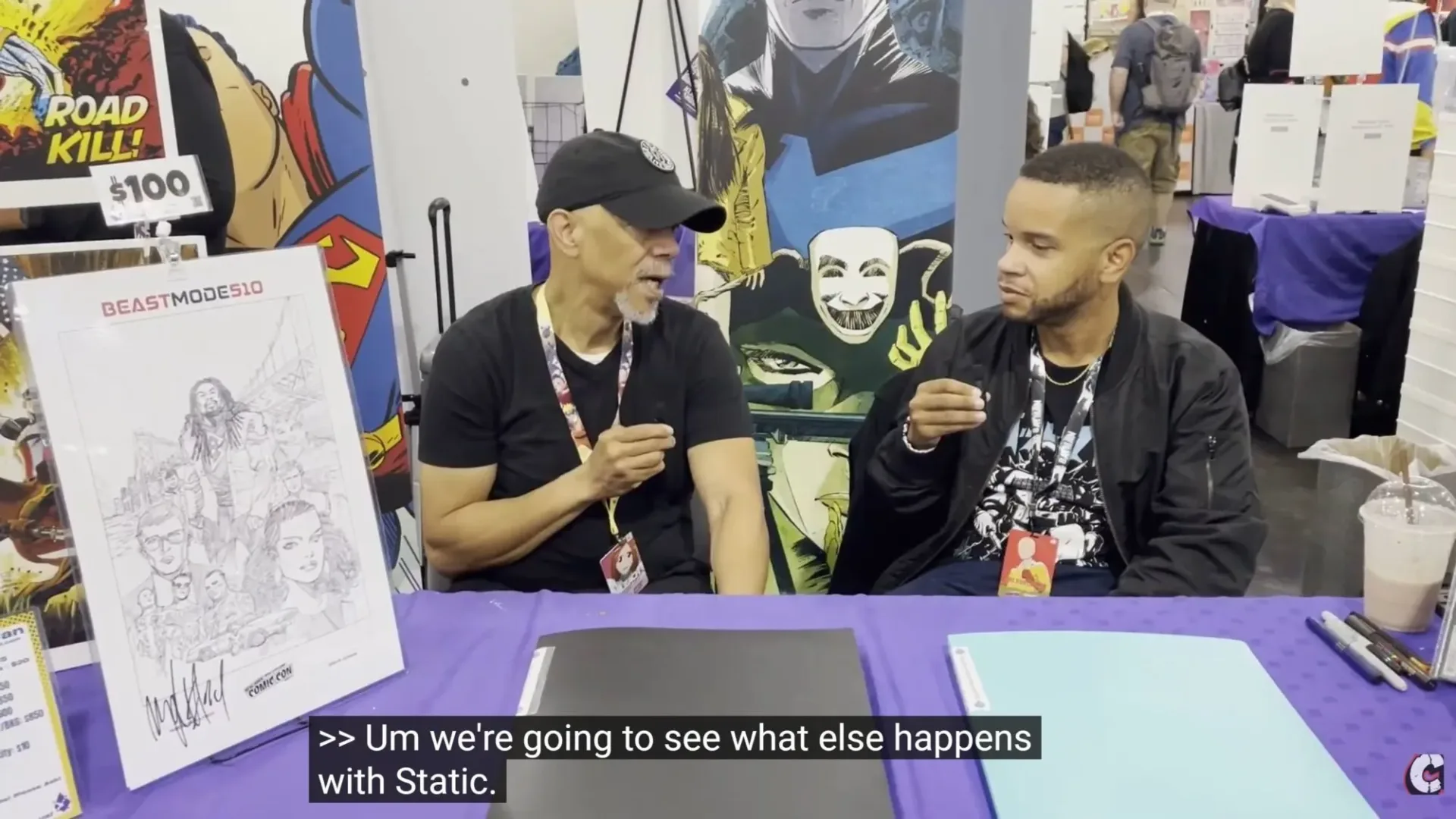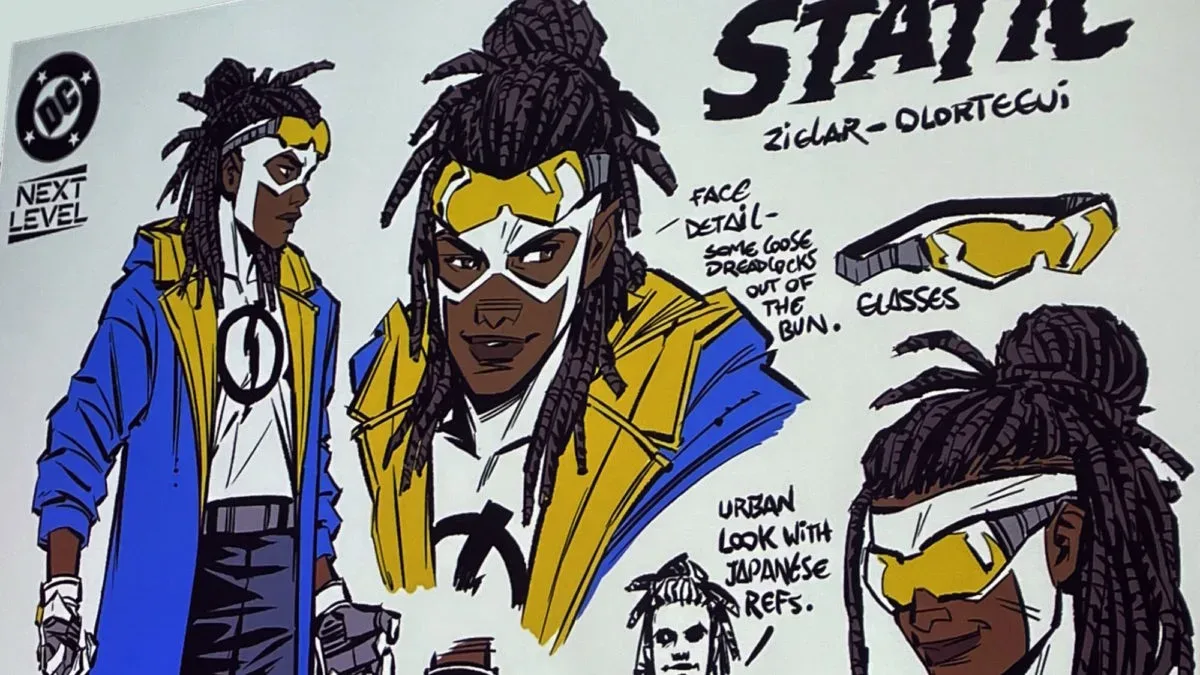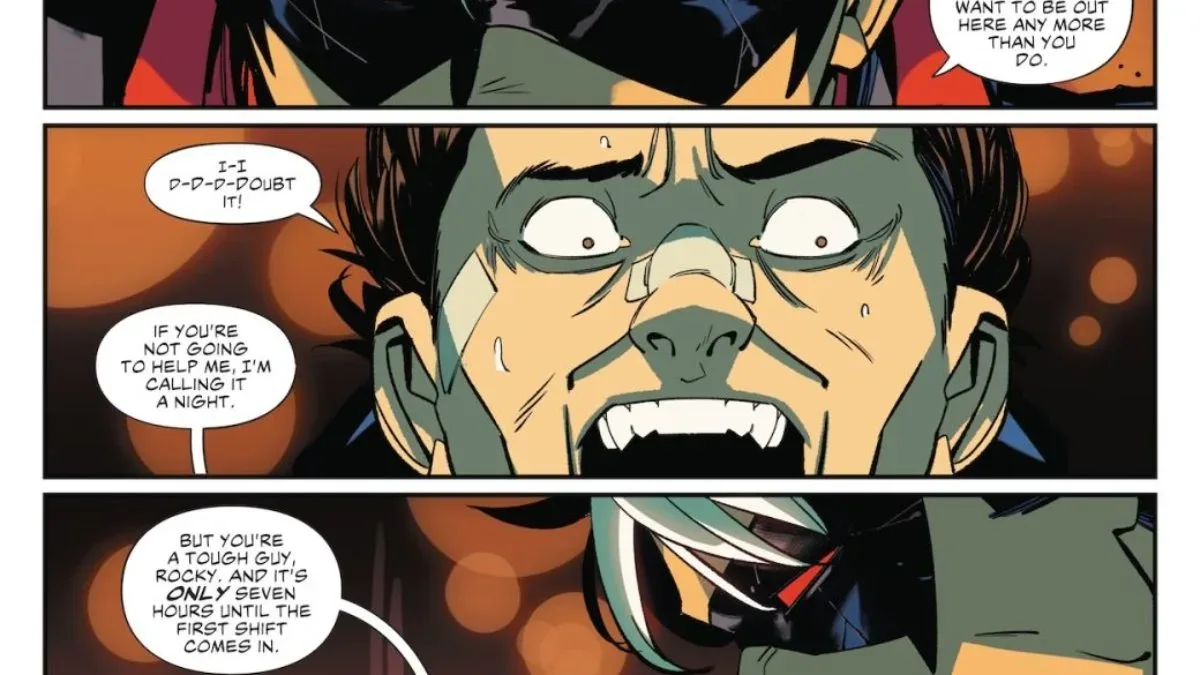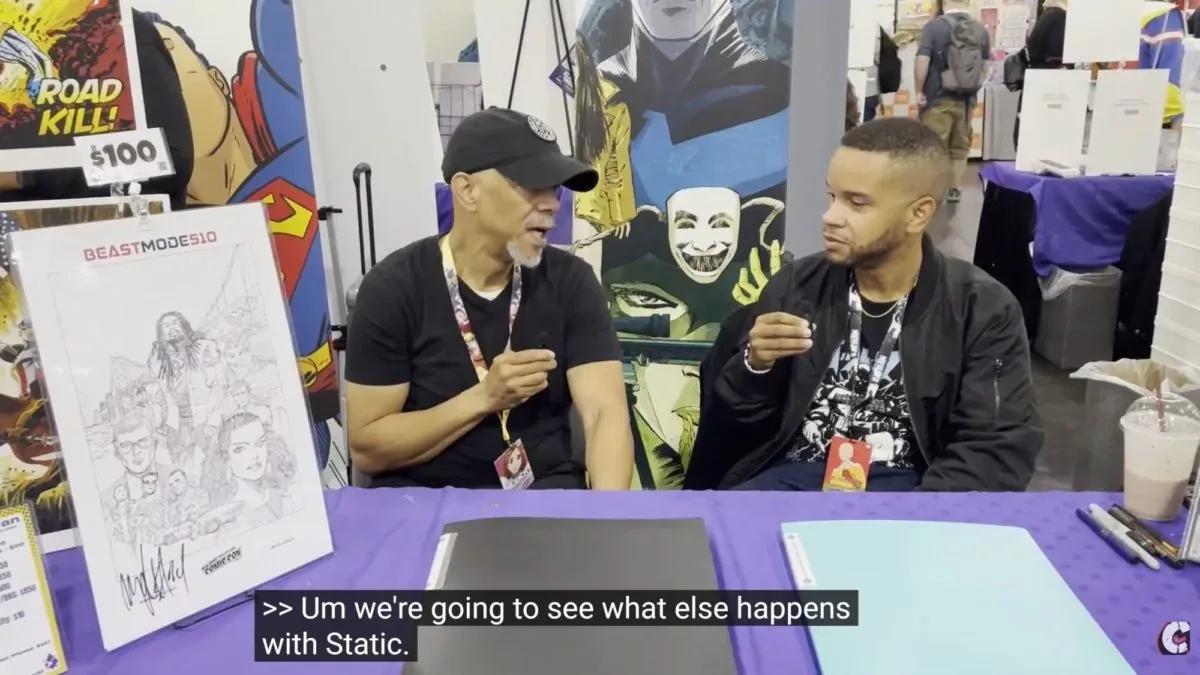
Milestone co-founder Denys Cowan has indicated that the publisher’s heroes are headed back into DC Comics, with Static at the center of the immediate plans. Speaking during New York Comic Con 2026, Cowan pointed to the ongoing Static series by writer Cody Ziglar and artist Diego Olortegui as the current priority, while making clear that the return is not intended to end with a single title.
“They’re coming back,” Cowan said of the Milestone characters’ renewed DC presence. He described the response to Static’s current run as especially encouraging and said there are plans for other books, though he did not identify those projects, name characters beyond Static, or provide a release schedule.
That leaves an important distinction for readers: a broader Milestone return has been confirmed in principle, but the details beyond Static remain unannounced. There is no supplied information on creative teams, formats, issue counts, launch dates, or how many additional series may ultimately follow.
Static is the focal point of the Dakota return
Static is leading the movement through the Dakota event and an ongoing series from Ziglar and Olortegui. Cowan’s comments frame that book as more than a lone appearance: it is the active foundation for a larger renewed push featuring Milestone characters within DC.
Milestone is associated here with characters Cowan helped create more than three decades ago. That long history gives the update weight, but Cowan’s emphasis was notably on the present-day reception rather than nostalgia alone. He said readers have embraced this iteration of Static, calling attention to the character’s current momentum under Ziglar and Olortegui.
For fans trying to parse the practical takeaway, the clearest answer is simple: Static is the book to watch. It is the named ongoing title, the project Cowan said the team is concentrating on, and the current proof point for any subsequent expansion. The references to further books are promising, but still deliberately non-specific.
“Ongoing” is an important comics publishing term here. It generally describes a series designed to continue beyond a pre-set limited number of issues, unlike a miniseries that has a defined endpoint from the outset. Cowan’s remarks do not establish how long Static will run, but they do make the current series the visible centerpiece of Milestone’s return.
Readers following other DC releases may also be tracking the publisher’s broader slate, including the pull-list attention surrounding recent Absolute and Bat-family books. Static’s role is distinct: Cowan is discussing a return for Milestone characters through Dakota, rather than another expansion of DC’s Absolute line.
What Cowan did—and did not—confirm
Cowan’s update supports several concrete points. Milestone characters are returning to DC. Static and Ziglar’s run are the immediate focus. The response has made Cowan optimistic. And other books are being planned or considered.
At the same time, the remarks do not confirm a full lineup. It would be premature to treat “other plans” as an announcement of particular characters, a Dakota-wide publishing program, crossover details, or an exact rollout. Cowan’s language leaves room for development while withholding the particulars that usually turn a plan into a solicited comic.
That restraint matters in serialized comics. A creator can signal intention without a publisher yet having finalized the items readers need to make a buying decision: a title, issue number, cover date, creative team, format, and release date. Until those details arrive, the reliable expectation is continued attention on Static rather than assumptions about which heroes are next.
Cowan and Ho Che Anderson’s OMAC project
Outside of the Milestone discussion, Cowan also spoke about an OMAC one-shot for DC’s Black Label anthology line, co-created with Ho Che Anderson. Cowan said he had long wanted to collaborate with Anderson and that the pair brought multiple project ideas to DC before OMAC became the first proposal selected.
The collaborators already share a Milestone connection. Cowan noted that Anderson worked with Milestone previously on Wise Son, a four-issue miniseries, and on the two-issue graphic novel King. Those credits explain why an eventual Cowan-Anderson project carries a different kind of continuity: it joins creators with prior Milestone history, even though OMAC itself is being positioned in DC’s Black Label space.
A one-shot is a self-contained comic release rather than a numbered ongoing series or a multi-issue miniseries. Meanwhile, an anthology line is a publishing banner that can accommodate separate projects rather than requiring every release to form one continuous serial narrative. The supplied information identifies OMAC as a one-shot in the Black Label anthology line, but offers no plot description, date, or further creative-team details.
There is a useful contrast between Cowan’s two updates. The Static news is about a continuing series positioned as a springboard for more Milestone material. OMAC is a discrete creative collaboration that emerged from a wider set of pitches. Both point to Cowan’s active DC work, but they should not be conflated as parts of one announced initiative.
Nightwing, Dan Watters, and “recreational fear”
Cowan is also drawing Nightwing with writer Dan Watters. His description of that partnership adds a lighter personal note to an otherwise forward-looking set of projects: Cowan said he does not seek out horror movies because he does not enjoy paying to be frightened, summing up the feeling with the phrase “recreational fear.”
That did not keep horror imagery out of the work sent his way. Cowan said scripts that followed included grisly material involving cannibals, fused bodies, and murderous priests. His account is not a complaint about his ability to draw the material; rather, it highlights the irony of an artist who avoids horror viewing finding himself repeatedly assigned horror-inflected scenes on the page.
The distinction is useful when discussing comics craft. Horror in a comic does not rely on a film’s sound or sudden motion. Instead, its impact can come from composition, pacing between panels, the reveal of an image, character expression, and the degree of detail the artist chooses to show. Cowan’s comments do not disclose specific upcoming Nightwing story developments, but they do suggest that Watters’ scripts have given his pages an unusually macabre charge.
Why the update matters
Cowan’s comments offer a clear status report without overpromising. Static is not merely being referenced as part of Milestone’s legacy; the character’s ongoing series is the stated focus of a new return to DC, and Cowan says that response has created room for further plans. That is meaningful confirmation, even if the next books are still unnamed.
The OMAC one-shot and Cowan’s current Nightwing assignment also show the breadth of his DC activity: a reunion-minded collaboration with Ho Che Anderson, a continuing superhero title with Dan Watters, and the larger Milestone return led by Static. For now, each project has its own lane. The common thread is Cowan’s involvement across projects that range from a Black Label one-shot to an ongoing series and a prospective expansion of Milestone publishing.
Readers awaiting the rest of Dakota’s plans will need to wait for formal details. Cowan has supplied the direction of travel, not the full map: Static is first, its reception has been strong, and more Milestone books are intended to follow.