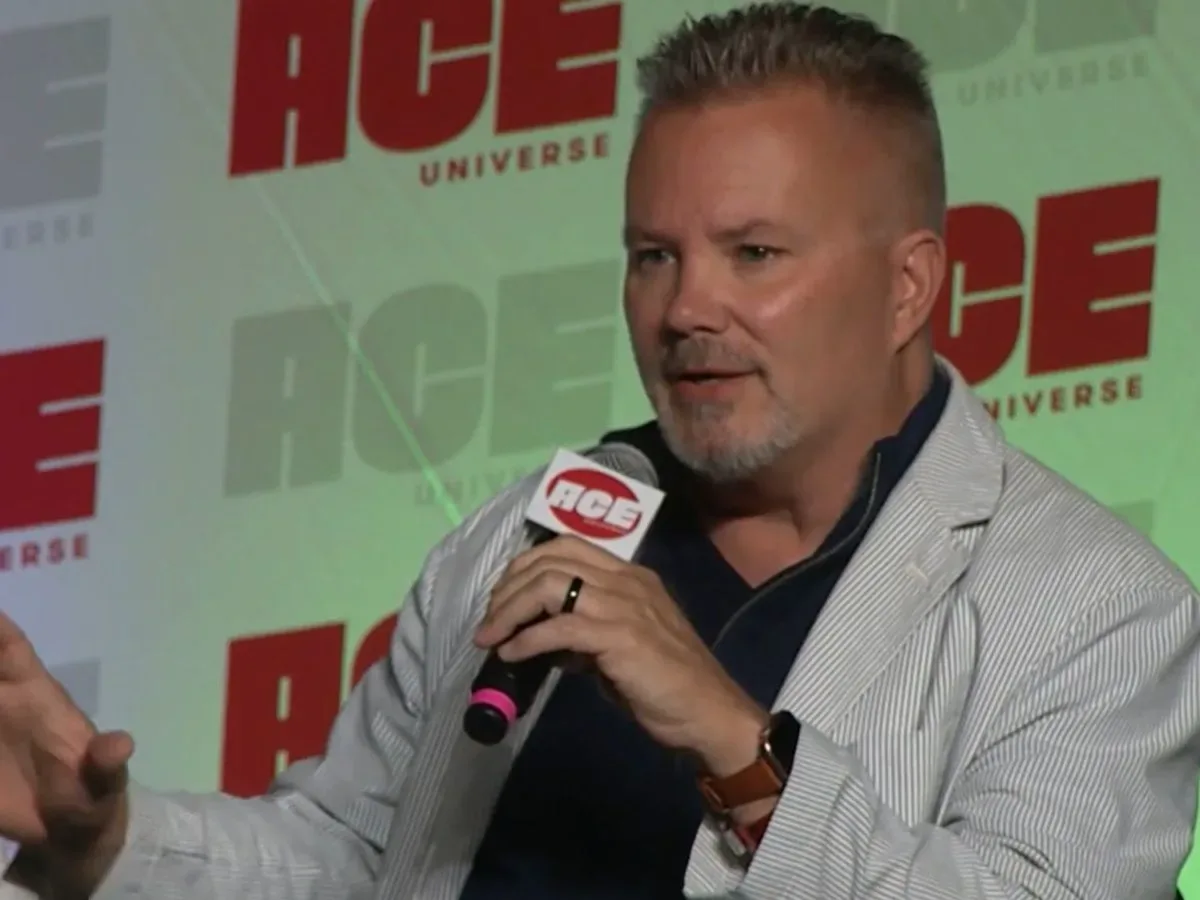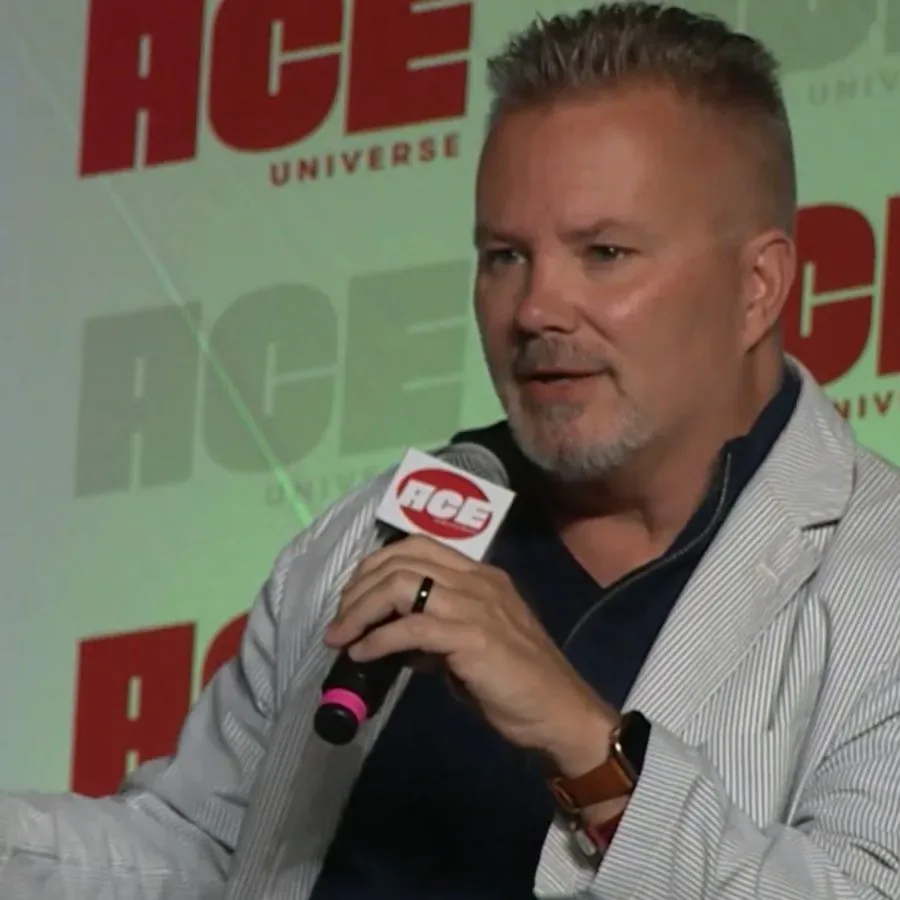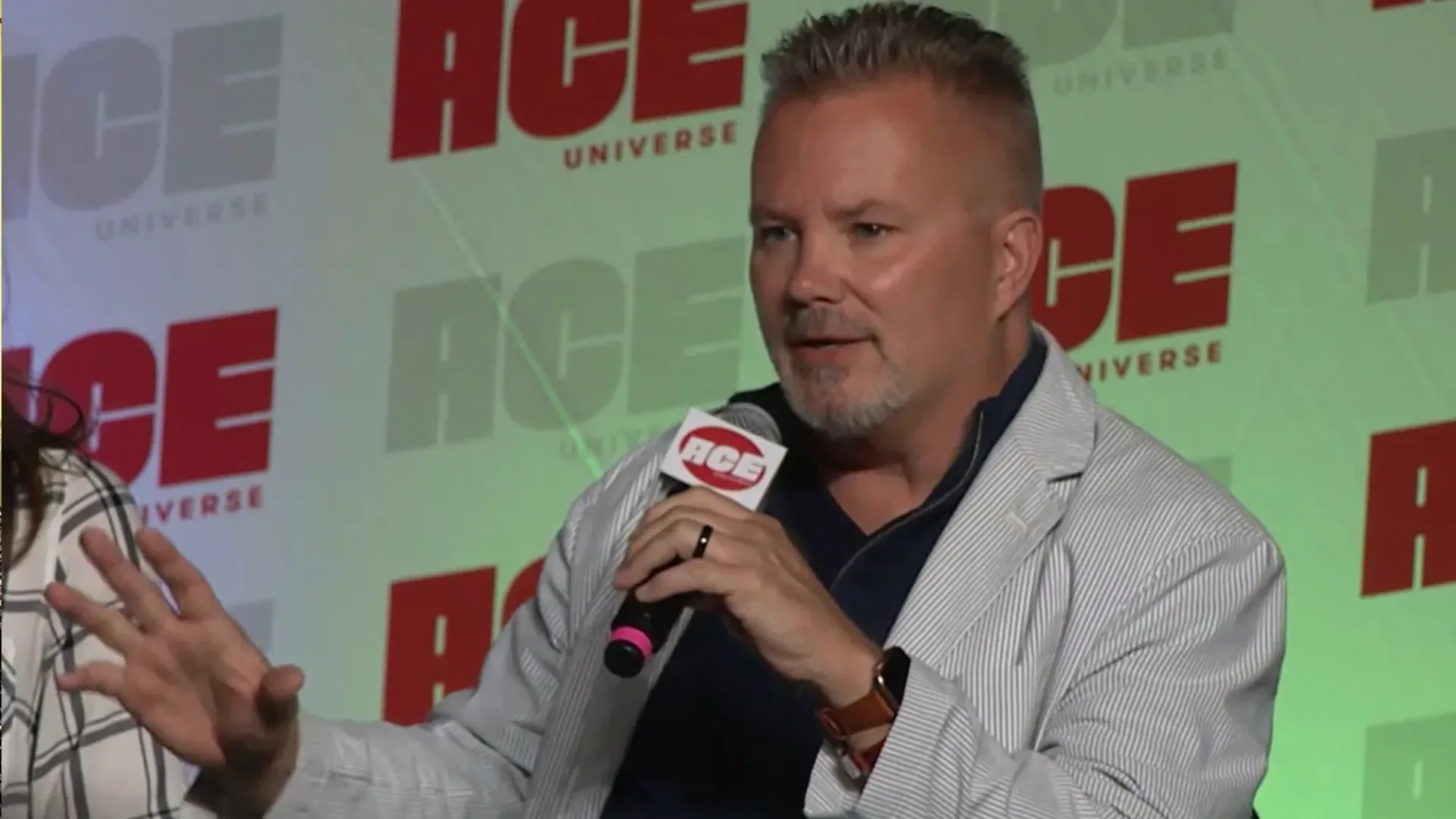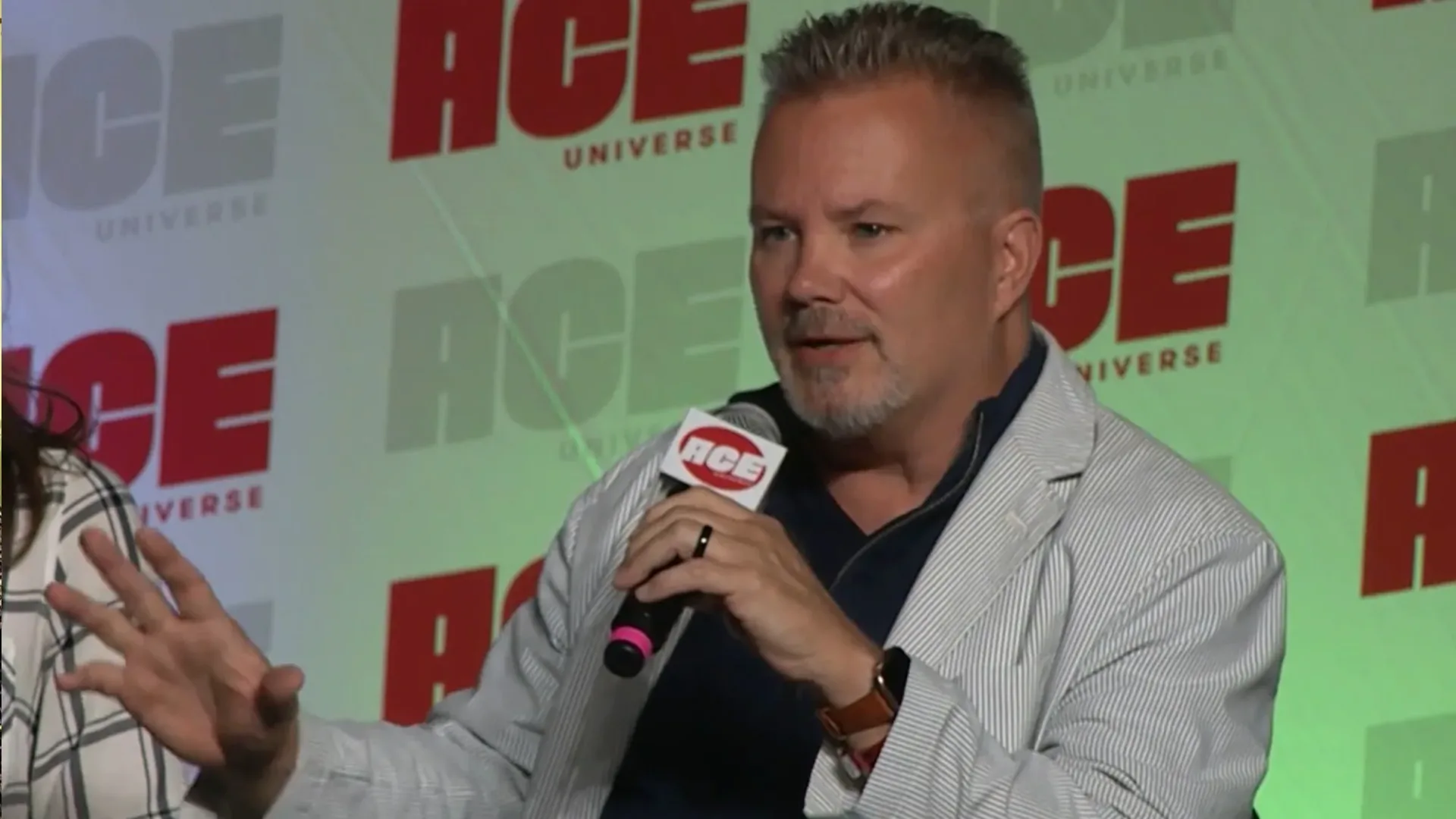
Comic creator, illustrator and educator Andy Fish has died at age 60. Fish died on September 5, 2026, surrounded by family, after battling B-cell lymphoma and myelofibrosis. His wife and longtime creative partner, Veronica Fish, shared news of his death.
Fish’s career was unusually wide-ranging even by the flexible standards of comics. He worked in mainstream superhero publishing, horror-comedy, all-ages material, adaptations and independent projects; he illustrated, painted, created storyboards and worked in character design. Just as importantly, he spent substantial time teaching comic art and mentoring young people. The result is a legacy that cannot be reduced to a single credit or publisher: it lives in finished pages and books, but also in students, collaborators and aspiring artists who encountered comics as a craft worth learning.
A career built across comics and illustration
Fish studied comic art and illustration at New York’s School of Visual Arts, where he studied under Will Eisner. He later undertook postgraduate work in illustration and painting at the Rhode Island School of Design. Jack Kirby and Paul Ryan were listed among his influences and mentors.
Those names point to three distinct but complementary traditions in the medium. Eisner is closely associated with comics as a sophisticated visual language, where page design, staging and lettering can carry narrative meaning. Kirby represents explosive imagination, forceful design and a kinetic approach to superhero storytelling. Ryan was a prolific artist whose work crossed prominent superhero titles. Fish’s own body of work moved between several corners of the field rather than remaining in one visual or commercial lane.
Before and alongside his comics work, Fish worked in advertising for Nike and Coca-Cola. He also worked in storyboards and character design for Warner Bros. Animation. Storyboarding is the process of planning a sequence visually, shot by shot or beat by beat, before final animation or filming. Character design concerns the readable visual identity of a character: silhouettes, expressions, costume cues and the details that make someone recognizable across a production. Both disciplines demand clarity, pacing and an understanding of how images communicate quickly—skills that translate naturally to comics pages.
His paintings were exhibited internationally, but comics remained his central creative focus. That commitment appears in the variety of projects attached to his name, from creator-owned and independent work to characters with long publishing histories.
Partnership with Veronica Fish
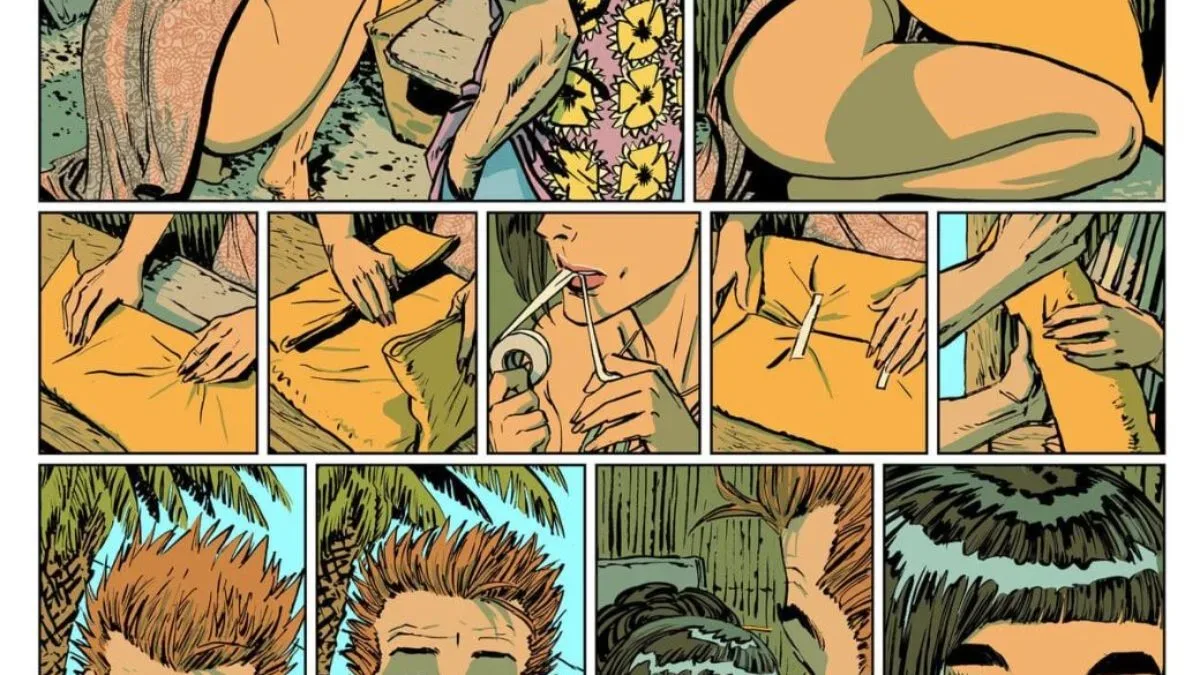
Fish collaborated closely with Veronica Fish, also a comic creator, on several prominent projects. Their shared credits included Blackwood, Evan Dorkin’s horror-comedy series, and its follow-up, Blackwood: The Mourning After. The pair also worked on the relaunch of Sabrina the Teenage Witch and Sabrina: Something Wicked with writer Kelly Thompson.
That range matters. Horror-comedy has to keep two potentially conflicting elements in balance: an unsettling atmosphere and timing that allows humor to land without removing all tension. A property such as Sabrina, meanwhile, arrives with an established identity and audience expectations, while still needing a distinct creative approach in a new series. Artists and creative teams working in those spaces are not simply drawing characters; they are helping establish mood, guide the reader’s eye and make shifts between menace, emotion and comedy feel deliberate.
Together, Andy and Veronica Fish also adapted Kiersten White’s novels Hide and Mister Magic into graphic novels. Adaptation is its own particular comics skill. A prose novel can spend pages inside a character’s thoughts or describe an environment at length. Graphic storytelling must decide which moments should become scenes, which information can be conveyed through body language or setting, and when text is necessary. The goal is not merely to illustrate prose, but to reshape a story into a sequence of panels, pages and turns that work on their own terms.
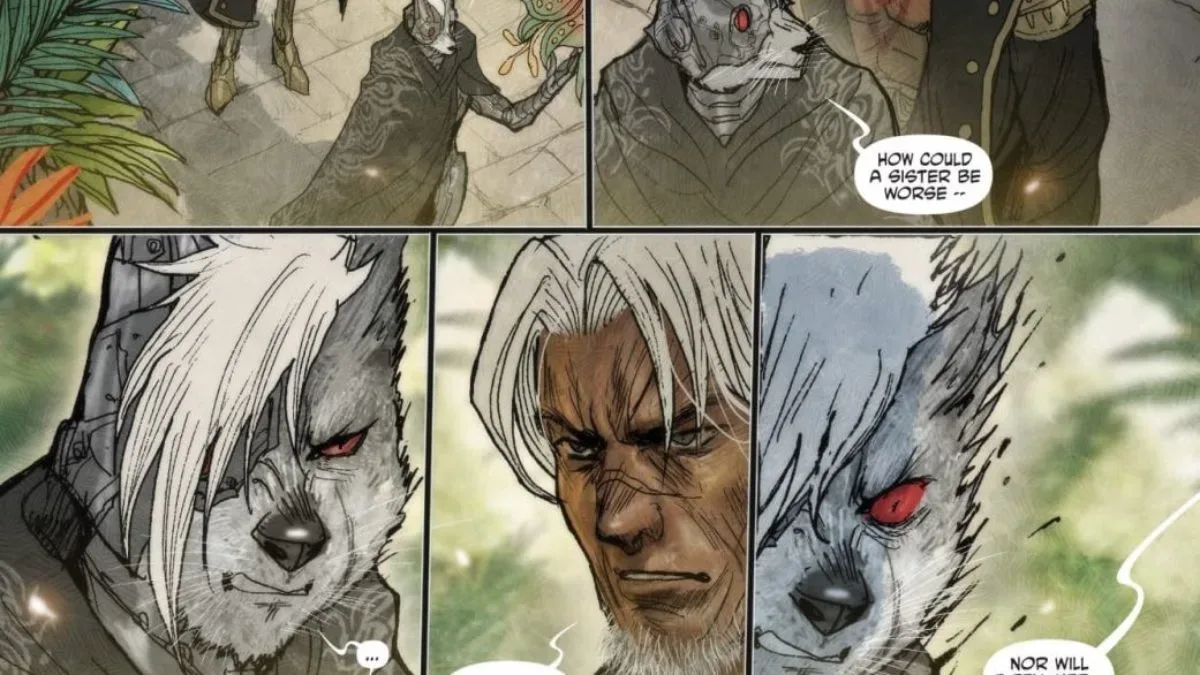
Fish’s additional comics credits included Geeks & Greeks with Steve Altes, The Tragic Tale of Turkey Boy, Fly: A True Story Completely Made Up, the folklore graphic novel Werewolves of Wisconsin, Dracula’s Army, The Misadventures of Adam West, KI-6: Killers, Bloodshot, Gumby and Pirates of Mars. He also worked on Spider-Woman for Marvel Comics.
For readers following the continuing discussion around comic creators, characters and editions, Joking Joystick has also covered recent comic-market attention around issue buzz and cover chases. Fish’s career is a reminder that the value of comics culture is broader than any one hot issue: it depends on artists, writers, editors, teachers and communities maintaining the medium over time.
Teaching comics as a practical discipline
Fish taught comic books at the Peabody Essex Museum, Worcester Art Museum, Massachusetts College of Art and Design, and Emerson College. The list reflects a serious investment in education across museums, art institutions and higher education.
Teaching comics is more than demonstrating how to render faces or anatomy. Comic art brings together drawing, visual composition, storytelling, editing and production decisions. A student may need to consider panel-to-panel transitions, the order in which a reader notices information, the emotional effect of a close-up versus a wide shot, and how much detail a background needs to establish place without slowing a page down. The craft also requires practical habits: meeting a deadline, revising a page, taking feedback and finishing work.
Fish extended that teaching experience into instructional books in the How to Draw series for Chartwell and Walter Foster. Instructional art books can make a complex subject less intimidating by breaking it into manageable steps. Their lasting usefulness is not that they provide a single correct style; rather, they can give beginners a framework for observation, construction and repetition. For readers and young artists who first meet comics through a pencil and a blank page, that kind of access can be formative.
He also served as Director of Comic Books and Graphic Novels for Makimono Entertainment. While the supplied information does not detail the scope of that position, the title itself reflects his standing as a professional able to work not only on individual pages but within a broader comics and graphic-novel focus.
Mentorship beyond the drawing board
Fish’s community work was not confined to classrooms or publishing. He was a mentor and boxing coach with the Boys & Girls Club of America. That combination is revealing. Comics education can give people a route into visual storytelling, while coaching can emphasize confidence, discipline, resilience and mutual respect. In both contexts, the point is bigger than a finished drawing or a single training session: it is helping someone develop skills and believe that consistent effort can lead somewhere.
His death followed a diagnosis in June of two rare blood cancers, B-cell lymphoma and myelofibrosis. He had been receiving outpatient chemotherapy in preparation for a possible stem-cell transplant, and a GoFundMe had been established to help raise funds for that treatment. The fundraiser will now help with funeral costs.
It is appropriate to be precise with the terms without treating a family’s loss as a medical case study. Lymphoma is a cancer involving the lymphatic system; B cells are a type of white blood cell involved in immune response. Myelofibrosis is a disorder affecting bone marrow, the tissue in which blood cells are made. The supplied account describes both illnesses as rare and notes that Fish was preparing for a stem-cell transplant. It does not provide further medical detail, and none is needed to recognize the severity of what he faced.
“He brought them down; he fought valiantly,” Veronica Fish wrote in her remembrance of her husband.
Ways to honor Fish’s work and community ties
Fish is survived by Veronica; his sons Matthew, Joe and Adam; his mother, Billee LaPrade; his sister, Darlene Dow; his brother, Al LaPrade; and their families. He was to be buried at St. George Catholic Church in Worcester, with private interment.
The family requested that, in place of flowers, people consider donations to the Boys & Girls Club of Worcester or the Hero Initiative. The latter is an organization focused on helping comic-book creators in need. Both requests fit the life being remembered: one supports young people in his local community, and the other supports the profession to which he devoted so much of his career.
A scholarship in Andy Fish’s name is also planned at the Worcester Art Museum. For an educator, a scholarship is a particularly meaningful continuation. It can create an opportunity for a future student to pursue art, comics or illustration with fewer barriers, turning remembrance into practical support.
Fish’s credits show a professional who could move among different genres, audiences and formats. His teaching and community work show an artist who treated that knowledge as something to pass on. Comics are often discussed through characters, franchises and collectible objects, but they are made by people who build visual worlds one decision at a time—and sustained by people willing to teach the next generation how those worlds are constructed. Andy Fish’s work in both areas will remain part of that larger story.
Shop the products
Check current price, model and availability at the retailer.