Spoiler warning: This article discusses a late-story scene in Herne & Shuck Book Three, published in 2000 AD Prog 2590.
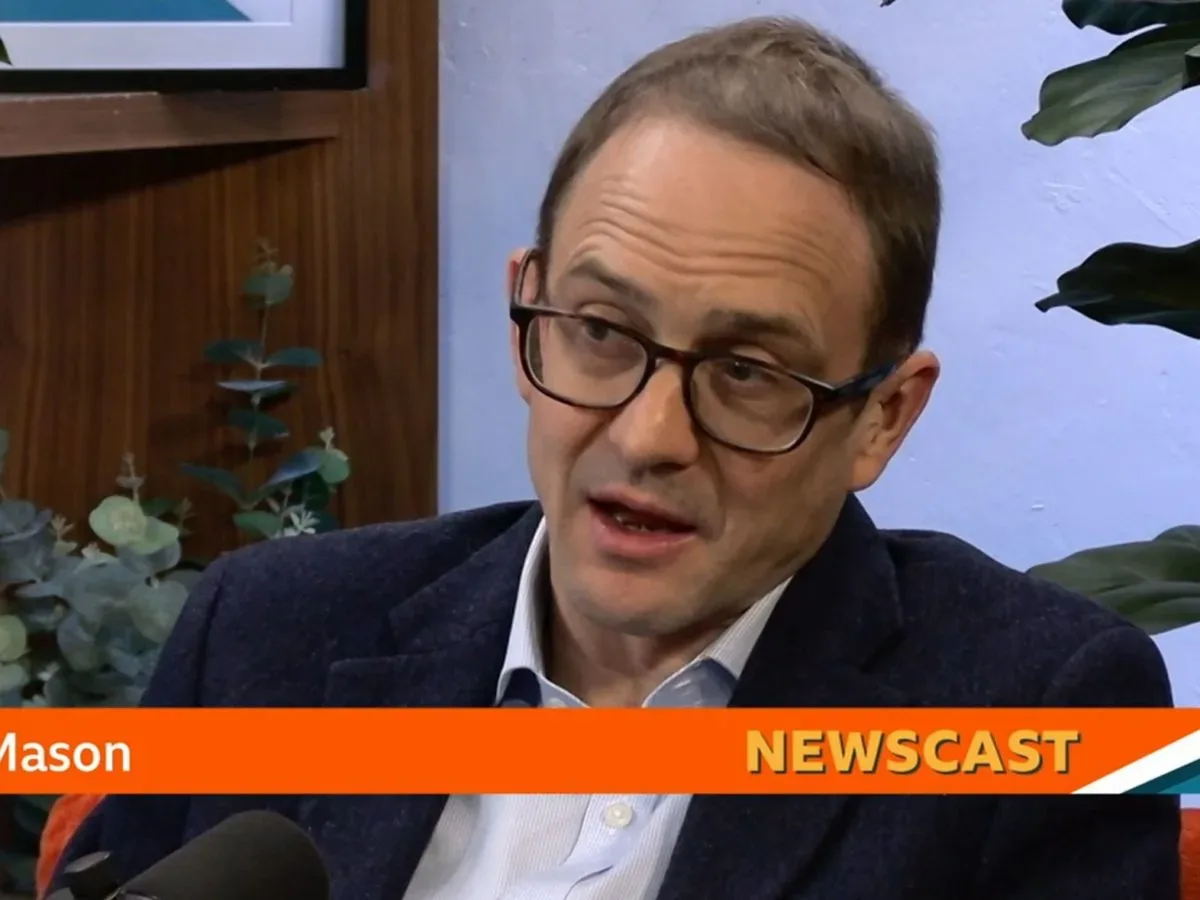
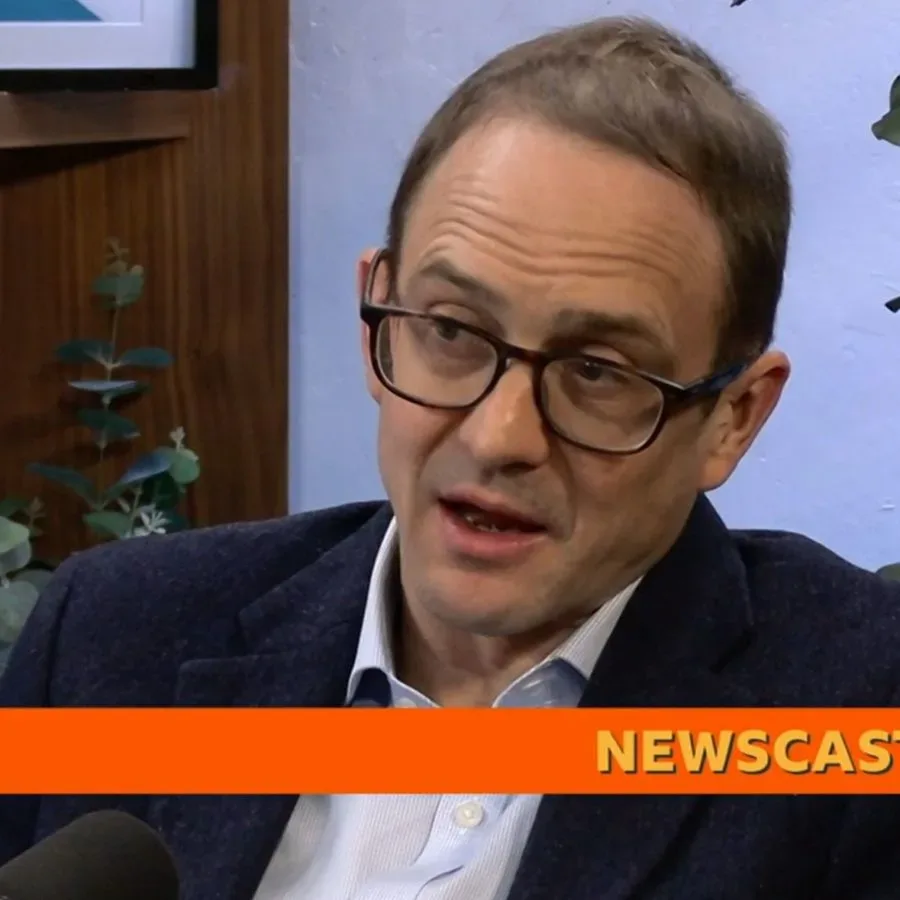
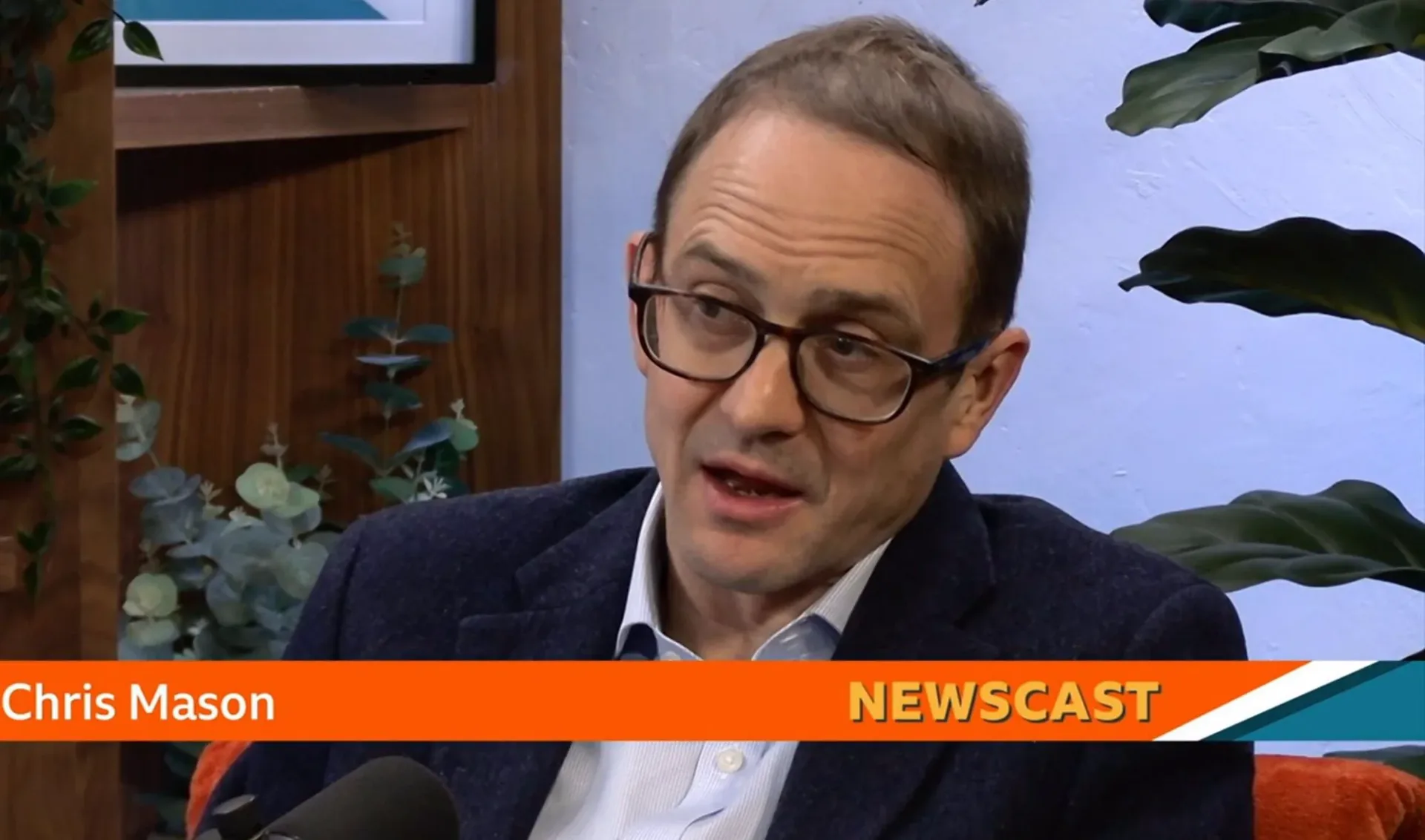
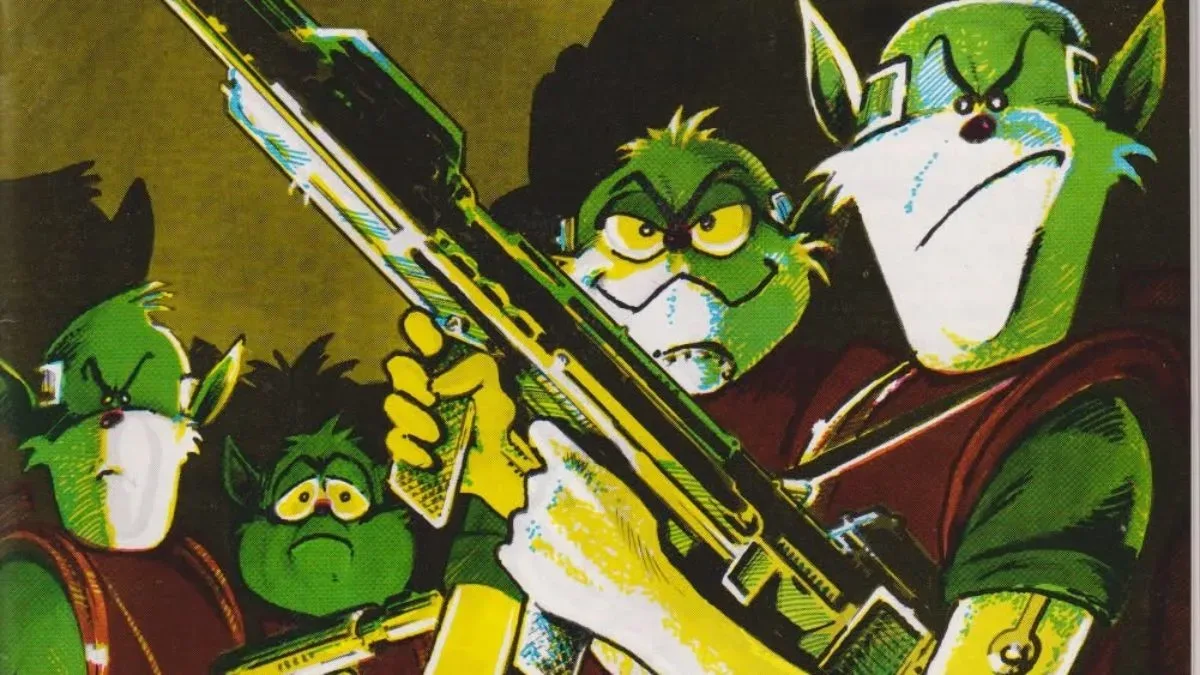
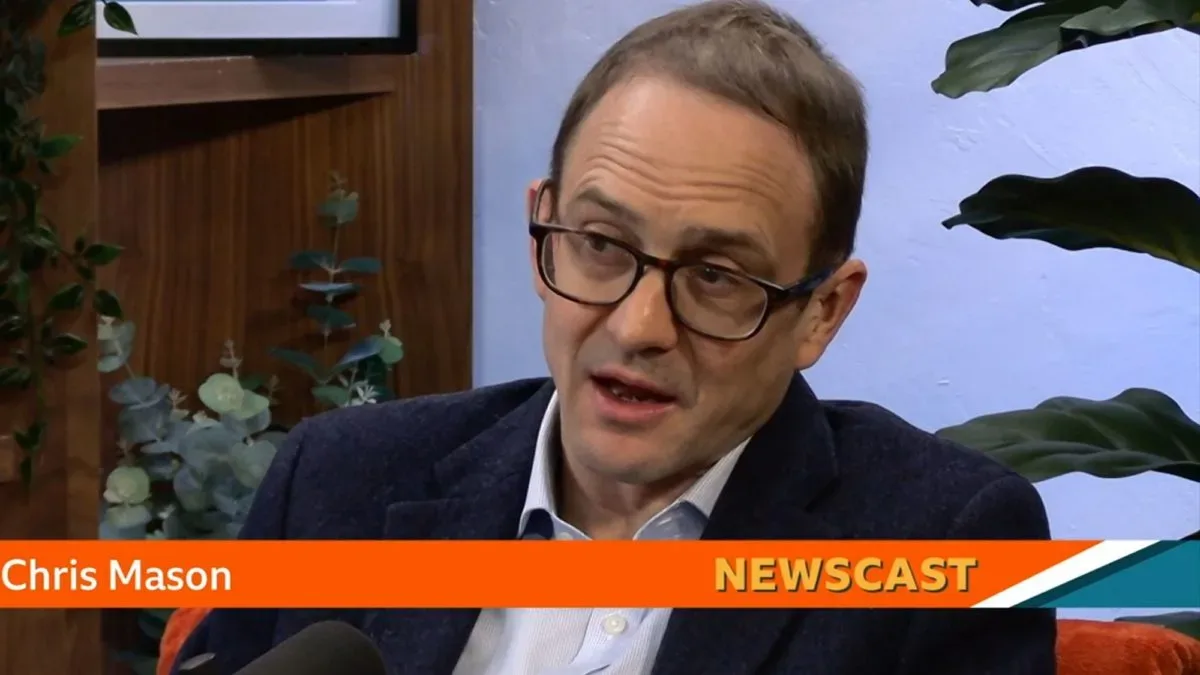
A recognisable face has turned up in an especially unlikely corner of British comics. BBC political editor Chris Mason appears as a drawn cameo in 2000 AD Prog 2590, during the conclusion of Book Three of Herne & Shuck, written by David Barnett with art by Lee Milmore.
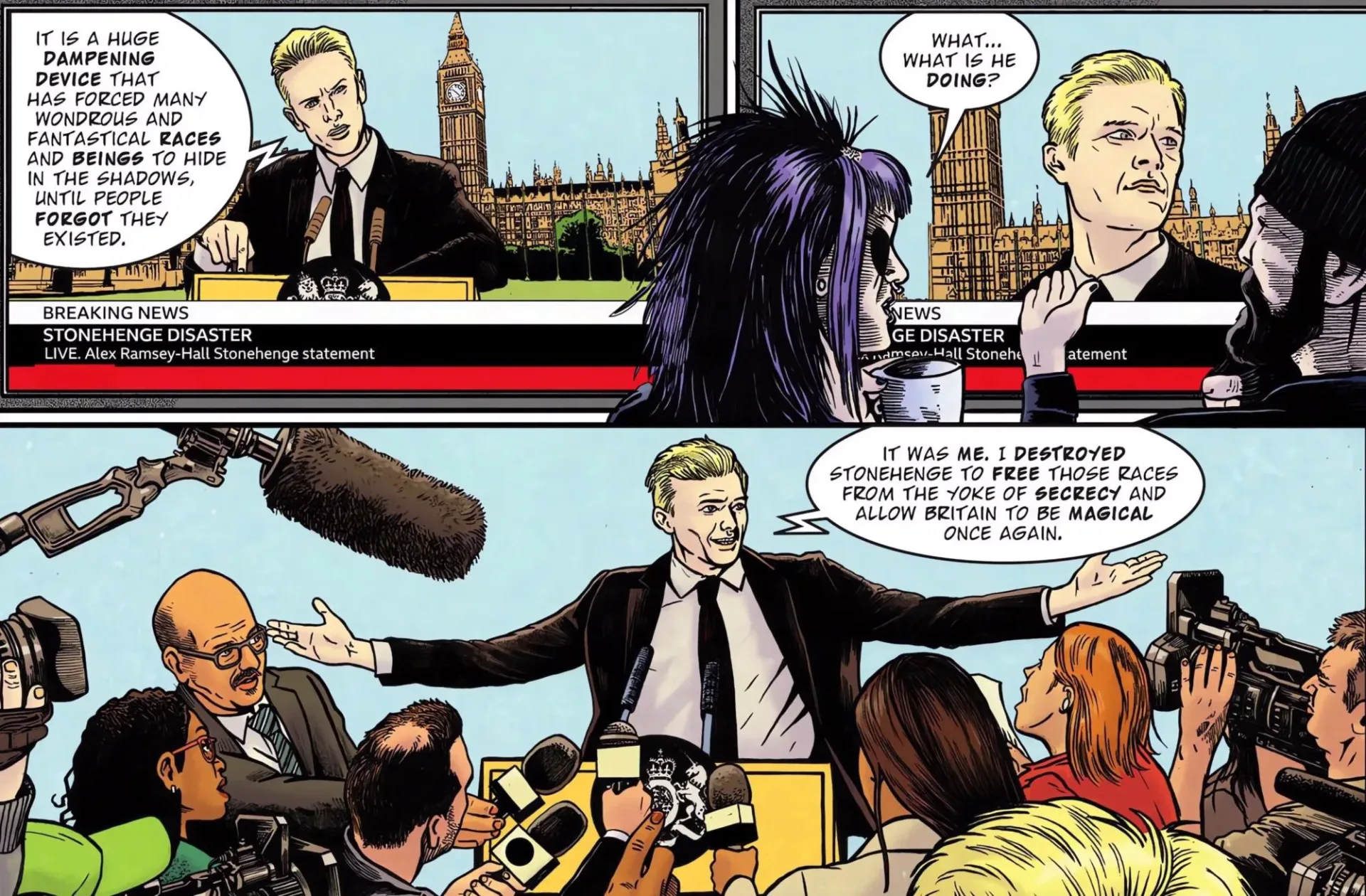
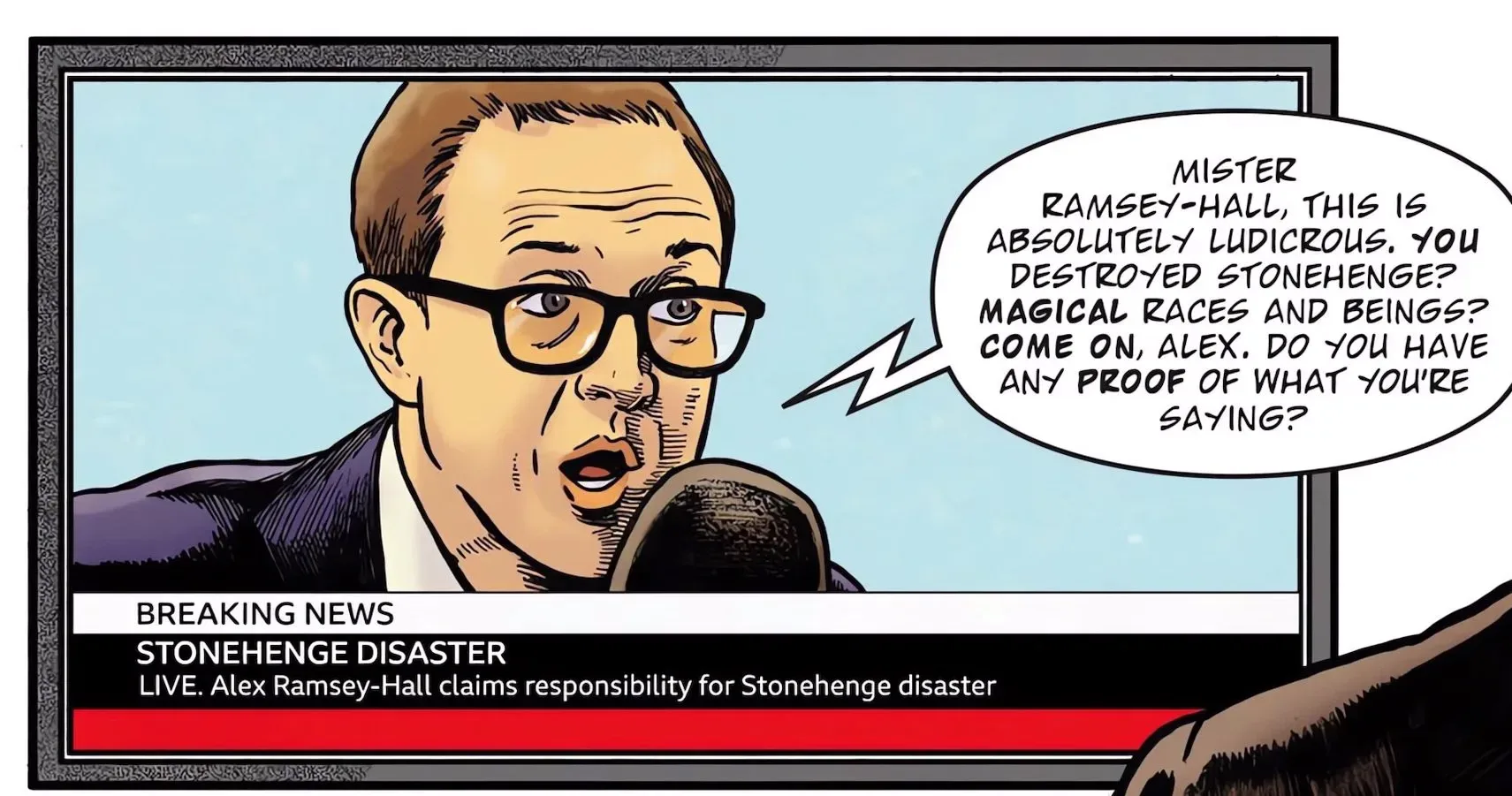
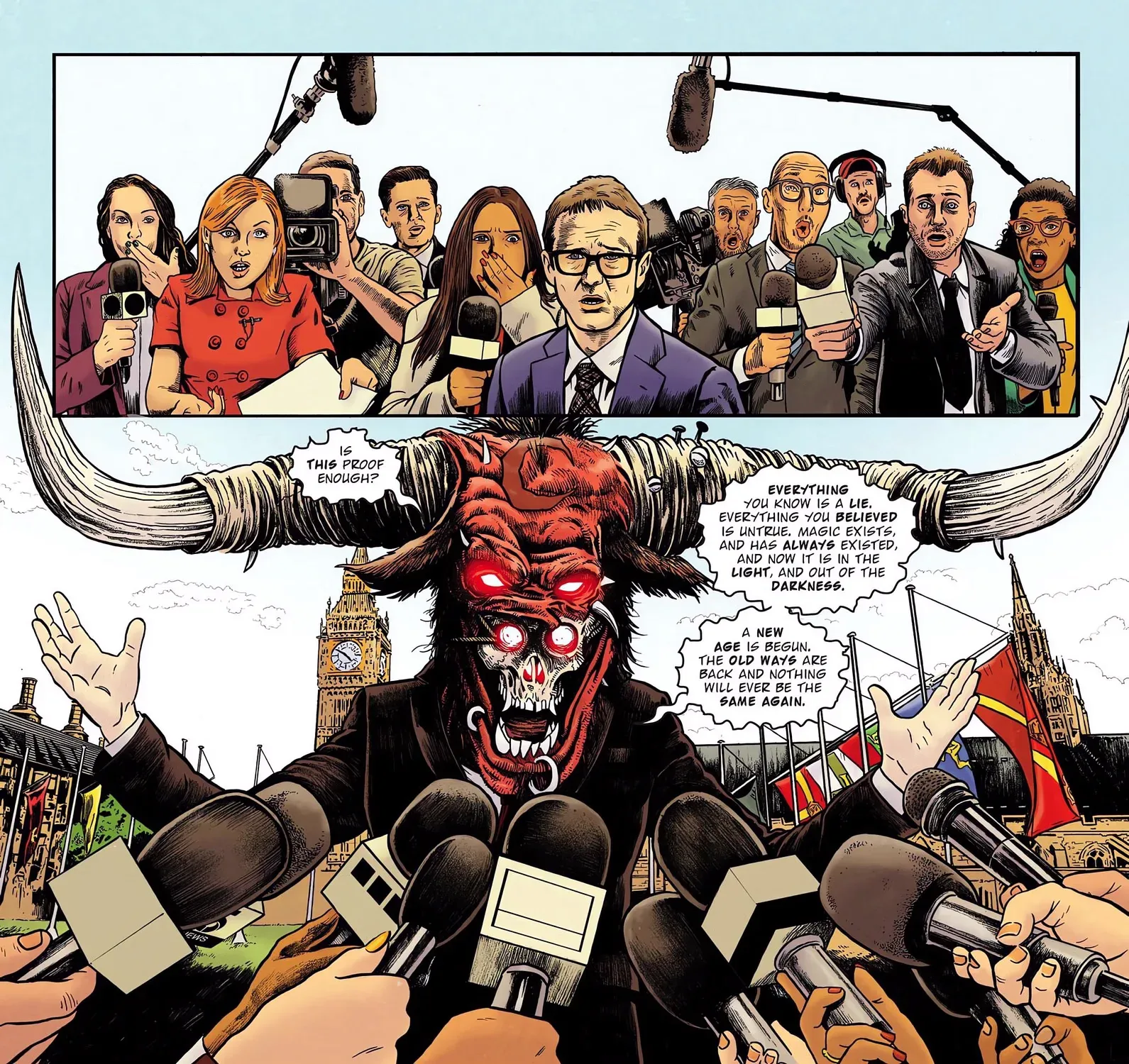
The cameo puts Mason into a deliberately heightened version of a familiar political-media setting: a press call on College Green. In the story, the occasion is not ordinary political damage control. Moloch, a supernatural antagonist possessing Alex Ramsey-Hall MP, publicly takes responsibility for the destruction of Stonehenge—an event that had previously been blamed on terrorists. Mason is depicted among the assembled press and receives the first question for the BBC.
That small piece of casting is more than a visual in-joke for attentive readers. It provides a sharp meeting point between Herne & Shuck’s occult fiction and the visual language of contemporary British political reporting. A demonic possession plot suddenly has to contend with microphones, cameras, reporters, public claims, and the awkward institutional rituals used to explain a crisis in public.
A supernatural emergency meets College Green
College Green is used in the strip as an instantly legible shorthand for a political press conference. The setting is meaningful because it brings a surreal declaration—the possessed MP’s claim over Stonehenge—into an environment associated with questions, scrutiny and live public response. The joke is not simply that a real journalist has been placed in a comic. It is that the fiction gives its most implausible event the formal presentation of a recognisable news moment.
In practical storytelling terms, a press conference is a useful pressure chamber. A villain making a statement is no longer acting from a hidden lair or speaking only to other characters who already understand the supernatural stakes. The claim is broadcast outward. Journalists can interrupt, challenge, clarify or force the speaker to account for contradictions. Even when a comic scene is chaotic, the simple act of putting reporters in front of a public figure creates the expectation that somebody will ask the obvious question.
That is why giving Mason the first BBC question matters within the construction of the sequence. It makes the real-world resemblance part of the scene’s rhythm rather than an indistinct background easter egg. Readers who recognise him get an extra layer of humour, while readers who do not can still follow the immediate function: a reporter is confronting an extraordinary claim at a highly public moment.
What is happening in Herne & Shuck?
Herne & Shuck centres on Herne, described as a troubleshooter and hired hand for different magical factions. His companion Shuck is a demon in dog form. Their work can include jobs such as exorcisms and rescues, giving the strip a premise that moves through a Britain where supernatural organisations and threats operate alongside ordinary life.
The Book Three material leading into Prog 2590 raises the stakes around Carys, a young person Herne had previously saved from ritual sacrifice. The organisation known as St Michael later takes her again, leaving Herne to mount a rescue while dealing with the broader consequences of that conflict. The College Green sequence expands the story’s scope beyond a contained magical dispute: Moloch’s actions and the Stonehenge destruction have become matters for public explanation.
Moloch is the immediate source of that escalation. While possessing Alex Ramsey-Hall MP, the demonic figure chooses to go public and claim involvement in the destruction of Stonehenge. The revelation is a turn in the strip’s political satire as well as its fantasy plot. A supernatural power does not merely cause an incident; it uses a political figure and a media event to frame the aftermath.
Possession, in this context, means that Moloch is controlling or inhabiting Ramsey-Hall’s body. It allows the story to fuse the supernatural and political dimensions in a single character: the public sees an MP at a press call, while readers understand that a malevolent occult force is behind the speech. That split between public appearance and hidden control is a natural engine for satire, particularly when the scene is staged around press questions.
Why real-person cameos work in a comic like this
A cameo is the appearance of a recognisable real person, or a recognisable fictional figure, within another work. It can be explicit, as it is here, or left as a visual nod for readers to identify. In either form, it relies on recognition: the audience brings knowledge from outside the comic and applies it to the panel.
For a serial anthology such as 2000 AD, that kind of moment can reward close reading without demanding that everybody be in on the reference. The central plot remains Moloch’s public claim and the consequences for Herne, Shuck, Carys and the forces around them. Mason’s appearance adds texture. It tells readers that this fictional Britain shares enough visual DNA with the real one for a familiar broadcaster to be standing at the edge of an occult-political disaster.
It also suits the material’s tone. A demonic entity taking over an MP and addressing the press is already an extreme premise. Grounding it with the likeness of a working political journalist makes it feel simultaneously more absurd and more immediate. The strip is not asking readers to believe that the event happened. It is using the trappings of a recognisable media landscape to make its imagined event land with more bite.
There is a craft consideration here, too. Comics do not have an actor’s voice, mannerisms or a moving performance to establish a cameo. The visual resemblance and placement in the panel have to do much of the work. Putting the likeness at a press conference, in a role that matches the person’s public profile, gives the reader enough context to make the identification quickly.
The appeal of occult political satire
Herne & Shuck appears to draw its energy from contrast: magical factions and demons collide with public institutions, rescue missions and political messaging. The College Green scene distils that approach. Stonehenge’s destruction is first understood in one public frame—terrorism—before Moloch’s statement changes the account. The plot then uses a routine mechanism of public life, the press call, to handle an explanation that routine public life is not equipped to process.
That mismatch is where the satire lives. The formality of reporters gathered for questions cannot make a demonic confession less bizarre. Conversely, the supernatural premise does not erase the need for questions about responsibility, motive or what comes next. The fiction gains tension from allowing those two systems to collide rather than keeping its magic hidden from the public eye.
It is also a reminder that political satire need not be limited to direct imitation. The strip does not need to recreate a specific real press event for College Green, the BBC presence and a familiar political editor to communicate the atmosphere it wants. These are broad, recognisable signals that establish the stakes of a public crisis quickly. Moloch’s involvement remains firmly in fantasy, but the surrounding spectacle is intentionally close enough to everyday media imagery to feel pointed.
For readers interested in genre stories that use real cultural touchstones, the cameo is the kind of detail likely to invite a second look at the page. It is not presented as a new plot thread or a claim about Mason outside the fiction. Its value is in the collision of identities: a figure associated with real political reporting becomes part of an imaginary account of a possessed MP, an occult antagonist and a national monument’s destruction.
Where the issue sits in the 2000 AD lineup
Prog 2590 is a weekly anthology issue featuring work by Rob Williams, Arthur Wyatt, Guy Adams and David Barnett, with art by Megan Huang, Henry Flint, Lee Milmore and Neil Edwards. Jake Lynch is credited for the cover. Alongside the end of Herne & Shuck Book Three, the issue also concludes Ghosted!.
The issue is scheduled for release in the UK and Ireland this week, with a US release dated December 2. For readers following Herne & Shuck, that means the Mason cameo arrives at a meaningful structural point: the end of the current book, when the consequences of the story’s escalated conflict are most likely to be in focus.
The wider pop-culture appeal of such crossovers between genre fiction and recognisable media figures lies in their economy. A single likeness can establish place, tone and satirical intent in one panel. That same pleasure—the way established creative voices reshape familiar cultural material—is also visible in news that John Carpenter will revisit music for an Escape from New York remake, albeit through a very different medium.
In Prog 2590, however, the gag is decidedly smaller and stranger: amid demons, ritual danger and a catastrophe at Stonehenge, a College Green reporter who looks a lot like Chris Mason gets to ask the first question.