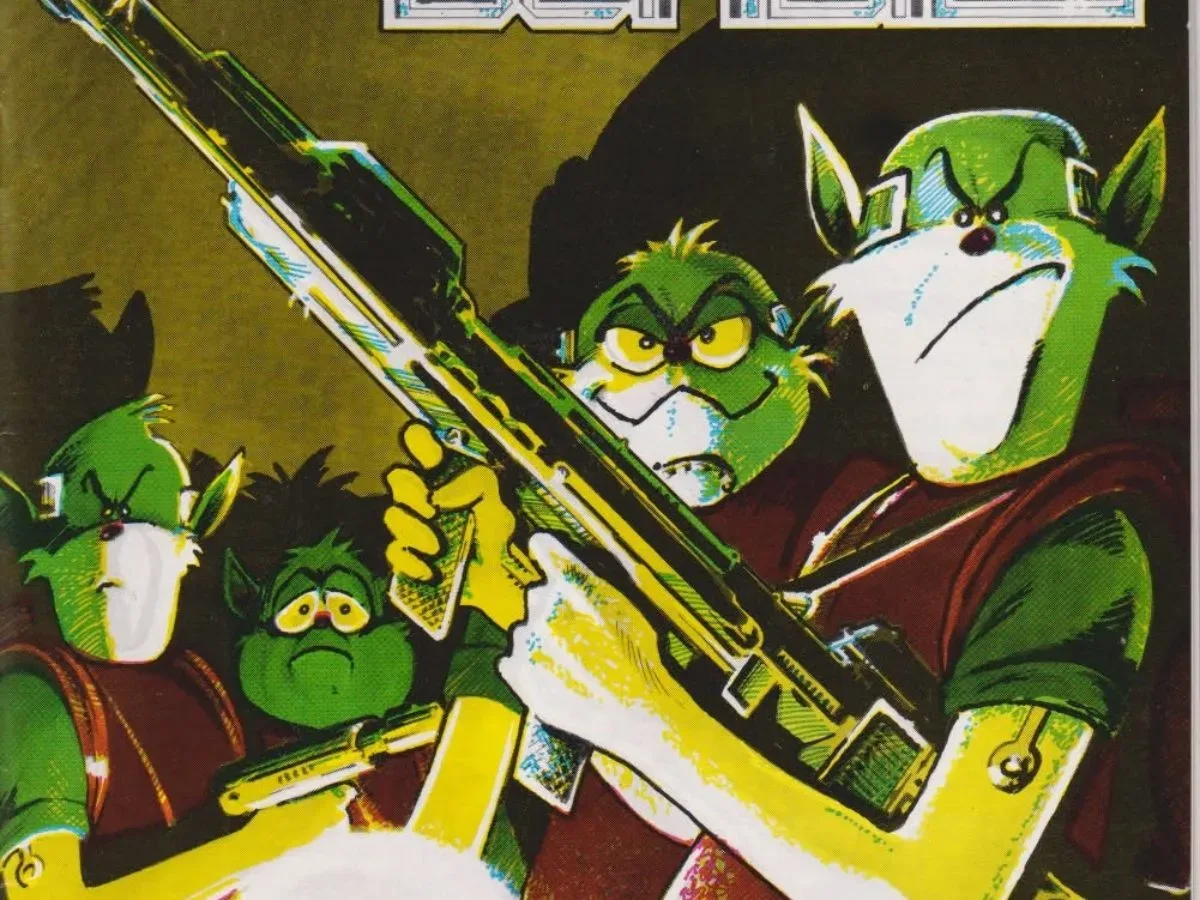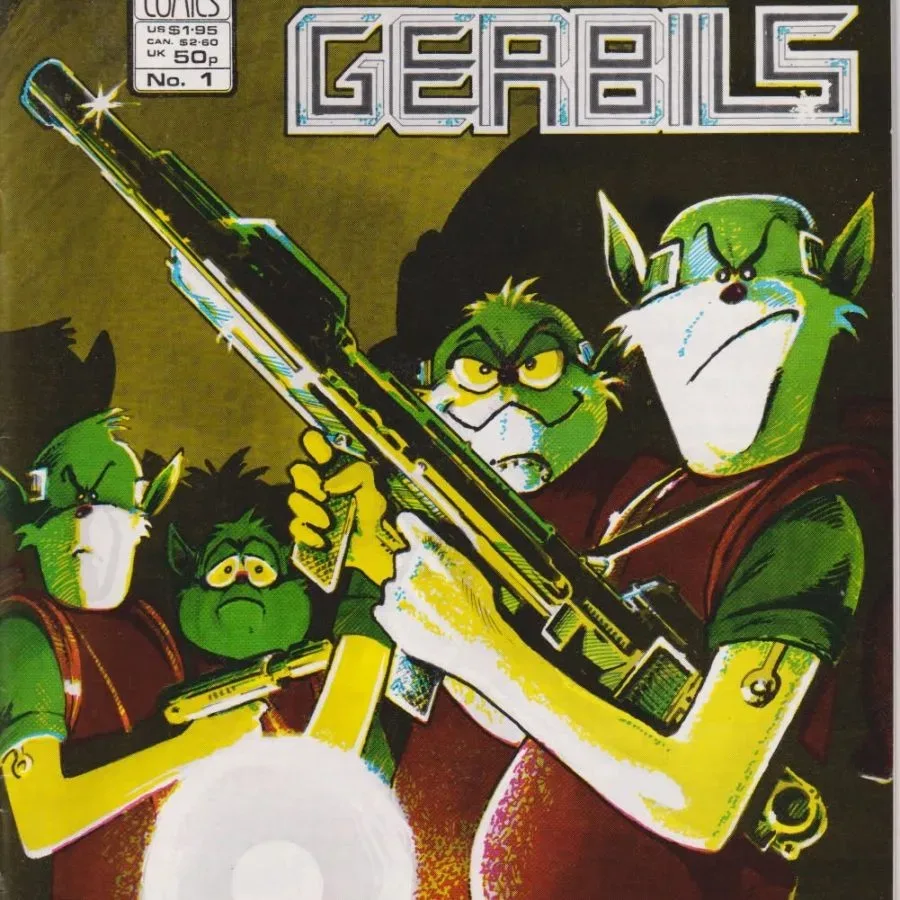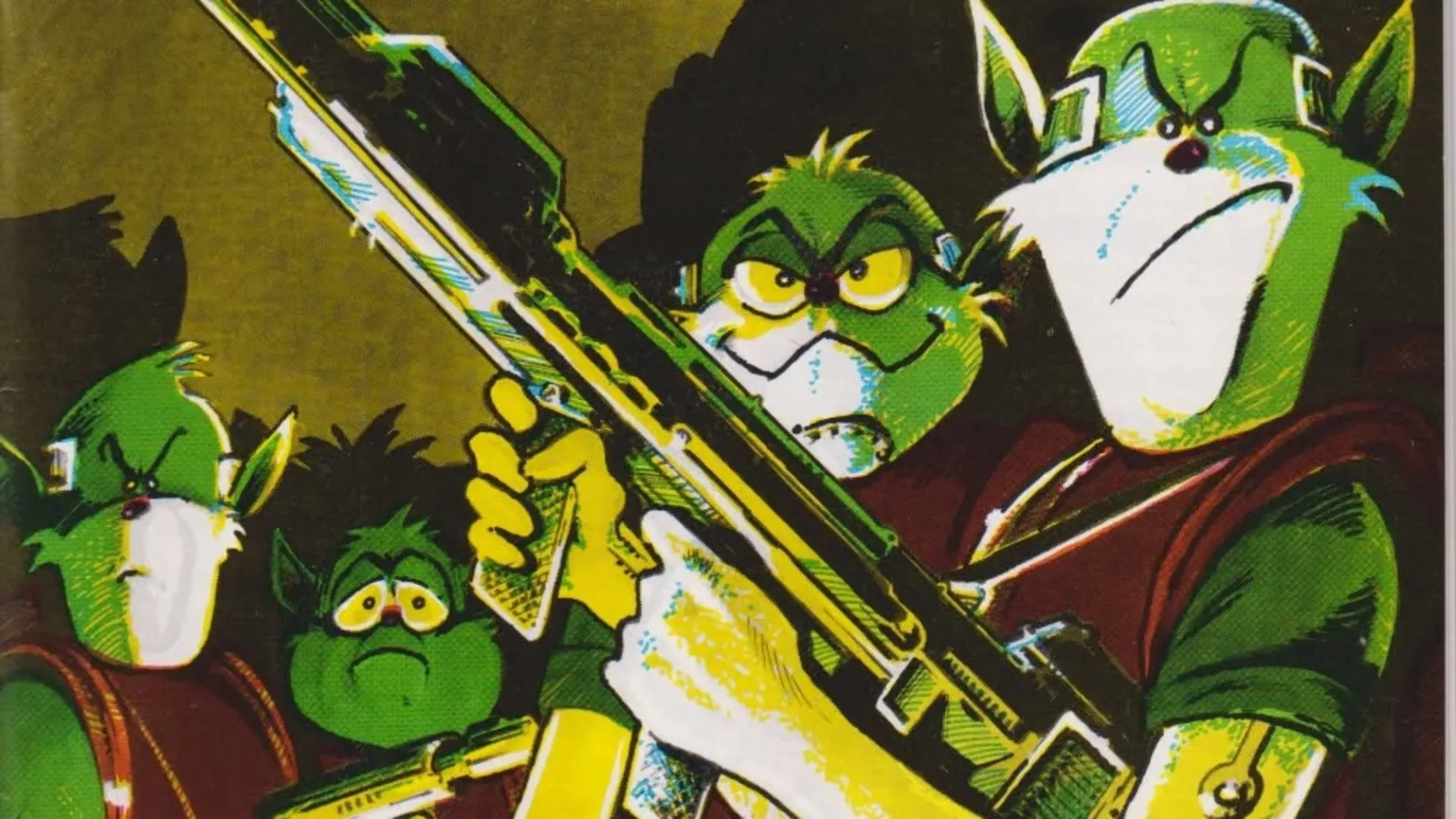
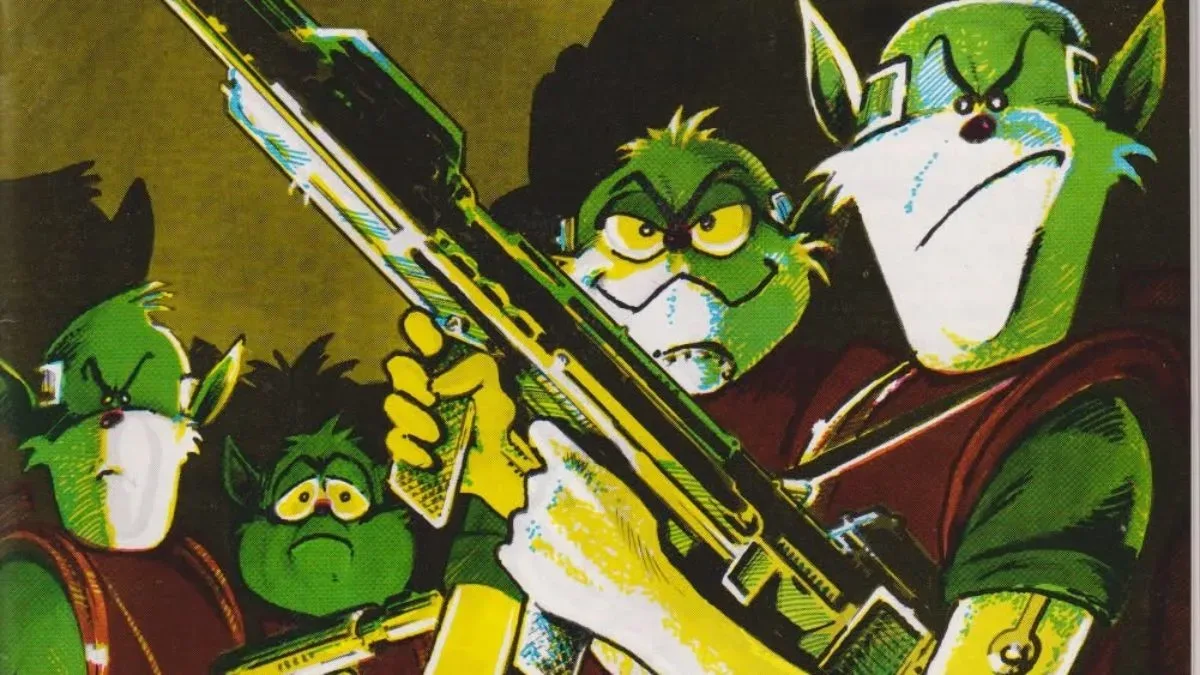
Some comics return because a corporate catalogue needs another familiar logo on the shelf. The All-New Cyborg Gerbils appears to be returning for a much more personal reason: its creators never quite lost the urge to make the strange little world work.
Volcano Comics, a Manchester-based independent publisher founded by John Jackson and Brian Clarke, is set to launch a Kickstarter campaign for a new Cyborg Gerbils comic on November 6. The project arrives roughly four decades after the characters’ earliest appearances and takes the form of a new origin story rather than a straight continuation. Jackson, who co-created the original characters with Dave Ashcroft, is drawing the new comic. Paul Duncan is writing it, Kenneth Wilson is providing embellishments, and the campaign is expected to include variant covers by Alan Davis and John Higgins.
That combination gives the project an unusually clear identity. It is a revival with roots in British independent comics, but it is also built to introduce the Gerbils to readers who do not own—or have never encountered—the earlier material.
A fresh start rather than homework for new readers
The new book is described as an origin story, which matters for anyone discovering the title through the crowdfunding campaign. In comic-book terms, an origin story establishes the central premise and characters from the beginning; it generally avoids requiring readers to track down old issues before they can understand what is happening. Here, the stated ingredients include a mad scientist, a psycho alligator and numerous Easter eggs.
Easter eggs are references, background details or in-jokes intended to reward attentive readers. They can connect a new work to earlier material, but they do not necessarily mean a reader needs specialist knowledge to follow the plot. That is a sensible fit for a comic with a long gap in publication: long-time supporters can look for callbacks while newcomers receive a story designed to stand on its own.
Jackson has said that this is not merely a nostalgia exercise. The version now reaching Kickstarter grew out of an earlier attempt to reimagine the characters for Fat City Films. Jezz Hall redesigned the Gerbils for animation, and Jackson produced two sample comics for producers. The animation option was not taken up and those sample comics were unpublished, but the creative work did not disappear. Instead, it became part of the foundation for the comic now being completed.
That history helps explain why “all-new” is more than campaign language. The project is drawing on a concept that was revisited, redesigned and reshaped over time, then handed to a different creative partnership for a full comic narrative.
From Trigon and Harrier to a new campaign
The Cyborg Gerbils first appeared through Manchester publisher Trigon Comics in 1986. Trigon also produced the science-fiction comic Totally Alien and a title called CLINT, unrelated to the later anthology with the same name. At the time, Trigon became the first independent UK comic publisher to gain direct sales in the United States, through Mike Lake at Titan Distributors.
That achievement was significant in an era when smaller comics often depended on a patchwork of specialist retailers, distributors, conventions and fan networks. Direct sales refers to copies supplied through the comic-shop distribution channel rather than ordinary newsstand-style returns. For a young independent publisher, access to that market could potentially put a local title in front of a far wider group of readers.
But independent black-and-white publishing was also crowded. A wave of smaller titles pushed order numbers down and reduced profitability for many publishers, including companies that had benefited from the boom. Trigon later collapsed. Harrier Comics published Tales of the Cyborg Gerbils #1 in 1987, with scripts by Brian Cuffe, giving the characters another stop in what has been a sporadic publishing history.
Jackson estimates that 30,000 copies of the first issues are out in the world. That does not automatically tell us how many are still held, read or remembered, but it does explain why the title may have survived in the memories of British indie-comics readers. A comic does not need a continuously published run to retain a following; sometimes an offbeat title’s scarcity, local convention life and distinctive premise are exactly what make it linger.
For readers interested in how older media can acquire a second life through preservation, specialist communities and renewed access, the wider pattern will feel familiar. Retro gaming’s resurgence has likewise been shaped by collecting, preservation and modern ways to revisit older work, even though comics and games have their own very different publishing realities.
Jackson, Duncan and Wilson form the new creative team
Jackson’s continued involvement provides an immediate line back to the original Cyborg Gerbils. His connection to British small-press comics also extends through Albert the Mouse, a creation he recalls taking to comic conventions in earlier years. Duncan knew Jackson’s work from the 1980s and remembers Albert the Mouse as a humorous presence in the ARK news fanzine, where the character interviewed famous comics figures.
Duncan is known for his Star Wars Archives books for Taschen, but his role here is as the comic’s writer. He originally wrote a Cyborg Gerbils reboot script intended to help pitch the property as an animated series. For the eventual comic, he drew inspiration from the balance of puns and action associated with Danger Mouse. That is a useful tonal pointer, not a promise that the book will imitate that show: the stated aim is fast, deliberately silly adventure alongside visual chaos.
Wilson is handling embellishments, a term that usually describes finishing work applied over the underlying art. Depending on the production method, embellishment may involve inks, texture, visual accents or other refinements that clarify and strengthen the final page. The important practical point is that the finished comic reflects a collaboration: Jackson supplies the art, Duncan the script, and Wilson contributes to the final visual presentation.
The three-person arrangement also separates the new comic from a simple archival reprint. Readers are not being asked to revisit the exact 1986 or 1987 material in a new package. They are being offered a current production with a creator from the original lineage, a new writer and a finisher helping bring the revised Gerbils to the page.
What the Kickstarter extras mean
The campaign’s announced rewards include variant covers by Alan Davis and John Higgins, as well as original hand-drawn sketch cards by Jackson. A variant cover is an alternate piece of cover art for the same comic, often offered as a separate edition or crowdfunding reward. The interior story may be identical, but the cover gives supporters a choice between different visual interpretations of the project.
Original sketch cards are something different. They are small, individually drawn pieces of art, meaning each one is unique rather than one copy in a numbered stack of matching prints. For supporters who care about original art, that distinction is important: a hand-drawn sketch card is a direct physical artifact of the artist’s work, not just a collectible cover edition.
Prospective backers should nevertheless treat the Kickstarter page as the definitive place for the final reward tiers, editions, delivery details and campaign terms once it is live. The currently stated information confirms the presence of Davis and Higgins variant covers and Jackson sketch cards, but it does not establish the full tier structure, print quantities, pricing or fulfillment schedule.
A Manchester comics project with a local publishing base
Volcano Comics is rooted in Manchester and presents itself as a publisher focused on local talent and bold new stories. Before the Cyborg Gerbils campaign, it published the Wallop and Spitfire annuals, both collections featuring British comics talent.
That connection gives the new book a sense of continuity beyond the characters themselves. Cyborg Gerbils began at a Manchester-based publisher, and its latest revival is being launched by another Manchester comics house co-founded by Jackson. In an industry where projects can often be separated from the scene that produced them, the regional link is unusually tangible.
It also underscores why Kickstarter is a fitting route for a property like this. Crowdfunding lets a niche comic present its premise, creators and special editions directly to readers most likely to care about them. It does not erase the work of publishing or guarantee an outcome, but it can give a long-dormant independent property a visible place to test whether its old cult reputation and new creative approach can meet.
The All-New Cyborg Gerbils therefore has a straightforward pitch: a bizarre British indie-comic concept returns with its original artist, a new origin story, a fresh collaborative team and campaign rewards that acknowledge both its heritage and its collector appeal. After an erratic journey through 1980s small press, an unrealized animation path and years away from print, the gerbils are finally getting another run at the page.