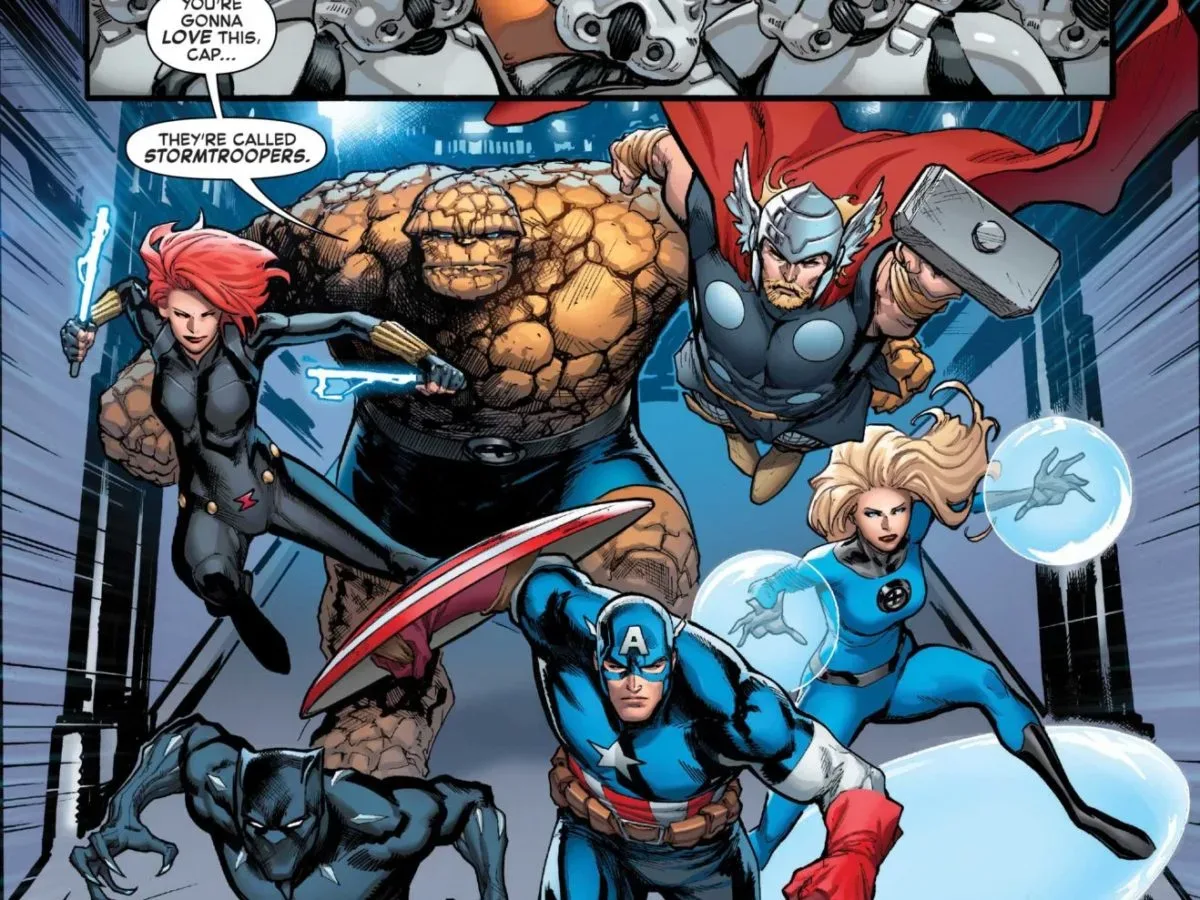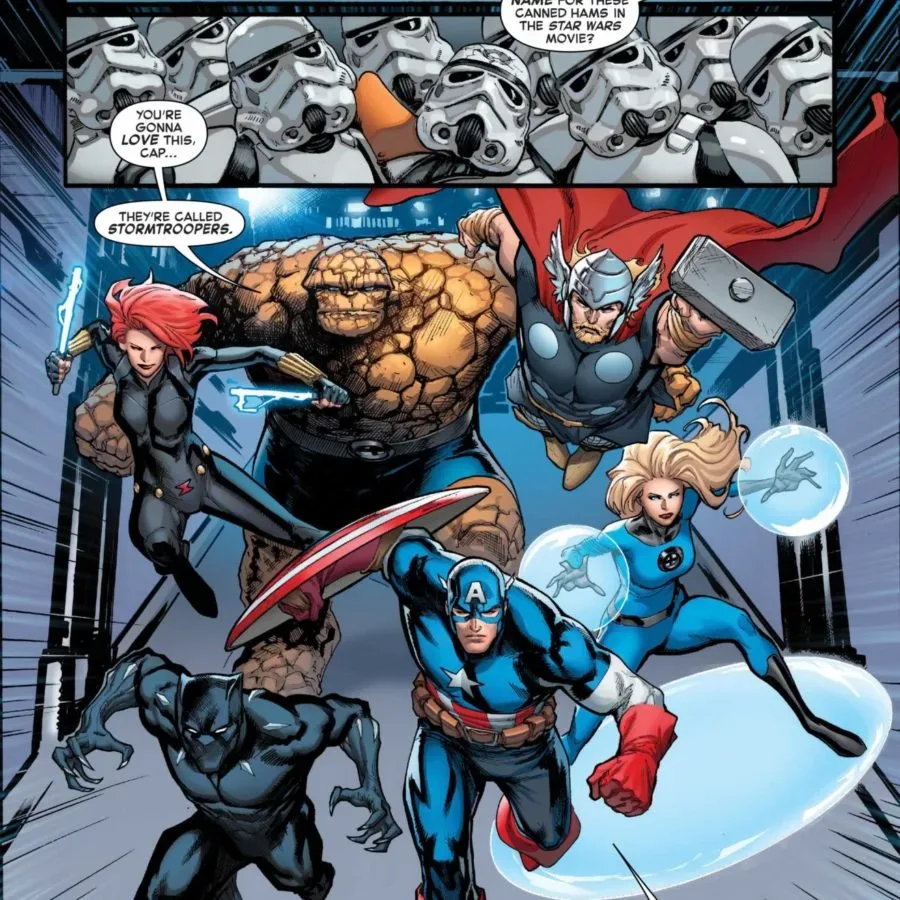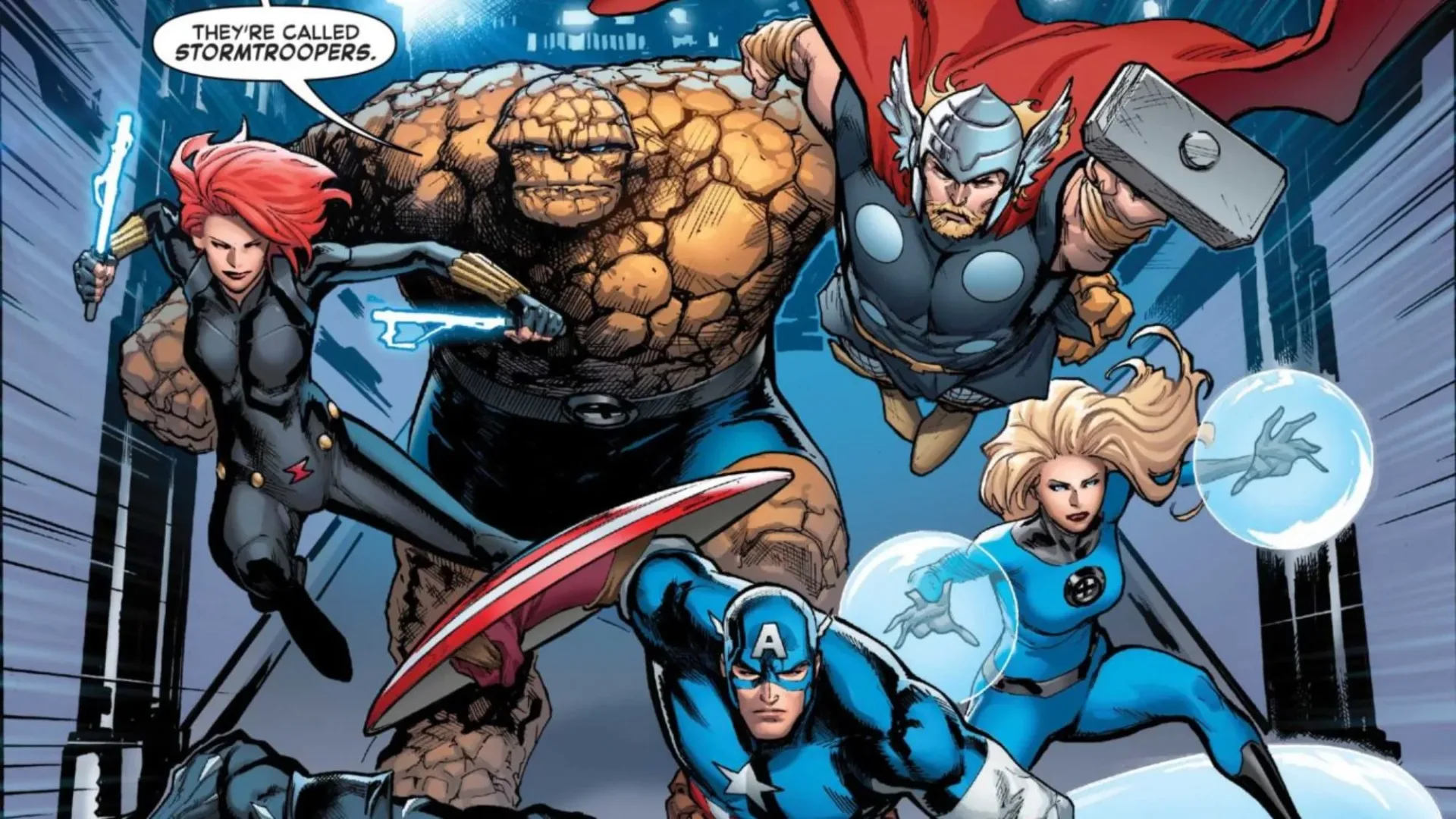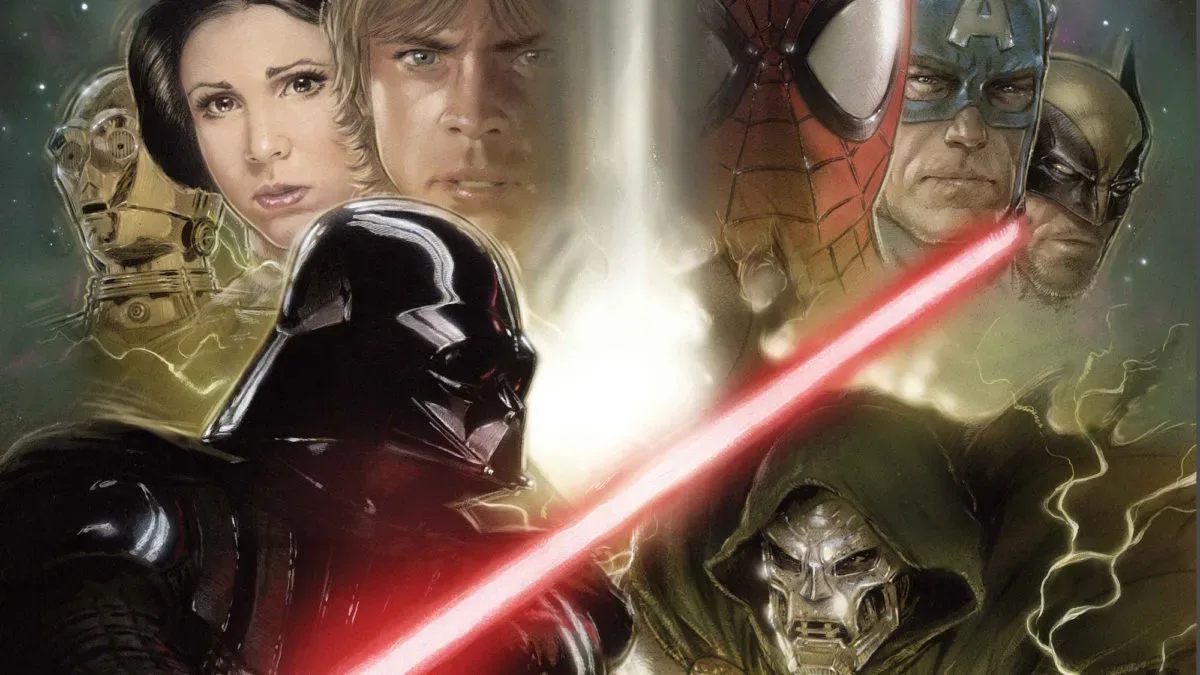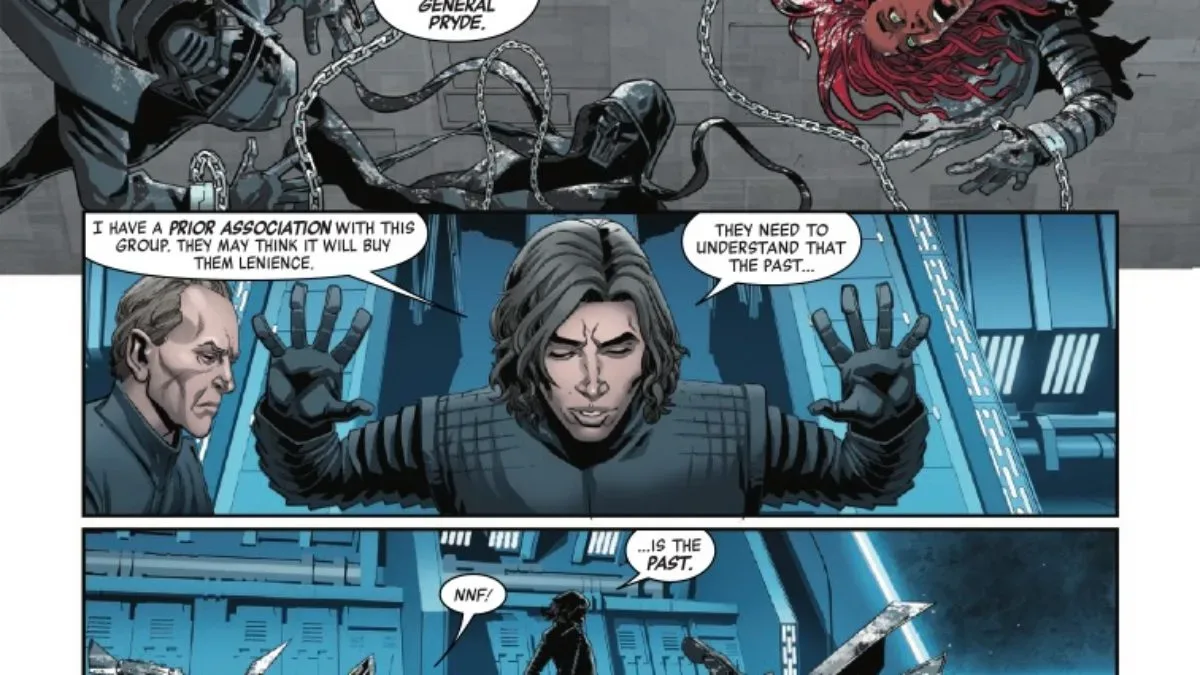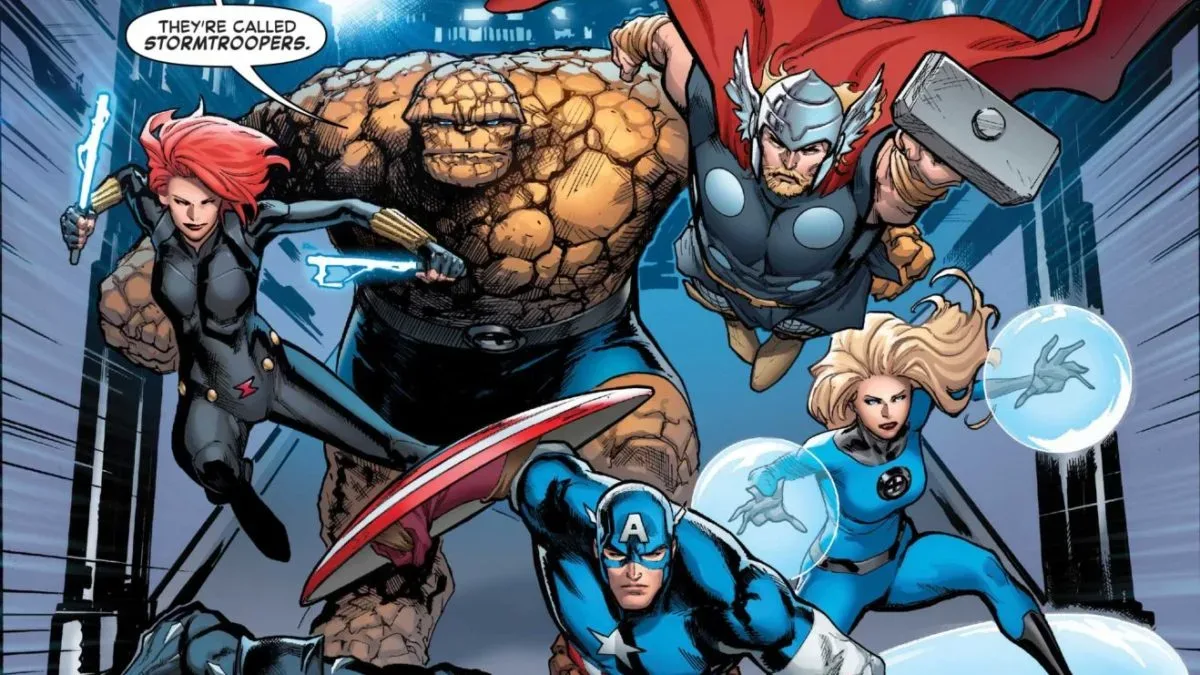
Marvel is making the premise of its forthcoming Star Wars | Marvel: Hope Assembles crossover even stranger than a standard meeting of two enormous fictional universes. The preview for issue #1 establishes that many Earth-616 heroes know Star Wars as fiction. Captain America, however, does not: Steve Rogers has apparently never watched it.
It is a small character beat, but a remarkably logical one. Steve was frozen in ice for roughly 70 years after World War II, missing the era in which Star Wars became an inescapable shared cultural reference. When a reality-shattering spell places the events of Star Wars: A New Hope into the Marvel Universe, other heroes can recognize what they are seeing. Captain America is left confronting it without that context.
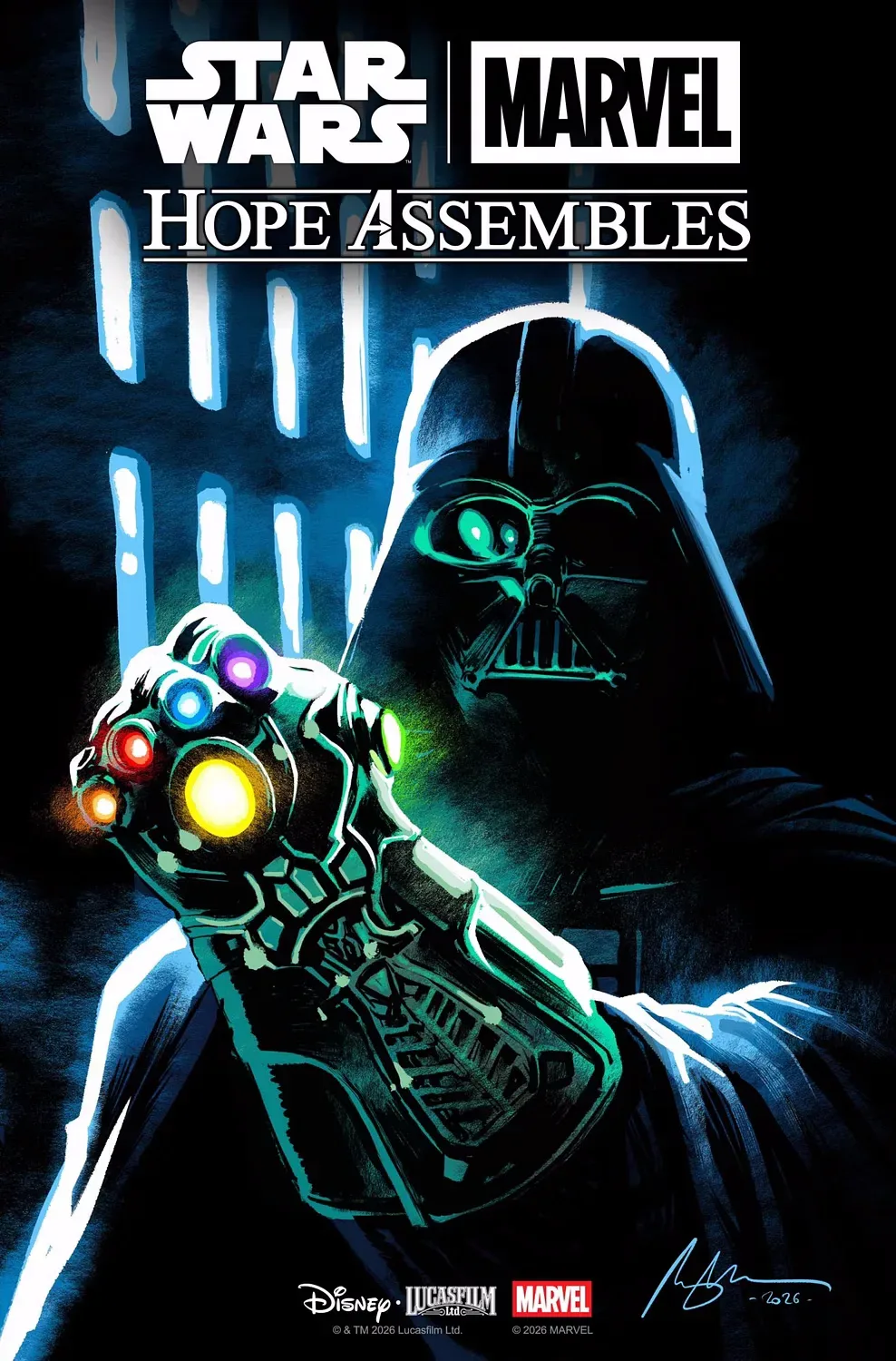
Hope Assembles is a six-issue series by Kevin Smith and David Marquez, beginning January 13, 2027. It is described as the first official crossover between Marvel’s superhero universe and Star Wars, and its events are intended to remain part of Marvel continuity. That last detail raises the stakes beyond a disconnected novelty: Earth-616 characters will not simply visit a familiar galaxy far, far away and then have the event politely erased.
A crossover built around recognition—and one hero who lacks it
The opening setup has an immediately useful comic-book tension. For heroes who have seen the movie, the arrival of its opening sequence is an impossible collision between entertainment and reality. They recognize people, places and story beats that should only exist on a screen. For Steve Rogers, it is simply an inexplicable crisis involving strangers and technology from somewhere beyond his experience.
That difference matters because crossover stories often rely on audience recognition more than character perspective. Readers know Darth Vader, Princess Leia, the Rebel Alliance and the basic trajectory of A New Hope. The Marvel cast can potentially function as an in-story chorus, reacting to the same landmarks readers know. Captain America offers the necessary counterweight: a person who needs the situation explained, evaluates it on its own terms and cannot take shortcuts based on decades of fandom knowledge.
In other words, Steve’s lack of Star Wars literacy is not merely a gag about being out of touch. It gives the series a character inside Marvel who can meet this reality-bending event as a genuine unknown. He has lived through alien invasions, cosmic wars and strange science, but that does not mean he has the specific cultural map the rest of the room appears to possess.
What Earth-616 means here
Earth-616 is the designation commonly used for Marvel’s central comic-book setting. It is the shared world in which a large range of Marvel characters, teams and ongoing consequences coexist. Calling the crossover an Earth-616 story therefore signals that the event is taking place in Marvel’s principal continuity rather than a one-off alternate setting.
Continuity, in this context, means later stories can acknowledge that these events happened. It does not automatically tell readers precisely which consequences will endure or which characters will carry the experience forward, but it means the premise is not being presented as a purely imaginary “what if” outside the established Marvel Universe.
That framing also helps distinguish Hope Assembles from the simple idea of Marvel heroes traveling to the Star Wars galaxy. The supplied premise is more disruptive: a spell shatters reality and brings the events of A New Hope to Marvel Earth-616. The story’s question is therefore not only how characters from each property get along. It is what happens when a story Earth-616 residents know as a movie ceases to stay fictional.
The value of starting with A New Hope
The decision to begin with Star Wars: A New Hope gives the miniseries a firm structural anchor. Rather than asking readers to enter an undefined point in a long-running space saga, the event starts at the foundational film’s opening sequence. That is especially well suited to a premise centered on recognition: Marvel characters who know Star Wars can understand the significance of what they are witnessing, while Steve’s blank slate creates an accessible point of contrast.
It also puts the crossover in conversation with the original film’s status inside the real world. Star Wars is marking its 50th anniversary, and Marvel’s connection to the property goes back to 1977, when it first published Star Wars comics. Hope Assembles is consequently not just a corporate handshake between two recognizable brands. It uses a long-running comics publishing relationship while asking Marvel’s own heroes to reckon with the cultural footprint of the film.
There is a playful paradox at the heart of it. In the real world, Marvel has published Star Wars comics for decades. Inside Earth-616, however, the preview indicates that at least some heroes encounter Star Wars as a film they already know. The characters are not merely meeting a different fictional world; they are watching the boundary between their own reality and pop culture collapse.
Why Captain America is the right person for the joke
Steve Rogers has long been defined by displacement in time. The character’s period frozen in ice separates his wartime origins from the modern world he inhabits. That background makes “Captain America has never watched Star Wars” a clean extension of the premise rather than an arbitrary attempt to make him seem old-fashioned.
It is also a more precise joke than treating the character as someone who knows nothing about contemporary life. The point is not that Steve cannot learn, adapt or understand a modern problem. Rather, he missed a particular cultural phenomenon while he was absent. In a story where other people’s foreknowledge could shape their reactions, that absence becomes narratively useful.
Captain America could also serve as a check on the temptation to treat real people as though they are merely reenacting a beloved movie. A hero who does not know the expected plot may be more likely to focus on immediate danger, the people caught in it and the moral choices in front of him. That is analysis of the setup rather than a confirmed plot point, but it illustrates why the detail has more potential than a single punchline.
Crossover fans are used to watching characters compare power sets, trade banter or discover who recognizes whom. Hope Assembles has room for a different kind of contrast: characters who know exactly what they think is supposed to happen versus a hero who does not accept that a film’s storyline should determine anyone’s fate.
Kevin Smith and David Marquez take on the collision
Smith and Marquez are the creative team behind the six-issue event. Editor Mark Paniccia has characterized the appeal as viewing recognizable moments from a new angle, with emotional, surprising and exhilarating opportunities created by bringing the casts together. Smith has also previously expressed a desire to see Marvel characters enter the Star Wars saga.
That emphasis on familiar moments seen differently is important. A direct replay of A New Hope would leave little reason for the Marvel half of the title to exist. The apparent hook is that the arrival of Earth-616 heroes changes the viewpoint, the available choices and perhaps the assumptions around moments readers already know. Captain America’s missing pop-cultural reference point is one early expression of that approach: even before the larger plot develops, the characters are not all reacting to the same event in the same way.
Marquez’s involvement is equally central to a premise this visually loaded. The story must make the collision legible: Marvel heroes need to feel at home in their own reality even as the imagery and situations of Star Wars intrude upon it. The preview material positions the series at the beginning of the original film, but the eventual scale and full roster have not been detailed here.
What readers can expect before January
A preview for Star Wars | Marvel: Hope Assembles #1 is set to appear in the back of select Marvel titles in the months before release. Beyond the announced six-issue length, January 13, 2027 launch date, creative team, Earth-616 setting and A New Hope-based premise, readers should be wary of assuming details the preview has not established.
That restraint is worthwhile with any continuity crossover. A series can promise lasting canon status without immediately spelling out every consequence, and a recognizable opening does not guarantee that events will proceed exactly as the original film did. The reality-shattering spell is the key disruption. Its presence makes the story less about a faithful adaptation and more about what changes once Marvel characters stand inside the situation.
For a broader look at why crossover stories work best when they preserve the distinctive voices of both sides, see our take on Final Fantasy’s place in Kingdom Hearts. Hope Assembles has a similarly clear opportunity: let the spectacle of Marvel and Star Wars sharing a page provide the hook, while character perspective supplies the reason to keep reading.
And for now, Steve Rogers’ unfamiliarity with Star Wars offers a wonderfully compact summary of the entire project. Everyone else sees an iconic piece of fiction arrive in their world. Captain America sees a crisis he has never been taught to recognize—and, as usual, will have to decide what to do about it anyway.