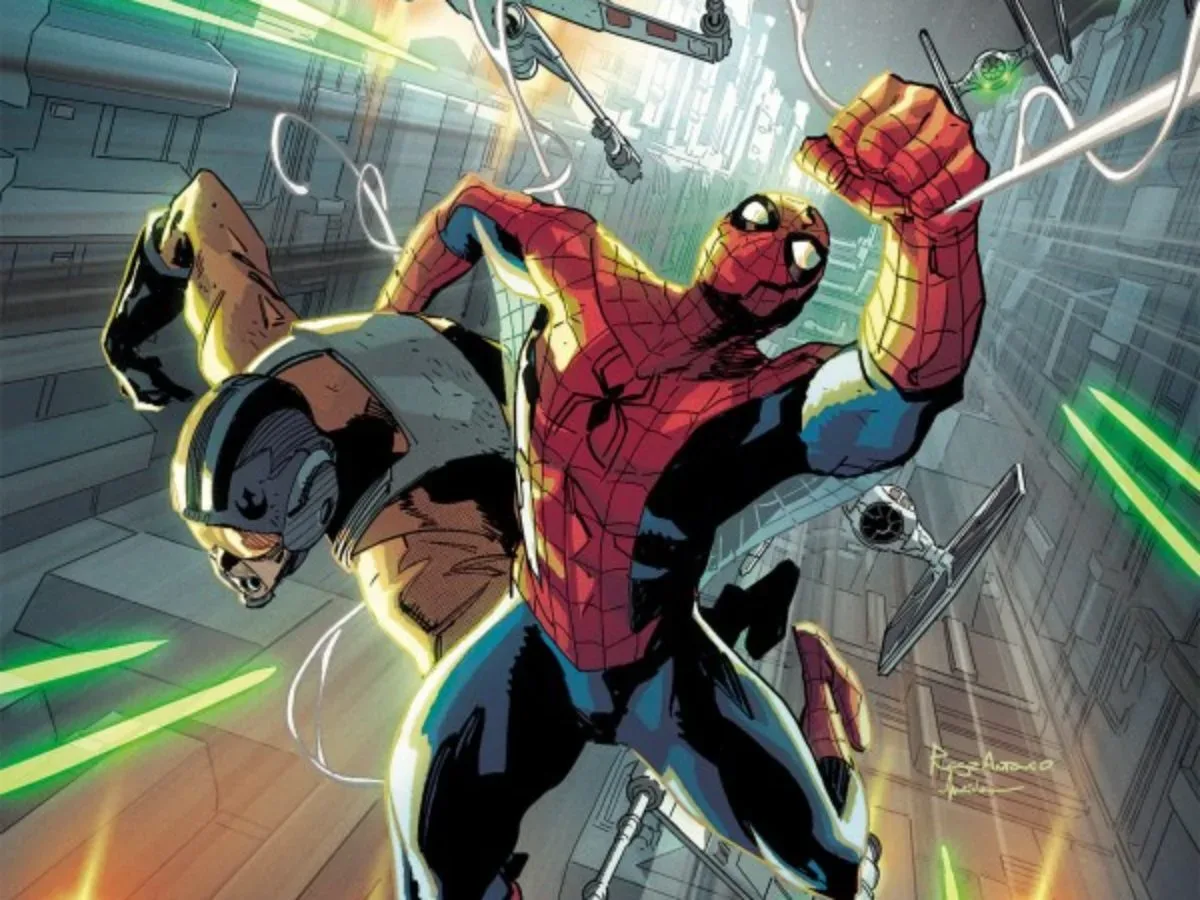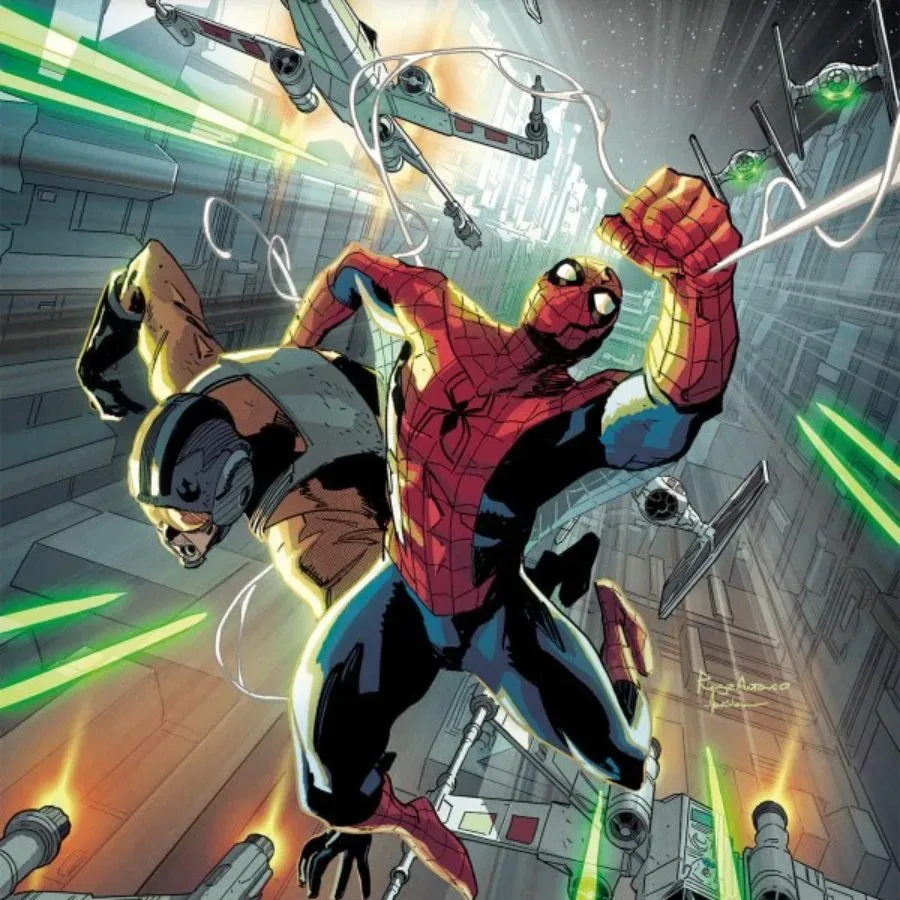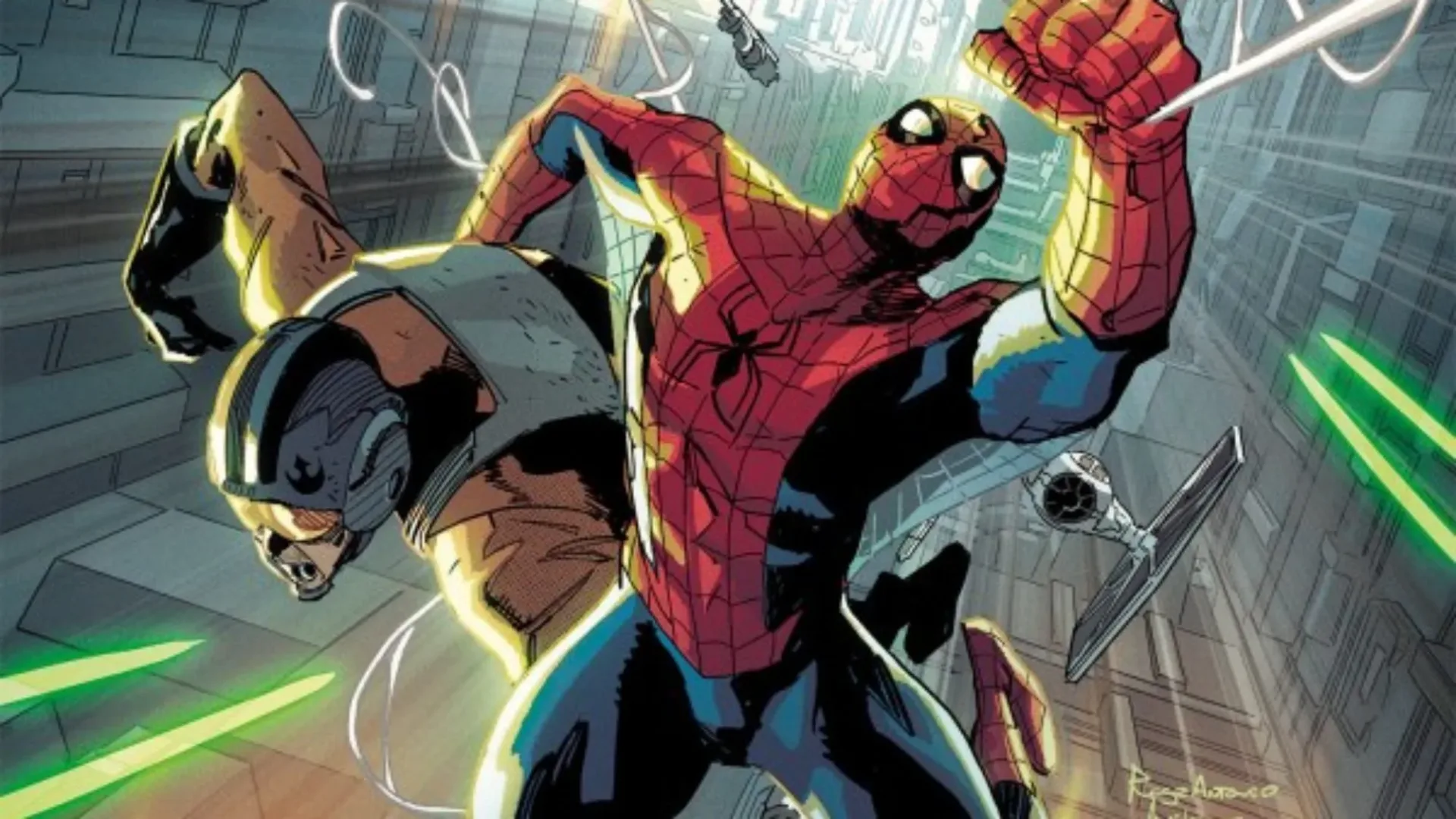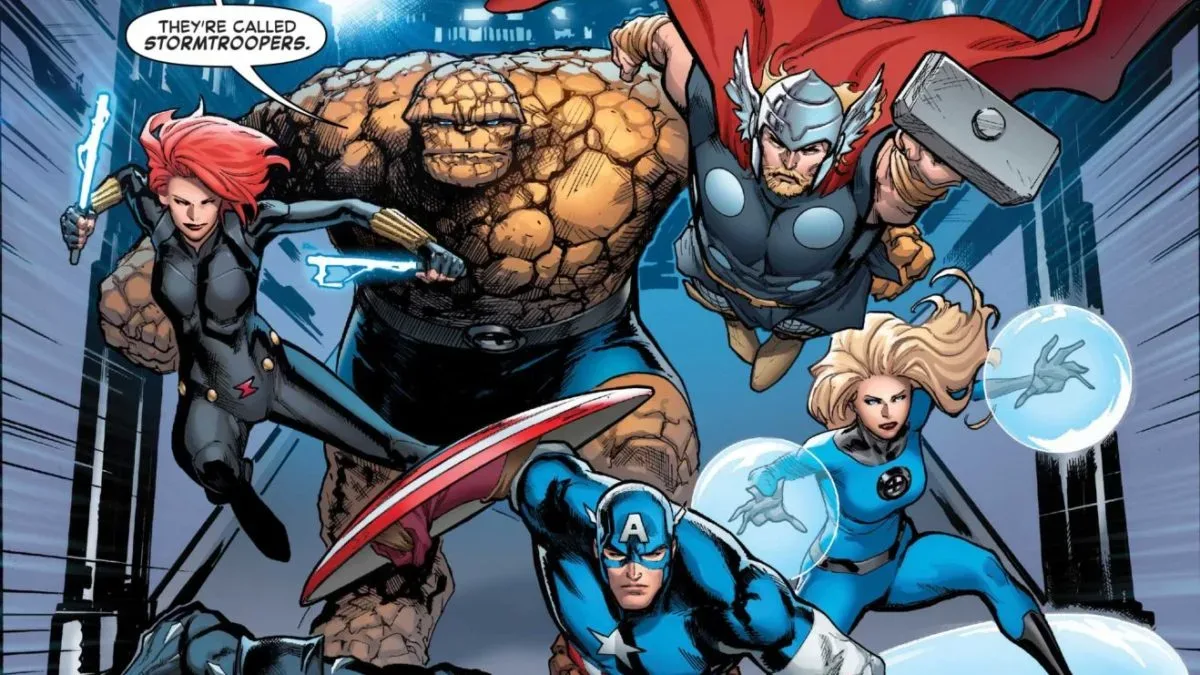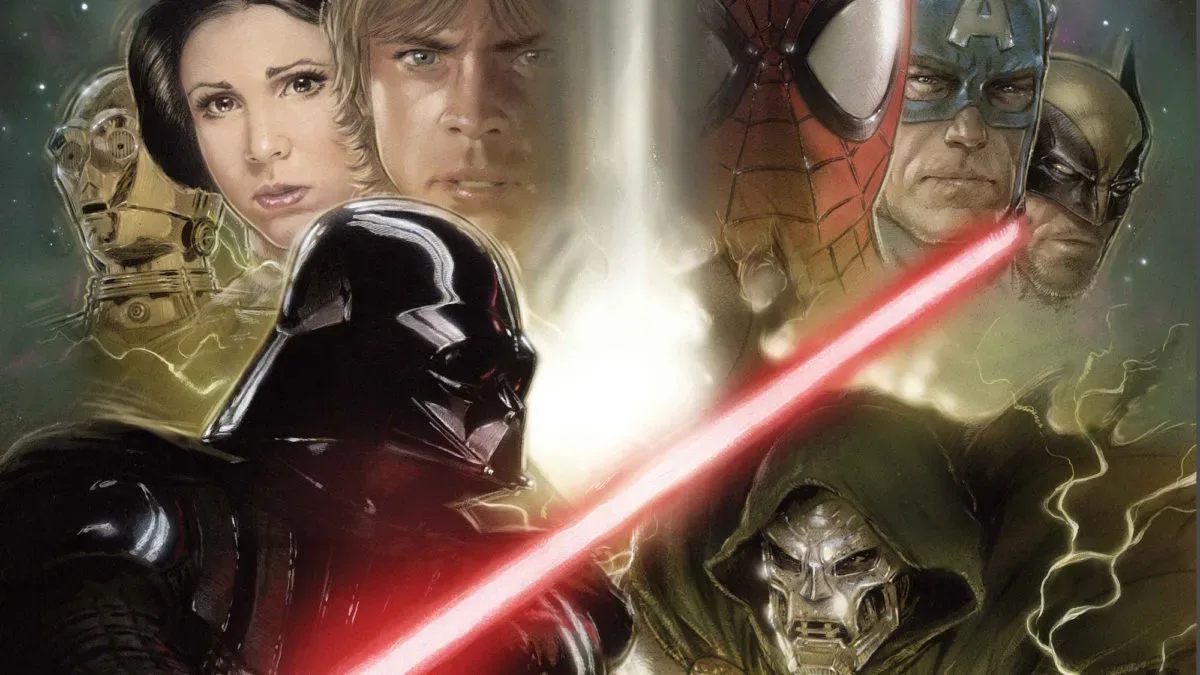
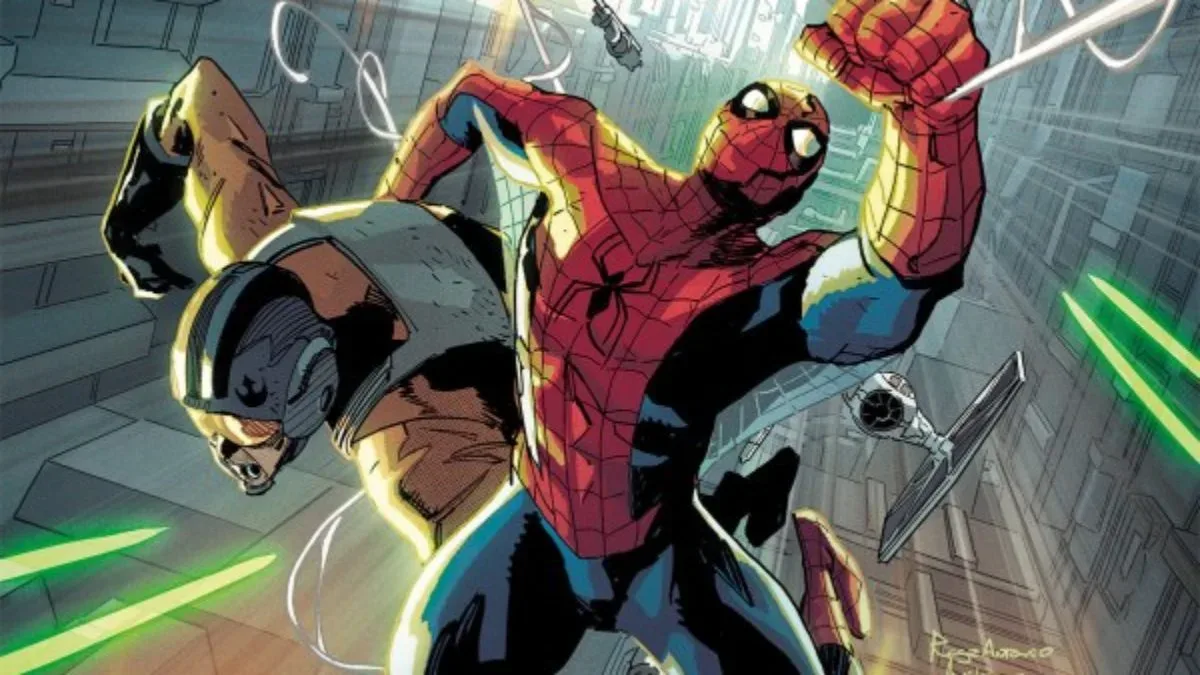
Star Wars/Marvel: Hope Assembles #1 has the makings of an unusually large comic-book launch. The six-issue series, credited to Kevin Smith and David Marquez, is described as the first official crossover between Star Wars and Marvel, with its 2027 timing tied to the 50th anniversary of A New Hope. That is a powerful premise on its own: Luke Skywalker and Spider-Man, Darth Vader and Doctor Doom, Han Solo and Thanos are combinations built to attract attention far beyond the weekly-comics audience.
But a major first issue is not only a creative occasion. It is also a retail event, a collector event and, potentially, a lesson in how quickly enormous demand can become enormous supply. The historical comparison hanging over the launch is DC's Superman #75, the 1992 conclusion to the Doomsday fight that depicted Superman's death. It produced blockbuster sales and brought non-readers into comic stores. It also became a lasting warning about speculation, retailer overordering and confusing a headline-grabbing sellout with enduring scarcity.
Hope Assembles does not need to repeat that story to be a success. In fact, the most useful takeaway from Superman #75 is that success should be measured more carefully than a single launch weekend, a packed midnight opening, or the size of an initial order.
Why Hope Assembles has a genuine event-book hook
Crossovers are familiar territory in superhero comics, but this one carries a different kind of recognition. Star Wars is already a comics property, while Marvel's characters are among the medium's most recognizable. Joining the two official worlds creates a simple, visual pitch that people can understand immediately, including people who do not regularly visit a comic shop.
That accessibility matters. A crossover can sometimes require readers to know years of continuity or buy multiple tie-ins. The supplied details identify Hope Assembles as a six-issue series, which at least gives the project a clearly defined shape. A prospective reader can understand that issue #1 is the beginning of a limited story rather than an arbitrary stop in a long-running title.
Kevin Smith's stated ambition is to reach people who may not even realize comic books are still being published. Whether that happens at a major scale is unknown, but the logic is easy to follow. Star Wars and Marvel are both expansive popular-culture brands. Pairing their signature characters creates the kind of premise that may be shared among fans who normally follow films, television, games or character news rather than monthly periodicals.
The anniversary connection adds another layer to the launch. An anniversary does not automatically create demand, but it offers an understandable reason for the timing and gives stores an occasion around which to organize promotions or extended hours. Reports of possible midnight sales point to an attempt to make the release feel communal rather than merely transactional: a one-night chance to be present for a pop-culture curiosity.
What made Superman #75 a milestone
Superman #75 was not simply a comic with a memorable cover. Written and drawn by Dan Jurgens, it closed the Doomsday/Superman battle with an issue built largely from full-page panels. The event was emotionally legible even to casual observers: Superman died in Metropolis, with Lois Lane beside him. That clarity helped make the story newsworthy outside comics circles.
DC also packaged the release as a collector's object. The collector edition came in a black polybag featuring a bleeding S symbol and included a black armband, poster, stamp, trading card and a Daily Planet obituary. A less expensive newsstand edition was also available. The material contents made the purchase feel like participation in a cultural moment, not just another installment of a serialized fight.
The response was enormous. Stores that might ordinarily have ordered a small number of Superman copies reportedly ordered in the hundreds or thousands. Customers queued before shops opened, some sellers reportedly sold through quickly, and purchase limits were used in some locations. Media coverage spread the underlying message—Superman was dead—to people who had no routine relationship with comics.
Estimates place sales across printings at roughly six million copies, with three million collector editions printed. Those figures explain why Superman #75 remains shorthand for a comics phenomenon. Yet they also explain why its collector reputation became complicated.
Sellout, sell-through and scarcity are not the same thing
The most important technical distinction for readers and collectors is between sellout, sell-through and scarcity. They can overlap, but they mean different things.
- Sellout means a particular store, distributor or publisher has no remaining copies available through that channel at that time.
- Sell-through concerns whether copies ordered by retailers actually reach readers and customers rather than remaining in shop back stock.
- Scarcity means few copies are available relative to the number of people who want them, especially over time.
Superman #75 could create dramatic local sellouts while still existing in enormous overall quantities. Its common editions did not become broadly scarce, and their values generally did not rise far beyond cover price. The issue's very success as a mass-market event worked against the assumption that every sealed copy would become a major investment.
That does not diminish the comic's cultural or storytelling significance. It simply separates an important artifact from a rare one. The original art from the issue later sold for millions at auction, while the standard comic itself remained widely available. Original art is inherently singular; a mass-printed comic is not. Treating those as equivalent collectible categories leads to bad expectations.
For Hope Assembles, that distinction is practical. A sellout at a nearby shop could mean the store ordered conservatively, local demand was unusually high, or both. It does not by itself establish how many copies exist globally or what they may be worth later. Conversely, an ample supply can be good news for readers who want to participate without paying inflated resale prices.
The retailer risk behind a blockbuster first issue
Comic retailers must make ordering decisions before they know how much public excitement will convert into actual purchases. The supplied information places the final order cut-off for Hope Assembles #1 on November 23. A final order cut-off, often shortened to FOC, is the deadline at which retailers finalize or adjust their orders. It is a critical point because a shop cannot simply restock instantly if demand exceeds expectations.
That creates a difficult balancing act. Order too little, and a store can disappoint customers and miss sales during the period of highest visibility. Order too much, and money is tied up in copies that could remain unsold for years. For a highly publicized crossover, the temptation to order aggressively is obvious—especially if queues and midnight launches appear likely.
Superman #75 illustrates the consequence when market excitement and ordering decisions become detached from the number of people who will keep reading or collecting after the headline passes. Many buyers saved their copies instead of reading them. Interest centered on the event itself, and many newcomers did not become long-term comics customers. Retailers who ordered heavily could be left holding stock.
The wider early-1990s speculation boom was not caused by one Superman issue. However, the overabundance of saved copies, combined with speculation around other relaunches and high-profile books, helped demonstrate how a market built on presumed future value can become fragile. The later market collapse made Superman #75 a useful cautionary example rather than a simple template for how to engineer a hit.
What a healthier Hope Assembles launch could look like
There is no evidence yet that Hope Assembles will match Superman #75's scale, nor is that the only meaningful benchmark. The project could perform exceptionally well without selling millions, and a massive first issue would not automatically establish lasting readership. Its success will depend on how much of the curiosity around the character matchups translates into people buying and enjoying a six-issue story.
For readers, the sensible priority is straightforward: buy the comic because the creative team, crossover premise or format appeals to you—not because a heavily promoted first issue is assumed to become scarce. If a midnight event is available locally, it may be a fun way to share the launch with other fans. It is not proof of a future resale outcome.
For retailers, the central question is less glamorous: how many customers are committed buyers rather than spectators? Stores can benefit from the attention generated by a major crossover, particularly if it introduces visitors to other books and turns a one-off purchase into a return trip. But that opportunity is strongest when expectations are managed rather than fueled by promises of instant collectibility.
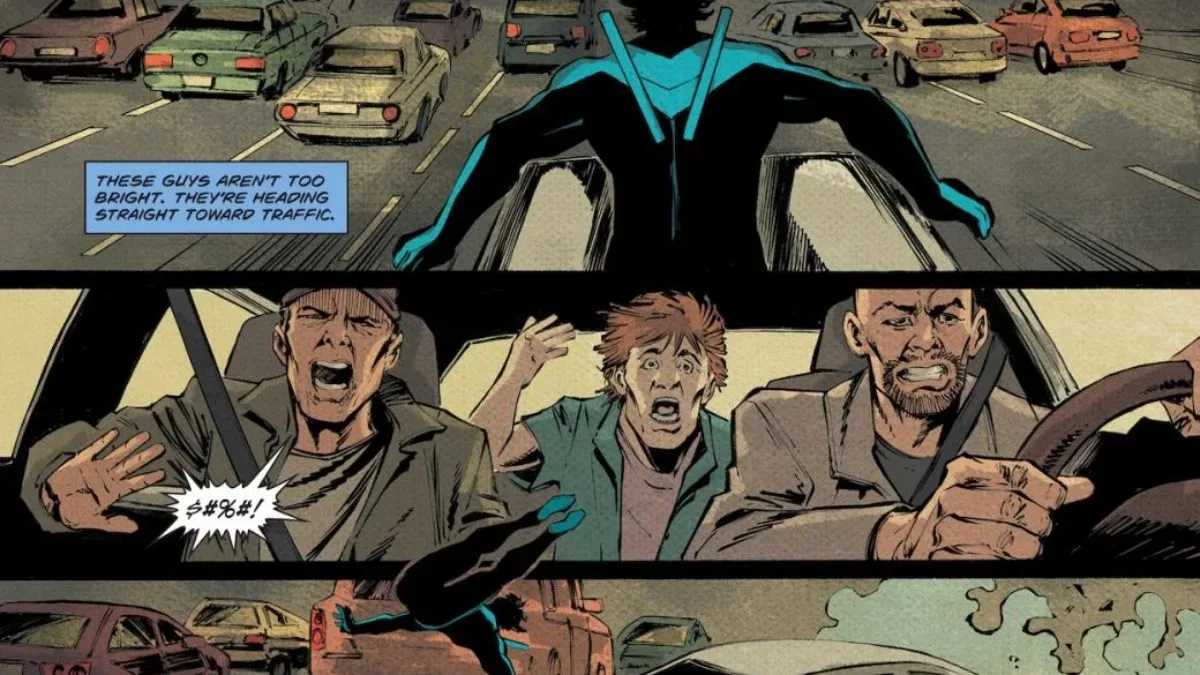
And for the series itself, the opportunity is unusually clear. A first official Star Wars/Marvel crossover has a premise big enough to make casual fans stop and look. The 2027 anniversary timing, the creative pairing of Smith and Marquez, and the iconic character combinations may produce exactly the kind of broad curiosity that comic stores want. In a comics landscape still shaped by landmark DC events, readers can also keep an eye on contemporary superhero serials such as Nightwing #144's Blüdhaven showdown.
The Superman #75 comparison is therefore useful when read in full. The 1992 issue proved that comics can become a mainstream conversation and bring extraordinary numbers of people through shop doors. Its aftermath proved that attention, high print volume and long-term collectible value do not move in lockstep. Hope Assembles may be a major event. The smarter question is not whether it can recreate every number or every frenzy of that earlier launch, but whether it can turn its remarkable crossover appeal into a satisfying series and sustainable engagement after issue #1.