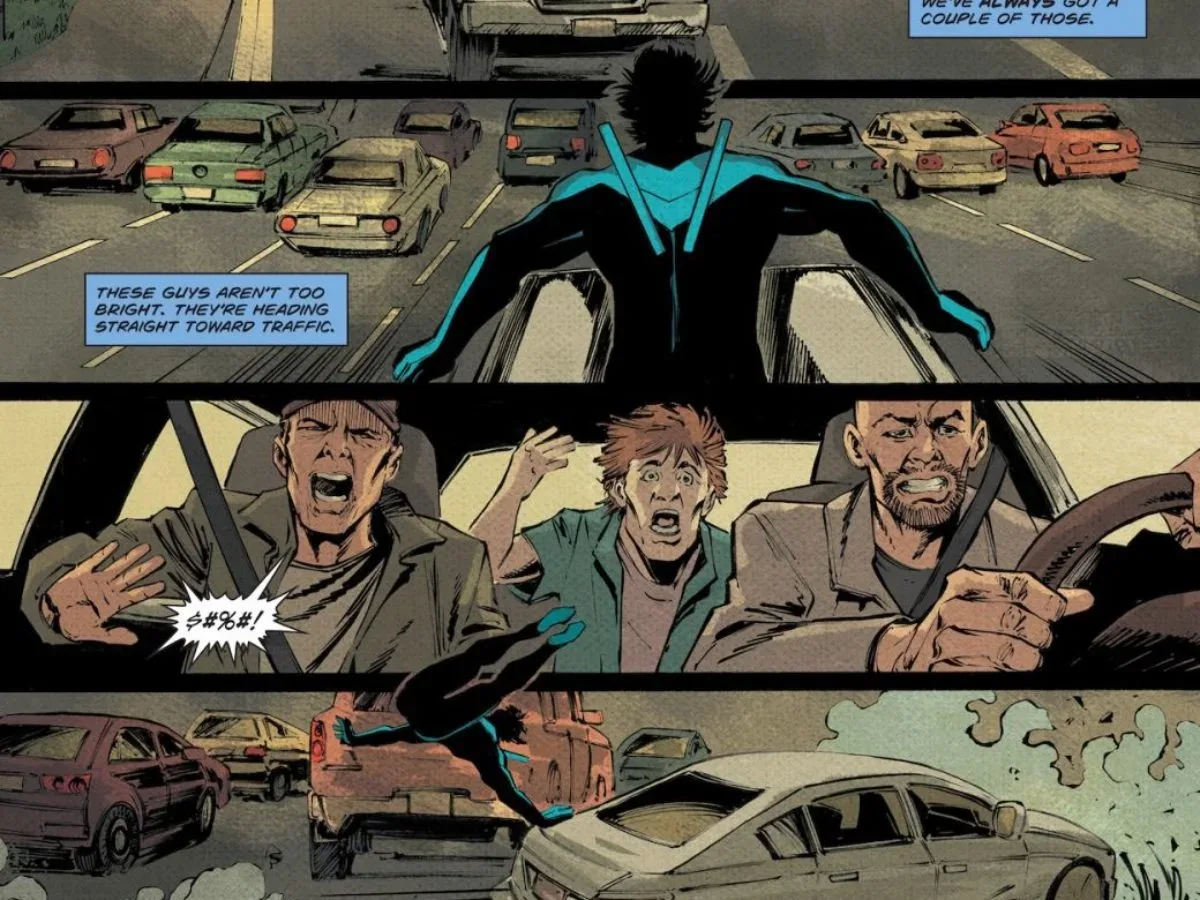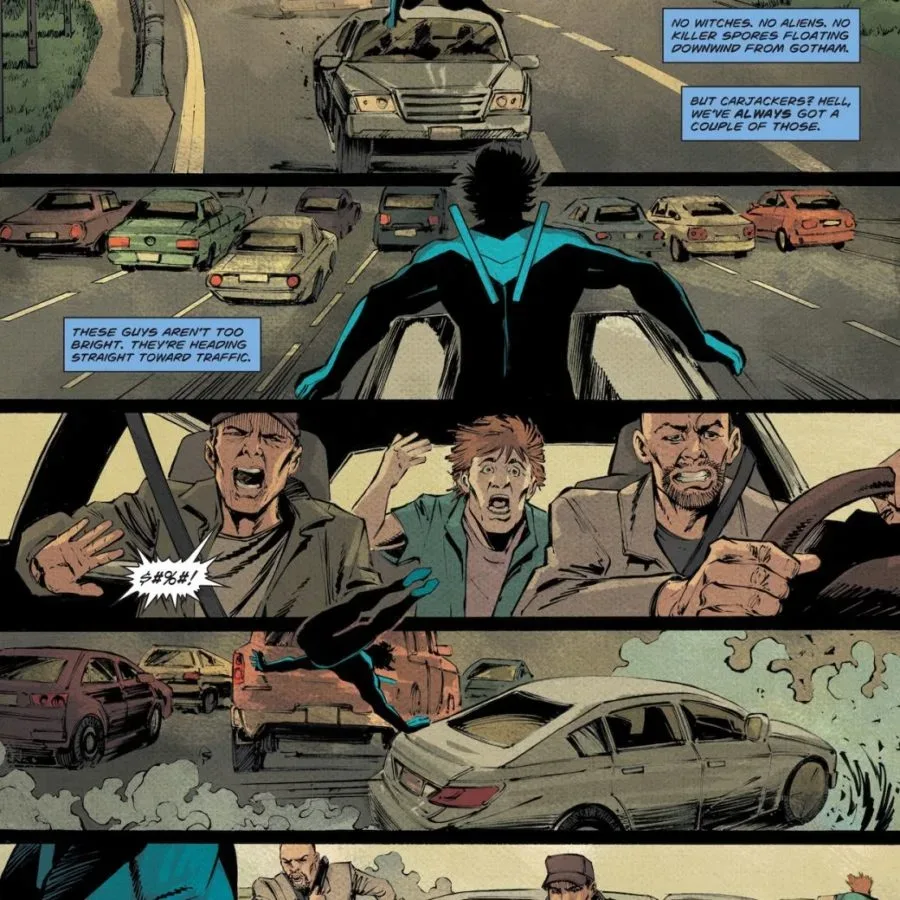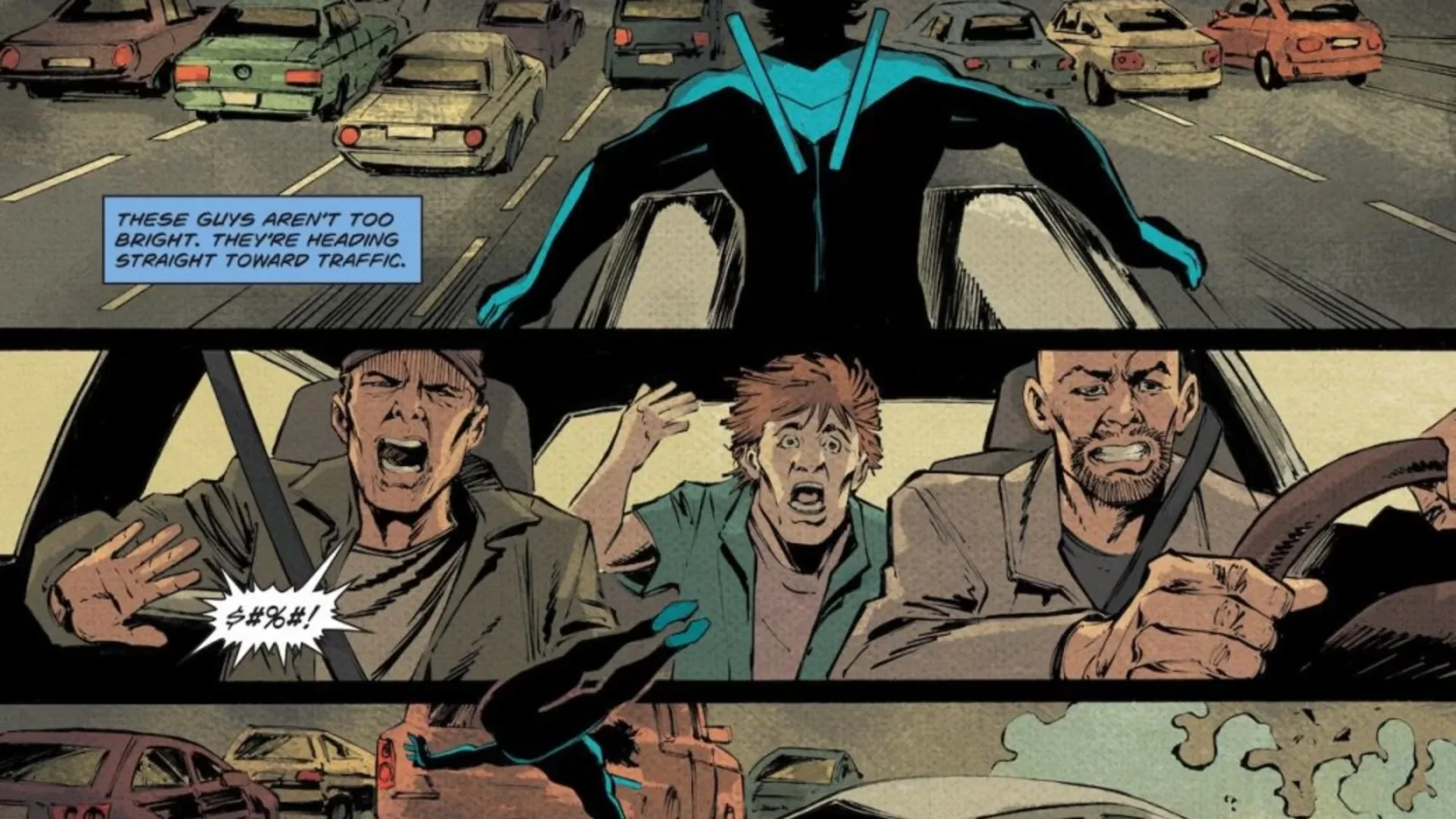
Blüdhaven’s latest civic-planning dispute is not heading toward a tedious public meeting. Nightwing #144 puts Dick Grayson on a collision course with Mayor Bisogni, the official identified as the force behind a superhighway project that has awakened horrors buried beneath the city.
DC Comics lists the issue for release on Wednesday, November 18, 2026. Dan Watters writes, Denys Cowan provides the interior art, and Jorge Fornés is credited for the main cover. The central setup is admirably direct: Nightwing finally gets a face-to-face confrontation with the mayor. The complication is that the city’s road construction is apparently no longer just a public-works matter. Something under Blüdhaven has been disturbed, and its emergence is linked directly to the superhighway.
That premise makes #144 sound less like a routine rooftop brawl and more like a story about accountability. A villain in a costume may vanish into the night; a mayor and a major civic project leave paperwork, consequences and an entire city stuck living with the result. Nightwing’s problem, at least from the solicitation, is not merely stopping the horrors. It is confronting the person whose decision made them a problem at all.
A showdown with Mayor Bisogni
The key word in the issue description is showdown. Mayor Bisogni is not framed as a distant authority figure or a name floating around in background dialogue. He is positioned as the mastermind responsible for the superhighway, and Nightwing is finally confronting him directly.
That wording leaves important questions unanswered, which is appropriate for a preview. It does not establish whether Bisogni understood what was buried beneath the construction site, whether he caused the dangers deliberately, or what form the awakened horrors take. It does establish a clear chain of responsibility within the story: the road was built, buried horrors were awakened, and Nightwing sees the mayor as the person to answer for it.
A superhighway, in this context, is more than a convenient piece of scenery for an action sequence. It is civic infrastructure on a large scale: an undertaking capable of changing how a city moves, looks and functions. In comic-book terms, it is also an efficient way to make a threat feel citywide. Roads cut through neighborhoods, excavations disturb foundations, and a project this visible forces characters to deal with public consequences rather than a hidden lair nobody else knows exists.
The buried-horrors element adds a genre turn to the municipal conflict. The solicitation does not explain their origin, abilities or intent, so readers should not assume specifics beyond their connection to the excavation and their threat to Blüdhaven. Still, the premise has an appealingly grim logic: build quickly over a problem nobody has properly reckoned with, then discover that the past has teeth.
Legacy, cruelty and the very strange burger question
The issue is also billed as unveiling another story involving familial legacy, psychological cruelty and, unexpectedly, cheeseburgers. That is a lot of tonal luggage to pack into one line, but it may be the most useful clue to the issue’s ambitions.
“Familial legacy” generally points to what one generation leaves for another: a name, obligation, trauma, reputation, expectation or conflict. The preview does not identify the family involved, so it would be premature to tie that thread to any particular character. What it does suggest is that the mayoral confrontation will not be limited to permits, pavement and subterranean monsters. There appears to be a personal history or inherited burden beneath the public dispute.
Psychological cruelty is a different kind of danger from a physical attack. It means harm aimed at someone’s emotions, perceptions, fears or relationships. Again, no mechanism is specified. The phrase may signal manipulation, a painful revelation, targeted humiliation, or an old wound being deliberately reopened. Nightwing stories can certainly accommodate physical peril, but a conflict that attacks a hero’s sense of self or family history raises the stakes without needing to reveal whether the buried horrors throw punches, tentacles or zoning appeals.
Then there are the cheeseburgers. Their inclusion is deliberately odd, and the solicitation gives no explanation for their role. They could be a pointed piece of characterization, an unsettling detail, a comic interruption, or an element with more serious narrative weight. The safe expectation is simply that they matter enough to be singled out, not that readers should expect a fast-food-centered plot. A good comic teaser sometimes works by making the audience ask the exact question it refuses to answer. Here, that question is: why are cheeseburgers involved in psychological cruelty?
What the creative credits indicate
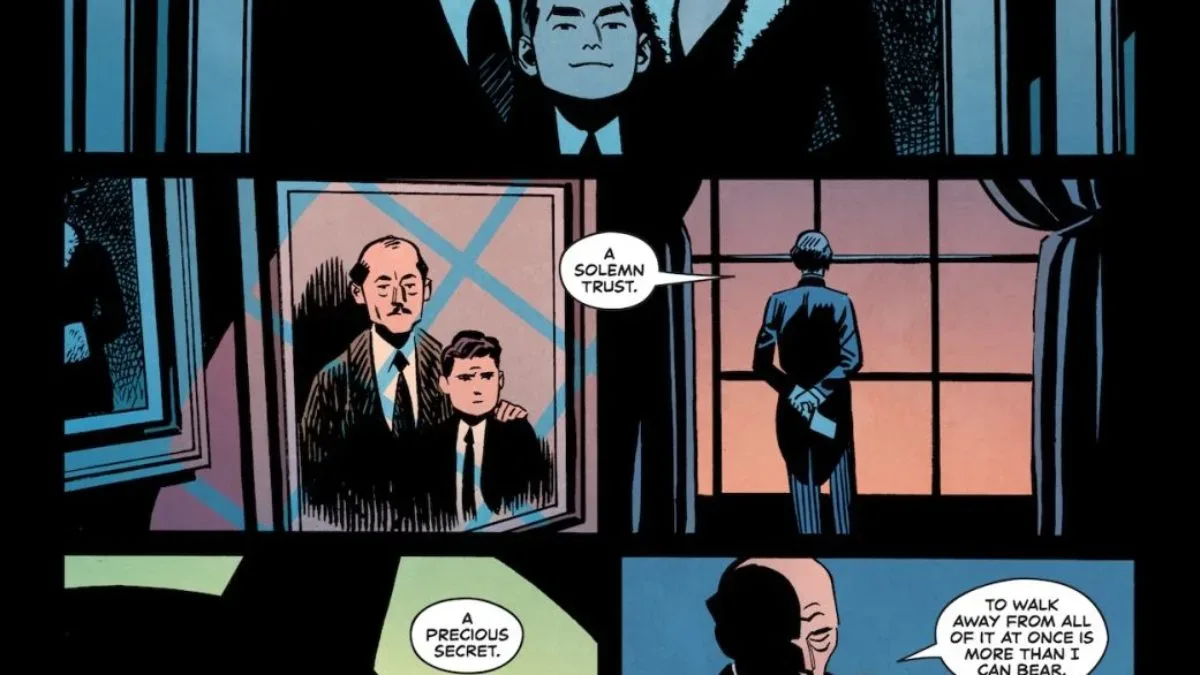
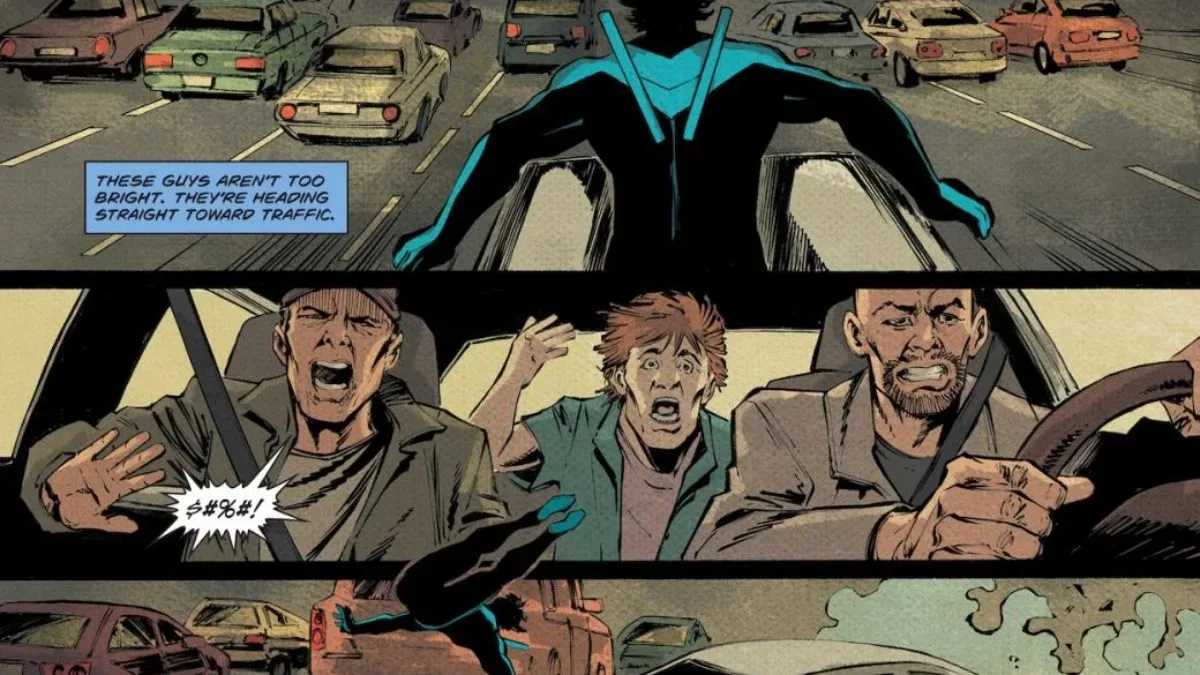
Watters is credited as writer and Cowan as artist, with Fornés on the main cover. Those roles matter when reading a comic listing. The writer is credited for the script and story construction; the artist handles the interior sequential art that carries the issue’s action, acting and visual storytelling; and the cover artist creates the principal image used to represent that edition on shelves and digital storefronts.
For readers who prioritize interiors, Cowan’s credit is the relevant one for the issue’s page-to-page visual experience. For readers buying a particular shelf copy, the cover listings provide the practical distinction. The main edition carries Fornés’ cover, while Riley Rossmo, Becky Cloonan and Nicola Scott are listed for additional cover editions. The solicitation does not identify those editions as incentives, ratios, limited printings or any other special format, so collectors should treat them as separately listed cover choices rather than infer scarcity from the names alone.
The listed suggested retail price for the standard issue is $4.99. The Rossmo, Cloonan and Scott cover editions are each listed at $5.99. That $1 difference is concrete information for anyone deciding between the standard cover and an alternate. It does not, by itself, indicate any difference in the comic’s interior content.
Why this premise suits Nightwing
Nightwing is Dick Grayson’s superhero identity, and the solicitation explicitly centers him in Blüdhaven. Even without adding unlisted continuity details, the basic setup makes sense for a hero whose story is being framed around a city and its leadership. A road project is a public decision with private costs; a mayor is a public official whose choices may be difficult to challenge through brute force alone. That gives the issue a conflict where saving people and exposing responsibility could be intertwined.
The setup also promises a clash of scales. On one side is the individual confrontation between Nightwing and Bisogni. On the other is a city-spanning construction project and whatever was awakened below it. Between them sits the legacy thread, which hints at consequences that may extend beyond the immediate disaster. The cheeseburger detail, meanwhile, threatens to make every intense conversation about civic culpability just a little less predictable.
That mix is part of the hook. Superhero fiction often treats infrastructure as disposable scenery: a bridge to dangle someone from, a tunnel to collapse, a train line to derail. Here, the highway is apparently the inciting force behind the threat. The story’s central construction project is not simply near the danger. It created the conditions for it.
Readers following pop-culture releases that move between different fandom formats may also want to note that licensed-universe publishing can take very different forms, as in this look at Magic: The Gathering’s current Star Trek set plans. For Nightwing #144, though, the immediate attraction is more grounded: a superhero versus the official behind a disastrous road project, with the bill arriving from beneath the pavement.
Buying details and what remains unknown
- Title: Nightwing #144
- Publisher: DC Comics
- Release date: November 18, 2026
- Writer: Dan Watters
- Interior artist: Denys Cowan
- Main cover artist: Jorge Fornés
- Standard suggested retail price: $4.99
- Listed alternate-cover artists: Riley Rossmo, Becky Cloonan and Nicola Scott
- Listed alternate-cover price: $5.99 each
The preview establishes the confrontation and its ingredients, but it does not reveal how it ends, what the buried horrors are, why Mayor Bisogni pursued the highway, whose family legacy is at issue, or what makes the cheeseburger component psychologically cruel. Those are not gaps to fill with guesswork; they are the reasons the issue exists. What is clear is that #144 is selling a reckoning: Blüdhaven’s mayor has a road, Nightwing has questions, and something under the city is very unhappy about both.