Betsy Braddock is set to take a new codename: Butterfly. The name will be used in Maximum X-Men, the forthcoming Marvel series written by Christopher Yost and drawn by Tony S. Daniel. It gives one of the X-Men line’s most complicated identity histories a clearer present-day designation while preserving a visual motif that has followed Betsy for decades.
The change matters because Betsy has been identified by more than one superhero name over the years, most prominently Psylocke and Captain Britain. Maximum X-Men positions Butterfly as the current label for Betsy while Kwannon continues as Psylocke. That distinction should remove a point of confusion that lingered after earlier material listed Betsy under the Psylocke name.
There is also a notably direct logic to Butterfly. Betsy’s telepathic abilities have long been represented on the page with a butterfly-shaped psychic aura around her face or head. The image persisted through major changes to the character’s appearance and role, including the body-swap history involving Kwannon. Fans have even used “Butterfly of Death” as an informal nickname. Marvel is now turning that enduring piece of visual language into an official codename.
What Maximum X-Men is setting up
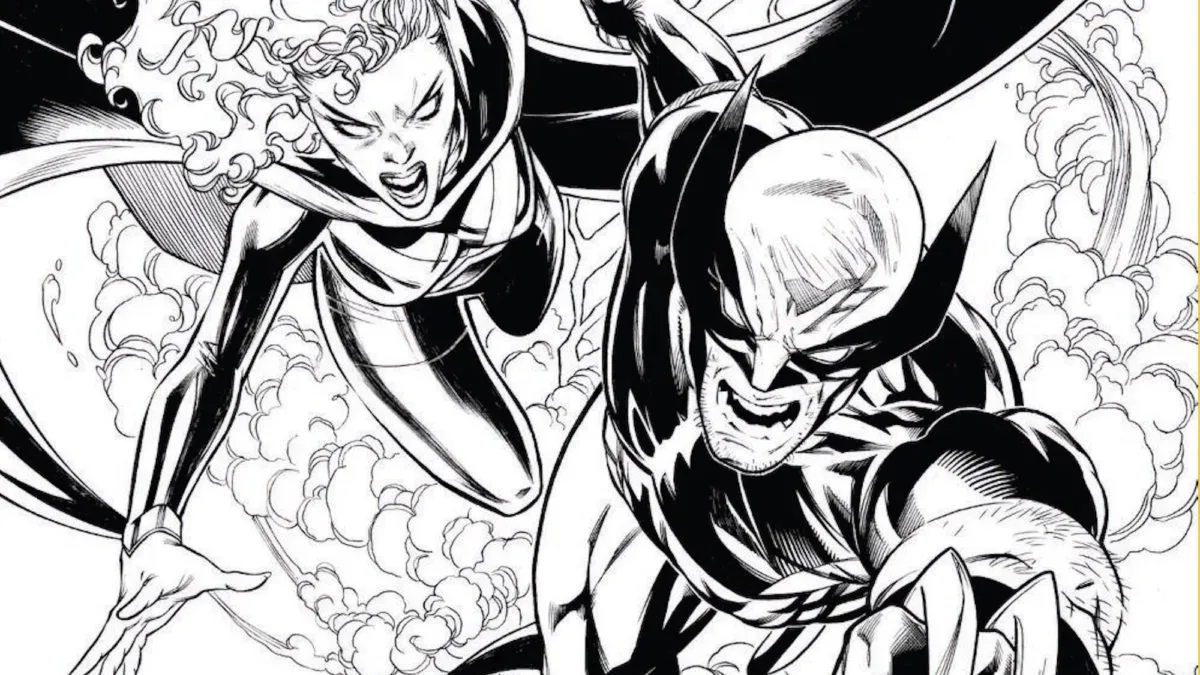
Maximum X-Men begins after the events of Avengers: Armageddon. The core premise is that the Avengers have disbanded, leaving no established group to answer threats on a global, Avengers-scale level. Storm decides the X-Men have to fill that gap, and she and Wolverine assemble a team built for that particular task.
The announced roster includes:
- Storm
- Wolverine
- Colossus
- Bishop
- Iceman
- Firestar
- Justice
- Betsy Braddock, as Butterfly
The first issue’s setup establishes a large immediate problem as well: the Annihilation Wave arrives on Earth. In other words, this is not being framed as a standard mutant-team adventure with a single localized crisis. The series’ stated purpose is to put this specific X-Men lineup in the position usually associated with the Avengers: confronting dangers too broad for one hero to manage alone.
That mission statement provides useful context for Butterfly’s return to an active team role. The name is a personal identity adjustment, but the book’s premise is much wider. Betsy is being placed beside heroes with very different histories and power sets in a squad intended to operate as an emergency-response team for the entire planet.
Why the Psylocke question has been so persistent
For readers who have not followed every turn in Betsy Braddock’s continuity, the issue is less about whether “Butterfly” fits and more about why a new codename was necessary at all. Psylocke is a name strongly associated with Betsy’s long X-Men tenure, particularly her telepathic abilities and psychic weaponry. Yet it is also a title bound up in the character’s extensive body-swap storyline with Kwannon.
That history left two characters connected to the same legacy name. Recent material had already established Kwannon as Psylocke, while Betsy’s own identity had also been shaped by her years as Captain Britain. Early references to Betsy as Psylocke in connection with Maximum X-Men therefore invited renewed discussion over which character should carry the name.
Butterfly is a clean editorial answer because it does not attempt to overwrite either thread. Kwannon remains Psylocke. Betsy gets a codename rooted in an established element of her own characterization rather than simply returning to a title that has become contested. It also avoids treating Captain Britain as her automatic default in a book where the focus is the newly formed X-Men response team.
For a character with so many transformations, aliases and status changes, a codename can serve as more than branding. It tells readers which version of the character they are being asked to follow right now. Butterfly signals Betsy Braddock specifically, while retaining the psychic symbolism readers already recognize.
The butterfly effect, in comic-book terms
Here, “butterfly” is not a reference to the scientific idea that tiny changes can lead to enormous consequences. It is primarily a visual shorthand for Betsy’s telepathy. A telepath is a character whose powers involve the mind, such as mental communication or psychic influence. Comic art needs visible ways to convey such invisible actions, and the butterfly aura became Betsy’s recurring signal.
That continuity of imagery is what makes the codename feel less abrupt than it may sound on first read. Costumes, affiliations and titles have changed around Betsy, but the psychic butterfly has remained recognizable. The new name translates an established visual cue into dialogue, cover copy and team-roster terminology.
It is also a case where an alias can simplify rather than complicate continuity. “Butterfly” is distinctive, short and directly associated with Betsy’s power presentation. Newer readers can grasp the connection quickly, while longtime readers can see the reference without needing the series to pause for a full chronology lesson.
What the name does not settle
A new codename does not erase Betsy’s earlier identities. Psylocke and Captain Britain remain major parts of her history, and the source material behind the announcement explicitly identifies her as formerly using both names. Nor does the name alone explain how every past continuity issue will be addressed on the page. It simply clarifies the designation being used for her in this particular era and series.
That is a useful distinction for readers coming to the book from different points in X-Men history. Butterfly is not presented as a replacement for the character’s past; it is a new present-tense identity that acknowledges one of her longest-running traits.
A team with an Avengers-sized job
The premise makes the X-Men’s role unusually explicit. Storm is not merely gathering mutants for a traditional X-Men assignment. She is building a squad because Earth lacks the Avengers after Avengers: Armageddon. The phrase “Avengers-level threat” is doing important work here: it describes the expected scale of conflict, not a change in who these characters are.
Storm and Wolverine sit at the center of that formation, with the remaining members bringing a mix of X-Men, Avengers and New Warriors associations. Firestar and Justice are especially notable in that respect. Justice, Vance Astrovik, is being positioned for what has been described as an X-Men-focused overhaul, with a difficult storyline ahead.
The roster’s composition suggests a deliberate crossover of superhero traditions. Colossus, Bishop, Iceman and Betsy carry substantial X-Men history. Firestar and Justice bring prominent connections to both team-oriented superhero storytelling and prior Avengers or New Warriors material. The result is a group that can plausibly inhabit a book about mutants answering a broader-world protection brief.
For Butterfly, this is a high-visibility launch point. She is not being introduced through a solo reinvention or an isolated guest appearance. The new name arrives in a series that puts her on a flagship-style team assembled to deal with worldwide consequences after a major Marvel event.
Release details and what readers can expect
Maximum X-Men #1 is scheduled for December 2, 2026, with a listed price of $4.99. Yost is credited as writer and Daniel as artist. The first issue is billed as a new series beginning in the aftermath of Armageddon, with the Annihilation Wave serving as the opening threat.
Readers looking to follow the name change should watch for Betsy’s role in that debut rather than assuming older solicitation language remains current. The important shorthand is now straightforward: Kwannon is Psylocke; Betsy Braddock is Butterfly in Maximum X-Men.
Superhero comics regularly revisit names, costumes and team functions, but this adjustment has a clearer character-based rationale than a cosmetic redesign. The psychic butterfly has always been an immediately recognizable part of Betsy’s presence. Making it her codename lets the visual symbol finally do verbal work, too.
For more comic-book scheduling context, see our coverage of recent date changes affecting DC collections and titles.