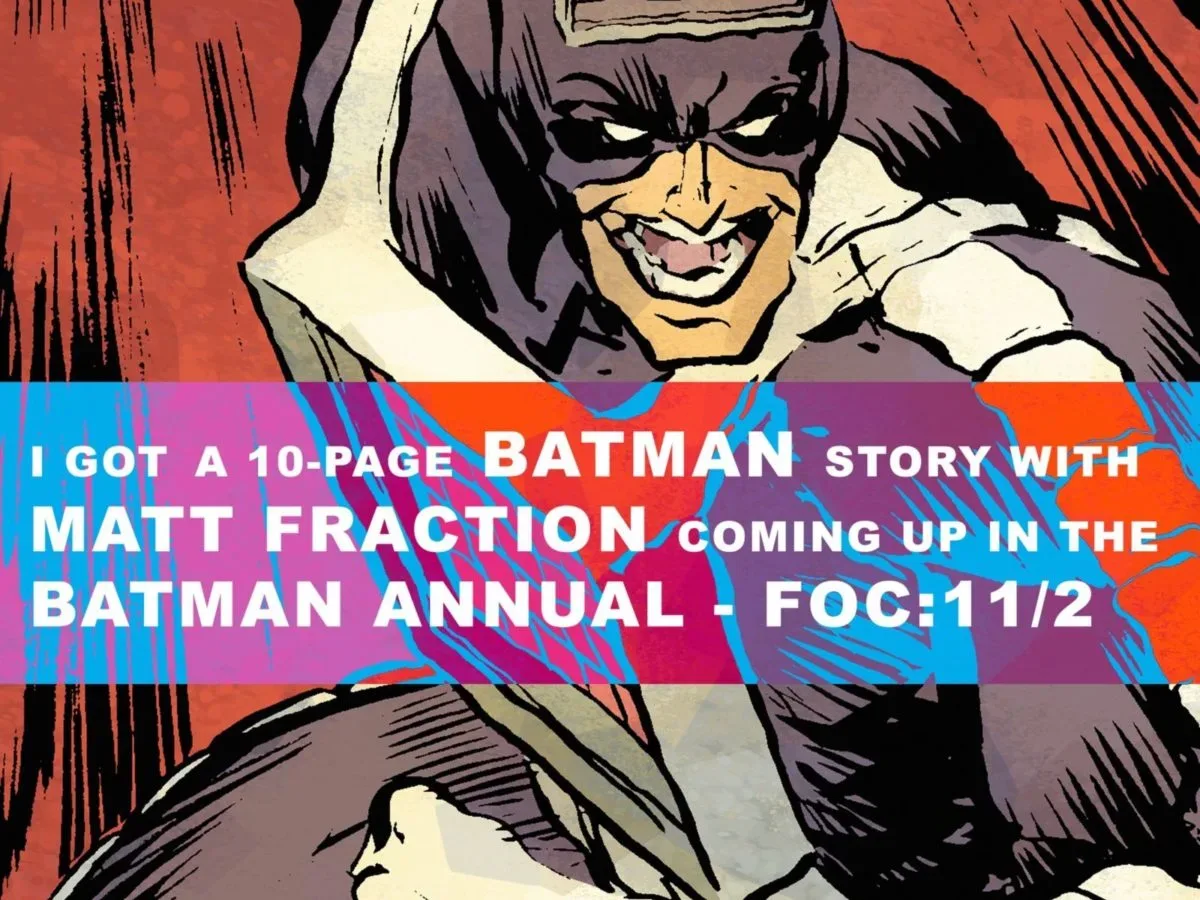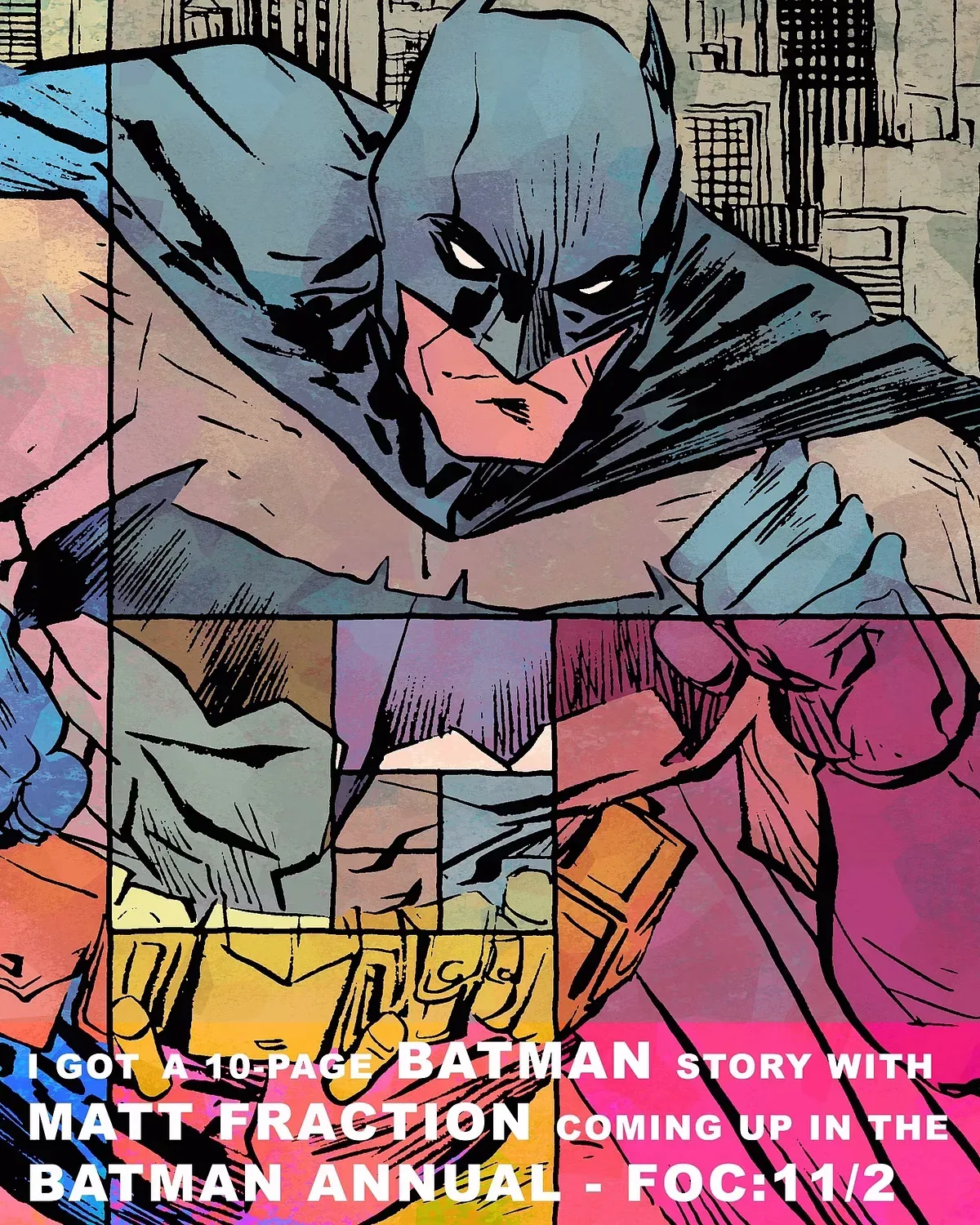
Gotham’s criminal underworld is being presented less as a loose crowd of costumed opportunists and more as a system with management, structure and a frighteningly efficient operating model in Batman 2026 Annual #1. Due November 25 for $5.99, the annual is credited to Matt Fraction, Brian Ching and Jesse Lonergan, and its two connected concerns are the expanding Torus organization led by Minotaur and the return of the Calculator’s particular brand of crime by calculation.
The pairing makes immediate thematic sense. Minotaur is described as the figure who turned Gotham’s chaos into calculated order, while the Calculator story explicitly concerns an “algorithm of crime.” Neither phrase should be mistaken for a complete explanation of either villain’s plan; the available solicitation frames both as mysteries. But together they establish an annual interested in organized information, prediction and the people who can turn Gotham’s criminal activity into something coordinated.
What the annual says about Torus and Minotaur
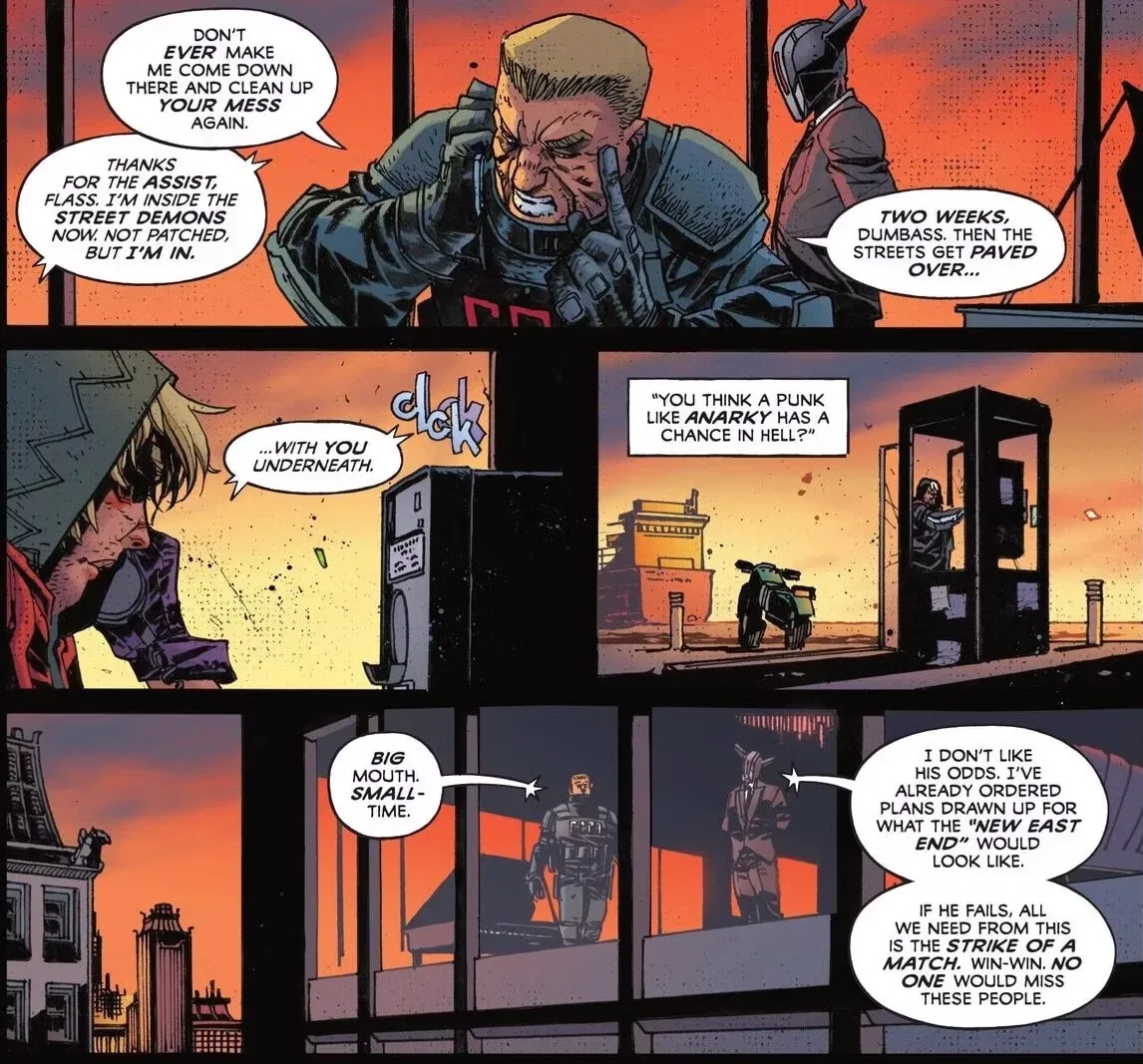
For months within the current Batman storyline, the Torus has been operating across Gotham’s underworld. At its center is Minotaur, characterized as the conductor of a larger criminal orchestra. The Brian Ching portion of the annual is positioned to tackle the conspiracy that has been building since Batman #1, asking who Minotaur is, how he consolidated influence and what he intends to do next.
That is an important distinction from a standard villain-of-the-month setup. The solicitation is not merely promising a fight with a new adversary. It presents Minotaur as someone whose power is organizational: he has made disorder productive for criminals. “Algorithm,” in this context, is best understood as a story image for an ordered process or decision-making system. It suggests crime planned through rules, data or predictions rather than a literal promise that readers will be given a technical explanation of software.
For Batman, a foe who can arrange the conditions around a crime can be as consequential as one who can win a physical battle. The annual’s questions point toward the infrastructure behind Gotham’s threats: who coordinates them, what information they use and where that system might be vulnerable. The result could give Minotaur clearer definition while also making the Torus feel like a sustained problem for the title rather than a collection of unexplained names.
The Calculator is built for an information-war story
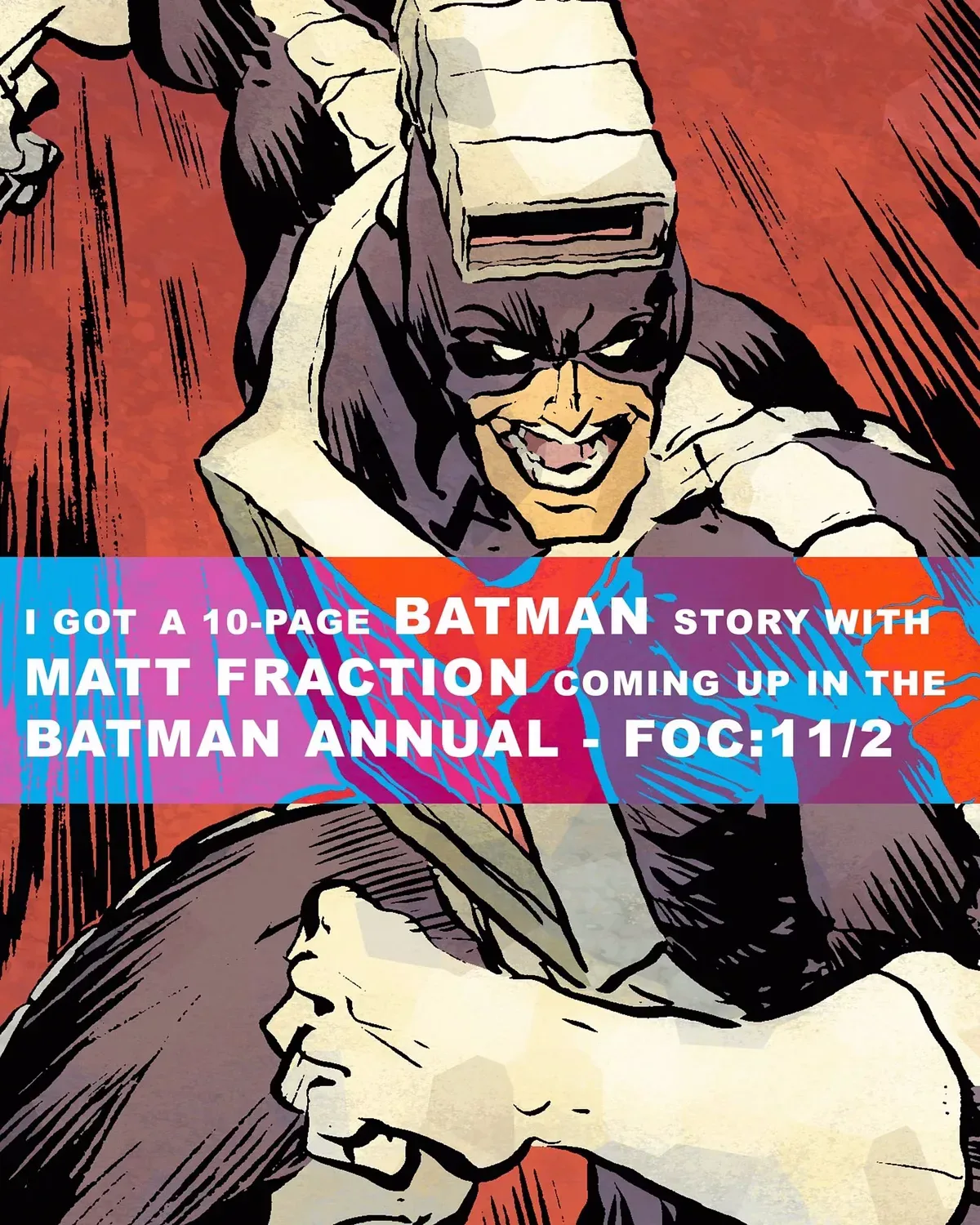
Fraction and Jesse Lonergan’s contribution explores the Calculator’s algorithm of crime. Lonergan has identified it as a 10-page story written by Fraction and has teased that it may contain notable cameos. The Calculator’s involvement is confirmed; any additional character appearances remain unconfirmed until the comic is released.
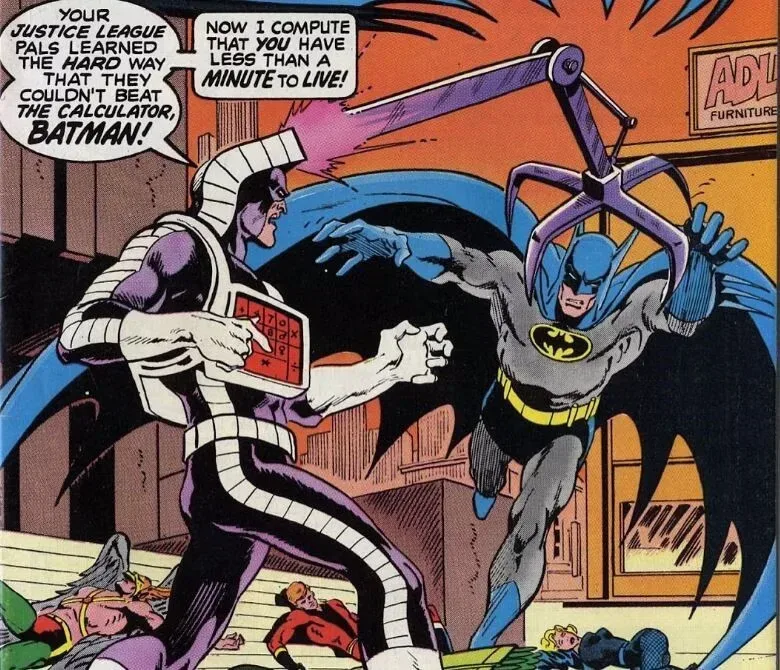
The character, Noah Kuttler, has always carried a concept that can be adjusted to fit the technology anxieties of a given era. Bob Rozakis and Mike Grell created the Calculator for Detective Comics #463 in 1975, when pocket calculators were a prominent new consumer technology. His initial look was unabashedly gadget-driven: a battlesuit with a numerical keypad across the chest and an LED display in the helmet.
That early costume was not just decoration. By entering commands, the Calculator could produce hard-light constructs and analyze opponents’ tactics. After losing to a hero, he could record the encounter with a special button. That record then enabled defensive or predictive responses in a rematch, such as force fields or countermeasures designed around the opponent’s known behavior.
In other words, his gimmick was learning from previous encounters. That is why the character sits so naturally beside a plotline about an algorithmically directed criminal network. An algorithm is simply a defined set of steps used to solve a problem or reach an outcome. In narrative terms, the Calculator’s original powers embody a feedback loop: observe a hero, save the observations, then alter the next response based on the stored result.
The Calculator initially battled a lengthy list of DC heroes, including the Atom, Black Canary, Green Arrow, Elongated Man, Hawkman, Batman, Blue Beetle and Air Wave. Batman eventually beat him by overwhelming the system. The victory is revealing: a predictive machine can look formidable when it has a manageable amount of information, but it may fail when the situation exceeds its capacity to process and respond.
From novelty armor to criminal support network
After a run that included several backup stories in Detective Comics, the Calculator spent years largely out of the spotlight, save for occasional appearances. His most consequential reinvention arrived in the 2004 miniseries Identity Crisis, where Brad Meltzer recast him as a non-costumed information broker for supervillains.
Rather than personally confronting heroes in a suit, this version sold services to the criminal underworld: logistical support, weapon recommendations, tactical analysis and real-time assistance. His stated price was $1,000 per question. The concept made him a villainous counterpart to Oracle, the information specialist associated with Barbara Gordon. It also shifted the threat from a man with a strange device to a person who could give other criminals a strategic advantage without being present at the crime scene.
That version of the Calculator later joined Lex Luthor’s Secret Society of Super Villains in the lead-up to Infinite Crisis. His fixation on discovering Oracle’s identity contributed to mental strain. In Birds of Prey stories, he came close to unmasking her but was stopped.
This history supplies two useful lenses for the annual. The original Calculator is a costume-clad, command-inputting combatant whose strength is adaptive analysis. The later Calculator is a networked facilitator, turning answers and intelligence into products for other villains. The annual’s reference to an algorithm of crime can potentially draw on either version—or on the tension between them. The provided material indicates that the Calculator appears to be returning in the suit, but it does not establish how much of his information-broker identity will shape the new story.
Why the Minotaur-Calculator connection is worth watching
Minotaur’s Torus and the Calculator need not be allies for the annual to make their stories resonate. The premise already places two approaches to control in the same issue. One is a leader reshaping a city’s underworld into a disciplined organization. The other is a veteran villain defined by turning data, prior encounters and analysis into leverage.
That creates several story questions without requiring readers to assume answers. Is the Calculator part of the Torus, working against it, or simply operating in the same Gotham at a moment when criminal information has exceptional value? Does his apparent return to armor signal a return to the mechanics of his 1975 concept? And what does Batman do when the people engineering Gotham’s crimes might be trying to predict his response before he has even reached the scene?
The annual is also a potentially accessible place to encounter the Calculator. A ten-page story can introduce the essentials of a concept quickly: who this person is, what kind of information he values and why his methods matter. Readers curious about Minotaur, meanwhile, appear to be getting a more direct piece of the long-form Torus narrative, rather than a side story disconnected from the main title.
A familiar character across DC animation and television
Although the Calculator’s comic-book identity has changed considerably over time, he has also appeared in several screen adaptations. Tom Amandes played him in Arrow; Armin Shimerman voiced him in Batman: The Brave and the Bold; Ely Henry voiced him in Justice League Action; and Jason Spisak voiced him in Batman: Bad Blood.
Those appearances underline the flexibility of the underlying premise. Calculator can be presented as a flamboyant technology-themed foe, an unseen coordinator or a more conventional player in the wider DC villain community. The annual’s small amount of confirmed information deliberately leaves its exact choice of emphasis open, but the apparent use of the suit makes the older visual identity particularly relevant again.
For readers tracking the wider DC pop-culture conversation, there is also renewed discussion around the studio side of the brand; recent debate over what “broad appeal” could mean for DCU projects is separate from this comic, but it illustrates how differently DC characters can be interpreted across media.
What is confirmed, and what remains a question
- Confirmed: Batman 2026 Annual #1 is scheduled for November 25, 2026, at $5.99.
- Confirmed: Matt Fraction, Brian Ching and Jesse Lonergan are credited on the annual.
- Confirmed: The issue addresses Minotaur, the Torus organization and a conspiracy developing since Batman #1.
- Confirmed: Fraction and Lonergan’s 10-page segment concerns the Calculator’s algorithm of crime.
- Confirmed: Lonergan has suggested the short story may feature cameos, without naming them.
- Not confirmed: The Calculator’s exact role in Minotaur’s plans, the identities of any cameo characters, and the ultimate scope of the Torus conspiracy.
The clearest promise of Batman 2026 Annual #1 is not that Gotham will become a simpler place. It is that its criminal world is becoming more legible—and perhaps more dangerous—because someone has imposed a system on it. With Minotaur overseeing Torus and the Calculator back in play, Batman may be confronting villains who do not merely set traps. They study the city, classify its weaknesses and plan around the answer they expect him to give.